
Robin’s-Plantain (Erigeron pulchellus)
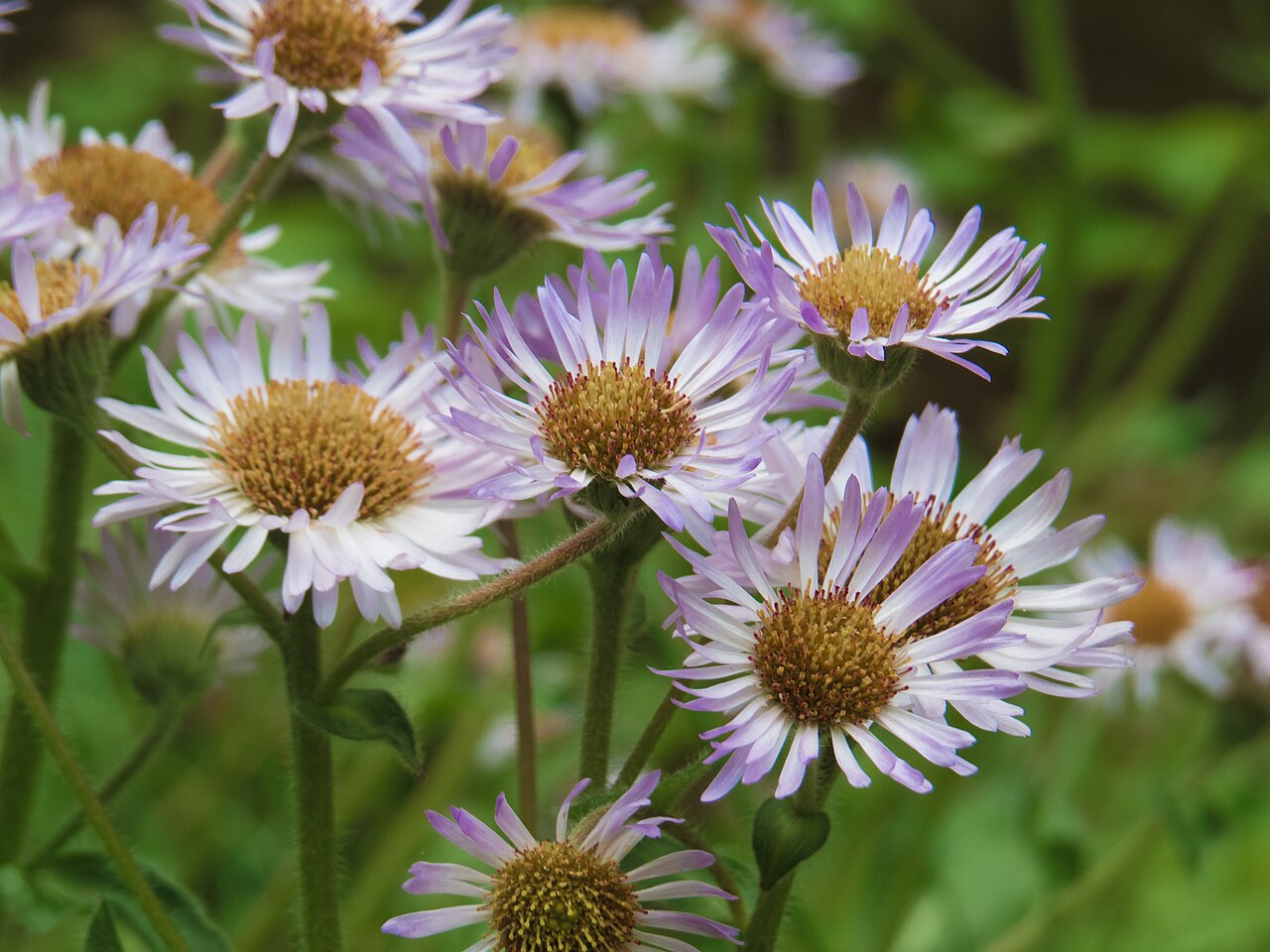
Erigeron pulchellus, known as Robin’s-Plantain (USDA: robin’s plantain), is one of the earliest and showiest fleabanes of eastern North America. It belongs to the aster family (Asteraceae) and is also called robin’s fleabane and hairy fleabane. It is a low perennial, 10 to 24 inches tall in bloom, that grows from a rosette of soft, hairy, spoon-shaped leaves and spreads by slender runners into small colonies.
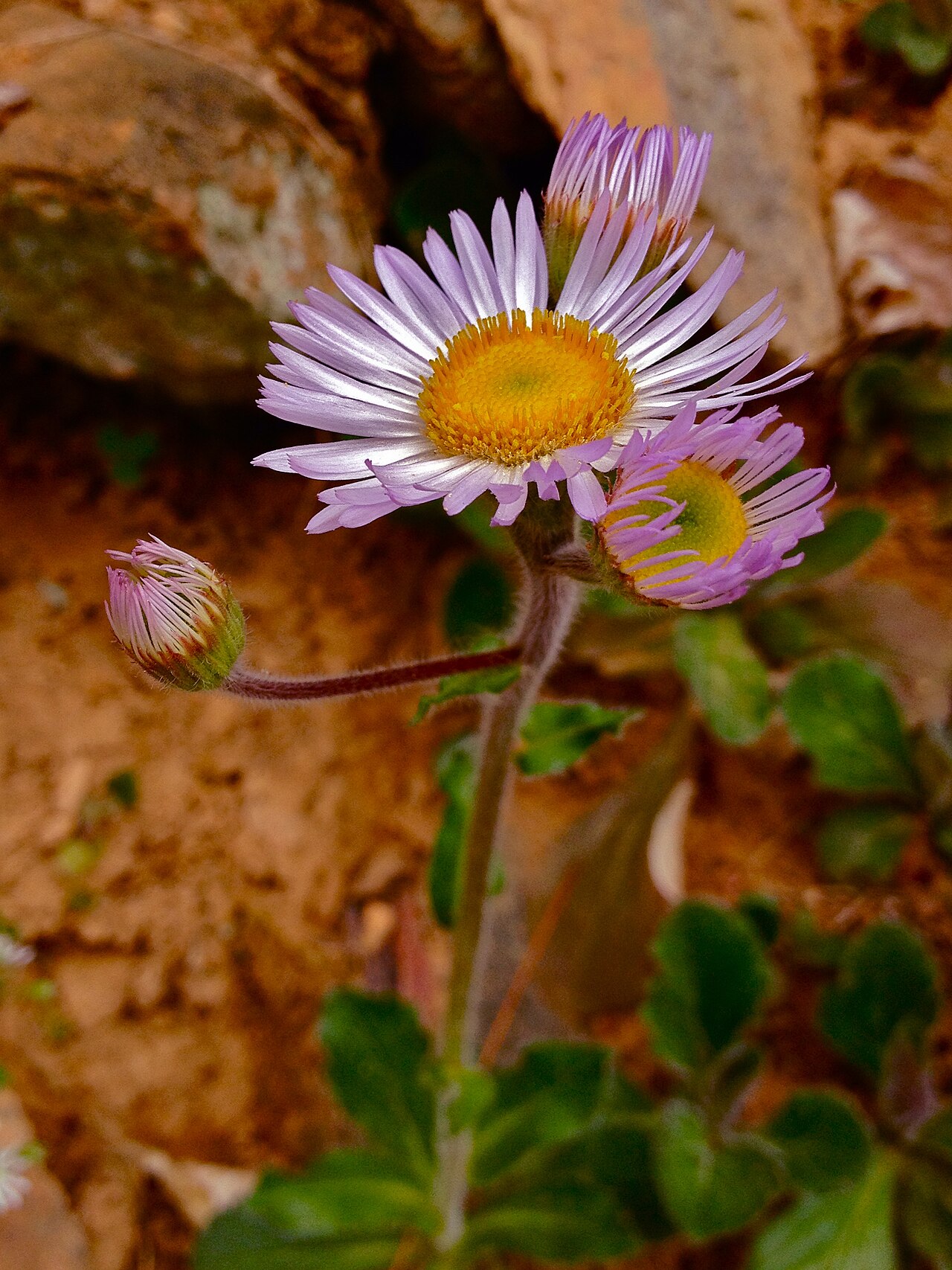
In spring, from about April to June, each softly hairy stem carries one to a few daisy-like flower heads 1 to 1 1/2 inches across. Each head has 50 to 100 very slender rays, usually pale lavender or blue-violet but sometimes pink or white, around a broad yellow center. The nodding buds open just as robins are returning and nesting, one explanation for its common name. It is a welcome early nectar source for small bees and butterflies.
Robin’s-plantain grows in open woods, wooded slopes, stream banks, rocky ledges, meadows and clearings across most of the eastern United States, from Maine and Minnesota south to Florida and East Texas. In gardens it is an easygoing, long-lived groundcover for part shade, woodland edges and naturalistic plantings.
Identification
Robin’s-plantain is easy to recognize in spring by its few large, fringed flower heads on hairy stems, its basal rosettes of soft, fuzzy leaves and its habit of spreading by runners.
Stems & Growth Habit
The plant forms a flat rosette of leaves and sends out slender, leafy runners (stolons) along the ground, which root and form new rosettes, creating loose colonies. In spring each rosette sends up a single, unbranched flowering stem 10 to 24 inches tall, densely covered with soft, spreading hairs.
Leaves
The basal leaves are obovate to spoon-shaped, 1 to 4 inches long, with shallow teeth or wavy edges, and are covered with soft hairs on both sides. The stem leaves are few, smaller, lance-shaped and stalkless, partly clasping the stem, and become smaller toward the top. The basal rosettes stay green through much of the winter in mild areas.
Flowers
One to six flower heads are borne at the top of each stem, often nodding in bud. Each head is 1 to 1 1/2 inches across, with 50 to 100 narrow ray florets that are lavender, pale blue-violet, pinkish or white, surrounding a yellow center of tiny disk florets. Bloom is from about April to June, earlier in the South.
Fruit & Seeds
The seeds are tiny achenes topped with a tuft of soft bristles (pappus), which catch the wind like dandelion fluff. The seed heads look like small, fluffy balls in early summer.
Look-alikes
Philadelphia Fleabane blooms at the same time but has smaller heads with 150 or more thread-thin rays, more heads per stem, and leaves that clasp the stem more fully; it does not spread by runners. Daisy fleabane (E. annuus) blooms later, with many small white heads. Pussy’s Toes has similar fuzzy, spoon-shaped rosettes and runners but small, whitish, rayless flower heads.
Safety Note
Robin’s-plantain is not known to be toxic. Fleabanes were once used in folk medicine, but they are not recommended as remedies, and the hairy leaves can irritate sensitive skin.
Quick Facts
| Scientific Name | Erigeron pulchellus |
| Family | Asteraceae (aster family) |
| Plant Type | Herbaceous perennial; spreads by runners |
| Mature Height | 10–24 in in bloom |
| Mature Spread | 1–2 ft; forms colonies |
| Growth Rate | Moderate |
| Sun Exposure | Part shade to full sun |
| Water Needs | Medium; moist to dry, well-drained soil |
| Soil Type | Loam, sandy or rocky soils |
| Soil pH | About 5.0–7.5 |
| Bloom Time | April–June |
| Flower Color | Lavender, pale blue-violet, pink or white with yellow centers |
| Fall Color | Basal rosettes stay green into winter |
| Fruit | Tiny achene with a fluffy pappus |
| Deer Resistant | Moderately; hairy leaves are seldom heavily browsed |
| USDA Hardiness Zones | 3–8 |
Native Range
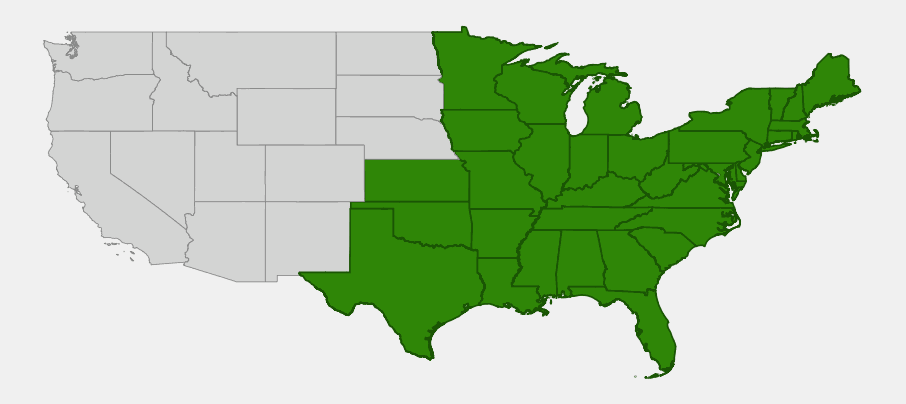
Robin’s-plantain is native to eastern North America. USDA PLANTS records it in 34 states and the District of Columbia, plus Ontario and Quebec. It grows throughout New England and New York, south through the Mid-Atlantic and Appalachian states to Georgia and northern Florida, and west across Ohio, Indiana, Illinois, Michigan, Wisconsin, Minnesota, Iowa and Missouri to eastern Kansas, Oklahoma, Arkansas, Louisiana and East Texas.
It is most common in the Appalachians, the Piedmont, the Ohio Valley and the Ozarks, and becomes scattered at the western and southern edges of its range, where it is mostly found in wooded hills and along streams. The Lady Bird Johnson Wildflower Center describes its native range as Maine and Ontario to southeastern Minnesota, south to Georgia, Mississippi and East Texas.
Typical habitats are rich to dry deciduous and mixed woods, wooded slopes and bluffs, stream banks, rocky ledges and outcrops, woodland openings, meadows, old fields and roadsides. It does best in light shade or partial sun with some moisture in spring, and it often grows on sandy or rocky, well-drained soils.
📋 Regional plant lists featuring Robin’s-Plantain: New York, Pennsylvania & Northern New Jersey · Ohio & Indiana · Michigan, Wisconsin & Eastern Minnesota · Kentucky & Tennessee · Nebraska, Kansas & Eastern Colorado · Connecticut, Massachusetts & Rhode Island · New Hampshire, Maine & Vermont · Maryland, Virginia & West Virginia · Delaware, Southern New Jersey & Long Island · Illinois, Iowa & Missouri · Alabama, Georgia & Mississippi · North & South Florida · North & South Carolina · Arkansas, Louisiana, Eastern Oklahoma & Eastern Texas
Growing & Care Guide
Robin’s-plantain is an easy, adaptable native for spring color in part shade. It is available from many native plant nurseries in the East, sometimes as the selection ‘Lynnhaven Carpet’, which has large, fuzzy leaves and makes a dense groundcover. Buy nursery-grown plants or seed rather than digging wild plants.
Light
Part shade or dappled light is ideal, such as at a woodland edge or under high deciduous trees, where it gets spring sun before the trees leaf out. It also grows in full sun if the soil does not dry out too much in summer.
Soil & Water
It grows in average, well-drained loam, sandy or rocky soil. It prefers some moisture in spring but tolerates dry shade and summer drought once established. Avoid soggy, poorly drained soil, which can rot the rosettes.
Planting Tips
Plant in spring or fall, spacing plants 12 to 18 inches apart. They will spread by runners to fill in. Use it at the front of a woodland border, on a shady slope, along a path or in a rock garden. It combines well with spring woodland wildflowers such as wild geranium, woodland phlox and golden ragwort.
Pruning & Maintenance
Little care is needed. Cut back the flowering stems after the seeds disperse to tidy the planting; the attractive, fuzzy rosettes remain. Divide crowded colonies every few years. Pull rosettes that spread beyond where you want them; the runners are shallow and easy to remove.
Propagation
Divide plants or pot up rooted runners in early spring or fall. Seed can be sown on the surface of moist soil in fall or spring without covering, since it needs light to germinate. Seedlings usually bloom in their second year.
Landscape Uses
- Woodland edge gardens: early spring flowers in part shade
- Groundcover: fuzzy rosettes spread by runners into a low carpet
- Pollinator gardens: an early nectar source for small bees, flies and butterflies
- Rock gardens and slopes: thrives on well-drained, rocky banks
- Meadow and woodland restoration: a native spring wildflower for openings and edges
Wildlife & Ecological Value
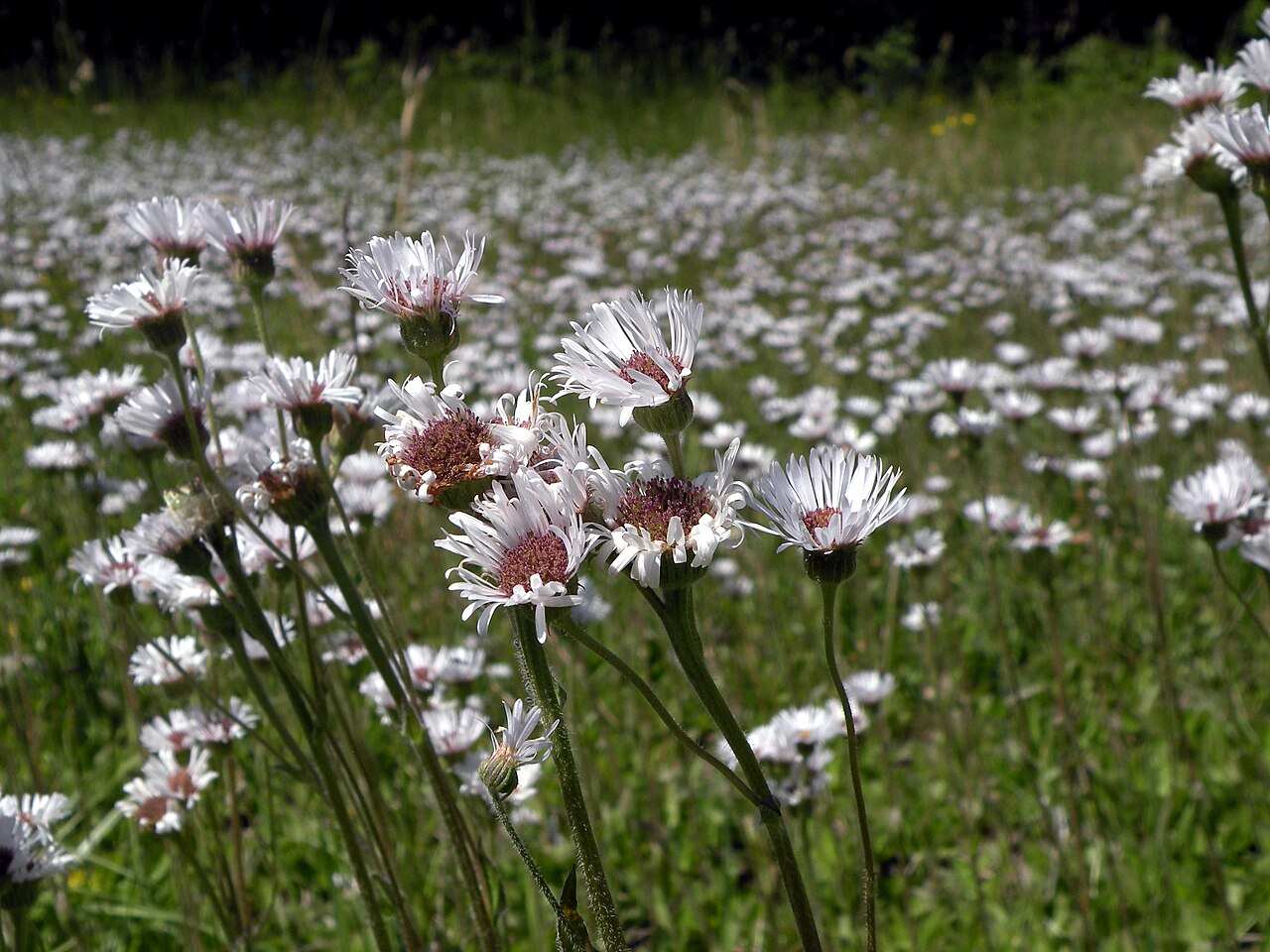
Robin’s-plantain is one of the first composites to bloom in spring, offering nectar and pollen when few other daisy-like flowers are open.
For Pollinators
The flowers attract many small native bees, including sweat bees and small carpenter bees, as well as flower flies and small butterflies such as skippers and crescents. The broad yellow center is easy for small insects to land on and feed from.
For Birds
Small seed-eating birds occasionally take the seeds, and the colonies provide ground cover in woodland openings.
For Mammals
Deer and rabbits occasionally browse it, but the hairy leaves are not a favorite food. The plant spreads quickly enough to recover from light browsing.
Ecosystem Role
Robin’s-plantain is part of the spring wildflower community of eastern woods and openings, filling the gap between early ephemerals and summer wildflowers. Its spreading colonies help hold soil on slopes and banks.
Cultural & Historical Uses
The name robin’s-plantain is usually explained by its spring bloom, which coincides with the return of robins, and by its broad, flat basal leaves, which resemble those of plantain (Plantago). The genus name Erigeron comes from Greek words meaning “early old man,” for the white, fluffy seed heads that appear soon after flowering, and pulchellus means “pretty.”
Fleabanes got their common name from an old belief that the dried plants repelled fleas. Several fleabanes, including robin’s-plantain, were used in folk medicine in North America for various complaints. Today they are valued as wildflowers and pollinator plants rather than remedies.
Botanists recognize a few varieties of robin’s-plantain, including a rare form of the Ohio Valley and the southern Appalachians. In gardens, the selection ‘Lynnhaven Carpet’ became popular in the Mid-Atlantic as a native groundcover for part shade.
Frequently Asked Questions
How do I tell robin’s-plantain from Philadelphia fleabane?
Robin’s-plantain has fewer, larger heads (1 to 6 per stem) with 50 to 100 rays and spreads by runners. Philadelphia fleabane has more numerous, smaller heads with 150 or more thread-thin rays and no runners.
Does robin’s-plantain spread?
Yes, slowly. It sends out runners that root and form new rosettes, creating loose colonies that make a nice groundcover. It is easy to pull where it is not wanted.
Does robin’s-plantain grow in shade?
Yes. It does best in part shade or dappled light, such as at the edge of woods, and also grows in sun if the soil is not too dry.
When does robin’s-plantain bloom?
In spring, from about April to June depending on location. It is one of the earliest daisy-like wildflowers to bloom in eastern woods.
Is robin’s-plantain good for pollinators?
Yes. Its early flowers provide nectar and pollen to small native bees, flower flies and small butterflies at a time when few similar flowers are open.

Looking for a nursery that carries Robin’s-Plantain?
Browse our native plant nursery directory: Alabama & Arkansas · Connecticut, Delaware, Florida & Georgia · Illinois, Indiana, Iowa & Kansas · Kentucky, Louisiana, Maine, Maryland, Massachusetts, Michigan, Minnesota, Mississippi & Missouri · New Hampshire, New Jersey, New York, North Carolina, Ohio & Oklahoma · Pennsylvania, Rhode Island, South Carolina, Tennessee, Texas, Vermont & Virginia · West Virginia & Wisconsin