
Long-Leaved Groundcherry (Physalis longifolia)
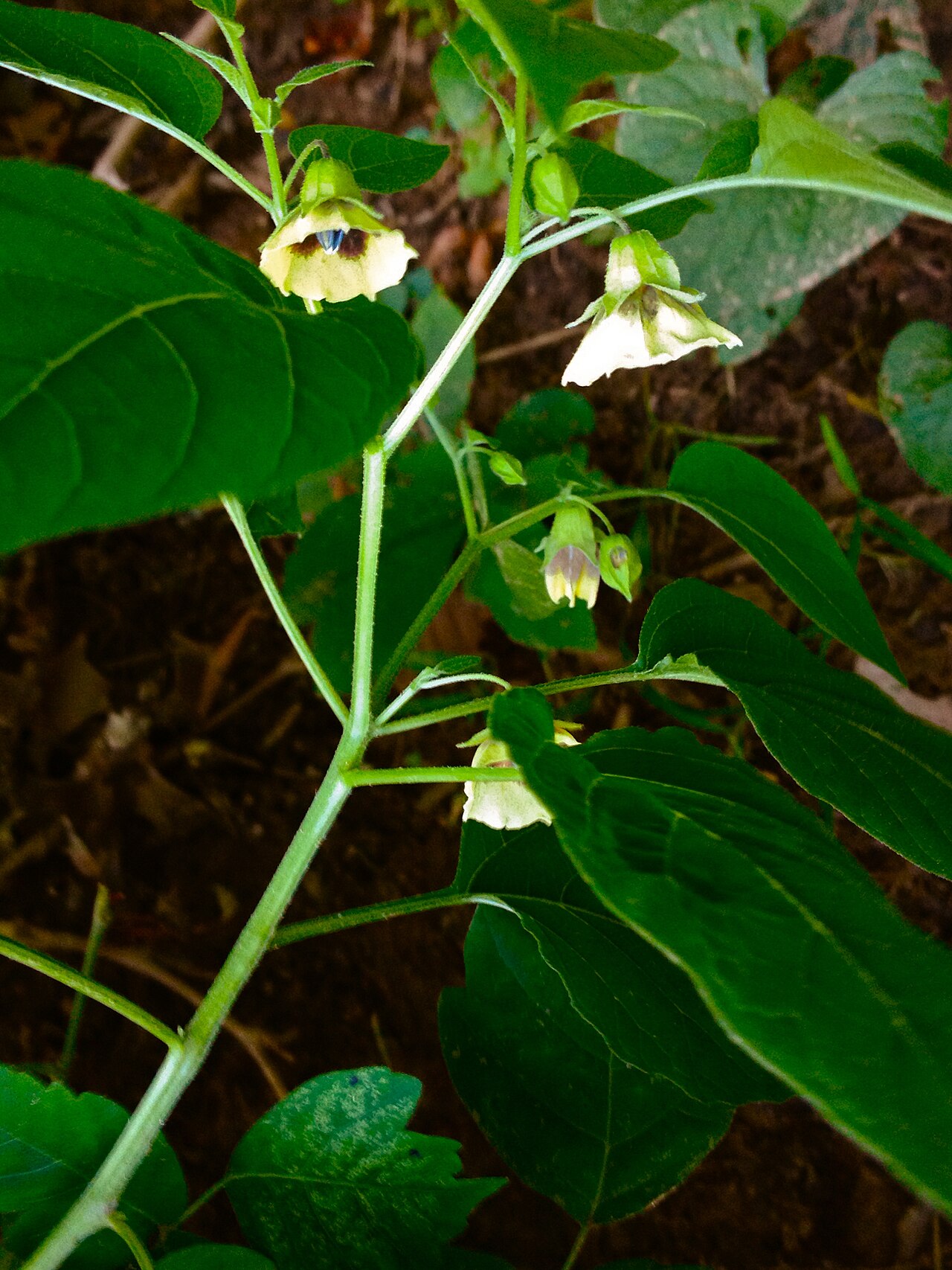
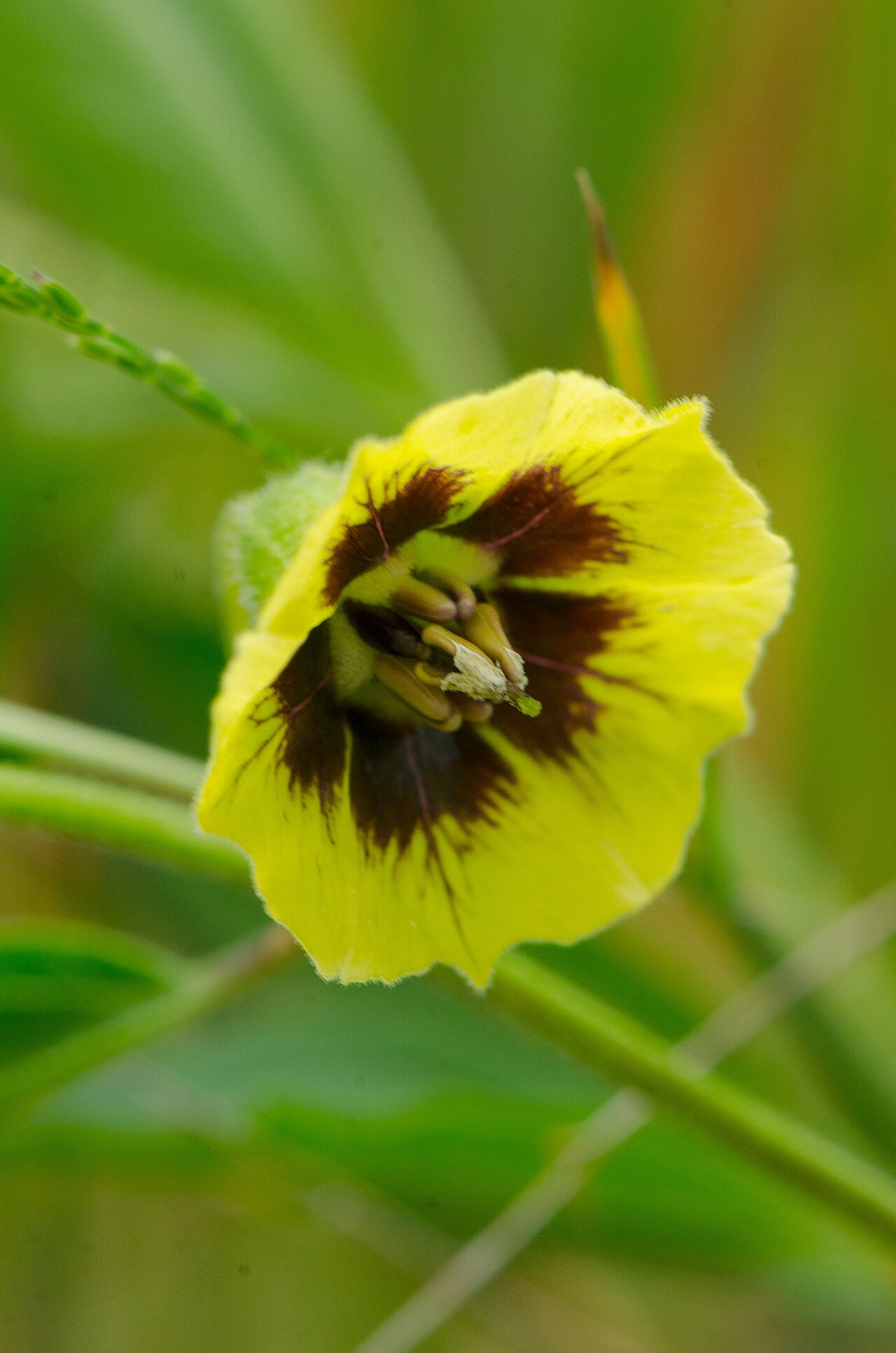
Physalis longifolia, known as Long-Leaved Groundcherry (USDA: longleaf groundcherry), is a native perennial of prairies, fields and open, disturbed ground across most of North America. It belongs to the nightshade family (Solanaceae), along with tomatoes, tomatillos and potatoes. Plants grow 1 to 3 feet tall from deep, creeping rhizomes, with lance-shaped leaves and nodding, bell-shaped, pale yellow flowers with a dark purplish-brown center, which bloom from early summer into fall.
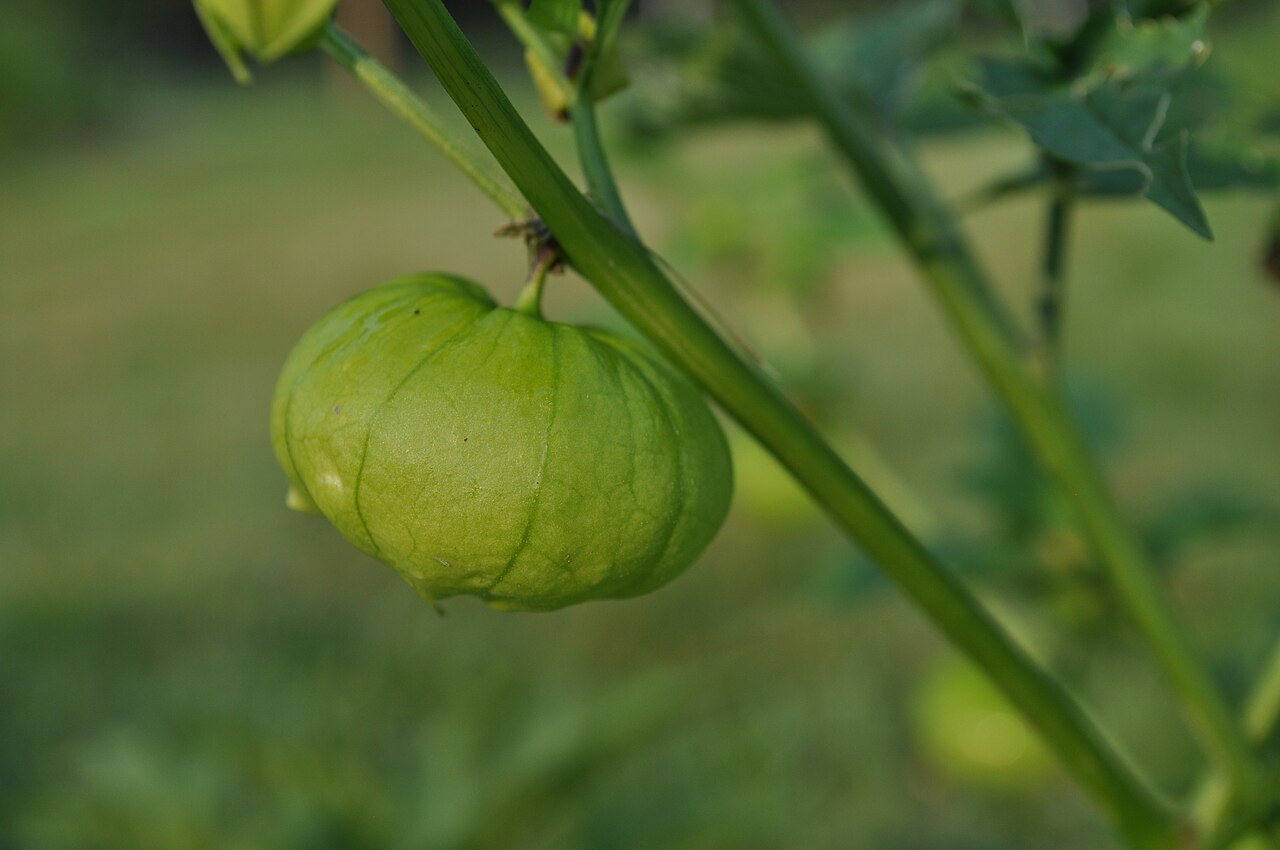
Like all groundcherries, its most distinctive feature is the fruit. After flowering, the green calyx swells into a papery, five-angled husk that hangs like a small Chinese lantern and encloses a round berry about 1/2 inch across. In the East and Midwest, the most common form is the nearly hairless smooth groundcherry, P. longifolia var. subglabrata, which some references treat as a separate species, P. subglabrata.
Safety note: the leaves, stems, husks and unripe green berries contain toxic alkaloids, like other members of the nightshade family, and can sicken people, pets and livestock. Only fully ripe berries, which turn yellow to orange and fall from the plant inside their dry husks, are edible. The plant is valuable to wildlife and supports specialist bees and moths, but it spreads readily and is best grown in a meadow, prairie or wildlife garden rather than a tidy flower bed.
Identification
Long-leaved groundcherry is recognized by its nodding yellow flowers with dark centers, lantern-like fruit husks and narrow, mostly smooth leaves. Separating it from other groundcherries requires looking at leaf shape and hairiness.
Stems & Roots
Plants grow 1 to 3 feet tall from deep, spreading rhizomes and often form colonies. Stems are upright and branched, often angled, and smooth or with sparse short hairs. Stems arise from the rhizome each spring, so plants appear in patches.
Leaves
Leaves are alternate, lance-shaped to narrowly oval, 2 to 4 inches long, tapering gradually to the leaf stalk, with smooth or wavy, sometimes shallowly toothed edges. In var. subglabrata they are often broader and nearly hairless. The narrow, mostly smooth leaves distinguish this species from the hairier, broader-leaved clammy groundcherry (P. heterophylla).
Flowers
From June to September, single flowers hang on short stalks from the leaf axils. Each flower is a broad, five-lobed bell about 1/2 to 3/4 inch across, pale greenish-yellow with five dark purplish-brown blotches in the throat. The five stamens have yellow or bluish-tinged anthers. The flowers open for only a day or two.
Fruit & Seeds
After pollination, the calyx enlarges into a five-angled, papery husk about 1 to 1 1/2 inches long that hangs downward and encloses a round, juicy berry about 1/2 inch across. The berry ripens from green to yellow or orange in late summer and fall and contains many small, flat seeds. Ripe fruits often drop to the ground inside their husks, which gives the plant the name groundcherry.
Look-alikes
Virginia groundcherry (P. virginiana) has densely hairy stems and leaves. Clammy groundcherry (P. heterophylla) has broad, heart-shaped, sticky-hairy leaves. Annual groundcherries such as cutleaf groundcherry (P. angulata) lack rhizomes and have smaller flowers, often without dark spots. Thickleaf groundcherry of the desert Southwest is a bushy plant with thick, grayish leaves. Horsenettle (Solanum carolinense) is prickly and has star-shaped white or lavender flowers and yellow berries without husks.
Safety
The leaves, stems, husks and unripe berries contain solanine-type glycoalkaloids and other compounds that are toxic to people, dogs, cats, horses and livestock, causing digestive upset and in larger amounts more serious illness. Livestock rarely eat it because of its bitter taste. Only the fully ripe, yellow to orange berries, removed from the husk, are considered edible, and they should be eaten only in modest amounts. Keep children and pets from eating green fruit or foliage.
Quick Facts
| Scientific Name | Physalis longifolia |
| Family | Solanaceae (nightshade family) |
| Plant Type | Herbaceous perennial; spreads by deep rhizomes |
| Mature Height | 1–3 ft |
| Mature Spread | 1–2 ft; forms colonies |
| Growth Rate | Moderate to fast |
| Sun Exposure | Full sun to part shade |
| Water Needs | Low to medium; drought tolerant |
| Soil Type | Sandy, loamy or clay soils; tolerates disturbed ground |
| Soil pH | About 6.0–8.0 (slightly acidic to alkaline) |
| Bloom Time | June–September |
| Flower Color | Pale greenish-yellow with a dark purplish-brown center |
| Fall Color | Husks turn tan and papery |
| Fruit | Yellow to orange berry in a papery, lantern-like husk |
| Deer Resistant | Yes; foliage is bitter and toxic |
| USDA Hardiness Zones | 3–9 |
Native Range
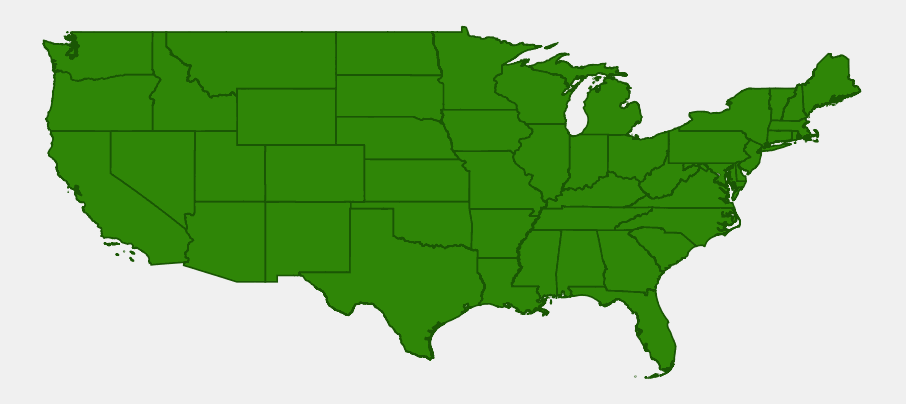
Long-leaved groundcherry has one of the widest ranges of any native groundcherry. USDA PLANTS records it as native in all 48 contiguous states and the District of Columbia, as well as in Ontario and Quebec. Its range extends from southern Canada south into Mexico, and from the Atlantic Coast to the Great Basin and the Pacific states.
It is most common in the Great Plains and the Midwest, from the Dakotas, Minnesota and Wisconsin south to Kansas, Oklahoma and Texas, where it is a familiar plant of prairies, pastures, roadsides and field edges. The smooth eastern form, var. subglabrata, is widespread from the Midwest to the Atlantic states, while var. longifolia is more common in the Great Plains and the West. In the Northeast, including Maine, New Hampshire and Vermont, Go Botany maps it as native but mostly in fields and disturbed habitats. West of the Rockies it is local and scattered, with outlying records in California, Nevada, Oregon and Washington, mainly east of the Cascades.
Habitats include tallgrass and mixed-grass prairies, sand prairies, savannas, pastures, old fields, cultivated fields, field margins, roadsides, railroad embankments, floodplains and open woods. It thrives on disturbed soil and often persists in cropland, where farmers may consider it a weed.
📋 Regional plant lists featuring Long-Leaved Groundcherry: New York, Pennsylvania & Northern New Jersey · Idaho, Eastern Oregon & Eastern Washington · Ohio & Indiana · Montana & Wyoming · Michigan, Wisconsin & Eastern Minnesota · Kentucky & Tennessee · Nebraska, Kansas & Eastern Colorado · Utah & Western Colorado · Connecticut, Massachusetts & Rhode Island · New Hampshire, Maine & Vermont · Maryland, Virginia & West Virginia · Delaware, Southern New Jersey & Long Island · Arizona & New Mexico · Illinois, Iowa & Missouri · Alabama, Georgia & Mississippi · North & South Florida · North & South Carolina · Arkansas, Louisiana, Eastern Oklahoma & Eastern Texas · South & West Texas · North Dakota, South Dakota & Western Minnesota · California & Nevada
Growing & Care Guide
Long-leaved groundcherry is very easy to grow, almost too easy in a small garden. Its deep rhizomes let it survive drought and spread into neighboring plants. Use it in meadows, prairie plantings, wildlife gardens or areas where it can roam. Keep the safety note in mind if children or pets use the garden.
Light
Full sun to part shade. It flowers and fruits best in full sun.
Soil & Water
It grows in nearly any well-drained soil: sand, loam or clay, including poor and disturbed soils, and it tolerates neutral to alkaline conditions. It is drought tolerant once established thanks to its deep rhizomes. Avoid constantly wet soil.
Planting Tips
Plant in spring, 18 to 24 inches apart, in a meadow, prairie planting, hedgerow edge or wildlife garden where its spreading habit is welcome. Avoid planting it in vegetable beds or tight perennial borders, where it can be hard to remove. Combine it with native grasses and sturdy prairie wildflowers that can hold their own.
Pruning & Maintenance
Little care is needed. Cut back the stems after frost or in early spring. To limit spread, pull unwanted shoots when they first appear in spring, or grow it in an area bordered by lawn or paving. Wear gloves when handling it if you have sensitive skin.
Propagation
Grow it from seed extracted from fully ripe berries, washed and dried, and sown in spring after the soil warms; a short cold stratification can improve germination. It can also be propagated from pieces of rhizome dug in early spring.
Landscape Uses
- Prairie and meadow plantings: a native summer bloomer for sunny, open sites
- Wildlife gardens: fruits for birds and mammals; host for specialist insects
- Specialist bee support: pollen source for groundcherry-specialist bees
- Erosion control: deep rhizomes on dry slopes and disturbed ground
- Habitat restoration: a pioneer of disturbed prairie and field soils
Wildlife & Ecological Value
Long-leaved groundcherry is an important food plant for several specialist insects and for wildlife that eat its fruit.
For Pollinators
The nodding flowers are pollinated mainly by bees. They are a key pollen source for the groundcherry specialist bee Colletes latitarsis, a cellophane bee that collects pollen almost entirely from Physalis flowers, and they are also visited by bumble bees, sweat bees and other native bees.
For Birds
Ground-feeding birds such as wild turkeys and quail, along with some songbirds, eat the ripe fruits and seeds, especially in fall and winter when they fall to the ground.
For Mammals
Small mammals, including mice, ground squirrels and skunks, eat the fallen ripe fruits and help spread the seeds. Deer and livestock usually avoid the bitter foliage.
Ecosystem Role
Groundcherries are host plants for specialist insects, including the caterpillars of the groundcherry moth (Heliothis subflexa), which feed inside the husks on the developing berries, and the three-lined potato beetle. These insects in turn feed birds and predatory insects. Its deep rhizomes help hold soil on disturbed ground, and it is often one of the first native perennials to recolonize disturbed prairie.
Cultural & Historical Uses
The genus name Physalis comes from the Greek word for “bladder” or “bellows,” describing the inflated fruit husk. The species name longifolia means “long-leaved.” The common name groundcherry refers to the small, round fruits that fall to the ground when ripe.
Native American peoples in many regions gathered ripe groundcherries. Go Botany notes that the Zuni boiled the berries and mashed them with onions, chili and coriander to make a salsa, and other peoples ate them fresh, cooked or dried. Cultivated relatives, such as the tomatillo (P. philadelphica) and cape gooseberry (P. peruviana), are grown for their fruit today.
Because it spreads by deep rhizomes and persists in cropland, long-leaved groundcherry is often treated as an agricultural weed, and it can host some pests and diseases of potatoes and tomatoes. At the same time, ecologists value it as a native plant of prairies and as a host for specialist bees and moths, a reminder that whether a plant is a “weed” depends on where it grows.
Frequently Asked Questions
Are long-leaved groundcherry berries edible?
Only when fully ripe. Ripe berries turn yellow to orange and usually fall from the plant inside their dry, papery husks. Unripe green berries, husks, leaves and stems are toxic and should never be eaten.
Is long-leaved groundcherry poisonous to pets and livestock?
Yes. The foliage and unripe fruit contain toxic glycoalkaloids, like other nightshade-family plants. Animals usually avoid the bitter plants, but keep pets and livestock from eating them.
Is smooth groundcherry the same plant?
Smooth groundcherry is usually treated as a variety, Physalis longifolia var. subglabrata, and is the common form in the East and Midwest. Some references treat it as a separate species.
Will long-leaved groundcherry spread in my garden?
Yes. It spreads by deep rhizomes and can be hard to remove once established. Plant it in a meadow, prairie or wildlife area where it has room, not in a vegetable bed.
What insects use long-leaved groundcherry?
It supports specialist groundcherry bees (Colletes latitarsis), groundcherry moth caterpillars that feed inside the husks, and other insects, along with general pollinators such as bumble bees.

Looking for a nursery that carries Long-Leaved Groundcherry?
Browse our native plant nursery directory: Alabama, Arizona & Arkansas · California · Colorado, Connecticut, Delaware, Florida & Georgia · Idaho, Illinois, Indiana, Iowa & Kansas · Kentucky, Louisiana, Maine, Maryland, Massachusetts, Michigan, Minnesota, Mississippi, Missouri & Montana · Nebraska, Nevada, New Hampshire, New Jersey, New Mexico, New York, North Carolina, North Dakota, Ohio & Oklahoma · Oregon · Pennsylvania, Rhode Island, South Carolina, South Dakota, Tennessee, Texas, Utah, Vermont & Virginia · Washington · West Virginia, Wisconsin & Wyoming