Columbine (Aquilegia canadensis)
Aquilegia canadensis, commonly known as Columbine, Wild Columbine, or Eastern Red Columbine, is one of North America’s most beloved native wildflowers, renowned for its distinctive nodding flowers with their unique red and yellow coloration and elegant spurred petals. This member of the Ranunculaceae (Buttercup) family has captured the hearts of gardeners and naturalists for generations with its graceful, delicate appearance and remarkable ability to attract hummingbirds, making it an essential component of any wildlife-friendly garden.
The intricate flowers of Wild Columbine are architectural marvels — each bloom features five red outer petals (sepals) that curve backward, revealing five yellow inner petals with distinctive hollow spurs that contain nectar specifically designed to attract long-tongued pollinators like hummingbirds and sphinx moths. The flowers dance on slender stems above delicate, blue-green compound leaves that remain attractive throughout the growing season, creating a plant that is as elegant in foliage as it is spectacular in bloom.
Wild Columbine thrives in the dappled shade of woodland edges, rocky slopes, and naturalized areas, where it often self-seeds to create charming colonies. Its adaptability to various light conditions, from partial sun to shade, combined with its tolerance for poor, rocky soils, makes it an excellent choice for challenging garden sites where many other perennials struggle. The plant’s relatively short but intense blooming period in late spring to early summer provides crucial nectar resources just as hummingbirds are establishing territories and beginning their breeding cycles.
Identification
Wild Columbine is a herbaceous perennial that typically grows 1 to 2 feet tall and about 1 foot wide, forming clumps from a short rootstock. The plant has a delicate, airy appearance that belies its toughness and adaptability.
Leaves
The leaves are compound, typically divided into three leaflets (trifoliate), with each leaflet further divided into three lobes, creating a distinctive “three-times-three” pattern. The leaflets are blue-green to gray-green in color with a somewhat waxy appearance that helps them retain moisture. Each leaflet is rounded with shallow, scalloped lobes rather than sharp teeth.
The basal leaves arise directly from the ground on long, slender petioles, while smaller stem leaves are present on the flowering stalks. The foliage has an elegant, fern-like quality that remains attractive throughout the growing season, even after the flowers have faded.
Flowers
The flowers are the plant’s most distinctive and celebrated feature. They are typically 1 to 2 inches long and hang gracefully from slender, branching stems, creating a nodding or pendant appearance. Each flower consists of five red sepals that curve backward and five yellow petals that form hollow spurs extending backward from the flower.
The spurs are typically ½ to ¾ inch long and contain nectar at their tips, accessible only to long-tongued pollinators. The center of each flower contains numerous yellow stamens and pistils that extend beyond the petals, creating an attractive contrast with the red and yellow flower parts. The flowers typically bloom from late April through June, depending on location and weather conditions.
Fruit & Seeds
After flowering, Wild Columbine produces distinctive dry fruits called follicles — elongated, pod-like structures that split open along one side when mature. Each flower typically produces 5 follicles arranged in a star-like pattern. The follicles contain numerous small, black seeds that are dispersed when the pods split open and the seeds shake out as the plant moves in the wind.
The seeds require a period of cold stratification to germinate, which they receive naturally during winter. This adaptation ensures that seeds germinate in spring when conditions are favorable for establishment.
Quick Facts
| Scientific Name | Aquilegia canadensis |
| Family | Ranunculaceae (Buttercup) |
| Plant Type | Herbaceous Perennial |
| Mature Height | 1–2 ft |
| Sun Exposure | Part Shade to Full Shade |
| Water Needs | Low to Moderate |
| Bloom Time | April – June |
| Flower Color | Red and yellow |
| USDA Hardiness Zones | 3 – 8 |
Native Range
Wild Columbine has one of the broadest native distributions of any North American wildflower, ranging from southeastern Canada south to northern Florida and west to the Great Plains. The species occurs naturally from Nova Scotia and New Brunswick west to Saskatchewan and Minnesota, and south through the Appalachian Mountains to northern Georgia and Alabama. Western populations extend through the Great Plains states to eastern Colorado, Kansas, and eastern Texas.
Throughout this extensive range, Wild Columbine typically inhabits rocky woodlands, forest edges, cliff faces, and areas with thin, well-drained soils. The plant shows a particular affinity for limestone and other calcareous soils, though it adapts to a variety of soil types. It is commonly found growing in the cracks of rock outcrops, on talus slopes, and in the thin soils of rocky woodlands where competition from other plants is reduced.
The species demonstrates remarkable ecological flexibility, occurring from near sea level to elevations of over 6,000 feet in the Appalachian Mountains. This broad elevational tolerance, combined with its wide geographic range, reflects Wild Columbine’s ability to adapt to diverse climatic conditions and habitat types.
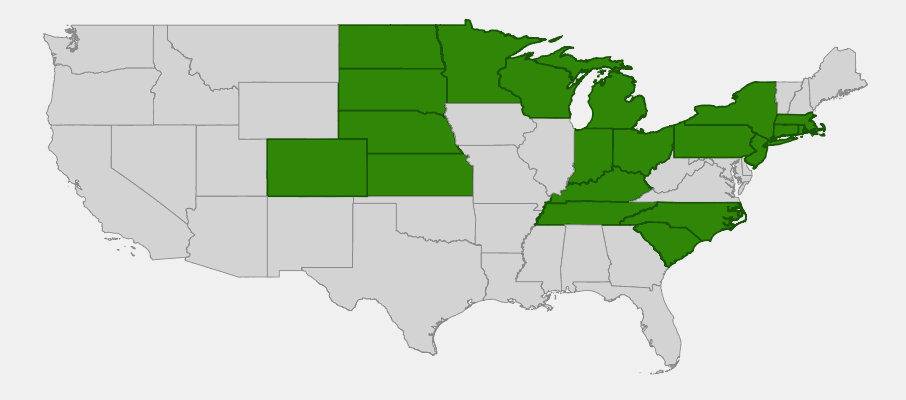
📋 Regional plant lists featuring Wild Columbine: North Carolina & South Carolina
Growing & Care Guide
Wild Columbine is generally easy to grow and maintain, though it has some specific preferences that, when met, result in vigorous plants that self-seed readily to create naturalized colonies.
Light
Wild Columbine is quite adaptable to different light conditions, thriving in partial shade to full shade. While it can tolerate morning sun, it generally prefers protection from hot afternoon sun, especially in southern regions. In northern areas, it can handle more sun, but in all regions it performs well in the dappled shade of woodland edges or beneath deciduous trees.
The plant’s natural habitat of rocky woodlands and forest edges provides the perfect model — bright, indirect light with some protection from the most intense midday sun. Too much shade can result in fewer flowers and weak, spindly growth.
Soil & Water
Wild Columbine prefers well-drained, rocky or sandy soils and is particularly at home in thin soils over rock where many other plants struggle. The plant has a natural affinity for limestone and alkaline soils but adapts to neutral and slightly acidic conditions as well. Heavy, clay soils that retain water are generally unsuitable, as the plant is prone to crown rot in constantly moist conditions.
Once established, Wild Columbine is quite drought tolerant, making it excellent for xeriscaping and low-water gardens. However, some moisture during the spring growing and flowering period helps ensure robust growth and abundant blooms. The key is good drainage — the plant should never sit in waterlogged soil.
Planting Tips
Wild Columbine can be grown from seed or planted as container-grown specimens. Seeds should be sown in fall for natural cold stratification, or can be cold-stratified in the refrigerator for 4-6 weeks before spring sowing. The plant often self-seeds readily in suitable conditions, creating naturalized colonies.
When planting container-grown specimens, choose a location with good drainage and protection from hot afternoon sun. The plant’s taproot makes it somewhat difficult to transplant once established, so choose the location carefully. Space plants about 12-18 inches apart to allow for natural spreading.
Pruning & Maintenance
Wild Columbine requires minimal maintenance once established. Allow the seed pods to develop and disperse if you want the plant to self-seed. The foliage typically remains attractive throughout the growing season and can be left standing through winter to provide structure and interest.
In early spring, remove any dead or damaged foliage to make way for new growth. The plant may go dormant during extended dry periods in summer, which is normal — new growth will appear when conditions improve.
Landscape Uses
Wild Columbine’s delicate beauty and ecological value make it suitable for many specialized garden applications:
- Woodland gardens — perfect for naturalistic forest understory plantings
- Rock gardens — thrives in crevices and thin soils over rock
- Native plant gardens — authentic North American wildflower
- Hummingbird gardens — essential nectar source for early-season hummingbirds
- Shade borders — provides color and interest in challenging locations
- Naturalized areas — self-seeds to create colonies
- Pollinator gardens — supports specialized native pollinators
Wildlife & Ecological Value
Wild Columbine is exceptionally valuable for wildlife, particularly specialized pollinators that have co-evolved with its unique flower structure.
For Hummingbirds
Wild Columbine is perhaps most famous for its relationship with hummingbirds, particularly Ruby-throated Hummingbirds in eastern regions. The red color and tubular spurs are specifically adapted to attract hummingbirds, and the plant blooms just as these tiny birds are establishing territories and beginning their breeding cycle. The nectar spurs are the perfect length for hummingbird bills, and the flowers are positioned to dust the birds’ heads with pollen as they feed.
For Native Bees & Other Pollinators
Several species of native bees have evolved specifically to pollinate columbines, including certain longhorn bees that can access the nectar in the spurs. Bumblebees often “rob” nectar by biting holes in the spurs, bypassing the plant’s pollination mechanism but still providing some pollination services. Sphinx moths and other long-tongued moths also visit the flowers, particularly in the evening.
For Butterflies
While Wild Columbine is not a host plant for butterfly larvae, the flowers are visited by various butterfly species that can access the nectar. However, the specialized flower structure limits which butterflies can effectively pollinate the plant.
For Other Wildlife
The seeds of Wild Columbine are consumed by various small birds, particularly finches and sparrows. Deer and rabbits generally avoid the plant due to toxic compounds in the foliage, making it valuable for gardens where browsing pressure is high.
Ecosystem Role
Wild Columbine serves as an important early-season nectar source in woodland ecosystems, bridging the gap between early spring ephemerals and later-blooming woodland plants. Its ability to thrive in thin, rocky soils makes it valuable for stabilizing erosion-prone areas and providing biodiversity in challenging habitats.
Cultural & Historical Uses
Wild Columbine has played significant roles in both Native American and European-American traditions, valued for its beauty, medicinal properties, and cultural symbolism. Many Native American tribes used Wild Columbine for medicinal purposes, though it should be noted that the plant contains potentially toxic alkaloids and should never be used medicinally without expert guidance.
The Cherokee used small amounts of the root as a treatment for heart trouble, kidney problems, and as an aid in childbirth, while the Iroquois used it for kidney and bladder ailments. The flowers were sometimes used in love potions and charms, reflecting the plant’s association with romance and attraction. However, these traditional uses carry significant risks, as the plant contains compounds that can be toxic in larger amounts.
European colonists were immediately enchanted by Wild Columbine, often sending seeds and plants back to European gardens where the species became a prized addition to ornamental collections. The plant’s resemblance to European columbines made it familiar yet distinctly American, leading to its adoption as one of the first North American wildflowers to be cultivated abroad.
The name “columbine” derives from the Latin “columba,” meaning dove, as the spurred flowers were thought to resemble a cluster of doves drinking from a fountain. The spurs themselves were sometimes called “dove’s feet,” reinforcing this poetic association. The scientific name Aquilegia comes from the Latin “aquila,” meaning eagle, referring to the claw-like spurs.
Wild Columbine has been adopted as a state flower by Colorado (though they primarily celebrate the blue Rocky Mountain Columbine, Aquilegia caerulea) and has appeared in countless works of American art, literature, and folklore. The plant’s delicate beauty and association with wilderness has made it a symbol of American natural heritage.
In Victorian flower language, columbines symbolized folly or foolishness, but in American tradition they came to represent natural grace and wild beauty. The plant’s ability to thrive in rocky, inhospitable places has also made it a symbol of perseverance and adaptation — qualities that resonated with American frontier culture.
Frequently Asked Questions
Is Wild Columbine poisonous?
Yes, Wild Columbine contains alkaloids that can be toxic to humans and animals if consumed in quantity. The seeds are particularly concentrated with these compounds. While historically used in very small amounts for medicinal purposes by knowledgeable practitioners, the plant should not be consumed and should be kept away from children and pets.
Why is my Wild Columbine short-lived?
Wild Columbine is typically a short-lived perennial, often living only 2-4 years in garden conditions. However, it readily self-seeds in suitable conditions, creating the appearance of a longer-lived colony. The plant’s strategy is to reproduce frequently rather than persist as long-lived individuals.
Will Wild Columbine attract hummingbirds to my garden?
Absolutely! Wild Columbine is one of the most reliable hummingbird attractors, particularly valuable because it blooms early in the season when hummingbirds are establishing territories. Plant several specimens for the greatest impact, and consider combining with other native hummingbird plants for a continuous nectar supply.
Can I grow Wild Columbine in full sun?
While Wild Columbine can tolerate some morning sun, it generally performs better with protection from hot afternoon sun, especially in southern regions. Full sun can cause stress, reduce flowering, and shorten the plant’s lifespan. Partial shade or dappled light is ideal for most situations.
How do I collect and plant Wild Columbine seeds?
Seeds ripen in summer and can be collected when the pods begin to split open. Sow seeds immediately in fall for natural cold stratification, or store them dry and cold-stratify in the refrigerator for 4-6 weeks before spring sowing. The plant often self-seeds readily, so you may not need to collect seeds if you allow natural reproduction.

Looking for a nursery that carries Wild Columbine?
Browse our native plant nursery directory: North Carolina · South Carolina