
Collared Annual Lupine (Lupinus truncatus)
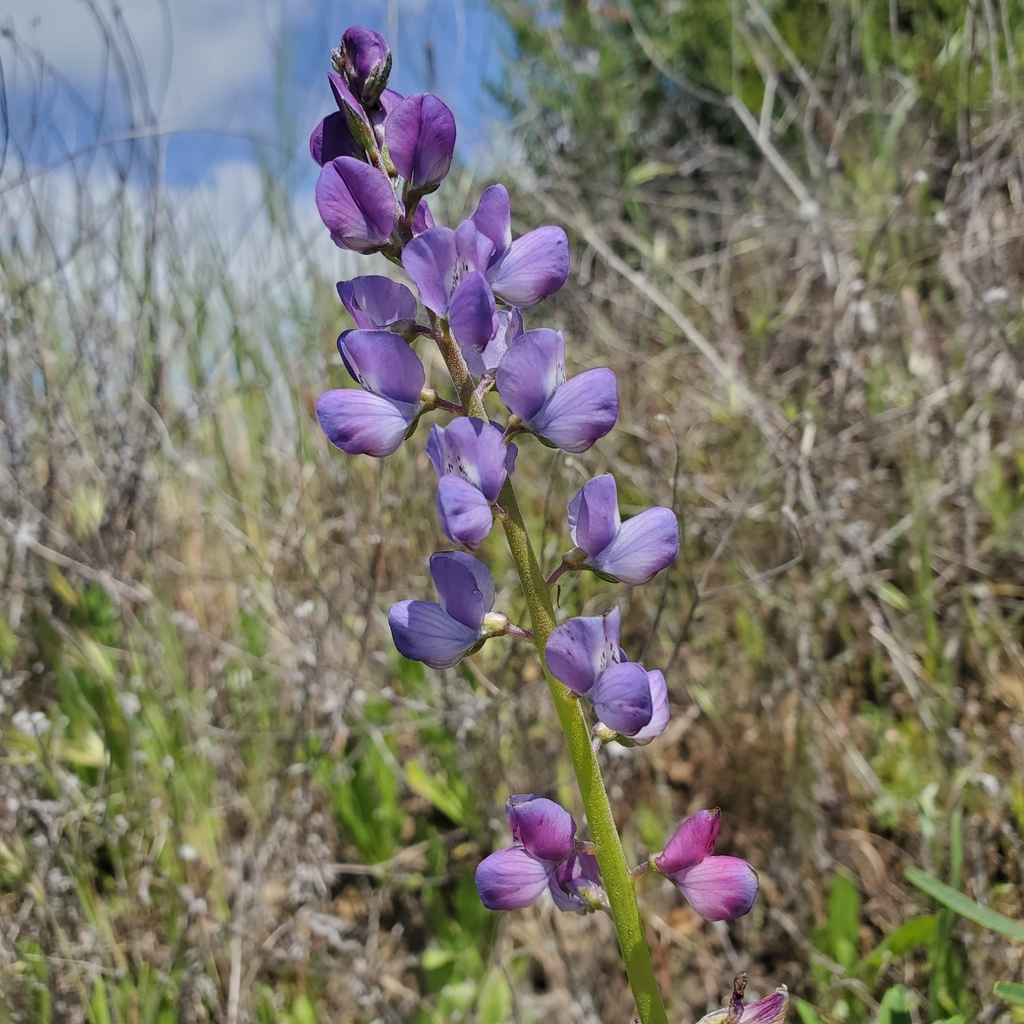
Lupinus truncatus, known as Collared Annual Lupine (also blunt-leaved lupine or truncate-leaved lupine), is a slender spring annual of the hills and canyons of southern California and northern Baja California. It belongs to the legume or pea family (Fabaceae). Its narrow leaflets look as if their tips were snipped off with scissors, a feature that makes it easy to recognize among the many lupines of California.
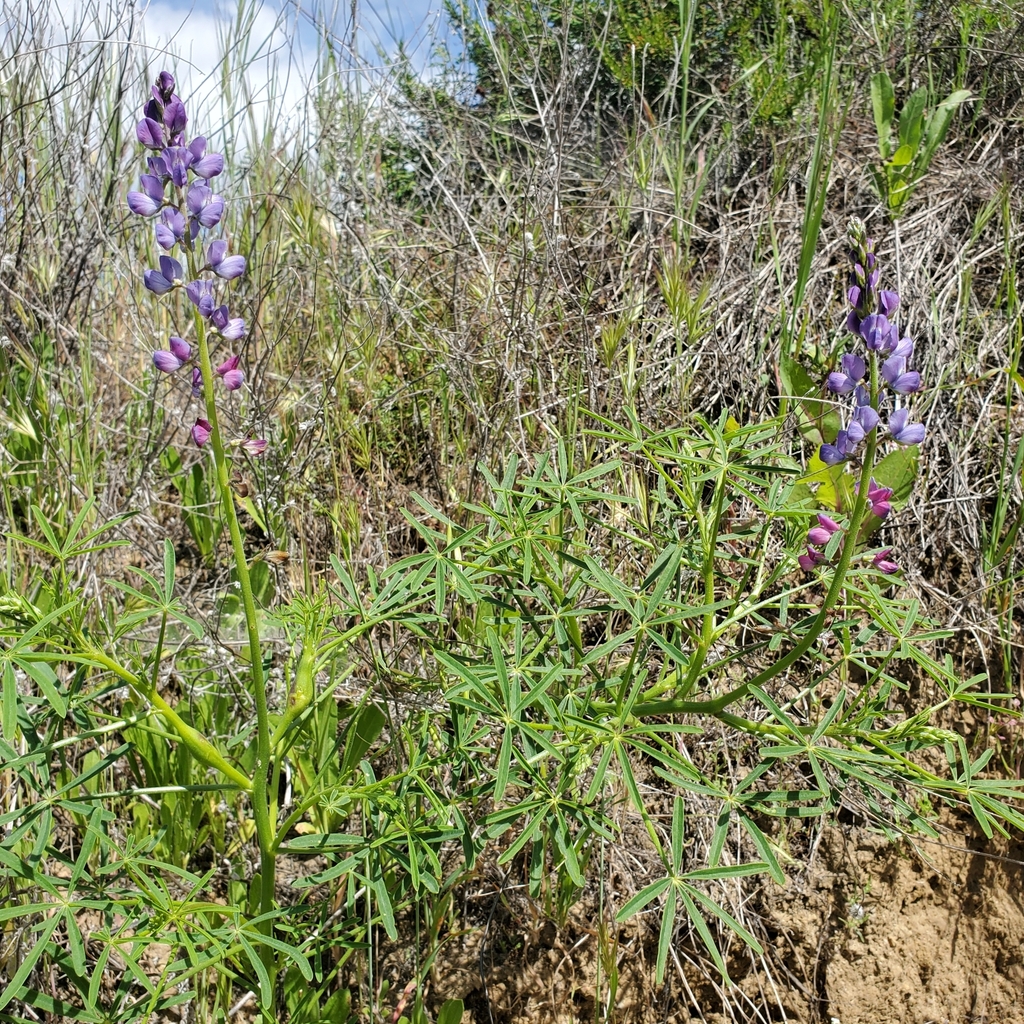
It grows 8 inches to about 3 feet tall, with an open spike of small, pea-like flowers that open deep blue to blue-purple and age to magenta or reddish-purple. It blooms from about February to May in coastal sage scrub, chaparral and grassland, and it is often especially abundant on open ground in the first years after a fire. Like other lupines, it fixes nitrogen with the help of root bacteria and helps rebuild poor or burned soils.
Safety note: lupines contain bitter alkaloids, and the seeds and pods of many species are toxic to people and livestock if eaten. Do not eat any part of this plant, and keep children and pets from chewing the pods. Collared annual lupine is easy to grow from seed in sunny, well-drained gardens within its native range.
Identification
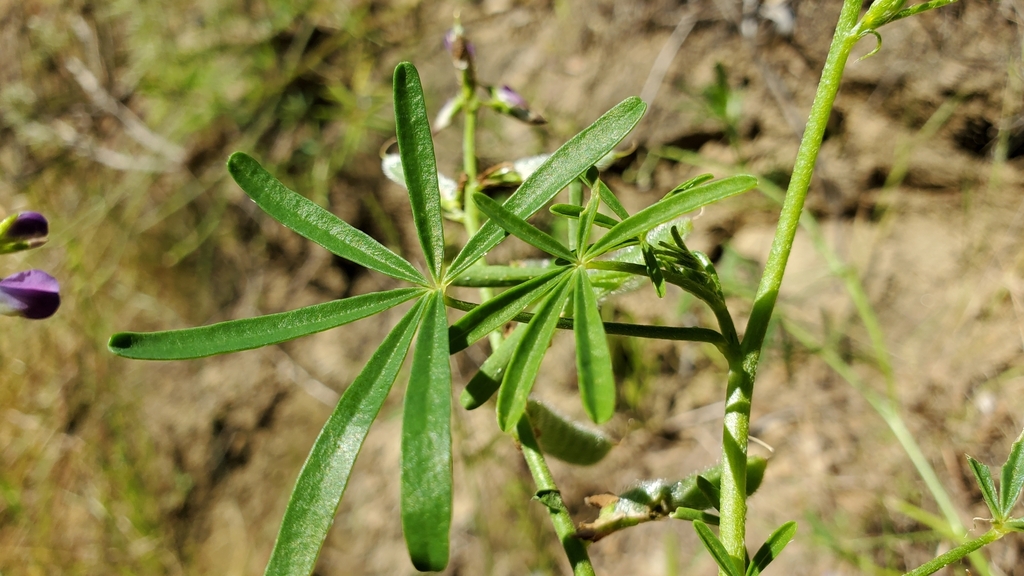
Look for a slender annual lupine with palmate leaves of 5 to 8 narrow leaflets whose tips are squared off and slightly toothed, and loose spikes of small blue-purple to magenta pea flowers in spring.
Stems & Habit
Collared annual lupine is an annual with a single upright stem or a few branches, usually 8 to 40 inches (20 to 100 cm) tall. The stems are slender, green and smooth or sparsely hairy. In dry years and poor soil it may be only a few inches tall with a short spike; after fire and in wet years it can grow into a tall, branched plant.
Leaves
The leaves are palmately compound, on long stalks, with 5 to 8 narrow, linear leaflets about 3/4 to 1 1/2 inches (2 to 4 cm) long. Each leaflet ends abruptly in a squared-off (truncate) tip with a few small teeth, rather than tapering to a point. The leaves are mostly smooth and green.
Flowers
The flowers are small for a lupine, about 1/2 inch (10 to 13 mm) long, in loose, open racemes at the stem tips, usually scattered or loosely whorled. They have the typical pea-flower shape, with an upright banner, two wings and a pointed keel. They open deep blue to blue-purple and turn magenta or reddish-purple as they age, so a spike often shows both colors. Bloom time is about February to May.
Fruit & Seeds
The fruit is a narrow pod about 1 1/4 to 2 inches (3 to 5 cm) long, holding several seeds. When dry, the pods twist open and throw the seeds a short distance. The plant dies after setting seed in late spring.
Look-alikes
Miniature Lupine (Lupinus bicolor) is a smaller annual with blue and white flowers and pointed leaflets. Arroyo Lupine (L. succulentus) is a stout, fleshy annual with broad leaflets and larger, deep blue flowers. Sky lupine (L. nanus) has blue flowers with a white banner spot and pointed leaflets. Only collared annual lupine has narrow leaflets with squared-off, toothed tips.
Safety & Toxicity
Lupines contain quinolizidine alkaloids, and the seeds and pods of many species are toxic. Eating them can cause poisoning in people, and some lupines cause poisoning and birth defects in livestock. Do not eat any part of collared annual lupine, and keep children and pets from chewing the pods or seeds. Wash your hands after collecting seed. The species is common in its range and is not of conservation concern.
Quick Facts
| Scientific Name | Lupinus truncatus |
| Family | Fabaceae (legume or pea family) |
| Plant Type | Annual wildflower |
| Mature Height | 8–40 in |
| Mature Spread | 6–18 in |
| Growth Rate | Fast |
| Sun Exposure | Full sun |
| Water Needs | Low; relies on winter rain |
| Soil Type | Well-drained sandy, gravelly or clay-loam soils; tolerates poor soil |
| Soil pH | About 6.0–8.0 |
| Bloom Time | February–May |
| Flower Color | Blue to blue-purple, aging magenta to reddish-purple |
| Fall Color | None; annual, dies after seeding |
| Fruit | Narrow pod 1 1/4–2 in long |
| Deer Resistant | Generally; bitter alkaloids discourage browsing |
| USDA Hardiness Zones | Annual; grows where zones 9–11 occur |
Native Range
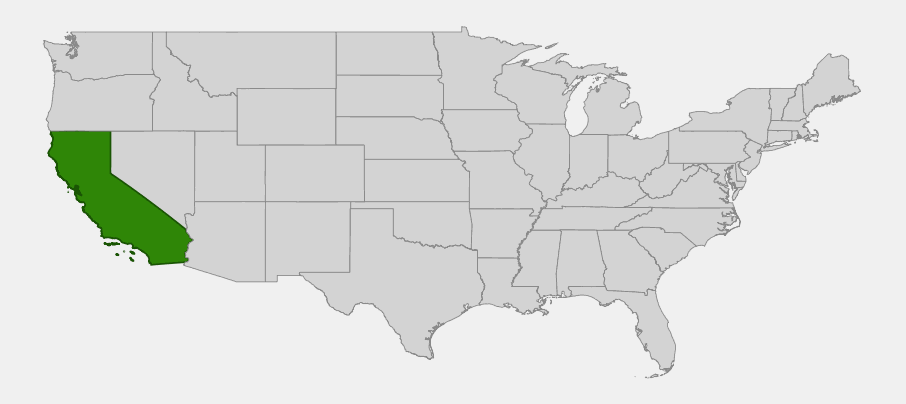
Collared annual lupine is native to southern California and northern Baja California, Mexico. USDA PLANTS lists it as native only in California among U.S. states. Its range extends from San Luis Obispo County south through the coastal mountains and foothills of Santa Barbara, Ventura, Los Angeles, Orange, Riverside and San Diego counties, and onto some of the Channel Islands, including San Clemente Island.
It is most common in the foothills and canyons of the Santa Monica, San Gabriel and Santa Ana Mountains and the hills of San Diego County, from near the coast to the inland valleys. It is a familiar spring wildflower in parks and open spaces around Los Angeles, Orange County and San Diego.
It grows in open, sunny places in coastal sage scrub, chaparral, oak woodland and grassland, especially on disturbed ground, road cuts, trail edges and recently burned slopes. It usually grows below about 4,000 feet. Like other annual lupines, its numbers rise and fall with winter rain and fire.
📋 Regional plant lists featuring Collared Annual Lupine: California & Nevada
Growing & Care Guide
Collared annual lupine is an easy wildflower to grow from seed in sunny, dry gardens in southern California. Sow it once and it may reseed in open ground for years.
Light
Full sun. In shade it becomes thin and flowers poorly.
Soil & Water
It grows in most well-drained soils, including poor, rocky or clay-loam soils, as long as water does not stand. Do not fertilize; like other lupines it makes its own nitrogen. Winter rain is usually enough. In a dry winter, water every two to three weeks until it starts blooming.
Planting Tips
Sow seed directly where you want it to grow in fall or early winter, before or with the first rains. Lupines have deep taproots and do not transplant well. Mix it with other native annuals such as California poppy, Miniature Lupine, Desert Chia and goldfields for a spring meadow.
Pruning & Maintenance
No pruning is needed. Leave plants until the pods have opened and dropped their seed, then pull or cut the dry stems. Keep weedy annual grasses in check in winter so seedlings are not crowded out.
Propagation
Grow from seed. Lupine seeds have a hard coat; nick the seed coat with a file or soak the seeds in hot (not boiling) water overnight before sowing to speed germination. Seeds sown without treatment will still germinate over time, sometimes in later years. Wear gloves when handling seed and keep it away from children and pets.
Landscape Uses
- Wildflower meadows: a colorful spring annual in mixed native seed sowings
- Pollinator gardens: bumblebees and other bees visit the flowers
- Post-fire and slope restoration: fast-growing, nitrogen-fixing annual for burned or disturbed ground
- Habitat gardens: fits coastal sage scrub and chaparral plantings
- Hillside erosion control: quick cover with deep taproots on open slopes
Wildlife & Ecological Value
Collared annual lupine is an important spring plant in southern California scrub and chaparral, especially after fire.
For Pollinators
Bumblebees, carpenter bees, mason bees and other bees visit the flowers, pressing down the keel to reach the pollen. The change in flower color from blue to magenta signals to bees which flowers have already been visited and have less reward. Lupines are also host plants for the caterpillars of several butterflies, including some blues and duskywings.
For Birds
Quail, doves and some sparrows eat lupine seeds from the ground. Insect-eating birds hunt among the plants for the caterpillars and other insects they support.
For Mammals
Rodents gather and cache the seeds. Deer and rabbits mostly avoid the bitter foliage, though they may nibble young plants.
Ecosystem Role
As a nitrogen-fixing annual, collared annual lupine adds nitrogen to soil, which benefits other plants. It is one of the native wildflowers that quickly covers slopes after chaparral fires, holding soil and feeding pollinators while shrubs resprout and regrow.
Cultural & Historical Uses
The genus name Lupinus comes from the Latin lupus, “wolf,” from an old belief that lupines robbed the soil of nutrients. In fact, lupines enrich the soil by fixing nitrogen. The species name truncatus means “cut off,” for the blunt, squared-off tips of the leaflets.
California is home to dozens of lupine species, from tiny annuals to tall shrubs. In southern California, collared annual lupine is one of the most widespread annual species, and its blue and magenta spikes are a sign of spring along trails in the Santa Monica Mountains and the hills of Orange and San Diego counties.
Related lupines on this site include Arroyo Lupine, Miniature Lupine, Silver Lupine and Texas Bluebonnet.
Frequently Asked Questions
How do I recognize collared annual lupine?
Look at the leaves. Its narrow leaflets end in a squared-off, slightly toothed tip, unlike the pointed or rounded leaflets of other annual lupines. The small flowers open blue and turn magenta with age.
Is collared annual lupine poisonous?
Yes, like many lupines it contains alkaloids, and the seeds and pods can be toxic if eaten. Do not eat any part of the plant, and keep children and pets from chewing it.
Why do the flowers change color?
The flowers open blue to blue-purple and turn magenta or reddish-purple after they are pollinated or as they age. The change helps bees find the fresh flowers that still have pollen.
Does it come back every year?
It is an annual and dies after setting seed, but it often reseeds itself in open, sunny ground, so new plants appear after winter rains.
How do I grow collared annual lupine?
Nick or soak the seeds and sow them directly in sunny, well-drained soil in fall or early winter. Do not fertilize, and let the plants drop seed in late spring.

Looking for a nursery that carries Collared Annual Lupine?
Browse our native plant nursery directory: California
