
Subalpine Larkspur (Delphinium barbeyi)
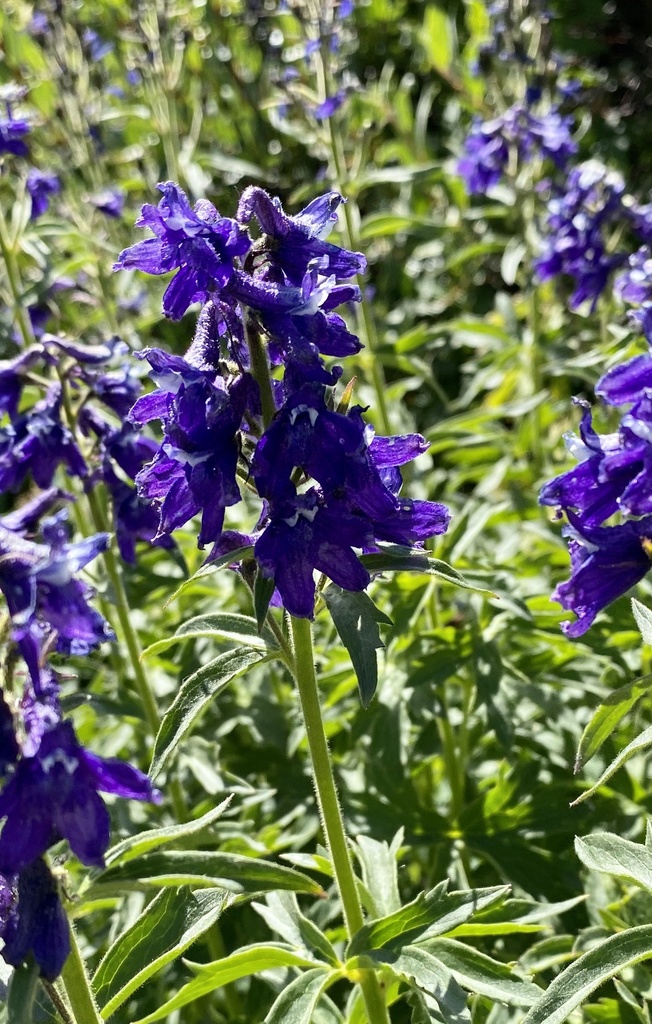
Delphinium barbeyi, the Subalpine Larkspur, also called tall larkspur or Barbey’s larkspur, is one of the showiest wildflowers of the southern Rocky Mountains. In July and August, its leafy stems rise 2 to 5 feet tall in moist mountain meadows and aspen groves, topped by dense spikes of rich, dark purple-blue, spurred flowers that are a favorite of bumblebees and hummingbirds.
Safety note: all parts of subalpine larkspur are poisonous to people and livestock. It contains toxic diterpenoid alkaloids that cause muscle weakness and paralysis, and it is one of the plants most often responsible for cattle deaths on mountain rangelands in Colorado and Utah. Never eat any part of it, keep children and pets away from it, and do not plant it where livestock graze.
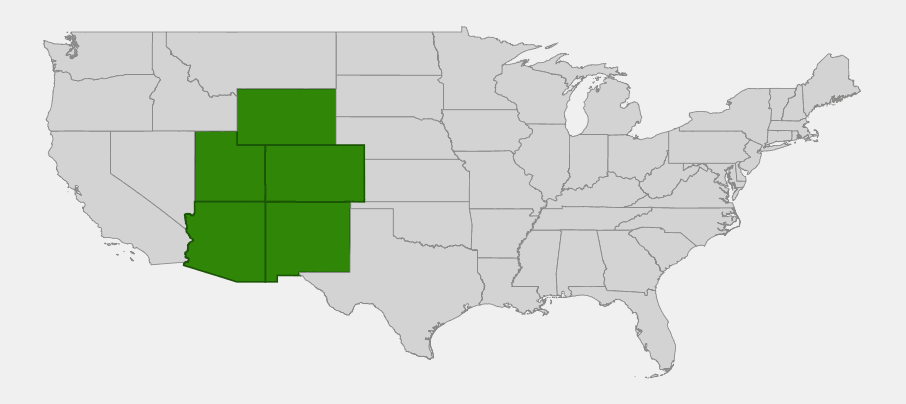
It is native to Wyoming, Colorado, Utah, New Mexico and Arizona, where it often dominates tall wildflower meadows near treeline. This guide covers identification, range and habitat, its role for pollinators, and what gardeners and landowners need to know about its toxicity.
Identification
Subalpine larkspur is a big, leafy larkspur of wet mountain meadows. Its height, dense flower spikes and sticky-hairy flower clusters help separate it from the smaller larkspurs of drier ground.
Leaves & Growth Habit
A clump-forming perennial from a stout, woody rootstock, sending up several stout, leafy stems 2 to 5 feet tall. The leaves are rounded in outline and deeply divided, palmately, into 3 to 5 or more toothed lobes, a little like a large geranium leaf. Leaves are spread along the stem, though the lowest ones often wither by flowering time. Individual plants are very long-lived and can survive for more than 75 years.
Flowers
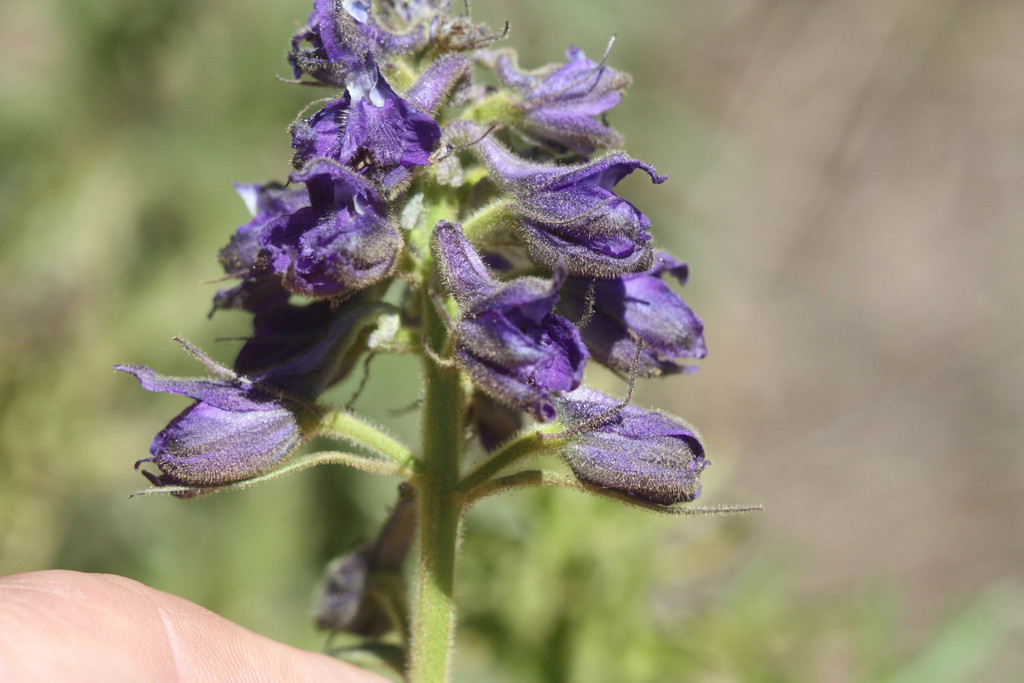
The flowers are packed into a dense spike at the top of the stem, often with dozens open at once. Each is about an inch long, with five dark purple-blue sepals, the upper one extending backward into a long spur, and small inner petals with whitish or yellowish hairs. The flower stalks and the upper stem are covered with short, sticky glandular hairs. Blooming runs from July to August.
Fruit
The fruit is a cluster of usually three upright pods (follicles), each up to about ⅞ inch long, which split open along one side in late summer to release many small seeds.
Look-alikes
Columbian Monkshood grows in the same wet meadows and also has blue-purple flowers, but its upper sepal forms a hood or helmet, not a spur. Tall Larkspur (Delphinium glaucum) is taller, with smooth, often waxy stems and a looser flower spike. The two hybridize freely, and their hybrid, the duncecap larkspur (Delphinium × occidentale), is often more common than either parent in parts of Colorado and Utah. Upland Larkspur is a much smaller plant of drier ground that blooms in spring.
Quick Facts
| Scientific Name | Delphinium barbeyi (Huth) Huth |
| Family | Ranunculaceae (buttercup family) |
| Plant Type | Herbaceous perennial wildflower; poisonous |
| Mature Height | 2–5 ft |
| Mature Spread | 1½–3 ft |
| Growth Rate | Moderate |
| Sun Exposure | Full sun to partial shade |
| Water Needs | Moist to wet; consistently moist soil |
| Soil Type | Deep, rich, moist loam in meadows, aspen groves and stream banks |
| Soil pH | Slightly acidic to neutral |
| Bloom Time | July–August |
| Flower Color | Dark purple-blue |
| Fall Color | Not significant; dies back in fall |
| Fruit | Cluster of upright pods (follicles) with many seeds |
| Deer Resistant | Yes; toxic and generally avoided |
| USDA Hardiness Zones | About 3–7 |
Native Range
Subalpine larkspur is native to the southern and central Rocky Mountains. USDA PLANTS lists it in Wyoming, Colorado, Utah, New Mexico and Arizona. Its heart is the high country of Colorado and Utah, including the Elk and San Juan Mountains of Colorado and the Wasatch Plateau and other high plateaus of Utah, from where it extends north into southern Wyoming and south into the mountains of northern New Mexico and eastern Arizona.
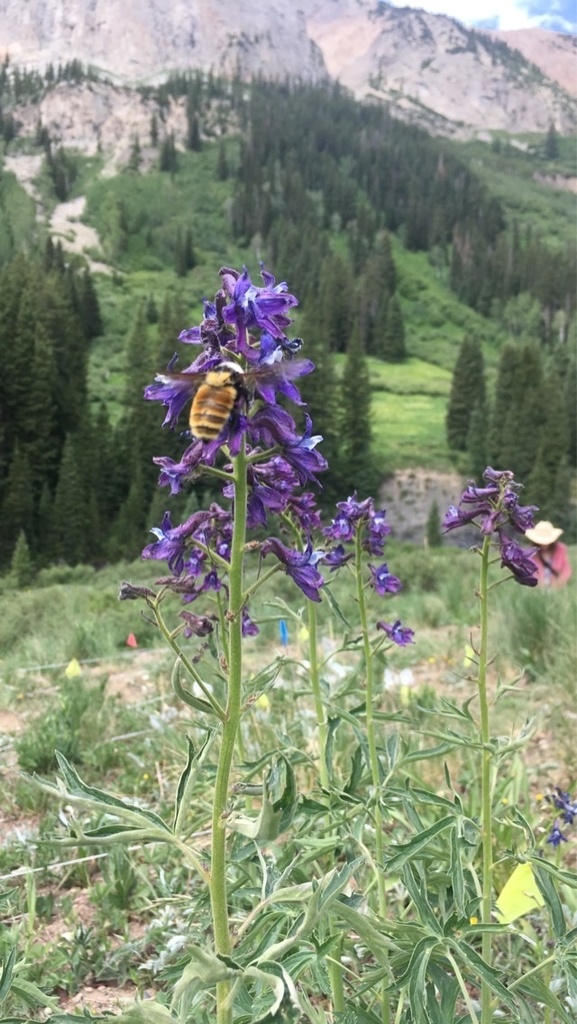
It grows mostly between about 8,000 and 12,000 feet, in the subalpine zone. Typical habitats are moist, tall-forb meadows, openings in spruce-fir forest, aspen groves, avalanche chutes, willow thickets and stream banks, often where snowmelt keeps the soil wet well into summer. In good sites it can be one of the dominant plants in the meadow, forming dense stands with other tall wildflowers.
These same lush subalpine meadows are prime summer cattle range, which is why subalpine larkspur and its hybrids have such a large economic impact. Ranchers often manage grazing around its growth stages, and land managers in parts of Colorado and Utah have adjusted grazing seasons in larkspur-rich areas.
📋 Regional plant lists featuring Subalpine Larkspur: Arizona & New Mexico · Utah & Western Colorado · Montana & Wyoming
Growing & Care Guide
Subalpine larkspur is seldom grown in gardens and is rarely sold by nurseries, though native seed suppliers in the Rockies sometimes offer it. It does best in cool, high-elevation gardens with moist soil. Because it is poisonous, plant it only where children, pets and livestock will not eat it, and never plant it in or near pastures. Never dig plants from the wild; their deep, woody rootstocks rarely survive transplanting.
Light
Full sun to partial shade. In the wild it grows in open meadows and in the dappled light of aspen groves; in warmer gardens, afternoon shade helps.
Soil & Water
Give it deep, rich, consistently moist soil, like the snowmelt-fed meadows where it grows naturally. It does not tolerate long dry spells or hot, humid summers, and it is best suited to mountain gardens with cool nights.
Planting Tips
Plant in spring in a sheltered, moist bed where its tall stems will not be flattened by wind, or let it rise among shrubs for support. Wear gloves when handling plants or seeds and wash your hands afterward. Label it clearly as poisonous in shared or public gardens.
Pruning & Maintenance
Cut stems to the ground after flowering or in fall, wearing gloves, and dispose of the cuttings where animals cannot eat them. Avoid composting large amounts of larkspur where livestock could reach the compost. Established plants need little care and can live for decades.
Propagation
Grow it from seed sown outdoors in fall, or after several weeks of cold, moist stratification. Seedlings grow slowly and may take two or three years to bloom. Mature clumps resent disturbance and are difficult to divide.
Landscape Uses
- Mountain wildflower gardens: tall, dark blue spikes for cool, moist, high-elevation gardens away from pets and livestock
- Pollinator plantings: a major nectar source for bumblebees and hummingbirds in the high country
- Wildflower viewing: peak bloom in Colorado and Utah meadows in July and August
- Meadow and riparian restoration: native component of tall-forb subalpine meadows on public lands, where grazing is managed
Wildlife & Ecological Value
Subalpine larkspur is a keystone nectar plant in Rocky Mountain meadows, even though it is poisonous to most grazing animals.
For Pollinators
Its nectar is held at the end of the long spur, where bumblebees with long tongues and hummingbirds can reach it. Studies in Colorado have recorded several bumblebee species, including Bombus appositus, B. flavifrons and B. nevadensis, as visitors, along with broad-tailed, rufous and calliope hummingbirds. Both bees and hummingbirds favor plants with the largest flower displays. The white-lined sphinx moth and some flies also visit.
For Birds
Hummingbirds rely heavily on it in mid- to late summer, when they are fattening up before migration. Its dense stands also give cover to ground-nesting birds in wet meadows.
For Mammals
Its toxic alkaloids make it dangerous to cattle, which may eat large amounts, especially after flowering, when the plants become more palatable. Sheep are much less sensitive and are sometimes used to graze larkspur-rich ranges. Deer and elk generally eat little of it.
Ecosystem Role
It is often a dominant plant in tall-forb subalpine meadows, providing structure, shade and nectar, and its long life gives it a steady presence in these communities. Its frequent hybridization with tall larkspur makes it a well-studied example of natural plant hybridization.
Cultural & Historical Uses
The species is named for the Swiss botanist William Barbey and was first described in the 1890s by the German botanist Ernst Huth, who studied the genus Delphinium. The name Delphinium comes from the Greek word for dolphin, for the shape of the flower buds, and “larkspur” refers to the spur, said to resemble a lark’s hind claw.
Few native plants have had as much economic impact on Western ranching. Tall larkspurs, including subalpine larkspur and its hybrids, have caused heavy cattle losses on mountain summer ranges, and in some areas a single season’s losses have reached several percent of a herd. Scientists at the USDA Agricultural Research Service’s Poisonous Plant Research Laboratory in Logan, Utah, have studied its alkaloids, grazing behavior and seasonal toxicity for decades to help ranchers avoid losses.
The most dangerous of these compounds are the so-called MSAL alkaloids, which block nerve signals to the muscles and can cause collapse and death from respiratory paralysis. Barbinine and barbinidine, two of the plant’s alkaloids, were named after this species. Despite its reputation, subalpine larkspur remains a beloved sight on summer hikes in the high Rockies.
Frequently Asked Questions
Is subalpine larkspur poisonous?
Yes. All parts contain toxic alkaloids that can cause muscle weakness, paralysis and death. It is especially dangerous to cattle, and it should never be eaten by people or pets. Wear gloves when handling it.
Where can I see subalpine larkspur?
In moist subalpine meadows, aspen groves and stream banks at about 8,000 to 12,000 feet in Colorado, Utah, Wyoming, New Mexico and Arizona, mainly in July and August.
What is the difference between subalpine larkspur and tall larkspur?
Subalpine larkspur is usually shorter, with a dense flower spike and sticky hairs on the flower stalks. Tall larkspur (Delphinium glaucum) is taller and smoother. The two often hybridize, producing the duncecap larkspur.
Which pollinators visit it?
Mainly long-tongued bumblebees and hummingbirds, including broad-tailed, rufous and calliope hummingbirds, which reach the nectar held in the long spur.
Can I grow it in my garden?
Only in cool, moist, high-elevation gardens, and only where children, pets and livestock will not eat it. Grow it from seed from a native seed supplier; never dig it from the wild.

Looking for a nursery that carries Subalpine Larkspur?
Browse our native plant nursery directory: Arizona · Colorado · New Mexico · Utah · Wyoming

