
Northern Pink (Dianthus repens)
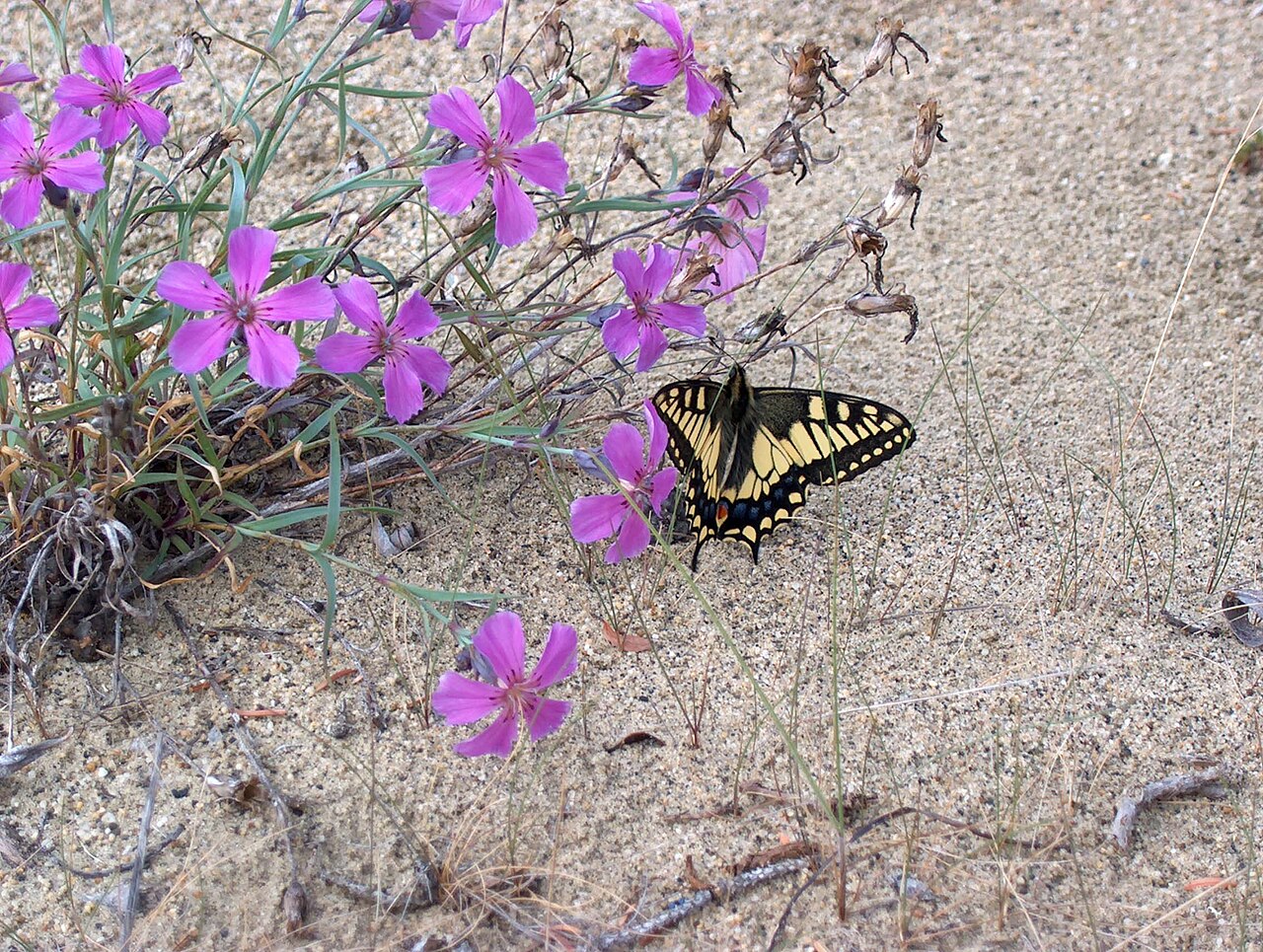
Dianthus repens, the Northern Pink (USDA name boreal carnation, also called wild carnation), is the only pink native to North America. It is a plant of the far north, growing in Alaska and Yukon and across northern Asia from Siberia to Kamchatka and Mongolia. In the United States it is found only in Alaska.
It forms low tufts of narrow, gray-green, grass-like leaves, and in summer it bears bright pink to magenta flowers about an inch across, with toothed petal tips, like a small wild carnation. It grows on gravel bars, sand dunes, dry tundra, rocky slopes and open woods, often in places that look too harsh for such a showy flower.
Northern pink is a striking wildflower of Alaska’s river valleys and dunes. It is rarely grown, but it is closely related to the familiar garden pinks and carnations. This guide covers how to identify it, where it grows, how it might be grown and its value to wildlife.
Identification
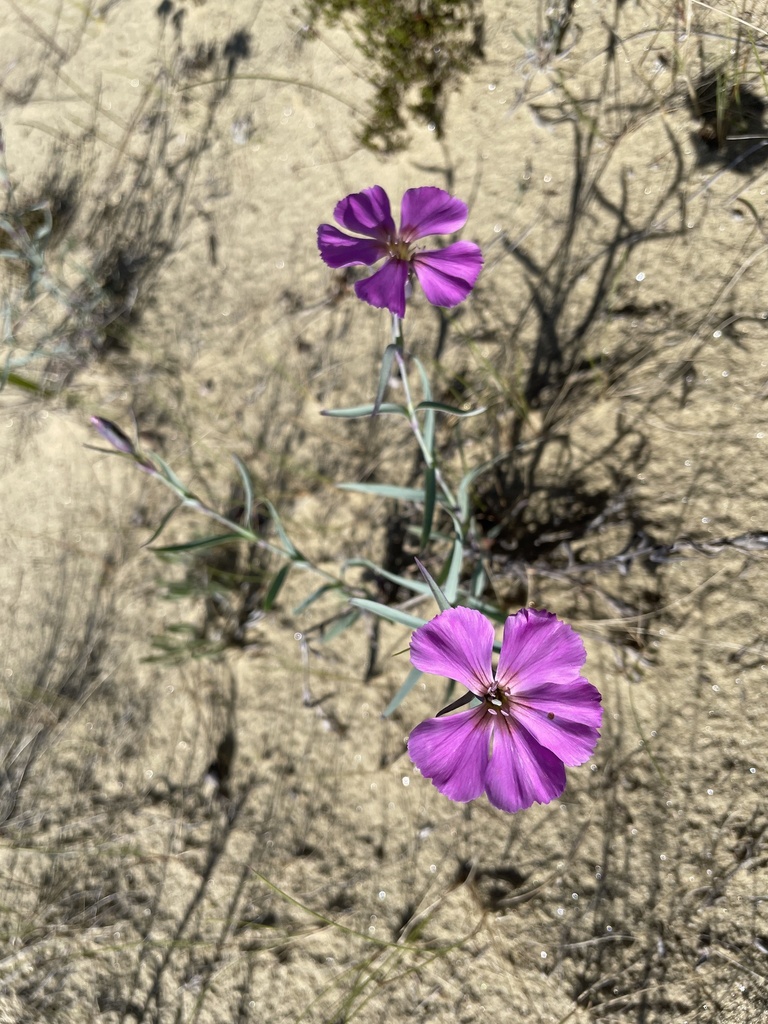
Northern pink is a low, tufted perennial with narrow, gray-green opposite leaves and one or two bright pink to magenta flowers per stem, each with five toothed petals and a tubular calyx.
Growth Form
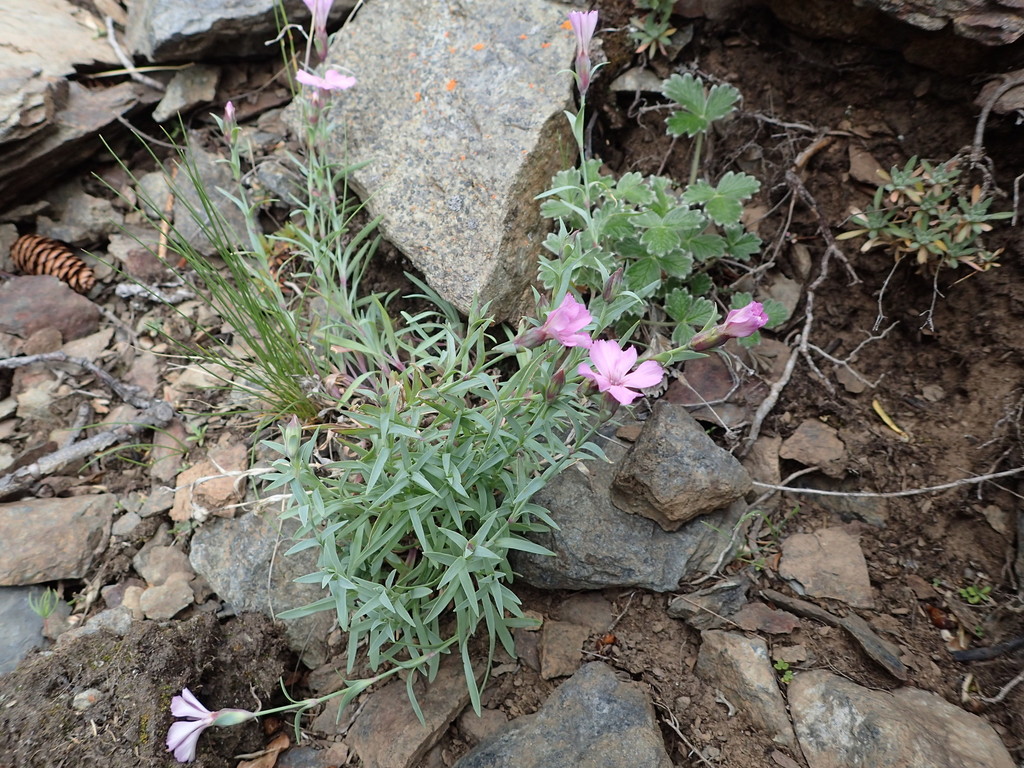
It grows from a branched, woody rootstock, forming loose tufts or small mats with many short, leafy non-flowering shoots. The flowering stems are usually 4 to 10 inches tall and slender, with swollen nodes, as in other members of the pink family.
Leaves
The leaves are opposite, narrow and grass-like, about 1 to 3 inches long, pointed and gray-green to bluish with a waxy coating. They are joined around the stem at their bases.
Flowers
From about late June to August, each stem bears one or sometimes two flowers about ¾ to 1¼ inches across. The five petals are bright pink to purple-magenta, broad, with finely toothed outer edges and often a darker ring or small spots and hairs near the center. The petals spread from a tubular, purplish calyx, which has a few short bracts at its base.
Fruit & Look-alikes
The fruit is a cylindrical capsule inside the persistent calyx, opening at the top by four teeth to release small, flat black seeds. Moss campion (Silene acaulis) forms dense cushions with small, stemless pink flowers. Pink-flowered phlox, such as Siberian phlox (Phlox sibirica), has flowers with a long, narrow tube and petals that are not toothed. Garden pinks escaped from cultivation are rare in Alaska and usually larger.
Quick Facts
| Scientific Name | Dianthus repens Willd. |
| Family | Caryophyllaceae (pink family) |
| Plant Type | Herbaceous perennial wildflower, tufted |
| Mature Height | 4–10 in |
| Mature Spread | 6–12 in |
| Growth Rate | Slow |
| Sun Exposure | Full sun |
| Water Needs | Low; dry to moderately moist |
| Soil Type | Sandy, gravelly or rocky, well-drained soil |
| Soil pH | About 6.0–8.0 |
| Bloom Time | Late June–August |
| Flower Color | Bright pink to magenta-purple |
| Fall Color | None notable; foliage gray-green |
| Fruit | Cylindrical capsule with small black seeds |
| Deer Resistant | Unknown; rarely browsed |
| USDA Hardiness Zones | 1–5 |
Native Range
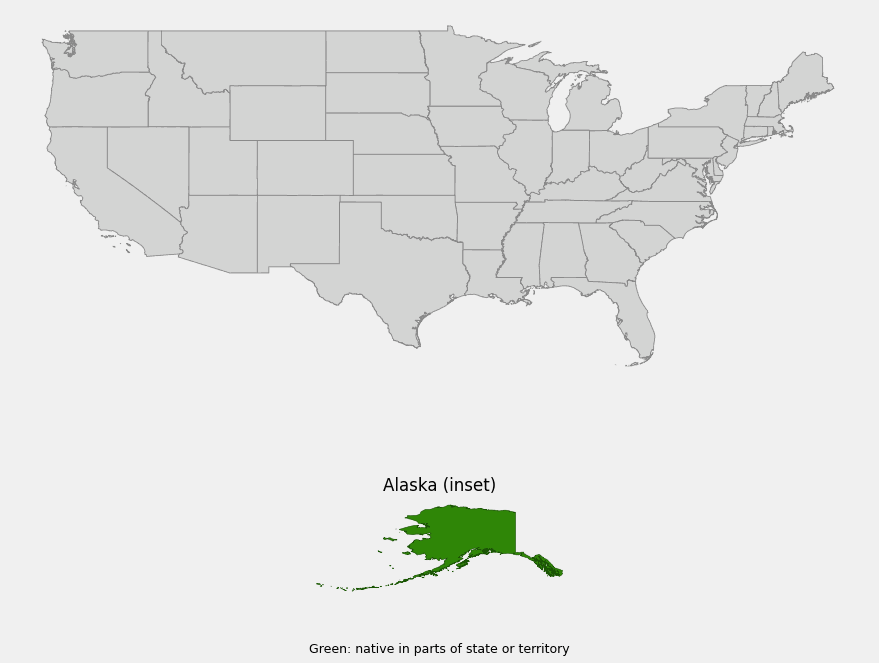
Northern pink is an Asian-Beringian species. It grows across northern Asia, from the Ural region through Siberia to the Russian Far East, Kamchatka and Mongolia, and in North America only in Alaska and Yukon. USDA PLANTS lists it as native in Alaska, which is its only U.S. state.
In Alaska it is found mainly in the western and interior parts of the state, including the Seward Peninsula, the Noatak and Kobuk valleys of the Western Arctic, and the Yukon River and other interior river systems, with scattered populations farther south. The sand dunes of Kobuk Valley National Park are one of the places where it is most easily seen.
It grows in dry, open, often disturbed habitats: river gravel bars and terraces, sandy dunes and bluffs, dry tundra, rocky and scree slopes, limestone outcrops and open, dry spruce and birch woods, from low elevations to alpine slopes.
📋 Regional plant lists featuring Northern Pink: Alaska
Growing & Care Guide
Northern pink is rarely available, though seed is occasionally offered by specialist alpine and rock garden seed exchanges. It is suited only to cold climates with cool summers. Do not dig wild plants; enjoy them where they grow, and grow it only from legally obtained seed.
Light
Full sun. It grows in open, exposed sites and becomes weak and sparse in shade.
Soil & Water
Give it very well-drained, sandy or gravelly soil, such as a scree bed, raised rock garden or trough. It tolerates drought and poor soil, but not wet, heavy soil, especially in winter. Water lightly in dry spells during the growing season.
Planting Tips
Plant in spring in a sunny pocket of a rock garden or gravel bed, 6 to 8 inches apart, and top-dress with gravel to keep the crowns dry. It is a good companion for mountain avens, kinnikinnik and other low northern plants.
Pruning & Maintenance
Little care is needed. Remove spent flowers to tidy the plant, or leave some to set seed. Keep it free of taller competing plants, which can shade it out.
Propagation
Sow seed in fall or late winter outdoors, or give it a few weeks of cold, moist stratification before sowing in spring. Like other pinks, it can also be grown from cuttings of non-flowering shoots taken in summer.
Landscape Uses
- Rock and scree gardens: bright pink flowers in cold-climate gardens
- Northern native gardens: for Alaska and Yukon gardeners
- Wildflower viewing: a showy summer flower of Arctic dunes and gravel bars
- Pollinator plantings: nectar for butterflies in the far north
Wildlife & Ecological Value
Northern pink provides nectar in the short northern summer and is a characteristic plant of Alaska’s dunes and gravel bars.
For Pollinators
Its bright, open flowers are visited by butterflies, including the Old World swallowtail, as well as bumble bees and flies. The deep calyx tube means that long-tongued insects reach the nectar most easily.
For Birds
Birds are not known to depend on it, but the dry, open habitats where it grows support ground-nesting birds of the tundra and river bars.
For Mammals
Grazing animals may nibble it, but it is not known as an important food plant for mammals.
Ecosystem Role
It is one of the pioneer plants of gravel bars, sandy bluffs and dunes, helping to colonize and stabilize bare mineral soil in river valleys of the far north.
Cultural & Historical Uses
The German botanist Carl Ludwig Willdenow described Dianthus repens in 1799. The species name means “creeping,” for its spreading, branched rootstock.
The genus name Dianthus comes from Greek words meaning “divine flower.” The genus includes carnations, sweet William and garden pinks, almost all of which are native to Europe and Asia. Northern pink is the only species of the genus native to North America.
The common name “pink” for this group may come from the toothed petal edges, which look as if they had been cut with pinking shears. The color pink is thought to be named after the flowers, not the other way around.
Frequently Asked Questions
Is northern pink native to North America?
Yes. It is the only native North American Dianthus, found in Alaska and Yukon, as well as across northern Asia.
Where can I see northern pink?
In western and interior Alaska, on river gravel bars, sand dunes, dry tundra and rocky slopes. The Kobuk sand dunes and the Noatak and Yukon River valleys are good places to look in July.
How do I recognize northern pink?
Look for a low tuft of narrow, gray-green leaves with bright pink to magenta flowers about an inch across, each with five toothed petals and a tubular calyx.
Is northern pink related to carnations?
Yes. It is in the same genus, Dianthus, as carnations, sweet William and garden pinks.
Can I grow northern pink?
It can be grown from seed in a sunny, gravelly rock garden or trough in cold, cool-summer climates, but it is rarely available and struggles in hot, humid areas.

Looking for a nursery that carries Northern Pink?
Browse our native plant nursery directory: Alaska

