
Alpine Sweetvetch (Hedysarum alpinum)
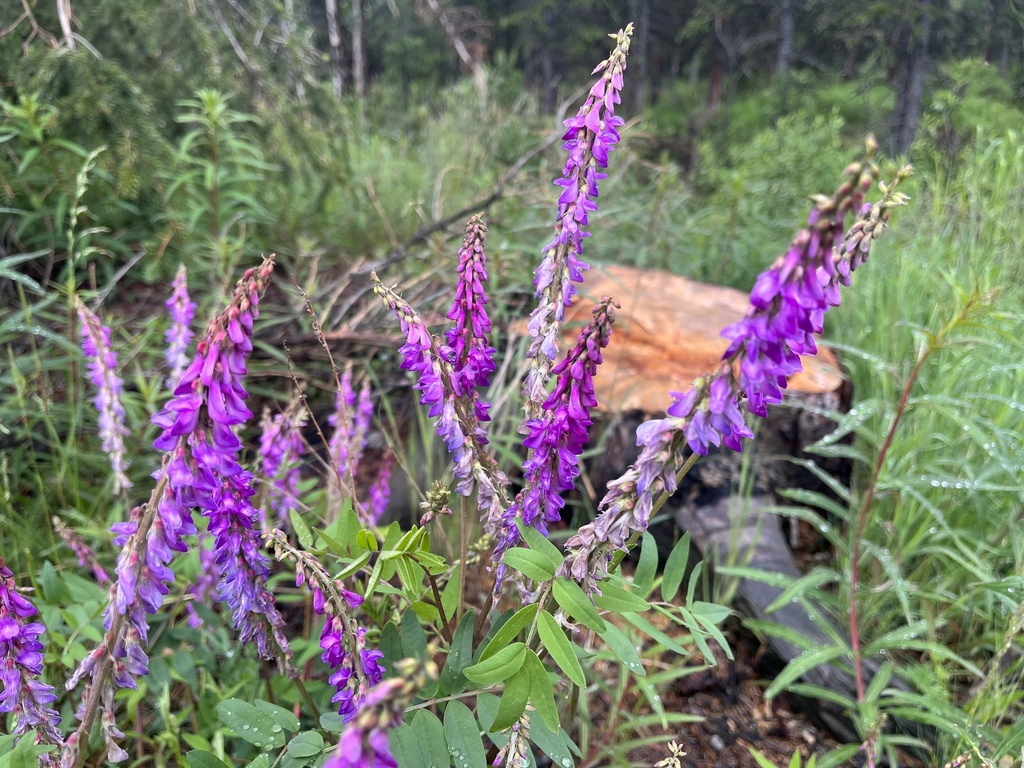
Hedysarum alpinum, known as Alpine Sweetvetch, alpine sweet-vetch or Eskimo potato, is a perennial wildflower in the pea family (Fabaceae). It forms clumps of leafy stems 8 to 28 inches tall with feathery, pinnately divided leaves and long, one-sided spikes of drooping, pink to purple pea flowers in early and midsummer. Its long, sweet, carrot-like taproot is one of the most important wild root foods of the North.
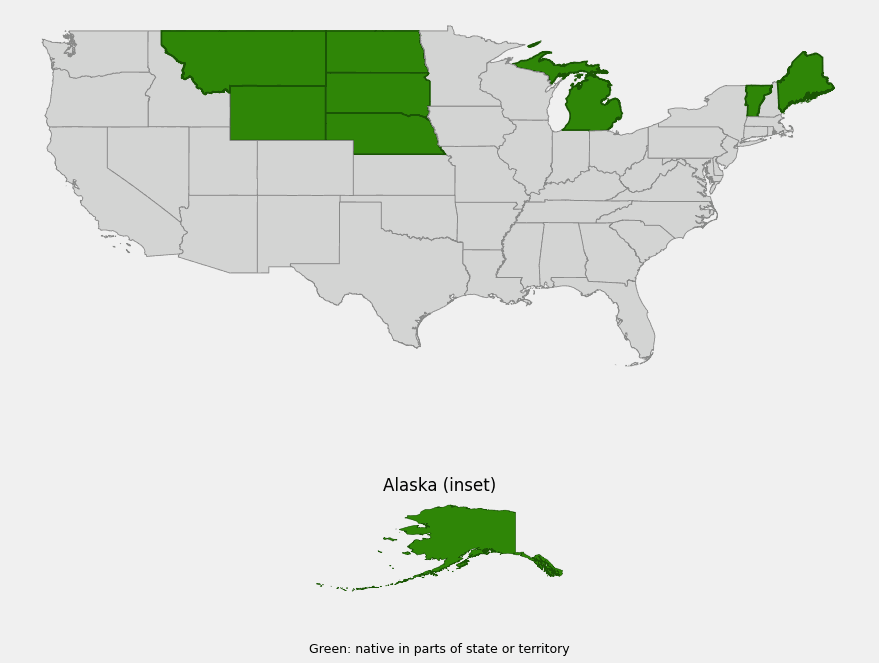
Alpine sweetvetch has a circumboreal range across northern Asia, Europe and North America. In the United States, USDA PLANTS lists it as native in Alaska, Maine, Vermont, Michigan, Montana, Wyoming, North Dakota, South Dakota and Nebraska. It is abundant across much of Alaska, on gravel bars, river terraces, tundra, roadsides and open spruce forest, and rare at the southern edge of its range.
It is an excellent plant for northern native gardens and for restoring gravelly, disturbed ground, because like other legumes it fixes nitrogen. This guide covers identification, including how to tell it from its look-alikes, its range, cultivation and its long history as a food plant.
Identification
Look for clumps of leafy stems with pinnate leaves of many narrow leaflets, topped by long spikes of small, drooping, pink-purple pea flowers all facing one side, followed by flat, jointed pods.
Growth Habit
Alpine sweetvetch is a herbaceous perennial with several upright or ascending stems, usually 8 to 28 inches tall, rising from a woody crown and a long, thick taproot. It forms loose clumps and dies back to the ground each fall.
Leaves
The leaves are alternate and pinnately compound, 2 to 6 inches long, with 9 to 21 oblong to lance-shaped leaflets, each about 1/2 to 1 1/4 inches long. The leaflets are green above and paler beneath, and the side veins are usually clearly visible on the underside, a useful field mark.
Flowers
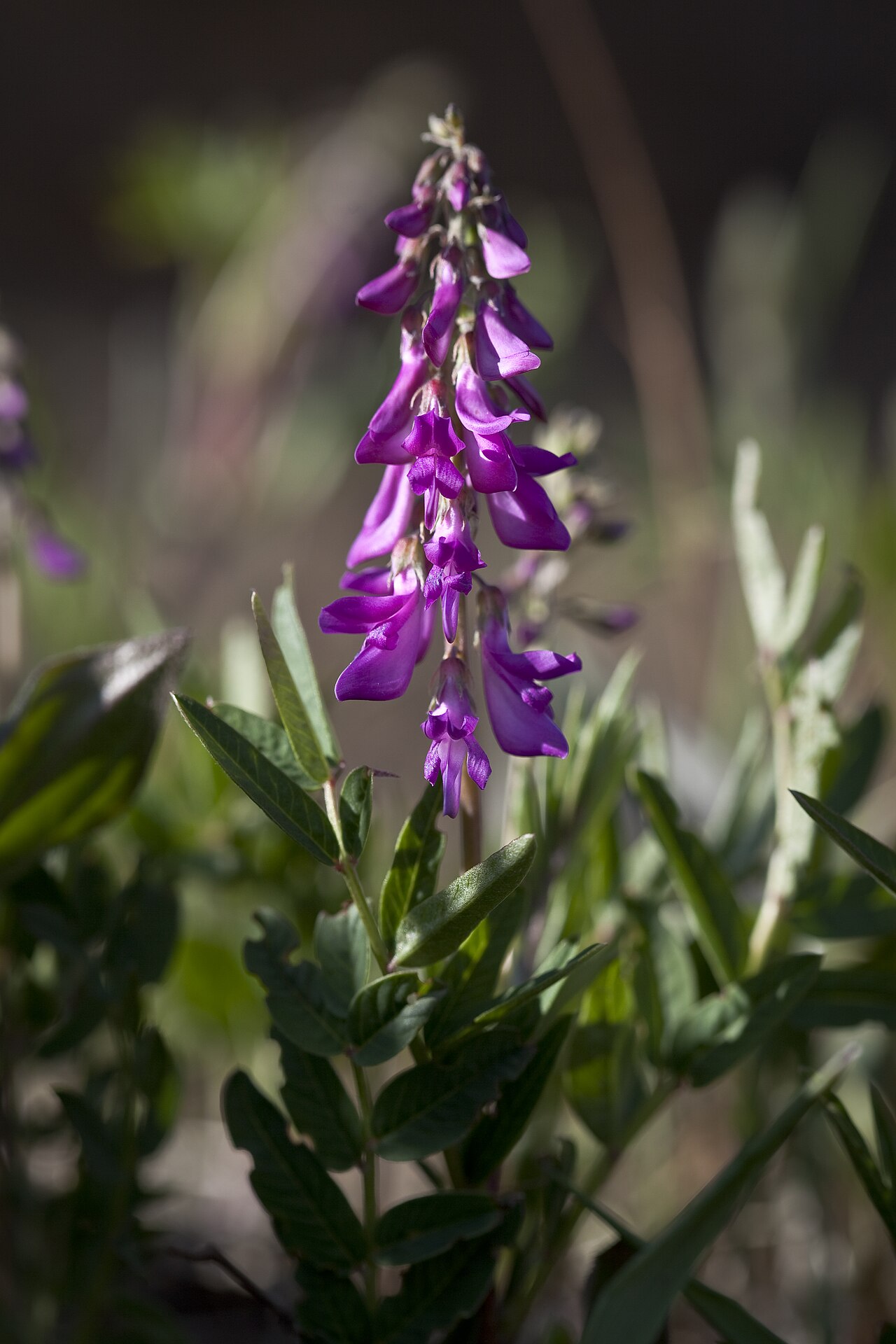
The flowers are borne in long, dense, one-sided racemes of 20 to 80 or more flowers at the top of the stems. Each pea flower is small, about 1/2 inch long, pink to magenta, purple or rarely white, and hangs downward. Flowering is from June to August, earliest at low elevations.
Fruit & Seeds
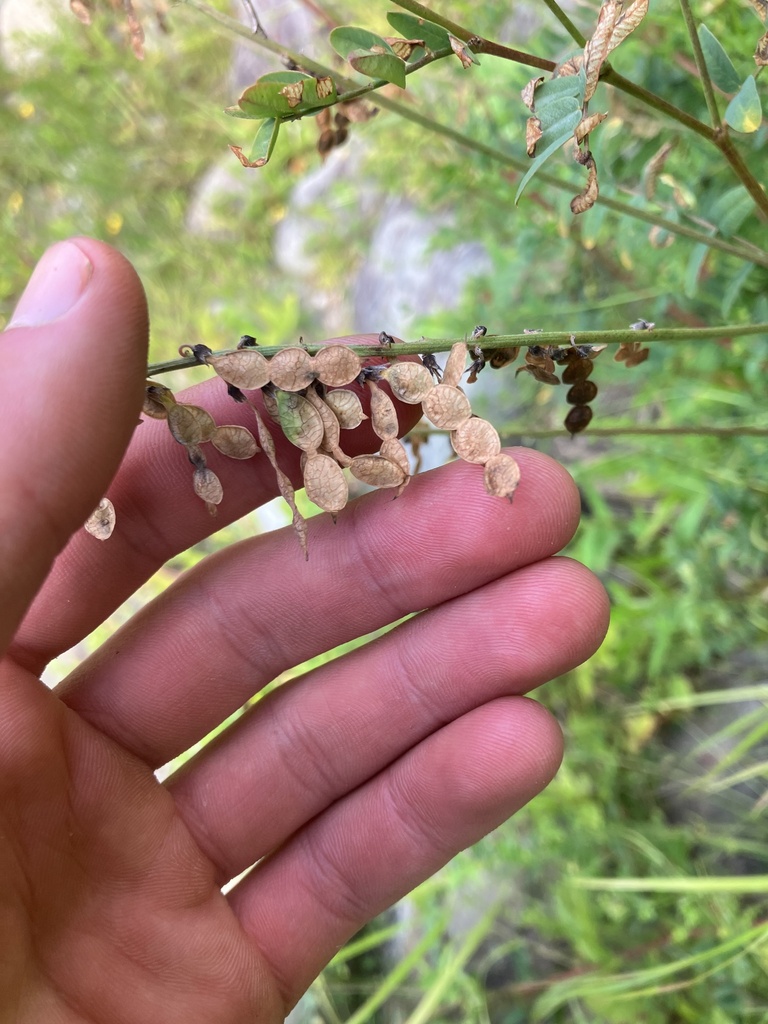
The fruit is a flat, hanging loment, a pod made of 2 to 5 rounded segments that are constricted between the seeds and break apart when ripe. The segments are net-veined and usually smooth, and each holds a single seed.
Look-alikes
Northern sweetvetch (Hedysarum boreale), including the form called wild sweet pea or Mackenzie’s sweetvetch (H. boreale subsp. mackenzii, often treated as H. mackenzii), has fewer, larger, brighter flowers (about 3/4 inch long), leaflets whose side veins are hidden, and a root that is not eaten. Northern sweetvetch is considered inedible and possibly toxic, so foragers in Alaska are taught to tell the two apart carefully. Milkvetches (Astragalus) and oxytropes (Oxytropis) have inflated, unsegmented pods.
Quick Facts
| Scientific Name | Hedysarum alpinum |
| Family | Fabaceae (pea family) |
| Plant Type | Herbaceous perennial with a deep taproot |
| Mature Height | 8–28 in |
| Mature Spread | 1–2 ft |
| Growth Rate | Moderate |
| Sun Exposure | Full sun to part shade |
| Water Needs | Low to moderate; well drained |
| Soil Type | Gravel, sand, silt and rocky loam; tolerates poor soil |
| Soil pH | Neutral to alkaline (about 6.0–8.0) |
| Bloom Time | June–August |
| Flower Color | Pink to magenta-purple, rarely white |
| Fall Color | Yellow |
| Fruit | Flat, jointed pod (loment) |
| Deer Resistant | No; browsed by wildlife |
| USDA Hardiness Zones | 1–6 |
Native Range
Alpine sweetvetch grows across the boreal and arctic regions of the Northern Hemisphere, from Scandinavia and Russia through Siberia and Mongolia to North America. In North America it ranges from Alaska and the Yukon across northern Canada to Labrador and Newfoundland, and south in the Rocky Mountains.
USDA PLANTS lists it as native in Alaska, Maine, Vermont, Michigan, Montana, Wyoming, North Dakota, South Dakota and Nebraska, and it also records it from New Hampshire and Rhode Island. Go Botany (Native Plant Trust) states that in New England it occurs only in Maine and Vermont, on ice-scoured riversides, cliffs, talus and subalpine ravines on high-pH rock, so New Hampshire and Rhode Island are left off the map here. Records from Nebraska and the Dakotas are outlying, southern populations.
In Alaska it is one of the most common wildflowers of river gravel bars, floodplain terraces, open spruce and birch forest, roadsides and alpine and arctic tundra. Farther south, it is usually rare and restricted to cold, calcium-rich sites such as river shores, cliffs and mountain slopes.
📋 Regional plant lists featuring Alpine Sweetvetch: Alaska · New Hampshire, Maine & Vermont · Michigan, Wisconsin & Eastern Minnesota · Montana & Wyoming · North Dakota, South Dakota & Western Minnesota · Nebraska, Kansas & Eastern Colorado
Growing & Care Guide
Alpine sweetvetch is a tough, long-lived plant for cold climates. It does best where summers are cool, in zones 1 to 6, and it is widely used in Alaska for revegetating gravel pads, roadsides and mine sites.
Light
Full sun gives the most flowers and the most compact plants. It tolerates light shade, as in open spruce and birch woods, but flowers less.
Soil & Water
Give it well-drained soil: gravel, sand, silt or rocky loam. It thrives in poor, low-nitrogen soil because, like other legumes, it hosts nitrogen-fixing bacteria in root nodules. It needs regular moisture while young and is drought tolerant once its taproot is established. Avoid heavy, poorly drained clay.
Planting Tips
Plant young plants or sow seed where you want it to stay, because the long taproot makes established plants hard to move. Space plants 12 to 18 inches apart. It combines well with fireweed, native grasses, yarrow and other northern wildflowers in meadows, gravel gardens and road cuts.
Pruning & Maintenance
Little care is needed. Cut stems back in fall or leave them for winter interest and to let seed drop. Moose, caribou, hares and voles may browse plants, so protect young plantings where browsing is heavy.
Propagation
Grow it from seed. The hard seed coat benefits from scarification (rubbing lightly with sandpaper) or a soak in hot water before sowing; a period of cold, moist stratification may also improve germination. Sow in fall outdoors or in spring after treatment. Seedlings develop a taproot quickly and should be planted out young. The Alaska Plant Materials Center has released seed of this species for revegetation.
Landscape Uses
- Northern native gardens: long-blooming summer color for cold climates
- Revegetation: stabilizes gravel pads, roadsides and mine reclamation sites
- Meadows: mixes with fireweed and native grasses
- Soil improvement: fixes nitrogen in poor, gravelly soils
- Wildlife plantings: roots and foliage feed bears, rodents, moose and caribou
Wildlife & Ecological Value
Alpine sweetvetch is one of the key wildlife food plants of Alaska and northern Canada.
For Pollinators
The flowers are pollinated mainly by bumble bees, which are strong enough to open the pea flowers. Other native bees and butterflies also visit for nectar.
For Birds
Ptarmigan and grouse eat the leaves, buds and seeds, and seed-eating birds feed on the pods.
For Mammals
Grizzly bears dig the roots in large numbers in spring and fall, sometimes leaving whole gravel bars dug over. Voles and arctic ground squirrels eat and cache the roots, and moose, caribou, Dall sheep and snowshoe hares browse the foliage.
Ecosystem Role
As a nitrogen-fixing pioneer of river gravel bars, burns and disturbed ground, alpine sweetvetch improves soil for later plants. Its roots, cached by rodents and dug by bears, link it into food webs across the North.
Cultural & Historical Uses
The roots of alpine sweetvetch, called masu in Iñupiaq, have been an important food for Iñupiat, Yupik, Dene and other northern peoples for many generations. They are dug in spring and fall, eaten raw, boiled, roasted or fried, and sometimes stored in oil. People traditionally also collected roots from the caches of voles and other rodents, often leaving other food in exchange. The roots taste sweet, somewhat like young carrots.
The plant is part of the story of Chris McCandless, whose death in Alaska in 1992 was described in Jon Krakauer’s book Into the Wild. Krakauer has suggested that seeds of the plant may have contributed to his starvation, a theory that remains disputed. Foragers should eat only well-identified roots of alpine sweetvetch, in moderation, and avoid the seeds.
The genus name Hedysarum comes from Greek words meaning “sweet” and “broom,” an old name for a sweet-smelling legume. The species name alpinum refers to its mountain and tundra habitats.
Frequently Asked Questions
Is alpine sweetvetch edible?
The roots are a traditional food of northern peoples and are eaten raw or cooked. Identify it carefully, because northern sweetvetch (Hedysarum boreale/mackenzii) looks similar and is not eaten. Avoid the seeds, and when in doubt, don’t eat it.
How do I tell alpine sweetvetch from wild sweet pea?
Alpine sweetvetch has smaller, more numerous flowers (about 1/2 inch) and visible side veins on the underside of the leaflets. Wild sweet pea has larger, brighter flowers and leaflets with hidden veins.
Where does alpine sweetvetch grow in the Lower 48?
It is native in Maine and Vermont, northern Michigan and the northern Rocky Mountains and plains of Montana, Wyoming, the Dakotas and Nebraska, where it is usually rare.
Does alpine sweetvetch fix nitrogen?
Yes. Like other legumes, it hosts nitrogen-fixing bacteria in root nodules, which makes it valuable for revegetating poor, gravelly soil.
Do bears eat alpine sweetvetch?
Yes. Grizzly bears dig its roots heavily in spring and fall, and it is one of their most important plant foods in Alaska and northern Canada.

Looking for a nursery that carries Alpine Sweetvetch?
Browse our native plant nursery directory: Alaska · Maine, Michigan & Montana · Nebraska & North Dakota · South Dakota & Vermont · Wyoming

