Dwarf Fireweed (Epilobium latifolium)
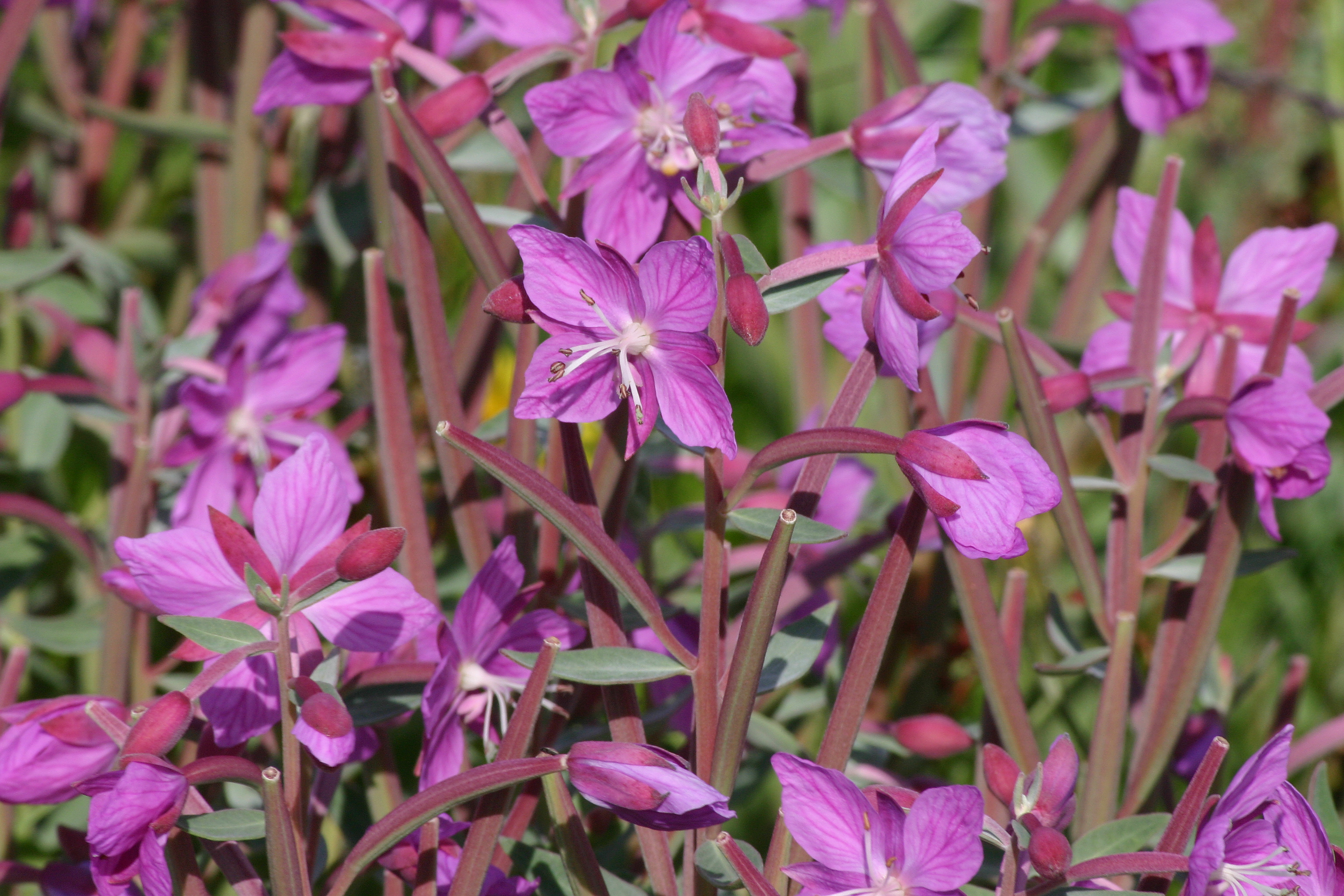
Epilobium latifolium (syn. Chamerion latifolium), commonly known as Dwarf Fireweed, River Beauty, or Broad-leaved Willowherb, is one of the most visually spectacular wildflowers of Alaska and the circumpolar north. A close relative of the tall Fireweed (Epilobium angustifolium), this lower-growing species of the Onagraceae (evening primrose) family produces large, vivid magenta to rose-pink flowers in dense terminal spikes that blaze along glacial riverbars, rocky outwashes, and subalpine streambanks with an intensity that can stop hikers in their tracks. Unlike its taller relative, which colonizes open disturbed ground across broad swaths of Alaska, Dwarf Fireweed is a specialist of the dynamic gravel bars and streamside environments created by glacial rivers and alpine meltwater streams.
The flowers of Dwarf Fireweed are notably large for a plant of its modest stature — each bloom is up to 1½ inches (4 cm) across, with four broad, rounded petals in brilliant magenta-pink, surrounding prominent stamens and a four-parted stigma. The plants form low, spreading mats or loose colonies, typically just 1 to 2 feet tall, and they spread readily across bare gravel substrates where competition from other plants is minimal. In bloom from late June through August, Dwarf Fireweed provides one of the defining visual experiences of Alaska’s glacially influenced landscapes — vivid pink carpets extending for hundreds of meters along the banks of rivers like the Kenai, the Copper, and countless unnamed glacial streams throughout the Alaska Range and Chugach Mountains.
For gardeners and restoration practitioners in Alaska and other cold, northern climates, Dwarf Fireweed is an outstanding native wildflower for rocky gardens, streamside plantings, and difficult-to-establish gravel or moraine habitats where few other ornamental plants can survive. Its combination of showy flowers, cold hardiness, and tolerance of disturbed, low-nutrient substrates make it a versatile and beautiful addition to challenging northern garden sites.
Identification
Dwarf Fireweed grows as a mat-forming or clump-forming perennial herb, typically 8 to 24 inches (20–60 cm) tall — noticeably shorter and more compact than the closely related tall Fireweed (E. angustifolium, which reaches 3–6 feet). The stems are reddish-tinged, somewhat fleshy, and either erect or slightly spreading. The overall plant has a neater, more compact appearance than tall Fireweed, with proportionally larger flowers relative to its stature.
Leaves
The leaves are one of the key features distinguishing Dwarf Fireweed from tall Fireweed: they are broader (latifolium means “broad-leaved”), more oval or elliptical in outline, and have a distinctive blue-green, somewhat glaucous (waxy, bluish-gray) cast that gives the foliage a cool, silvery quality in the field. They are smooth, without the prominent veining of tall Fireweed leaves, and lack the wavy-toothed margins of that species. Leaves are alternate, 1–3 inches (2.5–7.5 cm) long, and attached by very short petioles.
Flowers
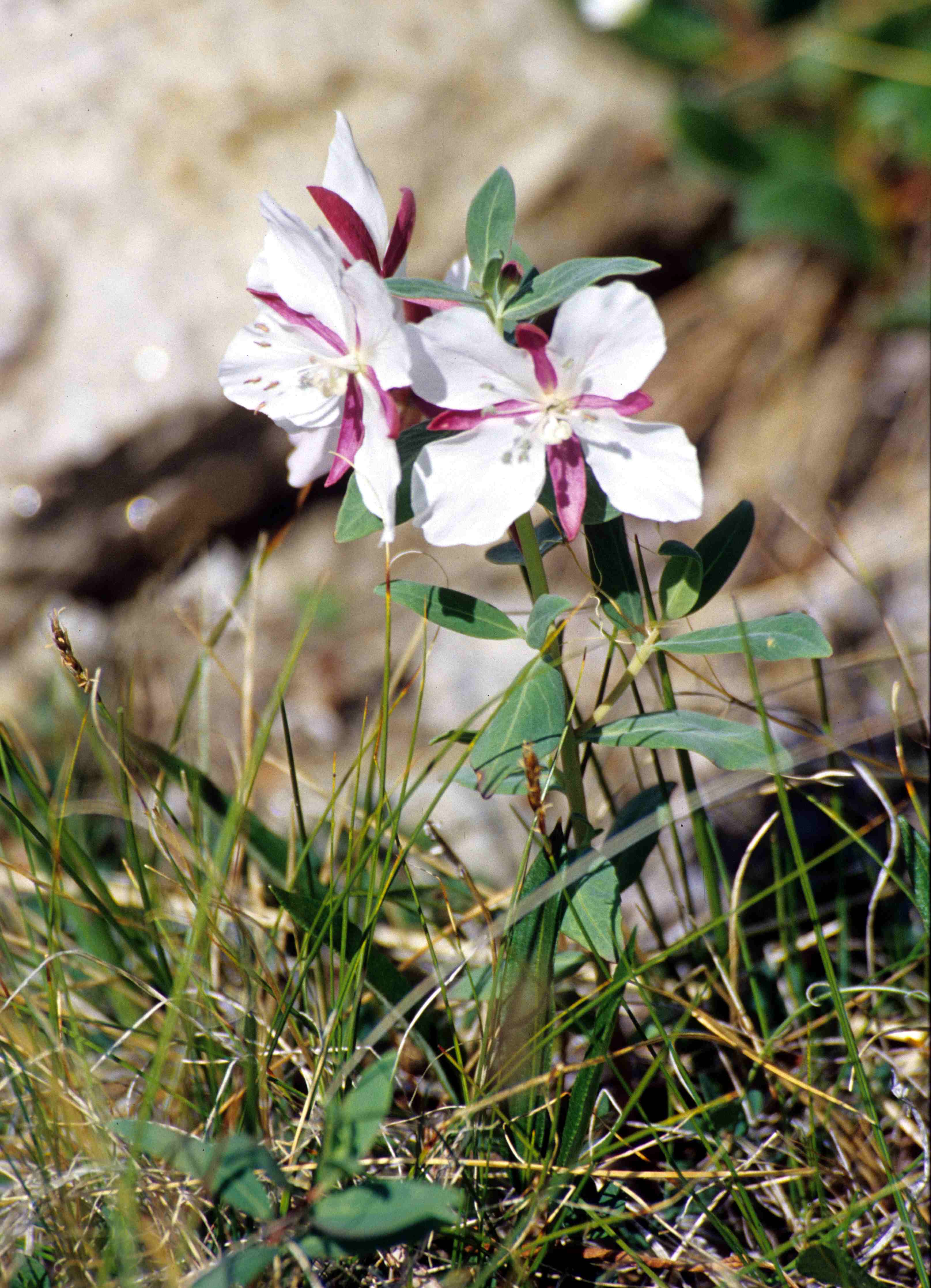
The flowers are the showiest feature — substantially larger than those of tall Fireweed, with four broad, rounded, overlapping petals typically 0.75 to 1.5 inches (2–4 cm) across. Color ranges from brilliant magenta to deep rose-pink; a rare white-flowered form (f. album) also occurs occasionally in wild populations. Flowers are arranged in a short, dense terminal spike with just 4 to 15 flowers, blooming from the bottom up. The four long stamens and prominent white stigma are distinctly visible against the bright petals. Blooms late June through August in Alaska.
Seeds
Like tall Fireweed, Dwarf Fireweed produces elongated seed pods (capsules) that split lengthwise to release numerous tiny seeds, each attached to a long silky white hair (coma) that enables wind dispersal. Large seed releases create dramatic white “blizzards” of downy seed material along streambanks in late summer — another iconic Alaska wildflower sight.
Quick Facts
| Scientific Name | Epilobium latifolium (syn. Chamerion latifolium) |
| Family | Onagraceae (Evening Primrose) |
| Plant Type | Perennial Wildflower / Mat-forming Herb |
| Mature Height | 2 ft |
| Sun Exposure | Full Sun |
| Water Needs | High |
| Bloom Time | Late June – August |
| Flower Color | Magenta to rose-pink (rarely white) |
| USDA Hardiness Zones | 2–7 |
Native Range
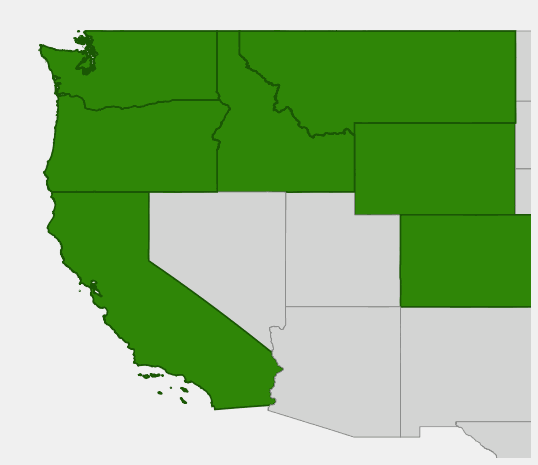
Dwarf Fireweed is a circumpolar arctic-alpine species with one of the broadest distributions of any northern wildflower. In North America, it ranges across Alaska, the Yukon, Northwest Territories, Nunavut, and northern British Columbia, then extends south through the mountains to Washington, Oregon, Idaho, Montana, Wyoming, and Colorado — wherever suitable glacial, rocky, or high-elevation streamside habitats occur. It is also found in Greenland, Iceland, the Canadian Arctic Archipelago, and across northern Eurasia from Scandinavia through Russia to the Pacific.
In Alaska, Dwarf Fireweed is found throughout the state — from the Aleutian Islands to the Brooks Range, and from sea-level coastal beaches to alpine ridges above 5,000 feet. It is most spectacular along the gravel bars and outwash plains of glacially fed rivers, where it often forms the dominant ground cover for hundreds of meters across barren gravel substrates that would challenge most other flowering plants. In these dynamic, periodically flooded environments, Dwarf Fireweed’s ability to recolonize rapidly from both seed and root fragments makes it an ecological pioneer of the first order.
The species is closely associated with glacial and periglacial landscapes — areas shaped by glaciers and permafrost processes. As climate change reshapes Alaska’s glacial landscape, newly deglaciated terrain is being colonized by Dwarf Fireweed at an accelerating rate, making it one of the most visible botanical responses to glacial retreat in the state. Hikers and scientists visiting retreating Alaskan glaciers are often struck by the rapid appearance of Dwarf Fireweed on recently exposed till — one of the first colonizers of bare mineral substrates that glacial recession reveals.
📋 Regional plant lists featuring Dwarf Fireweed: Alaska
Growing & Care Guide
Dwarf Fireweed is a rewarding native wildflower for cold-climate gardens and challenging sites. Its tolerance of poor, rocky, infertile soils and its spectacular flower display make it an excellent choice for alpine gardens, rock gardens, and streamside naturalistic plantings in northern and mountain environments.
Light
Dwarf Fireweed requires full sun and does not tolerate shade. In its natural habitat, it grows in the most open, exposed environments available — gravel bars, cliff faces, and open riverbanks where no canopy interrupts the long summer days of northern latitudes. In cultivation, choose the sunniest possible location for best flowering and plant vigor. Shaded sites produce weak, spindly growth with few flowers.
Soil & Water
Counterintuitively for a plant that naturally grows in high-moisture environments, Dwarf Fireweed thrives on excellent drainage combined with consistent moisture access. In nature, it grows on free-draining gravel with water-table moisture from adjacent streams — never in waterlogged soil. In the garden, replicate this by providing sandy, gravelly, or rocky soil with reliable summer watering. The plant is poorly suited to heavy clay soils or stagnant wet conditions. High water needs must be met by good-quality flowing or draining moisture, not standing water.
Planting Tips
Sow Dwarf Fireweed seed in fall directly on the soil surface — the seeds require light to germinate and should not be covered. Cold stratification through winter triggers spring germination. Alternatively, start indoors at 40°F (4°C) for 4–6 weeks before spring transplanting. The plant establishes well in rocky or gravelly areas and is excellent for filling spaces in rock gardens or alpine plantings where few other plants will thrive. Once established, it spreads slowly by underground rhizomes and reseeds modestly.
Pruning & Maintenance
Dwarf Fireweed requires minimal maintenance. Deadhead spent flower spikes if you want to prevent self-seeding; otherwise, allow seed heads to mature for the attractive white fluffy dispersal display in late summer. Cut plants back to ground level in late fall. The plant is naturally resistant to pests and diseases in cool northern climates. In warmer, more humid environments south of its natural range, it may be more susceptible to powdery mildew.
Landscape Uses
- Alpine and rock gardens — excellent in gravel and rocky settings
- Streamside and riparian plantings alongside fast-moving water
- Native wildflower meadows in cold northern climates
- Glacial moraine and disturbed site restoration in Alaska
- Erosion control on gravelly slopes and streambanks
- Specimen planting for dramatic summer color in northern gardens
Wildlife & Ecological Value
Dwarf Fireweed provides critical ecological services in the harsh alpine and Arctic environments where it grows — particularly as one of the earliest colonizers of disturbed terrain and one of the most reliable summer nectar sources in these environments.
For Birds
The silky seed plumes of Dwarf Fireweed are used as nesting material by several bird species, including American Robins, Varied Thrushes, and various sparrows that breed in subalpine and Arctic habitats. The seeds themselves are consumed by redpolls, Pine Siskins, and White-crowned Sparrows. The dense, low mat of foliage provides cover and foraging habitat for ground-nesting birds in open alpine environments.
For Pollinators
Dwarf Fireweed is one of the most important nectar and pollen plants for bumblebees in Arctic and alpine Alaska. Multiple species of Arctic and alpine bumblebees (Bombus polaris, B. sylvicola, and others) are primary pollinators, visiting the large, accessible flowers repeatedly during the brief northern summer. The flowers are also visited by hoverflies, sawflies, and various other insects that comprise the sparse but ecologically critical pollinator community of Alaska’s high-latitude and high-elevation habitats.
For Mammals
Caribou and Moose browse Dwarf Fireweed foliage and flowers during summer, when the plant is among the most palatable and nutritious vegetation available in barren arctic and subalpine landscapes. Brown Bears consume the young shoots in spring and the seed heads in late summer. Ground squirrels and pikas cache Dwarf Fireweed plant material as winter food stores. In ecosystems with few plant species, a single versatile species like Dwarf Fireweed can support a surprising number of different consumers.
Ecosystem Role
As a primary colonizer of glacially disturbed and recently deglaciated terrain, Dwarf Fireweed plays a foundational role in primary succession in Alaska. It is among the first vascular plants to establish on newly exposed glacial till, bare gravel, and rocky moraines — beginning the soil-building process that will eventually allow more diverse plant communities to develop. Its extensive root system stabilizes gravel substrates, its leaf litter adds the first organic matter to mineral soils, and its nitrogen-fixing associations with soil bacteria initiate soil nutrient cycling in barren substrates.
Cultural & Historical Uses
Dwarf Fireweed has been used by Indigenous peoples across the circumpolar north for thousands of years. The Alutiiq, Yupik, Athabascan, and other Alaska Native peoples consumed the young shoots raw or cooked as a spring green vegetable — one of the earliest edible plants to emerge after the long Alaskan winter. The shoots were particularly prized as a source of vitamins after the nutrient-limited winter diet. They have a slightly sweet, mildly astringent flavor somewhat reminiscent of asparagus, and were eaten fresh, boiled, or fermented in traditional preservation methods.
The leaves and flowers were also used as a tea substitute and in herbal medicine. Poultices of crushed Dwarf Fireweed leaves were applied to minor wounds, skin irritations, and insect stings — properties that likely reflect the plant’s tannin content and mild antimicrobial compounds. The inner pith of the stems, when scraped out and dried, was used as a fire-starting aid and as a tender material for wound dressing in the field. This multipurpose utility is characteristic of the most important wild plants in the Indigenous material culture of the circumpolar north, where every edible and useful plant was known intimately and used fully.
In contemporary Alaska, Dwarf Fireweed remains a beloved and evocative wildflower that symbolizes the short, brilliant Alaskan summer. It appears on postcards, in nature photography, and in the writings of Alaska naturalists with an almost emblematic status — the blazing pink carpets along glacial rivers are among the most photographed wildflower scenes in the state. For visitors to Alaska, the sight of Dwarf Fireweed in full bloom against the backdrop of glaciers and snow-capped peaks is often a defining memory of the wild north.
Frequently Asked Questions
What is the difference between Dwarf Fireweed and regular Fireweed?
Dwarf Fireweed (Epilobium latifolium) is shorter (1–2 ft vs. 3–6 ft), has broader, more oval blue-green leaves, larger individual flowers relative to its size, and a much shorter, denser flower spike. Tall Fireweed (E. angustifolium) has narrow, willow-like leaves, smaller flowers in a long tapering spike, and grows in disturbed areas and open forests. Both species are native to Alaska and often grow near each other, but Dwarf Fireweed prefers glacial gravel and streambanks rather than disturbed upland sites.
Can you eat Dwarf Fireweed?
Yes — the young shoots and leaves of Dwarf Fireweed are edible and have been used as food by Alaska Native peoples for thousands of years. The fresh young shoots are eaten raw or lightly cooked and taste somewhat like asparagus or spinach. The flowers can be used as a garnish or in salads. As with all wild plants, positive identification is essential before consumption, and harvesting should be done sustainably from abundant populations away from roads and polluted areas.
How do I grow Dwarf Fireweed from seed?
Sow seeds on the surface of moist, sandy or gravelly potting mix in fall, and allow them to overwinter outdoors in a cold frame or refrigerator for cold stratification. The tiny seeds need light to germinate — do not cover them. Spring germination typically occurs after 4–6 weeks of cold exposure. Seedlings grow slowly at first; transplant to the garden when they have 4–6 true leaves. Seeds are available from native plant seed suppliers in Alaska and the Pacific Northwest.
Does Dwarf Fireweed spread aggressively?
Dwarf Fireweed can spread both by wind-dispersed seed and underground rhizomes, but it is not considered invasive or aggressively spreading in most garden contexts. It grows most vigorously in the open, gravelly, disturbed habitats it prefers and is naturally checked by competition from other plants in established garden beds. In the right spot — a sunny, rocky, moist area — it will form a gradually spreading colony that is easy to manage.
Is Dwarf Fireweed the state flower of Alaska?
No — the state flower of Alaska is Forget-Me-Not (Myosotis alpestris). However, tall Fireweed (Epilobium angustifolium) is sometimes called the unofficial “state wildflower” of Alaska due to its incredible abundance and the dramatic, landscape-scale flower displays it creates on burned and disturbed land throughout the state. Dwarf Fireweed, while less famous, creates equally spectacular displays in its preferred glacial riverbar habitats.

Looking for a nursery that carries Dwarf Fireweed?
Browse our native plant nursery directory: Alaska