Boreale Sweetvetch (Hedysarum boreale)
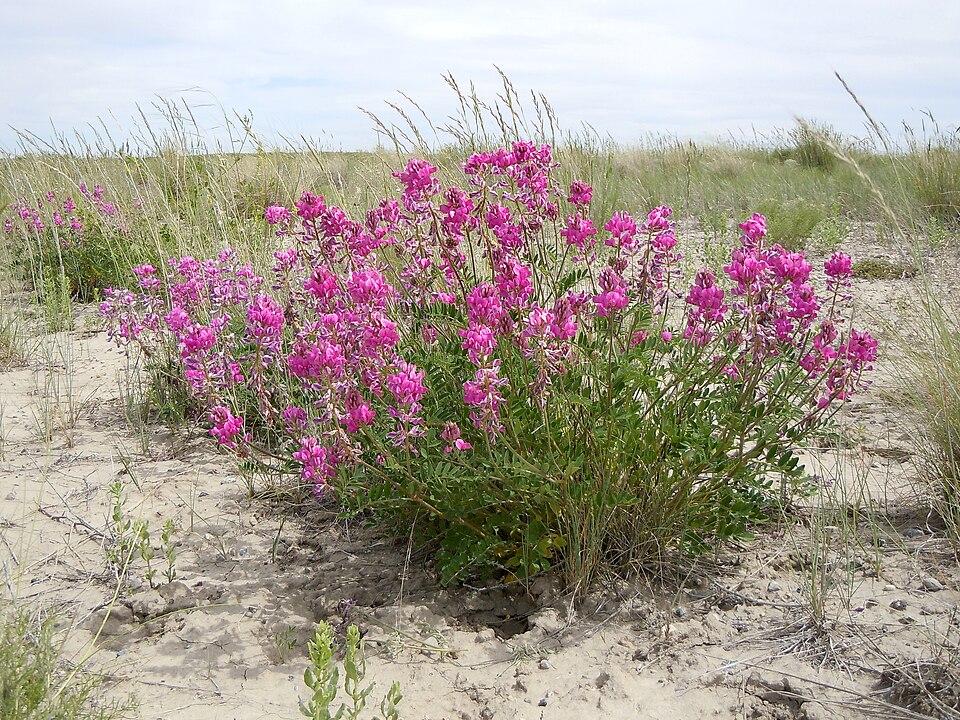
Hedysarum boreale, known as Boreale Sweetvetch or Northern Sweetvetch, is a striking native perennial legume of the Rocky Mountain West and Great Plains. Growing 1 to 2 feet tall on upright, leafy stems, this member of the pea family (Fabaceae) produces showy racemes of rose-pink to deep magenta flowers that make it one of the most visually impressive wildflowers of western meadows and grasslands. The common name “sweetvetch” comes from the edible, somewhat sweet-tasting roots that were prized as food by Indigenous peoples — and memorably, by explorers of the American West including members of the Lewis and Clark Expedition.
Boreale Sweetvetch is a nitrogen-fixing legume that improves soil fertility wherever it grows, making it a valuable component of native plant communities in nutrient-poor soils. It thrives in full sun with moderate moisture — found naturally in open meadows, mountain slopes, sagebrush grasslands, and along stream margins from the foothills to subalpine zones. In Montana and Wyoming, it is a characteristic plant of mountain parks, open slopes, and riparian meadows, often forming impressive colonies that carpet hillsides with color in June and July.
Beyond its ornamental appeal, Boreale Sweetvetch provides critical ecological services: its flowers are among the most important nectar sources for native bees and other pollinators in western montane environments, and its seeds and roots are consumed by a variety of birds and mammals. It is an excellent choice for native gardens, pollinator plantings, and revegetation of disturbed sites throughout the Northern Rockies.
Identification
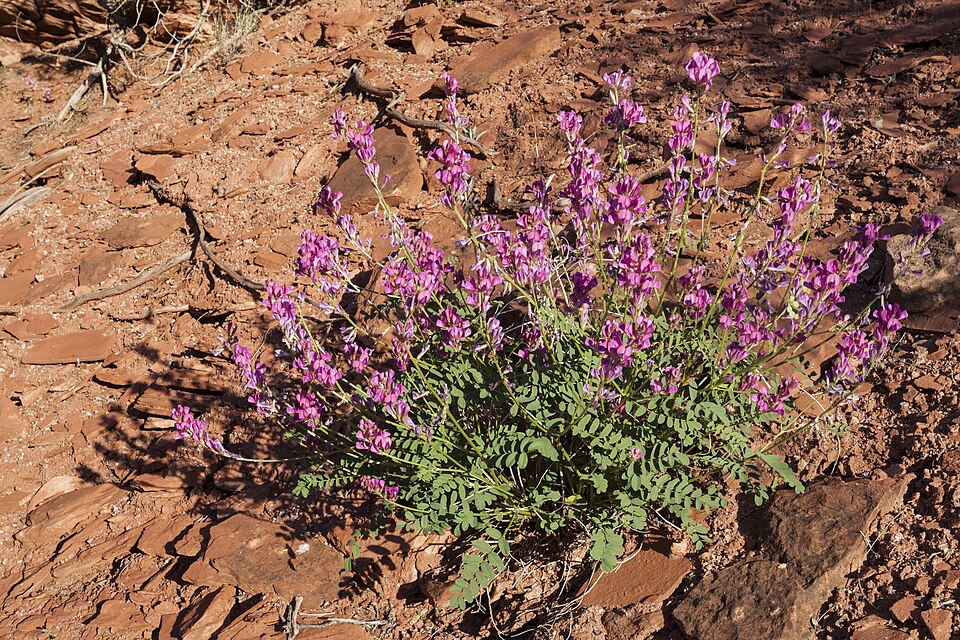
Boreale Sweetvetch is an erect perennial herb, growing 8 to 24 inches (20–60 cm) tall from a woody taproot. The stems are stout and branching, bearing pinnately compound leaves. Multiple stems typically arise from a single crown, forming a bushy clump over time. The overall appearance is lush and full during the growing season, with a particularly showy flowering display.
Leaves
The leaves are pinnately compound, 2 to 5 inches long, bearing 11 to 21 leaflets arranged in opposite pairs. Each leaflet is oblong to elliptic, ¾ to 1½ inches long, dark green above and slightly paler below, with prominent veins and a rounded tip with a small mucro (sharp point). Unlike the vetches (Vicia), the leaves of Hedysarum do not terminate in tendrils — the stem grows upright independently. The foliage remains attractive and lush throughout the growing season, turning pale yellow before senescence in fall.
Flowers & Fruit
The flowers are the plant’s most dramatic feature — deep rose-pink to reddish-magenta pea flowers, each 0.7 to 1 inch (18–25 mm) long, arranged in dense, one-sided racemes of 10 to 30 blossoms. The racemes are borne on long peduncles arising from the upper leaf axils, creating a colorful, upright display. Individual flowers have the typical legume structure: a large banner petal, two wing petals, and a keel. Bloom time runs from late May through July in Montana and Wyoming, with the peak display in June at mid-elevations.
The fruit is a distinctive loment — a segmented pod, 1 to 2 inches long, that breaks apart at constrictions into 3 to 7 single-seeded segments. The segments are flat, oval, and netted in texture, dispersed by wind and gravity. The seeds within are oval and brownish, remaining viable in the soil for many years.
Quick Facts
| Scientific Name | Hedysarum boreale |
| Family | Fabaceae (Pea / Legume) |
| Plant Type | Perennial Herb / Subshrub |
| Mature Height | 1–2 ft |
| Sun Exposure | Full Sun |
| Water Needs | Moderate |
| Bloom Time | May – July |
| Flower Color | Deep rose-pink to reddish-magenta |
| Soil Type | Well-drained; sandy, gravelly, loamy |
| Nitrogen Fixer | Yes — root nodules fix atmospheric nitrogen |
| USDA Hardiness Zones | 3–7 |
Native Range
Boreale Sweetvetch is native to the western interior of North America, ranging from the Northern Rocky Mountains south through the Colorado Plateau and Great Basin, and east across the northern Great Plains. Its core range spans Montana, Wyoming, Idaho, Colorado, Utah, Nevada, Arizona, and New Mexico in the U.S., extending north into the Canadian provinces of British Columbia, Alberta, Saskatchewan, and Manitoba.
In Montana and Wyoming, Boreale Sweetvetch is a common resident of mountain parks, open slopes, dry meadows, and sagebrush grasslands from the foothills up to subalpine elevations. It is particularly abundant in the Greater Yellowstone Ecosystem and throughout the Madison, Gallatin, and Big Horn mountain ranges. The plant favors well-drained, often gravelly or sandy soils in areas with reliable but not excessive summer moisture.
The species is well-adapted to the boom-bust precipitation cycles of the Rocky Mountain West, drawing on deep taproots to access moisture during dry summers. After fire, it is among the earliest legumes to recolonize disturbed ground, accelerating community recovery through nitrogen fixation. Its presence in a plant community is often an indicator of moderate disturbance and recovery — a positive ecological signal.
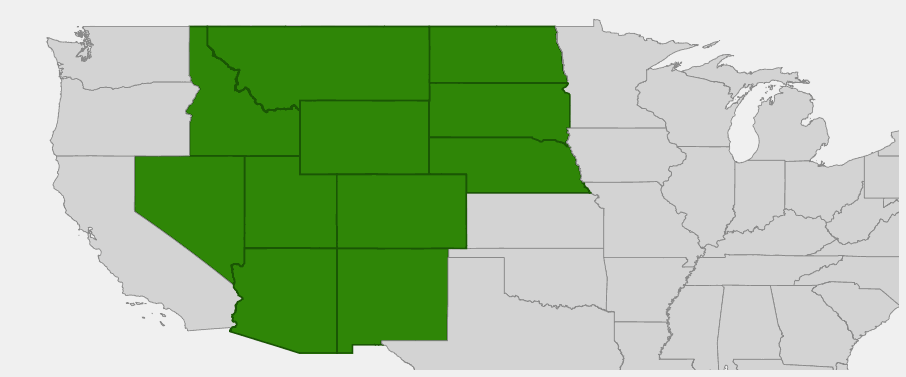
📋 Regional plant lists featuring Boreale Sweetvetch: Montana & Wyoming
Growing & Care Guide
Boreale Sweetvetch is a rewarding plant for native gardens in the Rocky Mountain region. It is long-lived, moderately easy to establish from seed, and once settled in the right conditions, it thrives with little intervention.
Light
Boreale Sweetvetch requires full sun for optimal growth and flowering. It will tolerate very light shade but becomes noticeably less floriferous in shadier conditions, producing more vegetative growth and fewer flowers. Plant it in the sunniest location available in your garden — south or west facing slopes are ideal in the Rocky Mountain region.
Soil & Water
This plant thrives in well-drained soils — sandy, gravelly, or loamy substrates are all suitable. It performs best with moderate moisture, which in Montana and Wyoming typically means sites that receive at least 12–15 inches of precipitation annually or occasional supplemental irrigation. Avoid heavy clay or waterlogged soils. Once established (typically after the second growing season), Boreale Sweetvetch is moderately drought tolerant, relying on its deep taproot to access subsoil moisture during dry spells. Avoid fertilizing — as a legume, it fixes its own nitrogen and can become excessively vegetative in rich soils.
Planting Tips
Growing Boreale Sweetvetch from seed requires patience but is reliable with proper preparation. Seeds have a hard seed coat that requires scarification — rub between two sheets of sandpaper or nick the seed coat with a knife — followed by 30–60 days of cold-moist stratification. After stratification, sow seeds ½ inch deep in a sunny, well-drained location. Germination typically takes 2–3 weeks. First-year plants establish a large root system and may not flower until the second season. Transplanting is difficult due to the deep taproot; direct seeding or early container transplanting is preferred.
Pruning & Maintenance
Boreale Sweetvetch requires minimal care once established. After the main bloom period, the developing seed pods are attractive in their own right. Allow some pods to mature and drop seed for natural spread; trim spent stems in late fall or early spring. The plant’s woody crown is persistent and expands slightly each year, so avoid disturbing the base. In cold-winter climates, a light mulch of straw or leaves over the crown helps protect against winter kill in the first 1–2 years.
Landscape Uses
- Native wildflower gardens — one of the showiest wildflowers in the Rocky Mountain region
- Pollinator meadows — exceptional nectar source for native bumblebees
- Revegetation and restoration — nitrogen-fixing pioneer on disturbed sites
- Dry slope stabilization — taproot helps anchor loose, gravelly slopes
- Mixed borders — pairs beautifully with Blue Flax, Arrowleaf Balsamroot, and native grasses
Wildlife & Ecological Value
Boreale Sweetvetch is one of the most ecologically significant native wildflowers of the Rocky Mountain West, providing critical resources for pollinators, seed-eating birds, and large herbivores.
For Birds
The segmented seed pods of Boreale Sweetvetch provide food for a variety of seed-eating birds. Horned Larks, Western Meadowlarks, and various native sparrows forage among the plants during seed ripening in late summer. The bushy clumps provide valuable nesting cover and refuge for ground-nesting birds in open meadow habitats.
For Mammals
The roots and foliage of Boreale Sweetvetch are highly palatable to large ungulates. Elk, Mule Deer, and Pronghorn Antelope browse the foliage throughout the growing season. Grizzly Bears and Black Bears dig up the sweet, starchy roots as an important food source — particularly in early summer when other high-calorie foods are less available. Ground squirrels and prairie dogs also consume seeds and roots. The roots of this plant played a documented role in the survival of Lewis and Clark Expedition members during their crossing of the Northern Rockies in 1805.
For Pollinators
Boreale Sweetvetch is among the most important native bee plants in the Rocky Mountain region. Its large, showy flowers with abundant nectar and pollen attract multiple species of bumblebees (Bombus spp.), which are the primary pollinators. Long-tongued solitary bees including Leaf-cutter Bees (Megachile spp.) and Mason Bees (Osmia spp.) are frequent visitors. The dense racemes can host dozens of bees simultaneously at peak bloom, creating an impressive and ecologically significant pollinator spectacle in Montana and Wyoming meadows.
Ecosystem Role
As a nitrogen-fixing legume, Boreale Sweetvetch significantly enriches the soil where it grows, benefiting neighboring plants that cannot fix their own nitrogen. After wildfires or other disturbances, it is among the first plants to recolonize, beginning the process of nitrogen accumulation that enables other plant species to establish. Its deep taproot breaks up compacted subsoil layers and channels water deeper into the soil profile, improving moisture retention at the site scale. In the context of the Greater Yellowstone Ecosystem, it is a foundational species in the recovery of disturbed meadow communities.
Cultural & Historical Uses
Few native plants of the Rocky Mountain West have such a well-documented history as a human food plant as Boreale Sweetvetch. The most famous account comes from the journals of the Lewis and Clark Expedition: on September 20, 1805, facing near-starvation while crossing the Bitterroot Mountains in present-day Idaho, members of the Corps of Discovery consumed the roots of what was almost certainly Hedysarum boreale, guided by their Shoshone guides and Sacagawea. The roots were described as “tolerable” when boiled and reportedly sweet-tasting — hence the common name “sweetvetch.”
Indigenous peoples throughout the Rocky Mountain region consumed the roots of Boreale Sweetvetch as a significant food source. The Shoshone, Blackfoot, Salish, and Crow peoples all harvested the large, starchy taproots in spring and fall — when they are most palatable and nutritious — roasting them in coals, boiling them, or eating them raw. The roots have a mild sweetness and a texture similar to a dense parsnip or turnip. They were also dried and stored for winter use, providing a reliable plant-based food in a region where plant calories could be scarce during harsh winters.
In contemporary times, Boreale Sweetvetch has attracted attention as a potentially valuable edible plant for sustainable food systems, particularly in high-altitude and northern climates where few perennial food crops can thrive. Its nitrogen-fixing ability, combined with its edible roots and attractive flowers, makes it an interesting candidate for permaculture and food forest plantings in the Rocky Mountain region. However, collectors should note that it can be confused with Poison Hemlock and other toxic plants — proper identification is essential before consuming any wild plant.
Frequently Asked Questions
Is Boreale Sweetvetch toxic to animals?
Boreale Sweetvetch is generally considered safe for livestock and wildlife. Unlike Locoweed (Oxytropis and Astragalus species) — which can cause serious neurological toxicity — Hedysarum species do not contain swainsonine or the selenium compounds that make those plants dangerous. In fact, Boreale Sweetvetch is a valued forage plant for livestock and wildlife.
When is the best time to plant Boreale Sweetvetch seeds?
Fall planting (October–November) is most reliable — seeds experience natural cold-moist stratification over winter and germinate in spring. For spring planting, stratify seeds in the refrigerator for 30–60 days, then direct-seed or start in pots after the last frost.
How long does it take to establish and bloom?
Boreale Sweetvetch typically flowers in its second year from seed. First-year plants focus energy on root development, often producing only a few leaves above ground. By the third year, established plants typically produce a full display of flowers and begin to spread slowly via seed.
Does it spread aggressively?
No. Boreale Sweetvetch spreads slowly by seed and does not reproduce vegetatively. In typical garden conditions, it forms a well-behaved clump that expands gradually. It is not considered invasive and is actively encouraged in native plant restorations throughout its range.
Is it related to the sweetvetch sold in garden centers?
Many plants marketed as “sweetvetch” in U.S. and European garden centers are Hedysarum coronarium, a Mediterranean species. Make sure you are obtaining seed or plants of the native Hedysarum boreale for use in Montana and Wyoming gardens and restorations.