Richardson’s Geranium (Geranium richardsonii)
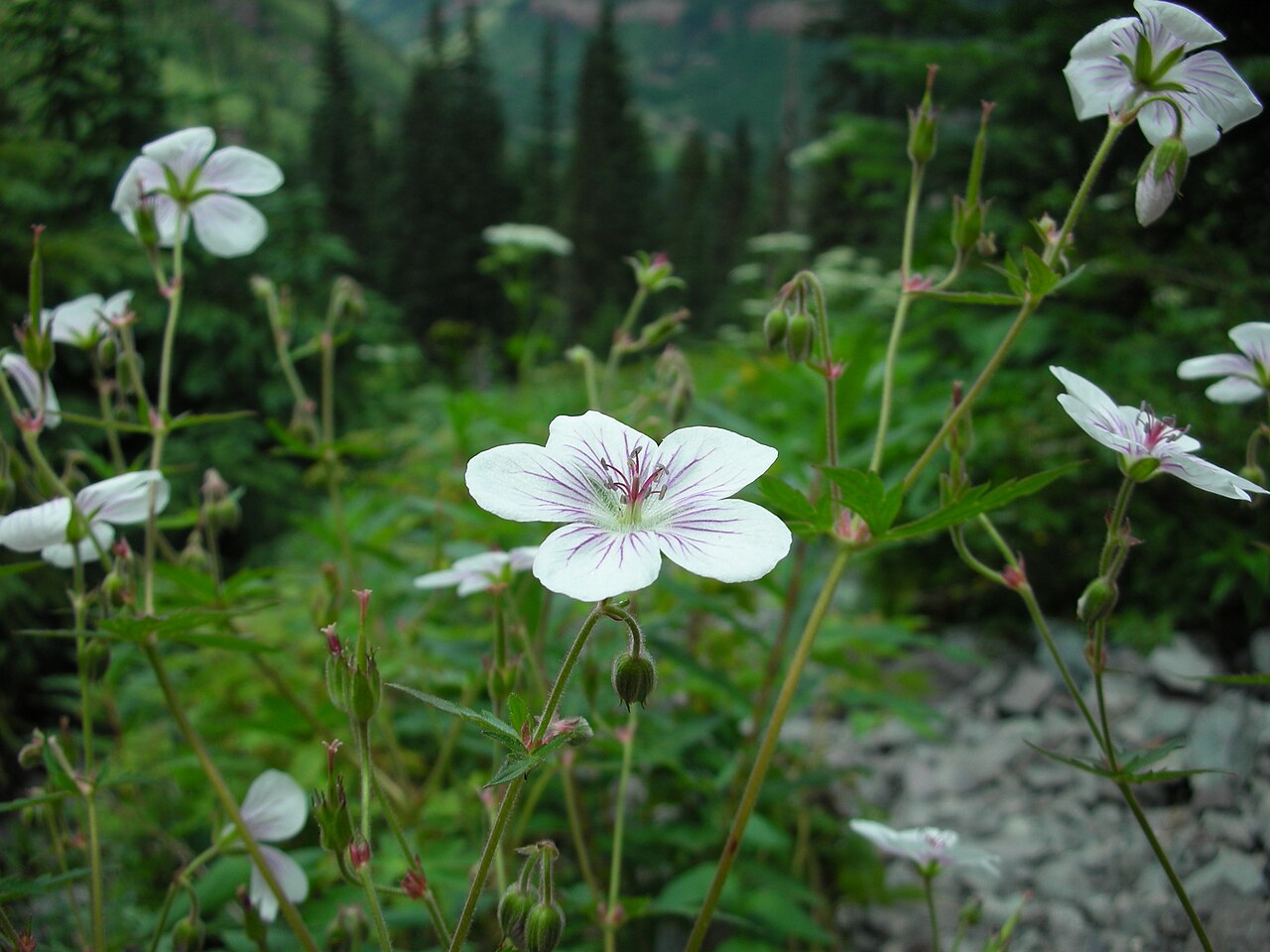
Geranium richardsonii, commonly known as Richardson’s Geranium, is a graceful native wildflower of the western mountains, prized for its clean white to very pale pink flowers etched with fine purple veins. A member of the geranium family (Geraniaceae), it grows wild across a wide swath of the West, from moist meadows and aspen groves to streambanks and open forest, wherever soil stays reasonably cool and moist through the growing season.
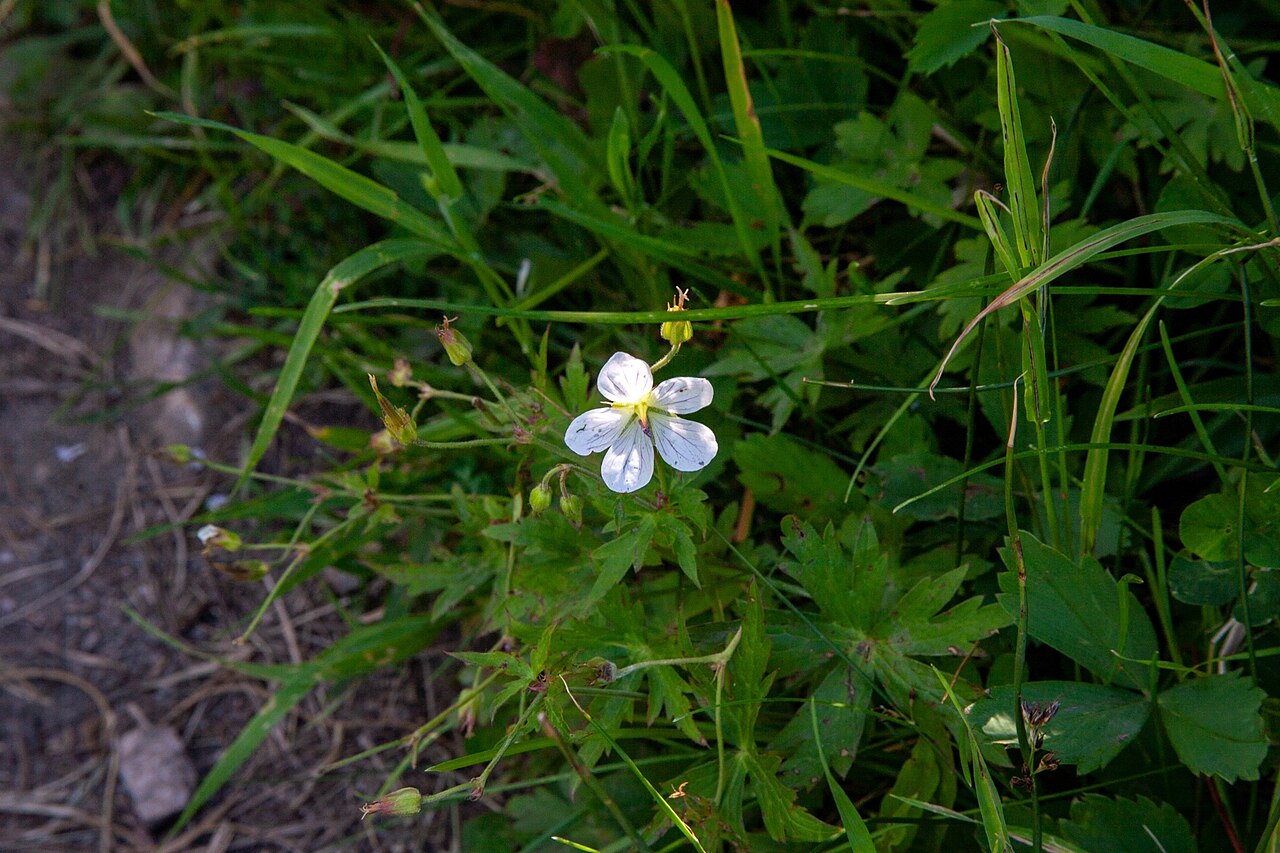
This is a clump-forming herbaceous perennial, typically 1 to 3 feet tall, with deeply lobed, maple-like leaves and slender, branching flower stalks that hold the blooms well above the foliage. Unlike its showier pink-flowered relative, sticky purple geranium (Geranium viscosissimum), Richardson’s Geranium is quieter and more refined — white or faintly blushed petals, each lined with delicate purple veins that guide pollinators to the nectar within.
For native plant gardeners in the Rocky Mountains, Great Basin, and Pacific states, Richardson’s Geranium is an easy, long-lived perennial for a part-shade border, woodland edge, or naturalistic meadow planting. It asks for little beyond reasonably consistent moisture and benefits pollinators through a long summer bloom season.
Identification
Richardson’s Geranium grows as an upright, clump-forming perennial, usually 1 to 3 feet (30–90 cm) tall, from a stout, fibrous-rooted base. Stems are slender, often branched in the upper portion, and covered in fine glandular hairs that can feel slightly sticky to the touch — a family trait shared with several other native geraniums.
Leaves
The leaves are deeply palmately lobed, cut nearly to the base into five to seven toothed, maple-leaf-like segments, giving the plant a lacy, textured look. Lower leaves are long-stalked and form a loose basal clump; upper stem leaves are smaller, shorter-stalked, and more deeply cut. Foliage is medium green and softly hairy on both surfaces.
Flowers
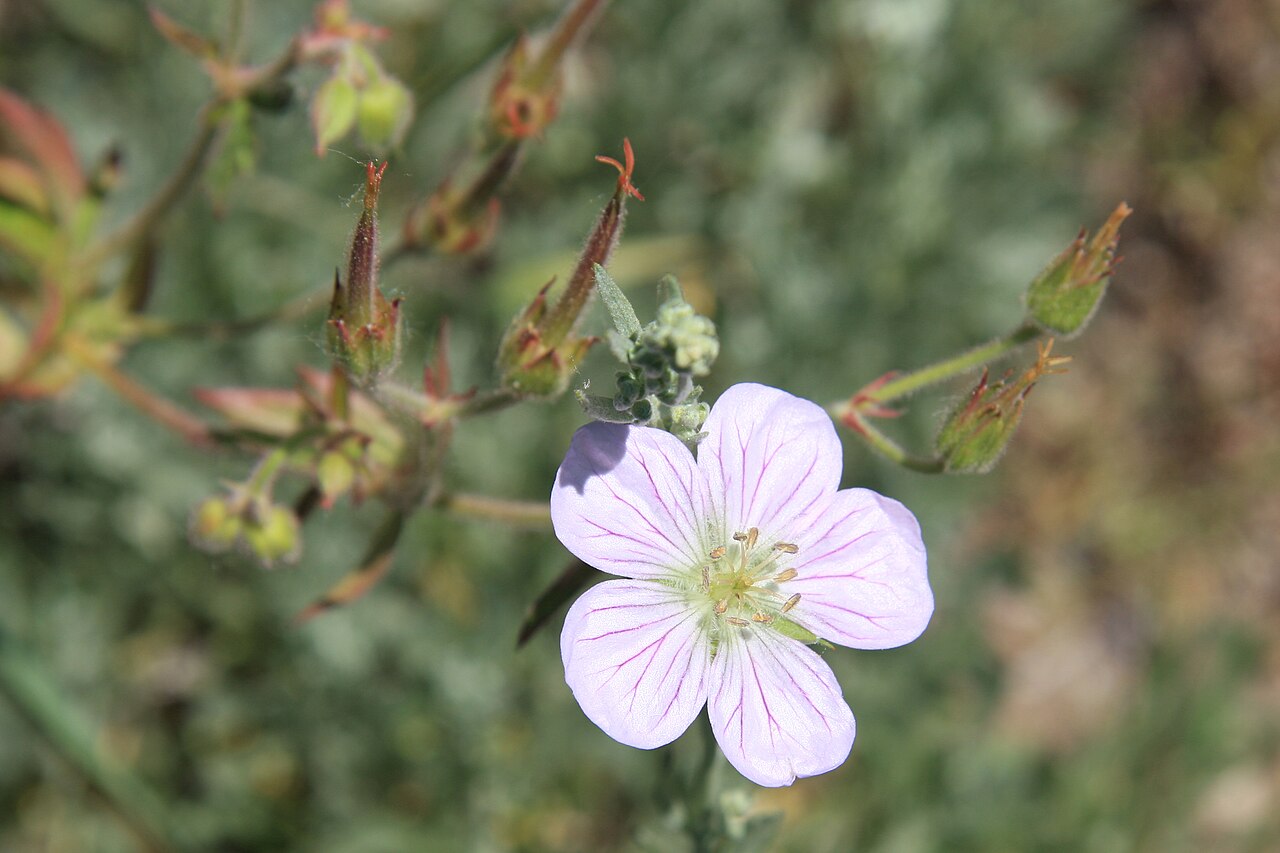
Flowers are borne in loose, open clusters atop slender stalks well above the foliage, each bloom about 0.75 to 1.25 inches (2–3 cm) across with five rounded, white to very pale pink petals. The petals are conspicuously marked with fine purple-pink veins that radiate from the base, a key feature for telling this species apart from similar white-flowered geraniums. Ten stamens with reddish-purple anthers surround the central pistil. Bloom runs from early summer into early fall, often continuing for many weeks in a single location.
Fruit & Seeds
Like other geraniums, the fruit is a distinctive long, beaked capsule — the source of the family’s old nickname “cranesbill.” As the capsule dries, it splits explosively from the base, flinging the seeds away from the parent plant. The slender, pointed beaks are visible on the plant for weeks before and after the petals drop, often alongside still-opening flowers on the same stem.
Quick Facts
| Scientific Name | Geranium richardsonii |
| Family | Geraniaceae (Geranium) |
| Plant Type | Herbaceous perennial forb |
| Mature Height | 1–3 ft (30–90 cm) |
| Mature Spread | 1–2 ft, clump-forming |
| Growth Rate | Moderate |
| Sun Exposure | Part Sun to Part Shade |
| Water Needs | Moderate; best with consistent moisture |
| Soil Type | Loamy, well-drained but moisture-retentive |
| Soil pH | 6.0–7.5 (slightly acidic to neutral) |
| Bloom Time | June – September |
| Flower Color | White to pale pink with purple veins |
| Fall Color | Foliage yellows and dies back after frost |
| Fruit | Beaked “cranesbill” capsule; not ornamental |
| Deer Resistant | Moderate (occasionally browsed) |
| USDA Hardiness Zones | 3–8 |
Native Range
Richardson’s Geranium is widespread across western North America, native from western Canada south through Washington, Oregon, and California, east through Idaho, Montana, Wyoming, and the western Dakotas, and south through Nevada, Utah, Colorado, Arizona, and New Mexico. Across this range it is a true mountain and high-plateau plant, most common from mid to upper elevations in the Rockies, Sierra Nevada, and the ranges of the Great Basin.
It grows in a wide range of moist to seasonally moist habitats: aspen groves, coniferous forest openings, mountain meadows, grasslands, and riparian corridors such as stream terraces, alluvial benches, and the margins of lakes and wet valley bottoms. It is notably abundant in the pinyon-juniper woodlands of Utah and is also found as an understory associate in mixed-conifer and even giant sequoia forest in the Sierra Nevada of California, showing its tolerance for both open meadow sun and dappled forest shade.
Common associates across its range include aspen, ponderosa and lodgepole pine, ninebark, and a range of montane wildflowers and grasses that share its preference for cool-season moisture. Because the species depends on reliable moisture during the growing season, populations are generally confined to higher elevations or riparian corridors rather than the hot, dry lowlands within its broader geographic range.
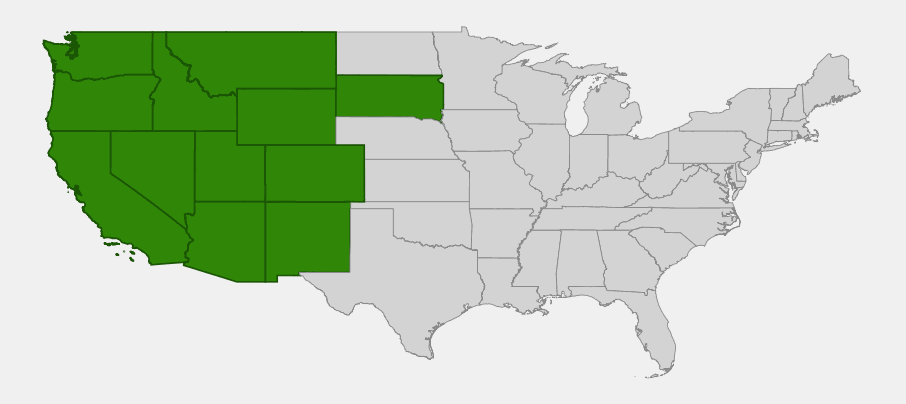
📋 Regional plant lists featuring Richardson’s Geranium: Montana & Wyoming · Utah & Western Colorado · Arizona & New Mexico · Idaho, Eastern Oregon & Eastern Washington · Western Oregon & Western Washington · North Dakota, South Dakota & Western Minnesota
Growing & Care Guide
Richardson’s Geranium is an easygoing native perennial for gardeners in the mountain West, rewarding modest care with months of delicate white bloom and reliable, long-lived clumps.
Light
Plants perform best in part sun to part shade — the dappled light of an aspen grove or forest edge mimics their natural habitat closely. They will tolerate more sun at higher, cooler elevations if soil moisture is adequate, and more shade in hotter, lower-elevation gardens.
Soil & Water
Richardson’s Geranium prefers loamy soil that drains well but does not dry out completely during the growing season. It is not a true wetland plant, but it struggles in hot, dry, sandy sites with no supplemental moisture. A site that stays evenly moist — such as near a downspout, at the edge of a rain garden, or in a lightly shaded border — suits it well. Established plants tolerate brief dry spells better than young ones.
Planting Tips
Set out container plants in spring or fall, spacing them 12 to 18 inches apart to allow clumps to fill in without overcrowding. A mulch layer helps retain soil moisture and keep roots cool through summer heat. The species transplants readily and establishes quickly once given adequate water during its first season.
Pruning & Maintenance
Deadheading spent flower stalks encourages continued bloom through the summer and prevents excessive self-seeding where a tidier look is wanted. Cut the whole plant back to the basal foliage in late fall or early spring. Clumps are long-lived and rarely need division, though old, congested clumps can be divided in early spring to rejuvenate them.
Propagation
Richardson’s Geranium is easily grown from seed, which benefits from a period of cold-moist stratification over winter before spring germination — sowing outdoors in fall accomplishes this naturally. Established clumps can also be divided in early spring, with each division replanted promptly to avoid root desiccation.
Landscape Uses
Its soft texture and long bloom season make Richardson’s Geranium useful in several garden settings:
- Woodland and aspen-grove gardens in part shade
- Mountain meadow and naturalistic plantings
- Pollinator and butterfly gardens for season-long nectar
- Rain gardens and moist border edges
- Mixed native perennial borders as a filler among bolder foliage
Wildlife & Ecological Value
Richardson’s Geranium is a dependable source of nectar and pollen through a long summer bloom season in habitats where many showier wildflowers finish earlier.
For Pollinators
The open, accessible flowers attract a wide range of native bees, bumblebees, and other pollinating insects. The fine purple veining on the petals functions as a nectar guide, directing visiting insects toward the center of the flower and improving pollination efficiency.
For Birds & Mammals
Deer and elk will browse the foliage on occasion, particularly where other forage is scarce, though it is not a preferred food source. Small mammals and ground-foraging birds benefit indirectly from the insect activity the flowers draw, and the plant’s presence in forest openings and meadow edges adds to overall habitat diversity used by a range of montane wildlife.
Ecosystem Role
As a common understory and meadow associate across much of the Rocky Mountain and Great Basin region, Richardson’s Geranium contributes to the herbaceous layer that supports pollinator food webs through the growing season. Its presence in aspen groves and forest openings reflects, and helps maintain, the diverse ground layer typical of healthy montane plant communities.
Cultural & Historical Uses
Like several other native geraniums, Richardson’s Geranium has a history of traditional use among some Indigenous peoples of the West, where the astringent roots of related wild geraniums were sometimes used in traditional remedies for minor ailments. Specific, well-documented ethnobotanical records for this exact species are limited compared with more widely studied relatives, such as spotted geranium in the East, and much of what is recorded reflects general uses attributed to wild geraniums as a group rather than detailed accounts specific to Geranium richardsonii.
Beyond these historical notes, the species has little recorded cultural significance and has mainly been valued, then as now, as a conspicuous and attractive component of mountain meadow and forest understory plant communities rather than for any practical use.
Frequently Asked Questions
Is Richardson’s Geranium the same as wild geranium?
No. “Wild geranium” usually refers to Geranium maculatum, a pink-flowered species native to the eastern and central United States. Richardson’s Geranium is a separate, white-flowered species native to the western mountains.
How is Richardson’s Geranium different from sticky purple geranium?
Sticky purple geranium (Geranium viscosissimum) has showier pink-purple flowers and often grows alongside Richardson’s Geranium in the same meadows. Richardson’s Geranium is distinguished by its white to very pale pink petals with fine purple veining.
Does Richardson’s Geranium spread aggressively?
No. It forms slowly expanding clumps and spreads modestly by seed, but it is not considered aggressive or weedy. Deadheading can reduce self-seeding further in a tidy garden setting.
Can Richardson’s Geranium tolerate full sun?
It can, especially at higher, cooler elevations with adequate soil moisture, but it generally performs best with some afternoon shade, particularly in hotter, lower-elevation gardens.
Is Richardson’s Geranium deer resistant?
It has only moderate deer resistance. Deer and elk browse the foliage occasionally, especially when preferred forage is limited, though it is not a first-choice food source.

Looking for a nursery that carries Richardson’s Geranium?
Browse our native plant nursery directory: Arizona · California · Colorado · Idaho · Montana · Nevada & New Mexico · Oregon · Utah · Washington · Wyoming