Varileaf Phacelia (Phacelia heterophylla)
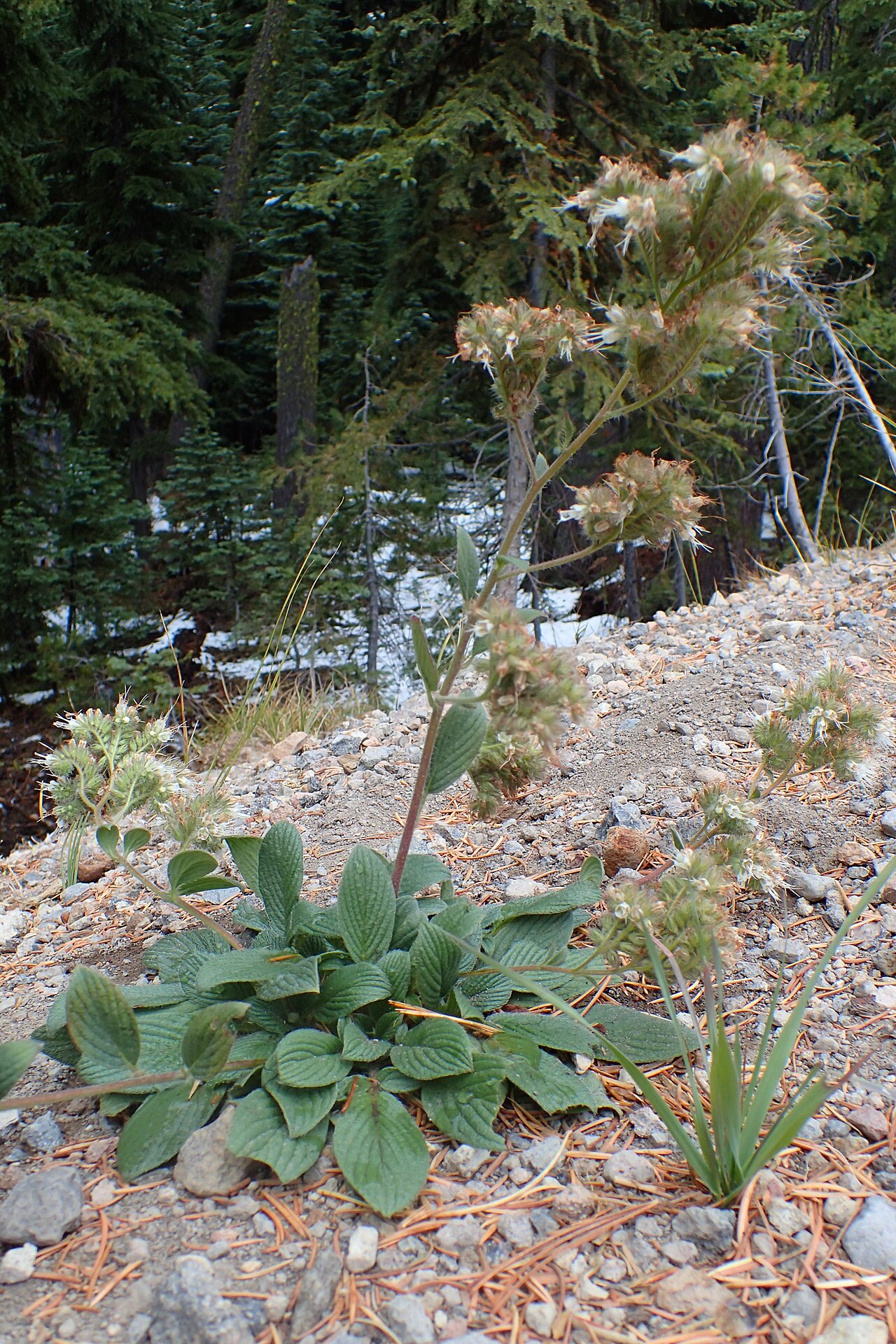
Phacelia heterophylla, commonly called Varileaf Phacelia (also known as Virgate Phacelia or Wand Phacelia), is a biennial or short-lived perennial wildflower found across much of the mountain West. A member of the waterleaf family (Hydrophyllaceae, now often folded into Boraginaceae), it gets its common name from its genuinely variable leaves — the basal rosette leaves are broad and sometimes lobed, while the leaves higher on the flowering stem narrow dramatically, so a single plant can look like it is wearing two different outfits.
This is not a showy garden phacelia in the way California’s annual species are; its flowers are small, pale, and bell-shaped, clustered into tight, coiled cymes that uncurl as they bloom — a family trait called scorpioid inflorescence that gives several of its relatives the common name “scorpionweed.” Varileaf Phacelia instead earns its keep as a tough, drought-tolerant pioneer of disturbed ground: road cuts, burned slopes, dry open forest, and gravelly mountainsides from the Pacific Coast ranges to the Rockies.
For native plant gardeners in dry-summer regions, Varileaf Phacelia is a useful, unfussy filler for a sunny, lean-soil bed — it reseeds modestly, feeds early-season bees, and asks for almost nothing once established. It is best handled with light gloves, however; like many phacelias, its hairy foliage can cause a poison-ivy-like contact rash in sensitive people.
Identification
Varileaf Phacelia is an erect, somewhat coarse herb reaching 1 to 3 feet tall, with a single main stem or a few stems arising from a basal cluster of leaves. The whole plant is covered in stiff, spreading hairs (hispid), which give the stems and leaves a grayish-green, slightly rough texture.
Leaves
Leaves are the plant’s signature feature and the source of its common name. Basal leaves are long-petioled, oval to lance-shaped, 2 to 6 inches long, and often shallowly lobed or toothed at the base. Stem leaves become progressively smaller, narrower, and less divided as they ascend, with the uppermost leaves reduced to simple, stalkless lance shapes. This leaf heterophylly — different leaf shapes on the same plant — is unusual enough among Western wildflowers to be a reliable field mark once you know to look for it.
Flowers
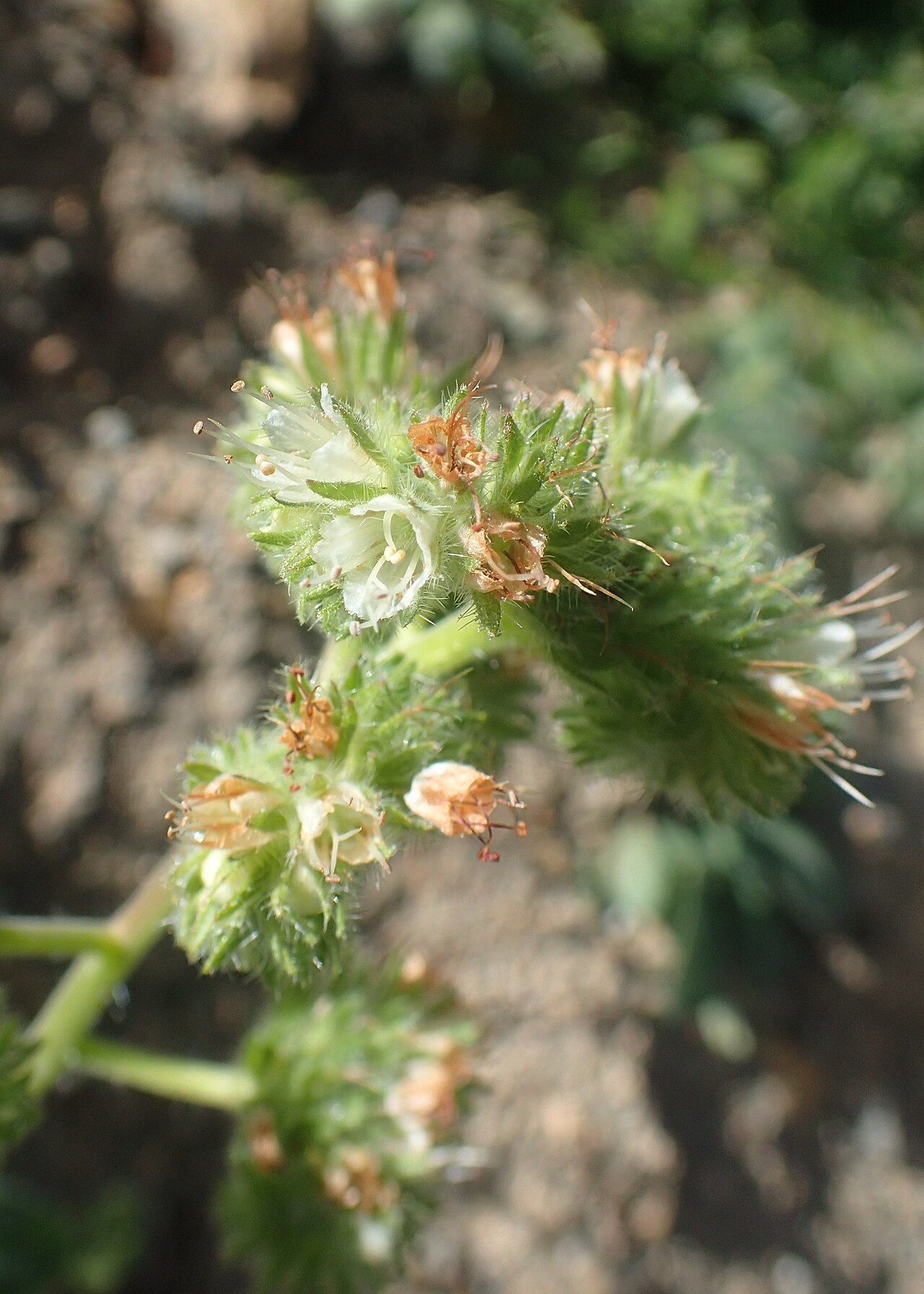
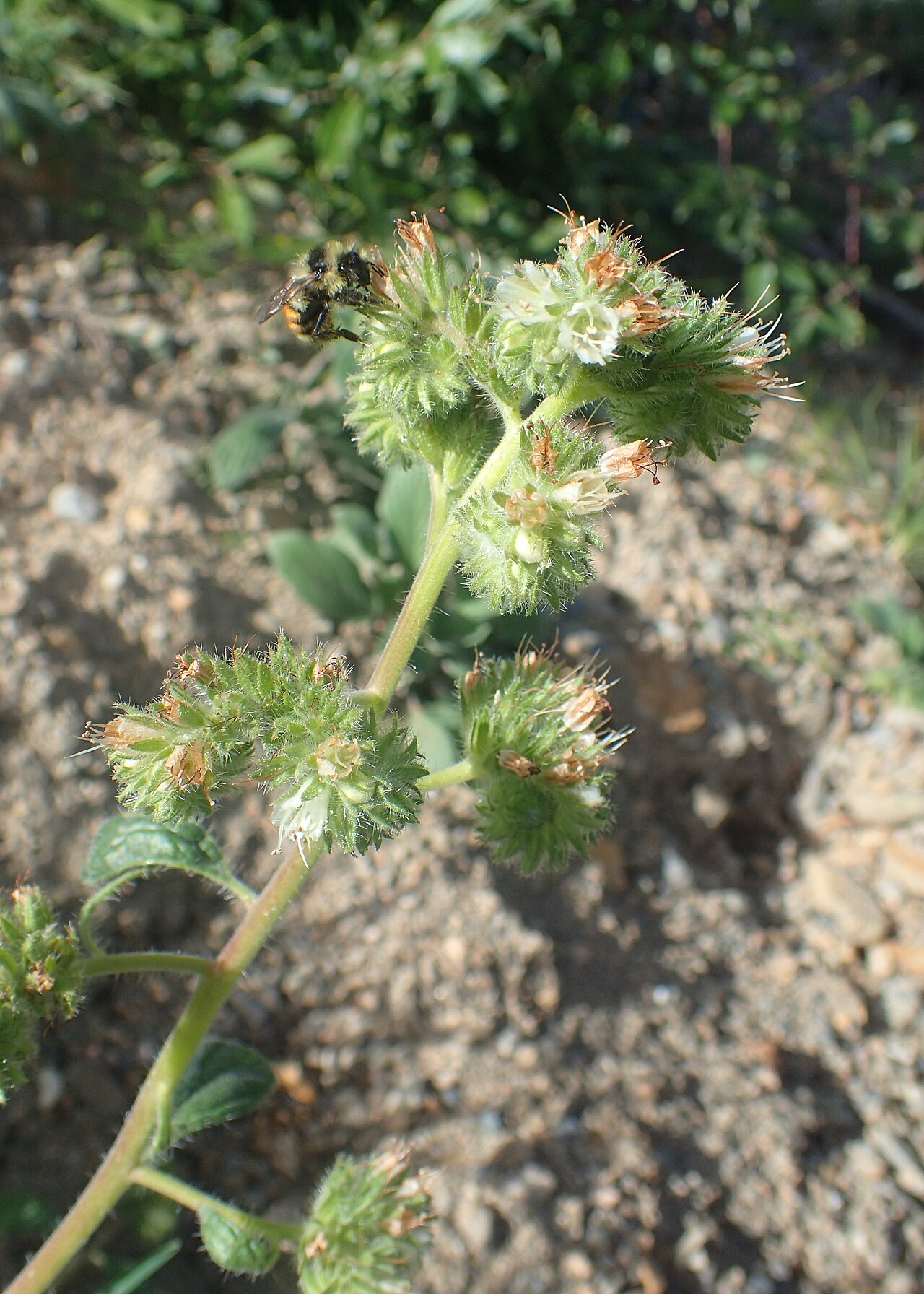
Flowers are small, about ¼ inch across, bell- to funnel-shaped, and whitish to pale lavender, each with five stamens and a style that project noticeably beyond the petals, giving flowering stems a slightly fuzzy, bottlebrush look. They are packed into dense, coiled, one-sided clusters (cymes) at the stem tips and upper leaf axils; the coils straighten out gradually as more flowers open along their length. Bloom runs from late spring into summer depending on elevation, generally May to July in California and often into August at higher, cooler sites in the Rockies.
Fruit & Seeds
After flowering, each small capsule splits to release one or two pitted, dark brown seeds. The dried flowering stalks and seed capsules often persist through summer, turning tan and papery, which is when many photographs of the species are taken — the dried inflorescence remains in its curled, caterpillar-like shape.
Quick Facts
| Scientific Name | Phacelia heterophylla |
| Family | Hydrophyllaceae (Waterleaf) |
| Plant Type | Biennial or Short-lived Perennial Forb |
| Mature Height | 1–3 ft |
| Mature Spread | 1–1.5 ft |
| Growth Rate | Moderate to fast (annual to biennial cycle) |
| Sun Exposure | Full Sun to Part Shade |
| Water Needs | Low to Moderate |
| Soil Type | Gravelly, sandy, or rocky; well-drained |
| Soil pH | 6.0–7.5 (neutral to slightly acidic) |
| Bloom Time | May – August (varies by elevation) |
| Flower Color | White to pale lavender |
| Fall Color | None notable; foliage dries tan |
| Fruit | Small dry capsule, not showy |
| Deer Resistant | Yes (hairy, bitter foliage) |
| USDA Hardiness Zones | 4–9 |
Native Range
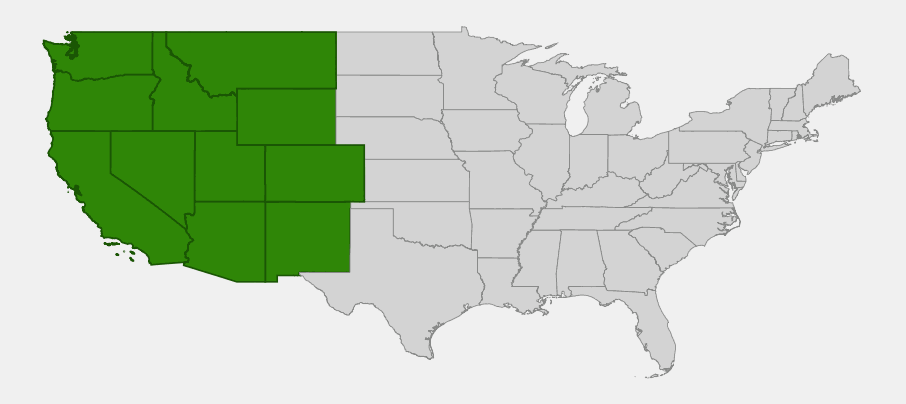
Varileaf Phacelia occupies a broad swath of the western United States, from the Cascade and Coast Ranges of Washington and Oregon south through California, and east across the Great Basin and Rocky Mountain states to Montana, Wyoming, Colorado, Utah, Nevada, Arizona, and New Mexico. Within Washington it occurs on both sides of the Cascade crest, and it reaches well into the Colorado Rockies and the mountains of Arizona and New Mexico, generally at middle to fairly high elevations.
Across this range it is a plant of open, disturbed, or rocky ground rather than closed forest: road cuts and shoulders, recently burned slopes, dry meadows, open conifer woodland, talus, and mesas. Elevation ranges from near sea level in parts of California up to roughly 9,000 feet in the Sierra Nevada and southern Rockies, which is why bloom time stretches from May at low desert-edge sites to August in subalpine settings.
Varileaf Phacelia is not reported as native in the central and eastern United States, and gardeners there should not expect it to persist outdoors; it is strictly a plant of the western mountains and intermountain basins.
📋 Regional plant lists featuring Varileaf Phacelia: Idaho, Eastern Oregon & Eastern Washington · Western Oregon & Western Washington · Utah & Western Colorado · Montana & Wyoming · Arizona & New Mexico
Growing & Care Guide
Varileaf Phacelia is a plant for gardeners who want texture and early pollinator value without fuss. It is best suited to naturalistic, dry-summer gardens, slope plantings, and post-fire or post-construction revegetation where its pioneering habit is an asset rather than a nuisance.
Light
Give it full sun to light, open shade. In the wild it favors recently disturbed or open ground precisely because it does not compete well with dense shade or thick turf; too much shade reduces flowering and makes stems leggy and weak.
Soil & Water
Lean, fast-draining, gravelly or sandy soil suits it best — rich, constantly moist garden soil tends to produce rank, floppy growth and shortens the plant’s life. Water occasionally to establish seedlings in the first year, then rely on natural rainfall; established plants are quite drought tolerant and resent heavy summer irrigation, particularly in clay soils.
Planting Tips
Direct-seed in fall so winter cold and moisture can break seed dormancy naturally, a process called cold stratification. Scatter seed on bare, disturbed soil rather than burying it deeply — in nature it typically establishes on freshly exposed ground. Thin seedlings to 12–18 inches apart if a tidier look is wanted, though a looser, self-sown drift usually looks more natural.
Pruning & Maintenance
Little maintenance is needed. Deadheading spent flower clusters can extend bloom slightly and tidy the plant’s appearance, but leaving some seed heads in place allows it to self-sow for next year, since many plants behave as biennials or short-lived perennials that die back after flowering. Wear gloves when handling the plant; the stiff hairs can irritate skin.
Propagation
Propagation is almost always by seed, either collected from dried capsules in late summer or purchased from native seed suppliers. Seed benefits from a cold-moist stratification period of 4–6 weeks if sown in spring rather than fall. Division is not practical given the plant’s taprooted, short-lived growth habit.
Landscape Uses
Varileaf Phacelia fits several practical garden roles:
- Dry slope and rock garden filler in sunny, lean-soil sites
- Pollinator meadows mixed with other early-season native wildflowers
- Post-fire and post-construction revegetation on disturbed soil
- Xeriscaping where low water use is a priority
- Roadside and slope stabilization plantings in the interior West
Wildlife & Ecological Value
Despite its modest looks, Varileaf Phacelia pulls real ecological weight, particularly as an early colonizer of disturbed ground where few other flowering plants are established yet.
For Pollinators
The genus Phacelia is well known among pollinator gardeners, and this species is no exception: its small, nectar-rich flowers attract native bees, bumblebees, and solitary bees in good numbers, along with some butterflies. Because it often blooms on freshly disturbed or burned ground, it can be an important early nectar source in landscapes recovering from fire or construction, where competing bloom is scarce.
Birds
Seed-eating songbirds, including sparrows and finches, take advantage of the small seeds produced in the dry capsules through late summer, especially where the plant grows in dense stands along disturbed corridors.
Mammals
The hairy, somewhat bitter foliage is not a preferred browse for deer or elk, which is part of why the species persists so well on heavily grazed or browsed rangeland; it is often one of the few broadleaf forbs still flowering in areas where more palatable plants have been grazed down.
Ecosystem Role
As a pioneer species, Varileaf Phacelia helps stabilize bare soil after fire, logging, or road construction, reducing erosion while slower-growing shrubs and perennials become established. Its presence on recently disturbed sites is often an early sign of native plant recovery rather than weed invasion.
Cultural & Historical Uses
Varileaf Phacelia does not carry the extensive ethnobotanical record of larger, more conspicuous western wildflowers, but botanists and herbarium collectors have documented it since the early 1800s, when Frederick Pursh first described the species from specimens gathered during early exploration of the American West. Its awkward, shifting leaf shapes made it a point of taxonomic curiosity for early collectors cataloging the flora of the Rocky Mountains and Pacific slope.
Historically, the genus Phacelia as a whole has drawn attention mainly for two reasons: its value to honeybees and native pollinators, which led some related annual species to be grown commercially as cover crops and bee forage, and its tendency, shared with Varileaf Phacelia, to cause allergic contact dermatitis in some people who handle the hairy foliage — a trait well known to field botanists and backcountry hikers in the plant’s range.
There is no record of Indigenous food or medicinal use specific to this species, and given its irritant hairs, it was more likely avoided than gathered. Today its main cultural role is a quiet one: a common, reliable sight along mountain roads and burn scars throughout the West, recognized mostly by hikers and naturalists rather than named in formal tradition.
Frequently Asked Questions
Is Varileaf Phacelia the same as “scorpionweed”?
“Scorpionweed” is a common nickname used loosely across many Phacelia species because of their coiled, scorpion-tail-shaped flower clusters. Several distinct species share the nickname, so it should not be used alone to identify this plant — Phacelia heterophylla is best confirmed by its combination of varied leaf shapes and the scientific name.
Can Varileaf Phacelia cause skin irritation?
Yes. Like a number of other phacelias, its stiff, glandular hairs can cause an itchy, poison-ivy-like contact rash in sensitive individuals, usually appearing a day or two after handling the plant. Wearing gloves when weeding or collecting seed is a simple precaution.
Will Varileaf Phacelia spread aggressively in a garden bed?
It self-sows but is not considered weedy or invasive; because individual plants are biennial or short-lived, populations shift location somewhat from year to year rather than forming a permanent dense patch. Removing spent seed heads before they shatter will keep it in check if needed.
Does it need rich garden soil to thrive?
No — it actually performs best in lean, gravelly, well-drained soil that mimics its native disturbed-ground habitat. Overly rich or consistently moist soil tends to produce weak, floppy growth and shortens the plant’s lifespan.
Is Varileaf Phacelia good for pollinator gardens?
Yes, particularly for early-season native bees and bumblebees, which readily visit its small, clustered flowers. It pairs well with other dry-climate pollinator plants such as native buckwheats and penstemons in a sunny, low-water bed.

Looking for a nursery that carries Varileaf Phacelia?
Browse our native plant nursery directory: Washington · Oregon · California · Idaho · Nevada & New Mexico · Utah · Colorado · Arizona · Montana · Wyoming