Douglas’s Phlox (Phlox douglasii)
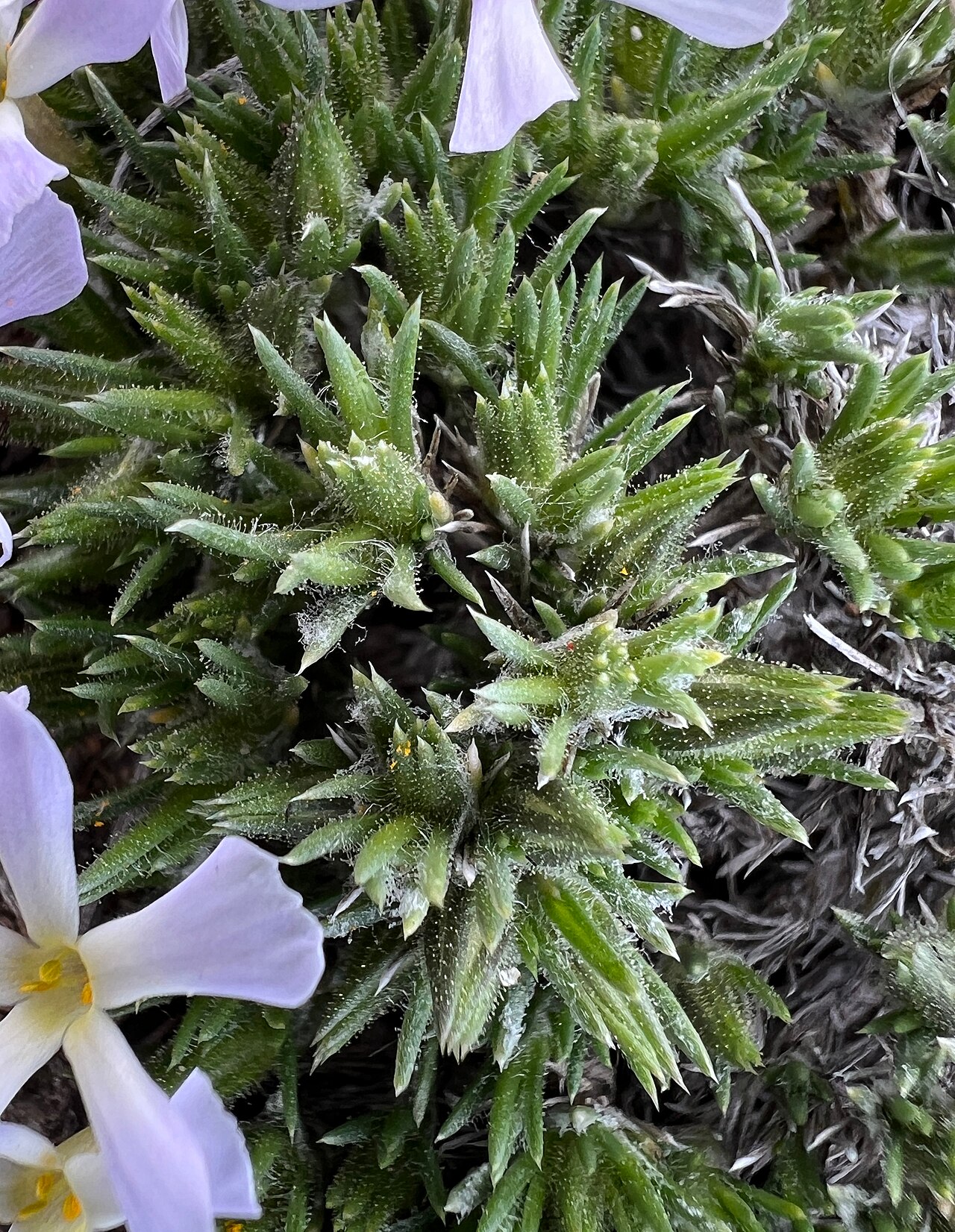
Phlox douglasii, commonly called Douglas’s Phlox, Tufted Phlox, or Columbia Phlox, is a tiny, tightly cushioned perennial of the dry sagebrush country of the Columbia Plateau. It belongs to the phlox family, Polemoniaceae, and is built for survival in thin, rocky soil over basalt bedrock — a low mound of sharp, needle-like leaves that can look almost like a miniature conifer or a spiny alpine cushion plant until it bursts into bloom.
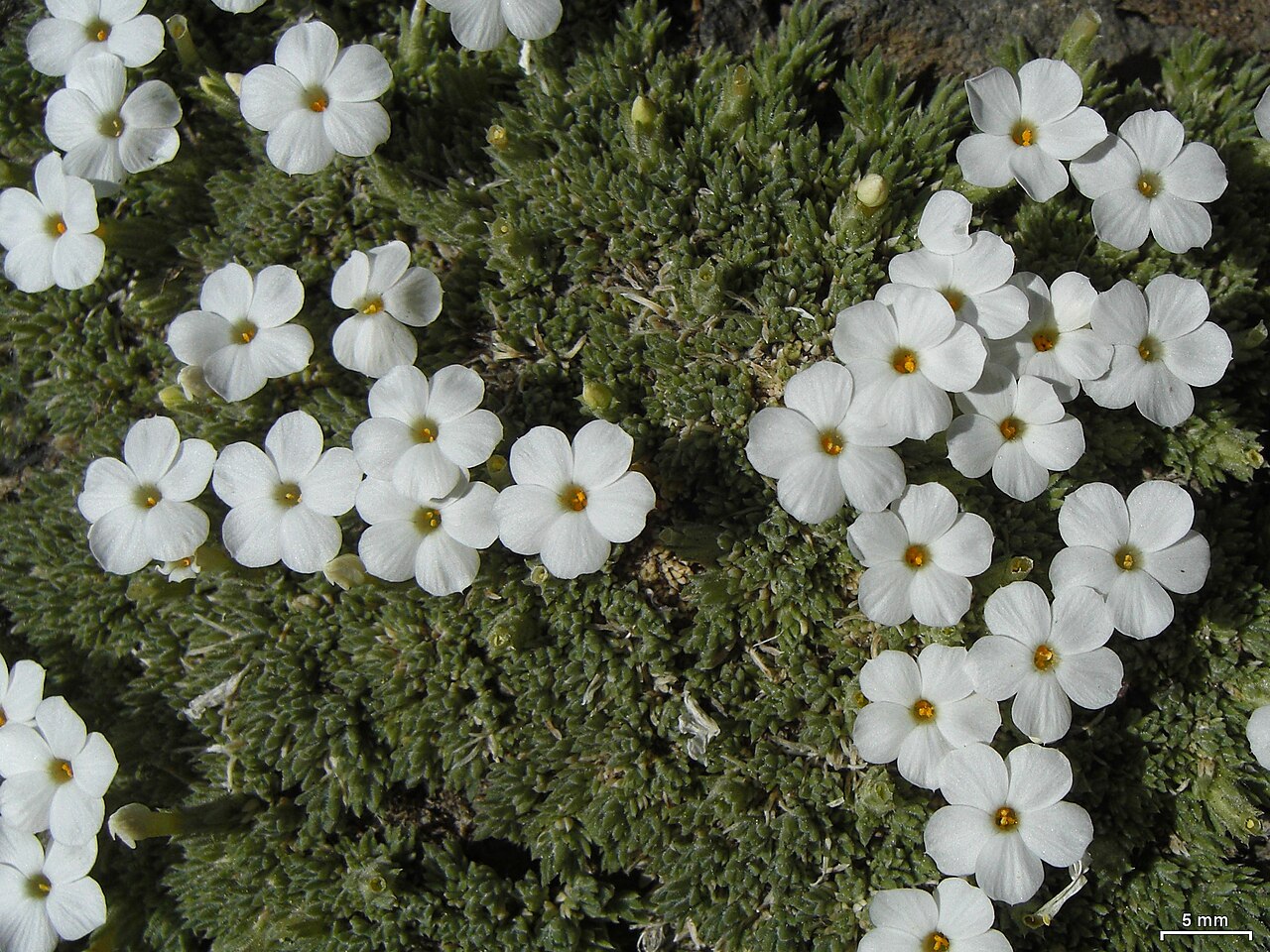
Douglas’s Phlox grows as a dense, compact mat or cushion only about 2 to 4 inches tall, made up of short, woody basal stems packed with stiff, narrow leaves tipped in a sharp point. From spring into summer, the whole cushion can disappear under a flush of flowers held just above the foliage — purple, pink, pale lavender, or occasionally near-white — each with five broad, rounded petal lobes quite different from the deeply notched petals of its Midwestern relative, Sand Phlox.
This is a plant for the harshest, driest, sunniest spot in a western garden: a scree bed, a crevice garden, or the gritty soil between flagstones. In its native shrub-steppe habitat it survives baking summer heat, cold winters, and months without rain, and it brings that same toughness to cultivation, rewarding gardeners who resist the urge to coddle it with rich soil or regular watering.
Identification
Douglas’s Phlox forms a low, tight cushion or mat, typically 2 to 4 inches tall and spreading slowly into a mound 6 to 12 inches across over several years. Growth comes from short, woody basal stems that are largely hidden beneath the current season’s needle-like leaves, giving mature plants a dense, almost moss-like or spiny-cushion texture.
Leaves
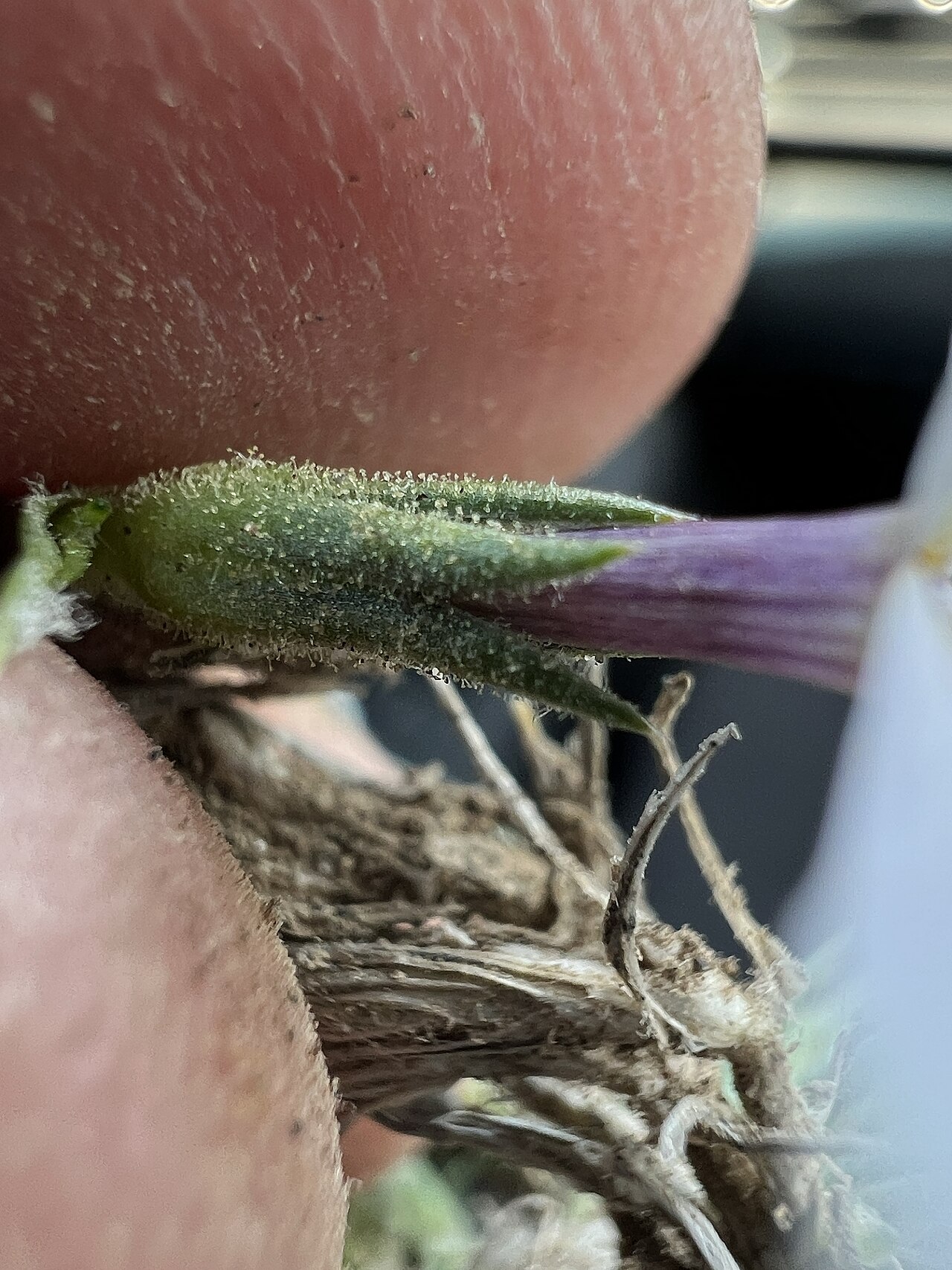
Leaves are simple, opposite, needle-like, and short — about ¼ inch long — with a sharp, firm point at the tip. Both the leaves and the flower calyx are covered in short, gland-tipped hairs, which can be felt as a faint stickiness when the foliage is touched. The leaves persist through much of the year, keeping the cushion evergreen-ish in mild winters.
Flowers
Flowers appear from April into summer, usually solitary or in small clusters of two to three at the stem tips, held on very short stalks just above the foliage. Each flower is roughly ½ to ¾ inch across, with five broad, rounded petal lobes (unlike the deeply forked lobes of Sand Phlox) that flare from a slender tube. Flower color is variable even within a single wild population — shades of purple, pink, pale lavender, and magenta-red all occur, sometimes with a darker eye at the center.
Fruit & Seeds
Like other phloxes, Douglas’s Phlox sets a small, dry, three-valved capsule after flowering, releasing a handful of seeds when ripe. In the wild, the species also persists and slowly spreads through the longevity of its woody cushion rather than relying heavily on seedling establishment in the sparse, competitive scabland soil it calls home.
Quick Facts
| Scientific Name | Phlox douglasii |
| Family | Polemoniaceae (Phlox) |
| Plant Type | Cushion-forming perennial |
| Mature Height | 2–4 in |
| Mature Spread | 6–12 in, slowly widening |
| Growth Rate | Slow |
| Sun Exposure | Full Sun |
| Water Needs | Very low; excellent drought tolerance |
| Soil Type | Shallow, rocky or gravelly; sharply drained |
| Soil pH | Neutral to slightly alkaline |
| Bloom Time | April – August |
| Flower Color | Purple, pink, pale lavender, or magenta-red |
| Fall Color | None; evergreen-ish foliage |
| Fruit | Small dry capsule, inconspicuous |
| Deer Resistant | Yes, generally avoided |
| USDA Hardiness Zones | 3–8 |
Native Range
Douglas’s Phlox is native to the Pacific Northwest, centered on the Columbia Plateau of eastern Oregon and eastern Washington, with its range extending south into the mountains of northern California and east into parts of Idaho. It is a true shrub-steppe specialist, essentially absent from the wetter forests west of the Cascades and from the Rocky Mountain country farther east.
Typical habitat is dry sagebrush scrub and open woodland on shallow, rocky soils over basalt bedrock, including the distinctive scabland terrain of the Columbia Plateau — bare basalt outcrops and thin gravelly pockets where few other plants can establish. Populations occur from near valley floors up to about 6,500 feet in elevation, wherever the combination of full sun, minimal soil, and low rainfall favors this kind of tough, drought-adapted cushion plant.
Because its habitat is so specific — dry, rocky, and sun-baked — Douglas’s Phlox does not range into the moist forests, river bottoms, or agricultural valleys that make up much of its home states, and gardeners outside the arid interior West should not expect it to thrive without recreating these lean, sharply drained conditions.
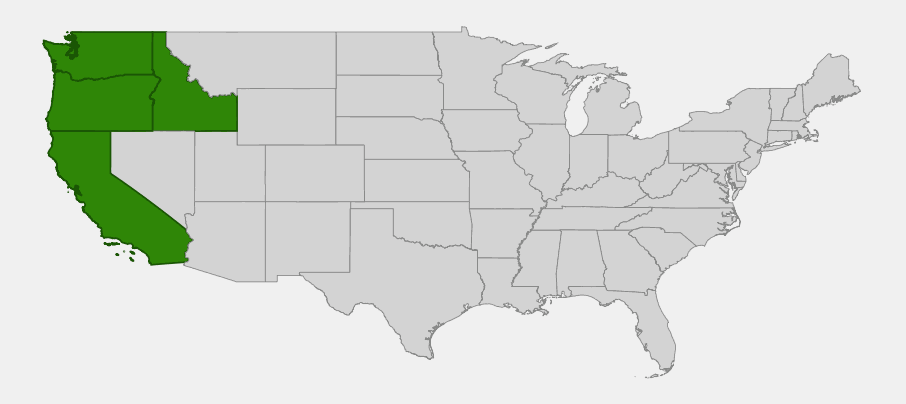
📋 Regional plant lists featuring Douglas’s Phlox: Idaho, Eastern Oregon & Eastern Washington
Growing & Care Guide
Douglas’s Phlox is a specialist, and its care is really one rule applied consistently: give it the driest, sunniest, leanest spot available and then leave it alone.
Light
Full sun is essential. This is a plant of open, unshaded scabland, and it will not perform in shade — expect sparse growth, weak flowering, and rot in damp shaded ground. A hot, south-facing site with reflected heat from stone or pavement suits it well.
Soil & Water
Shallow, rocky, or gravelly soil with exceptional drainage is non-negotiable. Douglas’s Phlox is adapted to thin pockets of soil over solid basalt and will not tolerate heavy clay, rich garden loam, or standing winter moisture, all of which quickly rot its roots. Once established, water only during extended summer drought, if at all in climates that match its native rainfall pattern; overwatering is the most common way gardeners lose this plant.
Planting Tips
Plant in a scree bed, rock garden, or raised crevice planting built from coarse gravel or crushed rock rather than amended garden soil. Set the crown slightly proud of the soil surface and top-dress with gravel mulch to keep moisture away from the stem base. Space plants 6 to 10 inches apart, since mature cushions stay compact. Spring planting gives roots a full season to establish before winter wet.
Pruning & Maintenance
Little is needed beyond removing dead patches within an older cushion, which can happen naturally as the center of a mat ages. Avoid fertilizing, which pushes soft growth poorly suited to this plant’s tough constitution. Once sited correctly, Douglas’s Phlox is essentially maintenance-free and free of serious pest or disease problems.
Propagation
Division of an established cushion in spring is possible but can be slow to recover, since plants resent root disturbance. Softwood cuttings taken from non-flowering shoots in late spring or early summer root reasonably well in a sharply drained sand or grit mix. Seed requires a cold, moist stratification period over winter to germinate well the following spring.
Landscape Uses
Douglas’s Phlox belongs in the driest, most mineral parts of a western native garden:
- Scree and crevice gardens built from crushed rock or gravel
- Rock gardens tucked among stones on a sunny slope
- Troughs and alpine containers
- Xeriscape plantings in arid interior-West gardens
- Shrub-steppe restoration on disturbed scabland sites
Wildlife & Ecological Value
In the sparse, sun-exposed scabland communities where it grows, Douglas’s Phlox contributes out of proportion to its small size.
For Pollinators
The long-tubed flowers attract native bees and butterflies able to reach the nectar at the base of the corolla, including early-season bees emerging on the Columbia Plateau in April. Because flowering continues over several months into summer, Douglas’s Phlox provides a steady, if modest, nectar source through a season when shrub-steppe wildflower bloom is often brief and concentrated in spring.
For Birds & Mammals
The dense, low cushions provide minor shelter for ground-dwelling insects in an otherwise open, exposed landscape, indirectly supporting the insectivorous birds and small mammals of the shrub-steppe. Deer and rabbits generally pass over the spiny, resinous foliage in favor of more palatable forage.
Ecosystem Role
As one of the few plants able to colonize the thinnest soil pockets on basalt scabland, Douglas’s Phlox helps stabilize what little soil accumulates in these harsh microsites and adds a pulse of flower color and structural diversity to a landscape otherwise dominated by sagebrush and bunchgrass. Its presence is a useful indicator of relatively undisturbed scabland habitat, since it does not persist well where soil has been compacted or where competitive weeds have taken hold.
Cultural & Historical Uses
There is no significant documented history of use of Douglas’s Phlox by Indigenous peoples of the Columbia Plateau as food or medicine; like many small cushion plants of the shrub-steppe, it was not a resource plant in the way that camas, bitterroot, or other larger-rooted species were.
Its more notable history is as a horticultural subject. The species was named for the Scottish botanist David Douglas, who explored and collected extensively in the Pacific Northwest in the 1820s and 1830s. Since the twentieth century, Douglas’s Phlox and its many named garden selections — bred for a range of flower colors from white through pink to deep magenta — have been staples of rock garden and alpine plant societies in Europe and North America, prized for their reliable, floriferous cushions in the toughest, driest parts of the garden.
Today it remains primarily a specialist’s plant: valued by rock gardeners and by native-plant gardeners restoring or recreating shrub-steppe habitat in the interior Pacific Northwest, rather than a common sight in general nursery trade.
Frequently Asked Questions
How is Douglas’s Phlox different from Sand Phlox?
The clearest difference is the petal shape. Douglas’s Phlox has broad, rounded petal lobes, while Sand Phlox (Phlox bifida) has petals deeply notched into two narrow points. The two species also occupy very different native ranges — Douglas’s Phlox in the dry Columbia Plateau of the Pacific Northwest, Sand Phlox in sand prairies and limestone glades of the central and eastern United States.
Can Douglas’s Phlox tolerate regular garden watering?
Not well. This species is adapted to months of summer drought in thin, fast-draining soil, and regular irrigation — especially combined with heavier soil — tends to cause root and crown rot. It performs best in a true scree or gravel garden where it only receives occasional supplemental water.
What soil does Douglas’s Phlox need?
Shallow, rocky, or gravelly soil with excellent drainage, similar to the thin pockets of soil over basalt bedrock it grows in naturally. Rich, deep garden loam that holds moisture is unsuitable and often fatal to this species over time.
Does Douglas’s Phlox stay evergreen?
The needle-like foliage persists through much of the year and can look evergreen-ish in mild winters, though it may look rough or partially dormant after extreme cold. The woody cushion itself is long-lived, even when top growth is reduced by winter weather.
Is Douglas’s Phlox the same plant as garden cultivars like ‘Crackerjack’ or ‘Eva’?
Those are named cultivars selected from or closely related to Phlox douglasii for particular flower colors, widely sold in the nursery trade for rock gardens. This page focuses on the wild species as it occurs in its native Columbia Plateau habitat, which shows the same range of flower colors found across its many garden-bred selections.

Looking for a nursery that carries Douglas’s Phlox?
Browse our native plant nursery directory: Washington · Oregon · Idaho · California