
Fernleaf Biscuitroot (Lomatium dissectum)
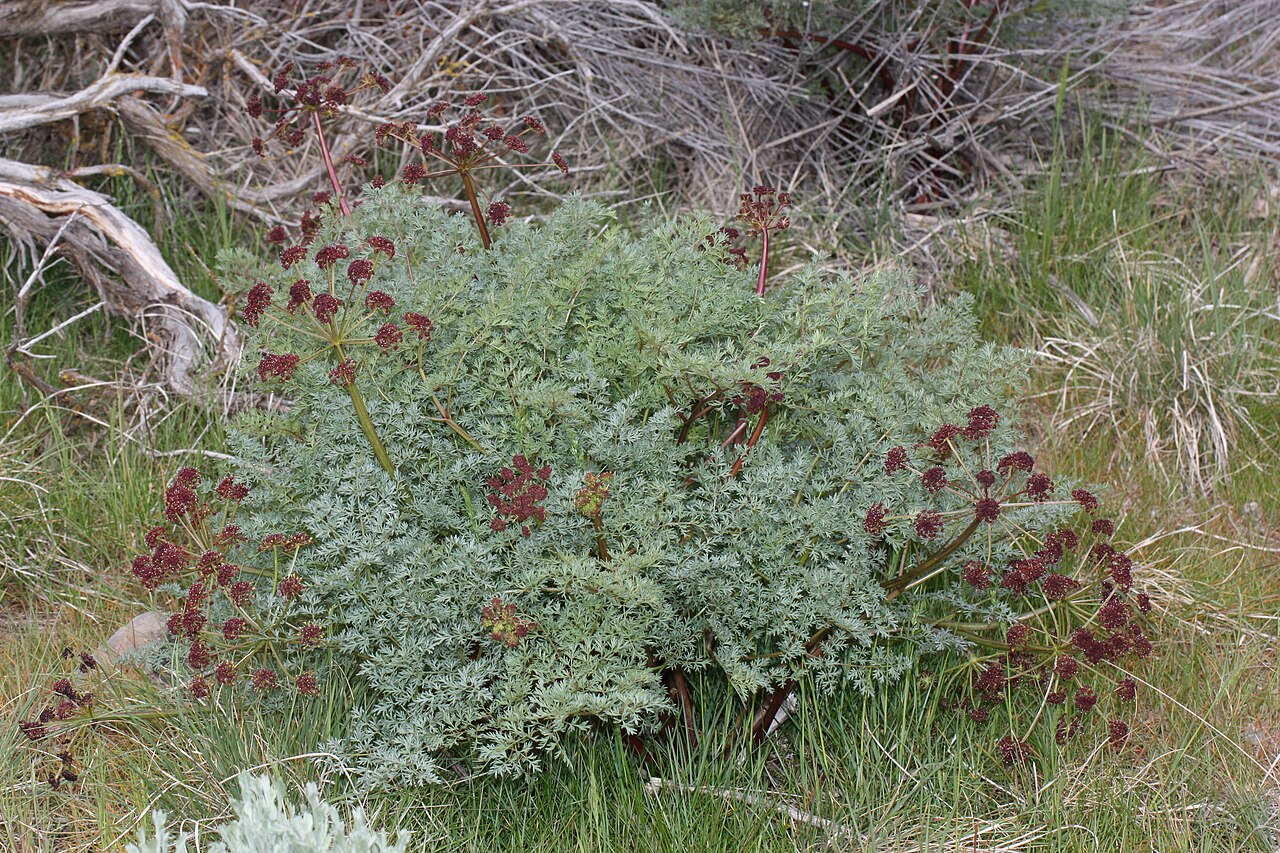
Lomatium dissectum, Fernleaf Biscuitroot (also called fern-leaved lomatium, fernleaf desert-parsley and, for its dark-flowered form, chocolate tips), is the largest of the western biscuitroots. From a massive, deep taproot it raises a bold mound of lacy, fern-like leaves 2 to 5 feet tall, and in early spring it carries umbels of tiny maroon-purple or yellow flowers on stout stalks. It grows on rocky slopes, talus, canyon walls, open forests and sagebrush hillsides from British Columbia to California and east to Montana, Wyoming and Colorado.
It is one of the first large wildflowers to bloom on many western hillsides, and it is an important early food for native bees and other pollinators. It has also been an important medicinal plant for Indigenous peoples of the Northwest and the Great Basin, and today “lomatium root” is sold as an herbal supplement. That demand, together with the plant’s slow growth, is a concern for wild populations.
Safety note: Fernleaf biscuitroot belongs to the carrot family (Apiaceae), which also includes the deadly poison-hemlock and water-hemlock. Never eat or use any wild plant in this family unless an expert has identified it. Do not dig wild roots: plants are slow-growing and long-lived, and digging destroys them. This guide covers how to identify it and its relatives, where it grows, how to grow it from seed, and its value to wildlife. See also our overview of the native desert parsleys and biscuitroots.
Identification
Fernleaf biscuitroot is easy to recognize by its size and its finely cut leaves. No other western Lomatium grows as large, and few have its combination of very lacy foliage and dark purple or yellow flowers.
Root & Crown
The plant grows from a very thick, deep, woody taproot, which can be several inches across on old plants. The root crown is covered with fibrous remains of old leaf bases. Plants are long-lived perennials, and they can take several years from seed to reach flowering size.
Leaves
The leaves grow mainly from the base and are large, up to about a foot or more long and wide, and repeatedly divided into many small, narrow segments, giving a lacy, fern-like look. They are green to grayish-green and smooth to finely rough. The leaf stalks sheathe the stem at the base. The foliage emerges early in spring, and in dry places it dies back by midsummer.
Flowers
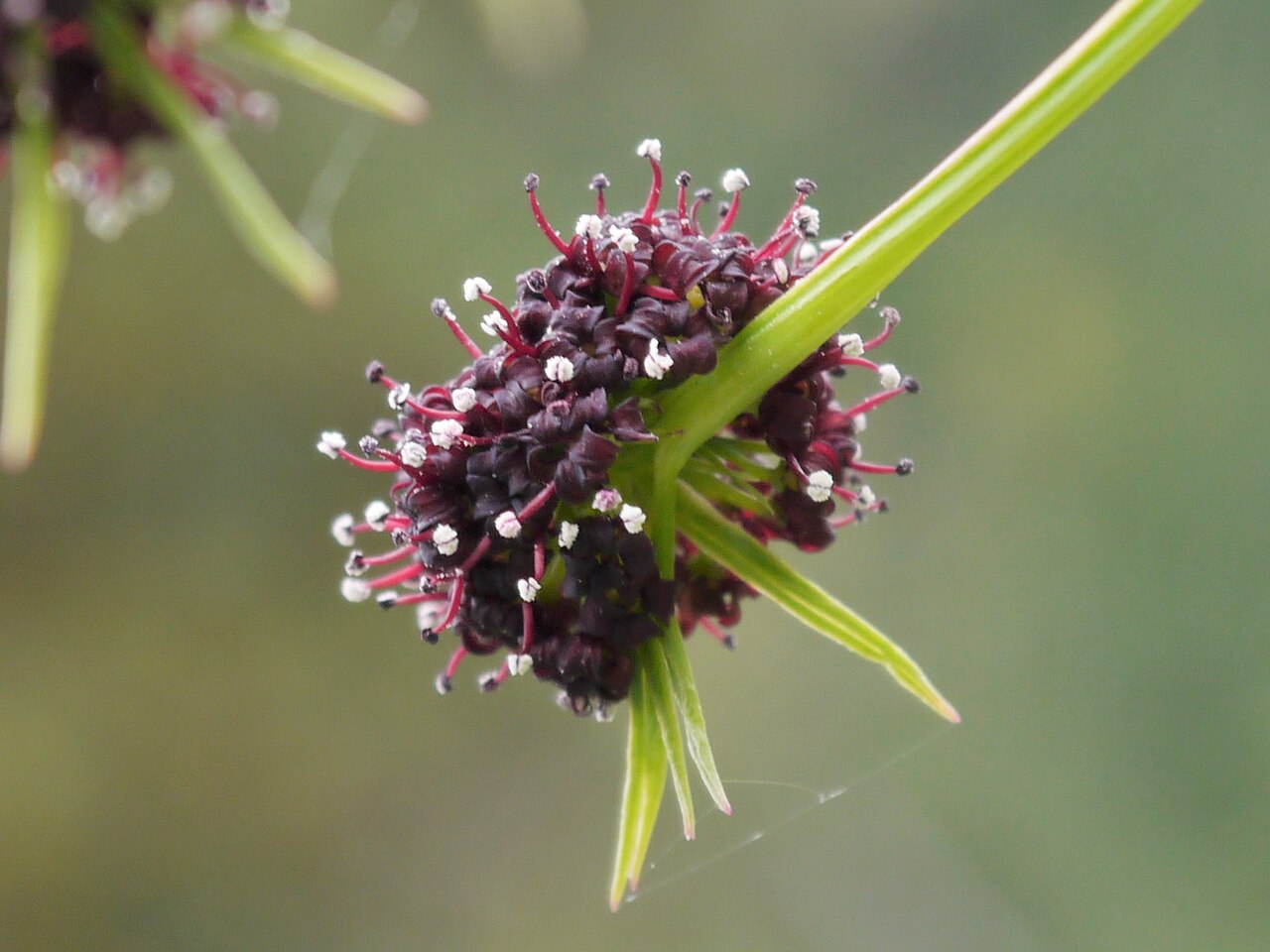
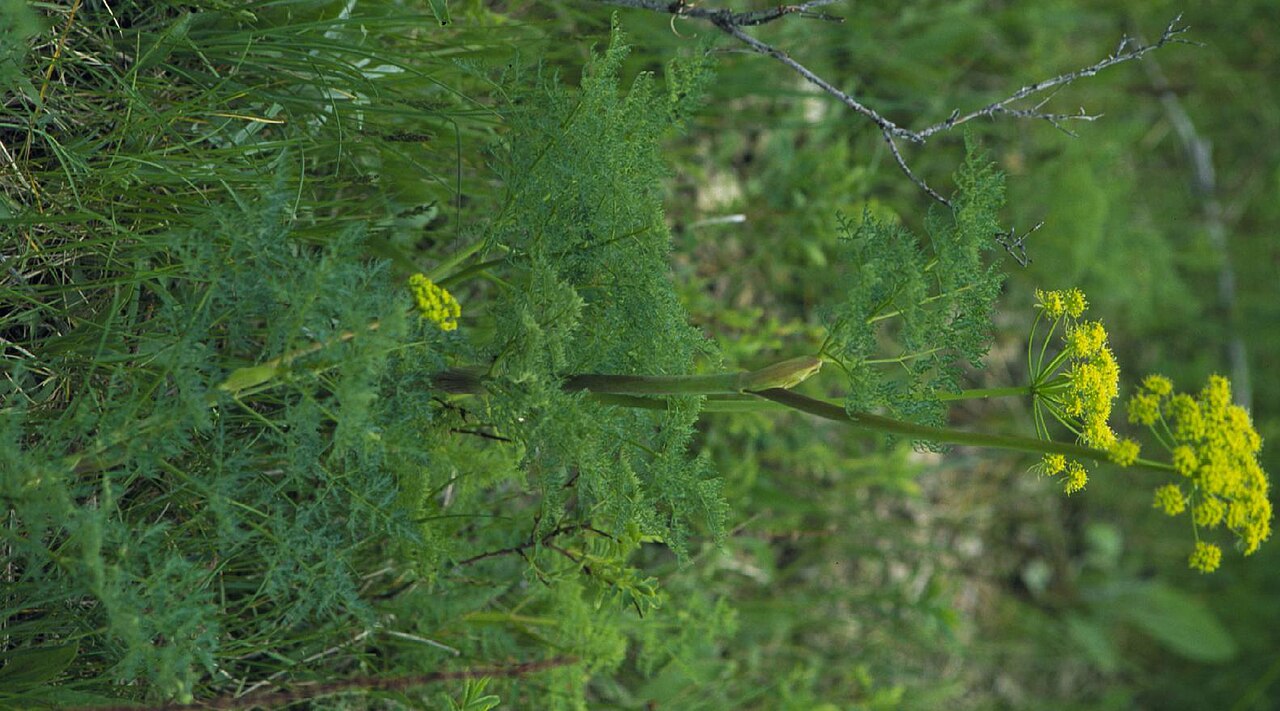
From about March to June, depending on elevation, thick, hollow flowering stems rise above the leaves and carry compound umbels 2 to 5 inches across. There is no ring of bracts at the base of the main umbel, but each small umbellet has a ring of narrow bractlets. The tiny flowers are dark maroon to purple-brown or yellow, and plants with both colors may grow in the same region. Purple-flowered plants are common west of the Cascades and in parts of the interior, and yellow-flowered plants are common in the interior.
Fruit & Seeds
The fruits are oblong to elliptic, flattened, about 1/2 inch long, with narrow, corky wings along the edges. They ripen to tan in early summer and split into two one-seeded halves, which are scattered by wind and gravity.
Look-alikes and safety
Several deadly plants belong to the same family. Poison-hemlock (Conium maculatum), an introduced weed, has smooth, hollow, purple-spotted stems, white flowers, and a musty odor when crushed. Western water-hemlock (Cicuta douglasii) and Spotted Water Hemlock grow in wet places and have white flowers and chambered rootstocks; water-hemlock is one of the most poisonous plants in North America. Fernleaf biscuitroot never has white flowers, but the leaves alone can be confusing, especially before flowering. Other biscuitroots, such as Barestem Biscuitroot, Bigseed Biscuitroot and Woollyfruit Desertparsley, are smaller, with different leaves or flowers.
Quick Facts
| Scientific Name | Lomatium dissectum (syn. Leptotaenia dissecta, Leptotaenia multifida) |
| Family | Apiaceae (carrot family) |
| Plant Type | Long-lived herbaceous perennial from a deep taproot |
| Mature Height | 2–5 ft in flower |
| Mature Spread | 2–3 ft |
| Growth Rate | Slow |
| Sun Exposure | Full sun to partial shade |
| Water Needs | Low; moist in spring, dry in summer |
| Soil Type | Rocky, gravelly or sandy, well-drained soils; talus and loams |
| Soil pH | About 6.0–8.0 |
| Bloom Time | March–June (varies with elevation) |
| Flower Color | Maroon-purple or yellow |
| Fall Color | None; foliage dies back in summer dormancy |
| Fruit | Flattened, narrowly winged fruit about 1/2 in long |
| Deer Resistant | Moderate; deer and elk graze young foliage |
| USDA Hardiness Zones | 4–8 |
Native Range
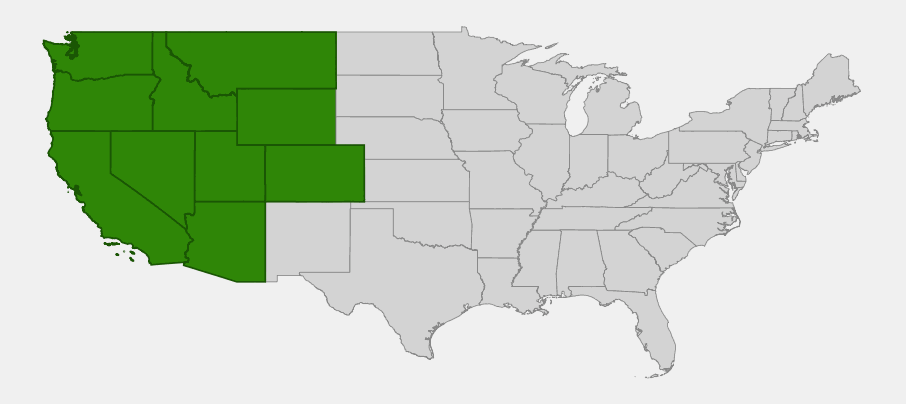
Fernleaf biscuitroot is native to western North America. USDA PLANTS records it in 10 western states: Washington, Oregon, California, Idaho, Nevada, Montana, Wyoming, Utah, Colorado and Arizona. In Canada it grows in southern British Columbia and Alberta, with records from Saskatchewan. It is most common in the Pacific Northwest and the northern Rocky Mountains, and more scattered in the Great Basin and the southern edge of its range.
It grows on rocky and gravelly slopes, talus, cliff bases, canyon walls and ridges, in open ponderosa pine and Douglas-fir forests and woodlands, and among sagebrush and bunchgrasses. It ranges from low foothills to subalpine slopes, and it is often found on rocky, well-drained sites where the soil is moist in spring but dry by summer.
Two varieties are generally recognized. Var. dissectum, mostly in western Washington and Oregon, the Columbia River Gorge and California, often has purple flowers. Var. multifidum, the widespread interior form, has yellow or purple flowers. Some authorities, including NatureServe, treat the interior form as a separate species, Lomatium multifidum.
📋 Regional plant lists featuring Fernleaf Biscuitroot: Arizona & New Mexico · California & Nevada · Montana & Wyoming · Utah & Western Colorado · Idaho, Eastern Oregon & Eastern Washington · Western Oregon & Western Washington
Growing & Care Guide
Fernleaf biscuitroot is a slow but rewarding plant for dry western gardens. Start it from seed or buy nursery-grown plants. Never dig wild plants: they rarely survive moving because of their deep taproots, and digging harms wild populations.
Light
Full sun to partial shade. On hot, low-elevation sites it appreciates a little afternoon shade or a north-facing slope.
Soil & Water
Plant it in deep, well-drained, rocky, gravelly or sandy soil. It needs moisture in spring and dryness in summer, matching its natural cycle of spring growth and summer dormancy. Avoid summer irrigation and heavy, wet soils, which can rot the root. No fertilizer is needed.
Planting Tips
Sow seeds outdoors in fall where you want them to grow, or into deep pots that allow the taproot to develop. Seedlings and young plants resent root disturbance, so transplant them while small and keep the root intact. Plant it with bunchgrasses, balsamroot, buckwheats and other dryland natives in a rock garden or on a slope.
Pruning & Maintenance
Very little care is needed. Leave the foliage until it dies back naturally in summer, then cut it if you want a tidy look. Leave some seed heads for wildlife and self-sowing. Mark the location, since the plant disappears for part of the year.
Propagation
Seed is the practical method. The seeds need a long cold, moist period, typically about 3 months or more, to germinate, so fall sowing outdoors works best. Expect several years before seedlings reach flowering size.
Landscape Uses
- Dryland and rock gardens: a bold, fern-like foliage plant for dry western gardens
- Habitat restoration: on rocky slopes, sagebrush steppe and open forests within its native range
- Pollinator gardens: one of the earliest large spring flowers for native bees and flies
- Butterfly gardens: a host for anise and Indra swallowtails
- Slope plantings: its deep root helps hold rocky soil
Wildlife & Ecological Value
Fernleaf biscuitroot is one of the important early-season plants of western hillsides, for insects and for grazing animals.
For Pollinators
The flowers open early in spring and attract many small native bees, flies, beetles and wasps. Lomatium species are larval host plants for the anise swallowtail (Papilio zelicaon) and the Indra swallowtail (Papilio indra), and fernleaf biscuitroot is among the hosts recorded for both.
For Birds
It is of limited direct value to birds, though seed-eating birds take some of the fruits, and the insects that visit its early flowers feed spring migrants and nesting songbirds.
For Mammals
Deer, elk and bighorn sheep graze the young spring foliage, and rodents such as ground squirrels and pocket gophers eat the leaves and roots.
Ecosystem Role
Its deep taproot reaches moisture far below the surface and helps stabilize rocky slopes and talus. As a long-lived perennial that blooms very early, it supplies pollen and nectar when few other flowers are available.
Cultural & Historical Uses
Fernleaf biscuitroot has long been important to many Indigenous peoples of the Pacific Northwest, the Plateau and the Great Basin. Ethnobotanical records describe its root being used as medicine for colds, coughs and other respiratory illnesses, and in poultices and washes. Some groups also used the crushed root to stun fish. Unlike several smaller biscuitroots, whose roots were major traditional foods, this large, resinous root was valued mainly as a medicine.
Botanists first knew it as Leptotaenia dissecta. Thomas Nuttall described it around 1840 from plants collected in the Northwest, and Mildred Mathias and Lincoln Constance later moved it into Lomatium. The genus name comes from the Greek loma, “border,” for the winged edges of the fruit.
In recent decades, “lomatium” root extracts have become popular herbal supplements. Herbal safety references note that lomatium products can cause a widespread skin rash in some people, and no medical use has been proven in controlled trials. Because the plant grows slowly and wild roots are dug for this trade, buy only cultivated material if you use it, and never dig wild roots.
Frequently Asked Questions
Is fernleaf biscuitroot edible?
It is not considered a food plant. Its large, resinous root was used mainly as medicine. More importantly, the carrot family includes deadly poison-hemlock and water-hemlock, so never eat any wild plant in this family without expert identification.
How do I tell it from poison-hemlock?
Poison-hemlock has white flowers, smooth stems with purple spots, and a musty smell, and it usually grows in disturbed, moist places. Fernleaf biscuitroot has maroon-purple or yellow flowers and grows on rocky slopes and open woods. If you are unsure, do not touch or taste the plant.
Can I dig fernleaf biscuitroot from the wild?
No. Plants have deep taproots, grow slowly and rarely survive transplanting, and digging destroys them. Collect a small amount of seed where it is legal and abundant, or buy nursery-grown plants.
Why does fernleaf biscuitroot disappear in summer?
It is summer-dormant. The plant grows and flowers in spring, sets seed by early summer, and then the foliage dies back to the root, which waits underground for the next spring.
Is fernleaf biscuitroot good for butterflies?
Yes. Biscuitroots are host plants for the caterpillars of the anise swallowtail and Indra swallowtail, and the early flowers feed many native bees and flies.

Looking for a nursery that carries Fernleaf Biscuitroot?
Browse our native plant nursery directory: Arizona · California · Colorado · Idaho · Montana · Nevada · Oregon · Utah · Washington · Wyoming

