
Native Desert Parsleys and Biscuitroots (Lomatium)
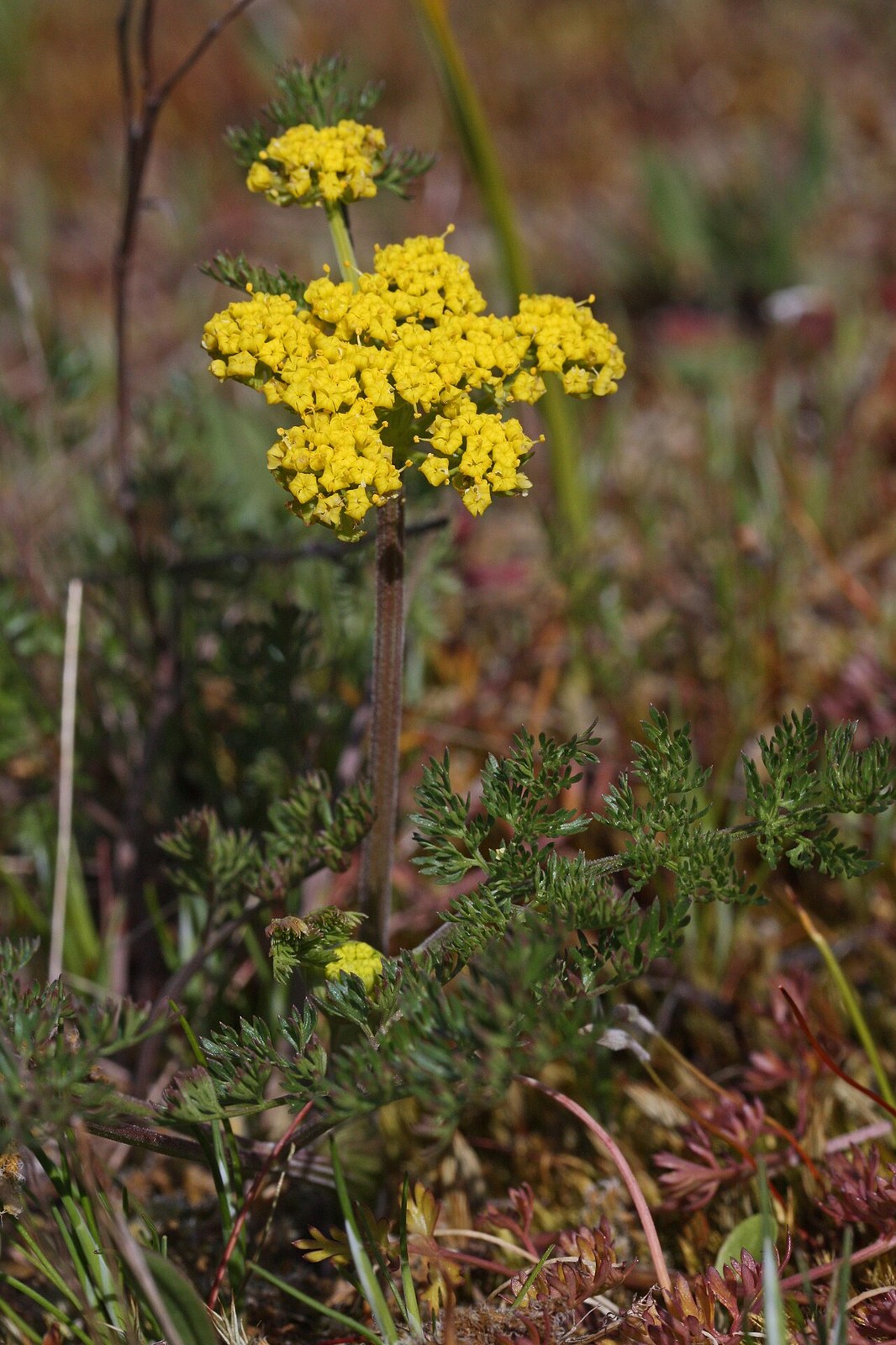
Desert parsleys and biscuitroots (genus Lomatium) are low, early-blooming wildflowers of the carrot family, with finely divided, often fern- or parsley-like leaves, umbrella-shaped clusters of tiny yellow, white or purple flowers, and deep taproots or swollen roots that carry them through dry summers. They are among the first plants to bloom in the West, often appearing on rocky ridges, sagebrush flats and foothill grasslands while snow still lingers in the mountains.
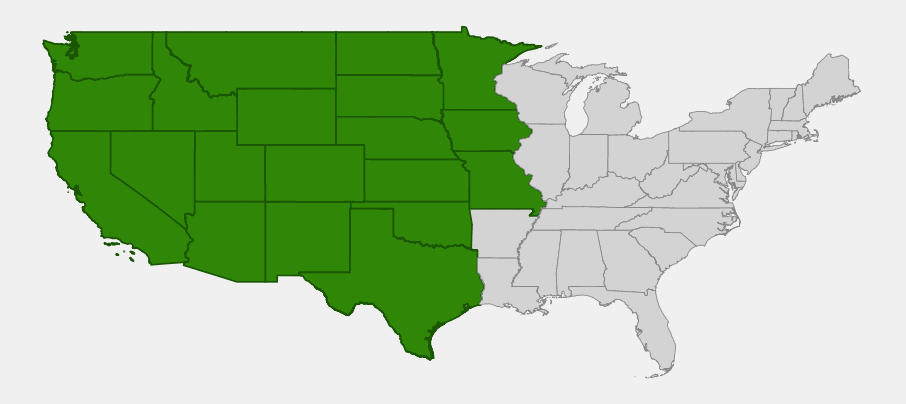
Lomatium is one of the largest plant genera in western North America, with about 75 to 80 species, all of them native. Most grow from the Rocky Mountains west to the Pacific, with the greatest variety in Oregon, Washington, Idaho and California. A few species reach east across the Great Plains to Minnesota, Iowa, Missouri, Oklahoma and Texas. Many are narrow endemics found on a single type of soil or in one mountain range, and several are rare and protected.
This guide covers the most widespread and garden-worthy species and explains a common naming confusion. In New Mexico and the southern Rockies, the yellow-flowered “mountain parsley” of foothills and forests is very often not a Lomatium at all but a close relative, alpine false springparsley (Pseudocymopterus montanus). Both are native, drought-adapted carrot-family plants that feed early bees, and both are covered below.
Identification
As a group, lomatiums are low perennials without leafy, branching stems. Most of the leaves rise from the base of the plant, and the flower stalks are leafless or nearly so. The flowers are tiny and arranged in compound umbels: several short rays radiate from the top of the stalk, each ending in a small cluster of flowers, so the whole head looks like an umbrella or a ball.
Roots
Below ground, lomatiums grow either a long, woody taproot or a swollen, tuber-like root. This storage root is why they can bloom so early and then go dormant in the summer heat. Species whose roots were traditional foods were the “biscuitroots” of Indigenous peoples of the Columbia Plateau and Great Basin.
Leaves
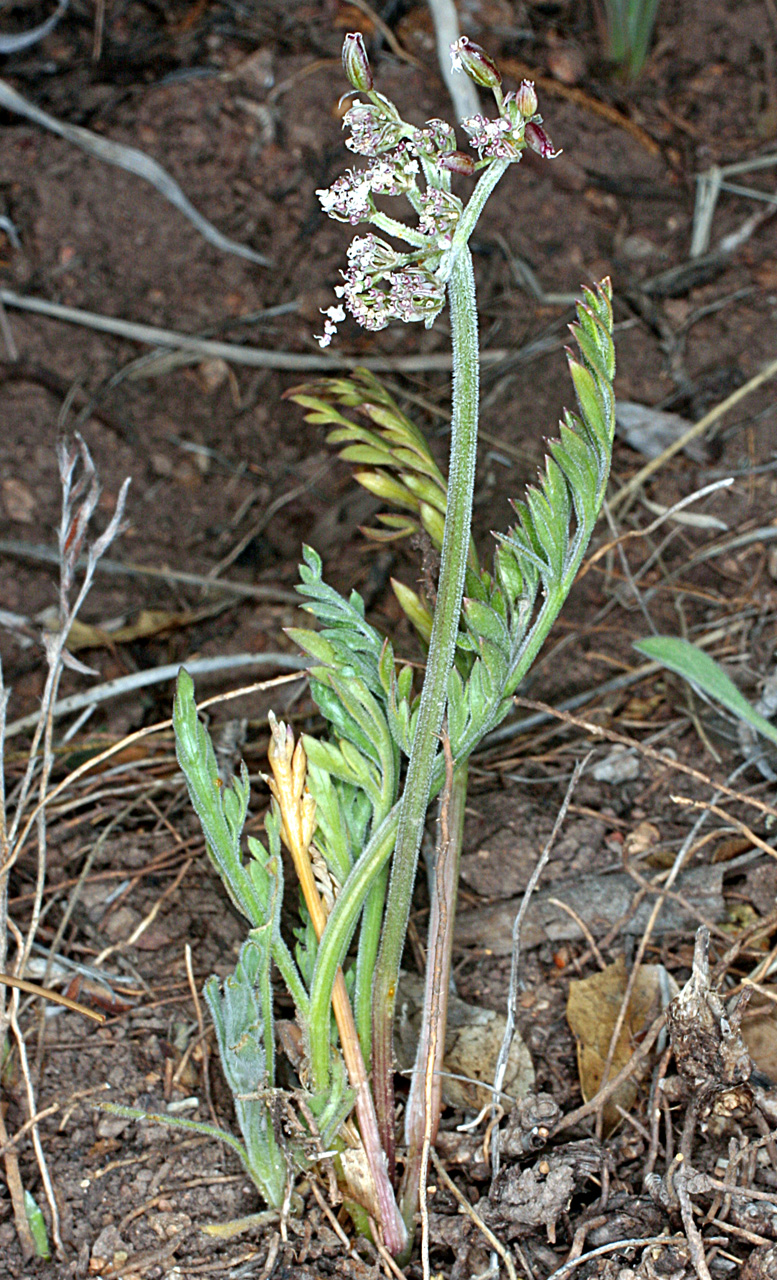
Most species have leaves divided two to four times into narrow, feathery segments, like carrot or parsley leaves; fernleaf biscuitroot is the largest, with lacy fronds. A few, such as barestem biscuitroot and nineleaf biscuitroot, have fewer, broader or longer leaflets. Leaves of many species are gray-green or bluish and are often strongly aromatic when crushed, smelling of celery, parsley or turpentine.
Flowers
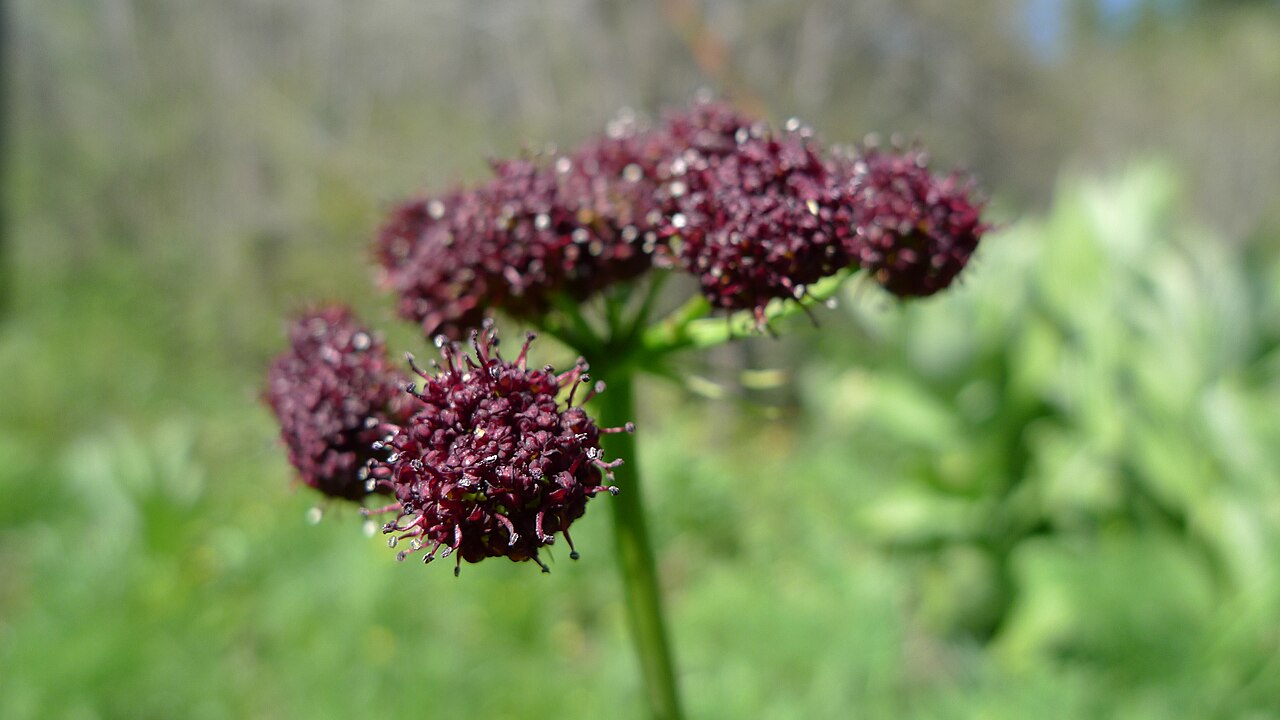
Flowers are tiny, with five petals, and are most often yellow, but some species have white, cream or purple-brown flowers. Most bloom from late winter to late spring, from February at low elevations to early summer in the mountains. Unlike many carrot-family plants, lomatium umbels usually lack the leafy bracts (involucre) beneath the main head.
Fruit & Seeds
The fruit is the best way to identify the genus. Each flower produces a flattened, oval fruit with thin, papery wings along both edges, which splits into two winged halves. Fruits range from about ¼ inch to more than an inch long in bigseed biscuitroot. The wings help the seeds blow across open ground in early summer.
Quick Facts
| Genus | Lomatium |
| Family | Apiaceae (Carrot family) |
| U.S. Native Species | About 75–80, all native to western and central North America |
| Growth Forms | Low perennial herbs with taproots or tuberous roots; summer-dormant |
| Mature Height | Most 4–20 in; fernleaf biscuitroot up to about 4 ft |
| Sun Exposure | Full Sun (a few tolerate light shade) |
| Water Needs | Low; dry summers once established |
| Soil Type | Rocky, gravelly or sandy, well-drained soils; some on clay or seasonally wet prairies |
| Bloom Time | February – June, depending on species and elevation |
| Flower Color | Mostly yellow; also white, cream or purple |
| Fruit | Flattened, winged fruits that split into two halves |
| Wildlife Value | Very early nectar for native bees; host plant for anise and indra swallowtails |
| Deer Resistant | Mostly; the aromatic leaves are lightly browsed |
| USDA Hardiness Zones | About 3–9, depending on species |
Native Range
Lomatiums are plants of the West. They are found in every state from the Rocky Mountains to the Pacific, and are especially diverse in the Columbia Basin and Blue Mountains of Oregon, Washington and Idaho, the Klamath and Siskiyou Mountains, the Sierra Nevada foothills and the Great Basin. In these regions you can find a dozen or more species within a short drive, on rocky scablands, sagebrush steppe, serpentine outcrops, oak savannas and mountain meadows.
Two species extend far onto the Great Plains. Desert biscuitroot (Lomatium foeniculaceum) grows in prairies and dry hills from the Canadian prairies through Montana, the Dakotas, Nebraska, Kansas and western Minnesota to Oklahoma, Texas and Missouri. Lomatium orientale grows from Montana, the Dakotas and western Iowa south through Colorado, Nebraska and Kansas to New Mexico and Arizona. In New Mexico, lomatiums are relatively few: desert biscuitroot, L. orientale and a handful of others in the northern and western mountains and plateaus.
No lomatium is native east of Minnesota, Iowa, Missouri and eastern Texas or Oklahoma. In the eastern US, the yellow umbels of golden alexanders (Zizia) fill a similar early-spring role. The map below shows states where at least one Lomatium is native.
📋 Regional plant lists covering native lomatium country: Arizona & New Mexico · Utah & Western Colorado · California & Nevada · Western Oregon & Washington · Idaho, Eastern Oregon & Washington · Montana & Wyoming · Dakotas & Western Minnesota · Nebraska, Kansas & Eastern Colorado · South & West Texas · Illinois, Iowa & Missouri
Native Species
These are some of the most common and most often grown lomatiums. Names with links go to our full plant profiles.
Foothill Desert Parsley or Spring Gold (Lomatium utriculatum)
A low plant, 4 to 12 inches tall, with bright green, finely divided leaves and small, bright yellow umbels from February to May. It is one of the most common early wildflowers of grassy balds, oak savannas and rocky meadows west of the Cascades and Sierra Nevada, from British Columbia to California. It is easy to grow from seed in sunny, well-drained sites.
Barestem Biscuitroot (Lomatium nudicaule)
Easily recognized by its smooth, blue-gray leaves with broad, rounded leaflets, very different from the feathery leaves of most lomatiums, and its tall, leafless stalks swollen just below the pale yellow umbels. It grows on open slopes and bluffs from British Columbia to California and east to Idaho.
Bigseed Biscuitroot (Lomatium macrocarpum)
A low, sprawling plant with gray, hairy, finely divided leaves, white to purplish flowers and the largest fruits in the genus. It grows on rocky, dry slopes and scablands across the interior West and northern Great Plains.
Woollyfruit Desertparsley (Lomatium dasycarpum)
A California and southern Oregon species of grasslands, chaparral and oak woodland, with gray-green, finely cut leaves, white to purple-tinged flowers and fruits covered in woolly hairs.
Coast Range Lomatium (Lomatium martindalei)
A small mountain species of rocky ridges and meadows in the Olympic Mountains, Cascades and Coast Ranges of Washington, Oregon and northern California, with bluish leaves and yellow or cream flowers. It is a good subject for rock gardens in the Pacific Northwest.
Fernleaf Biscuitroot (Lomatium dissectum)
The giant of the genus, with lacy, fern-like leaves forming mounds 2 to 4 feet tall and wide, and umbels of purple-brown or yellow flowers in spring. It grows across the West from British Columbia and California to the Rocky Mountains, on rocky slopes, talus and open woods. It is a showy, long-lived plant for large native gardens and a major host plant for swallowtail butterflies.
Nineleaf Biscuitroot (Lomatium triternatum)
A slender plant 8 to 30 inches tall with long, narrow leaflets, often in groups of three, and yellow umbels in late spring. It is common in grasslands, sagebrush and open pine forest throughout the Pacific Northwest and northern Rockies.
Gray’s Biscuitroot (Lomatium grayi)
One of the earliest bloomers, often flowering in February and March on rocky slopes east of the Cascades and in the Great Basin and Rockies. It has bright yellow umbels and dense, very finely divided, strongly scented leaves that smell like turpentine or celery.
Cous Biscuitroot (Lomatium cous)
A low, yellow-flowered species of open, rocky ground in the Columbia Plateau, Blue Mountains and northern Rockies. Its round, swollen roots were one of the most important traditional root foods of the Nez Perce, Umatilla and other Plateau peoples, and gave the whole group the name “biscuitroot.”
Desert Biscuitroot (Lomatium foeniculaceum)
The common lomatium of the Great Plains, a low, hairy plant with finely divided, gray-green leaves and small, yellow umbels in April and May. It grows in prairies, badlands and dry hills from the Canadian prairies to Texas and west into the Great Basin and Southwest, including New Mexico.
Lomatium orientale
A low, white-flowered species of short-grass prairies, foothills and pinyon-juniper woodland from Montana and the Dakotas to New Mexico and Arizona. Its pale umbels appear in early spring, often in blue grama sod. USDA calls it northern Idaho biscuitroot, though it is far more common on the Plains.
Bradshaw’s Desert Parsley (Lomatium bradshawii)
One of the rarest lomatiums, a yellow-flowered species of seasonally wet prairies in Oregon’s Willamette Valley and a few sites in southwestern Washington. Most of its habitat has been converted to farms and cities, and it has been the focus of federal and state recovery efforts. It is a reminder that many lomatiums are rare and should never be dug from the wild.
Mountain Parsley: Alpine False Springparsley (Pseudocymopterus montanus)
Not a lomatium, but the plant most often called mountain parsley in New Mexico, Arizona, Colorado and Utah. It has finely divided leaves and small umbels of bright yellow (occasionally red-purple) flowers on stems 4 to 24 inches tall, and it blooms from late spring through summer in mountain meadows, ponderosa pine forests and aspen groves. Unlike most lomatiums it has leafy stems and does not go fully dormant in summer. It is a good native choice for mountain gardens in the Southwest, attracting small bees and flies.
Non-Native Look-Alikes
All lomatiums are native, but several non-native and dangerous members of the carrot family can be mistaken for them, especially when not in flower. Never eat or handle a wild carrot-family plant unless you are certain of its identity.
- Poison hemlock (Conium maculatum), from Europe. A tall biennial, 3 to 8 feet, with lacy leaves, white umbels and smooth stems blotched with purple. It is deadly poisonous and invasive in moist, disturbed ground across the US, including much of the West.
- Fennel (Foeniculum vulgare), from the Mediterranean. Tall, feathery, licorice-scented plants with yellow umbels in summer. It is invasive in California grasslands and coastal areas and in parts of Oregon and the Southwest.
- Wild parsnip (Pastinaca sativa), from Europe and Asia. A tall plant with once-divided leaves and flat yellow umbels in summer. Its sap causes severe burns and blisters on skin exposed to sunlight. It is invasive in the Midwest and increasingly in the West.
- Queen Anne’s lace (Daucus carota), from Europe. Lacy leaves and flat, white umbels often with a dark central flower, blooming in summer along roadsides.
- Water hemlock (Cicuta species) is native but one of the most poisonous plants in North America. It grows in wet places and has white umbels and leaves divided into narrow, toothed leaflets.
Lomatiums are separated from these mostly by their low, early-spring growth, basal leaves, lack of tall leafy stems, and flat, winged fruits. Poison hemlock, fennel, wild parsnip and Queen Anne’s lace are taller, leafy-stemmed and bloom in summer.
Growing & Care Guide
Light
Plant lomatiums in full sun. They are adapted to open, rocky, sunny habitats and do poorly in shade or where taller plants crowd them. A few mountain species and alpine false springparsley tolerate light shade from open pines or aspens.
Soil & Water
Good drainage is essential. Most species want lean, gravelly, rocky or sandy soil. They grow and bloom with winter and spring moisture and then go dormant in summer, when they need to be kept dry; summer watering can rot their roots. Exceptions include Bradshaw’s desert parsley and some valley species that grow in clay soils that are wet in winter and spring and bake dry in summer.
Planting Tips
Lomatiums have deep taproots and do not transplant well once established. Plant small seedlings in fall or very early spring, or sow seed directly where you want plants. Mark their location, because the leaves disappear in summer. They combine well with bunchgrasses, buckwheats, penstemons and other dryland plants in rock gardens, meadows and xeriscapes.
Pruning & Maintenance
No pruning is needed. Let the plants go to seed and dry naturally; remove dried stalks after the seed has dropped. Do not fertilize.
Propagation
Grow lomatiums from seed sown outdoors in fall or given several months of cold, moist stratification. Seedlings often take two to four years to reach flowering size. Buy seed from native-seed suppliers rather than collecting from the wild, and never dig wild plants.
Landscape Uses
- Early-spring color in dry meadows and rock gardens
- Native bee and butterfly gardens
- Sagebrush steppe, prairie and oak savanna restoration
- Waterwise and xeriscape plantings that are dry in summer
- Wet prairie restoration in the Willamette Valley (Bradshaw’s and other valley species)
Wildlife & Ecological Value
For Pollinators
Because they bloom so early, lomatiums are an important first source of nectar and pollen for native bees emerging in late winter and early spring. Several mining bees (Andrena) specialize on lomatium pollen and time their emergence to its bloom. Flies, beetles and small wasps visit the open flowers too.
For Butterflies
Lomatiums are major host plants for the anise swallowtail and the indra swallowtail, whose caterpillars feed on the leaves and flowers. Fernleaf biscuitroot and other large species can support several caterpillars without harm.
For Birds and Mammals
Ground squirrels, pocket gophers, elk, deer and bears dig or graze on lomatium roots and early leaves, and sage-grouse eat lomatium leaves and flowers in spring, when other green food is scarce. Seed-eating birds and rodents eat the fruits.
Ecosystem Role
Lomatiums are part of the early-spring wave of wildflowers that defines sagebrush steppe, Palouse prairie and oak savanna. Their deep roots help them survive drought and fire. Many species are indicators of intact, unplowed native grassland.
Cultural & Historical Uses
For thousands of years, the roots of several lomatiums were staple foods for Indigenous peoples of the Columbia Plateau, the Great Basin and the northern Rockies. Cous, bitterroot and camas were gathered in spring, and cous roots were dried, pounded into flour and shaped into flat cakes. Members of the Lewis and Clark Expedition traded for these root cakes in 1805 and 1806, and the name “biscuitroot” comes from them. Traditional root digging continues today in many tribal communities, often on reserved lands.
That traditional knowledge depended on being able to tell food species from deadly look-alikes such as water hemlock and poison hemlock, which grow in the same landscapes. Do not dig or eat lomatium roots or any other wild carrot-family plants; misidentification can be fatal, and many lomatiums are rare.
Several lomatiums are also connected to the history of western botany, collected by David Douglas, Thomas Nuttall and other early naturalists in the 1820s and 1830s. Seeds of fernleaf biscuitroot and other species are now produced commercially for rangeland and sage-grouse habitat restoration.
Frequently Asked Questions
What is mountain parsley in New Mexico?
The name is used for several native carrot-family plants. In New Mexico’s mountains it usually means alpine false springparsley (Pseudocymopterus montanus), a yellow-flowered perennial of meadows and pine forests. Lomatiums such as desert biscuitroot also grow in the state, mostly in drier foothills and plains.
Why do lomatiums disappear in summer?
They are summer-dormant. They grow, bloom and set seed in the cool, moist months, then die back to their roots during the summer drought. This is normal; do not water them to keep them green.
Are lomatiums safe to eat?
Some species were important traditional foods, but they are hard to identify and closely resemble deadly poison hemlock and water hemlock. Do not eat wild carrot-family plants unless you are trained by someone with local expertise.
How long do lomatiums take to bloom from seed?
Usually two to four years. Seeds need a cold, moist period before germinating, so sow them outdoors in fall.
Do lomatiums attract butterflies?
Yes. They are larval host plants for anise and indra swallowtails, and their early flowers feed many native bees, including specialists that collect pollen only from lomatiums.

Looking for a nursery that carries native lomatiums?
Browse our native plant nursery directory: Arizona · California · Colorado · Idaho, Iowa & Kansas · Minnesota, Missouri & Montana · Nebraska, Nevada, New Mexico, North Dakota & Oklahoma · Oregon · South Dakota, Texas & Utah · Washington · Wyoming

