
Foothill Desert Parsley (Lomatium utriculatum)
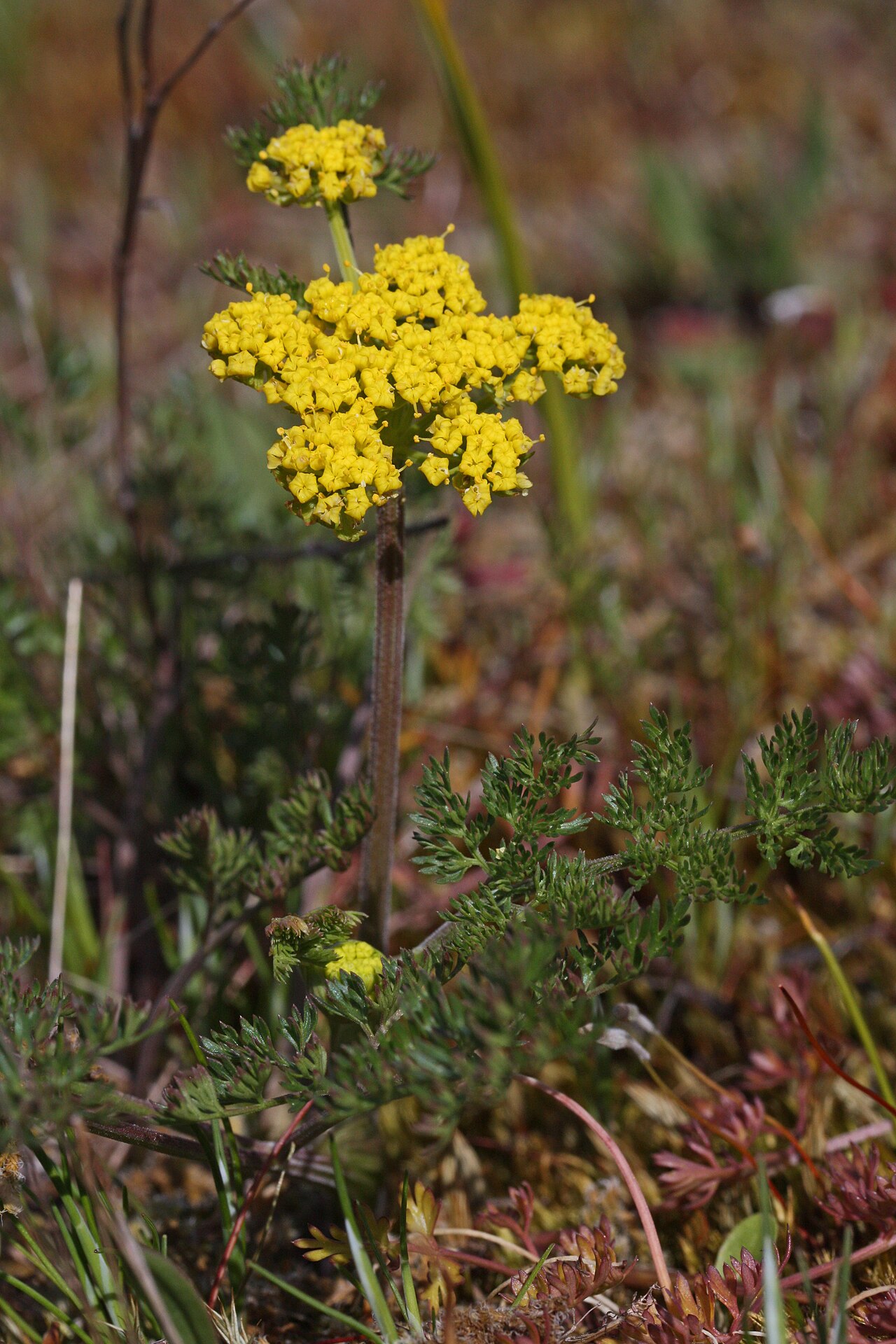
Lomatium utriculatum, known as Foothill Desert Parsley, is a small, early-blooming wildflower of the carrot family (Apiaceae) that grows in grasslands, oak savannas, rocky balds and open slopes west of the Cascades and Sierra Nevada, from British Columbia to Southern California. USDA PLANTS calls it common lomatium, and it is also widely known as spring gold, foothill lomatium and bladder parsnip.
From late winter into spring it forms a low clump of finely divided, fern-like leaves and holds rounded clusters of tiny, bright yellow flowers just above them, often turning open meadows gold. It is one of the first wildflowers to bloom in many western valleys and an important early food for native bees and other pollinators. It is the caterpillar food plant of the anise swallowtail.
Foothill desert parsley is easy to grow from seed in sunny, well-drained native meadows and rock gardens in its range. It goes dormant in summer and needs no summer water. It is a valuable plant for restoring oak savannas and prairies in the Pacific Northwest and California.
Identification
Look for a low, ferny clump with tiny yellow flowers in flat-topped, rounded clusters in early spring, in a sunny meadow or on a rocky slope west of the Cascades and Sierra Nevada.
Growth Habit
A perennial from a slender taproot, usually 4 to 20 inches tall, with mostly basal leaves and one to several flowering stems. Plants appear in late winter, bloom in spring and die back by early summer.
Leaves
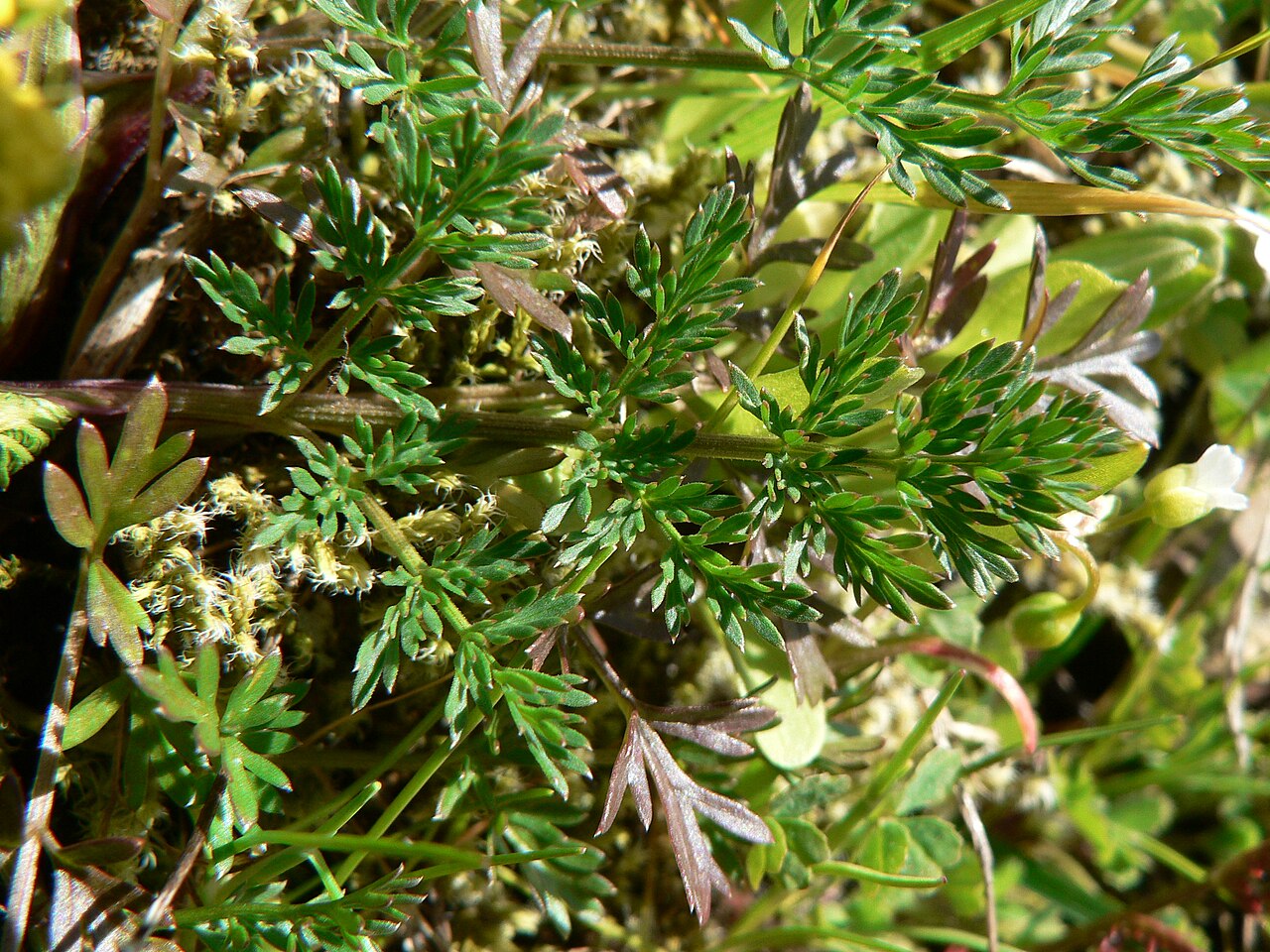
The leaves are bright green, two to four times divided into many narrow, linear segments, giving them a feathery, carrot-like look. The base of each leaf stalk widens into a broad, papery, somewhat inflated sheath, the “bladder” or “utricle” behind the species name. The plant is smooth or only slightly hairy.
Flowers
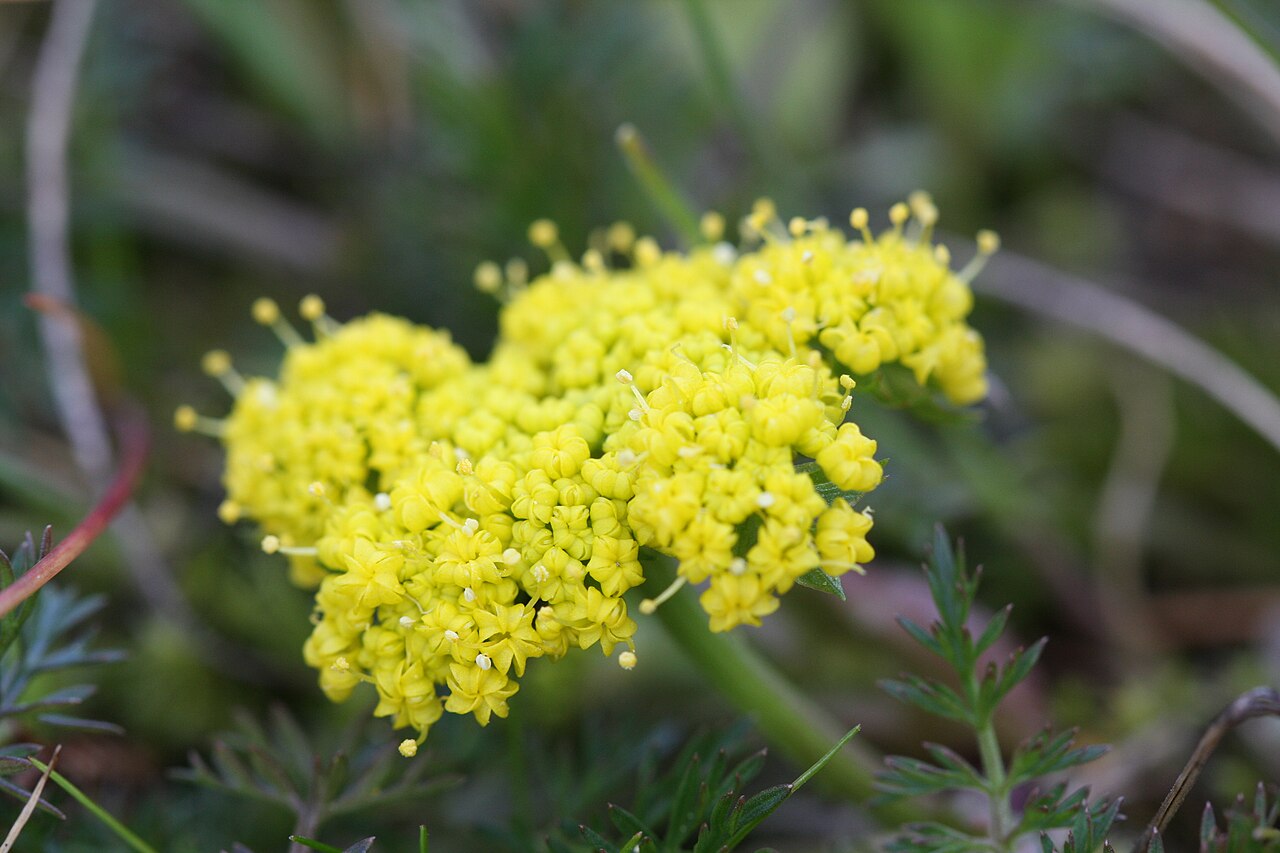
The flowers are tiny and bright yellow, packed into small, rounded umbellets that together form a compound umbel 1 to 2 inches across at the top of a stalk. Small, leafy bracts with papery edges sit beneath each umbellet. It blooms from about February to May, depending on elevation and latitude.
Fruit & Seeds
The fruits are flat, oblong to oval seeds about 1/4 to 1/2 inch long, with thin, papery wings along the edges, ripening in late spring.
Look-alikes
Many other lomatiums have yellow flowers. Barestem biscuitroot (Lomatium nudicaule) has broad, blue-green, undivided leaflets. bigseed biscuitroot (L. macrocarpum) have hairy, grayish leaves and white or yellow flowers. Several other fine-leaved yellow lomatiums grow in California and are best told apart by their fruits. Pacific sanicle has lobed, maple-like leaves and bur-like fruits.
Quick Facts
| Scientific Name | Lomatium utriculatum |
| Family | Apiaceae (carrot family) |
| Plant Type | Herbaceous perennial; summer dormant |
| Mature Height | 4–20 in |
| Mature Spread | 6–12 in |
| Growth Rate | Moderate |
| Sun Exposure | Full sun to part shade |
| Water Needs | Low; dry summer dormancy |
| Soil Type | Well-drained, rocky, gravelly, loamy or clay soils; tolerates serpentine |
| Soil pH | Slightly acidic to neutral (about 5.5–7.5) |
| Bloom Time | February–May |
| Flower Color | Bright yellow |
| Fall Color | None; dormant |
| Fruit | Flat, winged seeds |
| Deer Resistant | Moderate |
| USDA Hardiness Zones | 7–10 |
Native Range
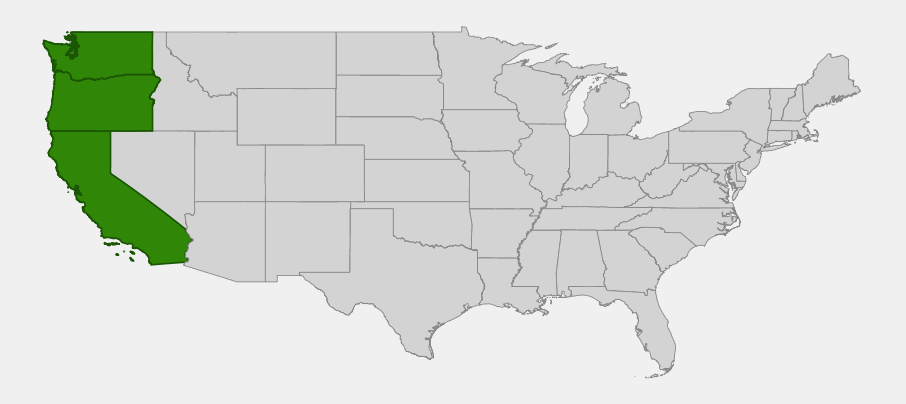
Foothill desert parsley is native to the Pacific Coast of North America. USDA PLANTS lists it in California, Oregon and Washington, and it reaches Canada in southwestern British Columbia, on southeastern Vancouver Island and the Gulf Islands.
In Washington and Oregon it grows west of the Cascades, in the Puget Trough, the San Juan Islands, the Willamette Valley and the valleys of southwestern Oregon, and along the Columbia River Gorge. In California it is widespread in the Coast Ranges, the foothills of the Sierra Nevada and the Cascades, and south through the Transverse and Peninsular Ranges to Southern California.
It grows in grasslands and prairies, oak savannas and woodland openings, rocky balds and outcrops, coastal bluffs, chaparral openings and serpentine barrens, from near sea level to about 5,000 feet. It is common in the remnant prairies and Garry oak meadows of the Pacific Northwest.
📋 Regional plant lists featuring Foothill Desert Parsley: Western Oregon & Western Washington · California & Nevada · Idaho, Eastern Oregon & Eastern Washington
Growing & Care Guide
Foothill desert parsley is a cheerful, easy native for sunny meadows and rock gardens in western Oregon and Washington and in California. It follows the rhythm of a Mediterranean climate: it grows and blooms with the winter and spring rains and rests in the dry summer.
Light
Full sun to light shade. It blooms best in open meadows and on sunny slopes.
Soil & Water
Well-drained soil of almost any texture, including rocky, gravelly and clay soils, and serpentine. No summer water is needed; summer irrigation can rot the taproot. Rainfall alone is enough in its native range.
Planting Tips
Sow seed directly in fall where you want plants to grow, or plant small seedlings in late fall or winter. The taproot makes larger plants hard to move. Grow it with camas, seablush, buttercups and native bunchgrasses for a spring meadow display.
Pruning & Maintenance
Let plants go dormant naturally in summer. If you mow a meadow, wait until the seeds have ripened and dropped in early summer. Keep vigorous non-native grasses from crowding it.
Propagation
From seed. Sow fresh seed outdoors in fall; it needs a cold, moist period of several weeks to germinate. Seedlings may take two to three years to bloom.
Landscape Uses
- Meadows and prairies: early gold color in native meadow plantings
- Rock gardens: a compact, ferny plant for sunny, rocky pockets
- Pollinator gardens: one of the earliest spring flowers for native bees
- Butterfly gardens: a caterpillar host for the anise swallowtail
- Restoration: for oak savanna, prairie and bald restoration west of the Cascades
Wildlife & Ecological Value
Foothill desert parsley is an important early-spring resource in western grasslands and oak savannas.
For Pollinators
Its flowers open when few others are blooming and are visited by many small native bees, including mining bees, as well as flies, beetles and early butterflies. Some solitary bees specialize in collecting pollen from lomatiums.
For Birds
Seed-eating birds may take the flat seeds, and the insects attracted by the flowers feed insect-eating birds in early spring.
For Mammals
Deer, elk and rodents graze the young leaves, and pocket gophers eat the roots.
Ecosystem Role
It is a caterpillar food plant of the anise swallowtail butterfly, whose larvae feed on the leaves and flowers. It is a characteristic plant of the remnant prairies and oak savannas of the Pacific Northwest, which are among the most threatened ecosystems in the region.
Cultural & Historical Uses
The genus name Lomatium comes from the Greek loma, “border,” for the winged edges of the fruit. The species name utriculatum refers to the inflated, bladder-like sheaths at the base of the leaf stalks.
Indigenous peoples of California and the Pacific Northwest ate the young leaves and stems of this and other lomatiums in early spring, when they are tender, and used the roots of some species as food. Because some members of the carrot family are deadly poisonous, never eat a wild plant unless you are certain of its identity.
Lomatiums are among the most diverse plant groups of western North America, with about 80 species. Many are early-blooming, summer-dormant plants adapted to dry summers, and they are key early food plants for pollinators across the West.
Frequently Asked Questions
What are other names for foothill desert parsley?
USDA PLANTS calls it common lomatium. It is also known as spring gold, foothill lomatium, fine-leaf desert parsley and bladder parsnip.
When does foothill desert parsley bloom?
From about February to May, among the earliest wildflowers in many western valleys and meadows.
Does it need summer water?
No. It goes dormant in summer and should be kept dry. Summer watering can rot the root.
Does foothill desert parsley grow east of the Cascades?
It is mainly a plant of the west side of the Cascades and Sierra Nevada. In Washington and Oregon it grows in the Puget Trough, the Willamette Valley, southwestern Oregon and the Columbia River Gorge.
Is foothill desert parsley a host plant for butterflies?
Yes. It is a caterpillar food plant of the anise swallowtail, which also uses other plants of the carrot family.

Looking for a nursery that carries Foothill Desert Parsley?
Browse our native plant nursery directory: California · Oregon · Washington

