
Bicolor Babystars (Leptosiphon bicolor)
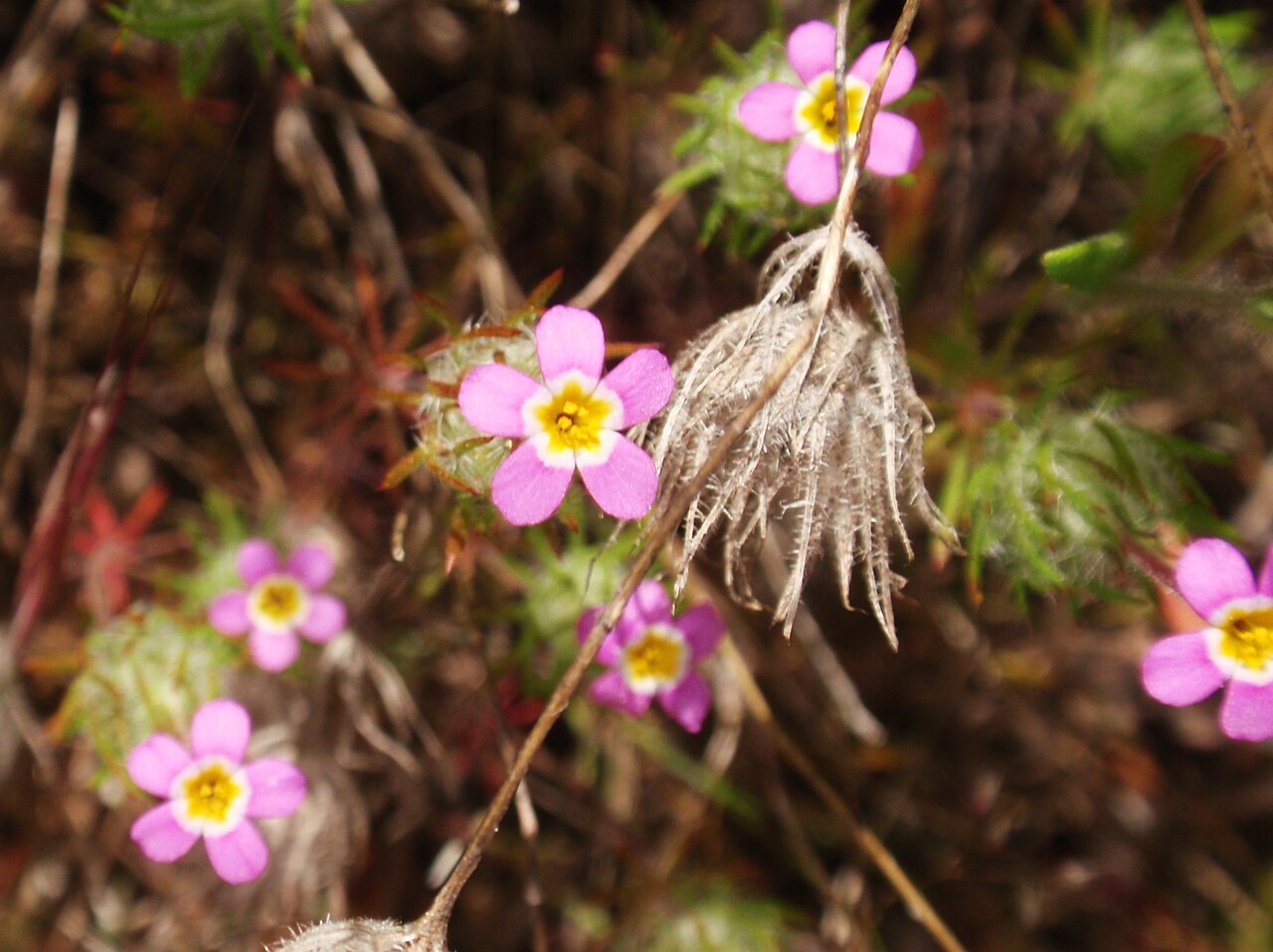
Leptosiphon bicolor, known as Bicolor Babystars, true babystars (the USDA name) or bicolored linanthus, is a tiny spring annual wildflower of the Pacific Coast. Its plants are often only 2 to 8 inches tall, with bristly whorls of needle-like leaves and small, starry flowers of white, pink or lavender with a yellow center. The flowers sit at the end of remarkably long, thread-like tubes, which hold them just above the foliage.
It belongs to the phlox family (Polemoniaceae) and was long known as Linanthus bicolor, a name still used in many older field guides. The genus Leptosiphon, meaning “slender tube”, refers to those long, narrow flower tubes. The species name bicolor describes the two-toned flowers, with pale lobes around a yellow throat.
Bicolor babystars grows in open, grassy and rocky places from southern British Columbia through western Washington and Oregon to California. It is easy to overlook but often abundant in spring, carpeting thin soils on balds, prairies and woodland openings. This guide covers how to identify it, where it grows, how to grow it from seed, and its value to pollinators.
Identification
Bicolor babystars is small enough to miss unless you get down to ground level. Look for tufts of bristly, needle-like leaves topped with tiny, two-toned flowers on very long, thin tubes.
Growth Habit
It is a slender annual, 2 to 8 inches tall, with a single stem or a few branches. The stems and leaves are covered with fine, stiff hairs. It germinates in fall or winter, flowers in spring and dries up by early summer after setting seed.
Leaves
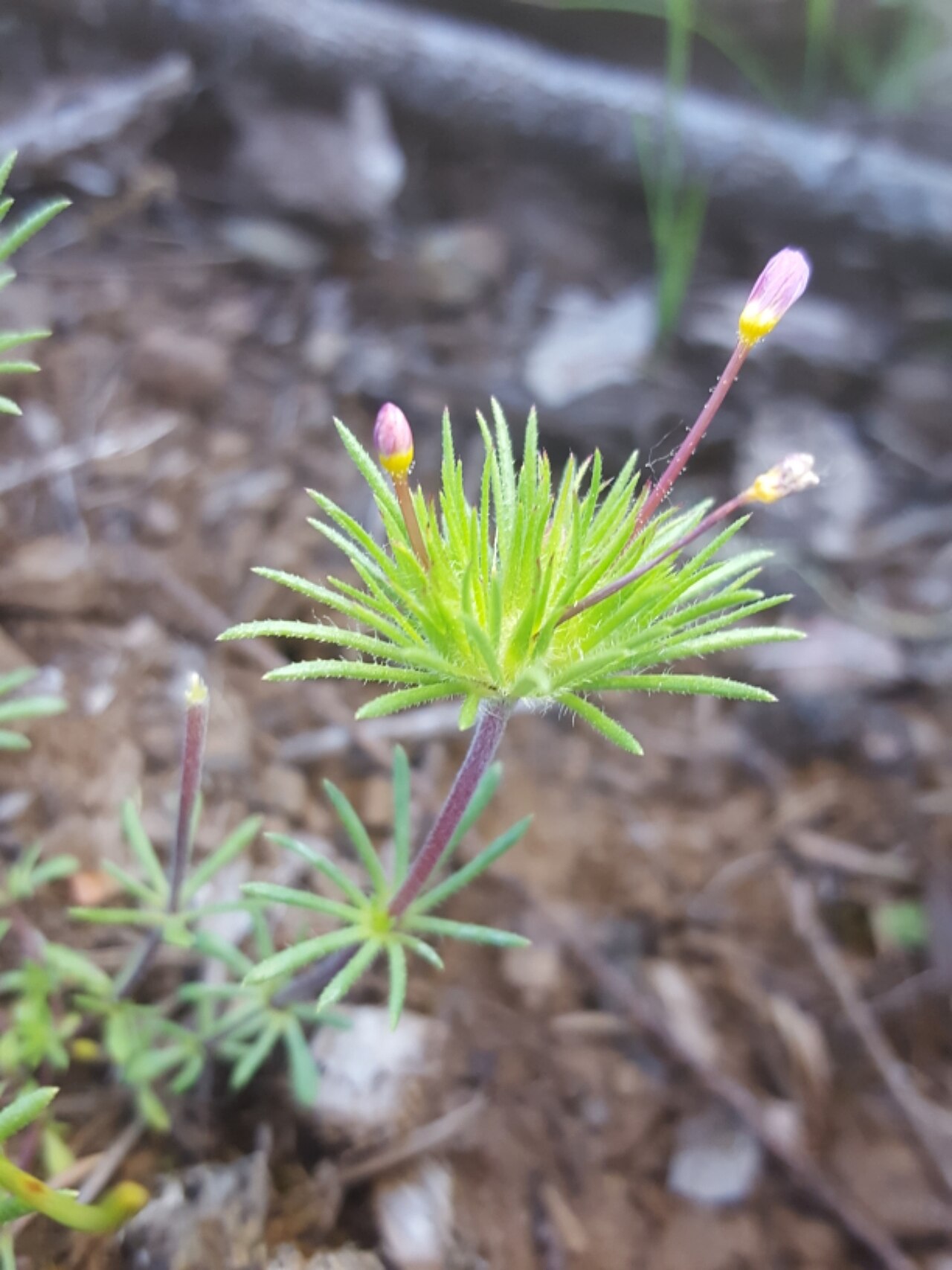
The leaves are opposite, but each one is divided nearly to the base into three to seven narrow, needle-like segments, so the pairs look like small, bristly whorls spaced along the stem. The segments are usually less than 1 inch long.
Flowers
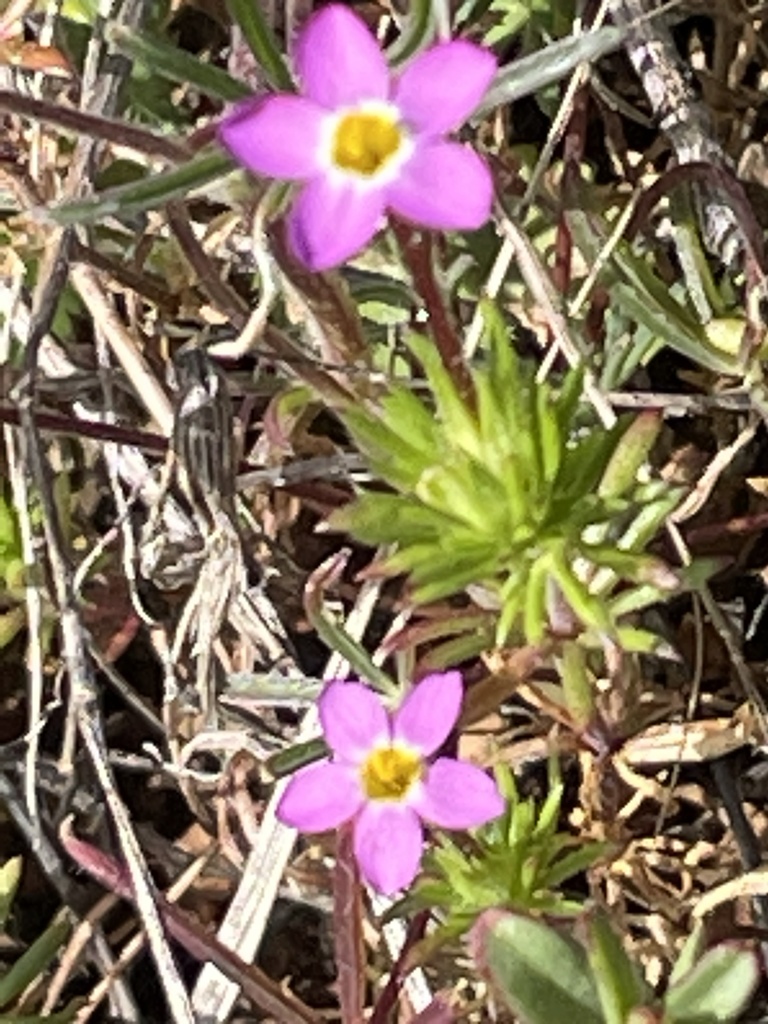
The flowers are clustered in a dense, head-like group at the top of the stem, surrounded by bristly, leafy bracts. Each flower has a very long, thread-like tube, often about 1 inch long and much longer than the leaves, ending in five small, spreading lobes about 1/4 inch long. The lobes are white, pink or lavender, and the throat is yellow. Bloom time is mainly March to June, into July at higher elevations and in the north.
Fruit & Seeds
Each flower produces a small capsule hidden among the bracts, which splits open when dry to release a few tiny seeds. The seeds fall near the parent plant, so babystars often forms patches.
Look-alikes
Several related babystars and linanthus species look similar. Variable linanthus (Leptosiphon parviflorus) has larger flower lobes in a range of colors, and whiskerbrush (Leptosiphon ciliatus) has pink flowers with a darker spot at the base of each lobe and long hairs on the bracts. Bicolor babystars is identified by its combination of small, white to pink lobes, a yellow throat and very long, slender tubes.
Quick Facts
| Scientific Name | Leptosiphon bicolor Nutt. |
| Family | Polemoniaceae (phlox family) |
| Plant Type | Annual wildflower |
| Mature Height | 2–8 in |
| Mature Spread | 1–3 in |
| Growth Rate | Fast (annual) |
| Sun Exposure | Full sun to light shade |
| Water Needs | Low; winter-spring moisture only |
| Soil Type | Thin, well-drained rocky, gravelly or sandy soils; including serpentine |
| Soil pH | About 5.5–7.5 |
| Bloom Time | March–June (to July in the north and at higher elevations) |
| Flower Color | White, pink or lavender with a yellow throat |
| Fall Color | None; annual, dies by early summer |
| Fruit | Small capsule with tiny seeds |
| Deer Resistant | Not well documented |
| USDA Hardiness Zones | 7–10 (grows as a cool-season annual) |
Native Range
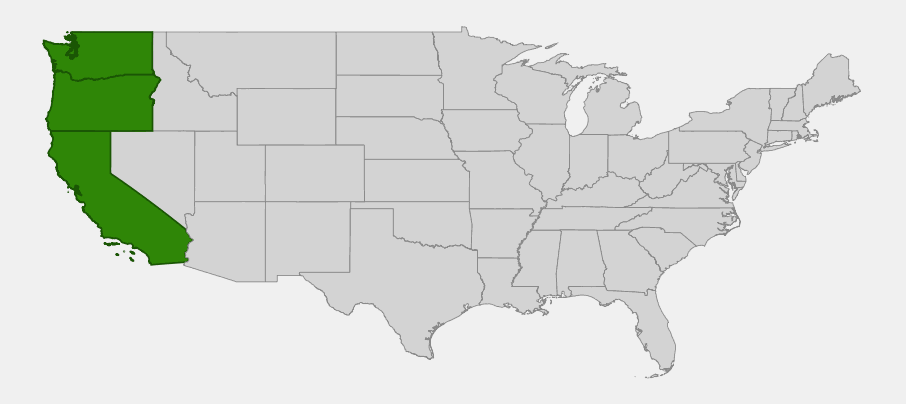
Bicolor babystars is native to the Pacific Coast of North America. USDA PLANTS lists it in Washington, Oregon and California, and it also grows in southern British Columbia, mainly on southeastern Vancouver Island and the Gulf Islands, where it is uncommon at the northern edge of its range.
In Washington and Oregon it grows mainly west of the Cascades: in the San Juan Islands and the northeastern Olympic Peninsula rain shadow, the Puget Trough, the Willamette Valley and its foothills, and the Siskiyou region of southwestern Oregon. It also extends into the Columbia River Gorge, reaching rocky plateaus such as the Rowena Plateau at the eastern end of the Gorge. In California it is widespread in the Klamath Mountains, the North and Central Coast Ranges, including the hills around San Francisco Bay, and the foothills of the Sierra Nevada and Cascades.
It grows in open, sunny places with thin soil: grassy balds and rock outcrops, prairies and meadows, oak woodland and chaparral openings, and serpentine barrens. It is found from near sea level into the foothills and lower mountains.
📋 Regional plant lists featuring Bicolor Babystars: Western Oregon & Western Washington · California & Nevada · Idaho, Eastern Oregon & Eastern Washington
Growing & Care Guide
Bicolor babystars is a delightful, if tiny, native annual for rock gardens, meadow plantings and container displays. It is grown from seed, which is offered occasionally by Pacific Northwest and California native seed suppliers. Because it is small, it shows best in groups and close to a path where its flowers can be seen.
Light
Give it full sun or light shade. It grows best on open, sunny sites with little competition from taller plants.
Soil & Water
Plant it in thin, well-drained soil, such as gravelly or sandy loam, a rock garden pocket or a shallow trough. It relies on fall, winter and spring rain and needs no summer water, since it completes its life cycle by early summer. Rich soil and irrigation favor weeds that will crowd it out.
Planting Tips
Sow seed in fall, scattering it on the soil surface and pressing it in lightly, ideally where it is to grow. It combines well with other small native annuals, such as seablush, blue-eyed Mary and miniature lupine, and with low bunchgrasses.
Pruning & Maintenance
No pruning is needed. Let the plants set seed and dry in place so they can reseed. Keep the area free of aggressive weeds and grasses, especially in winter and early spring, when the seedlings are tiny.
Propagation
It is grown only from seed. Collect the small capsules when they dry in late spring, or allow plants to reseed on their own. Store seed dry over summer and sow it in fall; the winter rains provide the conditions it needs to germinate.
Landscape Uses
- Rock gardens and troughs: tiny, colorful annual for thin, well-drained soil
- Meadow and prairie plantings: spring color among bunchgrasses and other annuals
- Pollinator gardens: nectar for long-tongued bees, flies and butterflies
- Habitat restoration: a native annual of balds, prairies and oak woodland openings
- Children’s and nature gardens: a fun plant to observe up close with a hand lens
Wildlife & Ecological Value
Despite its size, bicolor babystars is part of the spring wildflower community that supports pollinators in Pacific Coast grasslands and rocky openings.
For Pollinators
The long, narrow flower tube means that nectar can be reached only by insects with long tongues, such as bee flies, butterflies, day-flying moths and some long-tongued bees. Short-tongued insects may collect pollen from the open lobes.
For Birds
Seed-eating birds may take some of the tiny seeds, but the plant is too small to be an important food source.
For Mammals
Small mammals may eat the seeds. The plants are tiny and short-lived, so they are not significant browse for deer.
Ecosystem Role
As a spring annual of thin soils, bicolor babystars is part of the diverse wildflower communities of grassy balds, prairies and oak woodland openings in the Pacific Northwest and California. These habitats have been greatly reduced by development, fire suppression and invasive grasses, so populations on intact sites are worth protecting.
Cultural & Historical Uses
The genus name Leptosiphon comes from the Greek leptos, thin or slender, and siphon, tube, describing the long, narrow flower tubes. The species was described by Thomas Nuttall in the nineteenth century. For many years it was placed in Linanthus, but DNA studies led botanists to restore Leptosiphon as a separate genus for babystars and their relatives.
The name babystars refers to the tiny, starry flowers that dot the ground in spring. USDA PLANTS calls this species true babystars, while many field guides use bicolored linanthus or bicolor babystars.
Because it is so small, bicolor babystars is a plant that rewards slowing down. On spring walks in Northwest prairies and California grasslands, kneeling to look closely at a patch of babystars, often with a hand lens, reveals the long tubes and delicate colors that are easy to miss from a standing height.
Frequently Asked Questions
Why is it called bicolor babystars?
The tiny, star-shaped flowers are two-toned, with white, pink or lavender lobes and a yellow center. USDA calls it true babystars.
Is bicolor babystars the same as Linanthus bicolor?
Yes. It was long known as Linanthus bicolor, and that name still appears in older field guides. It is now placed in Leptosiphon.
Where does bicolor babystars grow?
It grows from southern British Columbia through western Washington and Oregon to California, in grassy balds, prairies, rocky openings and oak woodland, mainly west of the Cascades.
Can I grow bicolor babystars?
Yes. Sow seed in fall in thin, well-drained soil in full sun. It is an annual that reseeds if left to set seed.
What pollinates bicolor babystars?
Insects with long tongues, such as bee flies, butterflies, day-flying moths and some long-tongued bees, which can reach nectar at the base of the long flower tube.

Looking for a nursery that carries Bicolor Babystars?
Browse our native plant nursery directory: California · Oregon · Washington

