
Redshanks (Adenostoma sparsifolium)
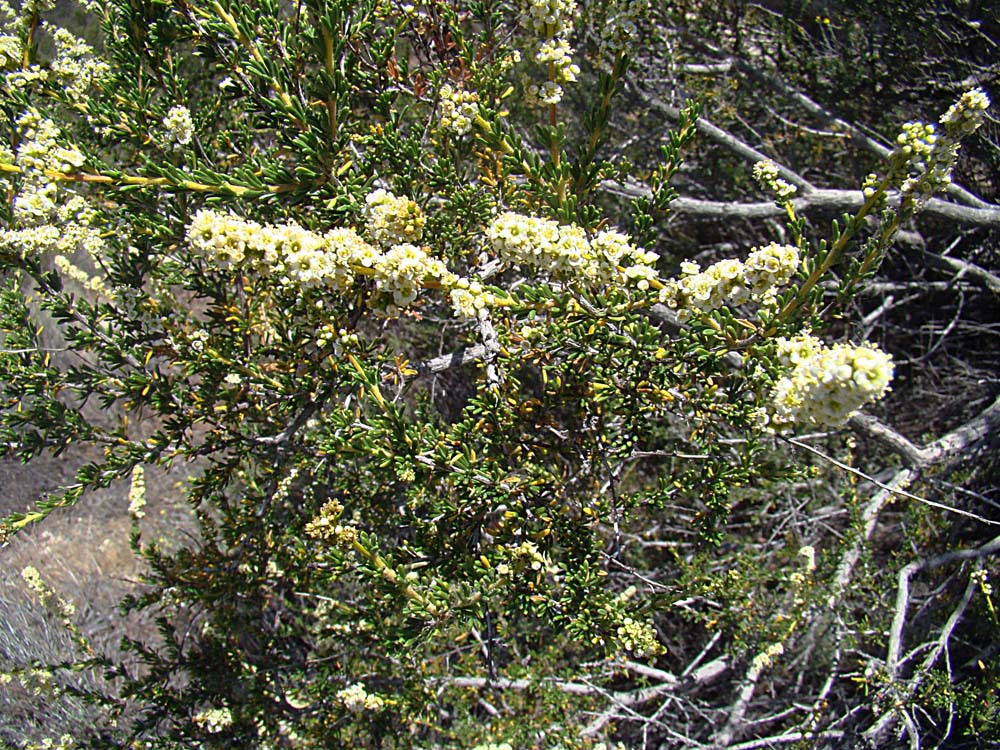
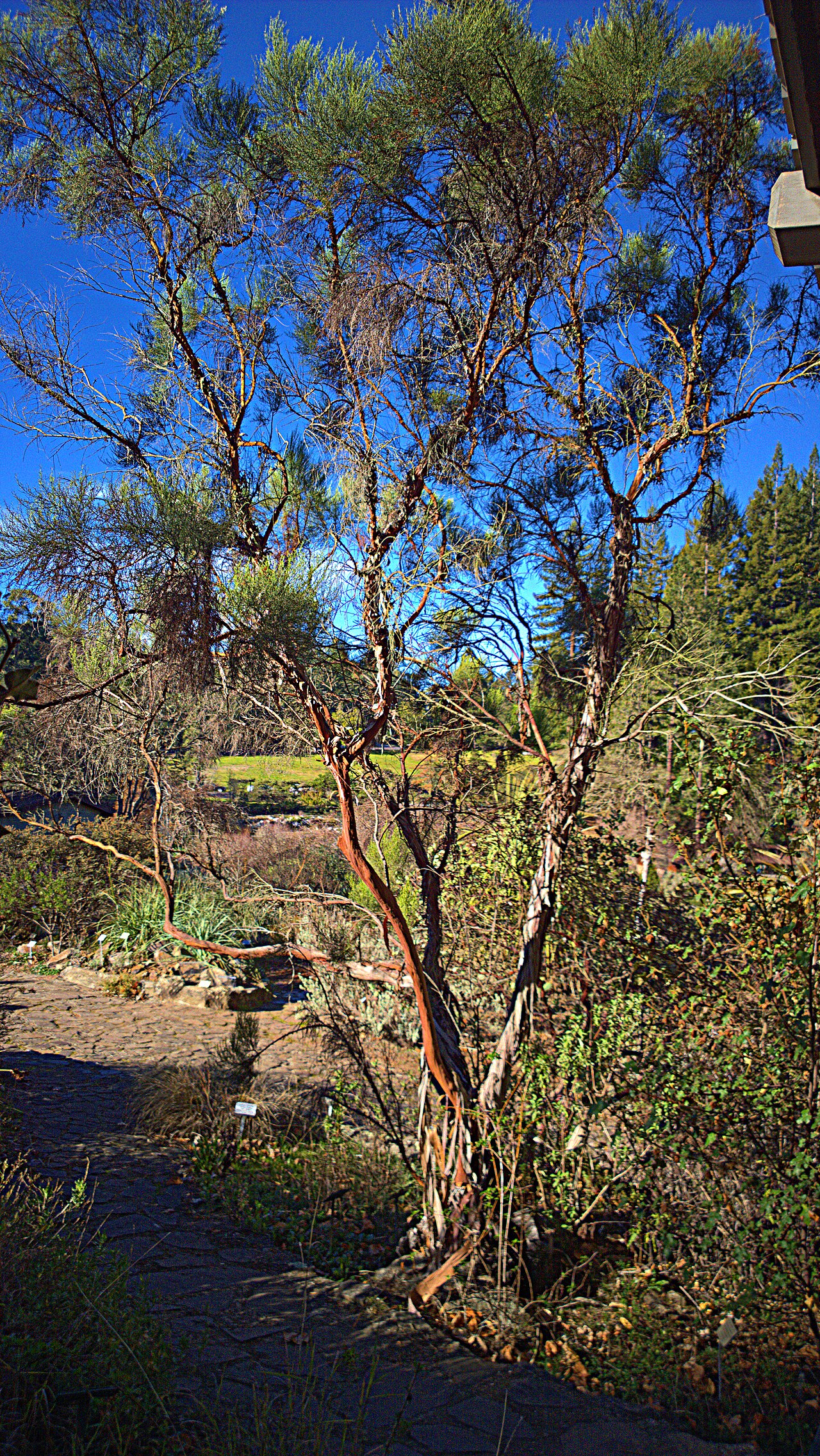
Adenostoma sparsifolium, known as Redshanks, red shank or ribbonwood, is a large evergreen shrub or small, multi-trunked tree of the southern California chaparral. It usually grows 6 to 18 feet tall, occasionally to about 20 feet, with several thick trunks wrapped in reddish bark that peels away in long, shaggy ribbons. Above the bare trunks, the branches carry soft, feathery masses of pale green, thread-like leaves, and in summer they are tipped with sprays of tiny white flowers.
Redshanks belongs to the rose family (Rosaceae) and is the larger, less common relative of chamise (Adenostoma fasciculatum), the most widespread shrub of California chaparral. The species name sparsifolium means “sparse-leaved”, a reference to its slender, widely spaced leaves. The community of Ribbonwood in Riverside County is named after the plant.
It grows in scattered, often disjunct stands from San Luis Obispo County south through the Transverse and Peninsular Ranges into northern Baja California. This guide covers how to identify redshanks, where it grows, how to use it in dry gardens, and its role in chaparral ecosystems and California history.
Identification
Redshanks is one of the most distinctive shrubs in southern California. Look for a tall, open, multi-trunked shrub with shaggy, rusty-red bark and soft, feathery, light green foliage that looks almost like a conifer from a distance.
Growth Habit
It is an upright, evergreen shrub or small tree, usually 6 to 18 feet tall, with many thick stems rising from a large woody root crown (lignotuber). The trunks are often bare for several feet before branching into rounded crowns of fine foliage. Old plants can look like small, gnarled trees.
Bark
The bark is the best field mark. It is reddish brown to cinnamon and peels freely in long, thin strips and ribbons that hang from the trunks and branches. This shaggy bark gave rise to the names redshanks and ribbonwood.
Leaves
The leaves are bright to pale green, very narrow and thread-like, mostly about 1/4 to 5/8 inch long, and spaced singly along the twigs. They are dotted with resin glands and feel slightly sticky, and the foliage has a faint resinous scent, especially on hot days.
Flowers
Redshanks blooms in summer, mainly in July and August, later than chamise, which flowers in spring. The tiny white flowers, each with five petals, are carried in loose, branching sprays at the ends of the twigs. In full bloom the crowns look frosted with white, and as the flowers age they turn rusty brown.
Fruit & Seeds
Each flower produces a single small, dry, one-seeded fruit (an achene). The dried flower clusters often stay on the plant into fall and winter, giving the crowns a rusty tint. Seed set is often poor, and young seedlings are rarely seen in the wild.
Look-alikes
Chamise is smaller and denser, with short, needle-like leaves held in bundles (fascicles), gray rather than shredding red bark, and spring flowers. Some goldenbushes, such as Ericameria arborescens, have similar fine foliage but yellow flowers and no ribbon-like red bark.
Quick Facts
| Scientific Name | Adenostoma sparsifolium Torr. |
| Family | Rosaceae (rose family) |
| Plant Type | Evergreen shrub or small multi-trunked tree |
| Mature Height | 6–18 ft (occasionally to 20 ft) |
| Mature Spread | 6–12 ft |
| Growth Rate | Slow to moderate |
| Sun Exposure | Full sun |
| Water Needs | Very low; summer-dry once established |
| Soil Type | Shallow, rocky, well-drained soils; granitic and sandy slopes |
| Soil pH | About 5.5–7.5 |
| Bloom Time | July–August (into September) |
| Flower Color | White, aging rusty brown |
| Fall Color | Evergreen; dried flower clusters give a rusty tint |
| Fruit | Small, dry, one-seeded achene |
| Deer Resistant | Fairly resistant; resinous foliage is little browsed once mature |
| USDA Hardiness Zones | 7–10 |
Native Range
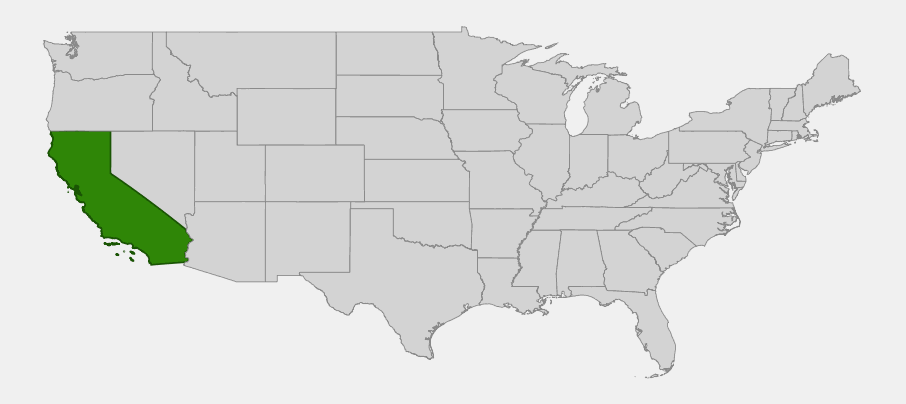
Redshanks is native to southern California and northern Baja California. USDA PLANTS lists it only in California. Its range is small and patchy: it grows in discrete, often isolated stands rather than as a continuous belt, and it is absent from many areas of apparently suitable chaparral between them.
In California it ranges from south-central San Luis Obispo County through the Santa Monica Mountains and other coastal parts of the Transverse Ranges to Los Angeles County. Farther south it shifts inland, to the interior Peninsular Ranges of Riverside and San Diego Counties, including the San Jacinto, Santa Rosa, Palomar, Cuyamaca and Laguna Mountains. In Baja California it extends into the Sierra Juárez and the Sierra San Pedro Mártir.
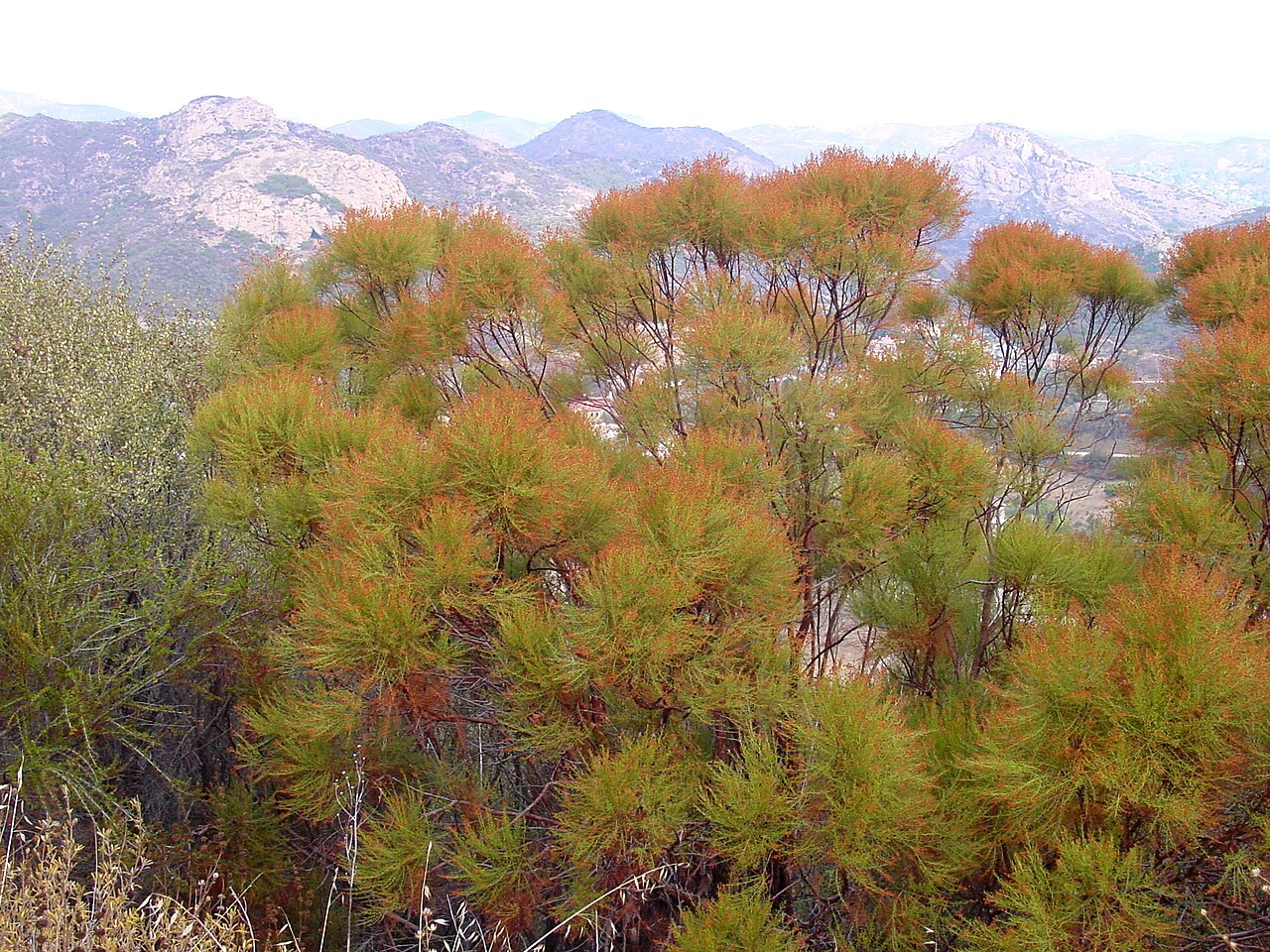
It grows on dry, rocky slopes and benches, mostly in upper chaparral between roughly 2,000 and 6,000 feet, though it reaches lower elevations near the coast. It often forms nearly pure stands on gentle slopes and valley floors in the mountains, mixing with scrub oak and ceanothus at lower elevations and with manzanitas and conifers near its upper limit.
📋 Regional plant lists featuring Redshanks: California & Nevada
Growing & Care Guide
Redshanks is an outstanding sculptural shrub for large, dry gardens in southern California and other mild, summer-dry climates. Its shaggy red trunks and soft, feathery foliage give it the look of a small ornamental tree, and it needs no summer water once established. It is offered by some California native plant nurseries, though less often than chamise.
Light
Plant it in full sun. In shade it becomes thin and leggy and flowers poorly.
Soil & Water
It needs fast-draining soil, such as decomposed granite, sandy loam or rocky ground on a slope. Water regularly but deeply during the first one or two dry seasons to establish the root system, then taper off. Mature plants are adapted to long, dry summers and do best with little or no summer irrigation; frequent summer watering, especially in heavy soil, invites root rot.
Planting Tips
Plant in fall or early winter so the roots can grow with the winter rains. Give it room, since it can reach 10 feet or more across in time. It looks best as a specimen or small grove, where the trunks can be seen, and combines well with manzanitas, ceanothus, sugar sumac and native sages in a chaparral-style planting.
Pruning & Maintenance
Little pruning is needed. Remove dead wood and, if you like, thin lower branches to reveal the red trunks. Old or damaged plants resprout vigorously from the root crown if cut back hard. Because redshanks is resinous and flammable, keep it outside the defensible space zone close to buildings in fire-prone areas, and clear dead material from underneath.
Propagation
Seed viability is low and short-lived, so seed must be collected fresh from the plant and sown promptly; even then germination is often poor. Nurseries usually raise plants from fresh seed or cuttings. Do not dig plants from the wild; their large root crowns rarely survive transplanting.
Landscape Uses
- Specimen shrub or small tree: shaggy red trunks and feathery foliage for year-round interest
- Chaparral and dry gardens: a no-summer-water shrub for slopes and rocky ground
- Erosion control: its deep roots and resprouting crown help stabilize slopes
- Habitat restoration: a native chaparral shrub for upper-elevation restoration in southern California
- Pollinator gardens: late-summer flowers when few other chaparral shrubs bloom
Wildlife & Ecological Value
Redshanks is a key structural plant in the stands where it grows, providing cover, nesting sites and late-season flowers in otherwise dry, summer-dormant chaparral.
For Pollinators
Its summer flowers bloom when most chaparral shrubs are finished, offering nectar and pollen to native bees, flies, wasps, beetles and small butterflies at a lean time of year.
For Birds
The dense crowns and multi-stemmed trunks give cover and nesting sites to chaparral birds such as wrentits, California thrashers, towhees and scrub-jays. Small birds glean insects from the foliage and bark.
For Mammals
Mature foliage is resinous and lightly browsed, but tender sprouts after fire are eaten by brush rabbits, woodrats and other chaparral rodents, and by deer and cattle. Small mammals shelter among the stems and in the litter beneath the crowns.
Ecosystem Role
Like chamise, redshanks is adapted to the periodic wildfires of chaparral: its stems are killed by fire, but it resprouts from a large root crown that stores energy below ground. Its seedlings, however, rarely establish, and studies have found high seed abortion in some populations, so stands depend mainly on long-lived resprouting individuals. Too-frequent fires can exhaust the root crowns and threaten these stands.
Cultural & Historical Uses
Redshanks was an important medicinal plant in Spanish and Mexican California. Californios and Native Californians used it as a remedy for pasmo, a folk illness associated with spasms and lockjaw, which gave the plant the Spanish name yerba del pasmo. The bark and leaves were also made into teas, washes and salves for colds, sores, wounds and other ailments. Today it should not be harvested from the wild, and its traditional uses are not a substitute for medical care.
The genus name Adenostoma comes from the Greek aden, gland, and stoma, mouth, referring to glands at the mouth of the flower cup. John Torrey described the species in the nineteenth century from plants collected in southern California; the earliest recorded collection is from near Warner’s Ranch in San Diego County in 1846.
The names redshanks and ribbonwood describe the plant’s shaggy trunks, and ribbonwood became the name of a small community in the Santa Rosa Mountains of Riverside County. For hikers in the mountains of southern California, a grove of redshanks with its red, peeling trunks and feathery crowns is one of the most memorable sights in the chaparral.
Frequently Asked Questions
Why is it called redshanks?
The trunks (the “shanks”) are covered in reddish bark that peels away in long, shaggy ribbons, which also gives it the name ribbonwood.
How is redshanks different from chamise?
Redshanks is larger, with shredding red bark, longer, thread-like leaves held singly, and summer flowers. Chamise is smaller and denser, with short leaves in bundles and spring flowers.
Where does redshanks grow?
It grows in scattered stands in the chaparral of southern California, from San Luis Obispo County to San Diego County, and in northern Baja California, mostly at about 2,000 to 6,000 feet.
Is redshanks good for gardens?
Yes, in large, dry gardens with fast-draining soil and full sun. It needs no summer water once established, but it is resinous and flammable, so keep it away from buildings in fire-prone areas.
Does redshanks survive wildfire?
The stems are killed, but the plant usually resprouts from its large root crown. Its seeds, however, rarely produce new plants, so very frequent fires can harm stands.

Looking for a nursery that carries Redshanks?
Browse our native plant nursery directory: California

