Bigpod Ceanothus (Ceanothus megacarpus)
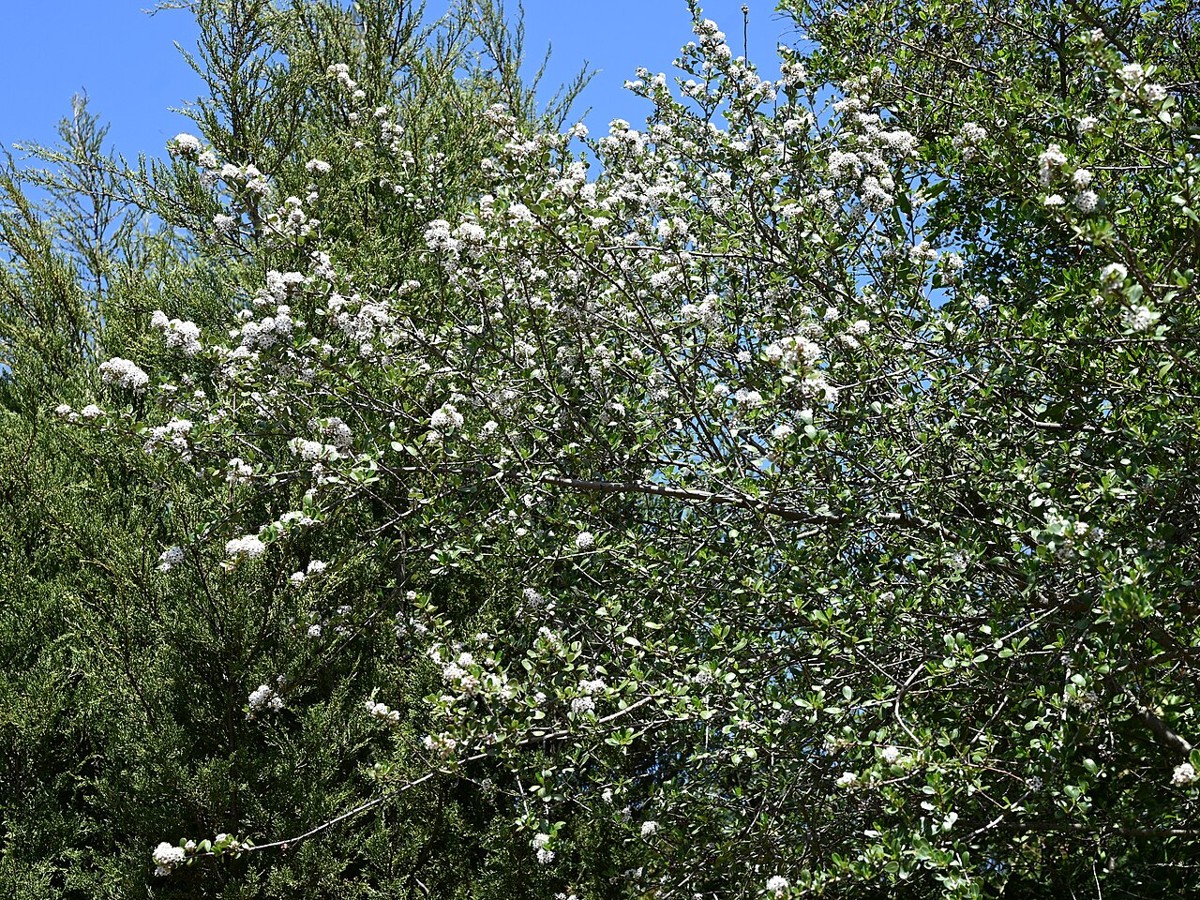
Ceanothus megacarpus, known as Bigpod ceanothus, is a large evergreen shrub of the Rhamnaceae (buckthorn) family and one of the defining species of Southern California’s coastal chaparral. It often forms dense, nearly pure stands on dry slopes and ridgelines from Santa Barbara County south to San Diego County, including the northern Channel Islands. The Latin name refers to its unusually large seed capsules for a ceanothus — up to 10 millimeters across — a feature that sets it apart from the many smaller-fruited species in the genus.
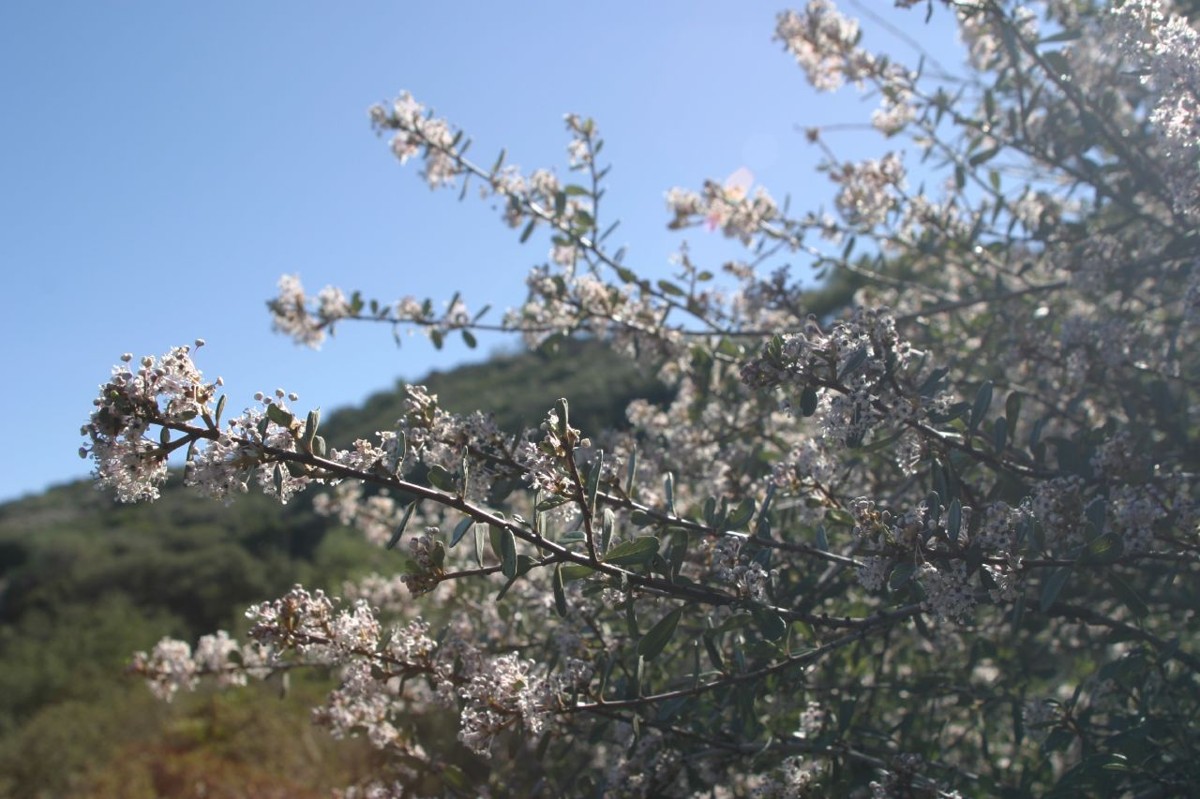
Bigpod ceanothus is a rounded, stiffly branched shrub that typically reaches 6 to 12 feet tall, though old, undisturbed stands can grow taller. Its small, leathery, gray-green leaves are smooth-edged rather than toothed like most other chaparral ceanothus species, and its masses of small white flowers open earlier in the year than almost any other native shrub in the region — often beginning in December and continuing into April. The result is a hillside that turns frosty white in the dead of winter, long before most other chaparral plants show any color.
For home gardeners and restoration planners in coastal Southern California, Bigpod ceanothus is a genuinely tough, low-water shrub that asks for almost nothing once established. It thrives on the same thin clay and shale soils that defeat most ornamental shrubs, fixes its own nitrogen, and supports an enormous range of native bees, butterflies, and birds. It is not a plant for regular garden irrigation or for gardens far from the coast — but where the climate matches its chaparral home, few natives are as reliable or as quietly spectacular in bloom.
Identification
Bigpod ceanothus is a dense, rounded to spreading evergreen shrub, usually 6 to 12 feet tall and equally wide, with stiff, often gray-barked branches. Unlike the willowy, arching forms of many other chaparral shrubs, it tends to build a tight, twiggy canopy that provides excellent cover for small wildlife.
Bark & Stems
Young twigs are grayish-green and finely hairy, aging to smooth gray-brown bark on older wood. The branching is rigid and somewhat spiny-tipped on older growth, giving mature plants a dense, almost impenetrable structure that is valuable for nesting birds and sheltering small mammals.
Leaves
Leaves are small, 1/2 to 1 inch long, oval to oblong, and arranged alternately along the stem. They are thick and leathery with a smooth (entire) margin — a key field mark, since most other local ceanothus species have finely toothed leaf edges. The upper surface is dull gray-green, the underside paler and finely hairy, an adaptation that reduces water loss through the long dry summer.
Flowers
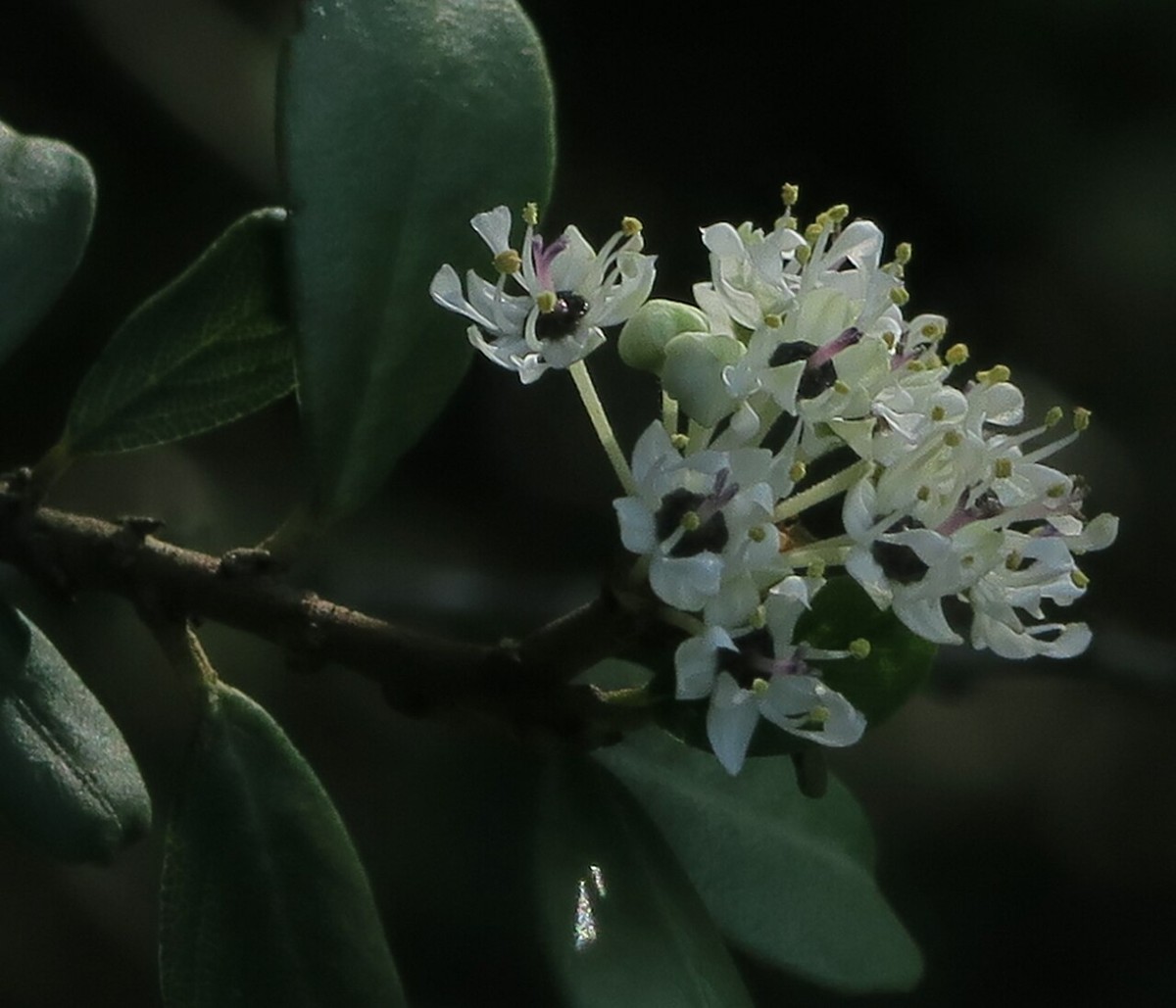
Small, five-petaled white flowers are packed into tight, rounded clusters (umbels) in the leaf axils rather than the long showy panicles typical of species like greenbark ceanothus. Flowering begins remarkably early, often in December, and peaks from February through April, making Bigpod ceanothus one of the first major nectar sources of the year for native bees emerging from winter dormancy.
Fruit & Seeds
The fruit is a sticky, three-lobed capsule, 3/8 to nearly 1/2 inch across — unusually large for the genus and the source of the species name megacarpus (“big fruit”). Capsules ripen to brown by early summer and split explosively, flinging seeds a short distance from the parent plant. The seeds then lie dormant in the soil, often for decades, until heat and chemical cues from fire trigger germination.
Quick Facts
| Scientific Name | Ceanothus megacarpus |
| Family | Rhamnaceae (Buckthorn) |
| Plant Type | Evergreen Shrub |
| Mature Height | 6–12 ft |
| Mature Spread | 6–12 ft |
| Growth Rate | Moderate |
| Sun Exposure | Full Sun |
| Water Needs | Low (very drought tolerant once established) |
| Soil Type | Lean, well-drained clay, shale or sandy soils |
| Soil pH | 6.0–7.5 (neutral to slightly acidic) |
| Bloom Time | December – April |
| Flower Color | White |
| Fall Color | Evergreen (none) |
| Fruit | Sticky, three-lobed brown capsules |
| Deer Resistant | No (browsed by mule deer) |
| USDA Hardiness Zones | 9–11 |
Native Range
Bigpod ceanothus is a California endemic, restricted to the South Coast Ranges and Transverse Ranges of coastal Southern California, from the Santa Ynez Mountains of Santa Barbara County south through Ventura, Los Angeles, Orange, and into San Diego County. It also occurs on Santa Cruz and Santa Rosa Islands in the Channel Islands. It is not found east of the coastal mountains or outside California.
Within this range, Bigpod ceanothus is one of the most abundant and visually dominant shrubs of the coastal sage scrub-chaparral mosaic, frequently forming extensive, nearly single-species stands on dry, south-facing slopes between roughly 500 and 3,000 feet elevation. It favors heavier clay and shale-derived soils, where it often outcompetes other chaparral shrubs.
Fire has shaped the species profoundly. Bigpod ceanothus is killed outright by fire (it does not resprout) and depends entirely on a persistent soil seed bank for recovery; a good fire season can trigger a dense flush of seedlings that quickly reclaims burned slopes. Because of this fire-return dependency, large unbroken stands are typically even-aged, reflecting the time since the last burn.
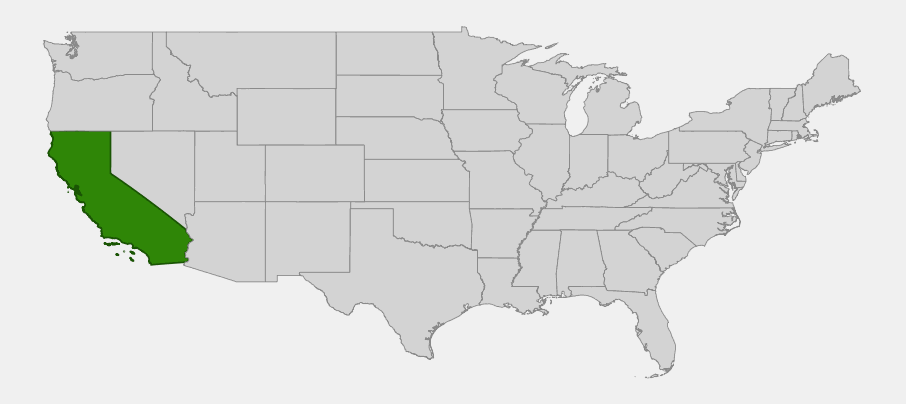
📋 Regional plant lists featuring Bigpod ceanothus: California & Nevada
Growing & Care Guide
Bigpod ceanothus rewards a hands-off approach. It is adapted to a long, bone-dry summer followed by winter rain, and gardeners who try to treat it like a typical landscape shrub — with regular watering and rich soil — usually lose it to root rot within a few years.
Light
Give it full sun. In its native habitat it grows on open, south-facing slopes with no overhead shade, and it flowers most heavily where light is unobstructed.
Soil & Water
Bigpod ceanothus wants lean, fast-draining soil — clay, shale, or decomposed granite are all fine as long as water does not pool around the roots. Water deeply but infrequently during the first one to two years to establish a deep root system, then taper off almost entirely. Established plants in coastal gardens often need no supplemental water at all once past their third summer. Avoid summer irrigation near the root crown, which is the most common cause of Ceanothus die-off in cultivated settings.
Planting Tips
Plant small container stock in fall, just ahead of the winter rains, so roots can establish before the dry season. Avoid amending the planting hole with rich compost; Bigpod ceanothus performs best in soil similar to what it would find on a wild hillside. Give it plenty of room — 8 to 12 feet of spacing — since it does not respond well to crowding or regular shearing.
Pruning & Maintenance
Prune lightly, if at all, right after flowering to shape the plant or remove dead wood; avoid cutting into bare old wood, which Bigpod ceanothus does not resprout from reliably. Because the species is killed by fire rather than resprouting, it is also intolerant of being cut back hard, so light, infrequent pruning is best.
Landscape Uses
Bigpod ceanothus fits a range of low-water, wildlife-friendly garden roles:
- Slope stabilization on dry, sunny hillsides where irrigation is impractical
- Wildlife hedgerows providing dense cover and early-season nectar
- Chaparral restoration plantings in coastal Southern California
- Waterwise foundation plantings away from irrigated lawns
- Fire-conscious landscaping when sited with defensible space and routine deadwood removal
Fire Ecology
Bigpod ceanothus is an obligate seeder: mature plants are killed by fire and do not resprout from the root crown. Instead, heat and smoke-related chemical cues break the hard seed coat of seeds stored in the soil, triggering a dense wave of germination after a burn. This strategy makes the species a classic early successional shrub on burned chaparral slopes, but it also means that fires occurring too frequently — before young plants have had time to rebuild the seed bank — can locally eliminate the species.
Wildlife & Ecological Value
As one of the most widespread shrubs of the Southern California chaparral, Bigpod ceanothus anchors the food web of its ecosystem across several seasons.
For Pollinators
Its early, abundant bloom — often the first major nectar source of the year in coastal chaparral — is a critical resource for native bees emerging from winter dormancy, along with honeybees, syrphid flies, and a variety of small native butterflies. The dense flower clusters make foraging efficient for small pollinators even in cool winter weather.
For Birds
The tight, twiggy branch structure provides excellent nesting cover and predator protection for chaparral birds such as wrentits, California towhees, and spotted towhees. Quail use dense Bigpod ceanothus stands as daytime cover, and many songbirds glean insects drawn to the winter flowers.
For Mammals
Mule deer browse the foliage, particularly new growth after fire, and the dense cover shelters rabbits and other small mammals from predators and summer heat.
Ecosystem Role
Like other Ceanothus species, Bigpod ceanothus hosts nitrogen-fixing Frankia bacteria in root nodules, enriching the typically lean chaparral soils it grows in. Its dominance after fire stabilizes slopes against erosion during the vulnerable post-fire years and creates the structural framework that other chaparral species recolonize around.
Cultural & Historical Uses
Indigenous peoples of the Southern California coast, including Chumash and Tongva communities, lived among extensive stands of Bigpod ceanothus and other local Ceanothus species, which were part of the broader chaparral landscape they managed in part through controlled burning to encourage game forage and useful plants.
Unlike some other California Ceanothus species whose flowers were historically used as a soap substitute by working up a lather with water, Bigpod ceanothus has a more limited documented ethnobotanical record, likely because its tighter, smaller flower clusters produce less of the saponin-rich lather than larger-flowered relatives. Its primary historical significance lies in its role as a dominant, defining shrub of the coastal chaparral landscape that shaped seasonal plant and animal use patterns in the region.
Today, Bigpod ceanothus is valued mainly as a backbone species in chaparral restoration and native landscaping, prized for its reliability on difficult, unirrigated coastal hillsides where few other shrubs will thrive.
Frequently Asked Questions
Why is it called “Bigpod” ceanothus?
The name refers to its seed capsules, which at up to nearly 1/2 inch across are unusually large compared to most other Ceanothus species — the species name megacarpus literally means “big fruit.”
Does Bigpod ceanothus need regular watering?
No. It is adapted to a dry Mediterranean climate with essentially no summer rain, and regular irrigation — especially near the root crown — is the most common cause of failure in cultivated plants. Deep, infrequent watering during establishment is all it needs.
Will Bigpod ceanothus resprout after a fire?
No. It is an obligate seeder, meaning mature plants are killed by fire rather than resprouting. Recovery comes entirely from seed stored in the soil, which germinates in response to post-fire heat and chemical cues.
Is Bigpod ceanothus native outside California?
No. It is a California endemic found only in the coastal mountains of Santa Barbara, Ventura, Los Angeles, Orange, and San Diego counties, plus two of the northern Channel Islands.
Is Bigpod ceanothus deer resistant?
Not reliably — mule deer browse the foliage, particularly tender new growth on young, post-fire plants. In areas with heavy deer pressure, young plants may need temporary protection while establishing.

Looking for a nursery that carries Bigpod ceanothus?
Browse our native plant nursery directory: California