Greenbark Ceanothus (Ceanothus spinosus)
Ceanothus spinosus, commonly called Greenbark ceanothus or redheart, is one of the largest members of its genus — a tall, tree-like evergreen shrub of the Rhamnaceae (buckthorn) family that can reach small-tree stature in the coastal mountains of Southern and Central California. Its name comes from the smooth, yellow-green young bark that stands out against the gray and brown stems of most other chaparral shrubs, giving mature plants an almost luminous quality even without flowers.
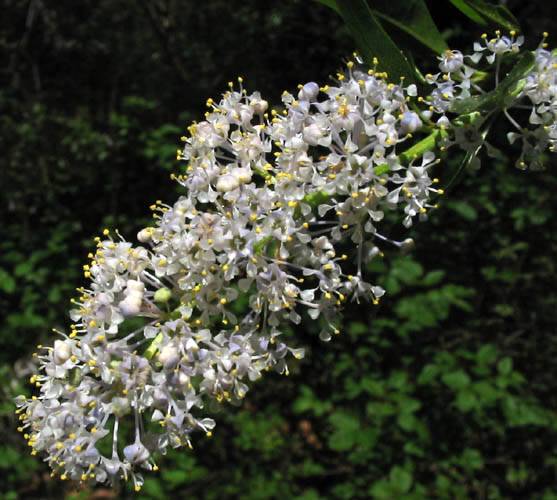
In spring, Greenbark ceanothus produces long, airy panicles of pale lavender-white flowers at the branch tips, a striking contrast to the tighter, rounder flower clusters of many related species. Growing anywhere from 8 to 20 feet tall — occasionally more in favorable canyon sites — it often develops an open, tree-like form with a distinct trunk, unlike the dense, rounded habit typical of most chaparral ceanothus.
For gardeners in coastal and near-coastal Southern California, Greenbark ceanothus offers fast growth, a dramatic spring floral display, and genuine drought tolerance once established. It is a good choice where a quick-growing large shrub or small multi-trunked tree is wanted along a slope or property edge, though its relatively short natural lifespan and sensitivity to summer water mean it is best treated as a statement plant rather than a foundation shrub expected to live for many decades.
Identification
Greenbark ceanothus is among the tallest native chaparral shrubs, often developing a single or few-trunked, tree-like form 8 to 20 feet tall with an open, airy canopy quite different from the dense, twiggy growth of smaller ceanothus species.
Bark & Stems
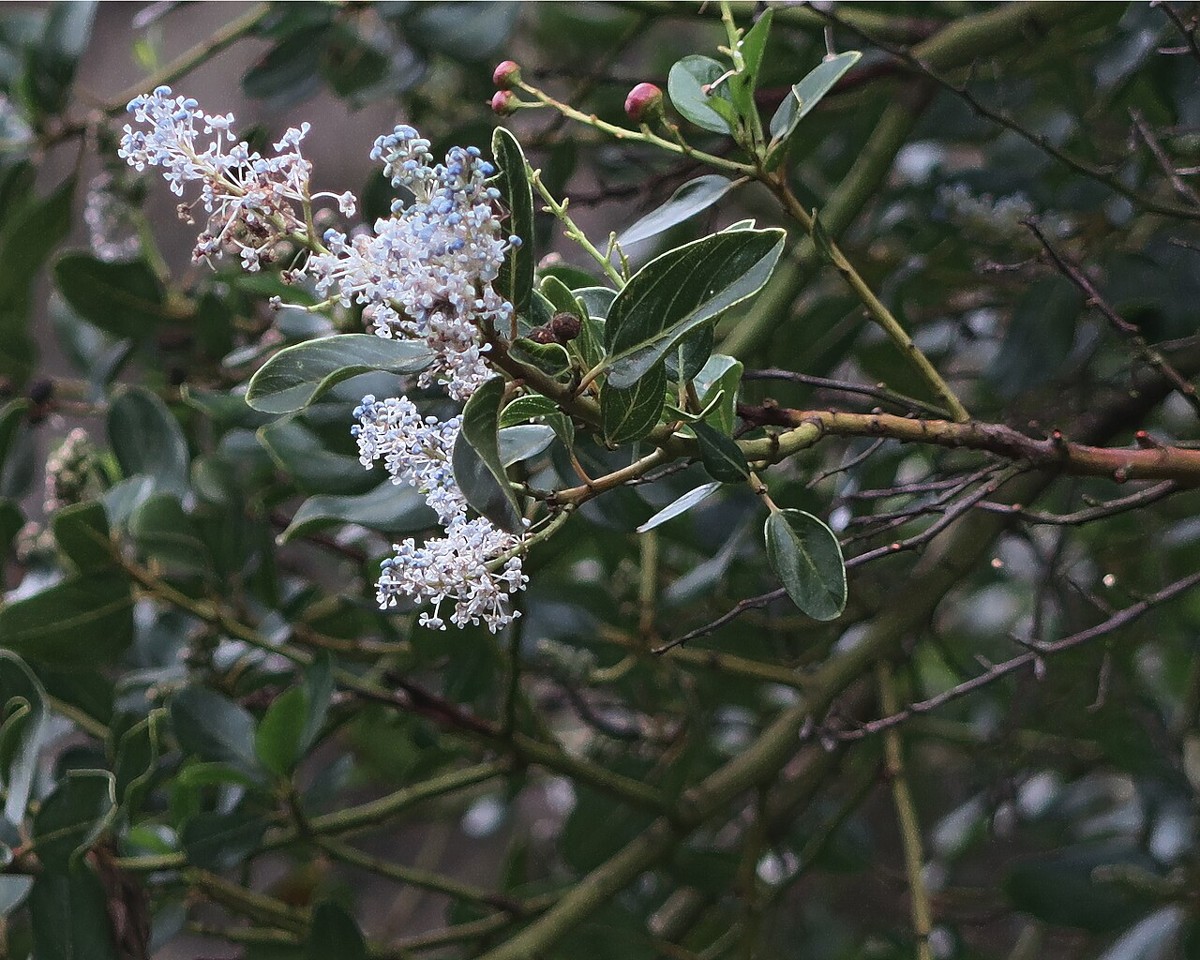
The defining feature of this species is its bark: young stems and branches are smooth and yellow-green to olive green, remaining distinctly colored for several years before eventually turning gray-brown with age. This greenish bark, visible year-round, gives the species both its common name and much of its ornamental appeal in the off-season.
Leaves
Leaves are evergreen, alternate, and narrowly oval to elliptical, 1 to 2 inches long, with finely toothed margins and a glossy dark green upper surface. They are noticeably thinner and glossier than the leathery, gray-green leaves of species like bigpod ceanothus, and they tend to hang somewhat pendulously from the airy branches.
Flowers
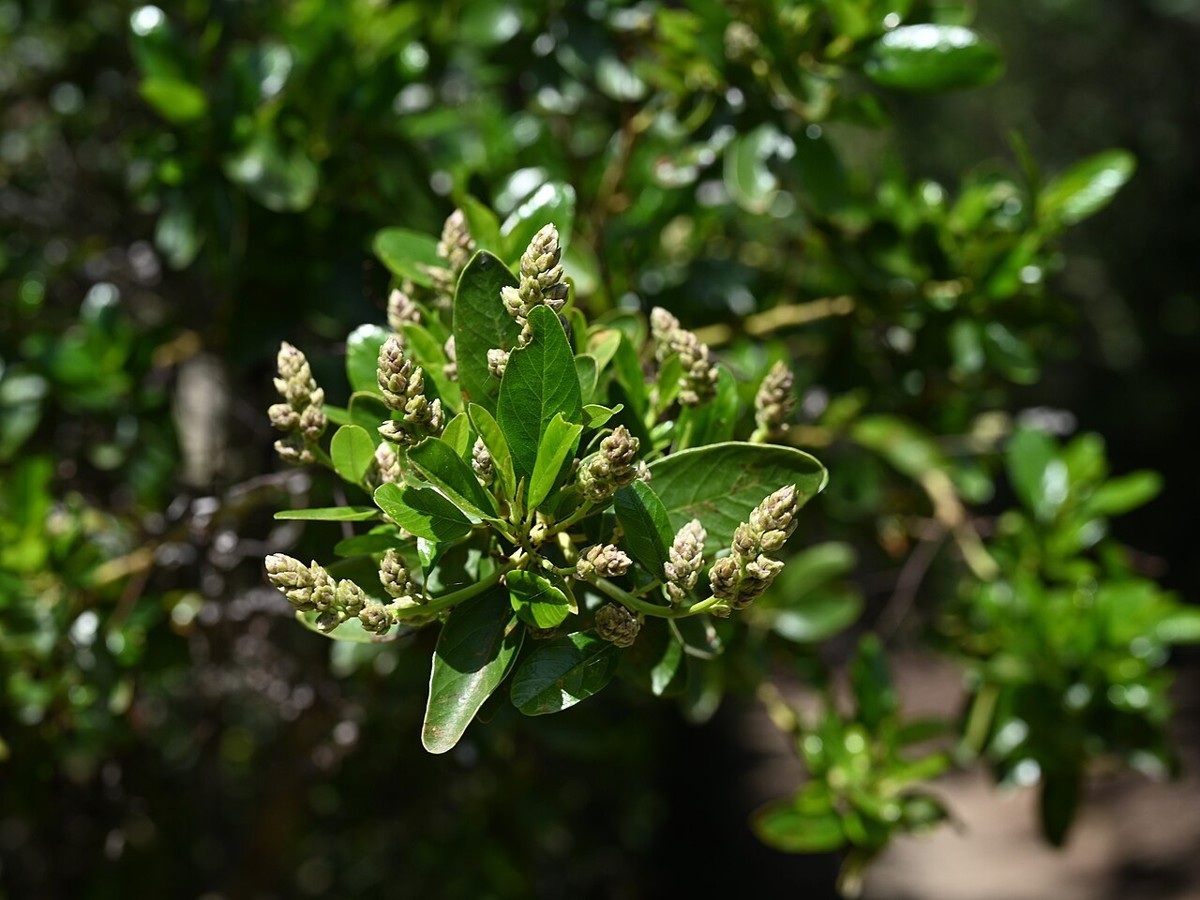
Flowers are small, pale lavender to nearly white, and packed into long, loose, cylindrical panicles 2 to 4 inches long at the ends of branches — larger and showier than the tight axillary clusters of many related chaparral species. Bloom occurs from February through April, somewhat later than bigpod ceanothus, and covers the plant in a soft haze of color visible from a distance.
Fruit & Seeds
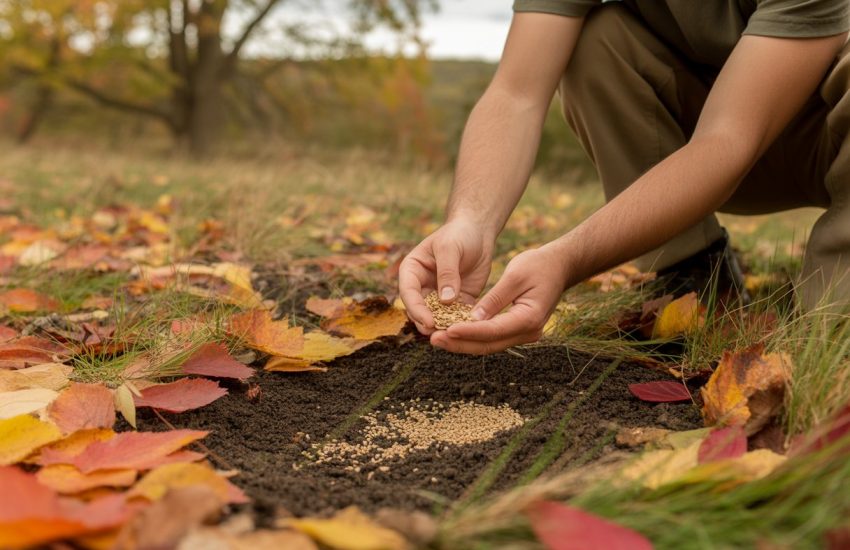
The fruit is a small, three-lobed capsule, about 1/4 inch across, that ripens from green to brown by early summer and splits open explosively to scatter seeds nearby. As with other chaparral ceanothus, seeds can remain viable in the soil for years, germinating readily after fire exposes them to heat and smoke-related chemical triggers.
Quick Facts
| Scientific Name | Ceanothus spinosus |
| Family | Rhamnaceae (Buckthorn) |
| Plant Type | Evergreen Shrub / Small Tree |
| Mature Height | 8–20 ft |
| Mature Spread | 8–15 ft |
| Growth Rate | Fast |
| Sun Exposure | Full Sun |
| Water Needs | Low (very drought tolerant once established) |
| Soil Type | Well-drained, lean soils; clay, loam or decomposed granite |
| Soil pH | 6.0–7.5 (neutral to slightly acidic) |
| Bloom Time | February – April |
| Flower Color | Pale lavender to white |
| Fall Color | Evergreen (none) |
| Fruit | Small three-lobed brown capsules |
| Deer Resistant | No (browsed by mule deer) |
| USDA Hardiness Zones | 8–11 |
Native Range
Greenbark ceanothus is native to the coastal mountains and foothills of California, ranging from San Luis Obispo County south through the Santa Ynez, Santa Monica, and Santa Ana Mountains to San Diego County, and continuing into northern Baja California, Mexico. It is not native to Nevada or any state outside California.
Within this range it grows on dry slopes and canyon walls in chaparral and oak woodland transition zones, typically from near sea level to around 4,000 feet elevation. It often favors slightly more sheltered sites than bigpod ceanothus — canyon bottoms, north-facing slopes, and woodland edges — where its taller, more open growth form can reach toward the light.
Like most chaparral ceanothus species, Greenbark ceanothus is fire-adapted, though individual plants are relatively short-lived (often 20 to 40 years) compared with the long-lived seed bank they leave behind. Fire removes mature stands and triggers a new generation of seedlings, which grow quickly in the open, sunny conditions that follow a burn.
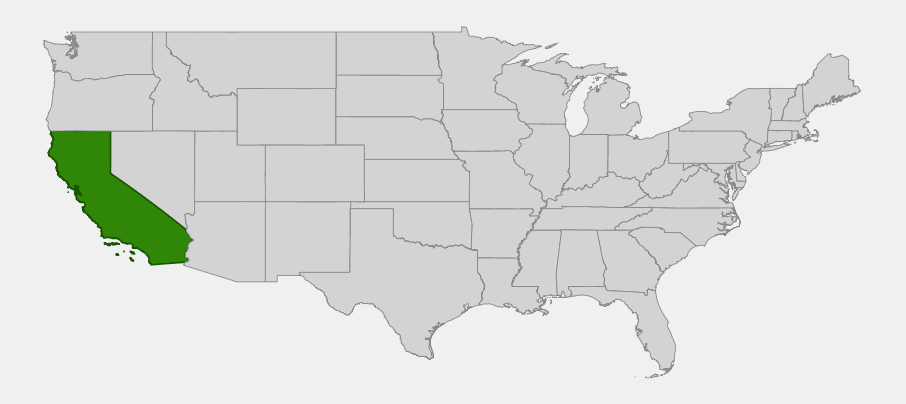
📋 Regional plant lists featuring Greenbark ceanothus: California & Nevada
Growing & Care Guide
Greenbark ceanothus grows fast and rewards patience with little else. Like its chaparral relatives, it is built for a long, dry summer, and the biggest risk to cultivated plants is simply too much water in the warm months.
Light
Plant it in full sun for the densest growth and heaviest bloom, though it will tolerate light, high shade from taller trees in hot inland gardens.
Soil & Water
Well-drained soil is essential — clay, loam, or decomposed granite all work as long as water does not sit around the roots. Water regularly through the first one to two summers to establish a deep root system, then cut back sharply; mature plants in coastal gardens typically need no summer irrigation at all. Overwatering established plants is a leading cause of root rot and premature decline.
Planting Tips
Install small container stock in fall ahead of winter rains. Because it grows quickly and can reach significant size, give it 10 to 15 feet of clearance from structures, paths, and other shrubs. It transplants best when young and establishes fastest with minimal root disturbance.
Pruning & Maintenance
Light shaping after flowering can keep the open, tree-like form tidy and encourage denser branching, but avoid cutting into old bare wood, which this species does not reliably resprout from. Because individual plants are relatively short-lived, expect to eventually replace older specimens — succession planting of younger plants nearby can keep a hedgerow or screen looking full over time.
Landscape Uses
Greenbark ceanothus works well as:
- A fast-growing screen or informal hedge along property lines
- A small flowering tree where its open, multi-trunked form can be showcased
- Slope and bank plantings in dry, sunny sites
- Wildlife habitat plantings that draw spring pollinators in large numbers
- Waterwise gardens needing quick height and seasonal color without irrigation
Fire Ecology
Greenbark ceanothus is an obligate seeder, killed by fire rather than resprouting from the root crown. Its seeds persist in the soil seed bank for many years and germinate readily in response to the heat and chemical signals of a burn, allowing the species to quickly recolonize recently burned chaparral alongside other fire-following shrubs.
Wildlife & Ecological Value
Greenbark ceanothus is a major spring nectar source across much of its Southern California range, and its larger stature makes it an important structural element in chaparral and oak woodland habitats.
For Pollinators
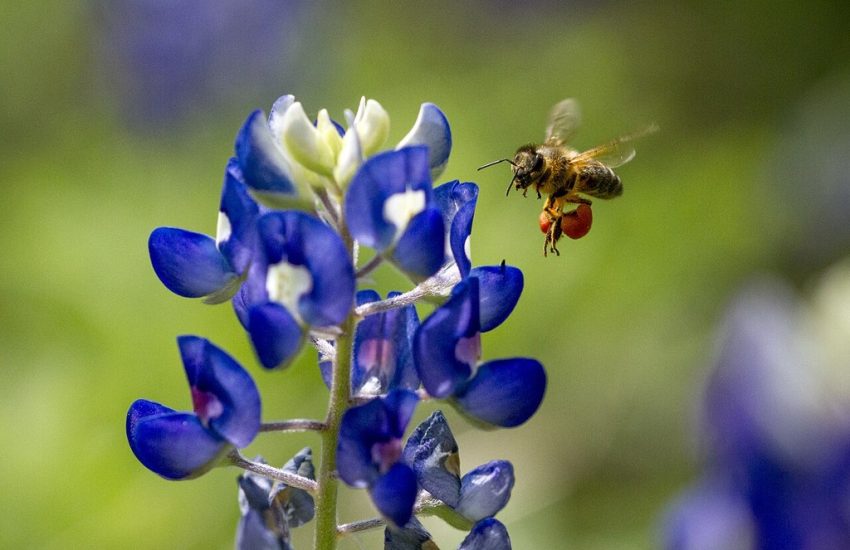
The long, airy flower panicles attract abundant native bees, honeybees, and butterflies during the peak spring bloom. Its flowering overlaps with and extends the nectar season begun earlier by bigpod ceanothus and other winter-blooming chaparral shrubs.
For Birds
The open, multi-layered canopy provides perching and nesting sites for a variety of chaparral and woodland-edge birds, while insects drawn to the flowers supply food for insectivorous species during the breeding season.
For Mammals
Mule deer browse the foliage, especially tender new growth, and the shrub’s size and structure provide shade and cover for a range of small mammals moving between more open chaparral and denser woodland.
Ecosystem Role
Like other Ceanothus species, Greenbark ceanothus hosts nitrogen-fixing Frankia bacteria in its roots, improving soil fertility in the chaparral and woodland-edge communities where it grows. Its relatively fast growth and tree-like stature help it quickly reestablish vertical structure after fire, bridging the gap between low shrubs and the oak canopy.
Cultural & Historical Uses
Indigenous peoples of coastal Southern California, including Chumash and Tongva communities, were familiar with the various local Ceanothus species that grew throughout the chaparral and oak woodland landscapes they tended. Several California ceanothus species, including close relatives of Greenbark ceanothus, were historically used by working the saponin-rich flowers into a mild lather with water for washing.
Greenbark ceanothus wood, like that of other chaparral shrubs, was of limited use for implements given its relatively small diameter, but the plant’s reliable presence across the region made it part of the broader seasonal landscape of chaparral resources available to local communities.
In more recent decades, Greenbark ceanothus has become a popular choice in California native plant horticulture for its fast growth and dramatic floral display, and it has been used in breeding programs to develop several cultivated ceanothus hybrids and selections sold in the native plant nursery trade.
Frequently Asked Questions
Why is it called “Greenbark” ceanothus?
Its young stems and branches are smooth and yellow-green to olive in color, staying distinctly green for several years before aging to gray-brown — a visible, year-round feature that sets it apart from most other chaparral shrubs.
How tall does Greenbark ceanothus get?
It typically reaches 8 to 20 feet, making it one of the largest native California ceanothus species, with an open, often tree-like form rather than the dense rounded shape of smaller relatives.
Does Greenbark ceanothus need summer water?
No, not once established. Like other chaparral ceanothus, it is adapted to dry summers, and regular summer irrigation is a common cause of root rot and early decline in cultivated plants.
Is Greenbark ceanothus native to Nevada?
No. Despite appearing on the California & Nevada regional plant list, it is native only within California’s coastal mountains, extending south into northern Baja California, Mexico — not into Nevada.
How long do Greenbark ceanothus plants live?
Individual plants are relatively short-lived for a shrub, often 20 to 40 years, after which they are commonly replaced in the wild by fire-triggered seedlings from the long-lived soil seed bank.

Looking for a nursery that carries Greenbark ceanothus?
Browse our native plant nursery directory: California