Giant Chinquapin (Chrysolepis chrysophylla)
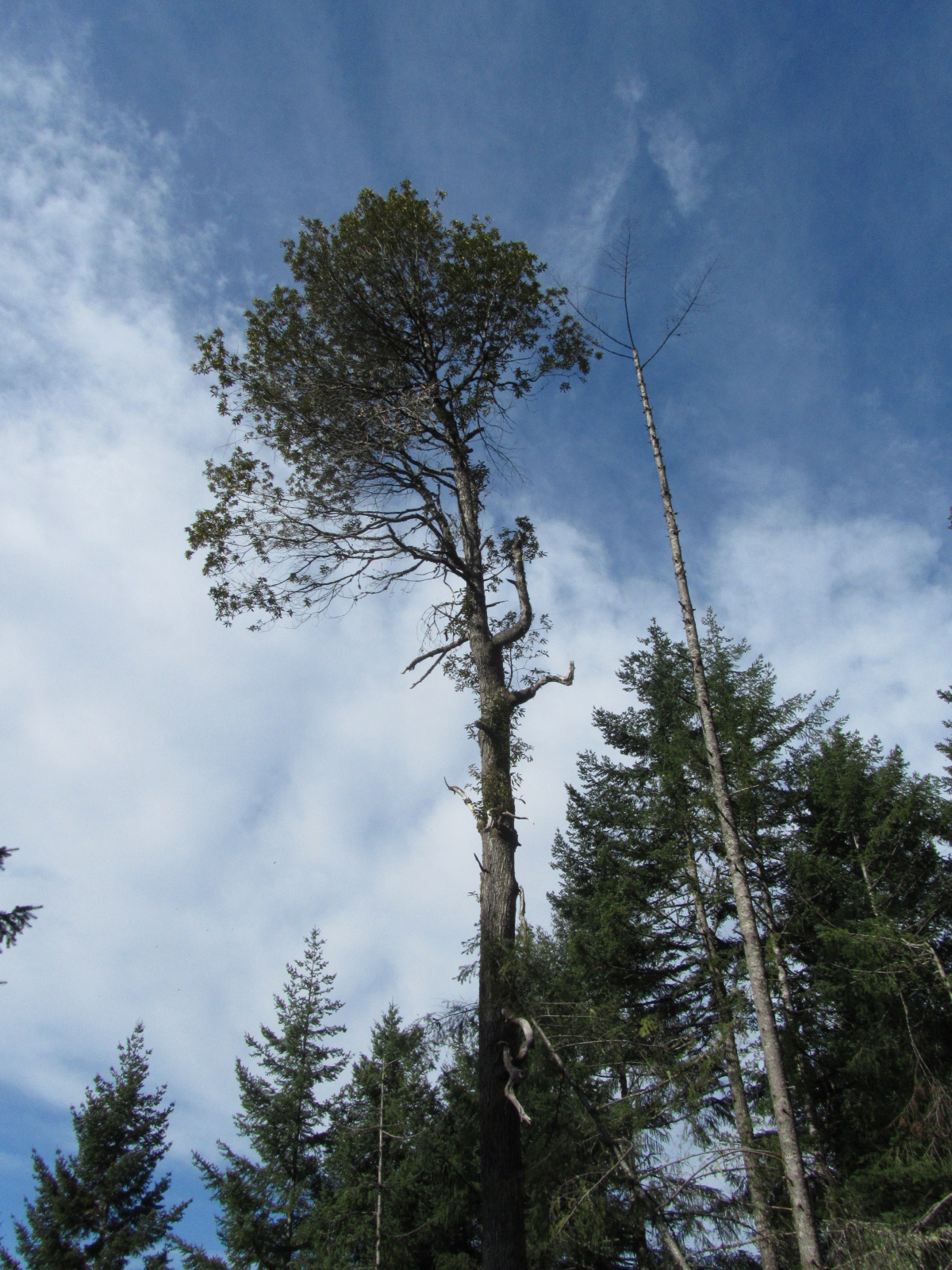
Chrysolepis chrysophylla, known as Giant chinquapin or golden chinquapin, is a striking evergreen tree of the beech family (Fagaceae) found scattered through the coastal and montane forests of California, Oregon, and a small disjunct area of Washington. Related to oaks and true chestnuts, it is instantly recognizable by the shimmering golden-bronze undersides of its leaves, which flash in the wind and give the species its scientific name — chrysophylla means “golden leaf.”
Giant chinquapin varies enormously in form depending on its site: in favorable coastal forest conditions it can grow into a stately tree 60 to 100 feet tall, while on exposed ridges and poorer soils it often persists as a dense, many-stemmed shrub only a few feet high. Its spiny, chestnut-like burrs, which split open in fall to reveal one or two edible nuts, are a familiar and distinctive sight on the forest floor throughout its range.
For gardeners and land managers in the Pacific Coast forest zone, Giant chinquapin offers a long-lived, structurally interesting native tree or large shrub with genuine wildlife value and an unusual, golden-backed foliage that sets it apart from the firs, pines, and oaks that typically dominate these forests. It is a patient grower best suited to naturalistic woodland settings rather than formal or small garden spaces.
Identification
Giant chinquapin is a variable evergreen tree or large shrub, ranging from under 10 feet on harsh sites to over 100 feet in prime coastal forest conditions, with a rounded to irregular crown.
Bark & Stems
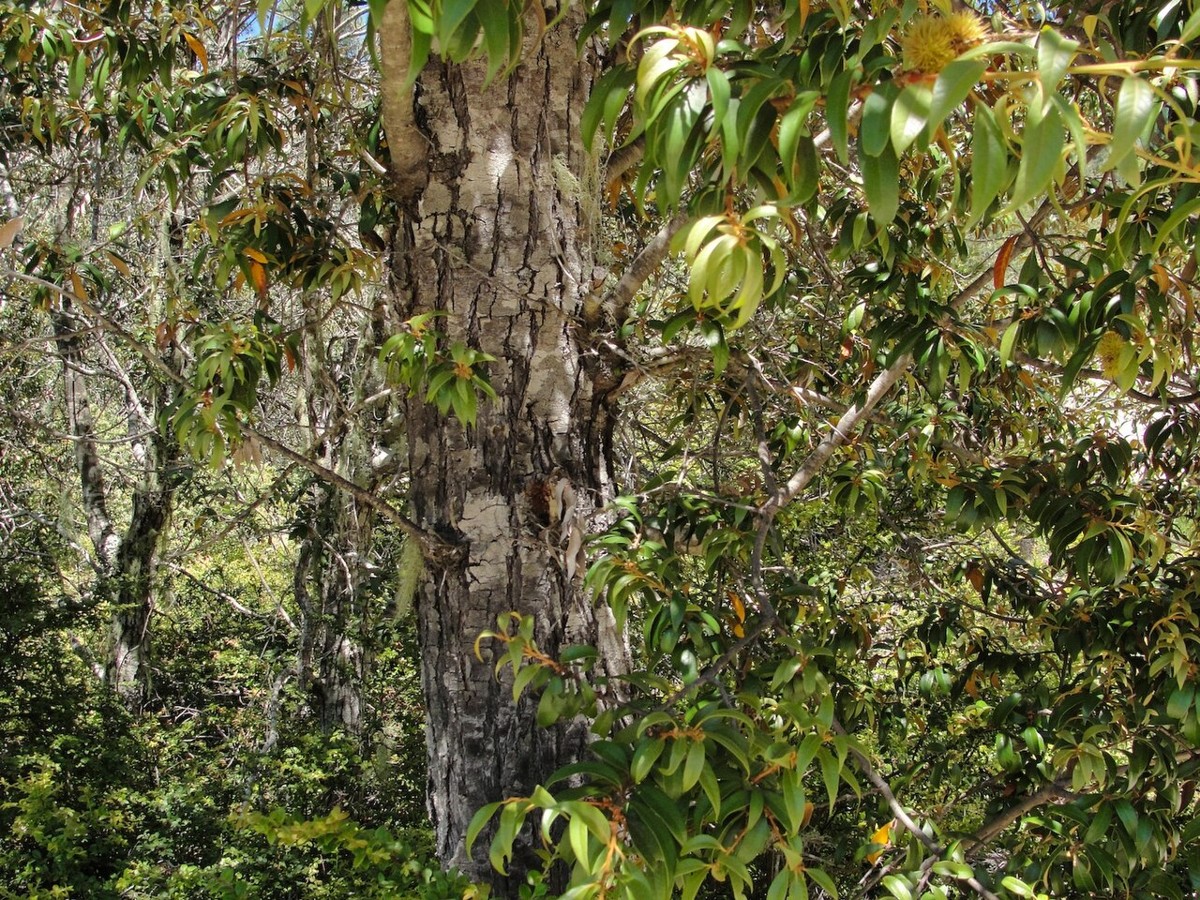
Bark on young trees is smooth and grayish, developing shallow furrows and plates with age, taking on a rougher, more deeply ridged texture on old trunks. Twigs are slender and often covered in the same golden-bronze scurfy hairs found on the leaf undersides.
Leaves
Leaves are evergreen, alternate, lance-shaped to oblong, 2 to 6 inches long, with smooth (entire) margins. The upper surface is glossy dark green, while the lower surface is covered in dense, golden-bronze to rusty scurfy hairs — a brilliant, almost metallic color that is the species’ most distinctive field mark and visible even from a distance when the wind turns the leaves.
Flowers
Giant chinquapin produces small, cream-colored flowers in erect, finger-like catkins in summer, typically June through August. Male and female flowers occur on the same catkin, with the female flowers clustered near the base; the blooms have a notably strong, somewhat unpleasant odor that nonetheless attracts a range of pollinating insects.
Fruit & Seeds
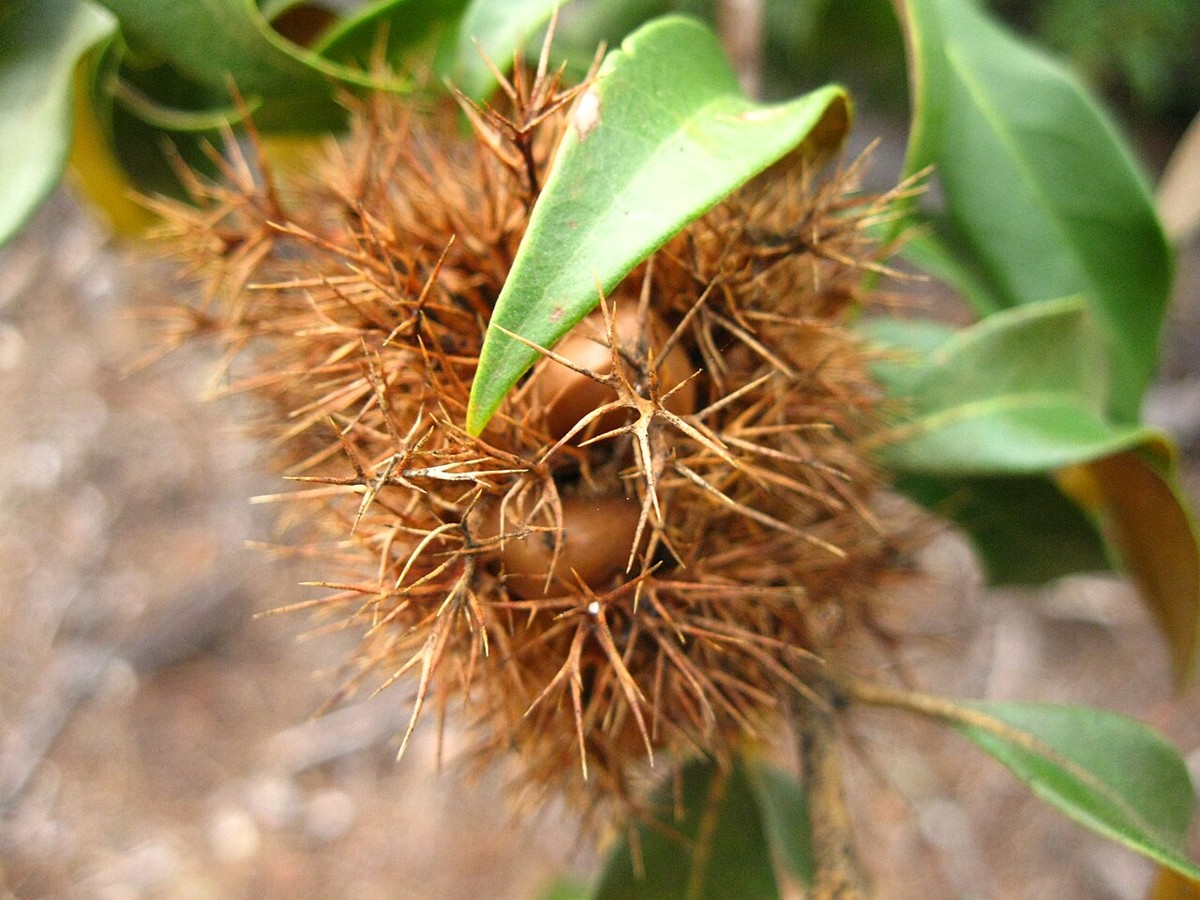
The fruit is a round, densely spiny burr, 1 to 1 1/2 inches across, resembling a small chestnut husk. Each burr contains one or two shiny brown nuts, maturing and splitting open in autumn of the second year after flowering. The nuts are edible and sweet, prized by wildlife and historically by people, though the spiny burrs require careful handling.
Quick Facts
| Scientific Name | Chrysolepis chrysophylla (syn. Castanopsis chrysophylla) |
| Family | Fagaceae (Beech) |
| Plant Type | Evergreen Tree (shrubby at high elevation or poor sites) |
| Mature Height | 10–100 ft (site dependent) |
| Mature Spread | 15–40 ft |
| Growth Rate | Slow to Moderate |
| Sun Exposure | Full Sun to Partial Shade |
| Water Needs | Low to Moderate |
| Soil Type | Well-drained, acidic to neutral; tolerates rocky, lean soils |
| Soil pH | 5.0–6.5 (acidic to slightly acidic) |
| Bloom Time | June – August |
| Flower Color | Cream |
| Fall Color | Evergreen; golden-bronze leaf undersides year-round |
| Fruit | Spiny burr with 1–2 edible nuts |
| Deer Resistant | Moderate |
| USDA Hardiness Zones | 7–9 |
Native Range
Giant chinquapin is native to California and Oregon, where it occurs widely west of the Cascade crest from the Coast Ranges and Klamath-Siskiyou Mountains south through the Sierra Nevada foothills and Coast Ranges to the central California coast. A notable disjunct native population also occurs in Washington, in Mason County along the Columbia River Gorge area and the west side of the Cascades, a genetically distinct outlier population of conservation interest.
Within this range, Giant chinquapin grows from near sea level to moderate mountain elevations, typically as an understory or mid-canopy tree in mixed-conifer and redwood forests, and as a smaller shrub form on drier, more exposed ridges and rocky outcrops where taller tree growth is not sustained.
The species shows a range of fire responses depending on size and site: smaller shrub-form plants typically resprout vigorously from the root crown after fire, while larger trees may be top-killed by intense fire but can also resprout, helping the species persist across a range of fire regimes found in its mixed forest habitats.
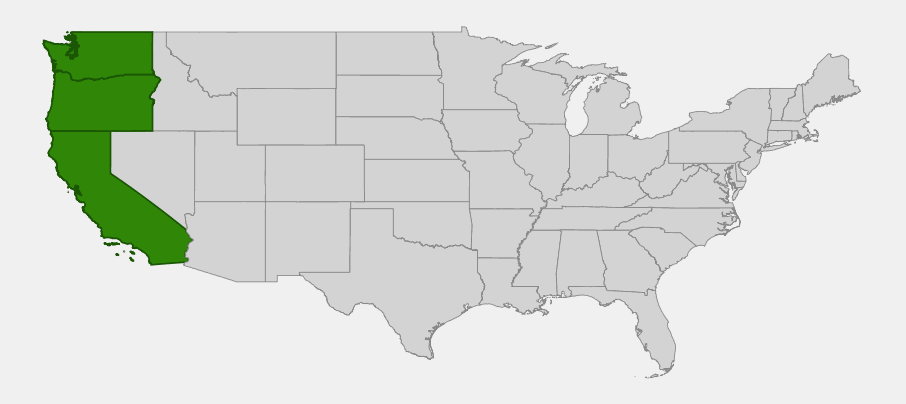
📋 Regional plant lists featuring Giant chinquapin: California & Nevada, Western Oregon & Western Washington
Growing & Care Guide
Giant chinquapin is a patient, long-term planting for naturalistic gardens and woodland restoration within its Pacific Coast forest range, rewarding minimal intervention with decades of structure and golden-backed foliage.
Light
It tolerates a wide range of light conditions, from full sun on open ridges — where it typically grows as a dense shrub — to partial shade beneath taller conifers, where it develops a more upright, tree-like form reaching toward available light.
Soil & Water
Giant chinquapin prefers well-drained, acidic to neutral soils and tolerates the lean, rocky soils typical of ridgetop and outcrop sites. It appreciates consistent moisture while establishing but becomes reasonably drought tolerant once mature, particularly in cooler coastal climates with regular fog or winter rainfall. Avoid heavy, poorly drained soils, which can lead to root problems.
Planting Tips
Plant young container stock in fall or early spring within the species’ native fog belt or moist forest range. Because form varies so much with site conditions, choose a planting location based on whether a tree or shrub form is desired — more open, sunnier, drier sites will favor a shrubbier habit. Allow significant room to grow, particularly if a tree form is expected.
Pruning & Maintenance
Minimal pruning is needed. Remove dead or damaged wood as needed; the species can be selectively limbed up over time to encourage a more tree-like form if a shrubbier young plant is growing in a site with adequate light. It is generally low-maintenance once established in a suitable site.
Landscape Uses
Giant chinquapin fits a range of naturalistic and restoration roles:
- Woodland and forest-edge plantings within its native Pacific Coast range
- Mixed-conifer forest restoration as an understory or mid-canopy component
- Wildlife habitat plantings valued for its nut crop and dense cover
- Specimen tree or large shrub in gardens large enough to accommodate its eventual size
- Erosion control on rocky slopes and ridges in its native range
Fire Ecology
Giant chinquapin shows variable fire response depending on form and fire intensity: shrub-form plants on drier sites typically resprout vigorously from the root crown after fire, while larger trees may survive low-intensity fire or be top-killed and resprout from the base after more severe burns. This flexibility helps the species persist across the range of fire regimes found in its mixed-conifer and chaparral-adjacent habitats.
Wildlife & Ecological Value
Giant chinquapin’s nut crop and dense evergreen foliage make it a valuable wildlife resource throughout its coastal and montane forest range.
For Pollinators
The summer catkins, though not showy, attract a range of pollinating insects drawn to their strong scent, including native bees and beetles, during a season when many spring-blooming natives have already finished flowering.
For Birds
Dense evergreen foliage provides year-round nesting and roosting cover for forest birds, while the nut crop is consumed by jays and other seed-caching birds that help disperse seeds away from the parent tree.
For Mammals
The nuts are an important food source for squirrels, chipmunks, and other small mammals, which cache them for winter and inadvertently aid in the species’ dispersal and regeneration. The golden hairstreak butterfly (Habrodais grunus) uses Giant chinquapin as its primary larval host plant, making the species ecologically significant well beyond its nut crop.
Ecosystem Role
As one of relatively few broadleaf evergreen trees in the Pacific Northwest’s conifer-dominated forests, Giant chinquapin adds structural and species diversity to mixed-conifer stands. Its nut production supports forest food webs, and its resprouting ability after fire or disturbance helps maintain canopy and understory continuity across forest succession.
Cultural & Historical Uses
Indigenous peoples throughout the Pacific Coast forest region, including groups in the Klamath-Siskiyou Mountains and coastal California and Oregon, gathered and ate the sweet nuts of Giant chinquapin, which were valued as a food source similar in use to acorns and other regional tree nuts, though generally gathered in smaller quantities given the species’ more scattered distribution compared to dominant oaks.
The wood, while not commercially significant on the scale of Douglas fir or redwood, has occasionally been used locally for small woodworking and fuel. The tree’s unusual golden-leaved appearance also made it notable to early botanists and collectors documenting the Pacific Coast flora in the nineteenth century, contributing to its relatively early scientific description.
Today, Giant chinquapin is primarily valued in habitat restoration and native landscaping for its wildlife benefits and its role as a distinctive, broadleaf evergreen component of Pacific Coast forest ecosystems.
Frequently Asked Questions
Why are the leaf undersides golden?
The underside of each leaf is covered in dense, golden-bronze scurfy hairs, a feature reflected in the species name chrysophylla (“golden leaf”). This coloring is visible year-round and becomes especially noticeable when wind turns the leaves to reveal their undersides.
Are Giant chinquapin nuts edible?
Yes, the nuts inside the spiny burrs are edible and sweet, historically gathered and eaten by Indigenous peoples and still collected by foragers today, though the spiny husks require careful handling to harvest safely.
Is Giant chinquapin a tree or a shrub?
Both, depending on site. In favorable, moist forest conditions it grows into a tree up to 100 feet tall; on drier, more exposed ridges or poor soils, it typically persists as a dense, multi-stemmed shrub only a few feet high.
Is Giant chinquapin native to Washington?
Yes, though only in a small, genetically distinct disjunct population in Mason County and nearby areas along the Columbia River Gorge, separate from its more extensive range across Oregon and California.
Does Giant chinquapin resprout after fire?
Often, yes. Shrub-form plants typically resprout vigorously from the root crown after fire, and even larger trees that are top-killed by intense fire can resprout from the base, helping the species persist across varied fire regimes.

Looking for a nursery that carries Giant chinquapin?
Browse our native plant nursery directory: California · Oregon · Washington