
Bigseed Biscuitroot (Lomatium macrocarpum)
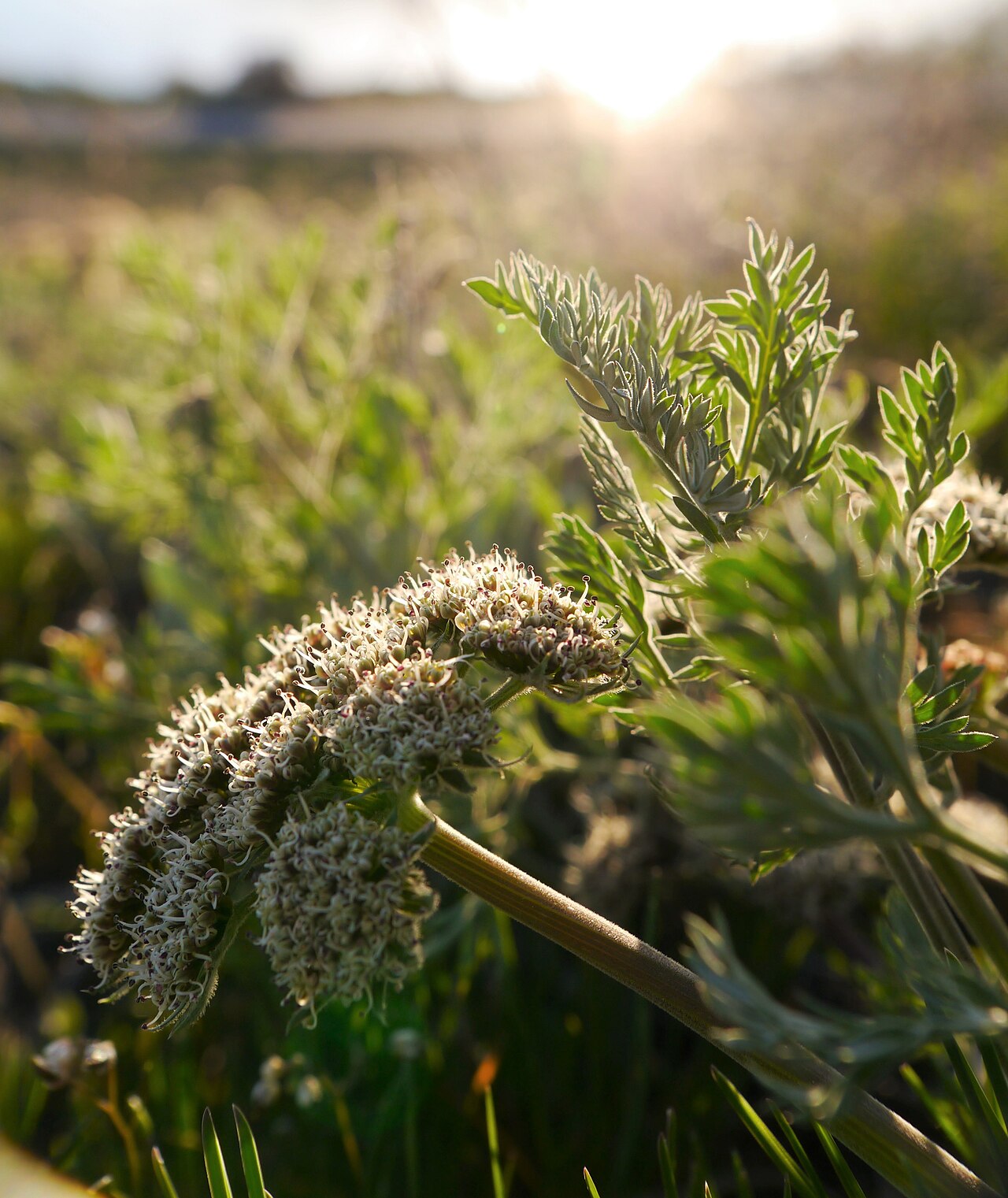
Lomatium macrocarpum, known as Bigseed Biscuitroot, bigseed lomatium or large-fruited desert-parsley, is a low, early spring wildflower of dry, open slopes in western North America. It belongs to the carrot family (Apiaceae). It grows from a deep taproot and forms a low clump, usually 4 to 16 inches tall, of finely divided, gray-green, softly hairy leaves.
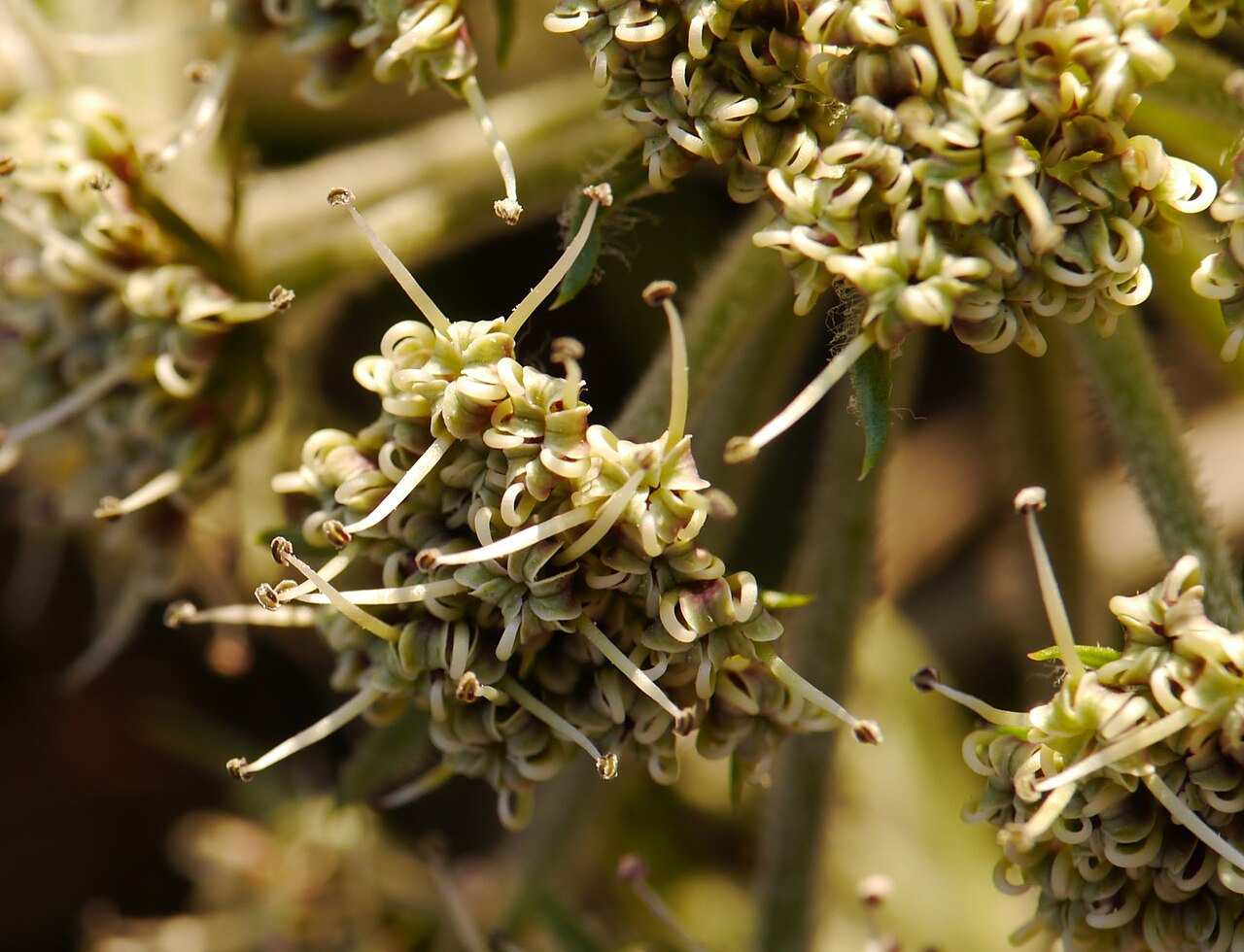
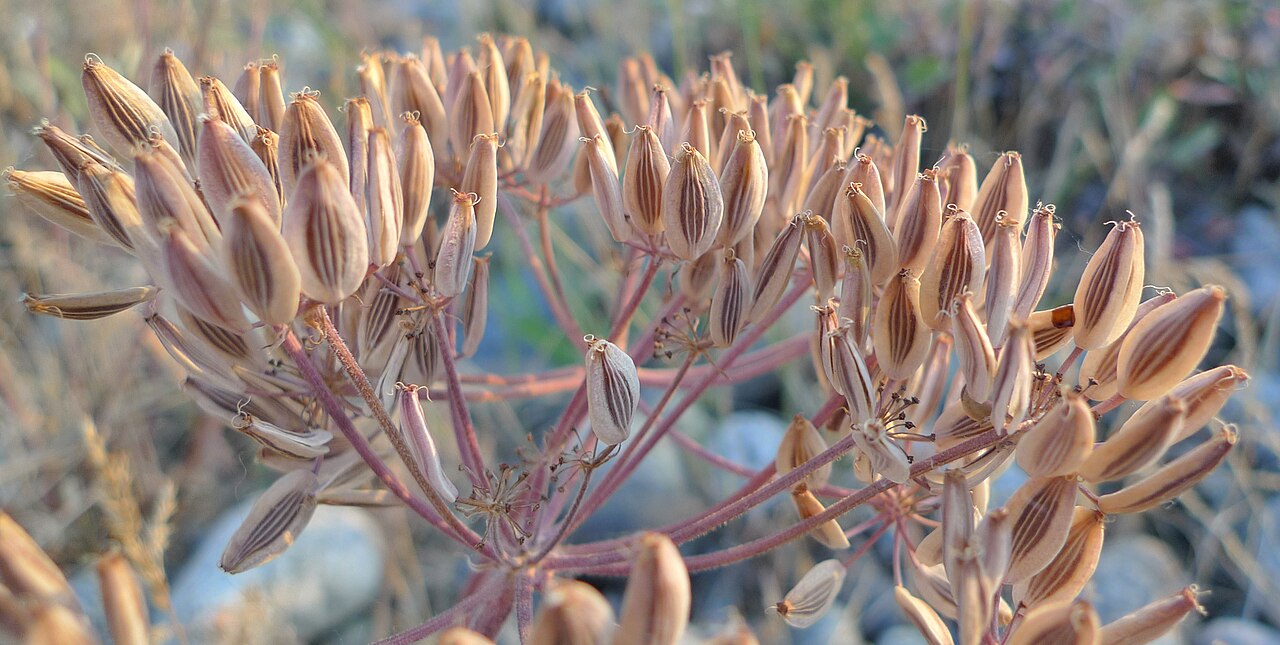
From March to June it opens flat-topped umbels of tiny flowers that are usually white to cream, sometimes yellowish or purplish. The flower clusters are framed by small, hairy bracts, and they are followed by unusually large, flat, winged fruits up to about an inch long, which give the plant its names.
Bigseed biscuitroot is one of the first wildflowers of spring in sagebrush and grassland country, from California and the Pacific Northwest to the Rocky Mountains and the northern Great Plains. It is a fine plant for dry, sunny rock gardens and native plantings in the West, and an important early food for pollinators.
Identification
Look in early spring for a low clump of finely cut, grayish, hairy leaves with rounded umbels of tiny whitish flowers, later followed by large, flat, winged seeds.
Growth Habit
A low perennial with a long, thick taproot. It has no true leafy stem; the leaves and flower stalks rise directly from the root crown, forming a clump 4 to 16 inches tall and about as wide. The plant often lies close to the ground at first, then stretches as the fruits ripen, and dies back by midsummer.
Leaves
The leaves are finely divided two or three times into many narrow segments, giving them a lacy, fern-like look. They are gray-green and covered with soft hairs, and are often tinged purple when young.
Flowers
The tiny flowers are in compound umbels at the tops of leafless stalks. Each small umbellet is surrounded by a whorl of narrow, hairy bracts (involucels), which helps identify this species. The flowers are usually white to cream, but some populations have yellowish or purplish flowers.
Fruit
The fruits are large for the genus, oblong to elliptic, about 1/2 to 1 inch long, flattened, smooth and edged with thin wings. They ripen in late spring and early summer, turning from green to tan, often with a pink or purple tinge.
Look-alikes
Several other biscuitroots grow in the same habitats. Woollyfruit desertparsley (L. dasycarpum) of California has hairy fruits. Fernleaf biscuitroot (L. dissectum) is much taller, and barestem biscuitroot (L. nudicaule) has broad, bluish leaflets and yellow flowers. Desert biscuitroot (L. foeniculaceum) has yellow flowers and hairy fruits.
Quick Facts
| Scientific Name | Lomatium macrocarpum |
| Family | Apiaceae (carrot family) |
| Plant Type | Low herbaceous perennial with a taproot |
| Mature Height | 4–16 in |
| Mature Spread | 6–12 in |
| Growth Rate | Slow |
| Sun Exposure | Full sun |
| Water Needs | Low; moist in spring, dry in summer |
| Soil Type | Rocky, gravelly or sandy, well-drained soils; also clay and scablands |
| Soil pH | Neutral to slightly alkaline (about 6.5–8.0) |
| Bloom Time | March–June |
| Flower Color | White to cream, sometimes yellowish or purplish |
| Fall Color | None; dormant by summer |
| Fruit | Large, flat, winged fruits up to 1 in long |
| Deer Resistant | No; browsed by deer, elk and livestock |
| USDA Hardiness Zones | 3–8 |
Native Range
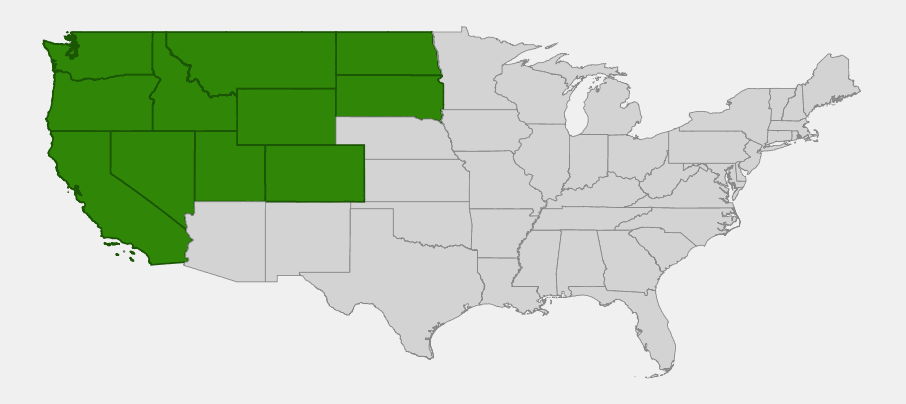
Bigseed biscuitroot is native to western North America. In Canada it grows in southern British Columbia, Alberta, Saskatchewan and Manitoba. In the United States, USDA PLANTS lists it as native in California, Oregon, Washington, Idaho, Nevada, Utah, Colorado, Wyoming, Montana, North Dakota and South Dakota.
It is most common in the Columbia Basin and the dry interior of Washington and Oregon, in Idaho, western Montana and northern Nevada, and in the foothills of northern and central California. In Oregon it grows mainly east of the Cascades, but also in the Siskiyou Mountains and Rogue Valley of southwestern Oregon and in a few dry, open sites in the Willamette Valley. On the eastern edge of its range it reaches the northern Great Plains in Montana and North Dakota; South Dakota is at the very edge of its range.
It grows on dry, open, rocky or gravelly slopes, ridges and flats, in sagebrush steppe, bunchgrass prairie, scablands, oak woodland and grassy openings in ponderosa pine forests, from low valleys to mountain slopes. It often grows on thin soils that are wet in early spring and dry by summer.
📋 Regional plant lists featuring Bigseed Biscuitroot: Idaho, Eastern Oregon & Eastern Washington · Montana & Wyoming · Utah & Western Colorado · North Dakota, South Dakota & Western Minnesota · Western Oregon & Western Washington · California & Nevada
Growing & Care Guide
Bigseed biscuitroot is a drought-adapted plant for dry gardens in the West. It is slow to establish but long-lived once its taproot is deep, and it needs a dry summer rest.
Light
Full sun. It does not tolerate shade.
Soil & Water
Plant in lean, well-drained rocky, gravelly or sandy soil. It needs moisture in winter and spring and dry conditions from early summer through fall, when it is dormant. Summer watering or rich, wet soil can cause root rot.
Planting Tips
It is best started from seed sown directly where it will grow, because the long taproot resents transplanting. Sow in fall in a dry rock garden, steppe planting or open meadow with bunchgrasses. Small containerized plants from native nurseries can be planted in fall or early spring.
Pruning & Maintenance
No pruning is needed. Leave the seed heads to ripen and drop seed, then remove dry stalks if you like. Mark the plant, since it disappears in summer.
Propagation
Grow from fresh seed sown outdoors in fall; the seed needs a long, cold, moist period to germinate. Seedlings grow slowly and take two to several years to bloom.
Landscape Uses
- Dry rock gardens: a lacy, gray-leaved early bloomer for sunny, gravelly sites
- Sagebrush and steppe restoration: a native forb for dry rangeland and grassland plantings
- Early pollinator food: one of the first nectar sources in spring
- Xeriscapes: needs no summer water once established
- Wildflower viewing: an early sign of spring on dry western slopes
Wildlife & Ecological Value
Bigseed biscuitroot blooms when few other flowers are open, making it valuable to early-season wildlife.
For Pollinators
Its flowers are visited by native bees, flies, beetles and small wasps in early spring. Biscuitroots are also host plants for caterpillars of swallowtail butterflies, such as the anise swallowtail and indra swallowtail.
For Birds
Greater sage-grouse and other ground birds eat the leaves and flowers of spring forbs such as biscuitroots, which are an important part of their spring diet.
For Mammals
Deer, elk, bighorn sheep and livestock graze the early leaves, and ground squirrels and pocket gophers eat the roots.
Ecosystem Role
Its deep taproot helps it survive drought and fire, and it is one of the early-season forbs that give sagebrush and bunchgrass communities their diversity. Its early flowers support pollinators before most other plants bloom.
Cultural & Historical Uses
The genus name Lomatium comes from the Greek loma, “border” or “fringe,” referring to the winged edges of the fruits. The species name macrocarpum means “large-fruited.”
Biscuitroots were among the most important root foods for Indigenous peoples of the Columbia Plateau and the Great Basin. Their roots were dug in spring, eaten fresh or dried and pounded into flour to make cakes, which gave rise to the name “biscuitroot.” Bigseed biscuitroot was one of the species used in parts of its range.
Do not dig or eat wild biscuitroots. Several deadly poisonous plants in the carrot family, such as water hemlock and poison hemlock, can be confused with them, and digging harms wild populations.
Frequently Asked Questions
Why is it called bigseed biscuitroot?
Its fruits are large for the genus, up to about an inch long, and its roots, like those of other biscuitroots, were traditionally dried and ground into flour for cakes.
When does bigseed biscuitroot bloom?
It is one of the earliest spring wildflowers, blooming from March to June depending on elevation.
Is bigseed biscuitroot edible?
Its roots were a traditional food, but you should not dig or eat it. It can be confused with deadly poisonous relatives such as water hemlock and poison hemlock.
Can I grow bigseed biscuitroot in my garden?
Yes, in dry western gardens with full sun, sharp drainage and no summer water. Sow seed in fall where it will grow, since it does not transplant well.
What color are the flowers of bigseed biscuitroot?
Usually white to cream, but some populations have yellowish or purplish flowers.

Looking for a nursery that carries Bigseed Biscuitroot?
Browse our native plant nursery directory: California · Colorado · Idaho · Montana · Nevada & North Dakota · Oregon · South Dakota & Utah · Washington · Wyoming

