
Woollyfruit Desertparsley (Lomatium dasycarpum)
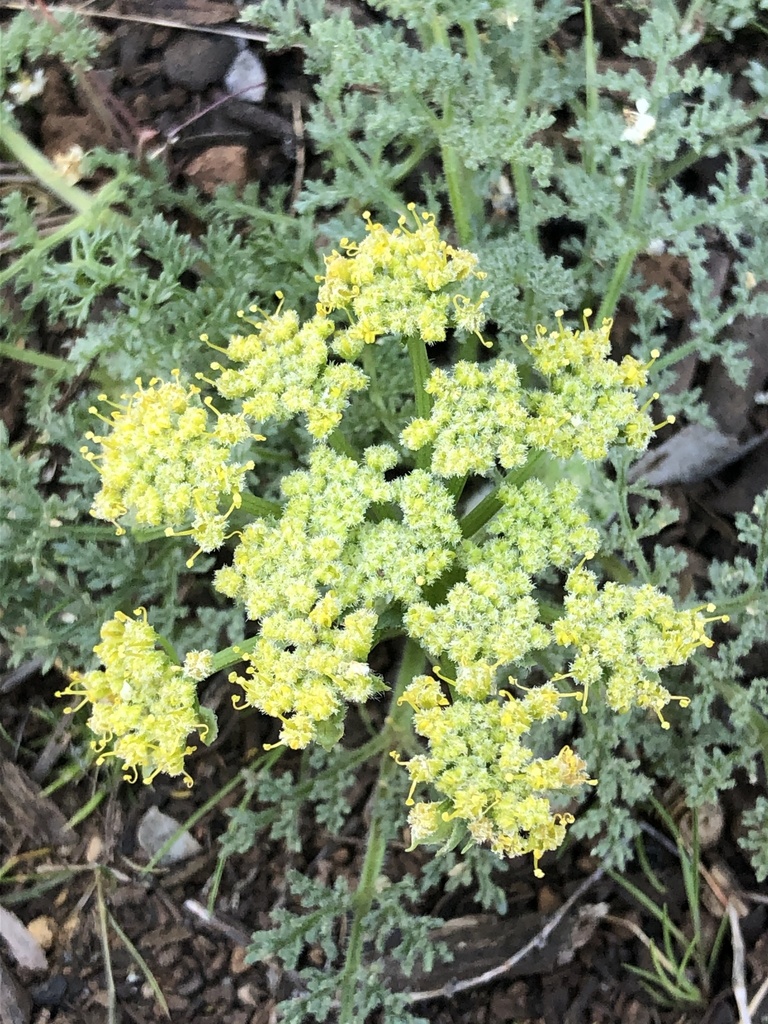
Lomatium dasycarpum, known as Woollyfruit Desertparsley, woolly-fruited lomatium or lace parsnip, is a low, softly hairy perennial of the carrot family (Apiaceae) that grows in the foothills and mountains of California and northern Baja California. In late winter and spring it produces a rosette of finely divided, gray-green, lacy leaves and rounded umbels of tiny greenish-yellow, yellow or purplish flowers, usually less than 2 feet tall.
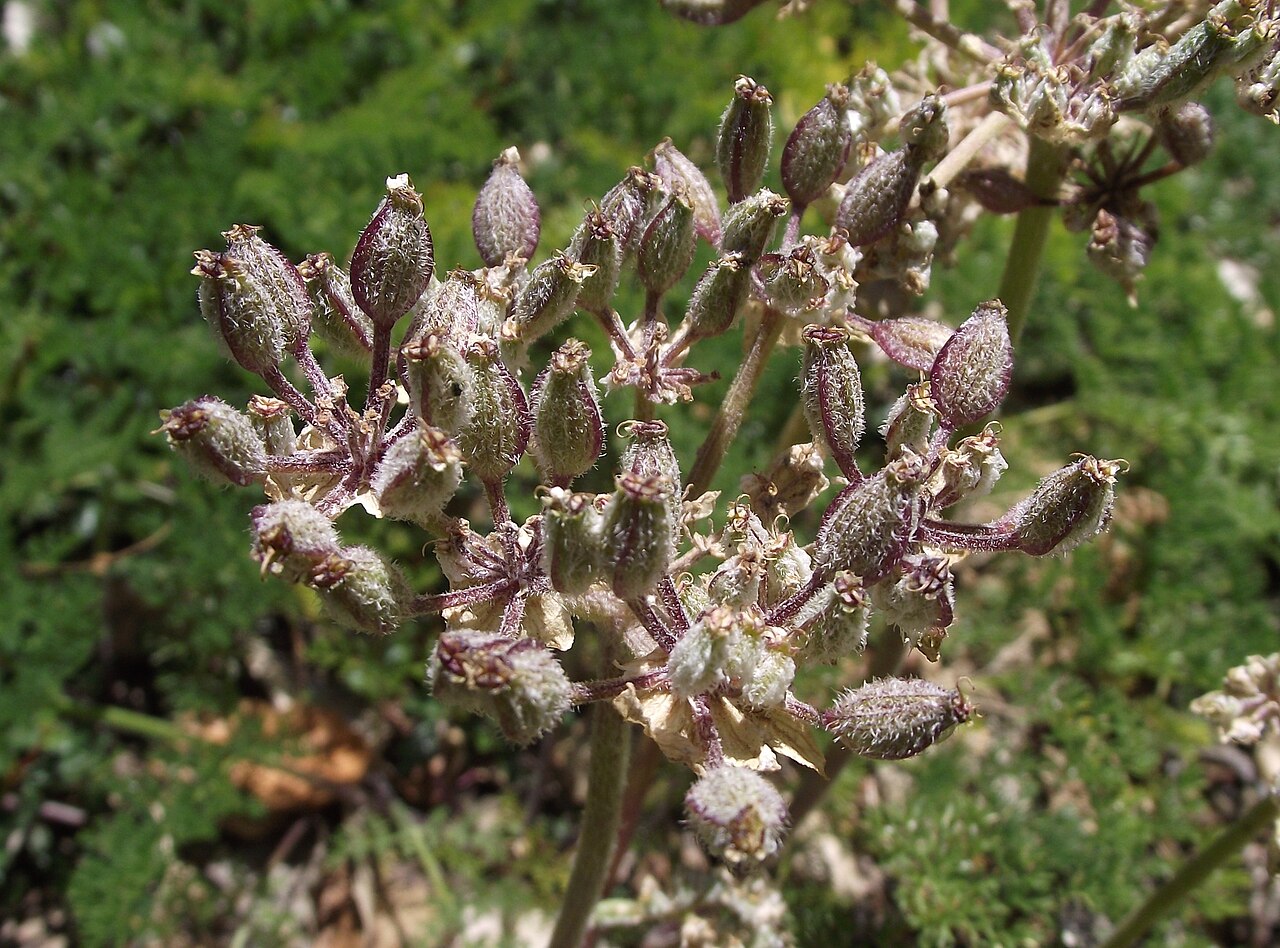
The name dasycarpum means “thick-haired fruit”, and the fruits are the plant’s most distinctive feature. After flowering, each umbel develops a cluster of flat, oval, disc-like fruits up to about 3/4 inch long, densely covered in woolly hairs. Like other lomatiums, it grows from a deep, thickened taproot, and it dies back to the ground during the dry summer.
Woollyfruit desertparsley is widespread in California’s Coast Ranges, Sierra Nevada foothills and southern mountains, on dry slopes and ridges in chaparral, foothill woodland, grassland and open pine forest. It is a larval host of the anise swallowtail and a source of early pollen and nectar for native bees and flies. This guide covers how to identify it, where it grows, how to grow it in a dry native garden, and its value to wildlife.
Identification
Woollyfruit desertparsley looks like many other lomatiums when it is only in leaf. In flower and fruit it is easier to identify: look for soft hairs on the leaves and flowers, and above all for the flat, woolly fruits.
Roots & Growth Habit
Each plant grows from a deep, thickened taproot. It is stemless or nearly so: the leaves and flowering stalks rise from the root crown, forming a low, spreading clump. The whole plant is lightly to densely hairy, which gives it a soft, gray-green look. Flowering stalks are usually 6 to 20 inches tall, sometimes reaching about 2 feet.
Leaves
The leaves are mostly basal, upright to spreading, up to about 9 inches long, and divided several times into many small, narrow segments, giving them a lacy, fern-like or carrot-top appearance. They are gray-green and softly hairy. The leaves appear with the winter rains and wither as the soil dries in late spring and summer.
Flowers
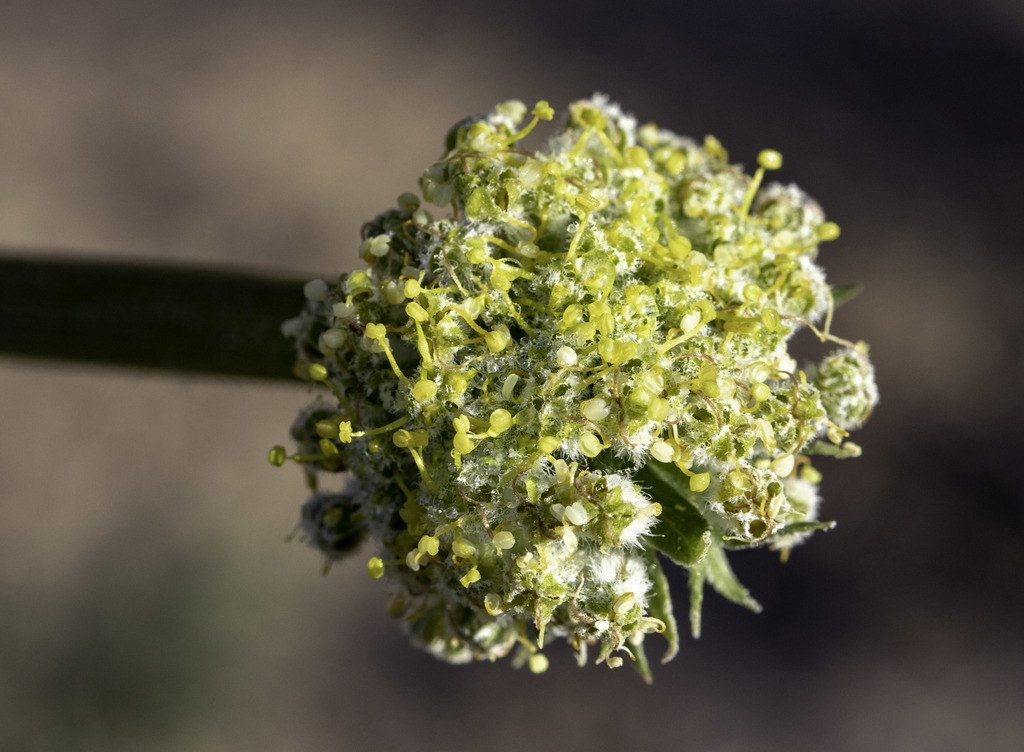
The tiny flowers are borne in compound umbels: several short rays, each ending in a small rounded cluster, together forming a rounded or slightly flat-topped head. The flowers are hairy and range in color from greenish or pale yellow to bright yellow or purplish. They bloom mainly from late winter through spring, depending on elevation and rainfall.
Fruit & Seeds
The fruit is the best field mark. Each flower develops a flattened, oval to round fruit about 1/2 to 3/4 inch long, with thin wings along the edges, covered in dense, woolly hairs. The fruits ripen in late spring and are scattered by wind and gravity as the stalks dry.
Look-alikes
California has many species of Lomatium, and several have similar finely divided leaves and yellow flowers. Woollyfruit desertparsley differs from most in its soft hairiness and woolly fruits; most other lomatiums have smooth fruits. Never eat any member of the carrot family found in the wild: the family includes deadly poisonous plants such as poison hemlock (Conium maculatum), and lomatiums are hard to tell apart without fruits.
Quick Facts
| Scientific Name | Lomatium dasycarpum (Torr. & A. Gray) J.M. Coult. & Rose |
| Family | Apiaceae (carrot family) |
| Plant Type | Herbaceous perennial from a deep taproot; summer-dormant |
| Mature Height | 6–20 in in flower (occasionally to about 2 ft) |
| Mature Spread | 8–18 in |
| Growth Rate | Slow |
| Sun Exposure | Full sun to light shade |
| Water Needs | Very low; dry summer dormancy |
| Soil Type | Well-drained rocky, gravelly or sandy soils; dry slopes and ridges |
| Soil pH | About 6.0–7.5 |
| Bloom Time | February–May |
| Flower Color | Greenish-yellow to yellow or purplish |
| Fall Color | None; dormant from summer until the fall rains |
| Fruit | Flat, oval, woolly-haired fruits up to about 3/4 in |
| Deer Resistant | Not well documented |
| USDA Hardiness Zones | 8–10 |
Native Range
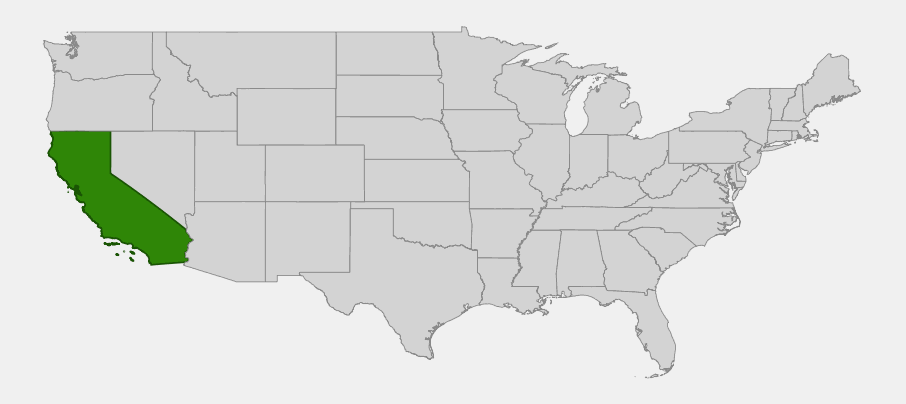
Woollyfruit desertparsley is a California plant. USDA PLANTS lists it as native only to California in the United States, and its range extends south into the mountains of northern Baja California, Mexico. Calscape describes it as widespread through many of California’s mountain ranges and valleys.
It grows in the North and South Coast Ranges, including the hills around San Francisco Bay, in the foothills of the Sierra Nevada, and in the Transverse and Peninsular Ranges of southern California, from the Santa Monica Mountains and Simi Hills to the mountains of San Diego County. It is generally absent from the deserts and from the high mountains.
Typical habitats are dry, open slopes and ridges with rocky or well-drained soils, in chaparral, foothill woodland, valley grassland and open yellow pine forest, mostly at low to middle elevations. Two subspecies are recognized: subsp. dasycarpum, the widespread form, and subsp. tomentosum, which is more densely hairy.
📋 Regional plant lists featuring Woollyfruit Desertparsley: California & Nevada
Growing & Care Guide
Woollyfruit desertparsley is a plant for dry, sunny, well-drained native gardens in California. It is rarely sold in nurseries, but specialist native nurseries and seed suppliers sometimes offer it. Its key requirements are sharp drainage, winter rain and a completely dry summer dormancy.
Light
Plant it in full sun, or light shade in hot inland gardens. In the wild it grows on open slopes and in gaps in chaparral and woodland, where it gets plenty of winter and spring sun.
Soil & Water
Use fast-draining rocky, gravelly or sandy soil, such as a slope, a raised bed or a rock garden. Calscape rates its water needs as very low. Let winter rains water it, and do not irrigate in summer when it is dormant; summer water in heavy soil is the most common cause of root rot in lomatiums.
Planting Tips
Because of its deep taproot, it is best started from seed sown where it is to grow, or planted out young from deep pots in fall at the start of the rainy season. Combine it with bunchgrasses, bulbs and other summer-dormant wildflowers that share its dry-summer rhythm.
Pruning & Maintenance
No pruning is needed. Let the seed heads ripen and scatter, then remove the dry stalks if you want a tidier look. Mark the location, since the plant disappears completely in summer and can be damaged by digging.
Propagation
Grow it from seed. Collect the woolly fruits when they turn tan in late spring and sow them outdoors in fall, so the winter rains and cold give the stratification lomatium seeds generally need. Germination occurs in late winter. Seedlings grow slowly and may take a few years to flower. Established plants do not divide or transplant well.
Landscape Uses
- Dry native gardens: lacy gray-green foliage and early yellow flowers with no summer water
- Butterfly gardens: a larval host plant for the anise swallowtail
- Rock gardens and slopes: suited to fast-draining, rocky or gravelly soil
- Grassland and woodland restoration: a native perennial of foothill grasslands, woodlands and chaparral
- Pollinator plantings: early-season pollen and nectar for native bees and flies
Wildlife & Ecological Value
Woollyfruit desertparsley blooms early in California’s spring, and like other lomatiums it supports a range of insects.
For Pollinators
The open umbels of tiny flowers are easy for short-tongued insects to use. Calscape lists many native bees, including bumble bees, and hover flies among the insects that visit or are likely to visit the plant. Because it flowers from late winter, it is one of the first pollen sources on dry slopes.
For Butterflies
Lomatiums as a group are important larval host plants for swallowtails in the West. Calscape lists woollyfruit desertparsley as a confirmed host of the anise swallowtail (Papilio zelicaon), whose caterpillars feed on the leaves and flowers of plants in the carrot family. This makes it a good choice for a butterfly garden in place of non-native fennel.
For Birds & Mammals
Seed-eating birds and rodents may eat the fruits, and the thick roots may be dug up by gophers and other small mammals.
Ecosystem Role
As a summer-dormant perennial with a deep taproot, woollyfruit desertparsley is part of the diverse wildflower layer of California’s grasslands, oak woodlands and chaparral openings. It grows and flowers during the rainy season and survives the long dry summer as a dormant taproot.
Cultural & Historical Uses
The genus name Lomatium comes from the Greek loma, a border or fringe, referring to the winged edges of the fruits. The species name dasycarpum combines dasys, thick-haired or shaggy, and karpos, fruit. The plant was first described by John Torrey and Asa Gray and later moved to Lomatium by John Merle Coulter and Joseph Nelson Rose.
Lomatiums are often called biscuitroots or desertparsleys, and the roots of several species were important foods for Native peoples of western North America. The specific uses of woollyfruit desertparsley are less well documented. Because wild carrot-family plants are hard to identify and some are deadly, foraging for them is best left to experts.
The name lace parsnip, used by the National Park Service in the Santa Monica Mountains, describes its lacy leaves and parsnip-like family resemblance. Its woolly fruits make it one of the easier lomatiums to recognize, and they are a good reason to visit the plant again in late spring after the flowers fade.
Frequently Asked Questions
Why is it called woollyfruit desertparsley?
Its flat, oval fruits are covered in dense, woolly hairs, and “desertparsley” is the USDA name used for the genus Lomatium, whose lacy leaves resemble parsley. It is also called woolly-fruited lomatium and lace parsnip.
Where does woollyfruit desertparsley grow?
It is native to California and northern Baja California, in the Coast Ranges, Sierra Nevada foothills and southern California mountains, on dry slopes in chaparral, foothill woodland, grassland and open pine forest.
Is woollyfruit desertparsley a host plant for butterflies?
Yes. Calscape lists it as a confirmed host plant of the anise swallowtail, whose caterpillars feed on carrot-family plants.
Does it need summer water?
No. It goes dormant in summer and should be kept dry then. Summer irrigation, especially in heavy soil, can rot the taproot.
Is it safe to eat?
Do not eat it or any wild carrot-family plant unless an expert has confirmed the identification. The family includes deadly poisonous species such as poison hemlock, and lomatiums are difficult to identify.

Looking for a nursery that carries Woollyfruit Desertparsley?
Browse our native plant nursery directory: California
