
Parry’s Jepsonia (Jepsonia parryi)
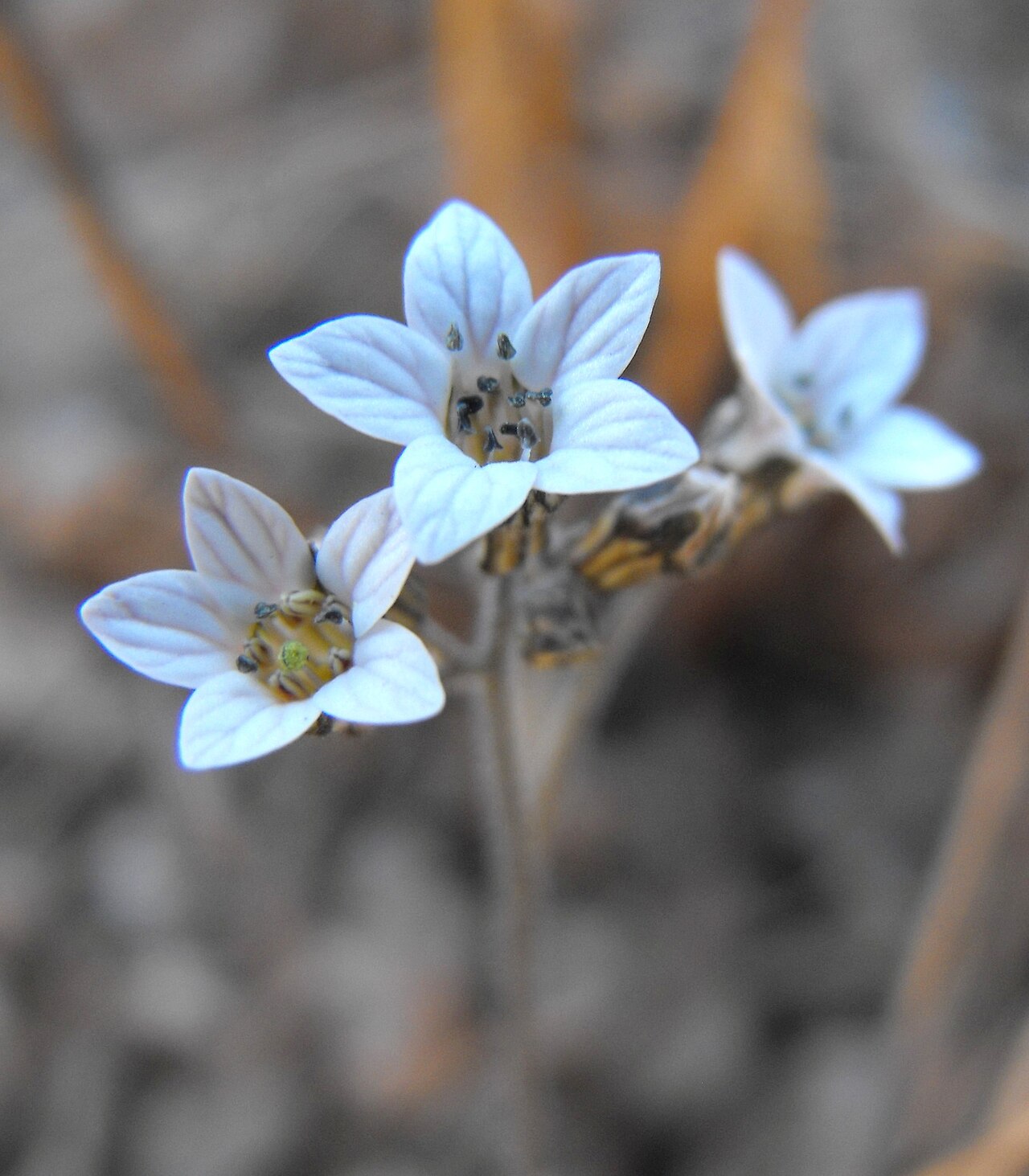
Jepsonia parryi, known as Parry’s Jepsonia or coast jepsonia, is a small perennial of the saxifrage family (Saxifragaceae) that grows on rocky slopes in coastal southern California and northern Baja California. It has an unusual schedule: it blooms in fall, often after the first rains of the season or even before, sending up leafless stalks 3 to 10 inches tall with clusters of small, white to pale pink, star-shaped flowers.
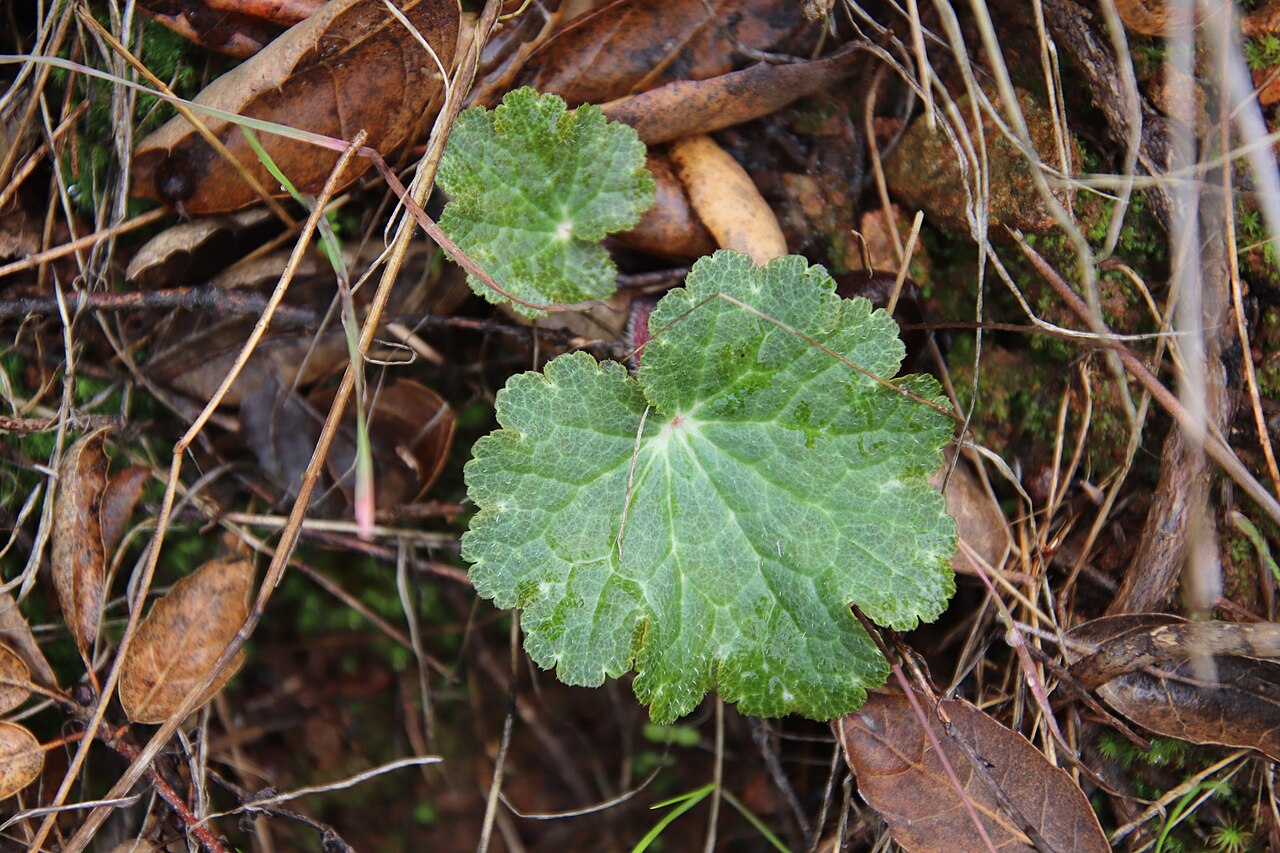
After the flowers fade, a single rounded, scalloped leaf (sometimes two) appears with the winter rains and lasts until spring. By early summer, the whole plant has disappeared underground, surviving the dry months as a small, corm-like base. Because it flowers when little else does, it is a welcome sight on autumn hikes in the coastal sage scrub and chaparral.
Parry’s jepsonia is a modest plant that is rarely grown in gardens, but it is a charming addition to a rock garden or container for native-plant enthusiasts in southern California. This guide covers how to identify it, where it grows, how it fits its life to California’s dry-summer climate, and what it takes to grow it.
Identification
Parry’s jepsonia is easiest to find in fall, when its flowers stand out on otherwise dry, brown slopes. In winter, look for its single round leaf close to the ground.
Growth Habit
It grows from a small, rounded, corm-like base (caudex) buried in rocky soil. In fall it produces one or more slender, leafless flowering stems, usually 3 to 10 inches tall. The plant has no stems or leaves above ground during the dry summer.
Leaves
Each plant usually has a single basal leaf, sometimes two, that appears after flowering, from late fall into spring. The leaf is round to kidney-shaped, about 1 to 3 inches across, shallowly lobed and toothed along the edge, on a short stalk, and lies flat or close to the ground. It somewhat resembles a small geranium or mallow leaf.
Flowers
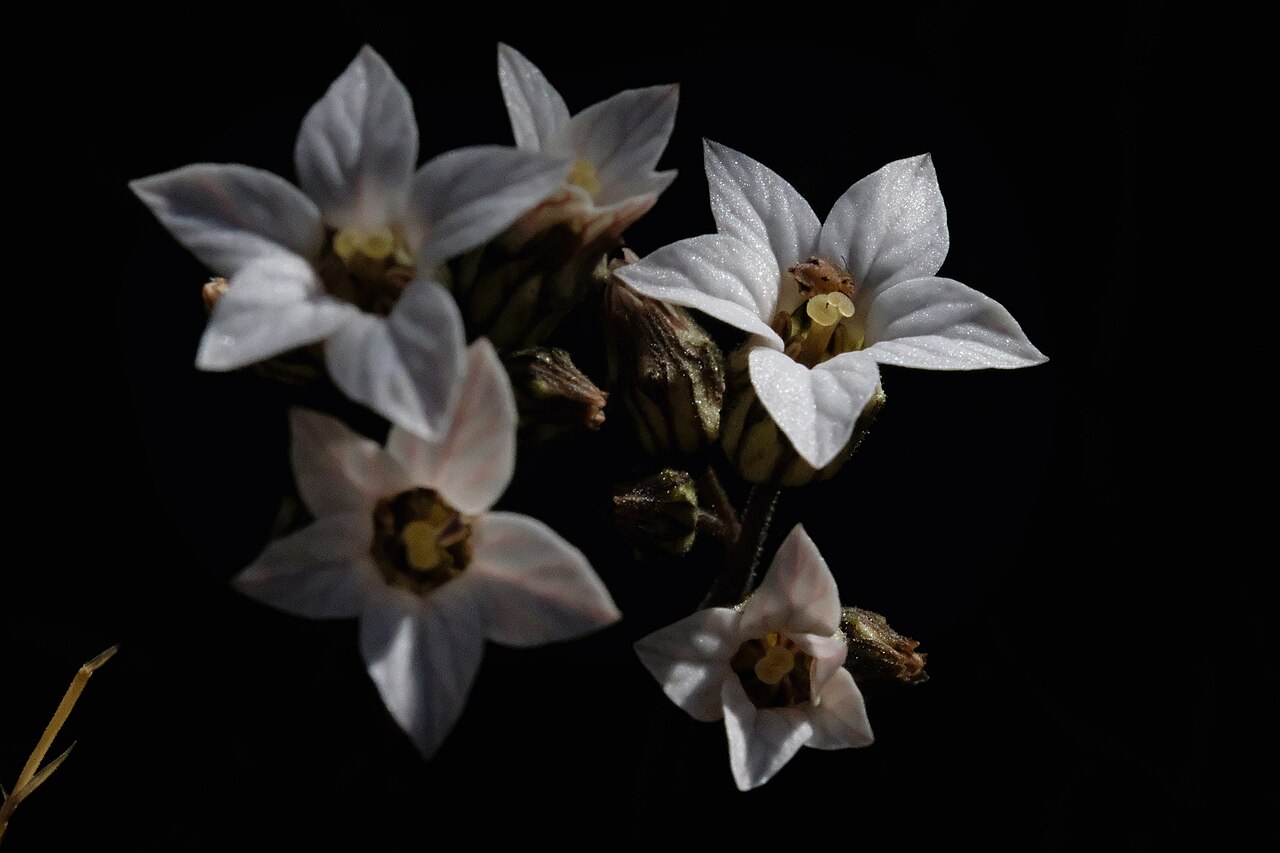
The flowers are borne in a small, loose cluster at the tip of each stalk. Each has a cup-shaped, reddish to brownish, often striped base (the hypanthium), five pointed sepals, and five narrow, white to pale pink petals, often with darker pink or red veins, that spread into a small star about 1/2 inch across. Ten stamens surround the two-parted ovary.
Fruit & Seeds
The fruit is a small, two-beaked capsule that ripens in winter and releases tiny seeds. Seedlings grow during the rainy season and slowly build up their underground base.
Look-alikes
Its fall bloom on leafless stalks makes it distinctive in its range. Foothill jepsonia (Jepsonia heterandra) grows in the Sierra Nevada foothills of central California, and island jepsonia (J. malvifolia) grows on the Channel Islands and Guadalupe Island, so they rarely overlap with Parry’s jepsonia. In winter, its single round leaf can be mistaken for a young mallow or Heuchera leaf.
Quick Facts
| Scientific Name | Jepsonia parryi (Torr.) Small |
| Family | Saxifragaceae (saxifrage family) |
| Plant Type | Herbaceous perennial from a corm-like base; summer-dormant |
| Mature Height | 3–10 in in flower |
| Mature Spread | 2–4 in |
| Growth Rate | Slow |
| Sun Exposure | Part shade to full sun |
| Water Needs | Very low; winter rain only, dry in summer |
| Soil Type | Rocky, gravelly or clay soils, often on north-facing slopes and among rocks |
| Soil pH | About 6.0–7.5 |
| Bloom Time | September–January, mostly October–December |
| Flower Color | White to pale pink with darker veins |
| Fall Color | Blooms in fall; leaf appears in winter |
| Fruit | Small, two-beaked capsule |
| Deer Resistant | Not well documented |
| USDA Hardiness Zones | 9–10 |
Native Range
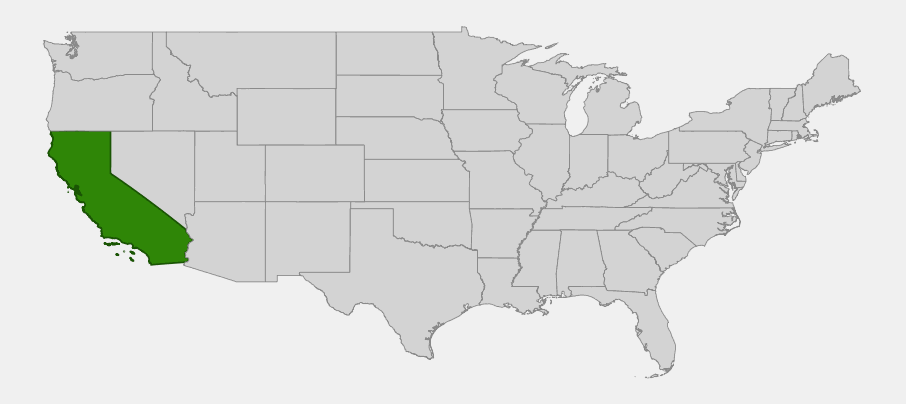
Parry’s jepsonia is native to coastal southern California and northern Baja California, Mexico. USDA PLANTS lists it only in California within the United States, and herbarium and iNaturalist records show it also grows across the border in Baja California.
In California it grows in the coastal mountains, foothills and mesas of the south, from the Los Angeles area through Orange and western Riverside counties to San Diego County, including the Santa Ana Mountains and the foothills of the Peninsular Ranges. It continues south along the Pacific slope of Baja California.
It grows on rocky slopes, outcrops and banks in coastal sage scrub, chaparral, grassland and oak woodland, often on north-facing slopes or in the shelter of rocks and shrubs, at low to middle elevations. Urban development in coastal southern California has removed much of its habitat, but it is still found in many parks and preserves.
📋 Regional plant lists featuring Parry’s Jepsonia: California & Nevada
Growing & Care Guide
Parry’s jepsonia is rarely available in nurseries, but native-plant enthusiasts sometimes grow it from seed or from plants shared by botanic gardens and native plant society sales. It is best suited to a rock garden or a container in southern California, where its fall flowers can be seen up close. Never dig it from the wild.
Light
Give it part shade or light shade, such as a north-facing slope, the shelter of a rock or the edge of a shrub. In cool coastal gardens it can also take more sun.
Soil & Water
Plant in fast-draining, rocky or gritty soil, or a gritty cactus-type mix in a pot. Water lightly in fall if the rains are late to encourage flowering, keep it moderately moist through the winter growing season, and let it go completely dry once the leaf withers in late spring. Summer water can rot the dormant base.
Planting Tips
Plant it among rocks, in a crevice or in a shallow pot where its small flowers and leaf won’t be hidden by larger plants. Label its location, since it disappears completely in summer. It combines well with dudleyas, small bulbs and other low, summer-dormant natives.
Pruning & Maintenance
Little care is needed. Remove dried flower stalks and leaves if you like. Keep the area free of weeds and non-native grasses that would crowd it out, and do not dig around it while it is dormant.
Propagation
Grow it from seed sown in fall in a gritty mix and left outside to receive the winter rains. Seedlings are tiny and grow slowly, building up their underground base over several years before they flower. Plants can also slowly form offsets.
Landscape Uses
- Rock gardens and crevices: small fall flowers that can be enjoyed up close
- Containers and troughs: easy to control water and see its unusual life cycle
- Coastal sage scrub gardens: adds fall bloom beneath native shrubs
- Habitat restoration: a native perennial of rocky slopes in coastal southern California
- Pollinator gardens: fall flowers for small native bees and flies
Wildlife & Ecological Value
Parry’s jepsonia blooms in the driest, quietest part of the year in coastal southern California, when few other flowers are available.
For Pollinators
Its small, open flowers are visited by small native bees, flies and other insects. Because it blooms in fall, when most of the coastal sage scrub is dormant, it provides a small but valuable source of pollen and nectar.
For Birds
It has little direct value for birds, but it is part of the coastal sage scrub and chaparral communities that support species such as the California gnatcatcher, California towhee and wrentit.
For Mammals
Small mammals may eat the leaves or dig for the underground base. Its tiny size and short season make it of minor importance as food.
Ecosystem Role
Parry’s jepsonia is one of many summer-dormant perennials in southern California’s coastal sage scrub and chaparral, timing its growth to the cool, wet months. It adds to the diversity of the herb layer on rocky slopes and is a good indicator of intact native habitat in a heavily developed region.
Cultural & Historical Uses
The genus Jepsonia honors Willis Linn Jepson (1867–1946), a leading California botanist, founder of the California Botanical Society, and author of the Manual of the Flowering Plants of California. The species honors Charles Christopher Parry (1823–1890), a botanist who collected widely in California and the Southwest, including on the U.S.–Mexico boundary survey.
The plant was first described by John Torrey as a species of Saxifraga, and was later moved by John Kunkel Small to the new genus Jepsonia, which contains three species, all native to California and Baja California.
Fall-blooming plants are rare in California’s coastal sage scrub, and Parry’s jepsonia is a favorite of local naturalists. It is often featured in autumn wildflower walks and as one of the first signs of the new growing season in coastal southern California.
Frequently Asked Questions
When does Parry’s jepsonia bloom?
Mostly from October to December, sometimes from September to January, often around the time of the first fall rains. Its leaf appears after the flowers.
Where does Parry’s jepsonia grow?
It grows on rocky slopes in coastal sage scrub, chaparral, grassland and oak woodland in coastal southern California, from the Los Angeles area to San Diego County, and in northern Baja California.
Why does it only have one leaf?
Each plant usually produces a single rounded leaf, occasionally two, during the winter growing season. The leaf withers in late spring, and the plant survives the dry summer underground.
Can I grow Parry’s jepsonia?
Yes, with care, in a rock garden or container with gritty, fast-draining soil, light shade and no summer water. It is rarely sold; grow it from seed or from plants shared by native plant groups, never from wild-dug plants.
Who is it named after?
The genus honors California botanist Willis Linn Jepson, and the species honors botanist Charles Christopher Parry.

Looking for a nursery that carries Parry’s Jepsonia?
Browse our native plant nursery directory: California

