Rock Clematis (Clematis columbiana)
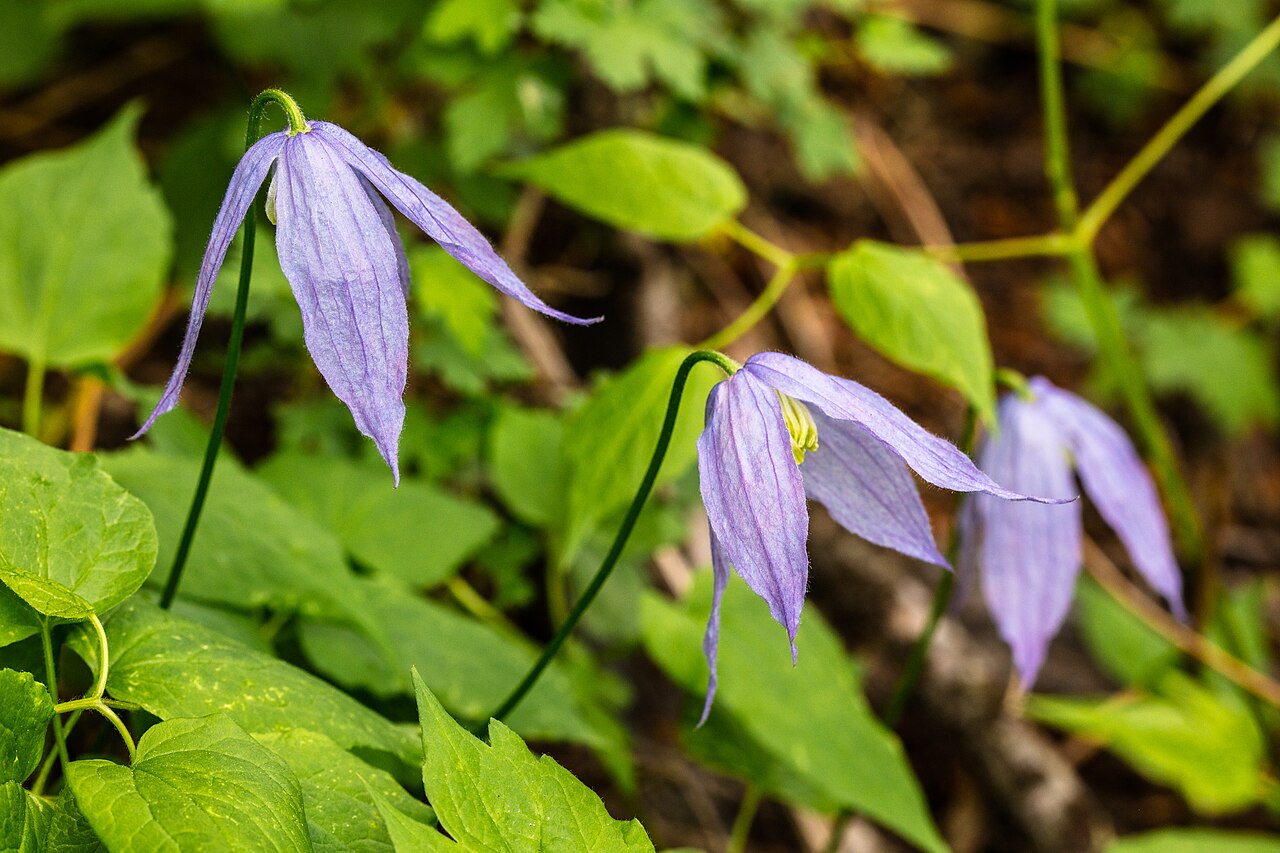
Clematis columbiana, commonly called rock clematis or Columbia virgin’s bower, is a slender, deciduous climbing vine of the interior mountain West. Each spring it drapes rocky slopes, talus, and open forest edges with nodding, four-petaled flowers in soft shades of lavender, blue-violet, or pink-purple — a striking contrast to the gray rock and conifer green of its typical high-country habitat. Unlike many clematis, the open, star-like flowers face slightly downward on long stalks, giving the plant a graceful, airy appearance as it scrambles over shrubs and boulders.
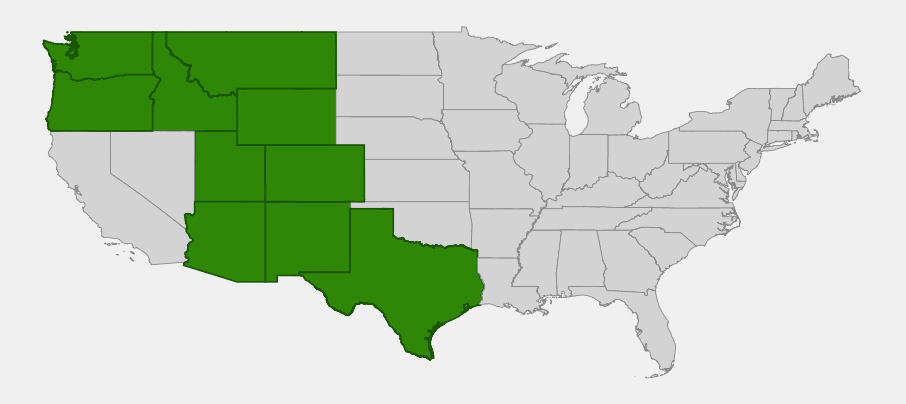
Rock clematis is widespread across the Rocky Mountains and intermountain West, from the eastern slopes of the Washington and Oregon Cascades through Idaho, Montana and Wyoming, south through Utah, Colorado, Arizona and New Mexico, with populations reaching into the mountains of west Texas. It typically grows at middle to high elevations in rocky, well-drained soils — talus slopes, rock outcrops, canyon walls and open coniferous forest — climbing modestly through shrubs or trailing over rock rather than reaching great heights.
For gardeners in the Mountain West, rock clematis is an excellent native alternative to ornamental clematis vines, adapted to the region’s cold winters, dry summers and rocky soils without the fuss that garden hybrids demand. It is especially well suited to rock gardens, dry slopes, and naturalistic plantings that mimic its native talus and open-woodland habitat.
Identification
Rock clematis is a woody-based, deciduous perennial vine that climbs by twisting its leaf stalks around supports, typically reaching 3 to 10 feet, though plants without support will sprawl or trail over rocks and low vegetation.
Leaves
Leaves are opposite and compound, usually divided into three leaflets (sometimes further lobed or toothed), with a thin, slightly leathery texture. Leaflet shape and degree of lobing vary across the species’ range — plants in some areas (sometimes distinguished as variety tenuiloba) have more deeply cut, narrow leaflet segments than the typical form.
Flowers
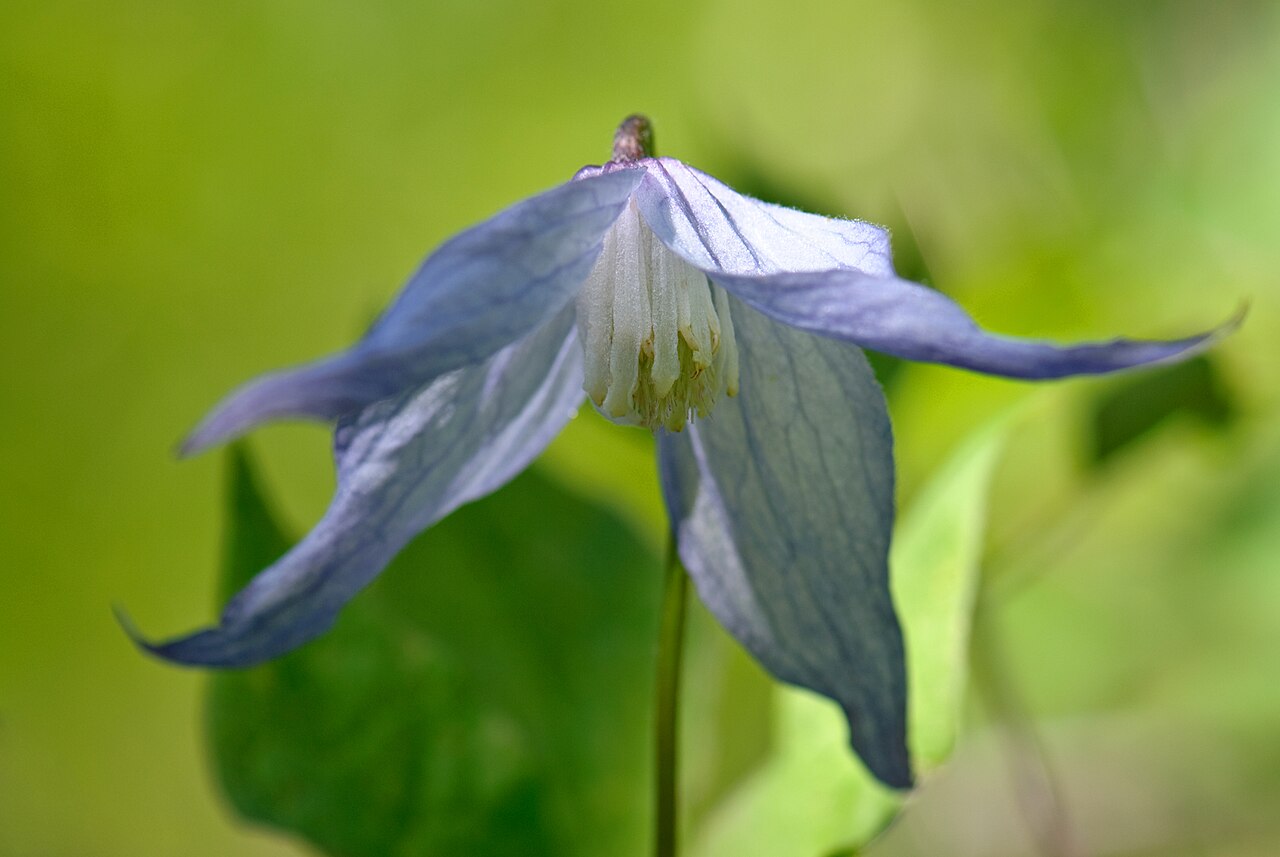
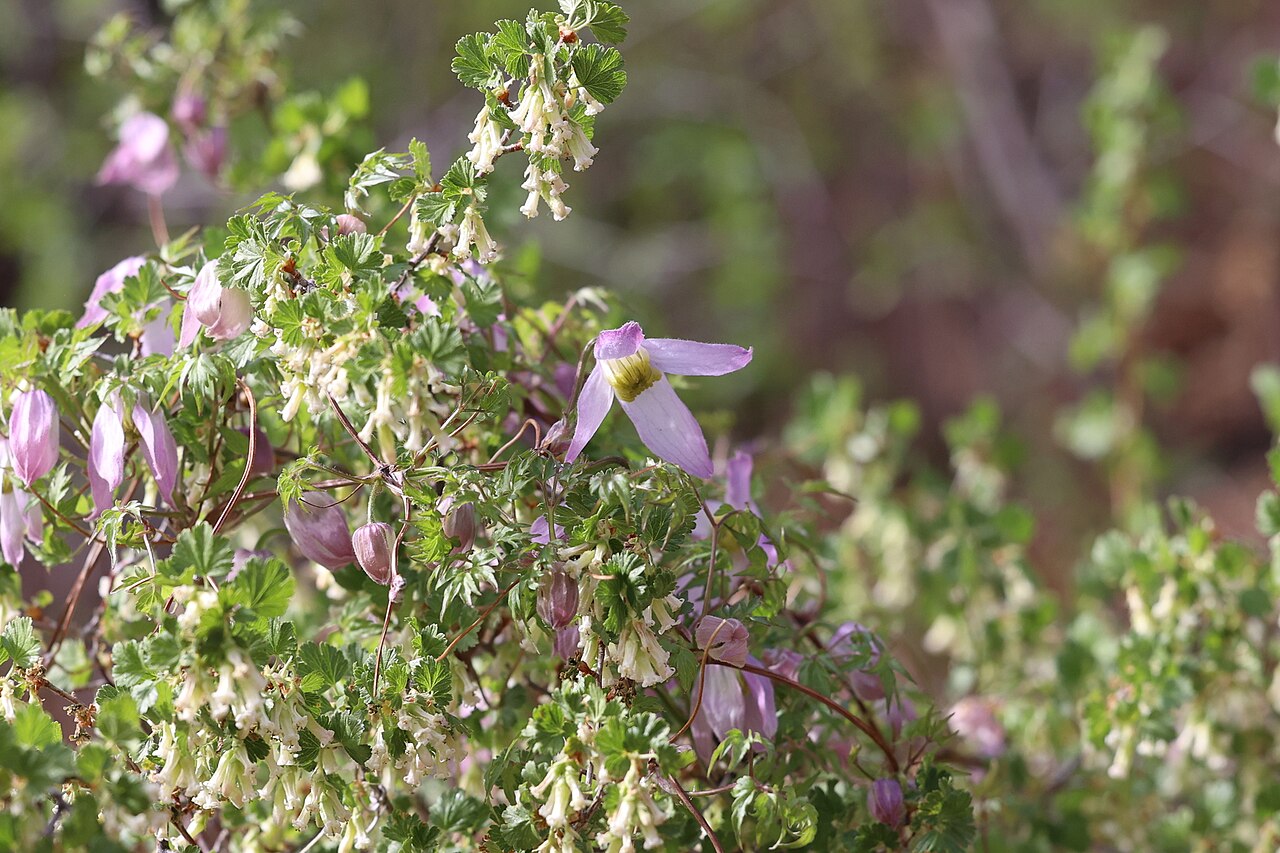
Flowers bloom singly on long, slender stalks from the leaf axils, mostly in late spring to early summer, with the bell- to star-shaped bloom nodding or facing outward rather than fully upright. Each flower has four (occasionally more) petal-like sepals, typically 1 to 2 inches long, in shades ranging from pale lavender-blue to deeper violet-purple, surrounding a dense cluster of cream to pale yellow stamens at the center.
Fruit & Seeds
After flowering, each bloom develops into a rounded cluster of achenes, each tipped with a long, feathery, silvery plume. These plumed seed heads are showy in their own right, catching sunlight in loose, silky puffs that persist on the vine for weeks after the flowers fade.
Quick Facts
| Scientific Name | Clematis columbiana |
| Family | Ranunculaceae (Buttercup) |
| Plant Type | Deciduous perennial climbing vine |
| Mature Height | 3–10 ft of climb (trails if unsupported) |
| Mature Spread | 2–5 ft |
| Growth Rate | Moderate |
| Sun Exposure | Full Sun to Part Shade |
| Water Needs | Low to moderate; good drainage essential |
| Soil Type | Rocky, gravelly or sandy, well-drained |
| Soil pH | Neutral to slightly alkaline (about 6.5–7.8) |
| Bloom Time | Late April – July, varying by elevation |
| Flower Color | Lavender-blue to violet-purple |
| Fall Color | None notable; silvery plumed seed heads persist |
| Fruit | Plumed achenes in silky, silvery clusters |
| Deer Resistant | Yes |
| USDA Hardiness Zones | 4–8 |
Native Range
Rock clematis is native across the interior mountain West, from the eastern Cascades of Washington and Oregon east through Idaho, Montana and Wyoming, and south through Utah, Colorado, Arizona and New Mexico into the mountains of west Texas (the Trans-Pecos). It is a true mountain plant, generally absent from the lower, drier plains and deserts between these ranges, and it does not occur on the moist, western (coastal) side of the Cascades.
Habitat is consistently rocky and well-drained: talus slopes, rock outcrops and cliff faces, canyon walls, and the open understory of pine, fir and spruce forests at middle to subalpine elevations. It often grows scrambling over boulders or through shrubs such as mountain mahogany and serviceberry, taking advantage of the extra support and the slightly cooler, moister microsite near rock and shrub cover.
Rock clematis is not rare or federally listed, and across much of its range it is a locally common component of montane plant communities, though it can be scarce at the margins of its distribution. Its wide elevational and geographic range reflects real adaptability to varying mountain climates, from the relatively mild Pacific Northwest high country to the hot, dry Southwest.
📋 Regional plant lists featuring Rock Clematis: Arizona & New Mexico · Idaho, Eastern Oregon & Eastern Washington · Montana & Wyoming · Utah & Western Colorado · South & West Texas
Growing & Care Guide
Rock clematis is a tough, adaptable vine for Mountain West gardens that can offer it what it gets in the wild: sharp drainage, cool roots, and relief from excess summer moisture.
Light
Full sun to part shade works well. In hot, lower-elevation sites, afternoon shade or a position where roots stay shaded by rock or nearby shrubs helps keep plants from drying out excessively, mimicking the cooler microclimates found near rock outcrops in the wild.
Soil & Water
Sharp drainage is the single most important factor — rocky, gravelly or sandy soils that mimic talus and outcrop conditions suit this species far better than rich, moisture-retentive garden beds. Established plants are quite drought tolerant and should be watered only occasionally through summer once roots are established; soggy soil, especially in winter, is the most common cause of failure.
Planting Tips
Plant in spring or fall into a rock garden, dry slope, or raised bed with excellent drainage. A “cool roots, warm top” placement — roots shaded by a flat rock or neighboring shrub, foliage reaching for sun — reproduces the plant’s natural rock-garden habitat and is a classic technique for clematis generally. Give it a low shrub, boulder, or small trellis to climb; our guide to trellises for pollinator vines covers lightweight support options suited to a modest climber like this one.
Pruning & Maintenance
Prune lightly in late winter to remove dead or damaged growth; this species flowers on the current season’s growth, so hard pruning in late winter does not sacrifice bloom. Avoid rich fertilizer, which encourages lush, floppy growth poorly suited to its naturally lean habitat. If leaves brown unexpectedly, check drainage first — our notes on diagnosing browning clematis leaves cover the most common causes, most of which trace back to wet feet in this species.
Landscape Uses
Rock clematis fits naturally into these Mountain West garden settings:
- Rock gardens and dry stone walls
- Xeriscape and water-wise mountain gardens
- Naturalistic plantings on rocky slopes
- Trailing over boulders where no support is provided
- Native plant collections for high-elevation gardens
- Pollinator gardens paired with other montane wildflowers
Wildlife & Ecological Value
Rock clematis provides pollen, nectar and structural habitat value within the montane plant communities where it grows.
For Pollinators
The open, star-shaped flowers are accessible to a wider range of pollinators than the more closed, urn-shaped flowers of some other native clematis, attracting native bees, flies, and other insects to the pollen-rich stamen cluster at the flower’s center. It blooms during a period when high-elevation floral resources can still be limited, making it a useful early- to mid-season nectar source.
For Birds
The persistent, silky seed plumes are gathered by small songbirds for nesting material in late spring and early summer, and the tangled vine growth over rocks and shrubs offers some additional cover for small wildlife.
Ecosystem Role
As a vine specialized for rocky, well-drained montane habitats, rock clematis helps stabilize loose talus and scree with its root system while adding structural complexity to otherwise sparse rock garden plant communities. Its wide elevational range makes it a connective species across different montane habitat types, from mixed conifer forest to open rocky slopes near treeline.
Cultural & Historical Uses
Clematis species across the Rocky Mountain region, including rock clematis, have a history of use among Indigenous peoples of the interior West, though documentation specific to this species is limited compared to more widespread relatives. Vine stems from various native clematis were sometimes used for cordage and lashings, taking advantage of their long, flexible, fibrous growth.
As with other species in the genus, the foliage and sap contain mildly irritant compounds typical of the buttercup family, and some clematis species were used externally in limited folk remedies — a historical practice, not a modern recommendation, since these compounds can cause skin irritation with prolonged contact.
Today rock clematis is valued primarily as a garden and restoration plant, prized by Mountain West native plant gardeners for its reliable performance on dry, rocky sites where few other flowering vines thrive, and as a component of native seed mixes used in high-elevation restoration work.
Frequently Asked Questions
How is rock clematis different from other Clematis species?
Rock clematis has open, outward-facing or nodding star-shaped flowers rather than the fully closed, urn-shaped blooms of leatherflower species, and it is adapted to rocky, high-elevation mountain habitat rather than lowland woods or wetlands.
Will rock clematis grow outside the Mountain West?
It can be grown elsewhere with sharp drainage and cool winters, but it performs best in climates that resemble its native range — cold winters, dry summers, and rocky or gravelly soil. In humid, wet-summer climates it is prone to root rot.
Does rock clematis need a trellis?
It benefits from a support such as a low shrub, boulder, or small trellis, but it is not an aggressive climber and will simply trail over rock or ground if nothing taller is available.
Is rock clematis toxic?
Like other buttercup-family plants, the foliage and sap contain mildly irritant compounds and should not be eaten. It is not considered a serious poisoning risk from normal garden handling, but it is not an edible plant.
What is Clematis columbiana var. tenuiloba?
This is a recognized variety with more deeply cut, narrow leaflet lobes, found at scattered sites within the species’ broader range, particularly in the Utah mountains. It shares the same growing requirements and garden value as the typical form.
What other native vines pair well with rock clematis in west Texas gardens?
In the Trans-Pecos region, rock clematis can be combined with other drought-tolerant native climbers; our roundup of flowering vines for Texas gardens covers additional options suited to the state’s hot, dry conditions.

Looking for a nursery that carries Rock Clematis?
Browse our native plant nursery directory: Arizona · Colorado · Idaho · Montana · New Mexico · Oregon · Texas & Utah · Washington · Wyoming