Tough-leaf Iris (Iris tenax)
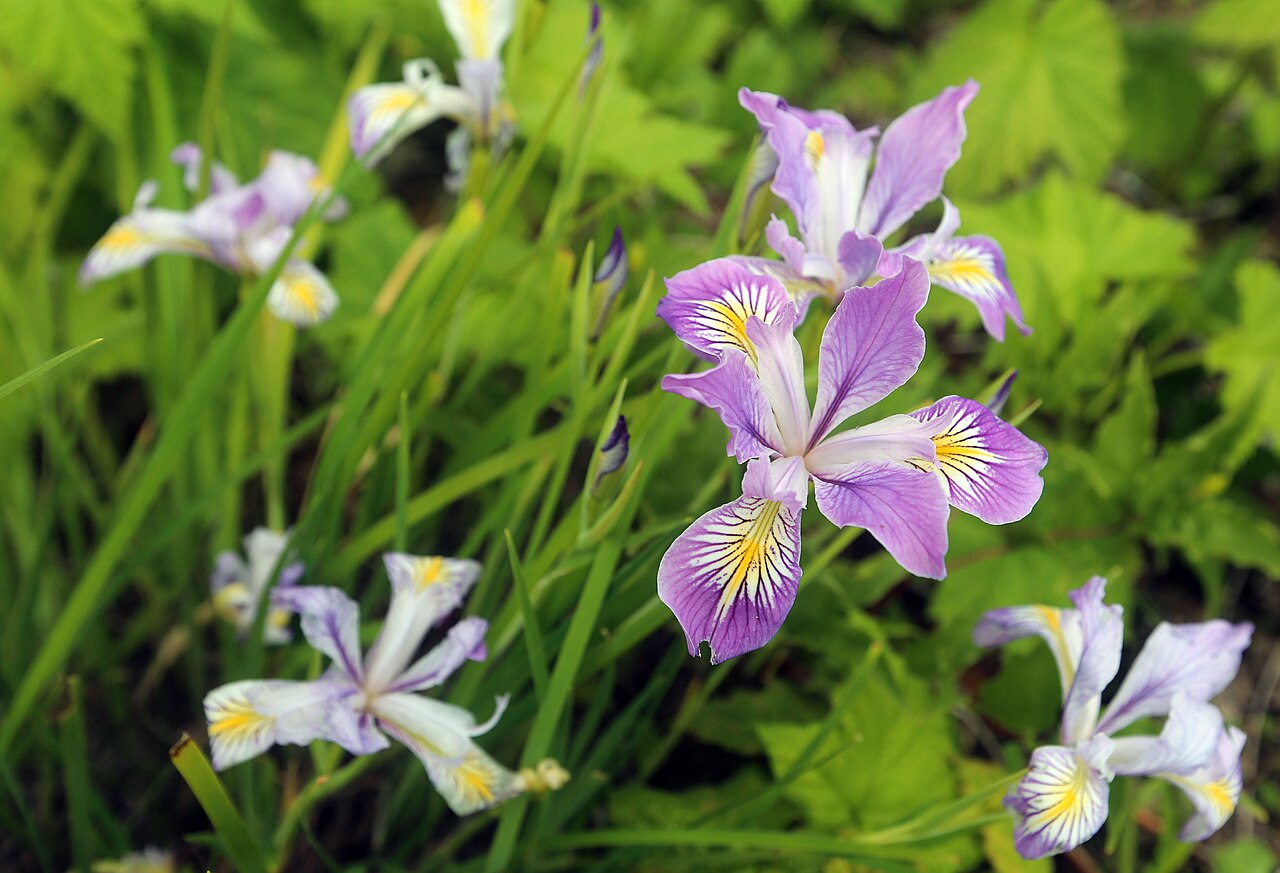
Iris tenax, commonly called tough-leaf iris or Oregon iris, is a compact, clump-forming perennial wildflower of the Pacific Northwest, prized for its showy purple-blue to lavender flowers held just above narrow, grass-like leaves each spring. The species name tenax — Latin for “tough” or “tenacious” — refers to the remarkably strong, fibrous leaves, which Indigenous peoples of the region once twisted into some of the strongest natural cordage known, capable of holding a deer snare or towing a canoe.
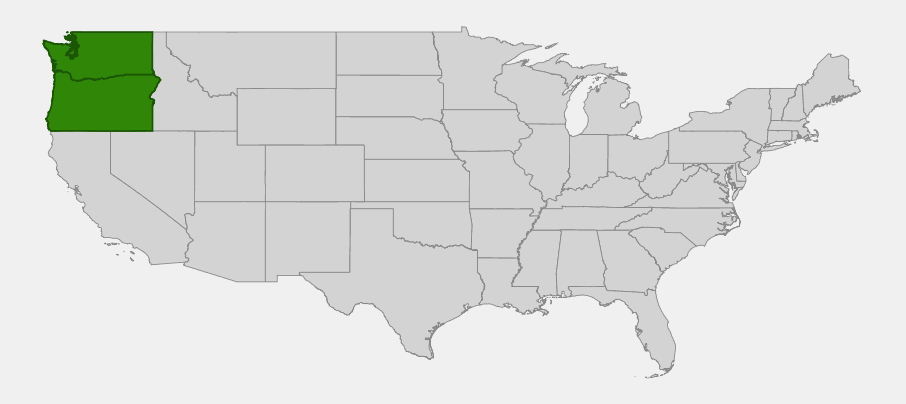
Tough-leaf iris is centered on Oregon’s Willamette Valley, where it was historically abundant across the region’s fire-maintained prairies, and it extends into southwestern Washington, with scattered populations elsewhere in Oregon’s valleys and foothills. It thrives in the open, grassy habitats that were once maintained by regular burning, growing low and tough among native bunchgrasses rather than in deep shade or wetland.
For gardeners in western Oregon and Washington, tough-leaf iris is one of the best native alternatives to ornamental bearded iris — compact, drought-tolerant once established, and a genuine piece of Willamette Valley prairie heritage. It is an excellent choice for native plant meadows, prairie restoration, and sunny perennial borders that don’t need summer irrigation.
Identification
Tough-leaf iris is a low, clump-forming perennial, typically 8 to 16 inches tall at bloom, spreading slowly by short rhizomes to form dense tufts over time.
Leaves
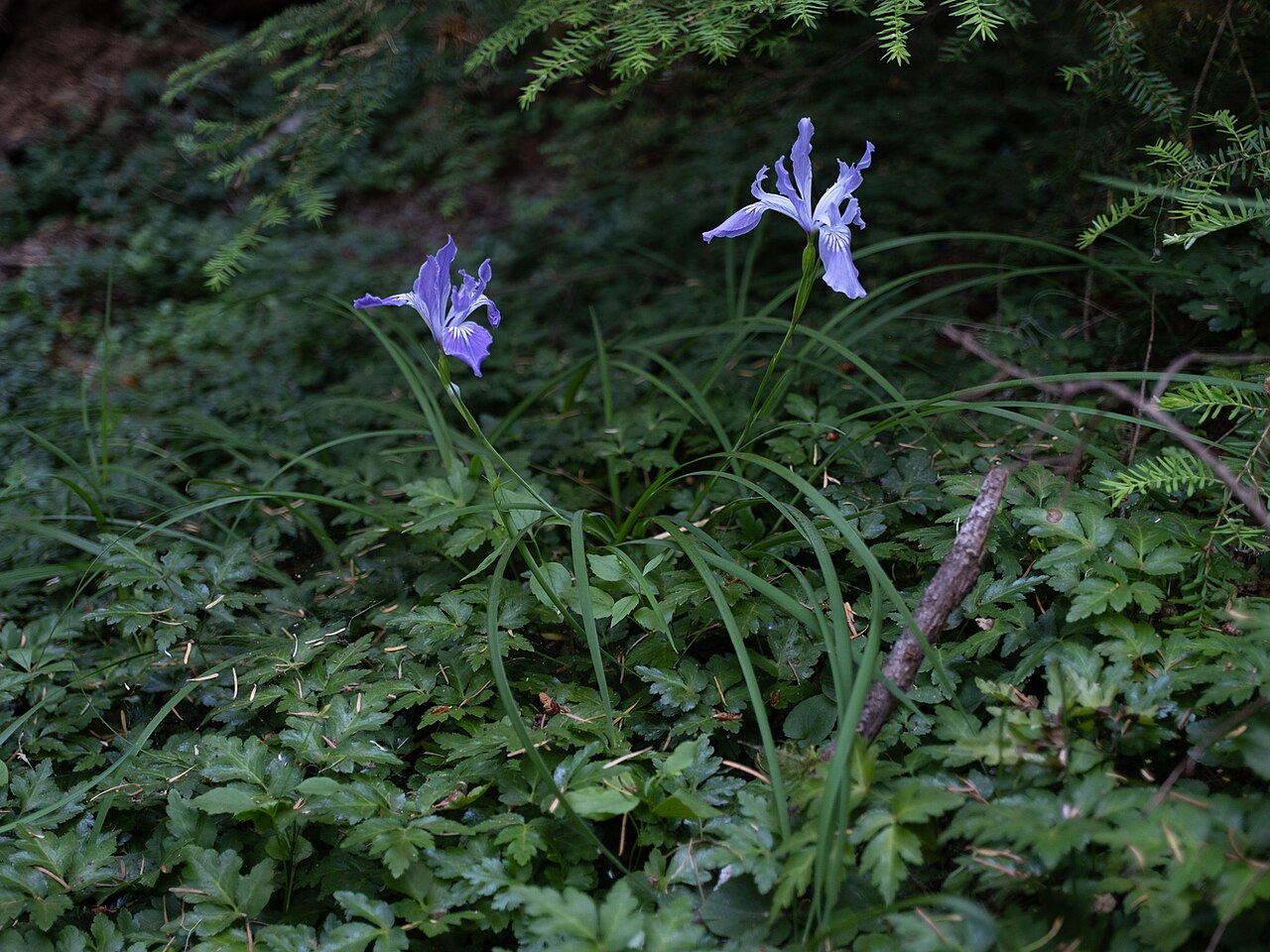
Leaves are narrow, linear, and grass-like, usually 8 to 16 inches long and less than ½ inch wide, arching gracefully from the base in a fan-like clump. They are notably tough and fibrous — the trait behind both the common and scientific names — remaining mostly evergreen to semi-evergreen in mild winters.
Flowers
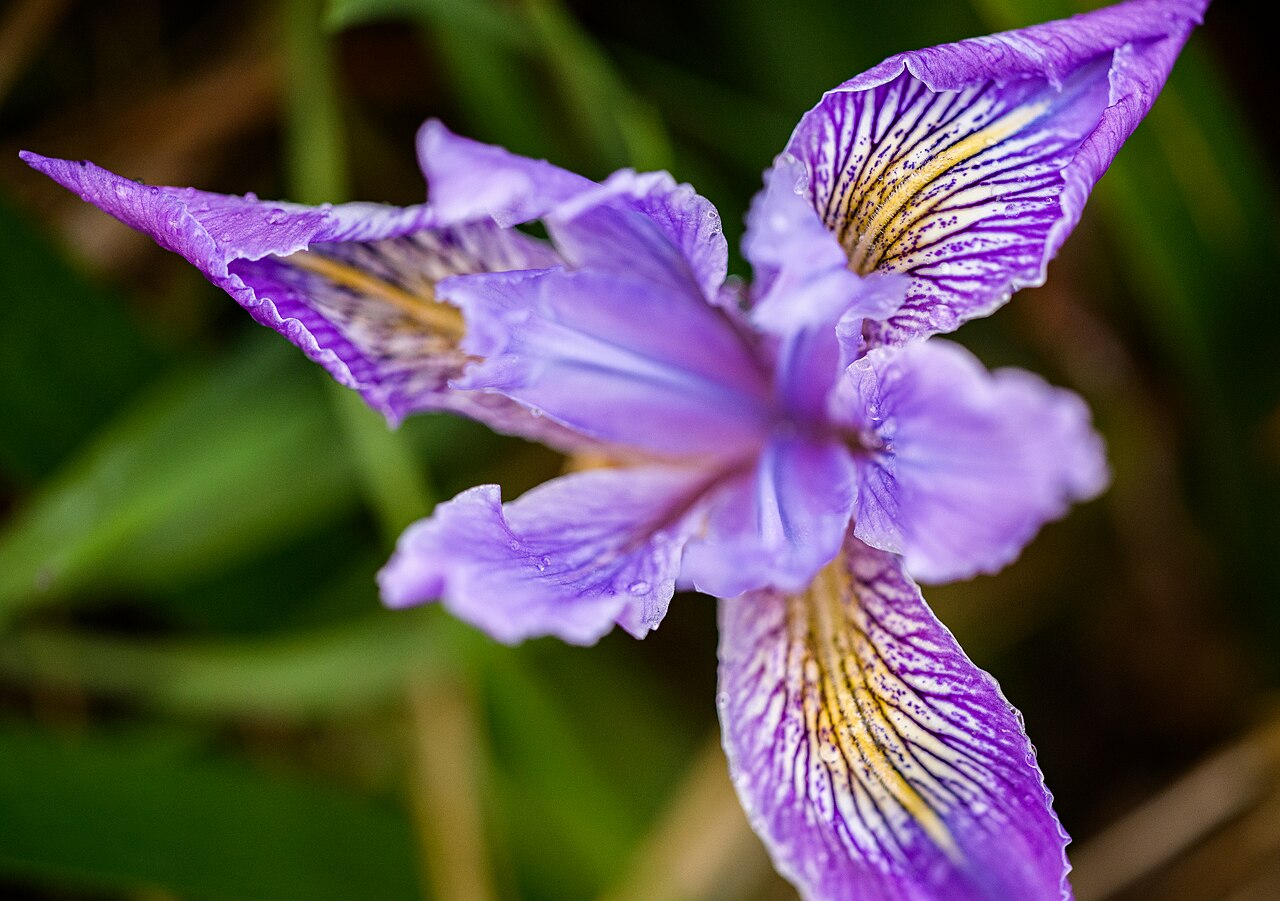
Flowers bloom in mid to late spring, one or two per stalk, held just above or among the leaves. Each flower is 2 to 3 inches across with the classic iris form: three large, drooping outer petals (falls), typically violet to lavender-blue with darker veining and a pale, yellow-tinged throat, and three smaller, more upright inner petals (standards) in a similar or slightly paler hue. Flower color varies naturally across populations from deep purple to pale lavender and occasionally white.
Fruit & Seeds
After flowering, an oblong seed capsule develops, splitting open when ripe to release rounded, light brown seeds. Seed capsules mature through summer and can be collected for propagation once they begin to dry and split.
Quick Facts
| Scientific Name | Iris tenax |
| Family | Iridaceae (Iris) |
| Plant Type | Herbaceous perennial, clump-forming |
| Mature Height | 8–16 in |
| Mature Spread | 10–14 in (spreads slowly) |
| Growth Rate | Slow to moderate |
| Sun Exposure | Full Sun to Light Shade |
| Water Needs | Low to moderate; drought tolerant once established |
| Soil Type | Well-drained loam, clay-loam or gravelly soil |
| Soil pH | Slightly acidic to neutral (about 5.5–7.0) |
| Bloom Time | Late April – June |
| Flower Color | Violet-purple to lavender, occasionally white |
| Fall Color | None (evergreen to semi-evergreen) |
| Fruit | Oblong seed capsule, splits when ripe |
| Deer Resistant | Yes |
| USDA Hardiness Zones | 6–9 |
Native Range
Tough-leaf iris is native to western Oregon, centered on the Willamette Valley and extending into the Oregon Coast Range and Cascade foothills, with its range reaching north into southwestern Washington. It is occasionally cited near the northern California border, but reliable floras treat its reliably native range as Oregon and Washington; any far-northern California occurrences are better treated as scattered, unconfirmed, or naturalized rather than a secure part of its native range.
Historically, tough-leaf iris was a defining species of the Willamette Valley’s fire-maintained prairies — open grasslands that Kalapuya and other Indigenous peoples burned regularly to maintain camas fields, game habitat and the conditions this iris and other prairie plants depend on. It also grows in open woodland edges, meadows and roadsides at low to moderate elevations west of the Cascades.
Decades of fire suppression, conversion to farmland, and urban development have eliminated the vast majority of the Willamette Valley’s native prairie, and tough-leaf iris populations have contracted accordingly, though the species itself is not federally listed. Including it in home gardens and restoration plantings helps support what remains of this now-rare prairie ecosystem.
📋 Regional plant lists featuring Tough-leaf Iris: Western Oregon & Western Washington
Growing & Care Guide
Tough-leaf iris is an easygoing, low-maintenance perennial for Pacific Northwest gardens, especially valuable for its drought tolerance once established — a useful trait as summer water restrictions become more common west of the Cascades.
Light
Full sun produces the most abundant flowering, though light shade is tolerated, particularly in hotter inland sites. In its native prairie and oak savanna habitat, it typically grows in open conditions with at least half a day of direct sun.
Soil & Water
Well-drained soil is important; tough-leaf iris tolerates a range of soil textures from loam to gravelly or clay-loam but does not want to sit in constantly wet ground. It needs regular moisture during its spring growth and bloom period but is notably drought tolerant through the dry Pacific Northwest summer once roots are established, needing little to no supplemental irrigation after the first year or two.
Planting Tips
Plant divisions or nursery starts in fall, giving roots the winter rains to establish before summer drought. Space plants about 10 to 14 inches apart to allow clumps to fill in over a few seasons. It combines naturally with native bunchgrasses and spring-blooming prairie wildflowers such as camas, which share its need for sun and well-drained soil; our guide to reliable perennial flowers for Pacific Northwest gardens has more companion ideas for a sunny bed in this region.
Pruning & Maintenance
Very little maintenance is needed. Remove old or damaged leaves in late winter if desired, though the foliage generally looks tidy year-round. Established clumps can be divided every several years in fall if you want to propagate more plants or rejuvenate a crowded clump — division is also the most reliable way to multiply named color forms. If foliage yellows during the growing season, our guide to diagnosing yellowing iris leaves covers the most common causes, from overwatering to nutrient issues, most of which trace back to soil that stays wetter than this species prefers.
Landscape Uses
Tough-leaf iris fits naturally into these Pacific Northwest garden settings:
- Prairie and oak savanna restoration plantings
- Dry, sunny perennial borders with minimal summer water
- Native plant meadows paired with bunchgrasses and camas
- Rock gardens and well-drained raised beds
- Pollinator gardens for an early-to-mid spring nectar source
- Low-maintenance groundcover in sunny native landscaping
Wildlife & Ecological Value
As a defining species of the Willamette Valley’s remaining prairie habitat, tough-leaf iris supports a range of pollinators and plays a role in a now-rare ecosystem.
For Pollinators
The showy flowers, with their nectar guides of dark veining and yellow throat markings, attract native bees and bumblebees strong enough to push past the flower’s reproductive structures to reach nectar — a classic iris pollination strategy. It blooms during the productive spring season for Willamette Valley pollinators, alongside camas and other prairie wildflowers; see our pollinator garden design basics for tips on sequencing bloom times across a planting.
For Birds & Mammals
The dense, tough-leaved clumps provide low cover for small wildlife, and while the foliage is not a preferred browse for deer (one reason it persists well in gardens), the open prairie habitat it occupies supports ground-nesting birds and small mammals more broadly.
Ecosystem Role
Tough-leaf iris is an indicator and anchor species of Willamette Valley upland prairie, one of the most reduced habitat types in the Pacific Northwest — estimates suggest well over 99% of the valley’s original prairie has been lost to agriculture and development. Including it in restoration and garden plantings supports pollinators and helps preserve the genetic diversity of a plant community that now survives mostly in small, scattered remnants.
Cultural & Historical Uses
Tough-leaf iris holds a significant place in the traditional technology of Pacific Northwest Indigenous peoples, particularly the Kalapuya of the Willamette Valley. The tough, fibrous leaves were processed into some of the strongest plant cordage known in the region — twisted into cord used for deer snares, fishing nets, rope strong enough to tow canoes, and other items requiring exceptional strength and durability. Processing the fiber was a skilled, labor-intensive craft, and iris cordage was a valued trade item among regional tribes.
The species’ abundance in the Willamette Valley was closely tied to Indigenous land management: the open, fire-maintained prairies that tough-leaf iris favors were actively created and sustained through regular burning practiced by the Kalapuya for thousands of years, primarily to encourage camas and other food plants. This long history of cultural fire shaped the prairie ecosystem this iris still depends on today.
Beyond its fiber use, tough-leaf iris has long been admired simply as a garden flower, and it was among the Pacific Coast iris species collected and described by early botanical explorers in the region during the 19th century, contributing to its continued popularity in native and ornamental gardens alike.
Frequently Asked Questions
Is tough-leaf iris the same as the iris sold at garden centers?
No. Most garden center irises are bearded iris hybrids or other ornamental types not native to North America. Tough-leaf iris is a true Pacific Northwest native, part of the “Pacific Coast iris” group that includes relatives such as Douglas iris from further south and west.
Why is it called “tough-leaf” iris?
The name refers to the leaves’ unusually strong, fibrous texture. Indigenous peoples of the Willamette Valley used this trait to process the leaves into exceptionally strong cordage for snares, nets and rope.
How much water does tough-leaf iris need?
It needs regular moisture during its spring growing and blooming season but becomes quite drought tolerant through summer once established, needing little or no irrigation after the first year or two — a useful trait for water-wise Pacific Northwest gardens.
Is tough-leaf iris toxic?
Yes — like most true irises, the rhizomes and other plant parts contain compounds that can cause gastrointestinal upset if eaten and skin irritation with prolonged contact. It should be treated as an ornamental plant only, kept away from pets prone to digging up and chewing roots, and not used for food or home remedies.
Can tough-leaf iris be divided like other irises?
Yes. Established clumps can be divided every several years in fall, which both rejuvenates crowded plantings and provides an easy way to propagate more plants true to the parent’s flower color.

Looking for a nursery that carries Tough-leaf Iris?
Browse our native plant nursery directory: Oregon · Washington