Douglas Iris (Iris douglasiana)
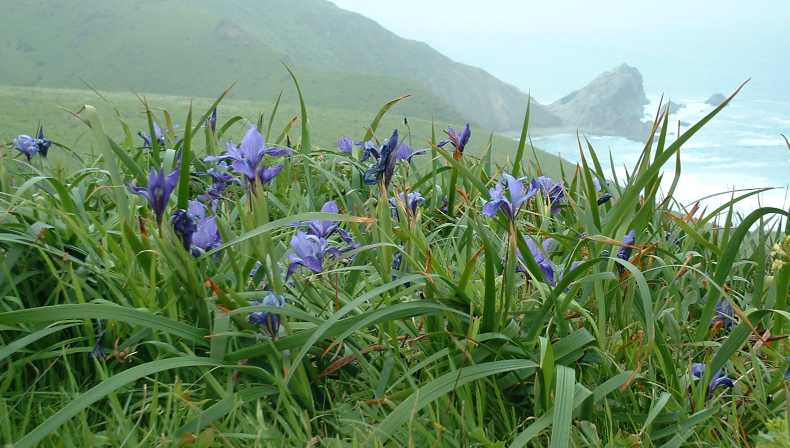
Iris douglasiana, the Douglas iris, is the big, showy, clump-forming wildflower that carpets coastal bluffs and grasslands from central California north into southern Oregon every spring. Named for the Scottish botanist David Douglas, who first collected it near Monterey in the 1830s, it is the most widespread and variable member of the Pacific Coast iris group — a tight-knit series of beardless irises found nowhere outside the West Coast. Few native perennials give so much color for so little effort.
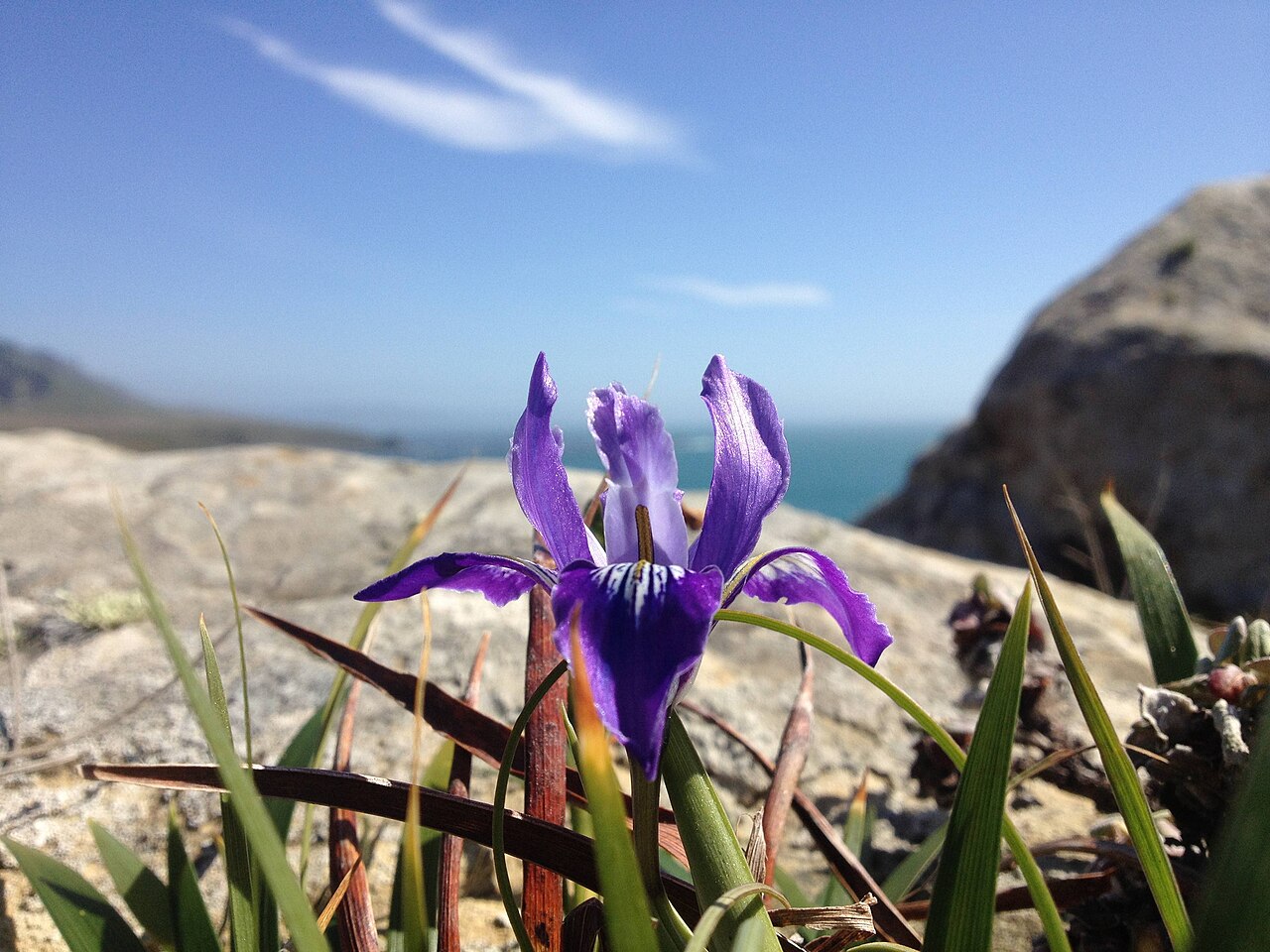
In the wild, Douglas iris forms dense tussocks of long, arching, leathery leaves topped by stems carrying two or three large flowers in shades of purple, lavender, blue-violet, or occasionally white or cream, each petal intricately veined and lit by a splash of gold at the throat. It flowers from April into June, timed to the last of the coastal rains, and is most at home in the open, fog-washed grasslands just back from the ocean.
For gardeners in California and the Pacific Northwest, Douglas iris is about as forgiving as a native wildflower gets: it tolerates heavy clay and lean rocky soils alike, shrugs off summer drought once established, and needs nothing beyond an occasional trim of old foliage. It has also become one of the most widely used parents in Pacific Coast hybrid iris breeding, prized for its vigor and flower size.
Identification
Douglas iris grows as a clump-forming herbaceous perennial from a slender rhizome, rarely more than a half-inch thick, that slowly expands outward to form substantial tussocks over the years.
Leaves
Leaves are long, narrow, and sword-like, growing in flattened fans up to 3 feet long but usually shorter, about ¾ inch wide. Color ranges from yellow-green to deep, glossy green, often flushed red or maroon at the base. The leaves are evergreen in mild coastal climates, persisting through winter.
Flowers
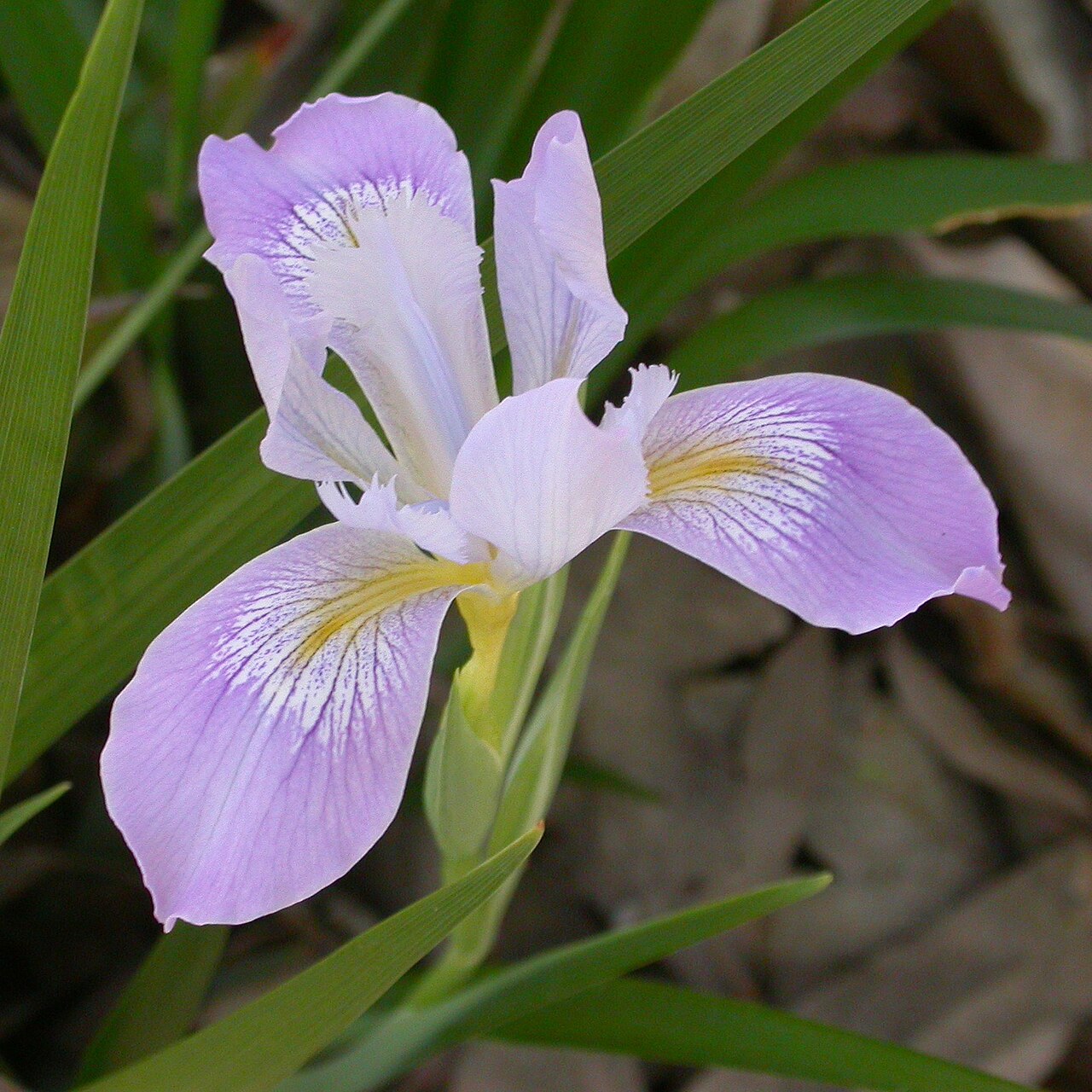
Flower stalks rise 6 inches to just over 2 feet tall, variable with site and moisture, each carrying two or three flowers. Blooms are large for a native iris — roughly 3 to 4 inches across — typically a rich purplish-blue to lavender, though white- and cream-flowered forms occur naturally in some populations. Each petal is intricately veined with darker purple lines radiating from a yellow or white throat patch (the “signal”) that guides pollinators to the nectar. The flowers are protandrous, releasing pollen before their own stigma becomes receptive, which combined with the way bees typically visit only one flower segment at a time helps the plant avoid self-pollination. Bloom season runs from April to June, peaking a few weeks later near the cool, foggy coast than in warmer inland sites.
Fruit & Seeds
Flowers mature into plump, three-chambered seed capsules holding up to 80 seeds. The capsules dry and split open in summer, and the seeds themselves are hard, long-lived, and slow to germinate without a cold, moist stratification period.
Quick Facts
| Scientific Name | Iris douglasiana |
| Family | Iridaceae (Iris) |
| Plant Type | Herbaceous Perennial (Rhizomatous) |
| Mature Height | 0.5–2 ft in bloom |
| Mature Spread | 1–3 ft clump, slowly expanding |
| Growth Rate | Moderate |
| Sun Exposure | Full Sun to Part Shade |
| Water Needs | Low to moderate once established |
| Soil Type | Tolerates clay, loam or rocky soils; prefers good drainage |
| Soil pH | Slightly acidic to neutral |
| Bloom Time | April – June |
| Flower Color | Purple, lavender, blue-violet; occasionally white or cream |
| Fall Color | Evergreen in mild climates |
| Fruit | Three-chambered seed capsule |
| Deer Resistant | Yes |
| USDA Hardiness Zones | 7–10 |
Native Range
Douglas iris is native to the coastal strip of mainland Northern and Central California and southern Oregon, growing in a band roughly following the Pacific coastline. It is most common and abundant in coastal prairies and grasslands of California, from around Santa Barbara County north through the San Francisco Bay Area and the North Coast to just across the Oregon border, generally staying within about 60 miles of the ocean.
The species favors open, sunny sites at low elevation — it is usually found below about 330 feet — including coastal bluffs, grassy headlands, and the margins of chaparral and open woodland, where it benefits from the dappled light and extra soil moisture at the shrub line. It tolerates a wide range of soil types and spreads readily into disturbed ground, such as old grazing land or recently burned chaparral.
Within its native range Douglas iris is common and not of conservation concern. It is frequently grown well outside this range as a garden plant, including as a parent of hybrid Pacific Coast irises bred for color range and vigor, but it is not native anywhere outside the coastal strip of California and southern Oregon described above — in particular, it is not part of Nevada’s native flora.
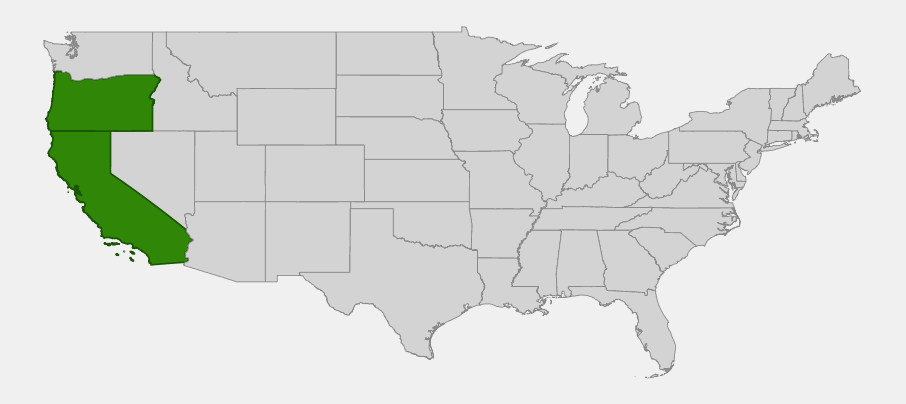
📋 Regional plant lists featuring Douglas iris: California & Nevada · Western Oregon & Western Washington
Growing & Care Guide
Douglas iris is one of the easiest native perennials to establish, adapting readily to garden conditions well outside the narrow band of coastline it occupies in the wild.
Light
Full sun produces the heaviest bloom near the coast, but in hot inland gardens Douglas iris does better with part shade or afternoon shade, which extends the bloom period and prevents scorched foliage.
Soil & Water
This species is remarkably adaptable, growing in heavy clay, average garden loam, or lean rocky soil alike, as long as drainage isn’t waterlogged through winter. Give it regular water during the first year to establish the clump, then cut back to little or no summer irrigation — established plants handle California’s dry season without trouble, though occasional deep summer watering in hot inland gardens will keep foliage looking fresher.
Planting Tips
Set out container plants or divisions in fall, so roots can establish during the winter rainy season ahead of spring bloom. Space clumps 12 to 18 inches apart to allow room for them to fill in over several seasons. Established clumps resent being dug and moved, so choose a permanent spot.
Pruning & Maintenance
Cut back tattered or browned foliage in late summer or fall. Large clumps can be divided every four to six years after flowering if they become crowded or start to bloom less, using a sharp spade to separate rhizome sections, each with a fan of leaves attached.
Propagation
Divide established clumps in fall, replanting sections promptly since the rhizomes dislike drying out. From seed, sow fresh seed in fall and expect germination the following winter or spring after a period of cold, moist stratification; seedlings take two to three years to reach flowering size.
Landscape Uses
Douglas iris fits naturally into many native garden styles:
- Coastal and meadow gardens, massed for a naturalistic bloom display
- Dry shade or part-shade borders beneath oaks and other natives
- Erosion control on slopes once clumps are established
- Cut flowers, used fresh in casual arrangements
- Pollinator gardens, valued for early-season bee forage
- Low-water lawn substitute in informal plantings
Wildlife & Ecological Value
Despite its showy flowers, Douglas iris plays a quiet but steady ecological role in California’s coastal grasslands.
For Pollinators
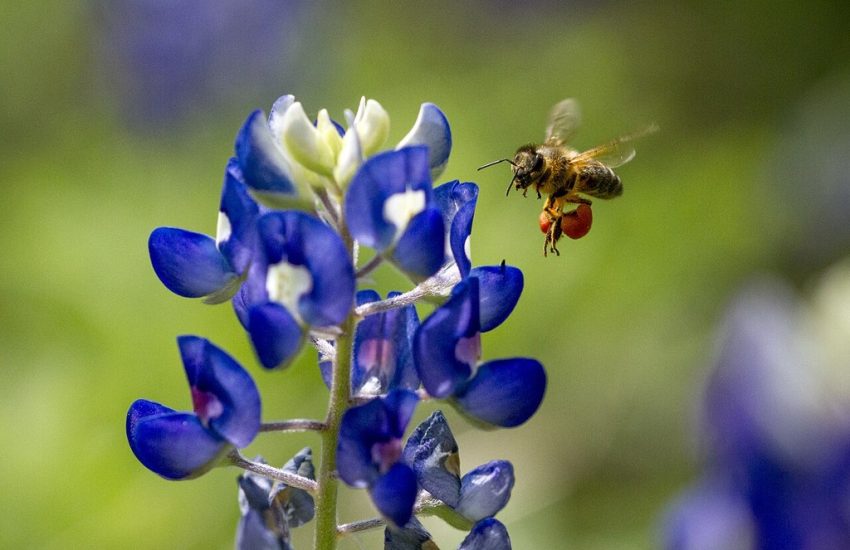
Bumblebees and other native bees are the primary pollinators, drawn in by the yellow throat markings that function as nectar guides. The flower’s protandrous timing — releasing pollen before its own stigma matures — combined with bees typically working only one of the flower’s three nectar-producing segments per visit, reduces self-pollination and encourages cross-pollination between plants.
For Birds & Mammals
The dense, grass-like foliage provides cover for small wildlife at ground level in open grassland, where little other structure exists. Deer generally avoid browsing the tough, fibrous leaves, making Douglas iris one of the more reliably deer-resistant native perennials for California gardens.
Ecosystem Role
As a long-lived, clump-forming perennial, Douglas iris helps stabilize soil on the coastal bluffs and grasslands where it grows densest, and its spread into disturbed or recently burned ground helps it serve as an early colonizer that holds space in the plant community while slower-growing natives reestablish.
Cultural & Historical Uses
Indigenous peoples of California, including the Pomo, made significant use of Douglas iris, though not as food — the plant is not safe to eat and can cause serious gastrointestinal distress if ingested. Instead, its value lay in the tough fibers running along the leaf margins, which were carefully extracted, twisted and combined into remarkably strong cordage used for nets, snares, fishing lines, and rope. Processing the leaves into usable fiber was a time-intensive craft, but the resulting cord was prized for its strength and flexibility.
Historical accounts also describe medicinal applications of the plant by California tribes, including preparations used as a diuretic or laxative, to induce vomiting, or applied externally to wounds. These are recorded here as documented history, not as guidance for use — Douglas iris rhizomes contain compounds that are irritating and potentially harmful if consumed or handled carelessly.
In more recent horticultural history, Douglas iris became a foundational parent species in the breeding of the Pacific Coast hybrid irises, a group of garden irises developed through crosses among several native West Coast species. Its vigor, flower size and wide color range made it one of the most influential species in that breeding work, and the species itself holds the Royal Horticultural Society’s Award of Garden Merit.
Frequently Asked Questions
Is Douglas iris safe to eat or use medicinally?
No. Despite historical medicinal uses recorded among California Indigenous peoples, Douglas iris is not safe to consume and can cause significant gastrointestinal discomfort. Treat this as a garden and wildlife plant only, not a food or home remedy.
Is Douglas iris native to Nevada?
No. Despite sometimes being listed alongside California natives for western gardens, Douglas iris is native only to the coastal strip of California and southern Oregon. It is not part of Nevada’s native flora, though it can be grown there in suitable garden conditions.
How much water does Douglas iris need in summer?
Very little once established. In its native coastal range it survives entirely on winter and spring rainfall. Inland gardens in hotter climates benefit from occasional deep summer watering, but routine irrigation is not required and can encourage rot in poorly drained soil.
Will Douglas iris spread or become invasive in my garden?
It spreads slowly by rhizome and self-seeds in favorable conditions, forming larger clumps and colonies over years, but it is not aggressive or invasive. It is easy to contain by dividing clumps or removing unwanted seedlings.
Is Douglas iris deer resistant?
Yes, generally. Deer tend to avoid the tough, fibrous leaves, which makes it a reliable choice for gardens with deer pressure, though no plant is completely deer-proof under heavy browsing conditions.

Looking for a nursery that carries Douglas iris?
Browse our native plant nursery directory: California · Oregon