Pacific Poison Oak (Toxicodendron diversilobum)
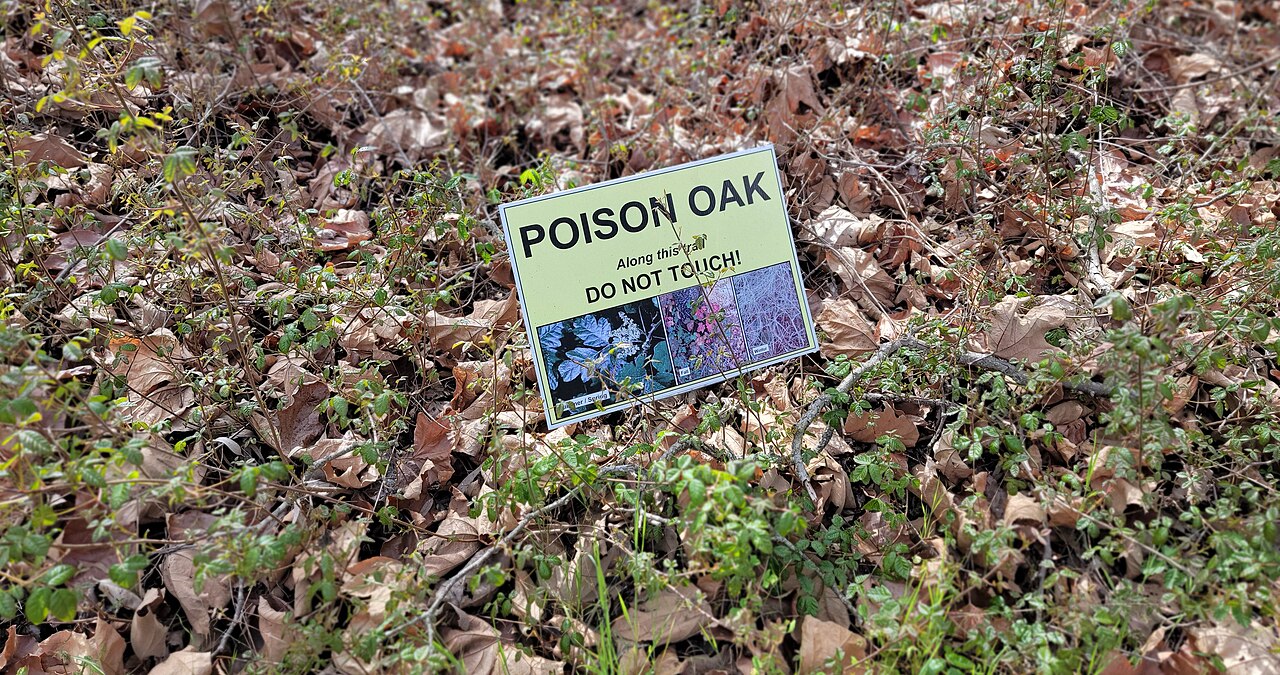
⚠ Urushiol warning: Every part of this plant — leaves, stems, roots, and even bare winter twigs — contains urushiol, an oily resin that causes an itchy, blistering rash in most people on contact. You do not need to touch the leaves directly; brushing against any part of the plant, touching a tool, glove, or pet that has, or even standing near a burning plant can cause a reaction, since inhaling the smoke can injure the lungs and throat and has sent people to the hospital. Read the safety notes below before you do anything else with this page.
Toxicodendron diversilobum, commonly called Pacific Poison Oak, is a native shrub or climbing vine found throughout much of California, western Oregon, western Washington, and a small sliver of Nevada. It is one of the most ecologically important native plants of the West Coast — and also one of the most medically troublesome, since nearly every part of the plant produces urushiol, the same skin-irritating oil found in poison ivy. This page exists to help you recognize it, understand why it matters ecologically, and avoid it safely. It is not a planting recommendation: PlantNative does not encourage anyone to plant Pacific poison oak in a home garden.
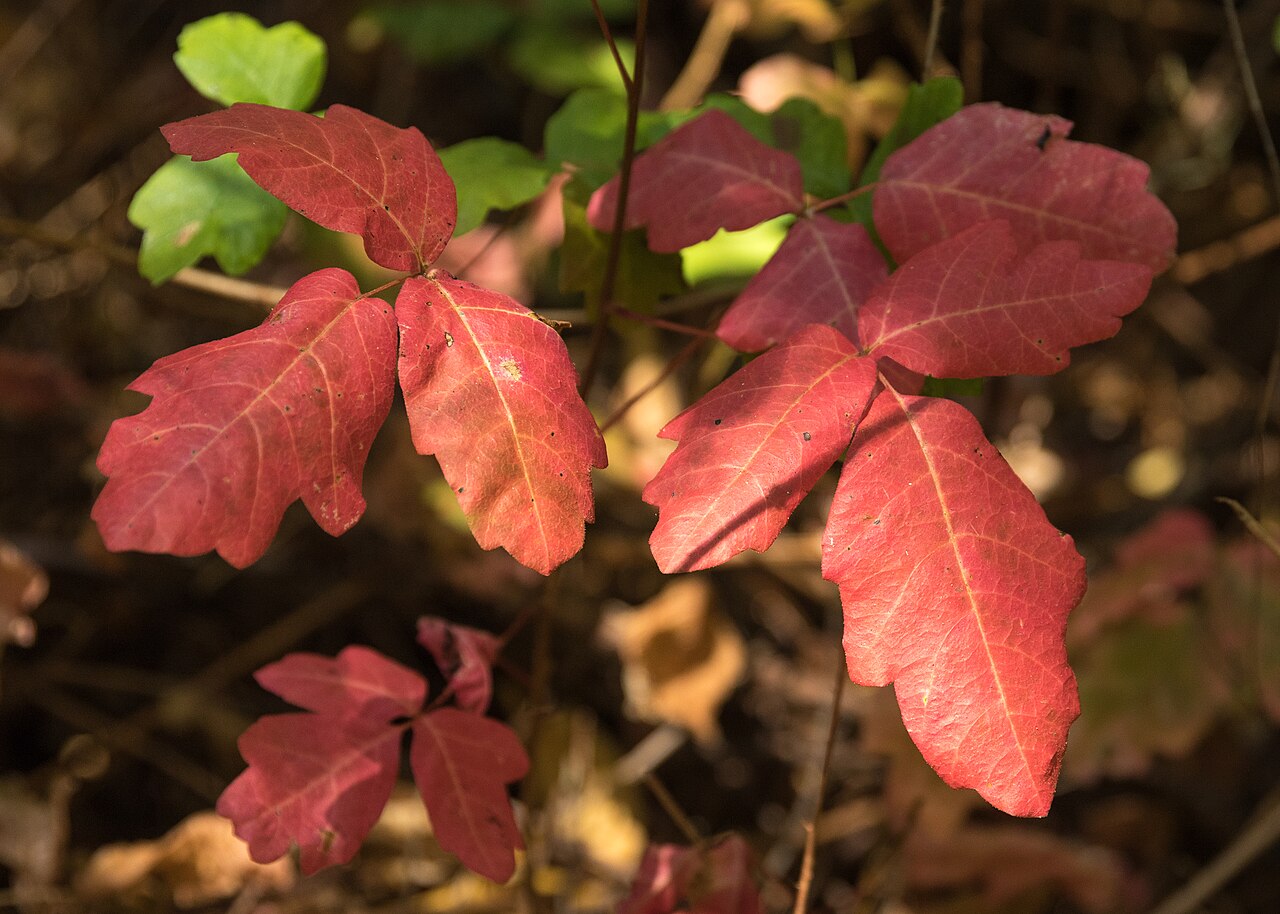
Growing as a low shrub in open sun or a tall climbing vine in shaded forest, Pacific poison oak is extremely variable in form, which is part of why it earns the species name diversilobum (“diverse-lobed”) — its leaflets range from smooth-edged to deeply toothed to lobed like a true oak leaf, often on the very same plant. It is deciduous, leafing out glossy green in spring, often turning brilliant red, orange, or yellow in fall before dropping its leaves for winter, when the bare, grayish stems can still cause a reaction even though there is no foliage to warn you.
Despite the hazard it poses to people, Pacific poison oak is a genuinely valuable wildlife plant across its native range, and removing it entirely from wildland areas is neither necessary nor appropriate. The goal of this page is informed avoidance around homes, trails, and campsites — not eradication of a native species that deer, birds, and countless other animals rely on.
Identification
“Leaves of three, let it be” is the classic reminder, and it holds true here: each leaf is made of three leaflets, the center one on a slightly longer stalk than the two side leaflets.
Stems & Growth Form
Pacific poison oak grows either as a freestanding shrub 1 to 6 feet tall in open, sunny areas, or as a woody vine climbing 30 feet or more up trees in shaded forest, clinging by aerial rootlets much like poison ivy does in the East. Bare winter stems are grayish-brown and often show small black or dark streaks where sap has oxidized on the surface — these resinous black marks are a useful identification clue even without leaves, and the dormant stems remain just as capable of causing a skin reaction as the leafy plant.
Leaves
Each compound leaf has three leaflets, usually 1 to 4 inches long, that are glossy and can appear smooth-margined, wavy-toothed, or irregularly lobed — the lobed forms resemble small oak leaves, which is the source of the common name. New spring growth often has a reddish or bronze tinge before turning glossy green, and the foliage frequently turns vivid red, orange, or yellow in fall, which makes autumn poison oak both beautiful and especially easy to spot from a distance.
Flowers & Fruit
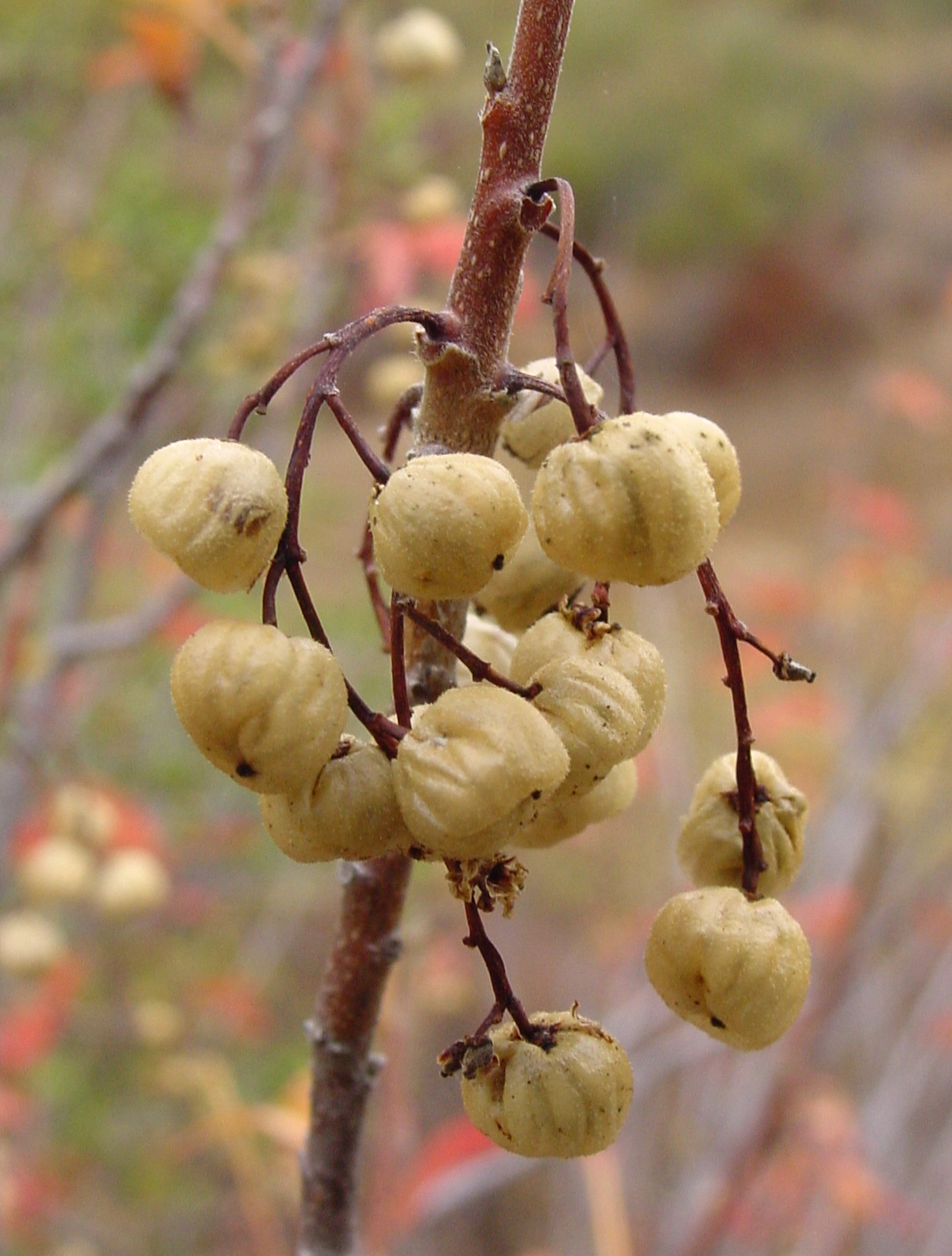
Small, inconspicuous greenish-white flowers bloom in loose, drooping clusters in spring, mostly hidden among the new leaves. These develop into clusters of small, round, greenish-white to tan berries (drupes) about a quarter-inch across, often faintly ribbed or striped, ripening in late summer and persisting into winter after the leaves fall.
Quick Facts
| Scientific Name | Toxicodendron diversilobum (syn. Rhus diversiloba) |
| Family | Anacardiaceae (Cashew/Sumac) |
| Plant Type | Deciduous shrub or climbing vine |
| Mature Height | 1–6 ft as a shrub; vines can climb 30+ ft |
| Mature Spread | Forms dense thickets several feet wide via rhizomes |
| Growth Rate | Fast, especially as a climbing vine |
| Sun Exposure | Full sun to full shade (shrub form in sun, vine form in shade) |
| Water Needs | Low to moderate; drought tolerant once established |
| Soil Type | Adaptable; well-drained to rocky soils |
| Soil pH | Wide tolerance |
| Bloom Time | Spring (March–May) |
| Flower Color | Greenish-white; inconspicuous |
| Fall Color | Brilliant red, orange, or yellow |
| Fruit | Small greenish-tan berries, persisting into winter |
| Deer Resistant | No — deer browse it freely and are unaffected by urushiol |
| USDA Hardiness Zones | 7–10 |
Native Range
Pacific poison oak is native along the Pacific Coast from Baja California, Mexico, north through nearly all of California, into western Oregon and western Washington (mainly west of the Cascade crest), with a narrow native presence in far western Nevada near the California border. It does not occur naturally east of the Cascades or Sierra Nevada, and it is not native anywhere in the eastern United States — the plant that causes a similar rash east of the Rockies is a different (though related) species, Eastern poison ivy (Toxicodendron radicans).
Within this range it grows in an enormous variety of habitats: oak woodlands, chaparral, coastal scrub, mixed-evergreen and redwood forest understory, grassland edges, and disturbed sites from sea level up into the lower mountains. It is equally at home sprawling as a low shrub in a sunny field edge or climbing high into the canopy as a vine in shaded coast redwood or Douglas-fir forest, and it very often grows alongside coast live oak, California bay laurel, and Douglas-fir.
Pacific poison oak is extremely common and ecologically secure across its native range; it is not a conservation concern. The concern here runs the other way — human safety around a widespread native plant.
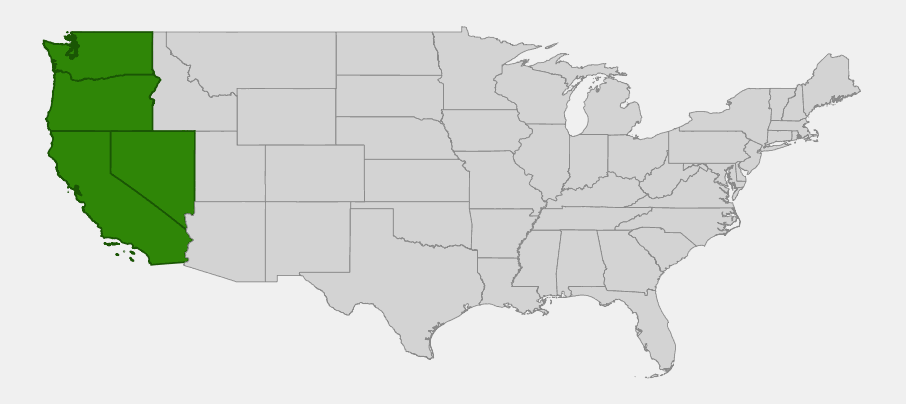
📋 Regional plant lists featuring Pacific Poison Oak: Western Oregon & Western Washington (native groundcover/vine present on this list’s region; not recommended for planting — see note above)
Growing & Care Guide
PlantNative does not provide planting or care instructions for Pacific poison oak. It is already abundant throughout its native range and spreads readily on its own by seed, rhizome, and root sprouts; gardeners do not need to plant it, and most homeowners instead want to know how to identify and avoid or remove it safely. The notes below are about safe coexistence and removal, not cultivation.
Recognizing It on Your Property
Walk your property in different seasons, since poison oak looks different through the year: glossy, sometimes reddish new growth in spring; green, oak-like lobed or smooth leaves in summer; brilliant red or orange foliage in fall (a season when many people are fooled into touching it because it looks ornamental); and bare, grayish, black-streaked stems with persistent pale berries in winter, when it is easiest to forget the plant is still hazardous.
Safe Removal
For small amounts, cut or pull plants while wearing long sleeves, long pants, and disposable gloves over cloth gloves, then wash all tools, gloves, and clothing in hot water separately from other laundry immediately afterward — urushiol can stay active on surfaces for months or even years. Never burn poison oak, anywhere, at any time of year: the smoke carries urushiol particles that can cause severe reactions in the eyes, airway, and lungs, and has sent people to the emergency room. For larger infestations, repeated cutting, careful herbicide application by a licensed applicator, or hiring a professional removal service is usually safer and more effective than DIY efforts.
Protecting People and Pets
Dogs and cats are generally not affected by urushiol themselves, but their fur readily picks up the oil from brushing against the plant and can transfer it to anyone who pets them — bathe a pet that has been in poison oak with gloves on. Keep children and pets on trails and away from dense understory in areas where poison oak is common, and teach kids the “leaves of three” rule along with the fact that the bare winter stems are just as capable of causing a rash.
If You Are Exposed
Wash the exposed skin with soap and cool water as soon as possible — ideally within 10 to 30 minutes — to remove the oil before it binds to the skin. Over-the-counter hydrocortisone cream, calamine lotion, and oral antihistamines can ease mild reactions; seek medical care for a reaction involving the face, eyes, genitals, a large area of the body, or any difficulty breathing, which can indicate smoke exposure or a severe allergic response.
Wildlife & Ecological Value
However unwelcome it is to people, Pacific poison oak is a cornerstone food and shelter plant across its native range, and native wildlife shows no sign of the reaction that troubles humans.
For Pollinators
The small spring flowers are visited by native bees and other insects, providing an early-season nectar source in oak woodland and chaparral habitats where blooming plants can otherwise be scarce.
For Birds
Dozens of bird species, including many warblers, thrushes, towhees, and woodpeckers, eat the waxy berries, especially through fall and winter when other food is limited, and birds are the primary agents spreading poison oak seed across the landscape.
For Mammals
Deer and other browsers eat the leaves and twigs readily and build no tolerance issue with urushiol the way humans do; black bears, rabbits, and other mammals also use dense poison oak thickets for cover. Dense stands provide important nesting and hiding cover for small mammals and ground-nesting birds alike.
Ecosystem Role
Poison oak’s rapid growth, dense thickets, and tolerance of disturbance make it an important early colonizer after fire or clearing, stabilizing slopes and providing cover while slower-growing natives reestablish. Its berries and foliage make it one of the more productive wildlife food sources in oak woodland and chaparral communities.
Cultural & Historical Uses
Indigenous peoples of California and the Pacific Northwest were well aware of poison oak’s hazards but also made limited, careful use of it: some groups used the sap, which darkens on exposure to air, as a dye or varnish-like finish for baskets and other items, and stems were sometimes used as basketry material after careful processing — work undertaken only by those with experience and often natural immunity or tolerance built through repeated careful handling. These are historical practices requiring specialized knowledge, not instructions for casual use.
In modern times, Pacific poison oak’s main cultural footprint is as a hazard to be managed: land managers, trail crews, and agricultural workers routinely deal with it, and it is a leading cause of plant-related dermatitis treated in Western emergency rooms and urgent care clinics each year, particularly in late spring and after wildfire-related brush clearing.
Frequently Asked Questions
Should I plant Pacific poison oak in my garden?
No. PlantNative does not recommend planting it anywhere people, children, or pets will encounter it. It is already common and ecologically secure throughout its native range, and the risk of accidental urushiol exposure to residents, visitors, and neighbors outweighs any landscaping benefit.
Is it true that burning poison oak is dangerous?
Yes, seriously so. Burning releases urushiol as an aerosol in the smoke, and inhaling it can injure the eyes, throat, and lungs, in some cases severely enough to require emergency treatment. Never add poison oak to a brush pile, campfire, or yard-waste burn.
Can my dog or cat give me a poison oak rash?
Indirectly, yes. Most pets are not themselves affected by urushiol, but the oil clings to fur, collars, and leashes and can transfer to your skin when you touch them. Wash a pet that has been in poison oak while wearing gloves.
How do I tell poison oak from true oak seedlings or blackberry?
Poison oak always has exactly three leaflets per leaf, with the center leaflet on a longer stalk, and lacks true oak’s lobed single leaf (poison oak leaflets are separate, not one lobed blade) or blackberry’s thorny stems and five-leaflet pattern. When in doubt, especially with young reddish growth, avoid handling the plant until you are certain.
Does everyone react to poison oak?
Most people do, though sensitivity varies and can change over a lifetime — some people with no past reaction can become sensitized after repeated exposure. Because sensitivity isn’t reliable or permanent, it’s safest to assume you can react and take precautions every time.

Looking for a nursery for native plants that won’t cause a rash?
Browse our native plant nursery directory: California · Oregon · Washington · Nevada