Common Manzanita (Arctostaphylos manzanita)
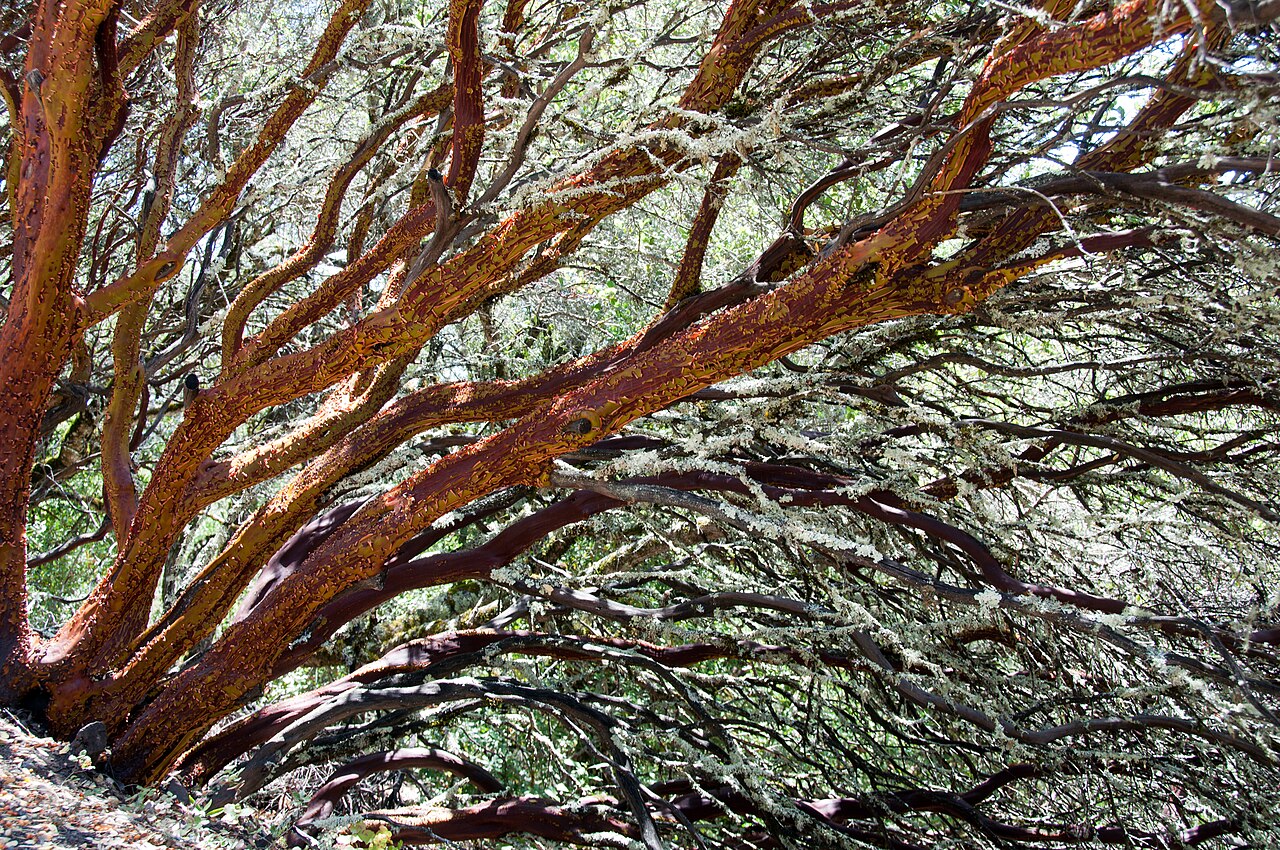
Arctostaphylos manzanita, commonly called common manzanita or whiteleaf manzanita, is one of the signature shrubs of California’s chaparral and foothill woodlands. The name “manzanita” is Spanish for “little apple,” a nod to the small, apple-shaped berries that ripen on its branches each summer. Few California natives are as instantly recognizable: the smooth, mahogany-red bark, the twisting branch architecture, and the evergreen, wedge-shaped leaves combine to make this species a favorite of restoration plantings and drought-tolerant gardens alike.
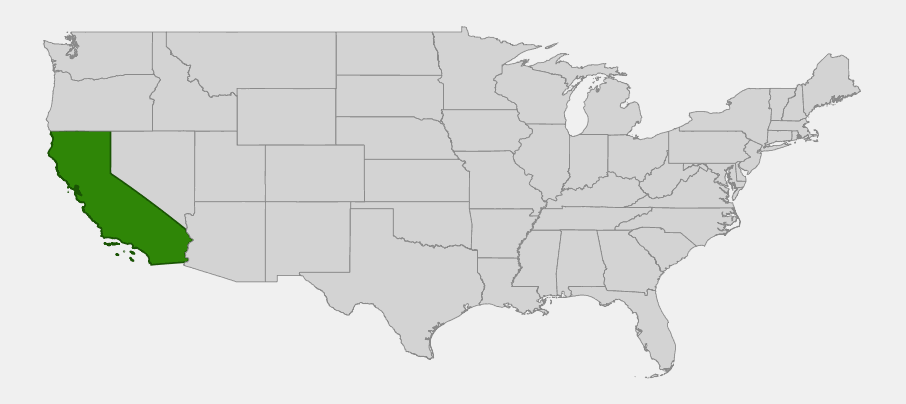
Common manzanita is endemic to California, found nowhere else in the world. It ranges through the North Coast Ranges, east into the Cascade Range foothills, and south through the Sierra Nevada foothills and the San Francisco Bay Area, usually on dry, rocky slopes and ridgelines where few other shrubs can compete. Six recognized subspecies divide up this range, each tied to a particular set of hills or soils, but all share the same architectural bark and winter-blooming habit that make the species so valued in gardens.
In the ground, common manzanita grows into a dense, rounded shrub or, with age and good light, a small gnarled tree 6 to 12 feet tall — occasionally taller where conditions are favorable. It asks for almost nothing once established: no summer water, no fertilizer, no pruning. For a California or Nevada native garden that leans into real drought tolerance, few shrubs do as much work for as little upkeep.
Identification
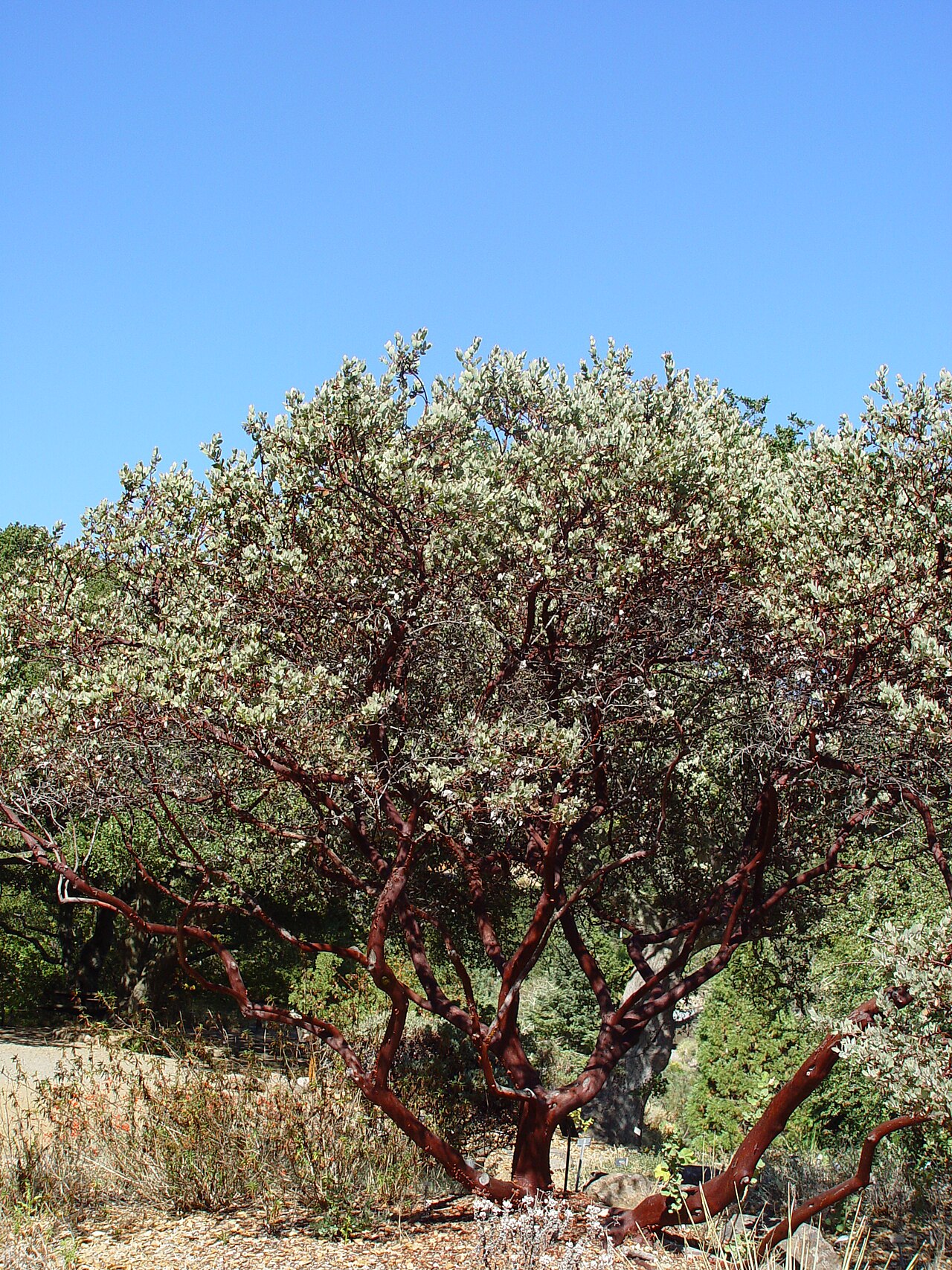
Common manzanita is an erect, evergreen shrub or small single-stemmed tree, broadly branched from the base with long, crooked limbs that give even young plants a sculptural, wind-sculpted look.
Bark & Stems
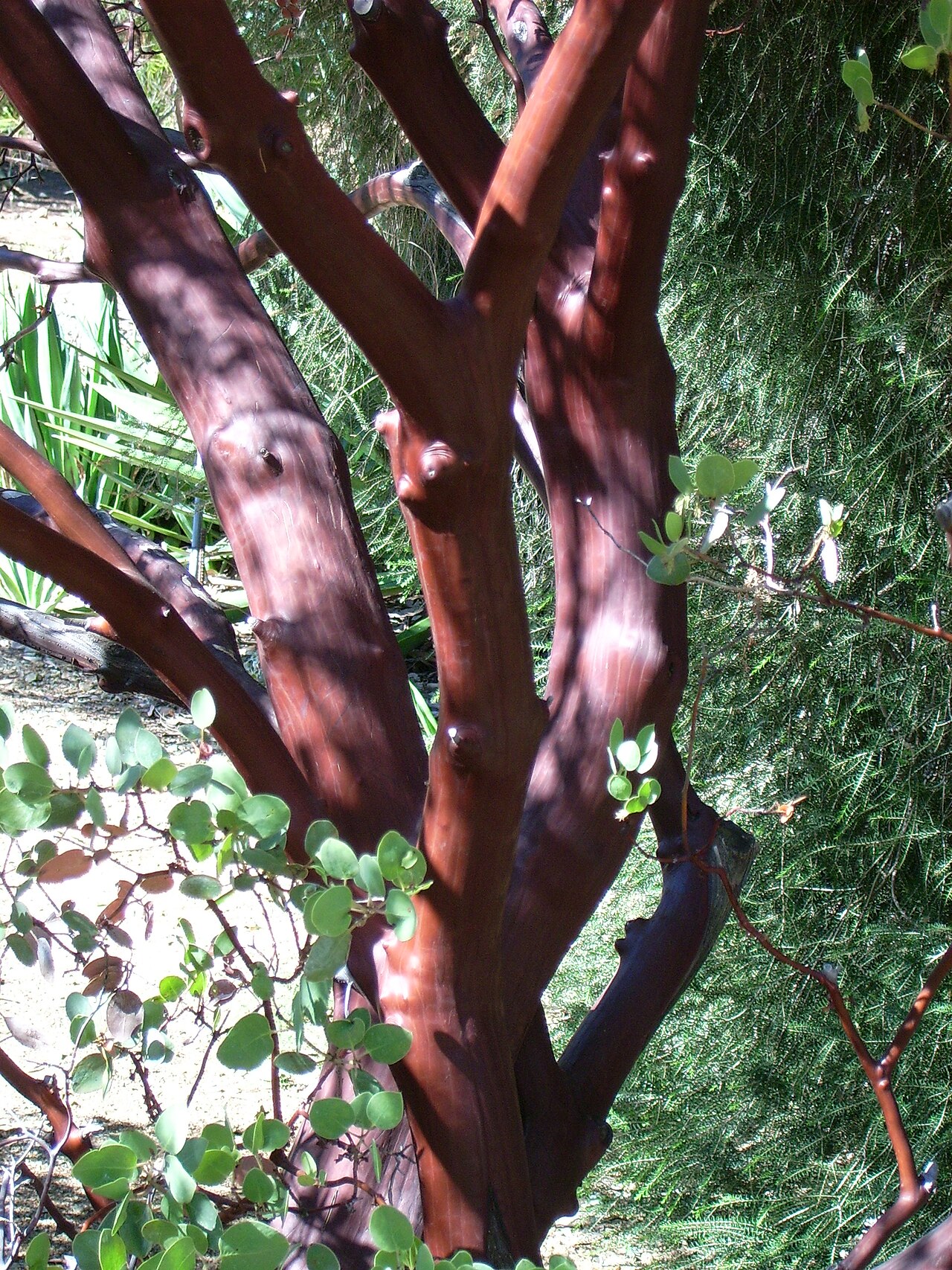
The bark is the plant’s calling card: smooth and reddish when young, maturing to a deep mahogany-red or purplish-brown, and peeling away in thin, papery flakes to reveal fresh, polished wood underneath. Older stems can take on an almost lacquered sheen in direct sun. The branching habit is characteristically crooked and widely spreading, often forming dense, nearly impenetrable thickets where the shrub dominates a hillside.
Leaves
Leaves are evergreen, thick and leathery, oval to wedge-shaped (broadly ovate to obovate), 1 to 2 inches long and roughly half an inch to an inch and a half wide, tapering to a point at the tip. They are a bright, slightly glaucous green and held at an angle that lets the plant shed excess sun during the dry season — an adaptation shared across the genus.
Flowers
Small, urn-shaped flowers, white to soft pink, hang in drooping clusters (panicles) at the branch tips from roughly December into March, well ahead of most other California natives. The flowers are a critical early-season nectar source, and their shape and timing make them a magnet for native bees on the first warm days of the year.
Fruit & Seeds
The fruit is a small, berry-like drupe about ⅓ to ½ inch across, flattened and apple-shaped — the “little apple” the plant is named for. Fruits start out whitish green and ripen to a reddish-brown by mid- to late summer, containing a handful of seeds protected by an unusually hard, stony inner layer that helps them survive both digestion by wildlife and the heat of wildfire.
Quick Facts
| Scientific Name | Arctostaphylos manzanita |
| Family | Ericaceae (Heath) |
| Plant Type | Evergreen Shrub / Small Tree |
| Mature Height | 6–12 ft (occasionally taller) |
| Mature Spread | 6–10 ft |
| Growth Rate | Slow to moderate |
| Sun Exposure | Full Sun to Part Shade |
| Water Needs | Low once established |
| Soil Type | Dry, rocky to sandy, well-drained; tolerates poor soils |
| Soil pH | Slightly acidic to neutral |
| Bloom Time | December – March |
| Flower Color | White to soft pink |
| Fall Color | Evergreen (no fall color change) |
| Fruit | Small reddish-brown berry-like drupes |
| Deer Resistant | Mostly (low-palatability browse; young growth may be nibbled) |
| USDA Hardiness Zones | 8–10 |
Native Range
Common manzanita is a California endemic, meaning the entire wild population is confined to one state. Its range runs through the North Coast Ranges, extends east into the Cascade Range foothills, and spreads south through the Sierra Nevada foothills and around the San Francisco Bay Area. Within this range it is a common and sometimes dominant chaparral shrub, occupying dry, rocky slopes, canyons and barren ridgelines from sea level up to about 4,900 feet elevation.
It grows in a mediterranean climate of wet, mild winters and long, hot, dry summers, typically on nonserpentine soils that are shallow, rocky and fast-draining, though it tolerates a wide range of parent material from weathered sandstone to volcanic substrate. Common manzanita associates closely with chamise chaparral, blue oak and Oregon white oak woodlands, ponderosa pine forest, and mixed broadleaf-evergreen forest, sometimes forming dense, nearly solid thickets across whole hillsides in the North Coast Ranges.
Common manzanita is not native to Nevada, despite being a staple recommendation for California and Nevada regional gardens — Nevada gardeners growing it are working outside its wild range, though it performs well there in suitable dry, well-drained sites. It is also not native to Texas. Within California, it is widespread and secure, not listed as rare or endangered.
📋 Regional plant lists featuring Common manzanita: California & Nevada
Growing & Care Guide
Common manzanita rewards a gardener who resists the urge to pamper it. In its native chaparral it thrives on neglect — lean soil, no supplemental water, and full sun — and that same hands-off approach produces the healthiest, longest-lived plants in cultivation.
Light
Give it full sun for the densest form and heaviest bloom. It will also grow in part shade, especially in hotter interior gardens, but tends to become looser and more open as it reaches for light.
Soil & Water
Fast drainage is non-negotiable. Common manzanita is adapted to dry, rocky or sandy soils and is notoriously intolerant of summer irrigation, particularly from sprinklers that wet the crown — overwatered plants are highly susceptible to root and crown fungal diseases. Water deeply but infrequently during the first one to two years to establish a deep root system, then withhold summer water entirely. A plant that needs watering to survive a California summer is a sign of poor drainage or an unsuitable site.
Planting Tips
Plant from small container stock in fall, ahead of winter rains, so the roots can establish before the dry season. Manzanitas resent being transplanted or disturbed once settled, so choose the final spot carefully and avoid moving an established plant. Avoid heavy mulch or organic amendments against the trunk, which can trap moisture against the crown.
Pruning & Maintenance
Little pruning is needed or wanted. Remove only dead or crossing wood, and do so in late summer when the plant is driest and least vulnerable to fungal infection through fresh cuts. Avoid shearing, which destroys the natural branch architecture that makes this species so distinctive.
Landscape Uses
Common manzanita earns its place in a wide range of garden styles:
- Chaparral and woodland restoration on dry, sunny slopes
- Specimen plant where its sculptural red bark and branch form can be seen up close
- Erosion control on dry banks and hillsides once established
- Wildlife and pollinator gardens, especially for winter-active bees
- Water-wise and Mediterranean-climate gardens needing zero summer irrigation
- Firescaping with proper spacing and deadwood removal, given its chaparral fire ecology
Fire Ecology
Common manzanita is a textbook chaparral fire-follower. Five of its six subspecies are obligate seeders — the parent plant is killed outright by fire, but its hard-coated seeds lie dormant in the soil and germinate in large numbers once heat and chemicals from the fire break their dormancy. Only Roof’s manzanita, a narrow-range subspecies, carries a woody burl at the root crown and can resprout after top-kill. Because seedlings generally need four to five years, and sometimes much longer under heavy deer browsing, to begin producing seed of their own, a site that burns too frequently can lose its common manzanita population entirely — a good reason to avoid unnecessary burning or mowing of established stands.
Wildlife & Ecological Value
Common manzanita is a keystone presence in California chaparral, feeding wildlife through the leanest parts of the year and holding the hillside together where few other shrubs can grow.
For Pollinators
The winter and early-spring flowers are an outsized resource for native bees, opening weeks before most other California natives begin to bloom. Nectar-collecting bees visit heavily and are thought to be the primary pollinators, and the obligate-seeding subspecies — the majority of the species — tend to produce more flowers and nectar than their burl-sprouting relatives.
For Birds
A variety of birds feed on the ripening berries through summer, and the dense, twisting branch structure offers secure nesting and roosting cover in otherwise open chaparral.
For Mammals
American black bears, rodents and mule deer all eat the fruit, and dusky-footed woodrats rely on the foliage as forage in coastal redwood-fringe habitats. The foliage itself is poor browse for deer and essentially unpalatable to cattle, sheep and horses, which gives common manzanita a real competitive edge on heavily browsed rangeland, where more palatable oaks and shrubs get grazed back while the manzanita grows on.
Ecosystem Role
As a dominant or co-dominant chaparral shrub, common manzanita stabilizes slopes with its root system, builds the dense cover that defines chaparral structure, and anchors a fire-adapted plant community that cycles through burn-and-regrowth over decades. Its enormous, long-lived soil seed bank is itself an ecological resource, ensuring the species re-establishes after fire even when every aboveground plant has been killed.
Cultural & Historical Uses
California Indigenous peoples made regular use of common manzanita, gathering the ripe berries to eat fresh or to pound and steep into a tart, cider-like beverage — a practice recorded across much of the plant’s range. The berries’ natural tartness made them a valued trailside and seasonal food wherever the shrub grew in quantity.
Historical accounts also describe practical and medicinal uses of other plant parts: ashes from burned manzanita wood were used as a poultice for burns, and the leaves were rubbed on skin to relieve the itching of Pacific poison oak rashes. These uses are recorded here as history, not as guidance for self-treatment.
Beyond its use as food, the hard, dense wood of manzanita species has long been prized by woodworkers and craftspeople for its rich color and fine grain, used in turned objects, furniture accents and walking sticks. Today, common manzanita’s greatest cultural value may be horticultural: it is a mainstay of California native-plant gardening precisely because it asks so little of the gardener while delivering so much structure, winter bloom and wildlife value.
Frequently Asked Questions
Can you eat common manzanita berries?
Yes — California Indigenous peoples traditionally ate the berries fresh and made them into a tart cider-like drink. They have a mild, apple-like tartness but are mostly seed and skin, so wild foraging is more a historical curiosity than a significant food source today.
Is common manzanita native to Nevada?
No. Despite being a common recommendation on California and Nevada regional plant lists, common manzanita is endemic to California only. Nevada gardeners can grow it successfully in hot, dry, well-drained sites, but it is not part of Nevada’s native flora.
Why does manzanita bark look polished?
The bark naturally sheds in thin, papery flakes as the shrub ages, constantly exposing fresh, smooth wood underneath. Combined with the deep red-mahogany color, this gives older branches a glossy, almost lacquered look, especially in direct sunlight.
Does common manzanita need water once established?
No, and it generally performs worse with it. Established plants are adapted to bone-dry California summers, and routine summer irrigation — especially overhead watering — significantly increases the risk of root and crown fungal disease.
How long does it take common manzanita to recover after a wildfire?
Most common manzanita plants are killed outright by fire and regenerate only from a long-lived bank of heat-triggered seed in the soil. Seedlings can take four to five years to begin flowering, and considerably longer where mule deer browsing is heavy, so populations need a fire-free interval of at least a decade or more to fully recover.

Looking for a nursery that carries Common manzanita?
Browse our native plant nursery directory: California