Whiteleaf Leatherflower (Clematis glaucophylla)
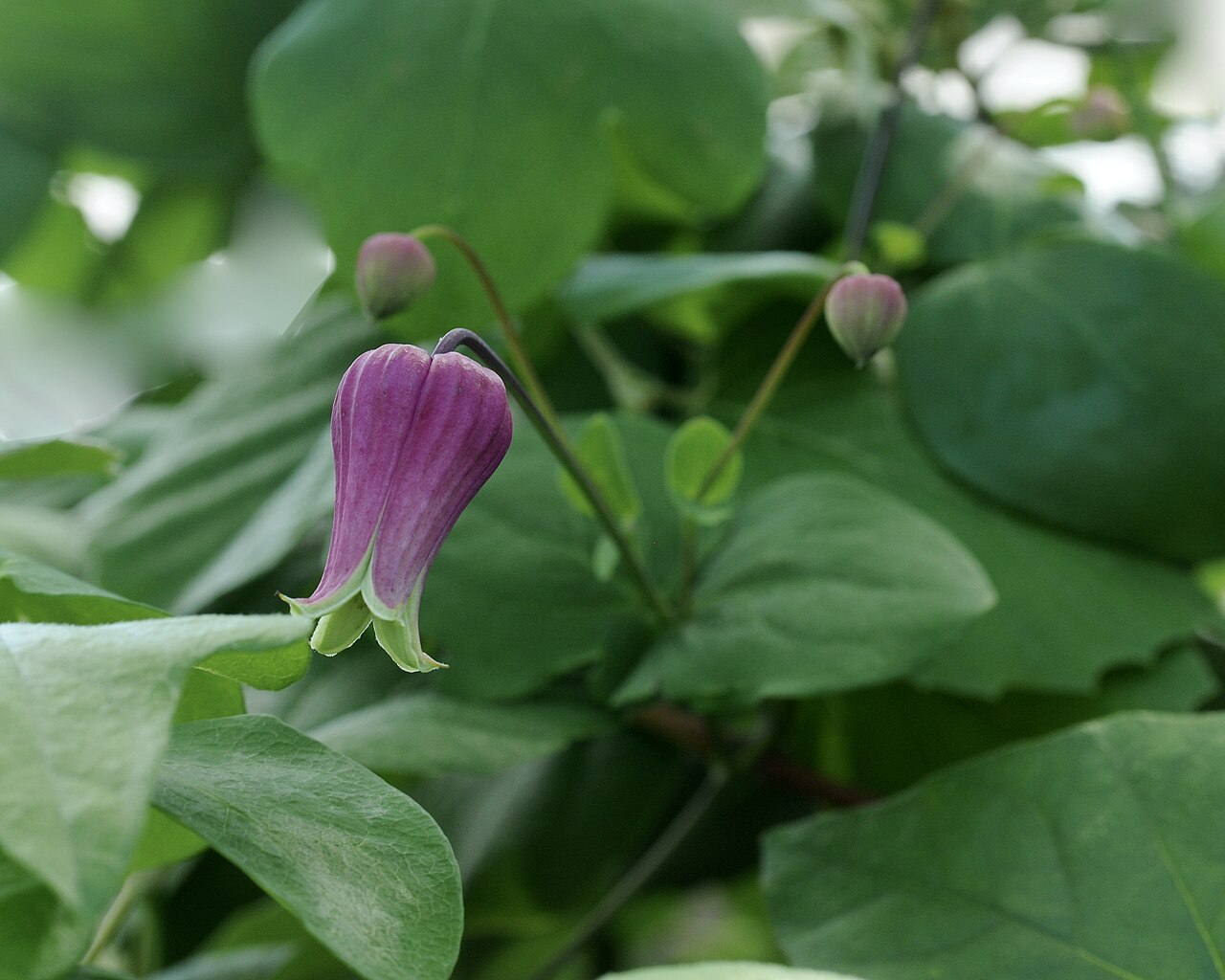
Clematis glaucophylla, known as whiteleaf leatherflower, is an uncommon climbing vine of the Deep South, named for the distinctive pale, waxy blue-green coating (glaucous bloom) on the underside of its leaves — a soft, almost whitish cast that sets it apart from other native leatherflowers at a glance. Like its relatives, it produces small, thick-textured, bell-shaped flowers that nod from slender stalks rather than the large, flat blooms of garden clematis hybrids, here in a rich reddish-purple that fades toward cream at the base.
Whiteleaf leatherflower is found scattered across the coastal plain and lower Piedmont of the Southeast — Oklahoma and Arkansas east through Louisiana and Mississippi to Alabama, Georgia and the Florida panhandle, with a scattered, disjunct population reaching into Virginia. It typically grows along dry, rocky river bluffs and in scrubby woodlands over sandy or gravelly soil, climbing by twisting leaf stalks through shrubs and open understory to a modest height.
This is a genuinely rare find even within its range, and it rarely appears in the nursery trade. For gardeners restoring dry woodland edges or rocky bluff habitat in the Southeast, whiteleaf leatherflower offers an unusual, textural native vine with a long season of small, jewel-toned flowers and the same silvery, plumed seed heads shared by the leatherflower group.
Identification
Whiteleaf leatherflower is a slender, twining perennial vine, woody at the base with herbaceous annual growth, typically climbing 6 to 10 feet through shrubs and small trees by wrapping its leaf stalks around supports.
Leaves
Leaves are opposite and pinnately compound with 5 to 9 leaflets, each oval to lance-shaped with smooth margins. The defining feature is the leaf’s glaucous underside — a pale, bluish-white, waxy bloom that rubs off slightly to the touch and contrasts with the darker green upper surface. This glaucous coating, which gives the species both its common and scientific names (glaucophylla means “glaucous-leaved”), is the most reliable field mark separating it from similar leatherflowers.
Flowers
Flowers bloom singly on long stalks from the leaf axils from late spring into summer. Each is a nodding, urn-shaped bloom roughly ¾ to 1¼ inches long, made of four thick, leathery sepals (true petals are absent in clematis) in a rich reddish-purple that pales to greenish-cream near the base, with the sepal tips curling outward at the mouth of the flower.
Fruit & Seeds
As in other leatherflowers, the fruit is a cluster of achenes, each bearing a long, feathery, silvery-white plume. These plumes form a fluffy seed head that persists on the vine for weeks after flowering, adding understated ornamental interest into fall.
Quick Facts
| Scientific Name | Clematis glaucophylla |
| Family | Ranunculaceae (Buttercup) |
| Plant Type | Perennial climbing vine (woody at base) |
| Mature Height | 6–10 ft of climb |
| Mature Spread | 3–5 ft |
| Growth Rate | Slow to moderate |
| Sun Exposure | Full Sun to Part Shade |
| Water Needs | Low to moderate; good drainage essential |
| Soil Type | Dry, rocky or sandy, well-drained |
| Soil pH | Slightly acidic to neutral (about 5.5–7.0) |
| Bloom Time | Late spring – mid-summer |
| Flower Color | Reddish-purple, fading to cream at base |
| Fall Color | None notable; silvery plumed seed heads persist |
| Fruit | Plumed achenes in fluffy silver-white clusters |
| Deer Resistant | Yes |
| USDA Hardiness Zones | 7–9 |
Native Range
Whiteleaf leatherflower is native to the Gulf coastal plain and lower Southeast, with populations recorded from Oklahoma and Arkansas east through Louisiana and Mississippi to Alabama, Georgia and the Florida panhandle, and a separate, disjunct population in Virginia. Across this range it remains uncommon and locally distributed rather than widespread, and some older reports of the species from further afield are now considered likely misidentifications of similar leatherflowers, so its core, reliable range is the Deep South states just listed.
Typical habitat is dry, rocky or sandy ground with good drainage: river bluffs, scrubby woodland margins, and open rocky slopes over xeric (dry) soils, as well as some moister wooded hammocks in Florida. It grows scattered through open understory rather than forming dense stands, climbing through shrubs and low trees where sunlight reaches the vine.
Because records are sparse and scattered, whiteleaf leatherflower is considered rare to very rare across much of its range, and some states track it as a species of conservation concern. It is not federally listed, but given how seldom it is encountered in the wild, gardeners should rely entirely on nursery-propagated stock and never collect from wild populations.
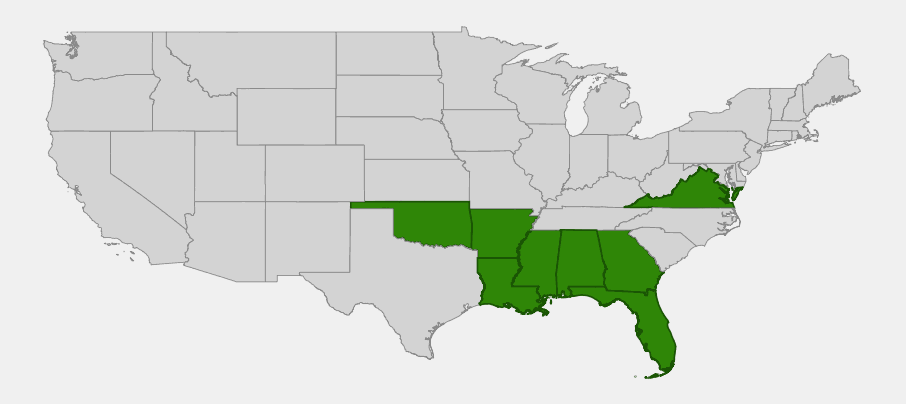
📋 Regional plant lists featuring Whiteleaf Leatherflower: Georgia, Alabama & Mississippi · Arkansas, Louisiana, Eastern Oklahoma & Eastern Texas · Maryland, Virginia & West Virginia (Virginia only; not native to Maryland or West Virginia)
Growing & Care Guide
Whiteleaf leatherflower is rarely offered commercially, but for gardeners who can source it from a specialty native plant nursery, it is a manageable, low-maintenance vine once matched to dry, well-drained conditions reminiscent of its rocky bluff habitat.
Light
Full sun to light part shade suits this species best, echoing the open woodland edges and rocky slopes where it grows wild. Flowering is heaviest with more direct sun; deep shade produces sparse, leggy growth.
Soil & Water
Good drainage is essential — this is a plant of rocky bluffs and sandy scrub, not moist garden beds. Dry to average soil moisture suits it well, and established plants tolerate drought better than they tolerate wet feet. Avoid heavy clay or low spots where water collects after rain.
Planting Tips
Plant in spring on a well-drained slope, rock garden, or raised bed. Give the vine a modest support such as a low shrub or wire trellis; our guide to choosing trellises for pollinator vines covers lightweight support options suited to a vine of this scale. Because nursery stock is scarce, plant whatever you can source with extra care, and avoid disturbing the root zone once established.
Pruning & Maintenance
Minimal pruning is needed — remove dead or winter-damaged stems in late winter before new growth starts. Skip fertilizer, since this species is adapted to lean, rocky soils and excess fertility tends to produce weak, overly lush growth at the expense of flowering. If leaves brown or wilt unexpectedly, see our notes on diagnosing browning clematis foliage, most often caused by soil that stays too wet.
Landscape Uses
Whiteleaf leatherflower suits a narrow but valuable set of garden roles:
- Dry rocky slopes and bluff-style plantings
- Native plant collector gardens seeking regional rarities
- Xeriscape and low-water beds in the Southeast
- Open woodland-edge restoration on sandy or rocky sites
- Low trellises and split-rail fences for a subtle climbing accent
Wildlife & Ecological Value
Like other native leatherflowers, this species contributes modest but meaningful value to the dry woodland communities it inhabits.
For Pollinators
The thick, nodding flowers are pollinated chiefly by native bees strong enough to access pollen through the partially closed sepals, a pattern shared across the leatherflower group. The blooms offer a nectar source in dry habitats where floral resources can be sparse in mid-summer.
For Birds
The persistent, plumed seed heads provide fine nesting material for small songbirds, and seed-eating birds forage on the ripening achenes through late summer and fall.
Ecosystem Role
As a rare specialist of dry, rocky bluff and scrub habitats, whiteleaf leatherflower is part of an uncommon plant community that is itself a conservation priority in parts of its range. Including it in appropriate restoration plantings supports the broader diversity of these increasingly fragmented dry woodland and bluff ecosystems.
Cultural & Historical Uses
Whiteleaf leatherflower has no significant documented history of traditional use. Its rarity and restricted, specialized habitat likely kept it out of the broader historical record that exists for more common and widespread native plants of the Southeast.
Within the Clematis genus generally, some related species have a history of use for cordage from vine stems and, in limited folk traditions, external application of crushed leaves for skin complaints — a practice tied to the mildly irritant compounds found throughout the buttercup family and not one to attempt without expert guidance. No such specific use has been recorded for whiteleaf leatherflower itself.
Today its significance is primarily botanical and horticultural: a genuine regional rarity valued by plant collectors and native plant enthusiasts, and an indicator species for the dry rocky-bluff habitats that conservationists work to protect across the Gulf coastal plain.
Frequently Asked Questions
How is whiteleaf leatherflower different from other native leatherflowers?
Its most distinctive feature is the pale, waxy, bluish-white (glaucous) coating on the underside of the leaves, which gives both its common and scientific names. Other native leatherflowers, such as purple leatherflower, lack this glaucous leaf coating.
Why is whiteleaf leatherflower hard to find at nurseries?
It is genuinely rare in the wild and seldom propagated commercially. Gardeners interested in growing it should check specialty native plant nurseries within its native range rather than general garden centers, and should never dig plants from wild populations. If you do obtain seed or cutting material, our guide to propagating clematis covers the general techniques, adjusted here to a fast-draining, gritty mix that matches this species’ rocky native soil.
Does whiteleaf leatherflower need rich soil?
No — it is adapted to dry, rocky or sandy soils with excellent drainage and actually performs poorly in rich, moisture-retentive garden beds, which tend to encourage root rot and weak growth in this species.
Is whiteleaf leatherflower toxic?
Like other members of the buttercup family, its foliage and sap contain mildly irritant compounds and should not be eaten. It poses no serious poisoning risk from ordinary garden contact, but it is not an edible plant.
Is whiteleaf leatherflower endangered?
It is not federally listed, but it is uncommon to rare throughout its range and tracked as a species of conservation concern in some states. Its scattered populations make habitat protection and nursery propagation, rather than wild collection, especially important.

Looking for a nursery that carries Whiteleaf Leatherflower?
Browse our native plant nursery directory: Alabama & Arkansas · Florida & Georgia · Louisiana & Mississippi · Oklahoma · Virginia