California Wild Rose (Rosa californica)
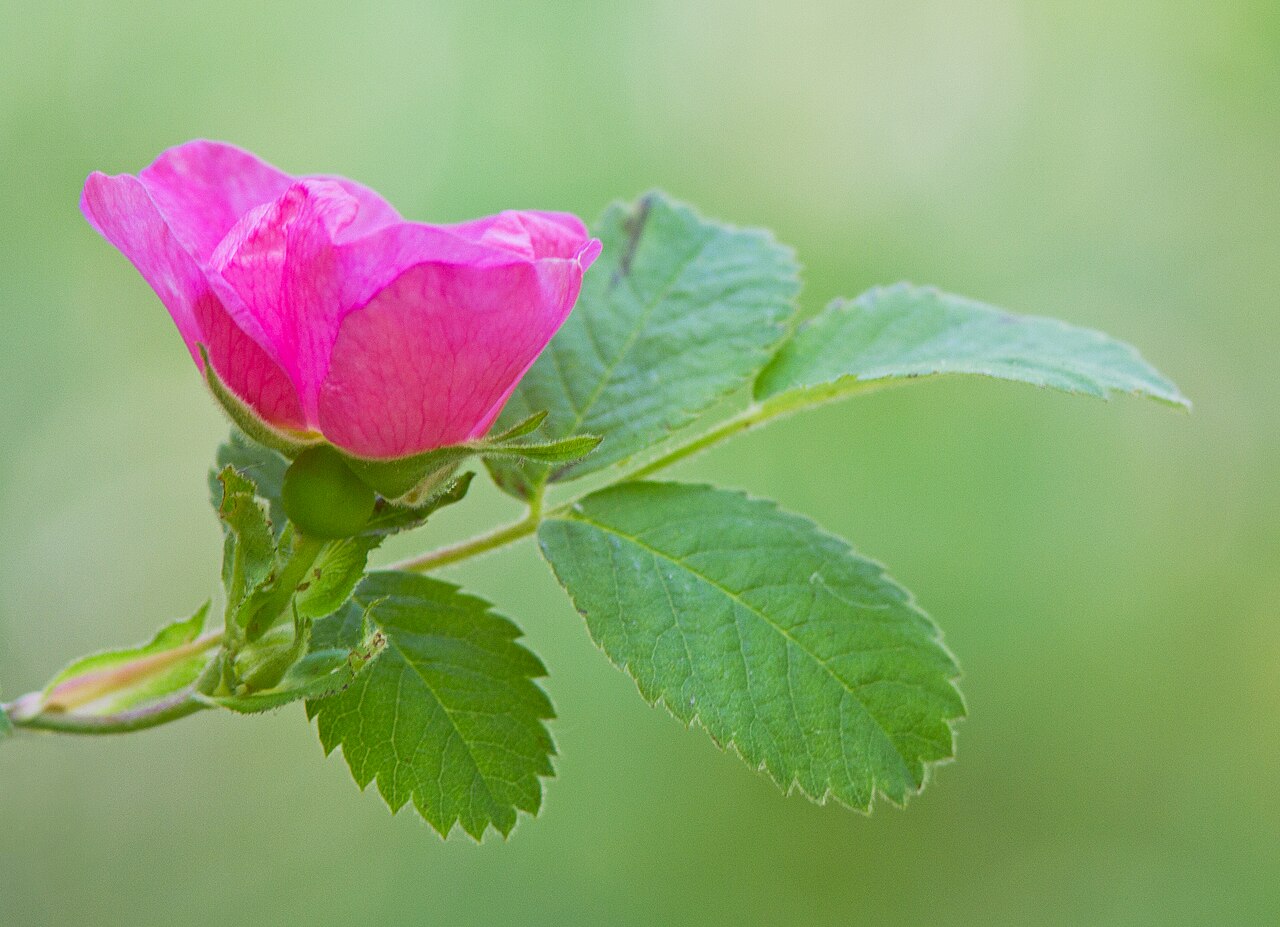
Rosa californica, the California Wild Rose, is a thicket-forming, thorny shrub found throughout much of California and into southwestern Oregon and northern Baja California, Mexico. It is one of the most widespread native roses of the West Coast, equally at home along a seasonal creek, on a chaparral hillside, or scrambling through the edge of an oak woodland. Fragrant, single pink flowers appear in a long bloom season, followed by bright orange-red rose hips that persist into winter and feed a wide range of wildlife.
This is a working shrub rather than a showy specimen plant: it suckers from the root to form loose thickets, carries curved thorns along arching canes, and tolerates both periodic drought and occasional flooding better than most garden roses. Where space allows, it makes an excellent wildlife hedgerow or streambank stabilizer, offering months of bloom for pollinators and winter food for birds — qualities that have made it a staple of California native plant restoration and habitat gardening.
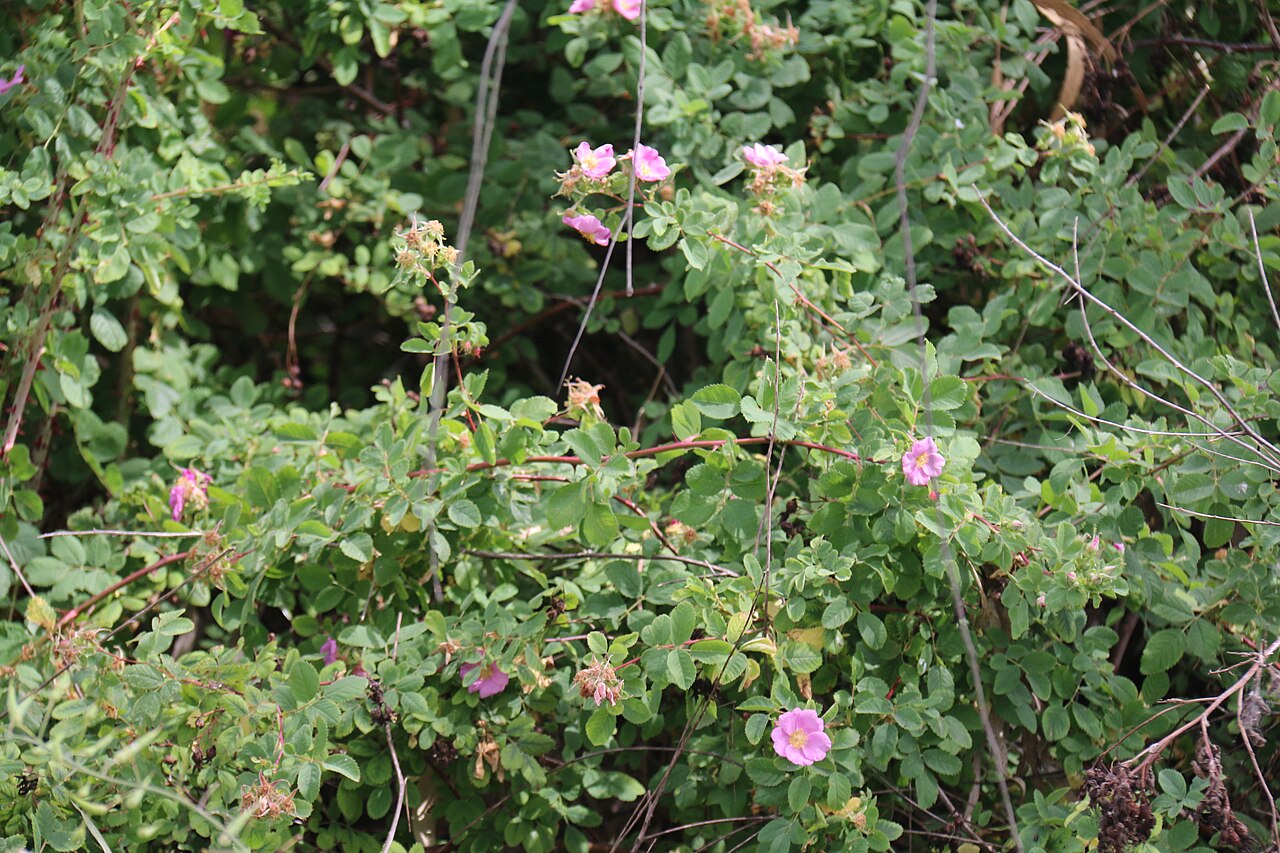
Because the common name “California rose” is sometimes applied loosely to garden roses or to other wild Rosa species in casual conversation, gardeners should confirm they are getting true Rosa californica — recognizable by its curved (not straight) thorns, grayish-green compound leaves, and loose clusters of single, five-petaled pink flowers — rather than an unrelated cultivated rose.
Identification
California Wild Rose is a deciduous, multi-stemmed shrub that spreads by root suckers, often forming dense thickets several feet across over time where conditions suit it.
Bark & Stems
Stems are slender, arching, and armed with stout, curved thorns scattered along their length — a helpful distinguishing feature from species with paired, straight thorns at the leaf nodes. Young canes are reddish-green, maturing to gray-brown with age. Plants typically reach 3 to 6 feet tall, occasionally taller in moist, favorable sites.
Leaves
Leaves are pinnately compound, usually with five to seven oval leaflets, each with a finely toothed margin and a slightly dull, grayish-green upper surface. The compound structure and fine leaf texture give the whole shrub a soft, airy look even though the stems themselves are well armed with thorns.
Flowers
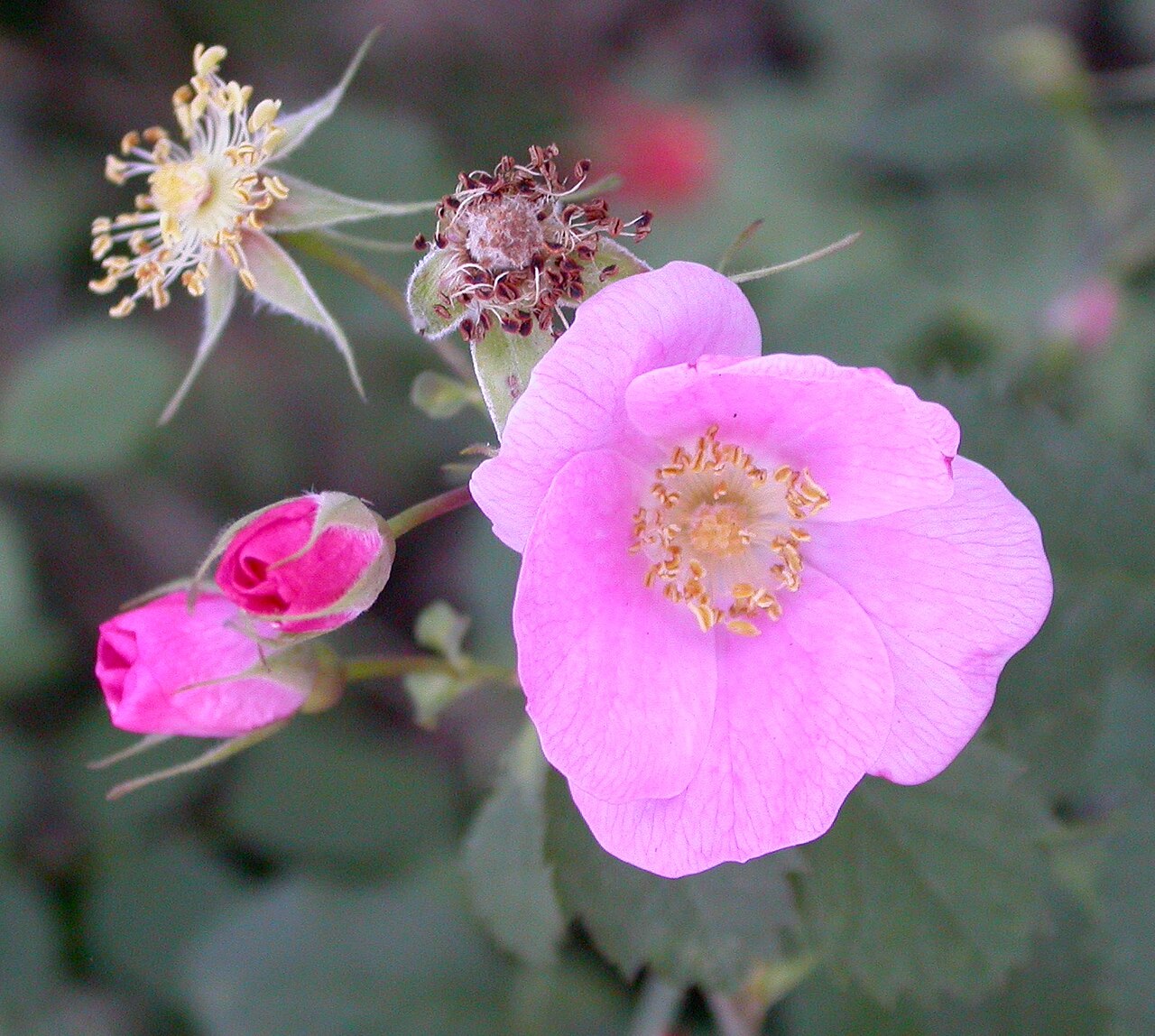
Flowers are fragrant, single, and open-faced, typically 1.5 to 2 inches across, with five petals ranging from pale pink to deep rose-pink surrounding a prominent cluster of golden stamens. Blooms may appear singly or in small clusters at branch tips. Flowering is extended, typically running from late spring through mid-summer, with occasional additional flowers into early fall in favorable years.
Fruit & Seeds
The fruit is a rounded to oval rose hip, roughly ⅓ to ½ inch across, ripening from green to bright orange-red in late summer and fall. Hips often persist on the bush well into winter, providing a long window of food for wildlife and a season of ornamental color after the leaves have dropped.
Quick Facts
| Scientific Name | Rosa californica |
| Family | Rosaceae (Rose) |
| Plant Type | Deciduous, Thicket-forming Shrub |
| Mature Height | 3–6 ft (occasionally to 8 ft in moist sites) |
| Mature Spread | 4–10+ ft, spreading by root suckers into thickets |
| Growth Rate | Moderate to Fast once established |
| Sun Exposure | Full Sun to Part Shade |
| Water Needs | Low to Moderate; best with occasional deep water near streams |
| Soil Type | Adaptable; clay, loam, or sand; tolerates seasonal moisture |
| Soil pH | 6.0–7.5 |
| Bloom Time | May – August |
| Flower Color | Pale to deep pink |
| Fall Color | Yellow to bronze, with persistent orange-red hips |
| Fruit | Orange-red rose hips, persisting into winter |
| Deer Resistant | Moderate (thorns deter some browsing, not all) |
| USDA Hardiness Zones | 6–10 |
Native Range
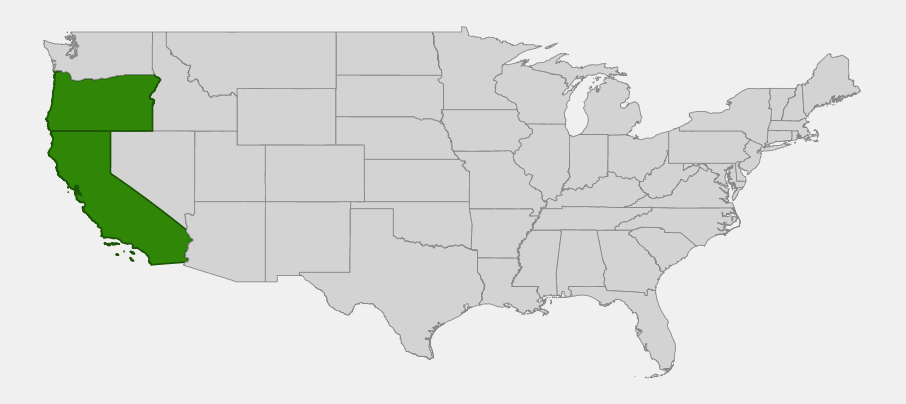
California Wild Rose is native throughout most of California, from the Sierra Nevada foothills and Central Valley margins to the coast ranges and southern California chaparral, extending north into southwestern Oregon and south into the northern part of Baja California, Mexico. Within California it is one of the most widely distributed native shrub roses, occurring across a broad range of elevations and plant communities.
It grows most abundantly in moist soils near streams, seeps, and seasonal drainages, where it often forms dense streamside thickets, but it is adaptable enough to persist in drier chaparral and oak woodland settings once established, drawing on deep roots to survive the dry season. This combination of riparian affinity and drought tolerance makes it valuable for a wide range of restoration and garden settings within its native range.
Gardeners outside California and southern Oregon should note that, despite the broad adaptability of this species in cultivation, it is not native east of the West Coast states, and plantings outside its natural range should be considered a garden introduction rather than habitat restoration.
📋 Regional plant lists featuring California Wild Rose: California & Nevada · Western Oregon & Western Washington
Growing & Care Guide
California Wild Rose is a forgiving, low-maintenance shrub once it is established, tolerant of the boom-and-bust rainfall pattern typical of California’s Mediterranean climate.
Light
Full sun produces the most abundant flowering and fruit set, but the shrub also tolerates part shade, particularly in hot inland gardens where some afternoon protection reduces summer stress. In its native streamside habitat, it often grows at the edge of taller riparian trees, receiving filtered light for part of the day.
Soil & Water
This rose adapts to clay, loam, or sandy soils and tolerates both seasonal flooding near streams and considerable summer drought once roots are established. For the best bloom and fruit production, provide occasional deep watering during the first two to three years; after that, established plants in most California gardens need little to no supplemental irrigation except during extended drought.
Planting Tips
Plant in fall or early winter to take advantage of the rainy season for root establishment. Because this species suckers and spreads, allow generous room — 6 feet or more — or plan to manage the thicket with occasional removal of unwanted suckers. It is an excellent choice for streambank or swale plantings where its spreading habit and flood tolerance are assets rather than a maintenance challenge.
Pruning & Maintenance
Little pruning is required. Remove dead or damaged canes in late winter before new growth begins, and thin out old, unproductive stems every few years to keep the thicket vigorous and encourage new flowering wood. Wear heavy gloves — the curved thorns are sharp and plentiful.
Landscape Uses
California Wild Rose fills several practical and ornamental roles:
- Wildlife hedgerow — dense, thorny growth offers cover and forage for birds and small mammals
- Streambank and swale stabilization — spreading roots help control erosion near water
- Pollinator garden — long bloom season supports native bees through summer
- Informal screen or barrier — thorny thickets discourage foot traffic
- Winter interest — persistent orange-red hips color the garden after leaf drop
- Restoration plantings — well suited to riparian and oak woodland habitat projects
Wildlife & Ecological Value
California Wild Rose is one of the more ecologically productive native shrubs across its range, offering food and shelter in nearly every season.
For Pollinators
The open, pollen-rich flowers are highly attractive to native bees, including bumble bees and smaller solitary species, as well as to honey bees and various beneficial flies and beetles. Because the plant blooms over an extended period from late spring through summer, it provides a reliable nectar and pollen source during a season when fewer California natives are in flower.
For Birds
Many songbirds and some game birds eat the rose hips through fall and winter, including California Quail, American Robins, and various sparrows and thrushes. The dense, thorny thicket habit also provides excellent nesting cover and predator-resistant shelter, a quality noted even by wildlife photographers who have documented fox dens tucked into established rose thickets.
For Mammals
Small mammals use the thickets for cover and denning sites, as the protective tangle of thorny canes deters larger predators. Deer will browse the foliage to some degree, though the thorns provide a measure of protection compared to thornless shrubs, and rose hips are eaten by a variety of small mammals once they ripen.
Ecosystem Role
Along streams and seasonal drainages, California Wild Rose contributes to the dense understory layer that stabilizes banks, filters runoff, and provides the structural complexity many riparian wildlife species depend on, making it a frequently used species in California stream and wetland buffer restoration projects.
Cultural & Historical Uses
California Wild Rose has a long history of use among California’s Indigenous peoples. The rose hips, rich in vitamin C, were eaten fresh or dried for later use, and various parts of the plant — including the flowers, leaves, and bark — were used in traditional preparations by different tribal groups across the plant’s range. These uses are documented as historical ethnobotanical practice; modern readers should not treat this page as medical guidance, and the thorny stems and astringent inner bark are not something to experiment with casually.
Beyond food use, the flexible, thorny canes were sometimes woven into small structures or used as components in basketry work, and the shrub’s dense growth made it a natural, functional barrier around village sites and gathering areas — a practical use that modern wildlife hedgerow plantings echo today.
In contemporary horticulture, California Wild Rose has become a foundational species in California native plant gardening and ecological restoration, valued precisely for the qualities — thorns, suckering habit, drought tolerance — that make it less convenient than a modern hybrid tea rose but far more valuable to the wildlife that evolved alongside it.
Frequently Asked Questions
Is California Wild Rose the same as the roses sold at garden centers?
No. Most garden center roses are hybrid cultivars bred primarily for flower form and repeat bloom, often with little wildlife value and less drought tolerance. California Wild Rose is a true native species adapted to West Coast conditions, with simpler single flowers but far greater ecological value.
Will California Wild Rose take over my garden?
It spreads by root suckers and can form a substantial thicket over time, so it is best suited to a spot where naturalizing is welcome, such as a hedgerow, streambank, or wildlife corner, rather than a small formal bed. Suckers outside the desired area can be removed as needed.
Are the rose hips edible?
Yes, the hips are edible and were historically eaten by Indigenous peoples of California, typically prepared rather than eaten raw in quantity. As with any wild-harvested plant part, correct identification and modest consumption are important, and the seeds inside the hip are not meant to be eaten.
Does California Wild Rose need a lot of water?
Not once established. It naturally grows most densely near water but tolerates considerable summer drought, especially in cooler coastal gardens; occasional deep watering during extended dry spells will keep it looking its best.
Is California Wild Rose deer resistant?
Partially. The thorny stems discourage some browsing, but deer will still eat the foliage and tender new growth in some situations, so it should be considered moderately rather than completely deer resistant.

Looking for a nursery that carries California Wild Rose?
Browse our native plant nursery directory: California · Oregon