Pine-hyacinth (Clematis baldwinii)
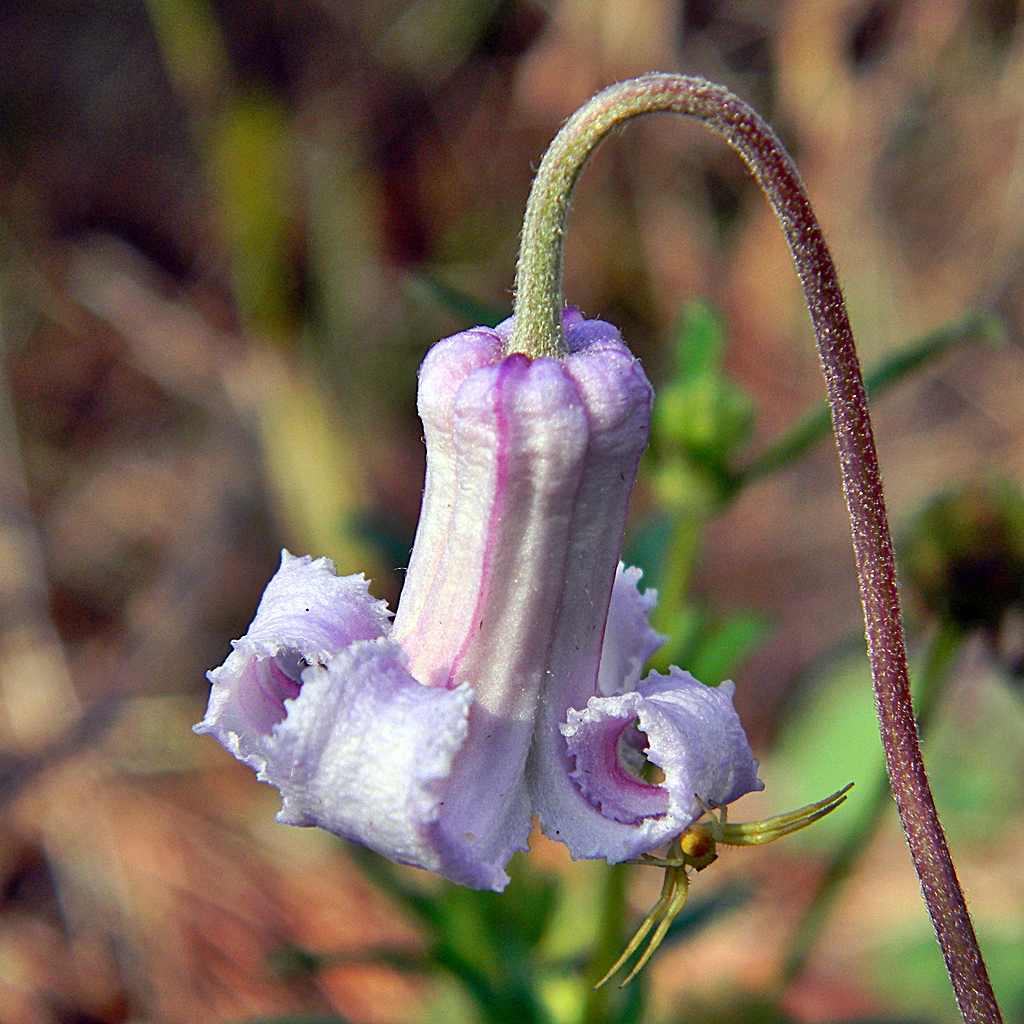
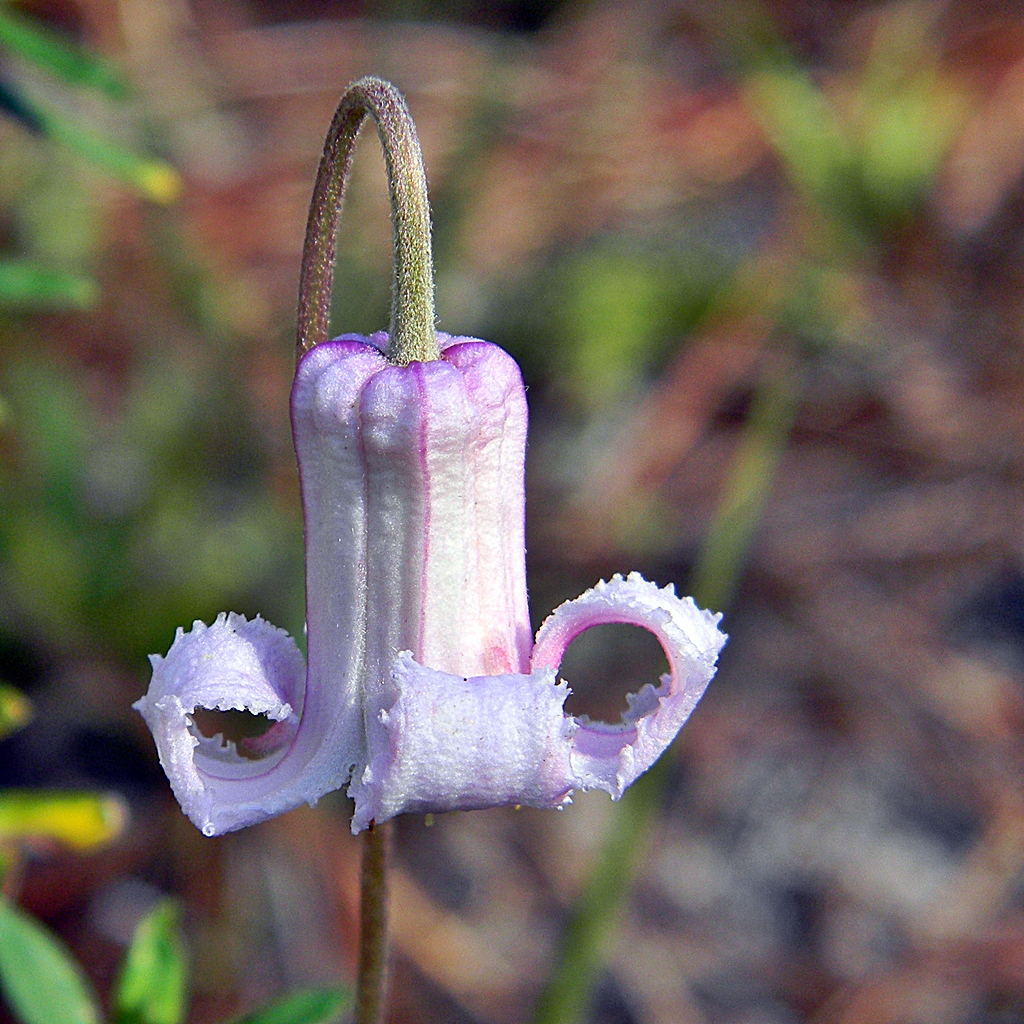
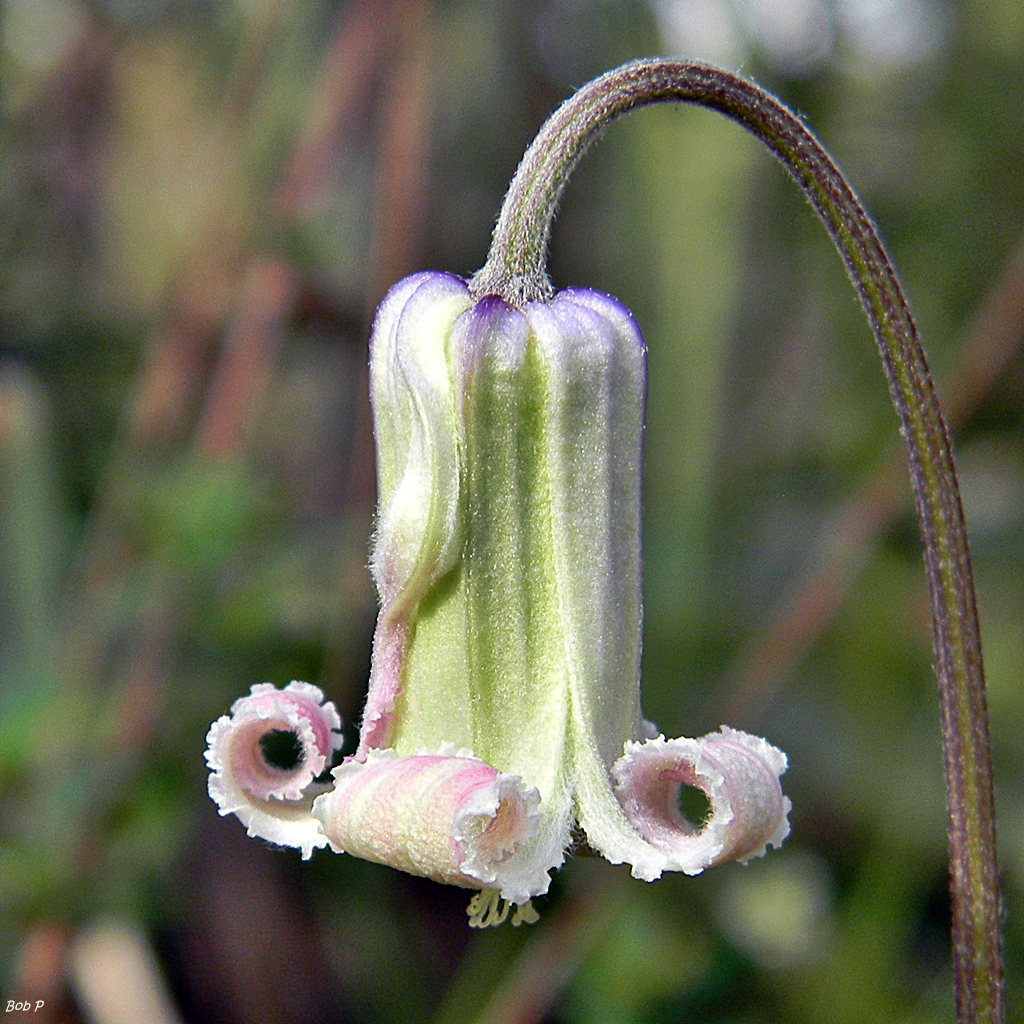
Clematis baldwinii, commonly known as pine-hyacinth, is a low, non-climbing wildflower found nowhere in the world except the Florida peninsula. Unlike nearly every other clematis, pine-hyacinth doesn’t vine or scramble — it grows as a short, upright to sprawling herbaceous perennial, rarely more than knee-high, topped with solitary nodding flowers of an almost sculptural strangeness: four thick, bell-fused sepals in pale pink-lavender to white, their tips flaring out and curling tightly into crinkled little ringlets, like party streamers caught mid-twist.
This true Florida endemic grows in the state’s signature fire-maintained habitats — pine flatwoods, wet prairies, and sandy pinelands — often alongside wiregrass and other groundcover species adapted to frequent, low-intensity fire. It is named for the pioneering American botanist William Baldwin, who collected plants in Georgia and Florida in the early 1800s, and “pine-hyacinth” nods to both its pine flatwoods habitat and its nodding, somewhat hyacinth-like flower form.
For Florida gardeners building a native wildflower meadow, flatwoods restoration, or pollinator garden, pine-hyacinth is a genuinely distinctive choice — a clematis that behaves like a clumping perennial wildflower rather than a vine, blooming for months and asking only for the sun, moisture and sandy soil it has adapted to over thousands of years in Florida’s pinelands.
Identification
Pine-hyacinth is a herbaceous perennial that grows from a woody rootstock, sending up slender, upright to somewhat sprawling stems typically 1 to 2 feet tall. Unlike most Clematis species, it does not climb — it has no tendrils or twining leaf stalks capable of real climbing, and instead forms a loose clump or leans on surrounding grasses and groundcover.
Leaves
Leaves are opposite and divided into narrow, linear to lance-shaped leaflets, giving the foliage a fine, almost grass-like texture that blends easily into flatwoods groundcover. The leaves are a muted gray-green, in keeping with the plant’s adaptation to bright, open, fire-maintained habitat.
Flowers
Flowers are borne singly on long, slightly nodding stalks from spring through much of the year in Florida’s mild climate, with peak bloom in spring and early summer. Each flower is a distinctive, elongated bell shape, 1 to 1.5 inches long, formed from four thick, fused-looking sepals in pale lavender-pink to nearly white, often with a darker pink or purple midrib. The sepal tips flare outward at the flower’s mouth and curl into tight, crimped ringlets — a shape unlike almost any other native wildflower, Clematis or otherwise.
Fruit & Seeds
Following the flowers, pine-hyacinth produces the plumed achene clusters typical of the genus — a loose, silvery, feathery seed head that persists on the stem and adds subtle textural interest after the flowers fade.
Quick Facts
| Scientific Name | Clematis baldwinii |
| Family | Ranunculaceae (Buttercup) |
| Plant Type | Herbaceous perennial wildflower (non-climbing) |
| Mature Height | 1–2 ft |
| Mature Spread | 1–1.5 ft |
| Growth Rate | Moderate |
| Sun Exposure | Full Sun to Light Shade |
| Water Needs | Moderate; tolerates seasonal wet-dry cycles |
| Soil Type | Sandy, moist to seasonally wet flatwoods soil |
| Soil pH | Acidic (about 5.0–6.5) |
| Bloom Time | Spring through fall, peak in spring–early summer |
| Flower Color | Pale lavender-pink to white |
| Fall Color | None notable; silvery plumed seed heads persist |
| Fruit | Plumed achenes in loose silvery clusters |
| Deer Resistant | Yes |
| USDA Hardiness Zones | 8b–10b |
Native Range
Pine-hyacinth is endemic to Florida — it grows wild nowhere else on Earth. Within the state it occurs throughout much of the peninsula, from the central panhandle-adjacent counties south through central and southern Florida, favoring the flat, fire-adapted lowlands that make up so much of the state’s native plant communities.
Typical habitat includes pine flatwoods, wet prairies, mesic (moderately moist) pinelands, and sometimes disturbed roadsides and old fields within its range. These are all fire-maintained ecosystems, historically burned every few years by lightning-sparked fires that keep the canopy open and favor low, sun-loving groundcover plants like pine-hyacinth over shrubs and trees.
Because its habitat has been heavily reduced by development, agriculture, and decades of fire suppression across Florida, pine-hyacinth is less common than it once was, though it is not currently federally listed as threatened or endangered. It is, however, a priority species for flatwoods and prairie restoration projects, since fire-dependent groundcover like this is often the first thing lost when natural fire cycles are interrupted.
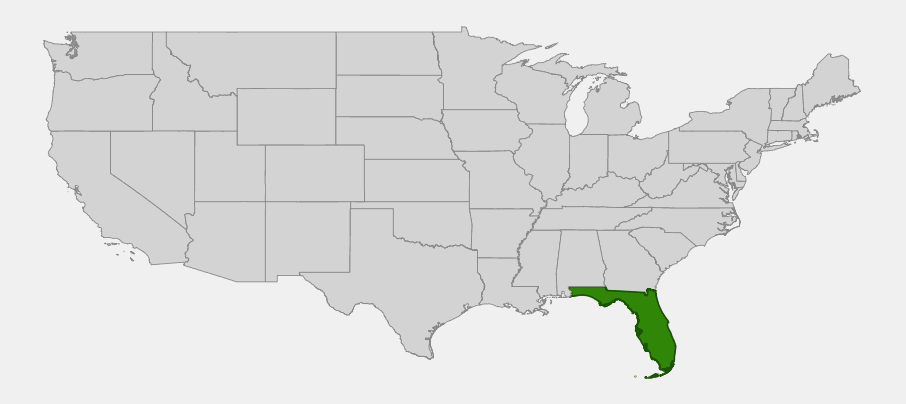
📋 Regional plant lists featuring Pine-hyacinth: Pine-hyacinth is endemic to Florida, which does not currently have a dedicated regional plant list on this site. See our full native plant directory for other Florida natives.
Growing & Care Guide
Pine-hyacinth is a well-behaved, clump-forming wildflower for Florida gardens, far easier to place in a mixed bed or meadow planting than a true climbing clematis, since it doesn’t need anything to scramble over.
Light
Full sun produces the best flowering and the most compact, sturdy growth, reflecting its habitat in open, fire-maintained flatwoods and prairies. Light shade is tolerated, though plants may stretch and flower less densely.
Soil & Water
Sandy, acidic soil that experiences seasonal wet-dry cycles — wetter in Florida’s summer rainy season, drier in winter — suits pine-hyacinth best, matching the flatwoods and wet prairie conditions where it grows wild. It tolerates both periodic moisture and dry spells once established but does not want constantly soggy, poorly drained ground.
Planting Tips
Plant in a sunny, sandy bed or naturalized meadow area, spacing plants about 12 to 18 inches apart to allow the clumps to fill in. Because it doesn’t climb, pine-hyacinth works well interplanted directly among grasses and other low wildflowers rather than near a trellis or fence, more like a companion for flower garden beds than a typical vine planting.
Pruning & Maintenance
Cut back dead growth in late winter before new shoots emerge. Established clumps need minimal care; avoid rich fertilizer and heavy irrigation, both of which push growth away from the lean, fire-adapted conditions this species is built for. In a restoration or meadow setting, occasional controlled burns or mowing that mimics fire can help maintain the open conditions pine-hyacinth prefers.
Landscape Uses
Pine-hyacinth fits well into these Florida garden settings:
- Native wildflower meadows and pine flatwoods restoration
- Mixed perennial beds as a low, long-blooming accent
- Pollinator gardens paired with other Florida natives
- Rain garden margins that see seasonal wet-dry cycles
- Naturalized, low-maintenance sunny borders
Wildlife & Ecological Value
As a flowering groundcover of Florida’s fire-maintained pinelands, pine-hyacinth supports a range of pollinators and small wildlife through its long bloom season.
For Pollinators
The nodding, bell-shaped flowers attract bumblebees and other native bees strong enough to access the pollen and nectar through the partially closed sepals, along with occasional visits from hummingbirds drawn to the tubular flower shape. Because pine-hyacinth blooms over many months in Florida’s mild climate, it offers an unusually long season of nectar availability compared to many spring-only wildflowers — our pollinator garden design basics guide has more on building a planting that keeps nectar available across the seasons.
For Birds
Birds and other small wildlife consume the ripening seed clusters, and the plumed achenes provide fine nesting material for songbirds during the breeding season.
Ecosystem Role
Pine-hyacinth is part of the low groundcover layer that defines healthy Florida pine flatwoods and wet prairies — plant communities that depend on frequent, low-intensity fire to stay open and diverse. Its presence is often used by land managers as an indicator of flatwoods in reasonably good ecological condition, and restoring it to degraded sites supports the broader diversity these fire-adapted ecosystems once held.
Cultural & Historical Uses
Pine-hyacinth has no significant documented history of use by Indigenous peoples or early settlers. As a localized Florida endemic with unusual, curiously shaped flowers rather than practical applications, it appears to have remained primarily of botanical interest rather than everyday use.
The species carries the name of William Baldwin, an American physician and botanist who collected extensively in Georgia and Florida in the early 19th century and died young while serving as a naturalist on a government expedition — his botanical collections and correspondence were an important early record of the Southeast’s flora, and several plants, including this one, were later named in his honor.
Today pine-hyacinth’s significance is primarily ecological and horticultural: a true Florida endemic valued by native plant gardeners and conservationists alike as a distinctive, long-blooming wildflower and an indicator of healthy flatwoods habitat.
Frequently Asked Questions
Does pine-hyacinth climb like other clematis?
No. Unlike most Clematis species, pine-hyacinth does not climb — it grows as a low, clumping herbaceous perennial without tendrils or twining stems, more like a typical wildflower than a vine.
Can I grow pine-hyacinth outside Florida?
It is adapted specifically to Florida’s mild, humid climate and acidic sandy soils, and it is hardy only in USDA zones 8b through 10b. Gardeners outside this range or outside Florida generally should not expect it to thrive or overwinter reliably.
How long does pine-hyacinth bloom?
It has an unusually long bloom season for a native wildflower, flowering from spring through much of the growing season in Florida’s mild climate, with the heaviest flush typically in spring and early summer.
Is pine-hyacinth toxic?
Like other members of the buttercup family, its foliage and sap contain mildly irritant compounds and should not be eaten. It is not considered a serious poisoning risk from ordinary garden contact, but it is not an edible plant.
Is pine-hyacinth endangered?
It is not currently federally listed as threatened or endangered, but its flatwoods and prairie habitat has been significantly reduced by development and fire suppression across Florida, making it a priority species in many native habitat restoration projects.

Looking for a nursery that carries Pine-hyacinth?
Browse our native plant nursery directory: Florida