Netleaf Leatherflower (Clematis reticulata)
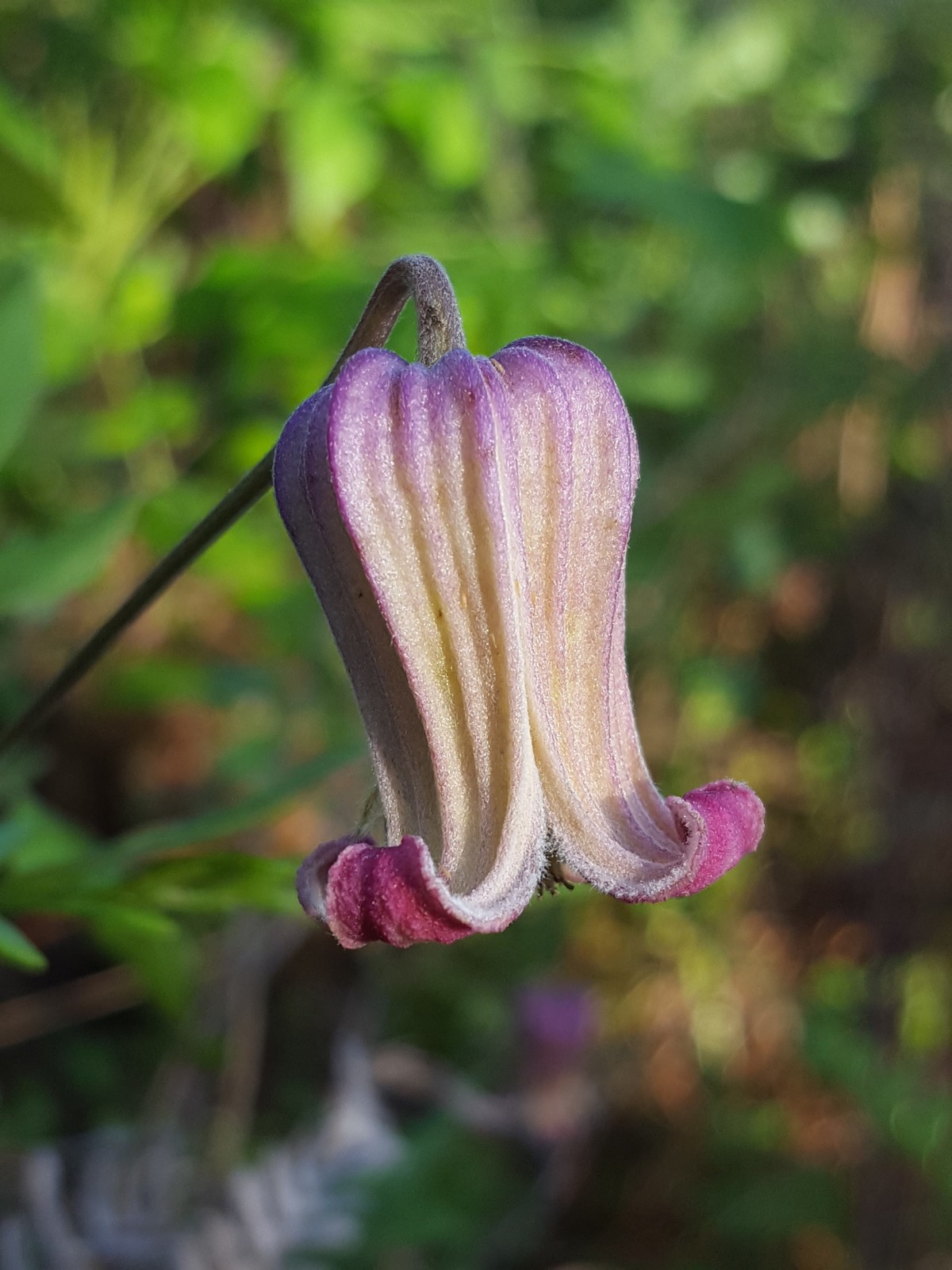
Clematis reticulata, commonly called netleaf leatherflower, is a slender, woody-based climbing vine native to dry sandhills and open woodlands of the Deep South. Unlike the showy, flat-faced clematis hybrids sold at garden centers, this native species produces small, thick-textured, urn-shaped flowers that nod from the vine like little lanterns — pale cream to dusty pink inside, edged in purple, with four leathery sepals whose tips curl sharply outward. The common name comes from its leaves, which are net-veined (reticulate) rather than smooth, giving the foliage a distinctive quilted texture.
This is a plant of dry, sandy ground: longleaf pine sandhills, scrubby oak woodlands, and dry hammocks across the coastal plain from Texas and Oklahoma east to South Carolina and south through much of Florida. It climbs by twisting its leaf stalks (petioles) around neighboring stems rather than by tendrils, scrambling a modest 6 to 12 feet through shrubs and open pine understory. Where garden clematis demand rich, moist soil, netleaf leatherflower thrives on neglect — it is built for sandy, low-fertility ground that drains fast and dries out between rains.
Because it is uncommon in cultivation and easy to overlook in the wild (the flowers are small and often hidden among foliage), netleaf leatherflower is a genuine rarity in native plant gardens. It is an excellent choice for anyone restoring a sandhill, longleaf pine, or dry woodland-edge planting in the Southeast, where it adds a long season of understated flowers, fluffy seed heads, and food for native bees without asking for irrigation or rich soil.
Identification
Netleaf leatherflower is a slender, twining perennial vine with woody growth at the base and herbaceous new growth each year. Stems are thin, ridged, and typically climb 6 to 12 feet by wrapping their leaf stalks around supports, though plants growing without anything to climb will sprawl along the ground as a loose groundcover.
Leaves
Leaves are opposite and compound, usually divided into 3 to 7 leaflets that are thick, leathery, and distinctly net-veined — the raised, reticulate venation is visible on both surfaces and gives the species its common and scientific names (reticulata means “netted”). Leaflets are oval to lance-shaped with smooth or slightly wavy margins, blue-green on top and paler beneath, and the terminal leaflet is sometimes modified into a short, grasping tendril.
Flowers
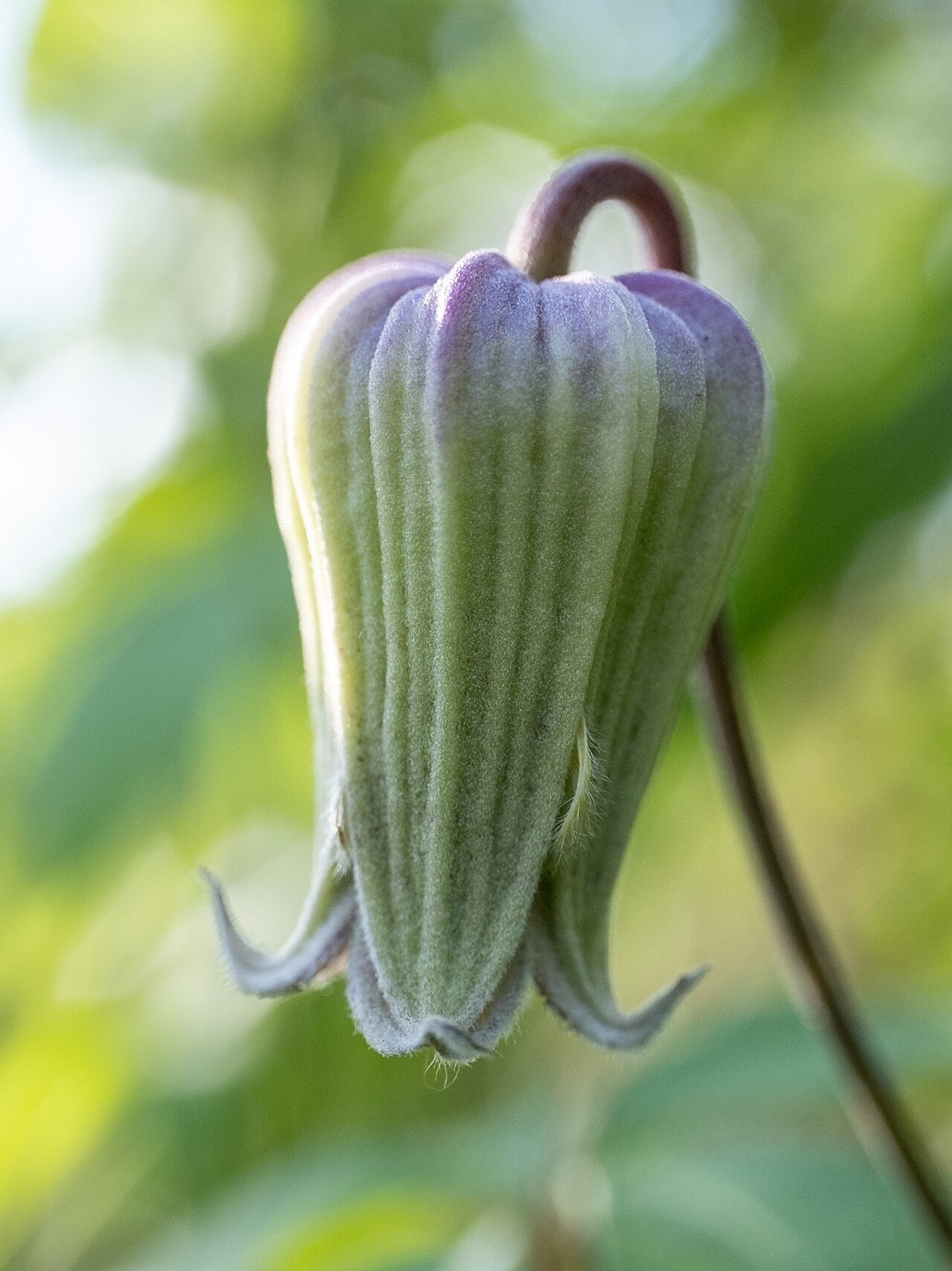
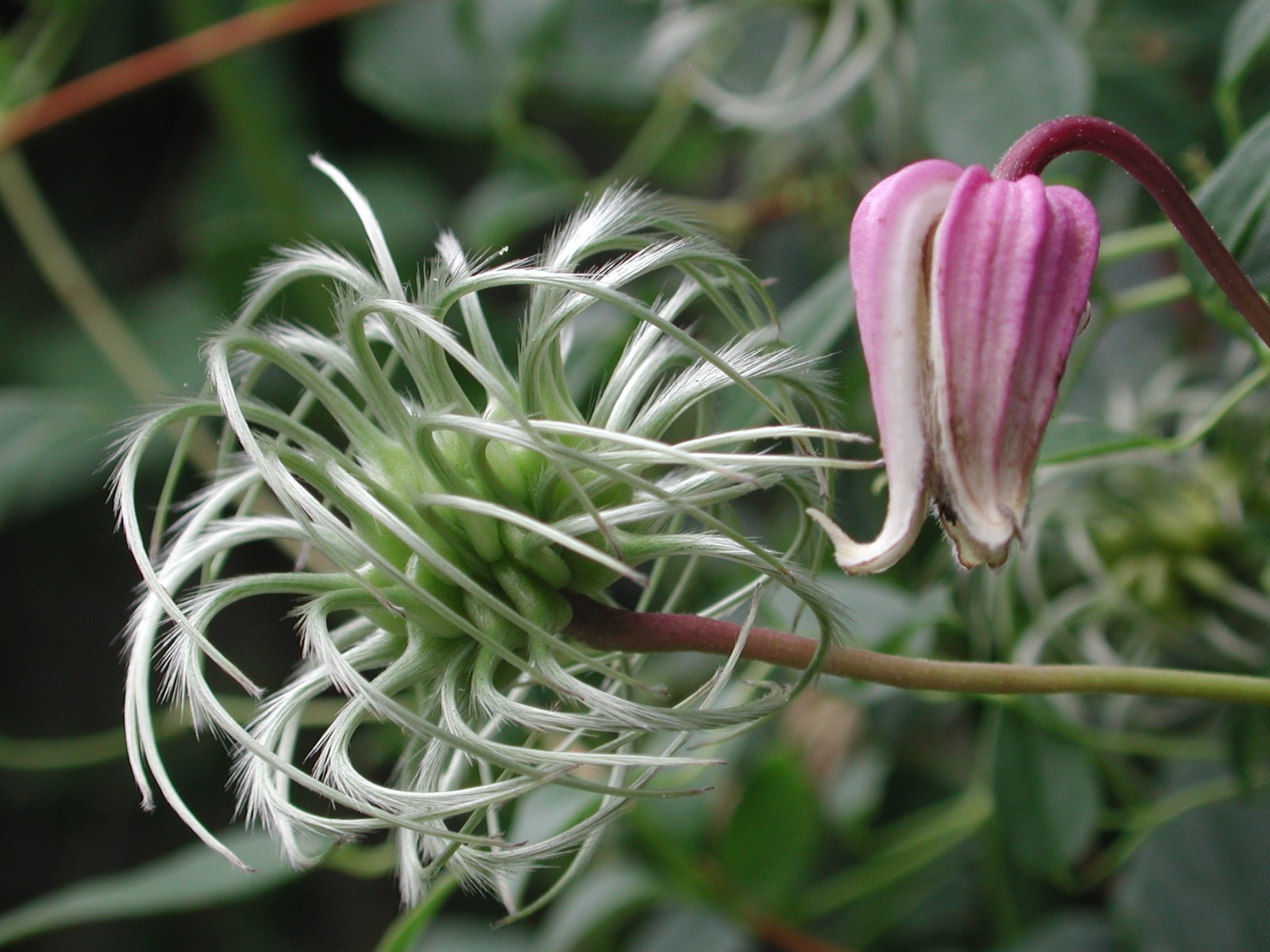
Flowers appear singly on long stalks from the upper leaf axils from late spring into summer, with occasional rebloom into fall. Each flower is an urn- or bell-shaped nodding bloom about ¾ to 1 inch long, made of four thick, leathery sepals (clematis species lack true petals) that are pale cream to pinkish on the inner surface and flushed with dusty purple along the margins, with the tips curling sharply backward. The texture is unusually substantial for a wildflower — almost waxy — which is part of where “leatherflower” comes from.
Fruit & Seeds
Like other leatherflowers, the fruit is a cluster of single-seeded achenes, each tipped with a long, silvery, feathery plume (the persistent style). These plumed seed heads form a fluffy silver puff 1 to 2 inches across that persists on the vine well into fall, catching light and adding ornamental interest after the flowers are gone.
Quick Facts
| Scientific Name | Clematis reticulata |
| Family | Ranunculaceae (Buttercup) |
| Plant Type | Perennial climbing vine (woody at base) |
| Mature Height | 6–12 ft of climb (sprawls if unsupported) |
| Mature Spread | 3–6 ft |
| Growth Rate | Slow to moderate |
| Sun Exposure | Full Sun to Part Shade |
| Water Needs | Low; thrives on dry, well-drained sites |
| Soil Type | Dry, sandy or rocky; low fertility |
| Soil pH | Slightly acidic (about 5.5–6.5) |
| Bloom Time | Late April – July, sporadic into fall |
| Flower Color | Cream to pink, edged purple |
| Fall Color | None notable; silvery plumed seed heads persist |
| Fruit | Plumed achenes in fluffy silver clusters |
| Deer Resistant | Yes |
| USDA Hardiness Zones | 7–9 |
Native Range
Netleaf leatherflower is native to the Gulf and South Atlantic coastal plain, found from eastern Oklahoma and most of Texas east through Arkansas, Louisiana, Mississippi, Alabama and Georgia, south through Florida, and into South Carolina. It is a plant of the Deep South’s dry, sandy interior — not the immediate coast — and reaches its southern limit in central peninsular Florida.
Throughout its range it favors dry, sandy, acidic soils in open woodlands: longleaf pine–turkey oak sandhills, dry hammocks, scrub margins, and open rocky or sandy woods where sunlight reaches the ground. It is consistently associated with longleaf pine ecosystems and the fire-maintained, well-drained habitats that go with them, growing alongside wiregrass, turkey oak and other sandhill specialists.
This species is uncommon to locally frequent across its range rather than abundant anywhere, and it can be easy to miss since the vines are thin and the flowers small. It is not considered rare or legally protected across most of its range, but because dry sandhill habitat itself has been heavily reduced by development and fire suppression, netleaf leatherflower is worth seeking out specifically from native plant nurseries rather than wild collecting.
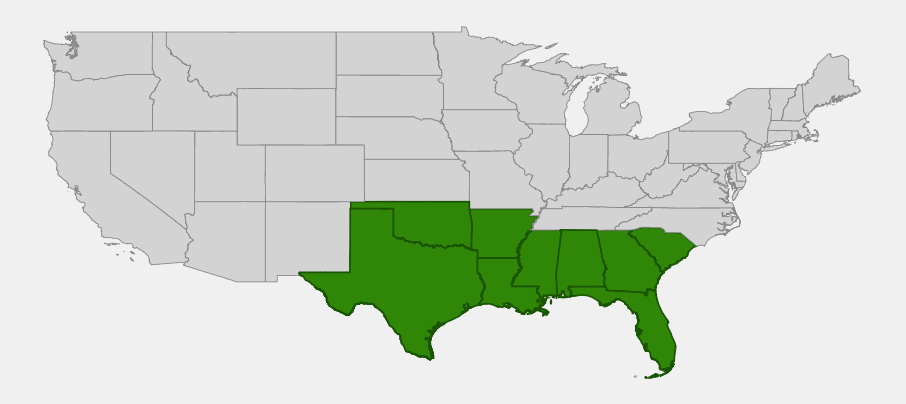
📋 Regional plant lists featuring Netleaf Leatherflower: Georgia, Alabama & Mississippi · Arkansas, Louisiana, Eastern Oklahoma & Eastern Texas · North Carolina & South Carolina (South Carolina only; not native to North Carolina)
Growing & Care Guide
Netleaf leatherflower is an easy, low-maintenance vine once you match it to the right conditions: dry, sunny, and sandy. It is one of the few clematis species genuinely suited to tough, lean soil, which makes it a useful problem-solver for difficult dry spots where showy garden clematis would struggle.
Light
Give it full sun to light part shade. More sun generally produces more flowers and a sturdier vine; in too much shade the growth becomes thin and sparse-flowering, reflecting its natural habitat in open pine woodland rather than closed-canopy forest.
Soil & Water
This species wants what most garden plants don’t: dry, sandy, low-fertility, fast-draining soil. Rich garden soil or regular irrigation encourages rot and weak, floppy growth. Once established, netleaf leatherflower needs no supplemental water beyond normal rainfall in the Southeast and should not be planted in heavy clay or consistently moist beds.
Planting Tips
Plant in spring into lean, sandy soil with excellent drainage — raised sandy beds or slopes work well in gardens with heavier native soil. Give the vine something modest to climb, such as a low shrub, split-rail fence, or wire trellis, since it is not a vigorous climber and won’t overwhelm a support; our general guide to choosing trellises for pollinator-friendly vines covers lightweight support options that suit a small, modest climber like this one. Space plants 3 to 4 feet apart if planting more than one. Gardeners in Texas or Alabama looking for companion climbers can also check our roundups of flowering vines for Texas and flowering vines for Alabama gardens.
Pruning & Maintenance
Little pruning is needed. Cut back dead or winter-damaged growth in late winter before new shoots emerge. Because it blooms on new growth through the season, light pruning after a flush of flowers can encourage rebloom. Avoid fertilizing — extra nutrients favor leafy growth over flowers and can shorten the plant’s life on sites that are naturally lean. If foliage yellows or browns unexpectedly during the growing season, our guide to diagnosing browning clematis leaves walks through the most common causes, most of which trace back to too much water or fertility rather than too little.
Landscape Uses
Netleaf leatherflower fits naturally into these settings:
- Sandhill and longleaf pine restoration plantings
- Dry, sunny slopes where little else will climb
- Low fences and split-rail trellises in a cottage or native garden
- Xeriscape and low-water gardens in the Southeast
- Pollinator gardens paired with other sandhill wildflowers
- Wild or naturalized borders where a subtle, textural vine is wanted
Wildlife & Ecological Value
Though modest in size, netleaf leatherflower contributes real value to the dry woodland and sandhill communities where it grows.
For Pollinators
The nodding, bell-shaped flowers are visited primarily by native bees, which are strong enough to push into the thick sepals to reach pollen and nectar — a pollination strategy shared by most leatherflower species. Smaller bees and other visiting insects also use the flowers, making this vine a useful, low-key nectar source in sandhill and dry woodland pollinator gardens.
For Birds
The fluffy, plumed seed heads provide fine nesting material for small songbirds in spring and early summer, and seed-eating birds will pick at the ripening achenes. The tangled vine growth, though sparse compared to larger vines, offers some additional cover within shrub and understory layers.
Ecosystem Role
As a specialist of fire-maintained sandhill and longleaf pine habitat, netleaf leatherflower is part of an increasingly scarce plant community. Its presence is a good indicator of healthy, open, fire-adapted woodland, and including it in restoration plantings helps rebuild the understory diversity that longleaf pine ecosystems depend on.
Cultural & Historical Uses
Netleaf leatherflower has no significant documented history of use by Indigenous peoples or early settlers, unlike some of its more widespread Clematis relatives. Its restricted, dry-woodland habitat and inconspicuous flowers likely kept it out of the ethnobotanical record that exists for showier or more common native plants.
Within the genus Clematis more broadly, various species have a long history of use: vine stems for cordage, and in some other clematis species, crushed leaves were historically applied externally as a folk remedy for skin ailments — a practice tied to the mildly irritant compounds found throughout the buttercup family, not something practiced safely without expert knowledge. Netleaf leatherflower itself carries no specific historical use beyond its role as part of the native sandhill flora.
Today the plant’s primary significance is horticultural and ecological: a specialist vine for restoring the longleaf pine sandhill communities of the Southeast, valued by native plant gardeners as a genuine rarity rather than for any practical product.
Frequently Asked Questions
Is netleaf leatherflower the same as garden clematis?
No. It is a different, much less showy native species than the large-flowered hybrid clematis sold at nurseries. The flowers are small, thick, and bell-shaped rather than large and flat-faced, and the plant wants dry, sandy soil instead of the rich, moist conditions typical garden clematis prefer.
Why isn’t my netleaf leatherflower blooming much?
Check the site conditions first. This species blooms best in full sun on lean, dry, sandy soil; rich soil, heavy shade, or too much water usually means fewer flowers and weaker, floppier growth than the plant shows in the wild.
Does netleaf leatherflower need a trellis?
It benefits from something to climb, such as a low shrub or wire support, but it is not a vigorous climber. Without support it will sprawl along the ground as a loose groundcover rather than failing outright.
How do you propagate netleaf leatherflower?
Seed, stem cuttings and layering all work, following the same general techniques outlined in our guide to propagating clematis, with one adjustment: use a very fast-draining, sandy cutting mix rather than the rich mix recommended for garden hybrids, since this species rots quickly in moisture-retentive media.
Is netleaf leatherflower toxic?
Like other members of the buttercup family, the foliage and sap contain mildly irritant compounds and should not be eaten. It is not considered a serious poisoning risk to pets or people in typical garden contact, but it is not an edible plant.
What other native clematis pair well with it?
In the Southeast, netleaf leatherflower can be combined with other native leatherflowers such as purple leatherflower and swamp leatherflower for a longer bloom season, provided each is matched to its own soil-moisture preference.

Looking for a nursery that carries Netleaf Leatherflower?
Browse our native plant nursery directory: Alabama & Arkansas · Florida & Georgia · Louisiana & Mississippi · Oklahoma · South Carolina & Texas