Washington Lily (Lilium washingtonianum)
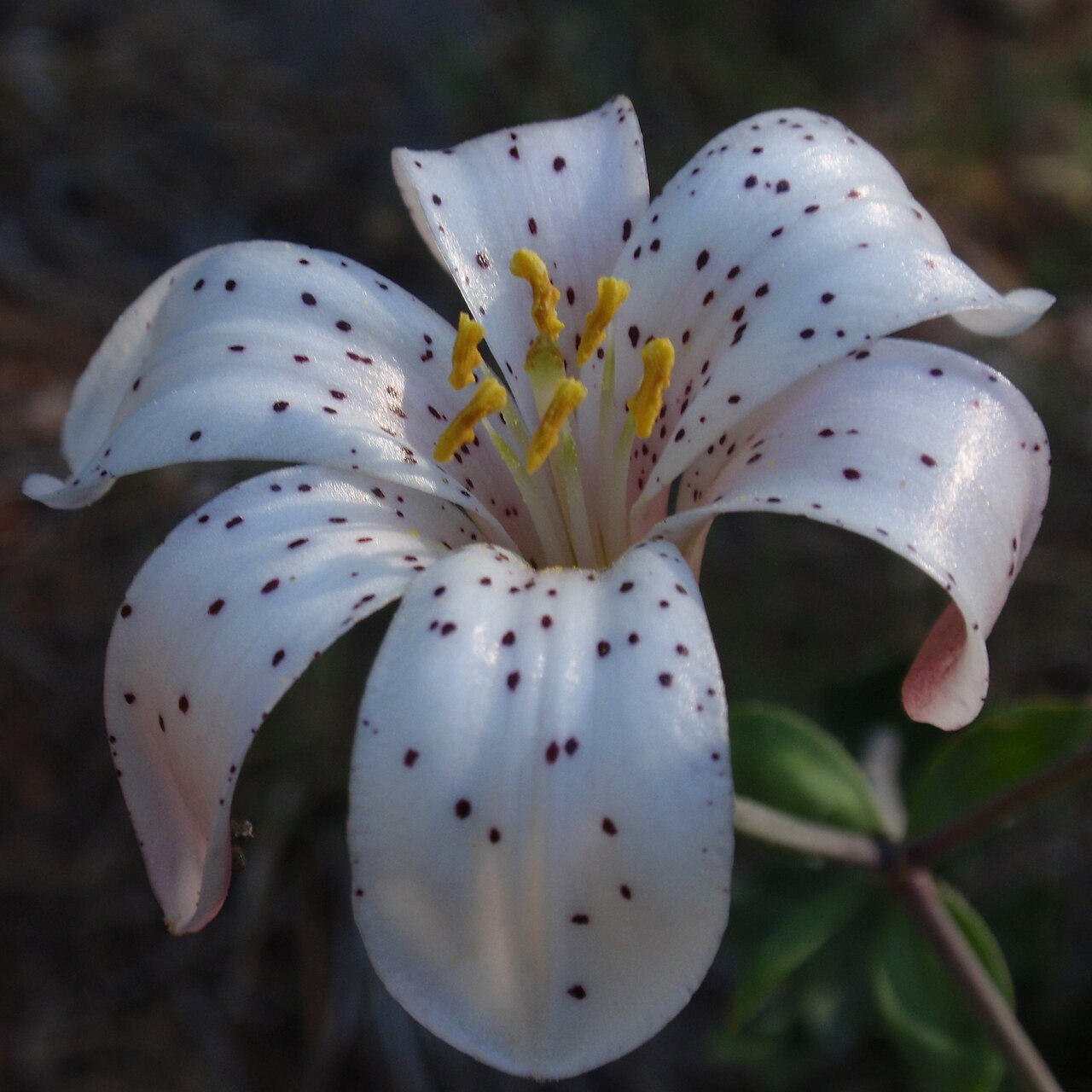
Lilium washingtonianum, the Washington Lily, is one of the most striking wildflowers of California and Oregon’s mountain forests — a tall, stately lily that can carry a dozen or more large, fragrant, trumpet-shaped flowers on a single stem. Despite the name, it has nothing to do with the state of Washington; botanist Albert Kellogg named it in 1859 to honor Martha Washington, which is why it is also known locally as Shasta Lily or Mount Hood Lily.
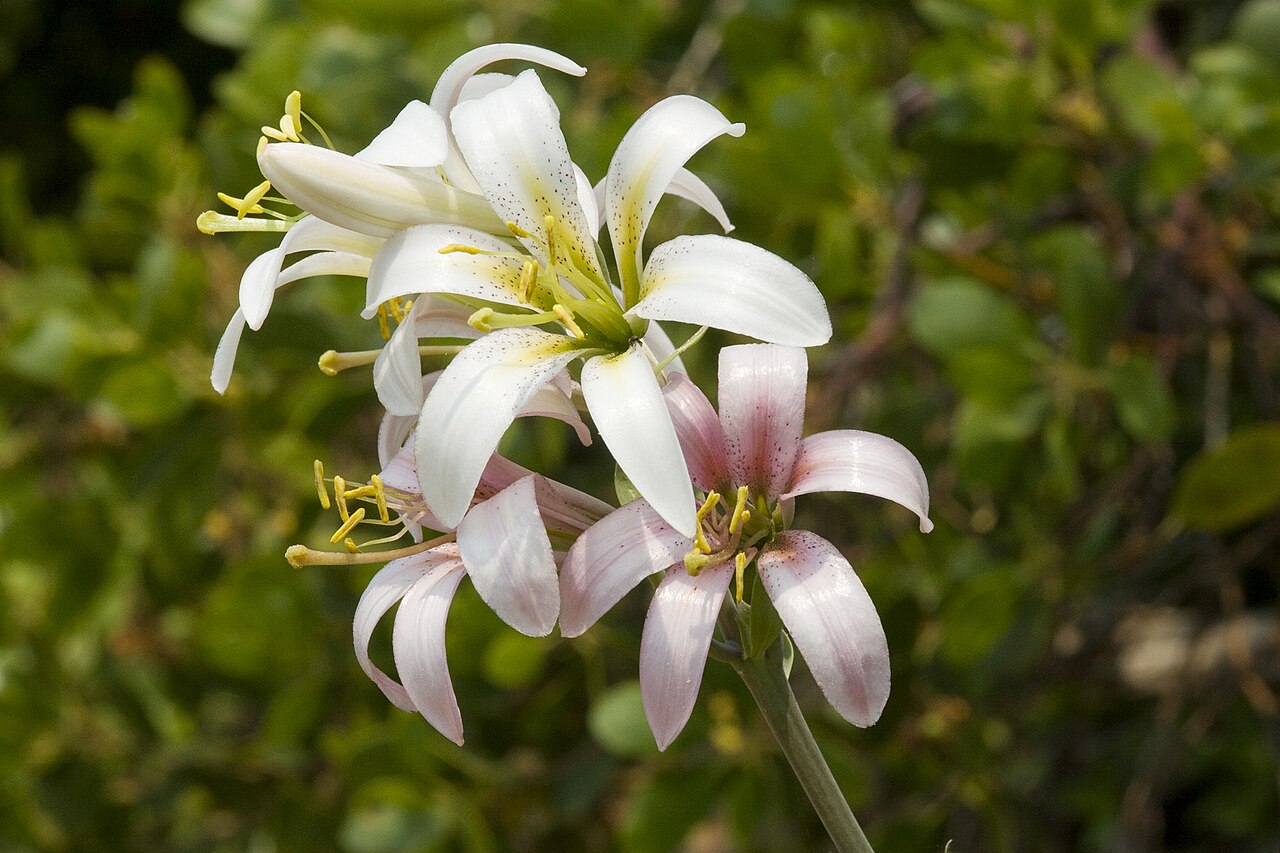
The flowers open pure white with a scattering of fine purple-maroon spots and a strong, sweet fragrance, then age gracefully to shades of pink, rose or lavender-purple over several days — so a single plant in full bloom can show both white and pink flowers at once. It grows in dry, open coniferous forest and chaparral margins through the Cascade Range, the Klamath Mountains, and the Sierra Nevada, usually well above the valley floor, where cool nights and well-drained volcanic or granitic soils suit it best.
Washington lily is a plant for a true dry-summer, mountain-climate garden rather than a typical coastal or valley landscape. Where that climate exists, it is an exceptional native for naturalizing under open pines or firs, bringing both striking flowers and a destination for hawkmoths and other pollinators. Because bulbs are slow to establish and wild populations can be locally vulnerable, always buy nursery-propagated bulbs rather than collecting from the wild.
Identification
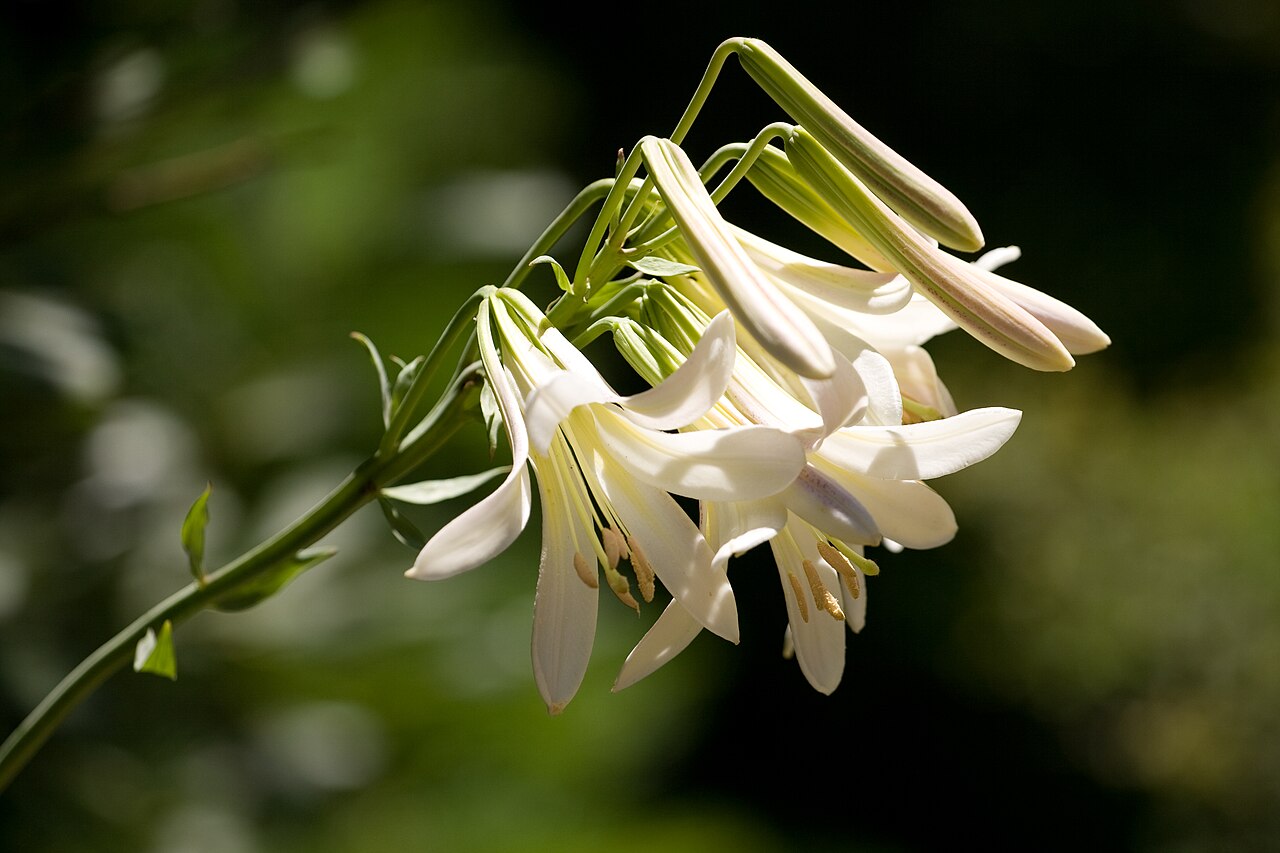
Washington lily grows from a large, scaly bulb and sends up a single, stout, unbranched stem that can reach impressive heights in good growing conditions, topped by a loose cluster of large, outward- to upward-facing trumpet flowers.
Leaves
Leaves are lance-shaped to narrowly elliptical, 2 to 5 inches long, and arranged in several whorls of 6 to 20 leaves spaced along the lower two-thirds of the stem, with the upper stem often bare below the flower cluster. The foliage is a matte, somewhat dusty green, in keeping with the dry forest conditions the plant favors.
Flowers
Each stem can carry anywhere from a few flowers to more than twenty on the most vigorous plants, held in an open, candelabra-like cluster. The six narrow, pointed tepals flare outward from a slender throat rather than fully recurving, forming a wide, fragrant trumpet 3 to 4 inches across. Flowers open white, lightly spotted with fine purple-maroon dots near the throat, and fade through pink to a deep rose-purple as they age; in the subspecies purpurascens, found mainly in the southern Cascades and Sierra Nevada, flowers open already flushed with purple-red. Bloom time runs from June to August, varying with elevation and snowmelt timing.
Fruit & Seeds
Pollinated flowers form an upright, oblong seed capsule that ripens and splits in late summer or early fall, scattering flat, papery seeds short distances on mountain winds. As with other native lilies, seedlings take several years underground before they produce their first above-ground leaf and considerably longer before they flower.
Quick Facts
| Scientific Name | Lilium washingtonianum |
| Family | Liliaceae (Lily) |
| Plant Type | Herbaceous bulb perennial |
| Mature Height | 3–6 ft (occasionally to 8 ft) |
| Mature Spread | 1–2 ft, single stem |
| Growth Rate | Slow |
| Sun Exposure | Part Shade (dappled light under open conifer canopy) |
| Water Needs | Low to average; dry in summer once established |
| Soil Type | Well-drained, gravelly volcanic or granitic loam |
| Soil pH | Slightly acidic to neutral, about 5.5–7.0 |
| Bloom Time | June – August |
| Flower Color | White aging to pink or purple, maroon-spotted |
| Fall Color | None (foliage withers after bloom) |
| Fruit | Upright capsule with flat, wind-dispersed seeds |
| Deer Resistant | No (deer browse buds and stems readily) |
| USDA Hardiness Zones | 6–8 |
Native Range
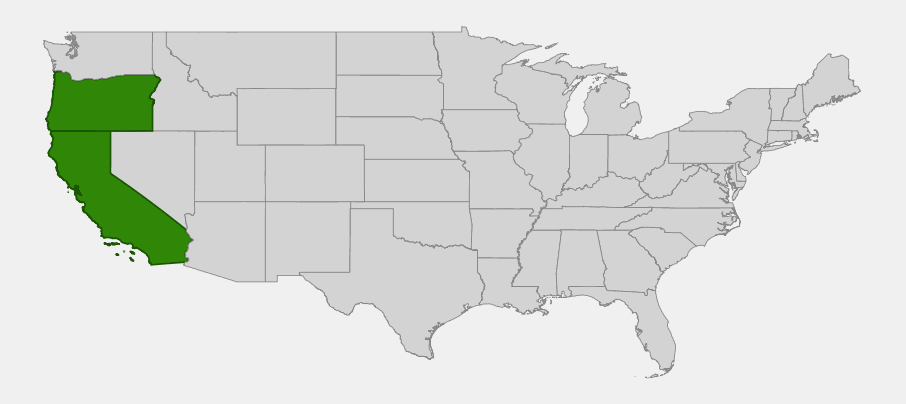
Washington lily is native to the mountains of California and Oregon, with its range running from the southern Cascade Range and Klamath Mountains of southern Oregon south through the Cascades, the Klamath-Siskiyou region of northern California, and into the Sierra Nevada as far south as Tulare County. It is absent from the Coast Ranges, the Central Valley, and all of Southern California.
Throughout this range, the species favors dry, open coniferous forest, forest-chaparral edges and brushy slopes at middle to upper elevations, typically between about 2,000 and 7,000 feet. It is often found growing through or at the edge of manzanita and ceanothus thickets, under a canopy of white fir, Douglas-fir, ponderosa pine or Jeffrey pine, where winter snowpack provides moisture but summers are dry — conditions quite different from the damp meadows favored by many eastern native lilies.
Washington lily is not federally listed, but it can be locally uncommon, and wild bulbs have historically been collected for the horticultural trade, which reduced some populations. It remains fairly widespread across its Klamath-Siskiyou and southern Cascades strongholds, where favorable fire history and open forest structure maintain suitable habitat.
📋 Regional plant lists featuring Washington Lily: California & Nevada · Western Oregon & Western Washington
Growing & Care Guide
Washington lily rewards gardeners who can offer it the dry-summer, well-drained mountain conditions of its native range. It is not well suited to humid climates or heavy, poorly drained soils, but in the right dry-summer garden it is a dramatic, long-lived native.
Light
Plants do best with dappled or filtered light, similar to an open conifer canopy — morning sun with afternoon shade works well in hotter inland gardens, while more open sun suits cooler, higher-elevation sites. Deep shade produces weak, floppy stems and few flowers.
Soil & Water
Sharp drainage is essential. Plant in gravelly, well-drained loam, ideally with some organic matter worked in, and avoid any soil that stays wet in summer. Water during establishment and in unusually dry springs, but taper off through summer to mimic the natural dry season; established bulbs are reasonably drought tolerant and are more likely to rot from excess summer moisture than to suffer from too little.
Planting Tips
Plant bulbs in fall, 4 to 6 inches deep, in a bed with excellent drainage, such as a gentle slope or raised area. Because bulbs are slow to multiply, start with nursery-propagated stock rather than seed if you want flowers within a few years, and avoid disturbing the planting area once the stem emerges in spring, since the roots are easily damaged.
Pruning & Maintenance
Allow the foliage to yellow and die back naturally after bloom before removing it, since the bulb is storing energy for next year’s growth. Stake exceptionally tall, heavily flowered stems in windy sites to prevent breakage. Watch for deer browsing on emerging buds, a significant threat in many mountain gardens, and protect young plantings with temporary fencing if deer pressure is high.
Propagation
Washington lily can be grown from fall-sown seed, though plants typically take four to six years to reach flowering size. Mature bulbs occasionally produce small offsets that can be separated and replanted during dormancy. Given the slow pace of propagation and the value of leaving wild colonies undisturbed, nursery-propagated bulbs are the most practical and responsible way to start a planting.
Landscape Uses
- Dry woodland gardens under open pines or firs in mountain and foothill gardens
- Chaparral-edge plantings alongside manzanita and ceanothus
- Naturalized drifts on well-drained slopes in dry-summer native gardens
- Cut flowers, prized for their fragrance and long vase life
- Pollinator gardens, paired with other summer-blooming California natives such as those in our guide to California native flowering shrubs
Wildlife & Ecological Value
Washington lily’s large, fragrant, night-opening flowers are built to attract long-tongued pollinators, and the plant’s dry-forest habitat supports a range of mountain wildlife.
For Pollinators
The strong evening fragrance and long, narrow floral tube point to hawkmoths as important pollinators, which hover and feed much as hummingbirds do. Bumblebees and other large bees also visit by day for nectar and pollen, making this lily a valuable, if seasonal, nectar source in dry mountain forest openings; see our broader list of Oregon native pollinator plants for more companions that support the same moth and bee visitors.
For Birds & Mammals
Hummingbirds occasionally visit the flowers for nectar, especially as they age and shorten slightly. Black-tailed and mule deer browse the buds, stems and flowers, which can significantly reduce flowering in both wild populations and gardens within deer range, making fencing or repellent important for reliable bloom.
Ecosystem Role
As a conspicuous, long-lived perennial of fire-adapted mixed-conifer and chaparral-edge communities, Washington lily is part of the diverse herbaceous layer that recovers and flowers well in the open, sunlit conditions that periodic fire historically maintained in these forests. Its presence is often associated with relatively open, well-drained forest sites rather than dense, fire-suppressed stands.
Cultural & Historical Uses
Washington lily was first collected and described by the California botanist Albert Kellogg in 1859, who named the species for Martha Washington rather than for the Pacific Northwest state that would later claim a similar-sounding name — a source of confusion ever since. Its alternative names, Shasta Lily and Mount Hood Lily, reflect the two prominent volcanic peaks near parts of its range.
There is no well-documented record of extensive traditional use of this species for food or medicine, likely reflecting both its localized mountain habitat and the general rarity of Indigenous use of true lily bulbs compared to other regional food plants such as camas. Its primary human history has been horticultural: nineteenth- and twentieth-century lily specialists and nursery catalogs prized Washington lily bulbs for collectors, and the Idyllwild Lily Festival in Southern California, though outside this species’ present range, celebrates the related and equally striking native lemon lily, underscoring the broader fascination these western mountain lilies have long inspired.
Today Washington lily remains primarily significant as a garden and conservation subject: a dramatic native for dry-summer mountain landscaping, and a species whose wild populations benefit when gardeners choose nursery-propagated bulbs over wild-collected ones.
Frequently Asked Questions
Is Washington lily named after the state of Washington?
No. It was named in 1859 by botanist Albert Kellogg in honor of Martha Washington, not the state. The species is native only to California and Oregon and does not naturally occur in Washington state.
Why do the flowers change color?
Washington lily flowers open white with light purple-maroon spotting and gradually age to pink, rose or lavender-purple over several days as the bloom matures, so a single flowering stem often shows a mix of white and pink flowers at once.
Can I grow Washington lily in a humid or coastal climate?
It is difficult. This species is adapted to dry-summer mountain conditions with sharp soil drainage, and it tends to struggle or rot in humid climates or heavy, poorly drained soils. It performs best in dry-summer gardens that mimic its native Cascade, Klamath or Sierra Nevada habitat.
How tall does Washington lily get?
Typically 3 to 6 feet, though vigorous plants in good sites can reach 8 feet or more, with a correspondingly large number of flowers on the tallest stems. For help telling it apart from other native lilies, see our guide to lily family plants and the related wood lily.
Do deer eat Washington lily?
Yes, deer readily browse the buds and stems, which is one of the main challenges to reliable flowering both in the wild and in gardens within deer range. Fencing or repellent during bud formation helps protect the bloom.

Looking for a nursery that carries Washington Lily?
Browse our native plant nursery directory: California · Oregon