Lemon Lily (Lilium parryi)
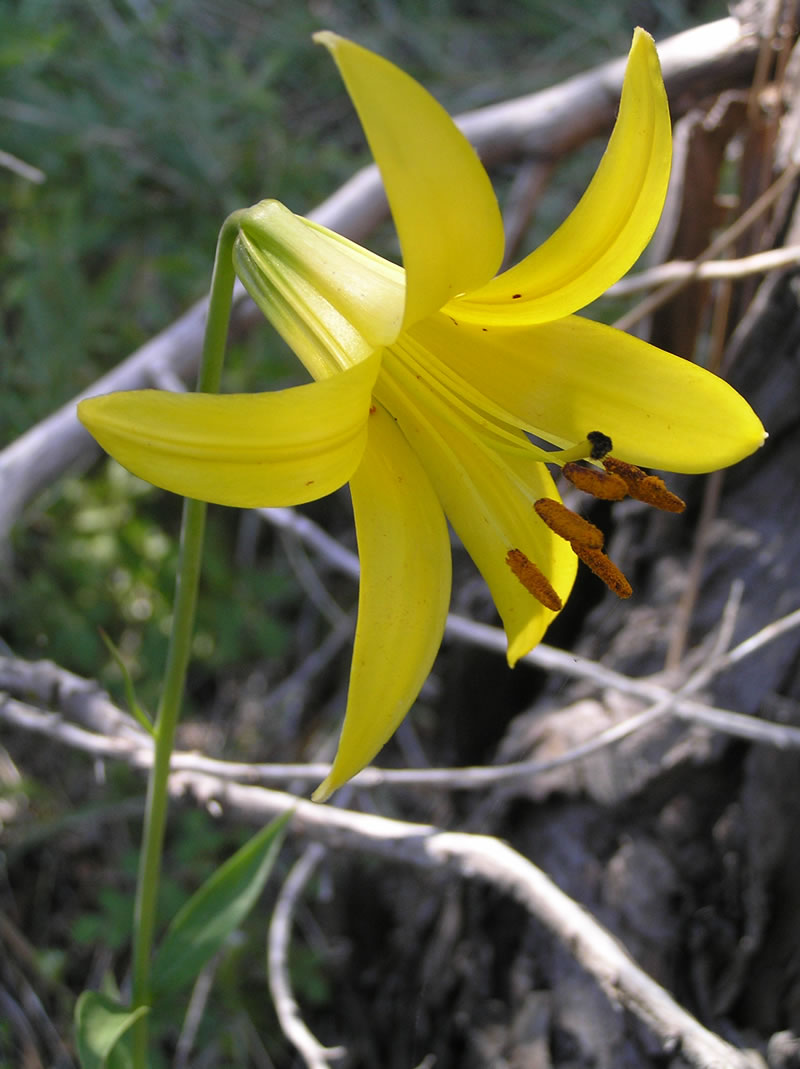
Lilium parryi, the Lemon Lily, is a rare and fragrant native lily of the southwestern mountains, instantly recognizable by its clear lemon-yellow, strongly recurved, trumpet-shaped flowers nodding atop a tall, leafy stem. It is the only true lily native to Arizona and one of the most celebrated wildflowers of Southern California’s high country, where it grows in wet meadows and along mountain streams in the San Bernardino, San Gabriel and Palomar mountain ranges.
Lemon lily’s fame is tied closely to Idyllwild, California, home to the long-running Lemon Lily Festival, which celebrates a species that was once far more common along the creeks of the San Jacinto Mountains before grazing, water diversion and habitat loss reduced its numbers. In Arizona, isolated populations persist in a handful of sky-island ranges — the Huachuca, Chiricahua and Santa Rita Mountains — making the species a true rarity on that side of its range as well.
For gardeners in mild-summer mountain or foothill climates who can provide reliably moist, well-drained soil, lemon lily is a spectacular native for a streamside or seep garden, rewarding patient cultivation with powerfully fragrant midsummer blooms that draw hawkmoths at dusk. Given its rarity and sensitivity to habitat disturbance, always plant nursery-propagated bulbs and never collect from wild populations.
Identification
Lemon lily is an unbranched, herbaceous perennial growing from a scaly bulb, typically reaching 2 to 6 feet tall in favorable wet-meadow conditions, with a single erect stem bearing whorled leaves and a cluster of large, fragrant flowers at the top.
Leaves
Leaves are linear to narrowly lance-shaped, up to about 11 inches long, and arranged mostly in whorls spaced along the stem, with a few scattered single leaves. The foliage is bright to medium green and gives the plant a slender, grass-like look below the flowers.
Flowers
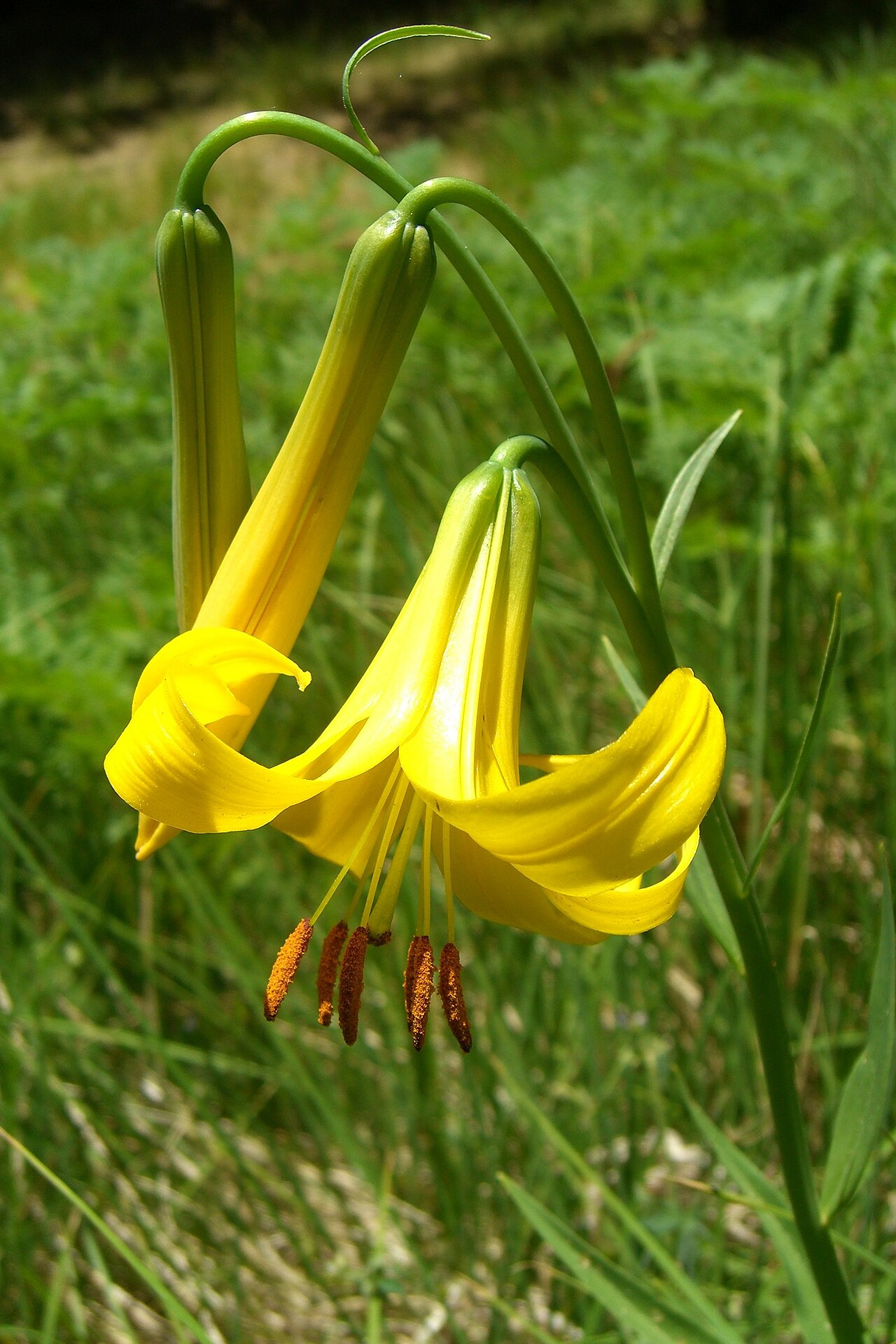
Each stem carries from one to over two dozen flowers on vigorous plants, though garden plants more typically show several to a dozen. The six tepals are a bright, clear lemon yellow, sometimes with a few small reddish spots near the base, and curl strongly backward to form the open, recurved shape typical of Turk’s-cap-type lilies. The large anthers and long, prominent pistil give the flower a dramatic, spidery presence, and the bloom carries a strong, sweet fragrance that intensifies in the evening. Flowering runs from June into August, peaking in July at most sites.
Fruit & Seeds
Pollinated flowers develop into an upright, oblong seed capsule that dries and splits in late summer, releasing flat, papery seeds that disperse a short distance on mountain breezes. As with other native lilies, seedlings spend several years building an underground bulb before producing their first flowering stem.
Quick Facts
| Scientific Name | Lilium parryi |
| Family | Liliaceae (Lily) |
| Plant Type | Herbaceous bulb perennial |
| Mature Height | 2–6 ft |
| Mature Spread | 1–2 ft, single stem |
| Growth Rate | Slow |
| Sun Exposure | Part Shade to Full Sun (cooler sites tolerate more sun) |
| Water Needs | High; consistently moist, seep or streamside conditions |
| Soil Type | Moist but well-drained, organic-rich loam |
| Soil pH | Slightly acidic to neutral, about 5.5–7.0 |
| Bloom Time | June – August |
| Flower Color | Bright lemon yellow |
| Fall Color | None (foliage withers after bloom) |
| Fruit | Upright capsule with flat, wind-dispersed seeds |
| Deer Resistant | No (deer and livestock browsing are documented threats) |
| USDA Hardiness Zones | 6–9 |
Native Range
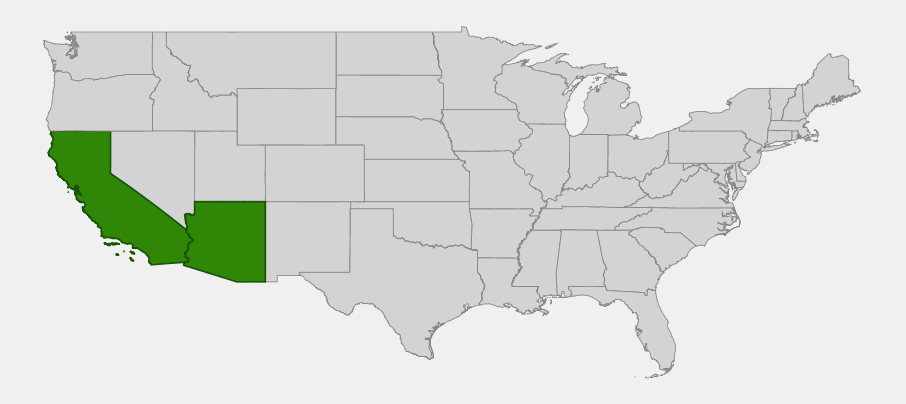
Lemon lily occurs in two widely separated regions of the Southwest. In California, it survives in the San Bernardino and San Gabriel Mountains and in a few remaining sites near Palomar Mountain in San Diego County, almost entirely at middle to high elevations in the Transverse and Peninsular Ranges of Southern California. In Arizona, it is known from a small number of populations in the Huachuca, Chiricahua and Santa Rita Mountains in the southeastern “sky island” ranges, making it the only true lily native to the state.
Across this range, lemon lily is tightly associated with wet, seepy ground: montane meadows, streambanks, spring-fed seeps and boggy flats, typically between about 4,000 and 9,000 feet elevation, often under a partial canopy of conifers or oaks. These moist microsites are scarce and scattered in an otherwise dry mountain landscape, which is a major reason for the species’ naturally limited and fragmented distribution.
Lemon lily is considered rare throughout its range and is tracked by natural heritage programs in both California and Arizona. Historical threats include livestock grazing and trampling, recreational use of meadows, water diversion that dries out seeps, and horticultural collection of wild bulbs and flowers. Because populations are small and sensitive, any garden use should rely strictly on nursery-propagated bulbs.
📋 Regional plant lists featuring Lemon Lily: California & Nevada · Arizona & New Mexico
Growing & Care Guide
Lemon lily needs consistently wet feet and a cool mountain climate to thrive, making it a specialist plant best suited to a streamside, seep or bog-style bed in a mild-summer, higher-elevation garden.
Light
Give lemon lily part shade to filtered sun in hotter inland gardens, or fuller sun at cooler, higher elevations where it grows in the wild. Consistent soil moisture matters more than exact light exposure; plants in full sun with reliably wet roots generally perform as well as those in partial shade.
Soil & Water
This is the thirstiest of the native lilies profiled on this site. Plant in rich, organic soil that stays consistently moist to wet, ideally near a seep, spring or slow-moving stream edge, but avoid stagnant, poorly oxygenated water, which can rot the bulb. Regular irrigation is necessary in most garden settings outside of a true wet meadow; allowing the soil to dry out, even briefly, stresses the plant and can prevent flowering.
Planting Tips
Plant nursery-propagated bulbs in fall, about 4 to 6 inches deep, in a bed amended with compost to hold moisture while still draining slowly rather than becoming stagnant. Because lemon lily is rare and bulbs are slow to multiply, source plants only from specialty growers who can document propagated, not wild-collected, stock.
Pruning & Maintenance
Let foliage die back naturally after flowering to recharge the bulb for next year. Protect young plants from deer, rabbits and other browsers, which readily eat the buds and flowers and are a documented pressure on wild populations as well as garden plantings. Maintain steady moisture through the growing season; this species is unforgiving of drought stress compared to upland native lilies.
Propagation
Lemon lily is propagated from seed sown in consistently moist, well-drained medium, with several years typically required to reach flowering size. Mature bulbs occasionally form small offsets that can be divided and replanted in fall. Given the species’ rarity and conservation concern, propagation should rely on seed or bulbs from nursery stock with a documented, non-wild origin.
Landscape Uses
- Streamside and bog gardens in cool, mild-summer mountain or foothill climates
- Seep and spring restoration plantings within the species’ historic range
- Specialty collector gardens focused on rare Southern California and Arizona natives
- Pollinator gardens, valued for the strong evening fragrance that draws hawkmoths
Gardeners with a suitable wet spot in Southern California or Arizona can find easier-care companions in our roundups of perennial flowers for Southern California and perennial flowers for Arizona, though most featured there are far less fussy about constant moisture than lemon lily.
Wildlife & Ecological Value
Lemon lily’s large, fragrant, evening-scented flowers are adapted to a specific set of pollinators, and the wet-meadow habitat it depends on supports a wider community of mountain wildlife.
For Pollinators
The flowers are primarily pollinated by hawkmoths, including the white-lined sphinx (Hyles lineata) and Sphinx perelegans, which are drawn to the strong fragrance and visit at dusk and after dark. This moth pollination syndrome is reflected in the flower’s pale color, strong scent and long, exposed reproductive parts, all features that make the bloom easy for a hovering moth to locate and access.
For Birds & Mammals
Hummingbirds occasionally visit the flowers by day. Mule deer and, at some sites, grazing livestock browse the buds, stems and flowers, which has historically reduced flowering success at several known populations and remains one of the most significant threats to the species’ recovery.
Ecosystem Role
As an indicator of healthy, undisturbed mountain meadow and seep habitat, lemon lily’s presence signals intact hydrology in an otherwise dry Southwestern mountain landscape. Protecting its populations generally means protecting the specific wet meadows and springs it depends on, habitats that also support a range of other moisture-dependent native plants and animals.
Cultural & Historical Uses
Lemon lily was named by botanist Sereno Watson in honor of Charles Christopher Parry, a British-American botanist and mountaineer who collected extensively across the Southwest in the nineteenth century. The species became closely associated with the town of Idyllwild in the San Jacinto Mountains, where it was once abundant along meadow streams before grazing and water diversion reduced local populations.
Since the 1980s, the Lemon Lily Festival in Idyllwild has celebrated the species each summer, combining community events with conservation and restoration work aimed at helping local populations recover. This festival tradition reflects a broader pattern in which a rare, visually striking native plant becomes a rallying point for local habitat conservation.
There is no significant documented history of lemon lily being used for food or medicine, consistent with its naturally rare, localized distribution in wet mountain meadows that saw limited traditional harvesting pressure compared to more widespread food plants. Its primary significance today is as both a conservation priority and a prized, if challenging, native bulb for specialty gardeners.
Frequently Asked Questions
Where is the best place to see lemon lily in the wild?
Idyllwild, California, in the San Jacinto Mountains, is the species’ most famous stronghold and home to the annual Lemon Lily Festival. Populations also persist in the San Bernardino and San Gabriel Mountains and in a few Arizona sky-island ranges, though all are sensitive and should be viewed without disturbance.
Is lemon lily the only native lily in Arizona?
Yes. Lilium parryi is the only true lily (genus Lilium) native to Arizona, found in a small number of populations in the Huachuca, Chiricahua and Santa Rita Mountains in the southeastern part of the state.
Why is lemon lily hard to grow in gardens?
It requires consistently wet, well-oxygenated soil, essentially a seep or streamside condition, which is difficult to maintain in most ordinary garden beds. Gardens near a natural spring, seep or slow stream in a mild-summer climate have the best chance of success.
What pollinates lemon lily?
Primarily hawkmoths, especially the white-lined sphinx moth, which are drawn to the flower’s strong fragrance at dusk and after dark. Hummingbirds also visit occasionally during the day.
Is lemon lily endangered?
It is not federally listed, but it is tracked as rare by natural heritage programs in both California and Arizona due to its small, scattered populations and sensitivity to grazing, water diversion and habitat disturbance.
How can I tell lemon lily apart from other yellow wildflowers?
Its strongly recurved, fragrant, nodding flowers and whorled leaves are distinctive among native lilies; see our guide to flowers that look like lilies for comparisons with similar blooms.

Looking for a nursery that carries Lemon Lily?
Browse our native plant nursery directory: California · Arizona