Swamp Leatherflower (Clematis crispa)
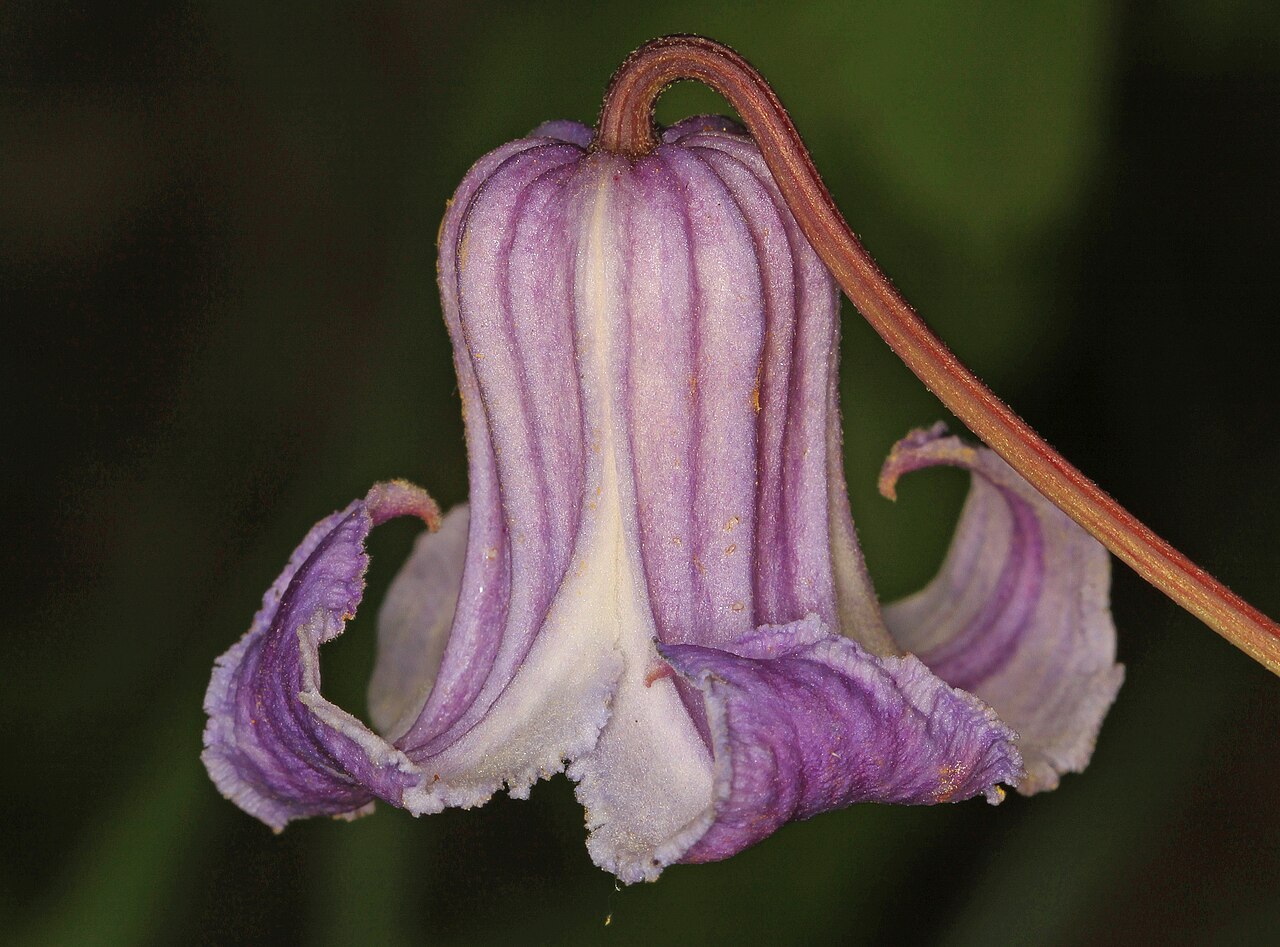
Swamp leatherflower is a native clematis for gardeners who enjoy details: nodding bells, rolled-back edges and an airy seed head rather than enormous flat hybrid flowers. The thick, curled flower parts explain both 'leatherflower' and the epithet crispa. Give it a fine-textured support near a path and the small flowers become much easier to appreciate.
This plant belongs in a moist garden setting. It is not an interchangeable substitute for a drought-tolerant fence vine, even though both may be sold under the broad heading of native climbers. In Arkansas, Louisiana, eastern Oklahoma and eastern Texas, the relevant habitat is wet woodland and floodplain vegetation, not an exposed dry roadside bank.
The regional table calls it Leatherflower and notes seasonal dieback. Here the more explicit name Swamp Leatherflower helps distinguish it from other Clematis species. It usually renews its climbing stems from near the base after winter, and its mature size is manageable on a small trellis. All parts should be kept out of food and herbal preparations: ornamental clematis can cause irritation and poisoning if eaten.
Identification
Bark & Stems
Slender climbing or scrambling stems rise from a perennial base. Growth can become partly woody near the bottom but often dies back in winter. Unlike crossvine, it does not form a massive evergreen covering. Follow stems carefully through surrounding vegetation before trimming; a clematis that seems to have disappeared may simply have threaded its growth through a neighboring shrub.
Leaves
Leaves are divided into several leaflets, commonly three to five, with variable oval to narrower outlines. The leaf stalks help the vine hold slender supports. Leaflet form can change along a shoot, so one detached leaflet is not enough to establish identity. A good identification photograph includes a complete leaf, its attachment and a flower. This is especially important because 'leatherflower' is used for several related native vines.
Flowers
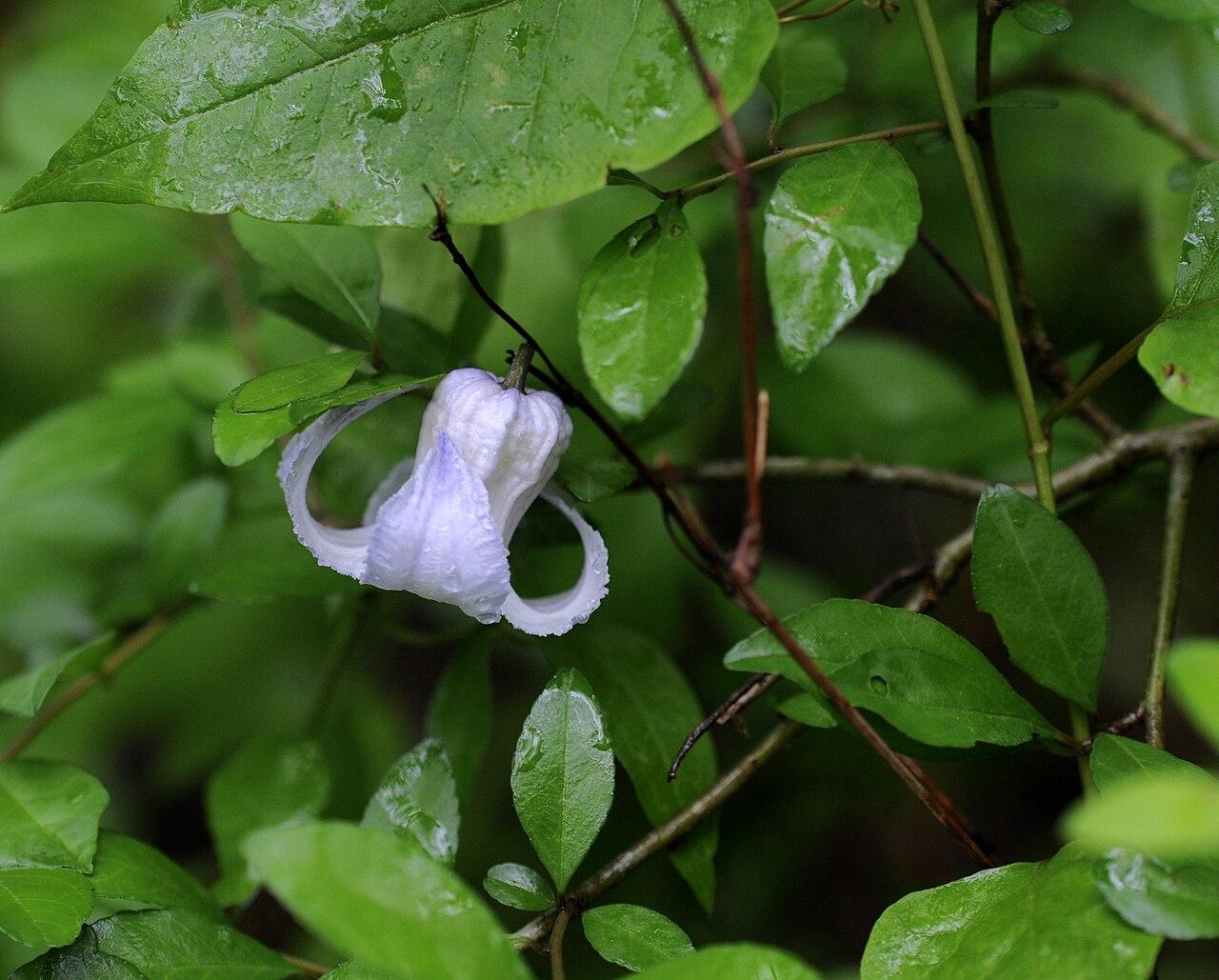
The hanging bell has thick showy sepals, not the broad petal arrangement of many cultivated clematis. Their tips curl outward and the margins may appear wavy or crisped. Blue-purple and lavender shades are familiar, but pale or pinkish plants occur. Flowers are generally around one to two inches long. A close view from the side shows the recurved tips much better than a view looking straight into the bell.
Fruit & Seeds
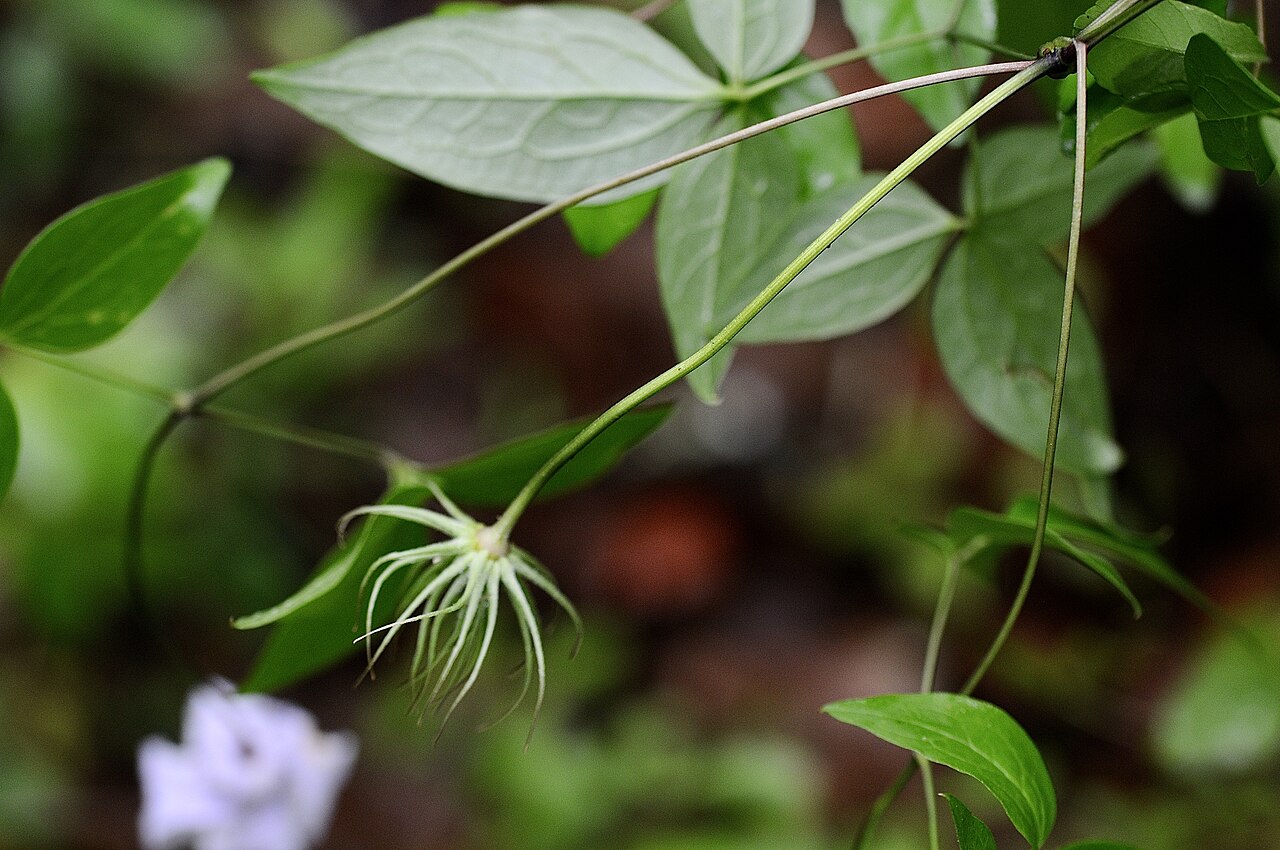
After flowering, the developing seed head becomes a cluster of individual dry fruits, each retaining a lengthened style. The radiating tails give a delicate, spider-like appearance. These are not edible berries and should not be confused with a succulent fruit crop. Leaving a few seed heads provides a second season of visual interest; removing every spent flower is unnecessary unless controlling seedlings is a specific goal.
Quick Facts
| Scientific Name | Clematis crispa |
| Family | Ranunculaceae |
| Plant Type | Deciduous perennial climbing or scrambling vine |
| Mature Height | 6–10 ft with support |
| Mature Spread | 3–6 ft, depending on training |
| Growth Rate | Rapid seasonal growth after establishment |
| Sun Exposure | Full sun to partial shade |
| Water Needs | Consistent moisture; tolerates periodically wet sites |
| Soil Type | Moist, organically enriched soil with usable root-zone drainage |
| Soil pH | Acidic soil preferred |
| Bloom Time | Spring through summer, sometimes repeating in fall |
| Flower Color | Blue-purple, lavender, pinkish or whitish sepals |
| Fall Color | Deciduous; not grown for autumn leaf color |
| Fruit | Cluster of achenes with elongated, silky styles |
| Deer Resistant | Often less browsed than some clematis; not immune |
| USDA Hardiness Zones | 6–9 |
Native Range
The native distribution extends across the central and southeastern United States. The state list shown here follows the botanical distribution reported by NC State and NatureServe, including Arkansas, Louisiana, Oklahoma and Texas along with the southeastern states and portions of the lower Midwest. It does not imply that the plant is frequent throughout any one state.
Wet woods, floodplains and swamp margins explain its need for dependable moisture. In a garden, the shoulder of a rain garden or the moist edge of a pond can be suitable, but a permanently submerged crown is a different condition. Match the actual root-zone environment, not simply a label such as 'water garden.'
For a local restoration project, verify county occurrence and ask for regional propagation stock. Garden plants can be carried far outside their native range, and common names are particularly confusing in Clematis. The USDA link provides another way to check the botanical identity, while the map is a broad U.S. orientation rather than a planting authorization for every shaded state.
Native Range at a Glance
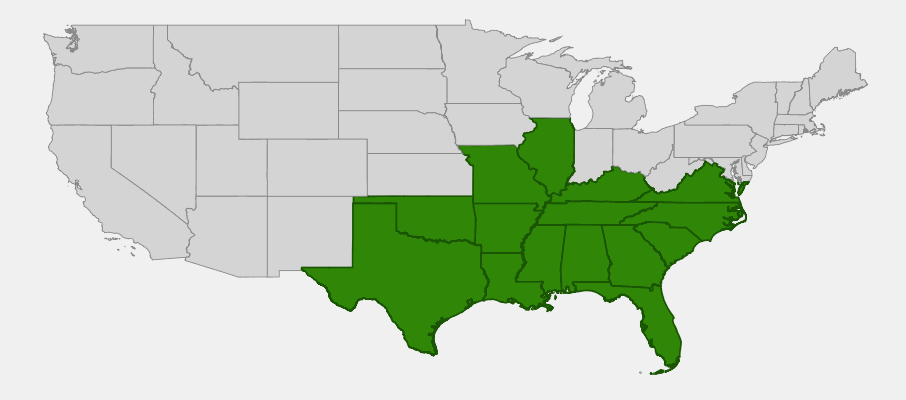
| U.S. States | Alabama, Arkansas, Florida, Georgia, Illinois, Kentucky, Louisiana, Missouri, Mississippi, North Carolina, Oklahoma, South Carolina, Tennessee, Texas, Virginia |
| Mexico / Canada / Other Range | No Canadian or Mexican native range included in this treatment |
| Ecoregion | Southeastern coastal plains and central/eastern riverine lowlands |
| Elevation Range | Mostly lowland floodplains and wet woods; local limits vary |
| Habitat | Swamps, floodplains, wet woodland margins and moist thickets |
| Common Associates | Local wetland shrubs and floodplain hardwoods; select by actual site moisture |
📋 Explore the native plant list for Arkansas, Louisiana, eastern Oklahoma and eastern Texas. Species occurrence differs within this multi-state region.
Growing & Care Guide
Light
Sun encourages flowering if the roots have adequate moisture. Partial shade can be a useful compromise in hot southern gardens, especially where reflected heat from paving would dry a pot or narrow bed. Avoid relying on a very dark corner for a heavy flower display. Observe soil moisture as well as leaf appearance when deciding whether a sunny location is workable.
Soil & Water
Use an acidic, moisture-retentive soil rather than a sharply drying gravel pocket. Organic mulch can reduce evaporation and keep competing weeds down. During establishment, water enough to moisten the root ball and surrounding soil; a quick surface splash does little for a vine already drying below. Repeated wilting is a sign to reconsider the site or watering, not evidence that this wetland-associated species is becoming drought adapted.
Planting Tips
Plant at the depth recommended for the nursery-grown stock and avoid burying the crown under a thick mound of wet mulch. Provide a small trellis, wire framework or twiggy support with narrow elements that leaf stalks can grasp. Space it so the stems remain visible and accessible. A wide solid fence panel by itself offers little for the vine to grip unless additional support is installed.
Pruning & Maintenance
Because growth generally dies back and flowers are carried on the season's growth, remove dead stems in late winter or early spring after confirming where living buds remain. Do not repeatedly shear new shoots during the growing season and then expect abundant flowers. Mark the crown location so dormant plants are not dug out during spring bed work. Keep nearby aggressive vines from taking over the same support.
Propagation
Seed-grown material preserves variation within the species; vegetative propagation retains a particular garden plant. Obtain propagation advice with the stock, because seed dormancy and timing can vary. Use correctly labeled nursery plants when immediate species certainty matters. Never strip wetland sites for garden transplants: collecting can damage sensitive habitat and may be restricted even where the species itself is not rare.
Landscape Uses
- A small trellis at the moist edge of a woodland garden.
- A rain-garden margin that drains between storms.
- A native pollinator bed with irrigation appropriate to moisture-loving plants.
- A low scrambling accent where the curled bells can be viewed closely.
Wildlife & Ecological Value
For Pollinators
Bees and other flower visitors use the blooms. A garden that supports these insects should include uninterrupted flowering resources beyond this vine's season. Avoid broad-spectrum sprays on or near the flowers, and do not assume a visiting insect is a pest merely because it is unfamiliar.
For Birds
The vine contributes fine-scale cover and insect habitat rather than a substantial berry harvest. Seed heads add structure, but claims that every bird will eat the seed are not necessary to explain its value. Combine it with native shrubs and grasses for a more complete habitat planting.
For Mammals
Some extension sources describe lower browsing damage than on other clematis. That is a relative observation, not a guarantee. Protect new shoots where deer or rabbits are abundant and judge the local response. Its irritating chemistry is a reason to keep it away from grazing pets or livestock, not a reason to place it carelessly in a play area.
Ecosystem Role
In native wetland-edge vegetation, a modest climber occupies gaps between taller plants without requiring a large trunk of its own. In a garden, its dependence on support and moisture encourages thoughtful placement among compatible species. Do not pair it with plants that need a dry summer simply because their flowers look attractive together.
Cultural & Historical Uses
Leatherflower and curly clematis are descriptive common names rather than separate species. The Latin epithet crispa refers to the curled character of the floral edges. Blue jasmine is another name encountered in gardens, but the plant is not a true jasmine and belongs to the buttercup family.
The appeal of this native clematis is different from that of large-flowered hybrids: it rewards close viewing, seasonal observation and an appreciation of seed heads. An in-region photograph from an Arkansas wetland or Louisiana refuge helps show what the species looks like outside a highly managed ornamental display.
No medicinal recipe or edible use is recommended here. The safest cultural role for this plant is ornamental and ecological, supported by correct labeling and sensible handling. Wear gloves if sap irritates your skin and keep trimmings away from animals that might browse them.
Frequently Asked Questions
Is swamp leatherflower a jasmine?
No. Blue jasmine is a common name, but Clematis crispa is in the buttercup family, not the true jasmine genus.
Does it need wet soil all the time?
It needs consistent moisture and tolerates periodic wetness. A moist rain-garden edge is different from a permanently submerged planting hole.
Why did the stems die in winter?
Seasonal dieback is normal in much of its range. Check for new growth at the crown before concluding that the plant is dead.
What should it climb on?
A narrow wire or twiggy trellis is easier for its leaf stalks to grasp than a broad smooth post.
Are the flowers or seeds edible?
No. Treat the plant as an ornamental; clematis can cause significant irritation and poisoning if eaten.
Sources & Further Reading
- Kew Plants of the World Online: identity, synonyms and native distribution
- USDA PLANTS profile
- NC State Extension Gardener Plant Toolbox: identification and cultivation
- NatureServe Explorer: distribution
Find Native Plants Near You
Ask a native-plant nursery for correctly identified, nursery-propagated stock and information about regional provenance. Match the plant to your site rather than collecting it from a wild population.
Arkansas native plant nurseries · Louisiana native plant nurseries · Oklahoma native plant nurseries · Texas native plant nurseries