
Rocky Mountain Blazing Star (Liatris ligulistylis)
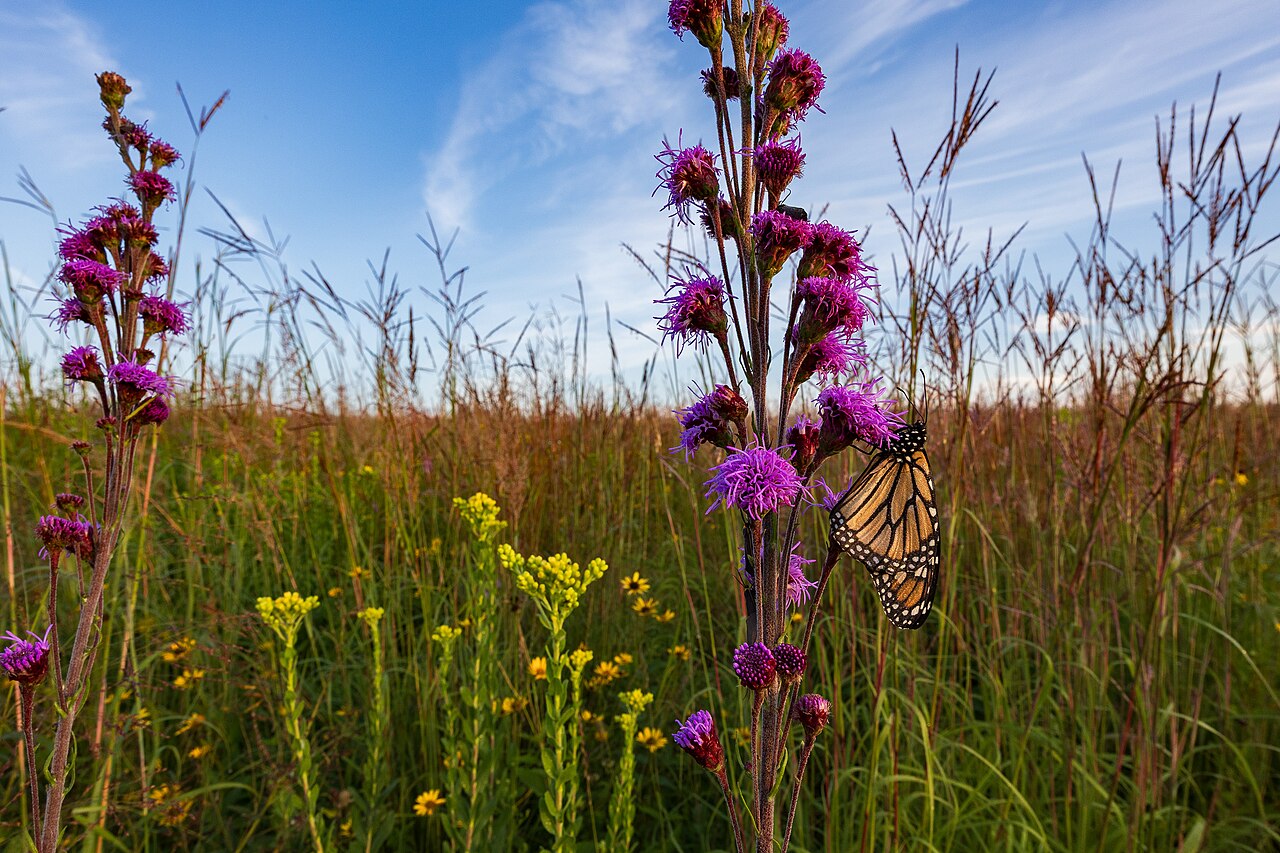
Liatris ligulistylis, the Rocky Mountain Blazing Star, also called meadow blazing star or northern plains blazing star, is a native perennial wildflower of moist prairies and meadows from the Upper Midwest to the Rocky Mountains. In late summer it sends up 2- to 4-foot stems lined with round, fluffy, rosy-purple flower heads that open from the top of the stem down.
Its biggest claim to fame is as a monarch butterfly magnet. Many gardeners and nurseries consider it the single best Liatris for attracting monarchs. It blooms mostly in August, when monarchs are fueling up for their fall migration, and it is common to see several butterflies on one patch at once.
Despite its name, Rocky Mountain blazing star is not mainly a mountain plant. Most of its range lies in the northern Great Plains and prairie regions of Minnesota, the Dakotas, Wisconsin, Iowa and the Canadian Prairie Provinces, with populations extending into the foothills and mountain parks of Montana, Wyoming, Colorado and New Mexico. This guide covers identification, native range, care and its value to pollinators.
Identification
Blazing stars all have spikes of small, fuzzy flower heads, but the heads of Rocky Mountain blazing star are unusually large and button-like, each on its own short stalk. It is most often confused with Rough Blazing Star, which has similar round heads.
Growth Habit
Rocky Mountain blazing star grows from a rounded underground corm and forms a clump of one to several upright stems, usually 2 to 4 feet tall in gardens and sometimes shorter in the wild. The stems are often reddish or purplish and carry many narrow leaves that become smaller toward the top.
Leaves
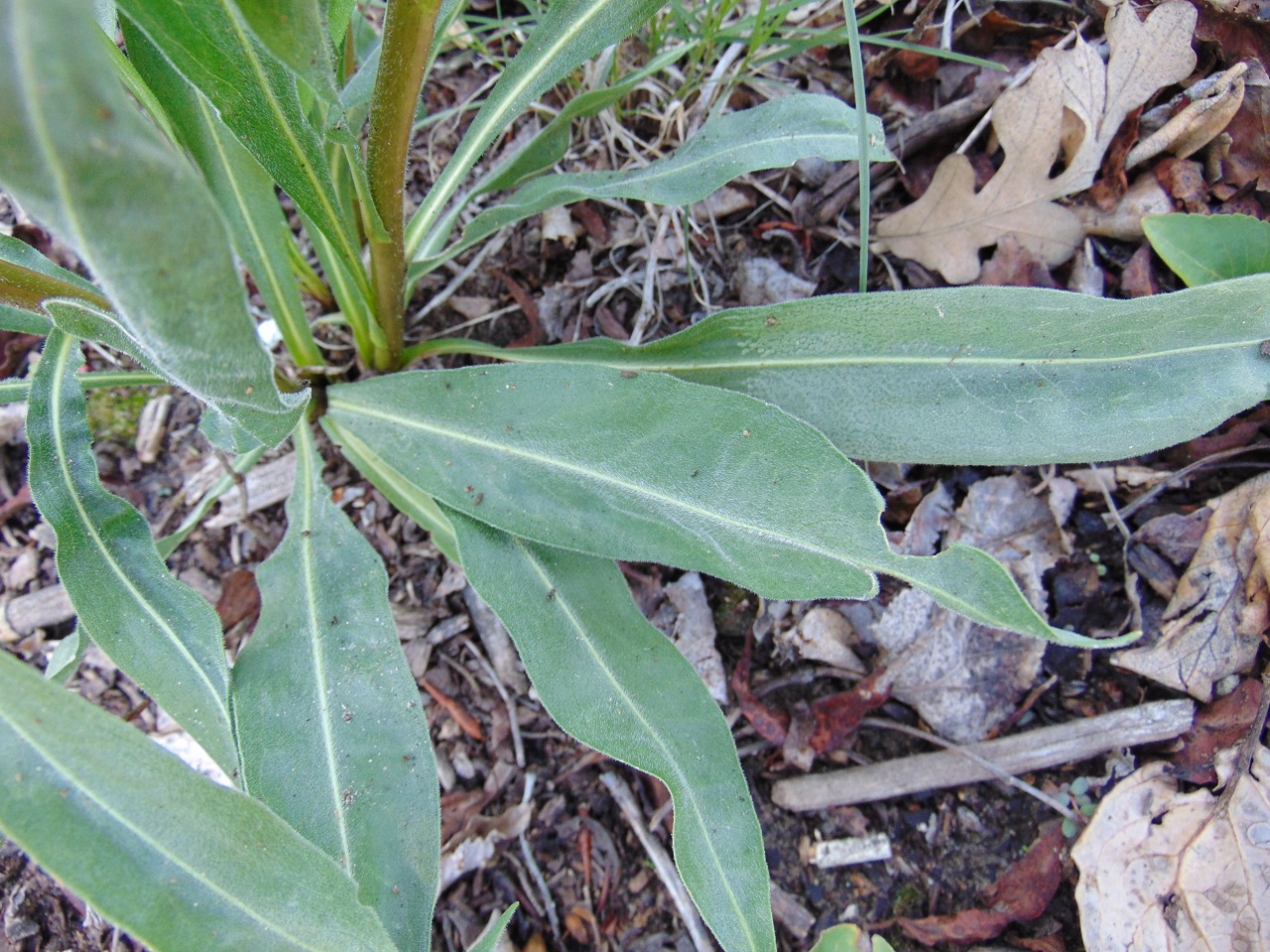
The lower leaves are long, narrow and lance-shaped, tapering to a stalk, and are the longest leaves on the plant. Upper leaves are linear and stalkless. The leaves have a noticeably pale or whitish midrib, and the stems and leaves range from nearly smooth to finely hairy.
Flower Heads
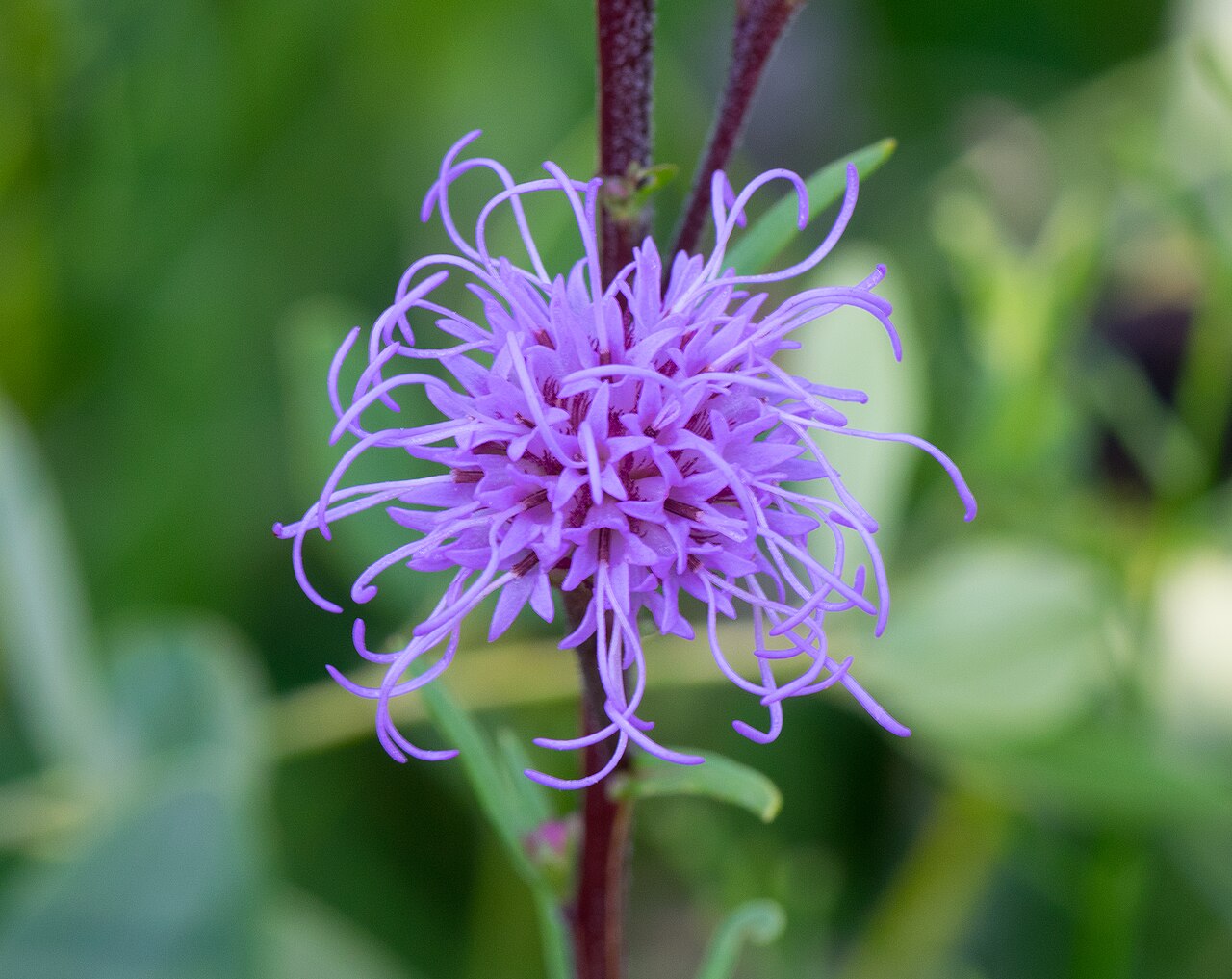
The flower heads are round and about 1 inch or a little more across, among the largest in the genus. There are usually about 4 to 21 heads in a loose spike, each on a short stalk about 1/3 to 2/3 inch long. Each head holds 30 to 100 small, tubular, rosy-purple flowers with long, divided styles that give the head a shaggy look. The topmost head, which opens first, is often the largest.
Bracts
The bracts (phyllaries) around each head are spoon-shaped, with translucent, jagged edges that are often purple or reddish and turned inward. This is one of the best identification features.
Similar Species
Rough blazing star (Liatris aspera) has round heads too, but they sit on very short stalks or none, and its bracts have papery, often wrinkled, whitish edges. It prefers drier, sandy or gravelly soils. Prairie Blazing Star and Blazing Star (L. spicata) have dense, bottlebrush-like spikes of many small, stalkless heads.
Quick Facts
| Scientific Name | Liatris ligulistylis (A. Nelson) K. Schum. |
| Family | Asteraceae (aster family) |
| Plant Type | Herbaceous perennial from a corm |
| Mature Height | 2–4 ft (occasionally to 5 ft) |
| Mature Spread | 1–1.5 ft |
| Growth Rate | Moderate |
| Sun Exposure | Full sun |
| Water Needs | Medium to moist; tolerates brief dry spells |
| Soil Type | Moist loam, clay loam or sandy loam |
| Soil pH | About 6.0–8.0 |
| Bloom Time | Late July–September (peak in August) |
| Flower Color | Rosy purple |
| Fall Color | Stems and leaves turn tan to bronze |
| Fruit | Small, ribbed seed (cypsela) with a feathery, barbed pappus |
| Deer Resistant | Low; deer, rabbits and voles eat stems and corms |
| USDA Hardiness Zones | 3–8 |
Native Range
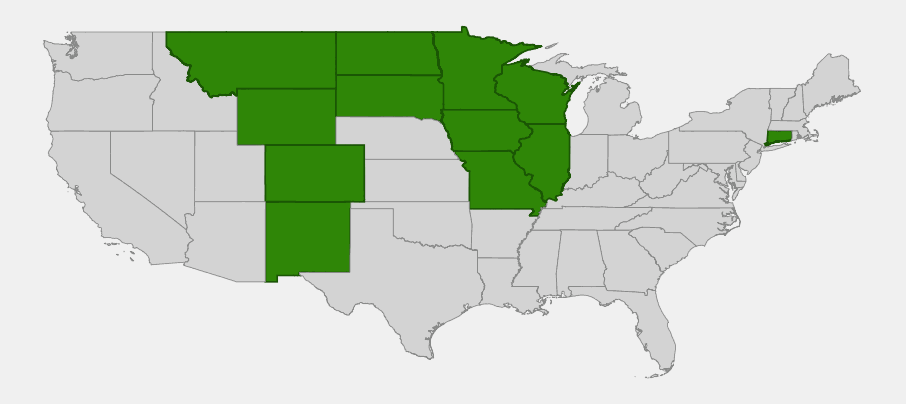
Rocky Mountain blazing star is native to the northern Great Plains and adjacent regions of the United States and Canada. USDA PLANTS lists it in Montana, Wyoming, Colorado, New Mexico, North Dakota, South Dakota, Minnesota, Wisconsin, Iowa, Illinois and Missouri, and in Alberta, Saskatchewan and Manitoba. It is most frequent in Minnesota, the eastern Dakotas and Wisconsin, and becomes scattered and local toward the south and west.
In the West it grows in moist meadows, mountain parks and foothill grasslands along the eastern edge of the Rocky Mountains, south to northern New Mexico. In Illinois and Missouri it is at the southeastern edge of its range and uncommon. USDA also has an isolated record from Connecticut, far from the rest of its range. That outlying record is shown on the map, but the plant is not a typical part of the New England flora.
It grows in moist to mesic prairies, wet meadows, sedge meadows, swales, the edges of marshes and stream banks, and openings in aspen parkland. It tends to grow in moister spots than most other blazing stars, often near the transition from upland prairie to wet meadow.
📋 Regional plant lists featuring Rocky Mountain Blazing Star: Montana & Wyoming · North Dakota, South Dakota & Western Minnesota · Michigan, Wisconsin & Eastern Minnesota · Illinois, Iowa & Missouri
Growing & Care Guide
Rocky Mountain blazing star is easy to grow in a sunny garden with average to moist soil. It is very cold-hardy and is widely available from native plant nurseries as seed, plugs and potted plants. Plant a group of them, rather than a single plant, for the best show and the most butterflies.
Light
Give it full sun. In shade the stems become weak and flop, and flowering is poor.
Soil & Water
It does best in medium to moist, fertile soil, including clay loams, and tolerates seasonally wet ground better than most blazing stars. It is less drought-tolerant than dry-prairie species such as rough blazing star, so water during long dry spells in summer. Avoid soils that stay waterlogged all winter, which can rot the corms.
Planting Tips
Plant corms, plugs or potted plants in spring, setting corms about 2 inches deep. Space plants 12 to 18 inches apart. If voles or rabbits are a problem, protect new plantings with wire cages, because they eat the corms and young shoots.
Pruning & Maintenance
Rocky Mountain blazing star needs little care. Taller plants in rich soil may lean, so grow them among grasses or other sturdy perennials for support. Leave the seed heads standing after bloom for finches and winter interest, and cut the stems back in late winter or spring.
Propagation
Grow from seed sown outdoors in fall, or give seeds about 60 days of cold, moist stratification before spring sowing. Seedlings usually take two or three years to bloom. Established clumps can be divided in early spring by separating the corms.
Landscape Uses
- Monarch and butterfly gardens: one of the most attractive late-summer nectar plants for monarchs
- Prairie and meadow plantings: a showy forb for moist to medium prairie restorations
- Rain gardens: tolerates periodic moisture at the upper edge of a rain garden
- Cut flowers: long-lasting stems for fresh or dried arrangements
- Perennial borders: an upright, purple vertical accent in sunny beds
Wildlife & Ecological Value
Rocky Mountain blazing star is one of the best native plants for butterflies in the northern United States.
For Pollinators
The flowers are rich in nectar and attract monarchs, swallowtails, fritillaries, painted ladies, skippers and other butterflies, as well as bumblebees and other native bees. The plant is also a host for the caterpillars of the bleeding flower moth (Schinia sanguinea), which feed on blazing star flowers and seeds.
For Birds
Goldfinches and other small seed-eating birds pick seeds from the dried heads in fall and winter.
For Mammals
Deer and rabbits browse the stems and buds, and voles, gophers and other rodents dig and eat the corms.
Ecosystem Role
As a late-summer bloomer in moist prairies and meadows, it provides nectar when many spring and early summer flowers have finished. Its timing makes it an important fuel stop for migrating monarchs in the northern Great Plains and Upper Midwest.
Cultural & Historical Uses
The species was first named Lacinaria ligulistylis by the Wyoming botanist Aven Nelson and later moved to the genus Liatris. The species name refers to the strap-shaped (ligulate) style branches of the flowers. The origin of the genus name Liatris is uncertain.
The common name “Rocky Mountain blazing star” reflects its western populations, but the names meadow blazing star and northern plains blazing star better describe where most plants grow. The name “blazing star” refers to the bright, starburst-like flower heads that seem to blaze along the stems.
Rocky Mountain blazing star has become a favorite of monarch conservation programs and butterfly gardeners, and native plant nurseries often promote it as the best blazing star for monarchs.
Frequently Asked Questions
Is Rocky Mountain blazing star good for monarchs?
Yes. It is one of the best monarch nectar plants in the northern United States. It blooms in August, when monarchs are building fat reserves for their fall migration, and its flowers attract many butterflies at once.
What is the difference between meadow blazing star and Rocky Mountain blazing star?
They are the same plant, Liatris ligulistylis. Meadow blazing star and northern plains blazing star are other common names for it.
How tall does Rocky Mountain blazing star get?
It usually grows 2 to 4 feet tall, occasionally taller in rich, moist garden soil.
Does Rocky Mountain blazing star need moist soil?
It prefers medium to moist soil and grows naturally in moist prairies and meadows, but it does well in average garden soil if watered during long droughts.
How do I tell it apart from rough blazing star?
Rocky Mountain blazing star has round heads on short stalks and bracts with purple, translucent, jagged edges, and it grows in moist sites. Rough blazing star has nearly stalkless heads with whitish papery bract edges and grows in dry, sandy or rocky soils.

Looking for a nursery that carries Rocky Mountain Blazing Star?
Browse our native plant nursery directory: Colorado & Connecticut · Illinois & Iowa · Minnesota, Missouri & Montana · New Mexico & North Dakota · South Dakota · Wisconsin & Wyoming

