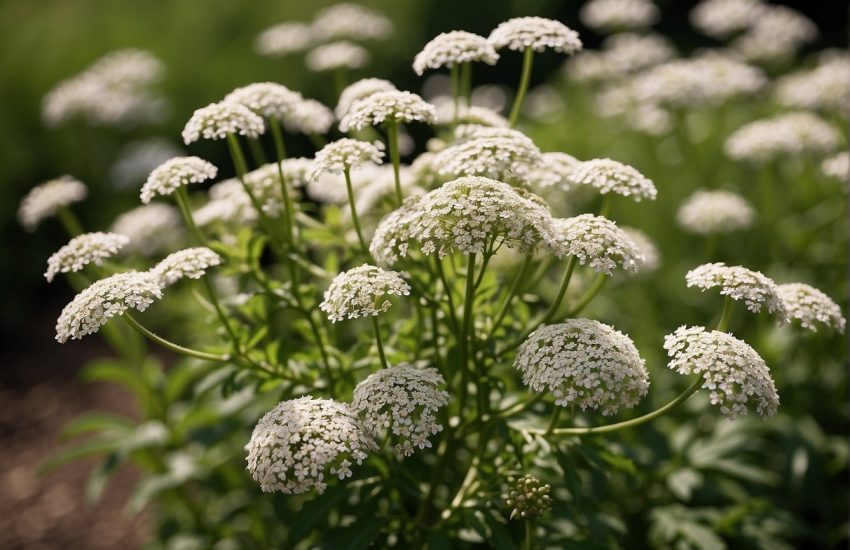
Blazing Star (Liatris spicata)
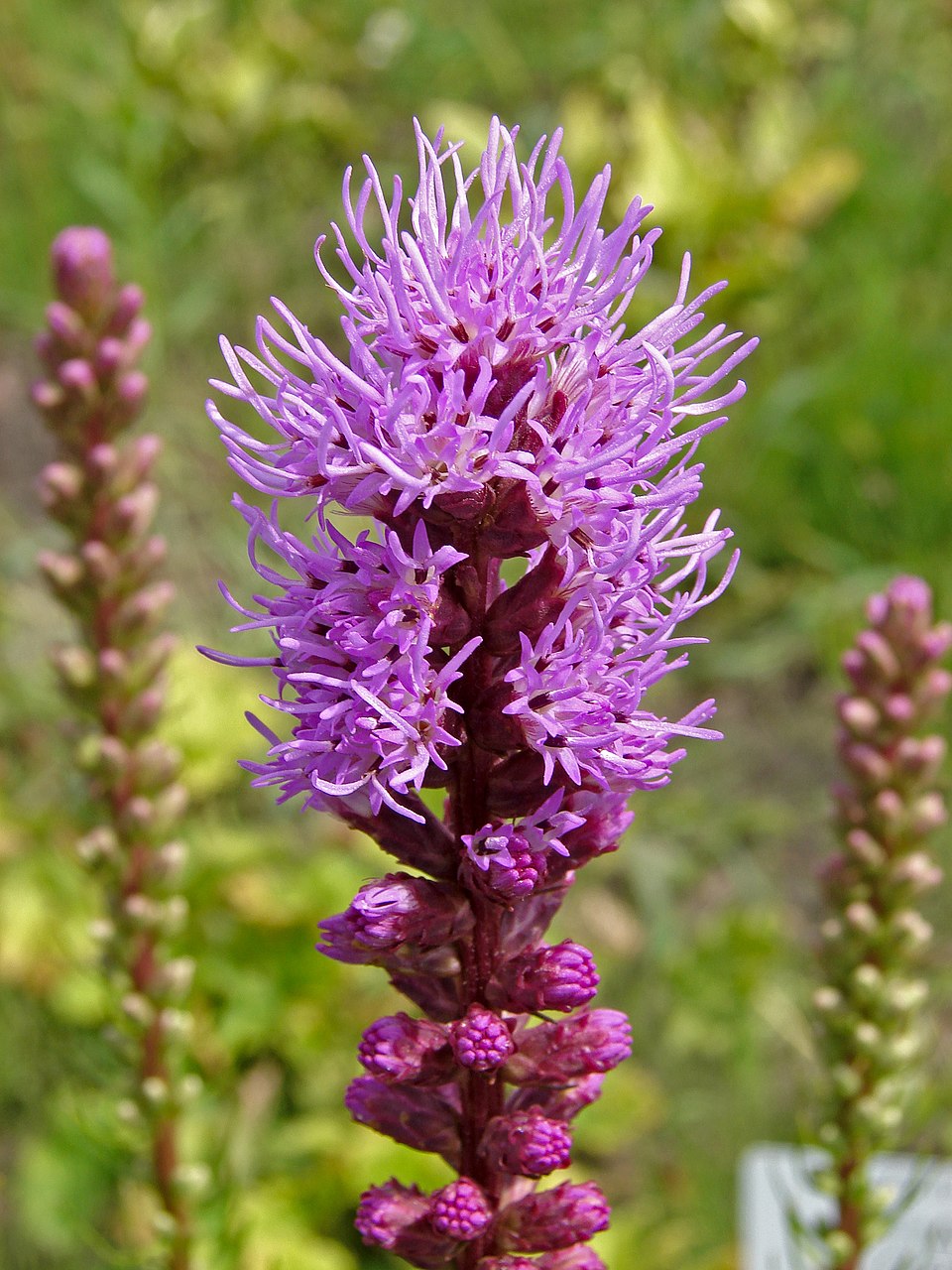
Liatris spicata, commonly known as Blazing Star, Dense Blazing Star, or Gayfeather, is one of North America’s most spectacular native wildflowers and a cornerstone species for pollinator gardens. This member of the Asteraceae (sunflower) family produces towering spikes of vibrant purple-pink flowers that bloom in a unique top-to-bottom sequence, creating a stunning display that can last for weeks in mid to late summer.
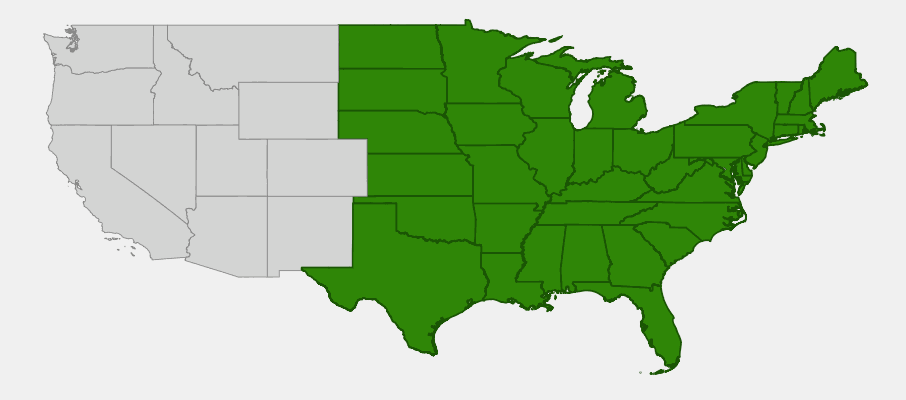
Native to the eastern and central United States from Canada to the Gulf of Mexico, Blazing Star demonstrates remarkable adaptability to diverse growing conditions, from moist prairie swales to dry upland sites. Its deep taproot allows it to access moisture and nutrients far below the surface, making it exceptionally drought-tolerant once established. The plant’s architectural form and extended bloom period have made it a favorite among wildflower enthusiasts and professional landscapers alike.
Beyond its ornamental appeal, Blazing Star provides exceptional ecological value as a late-season nectar source when many other native plants have finished blooming. The flower spikes attract dozens of butterfly species, native bees, and other pollinators, while the seeds feed goldfinches and other birds throughout fall and winter. Its deep roots also help break up compacted soils and access nutrients in deep soil layers, making it valuable for prairie restoration and soil improvement projects.
Identification
Blazing Star grows as a herbaceous perennial from a deep, thick taproot and underground corm, reaching 2 to 5 feet tall with a clumping growth habit. The plant produces multiple upright stems from the base, each topped with a distinctive flower spike that can be 6 to 18 inches long.
Stems & Leaves
The stems are sturdy, upright, and densely clothed with narrow, linear leaves that decrease in size as they ascend the stem. The leaves are alternate, simple, and typically 3 to 8 inches long and ¼ to ½ inch wide, with a grass-like appearance. They’re dark green and somewhat thick, with prominent parallel veining. The leaves are dotted with tiny resin glands that give them a slightly sticky feel and aromatic scent when crushed.
Flowers
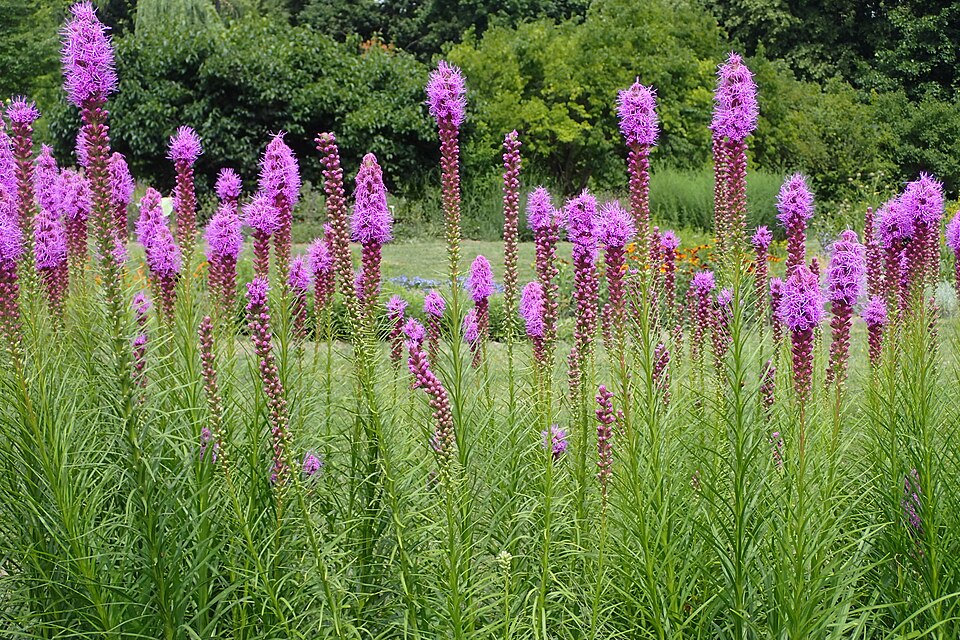
The most distinctive feature is the dense, cylindrical flower spike composed of numerous small flower heads packed closely together. Each individual flower head contains 5 to 13 small tubular florets, all disk flowers with no ray petals. The flowers are typically bright purple-pink to magenta, though white forms occasionally occur. Uniquely among most flowering plants, Blazing Star blooms from the top of the spike downward, creating a distinctive pattern as the flower spike develops over several weeks.
Root System
Below ground, Blazing Star develops an impressive root system consisting of a deep taproot that can extend 15 feet or more into the soil, plus a thick, rounded corm (underground storage organ) from which the stems arise. This extensive root system allows the plant to survive extended droughts and access nutrients from deep soil layers that shallow-rooted plants cannot reach.
Quick Facts
| Scientific Name | Liatris spicata |
| Family | Asteraceae (Sunflower) |
| Plant Type | Herbaceous Perennial |
| Mature Height | 2–5 ft |
| Sun Exposure | Full Sun |
| Water Needs | Moderate |
| Bloom Time | July – September |
| Flower Color | Purple-pink to magenta |
| USDA Hardiness Zones | 3–9 |
Native Range
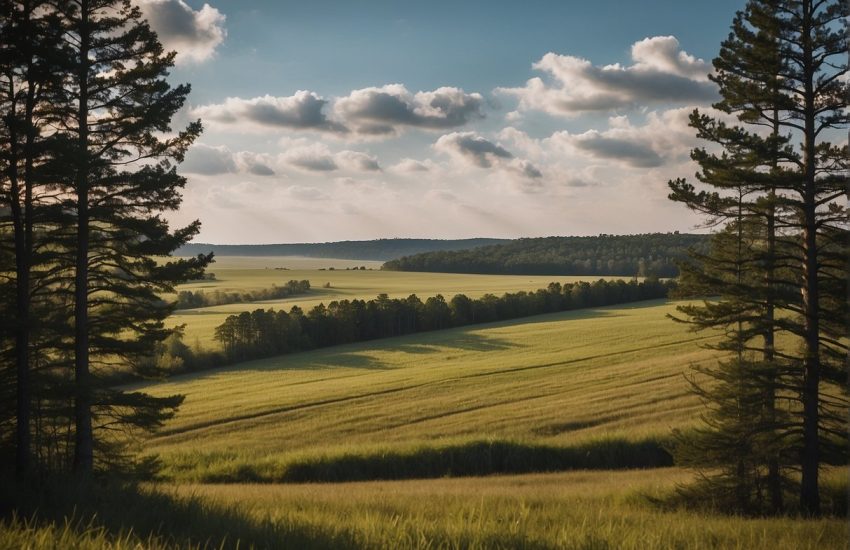
Blazing Star has an extensive native range across much of the eastern and central United States, from southern Canada south to Florida and Texas, and from the Atlantic coast west to the Great Plains. The species is particularly abundant in the tallgrass prairie regions of the Midwest, where it’s considered a signature species of high-quality native grasslands.
This adaptable wildflower occurs in diverse habitats including wet to mesic prairies, prairie swales, open woodlands, forest edges, and meadows. It’s equally at home in the moisture-retentive clay soils of Illinois prairies and the sandy soils of pine barrens in New Jersey. This habitat flexibility has allowed Blazing Star to persist across its range despite significant prairie loss, though it has declined in areas where suitable habitat has been converted to agriculture or development.
Throughout its range, Blazing Star serves as an indicator species for high-quality native plant communities. Its presence often signals intact ecosystems with deep soils and natural hydrology, making it valuable for conservation assessment and restoration planning.
📋 Regional plant lists featuring Blazing Star: North Carolina & South Carolina
Growing & Care Guide
Blazing Star is one of the easiest native wildflowers to grow successfully, combining spectacular ornamental appeal with remarkable drought tolerance and low maintenance requirements once established.
Light
This prairie native performs best in full sun, requiring at least 6-8 hours of direct sunlight daily for optimal flowering. In partial shade, plants may become leggy and produce fewer, smaller flower spikes. The intense summer sun that would stress many garden plants actually benefits Blazing Star, promoting compact growth and abundant blooms.
Soil & Water
Blazing Star is remarkably adaptable to soil conditions, thriving in everything from heavy clay to sandy soils. It prefers well-drained sites but tolerates both wet conditions in spring and drought in summer — a reflection of its prairie origins where seasonal moisture extremes are common. The plant prefers neutral to slightly alkaline pH (6.5-7.5) but adapts to acidic conditions. Most importantly, avoid consistently wet soils, which can cause the corm to rot.
Planting Tips
Plant from nursery-grown containers or bareroot corms in fall or early spring. Space plants 12-18 inches apart for mass plantings, or use as individual specimens. When planting corms, place them 2-3 inches deep with the pointed end up. Water thoroughly after planting but avoid overwatering — the deep taproot will find moisture as it establishes. Mulch lightly to suppress weeds but keep mulch away from the base of the plant.
Pruning & Maintenance
Blazing Star requires minimal maintenance once established. Deadhead spent flowers to encourage additional bloom or leave seed heads for birds and winter interest. Cut plants back to 3-4 inches in late fall or early spring. The plant may take 2-3 years to reach full size and flowering potential as the root system develops. Avoid disturbing established plants unnecessarily, as the deep taproot resents transplanting.
Landscape Uses
This versatile native excels in many garden applications:
- Pollinator gardens — exceptional late-season nectar source for butterflies and bees
- Prairie-style plantings — authentic component of naturalistic grassland gardens
- Perennial borders — provides vertical structure and late summer color
- Cut flower gardens — excellent fresh and dried flower for arrangements
- Wildflower meadows — helps establish diverse native plant communities
- Rain gardens — tolerates seasonal wetness and summer drought
- Slope stabilization — deep roots help prevent erosion
Wildlife & Ecological Value
Blazing Star ranks among the most ecologically valuable native plants, providing critical resources for pollinators when many other flowers have finished blooming and supporting diverse wildlife throughout the growing season and beyond.
For Birds
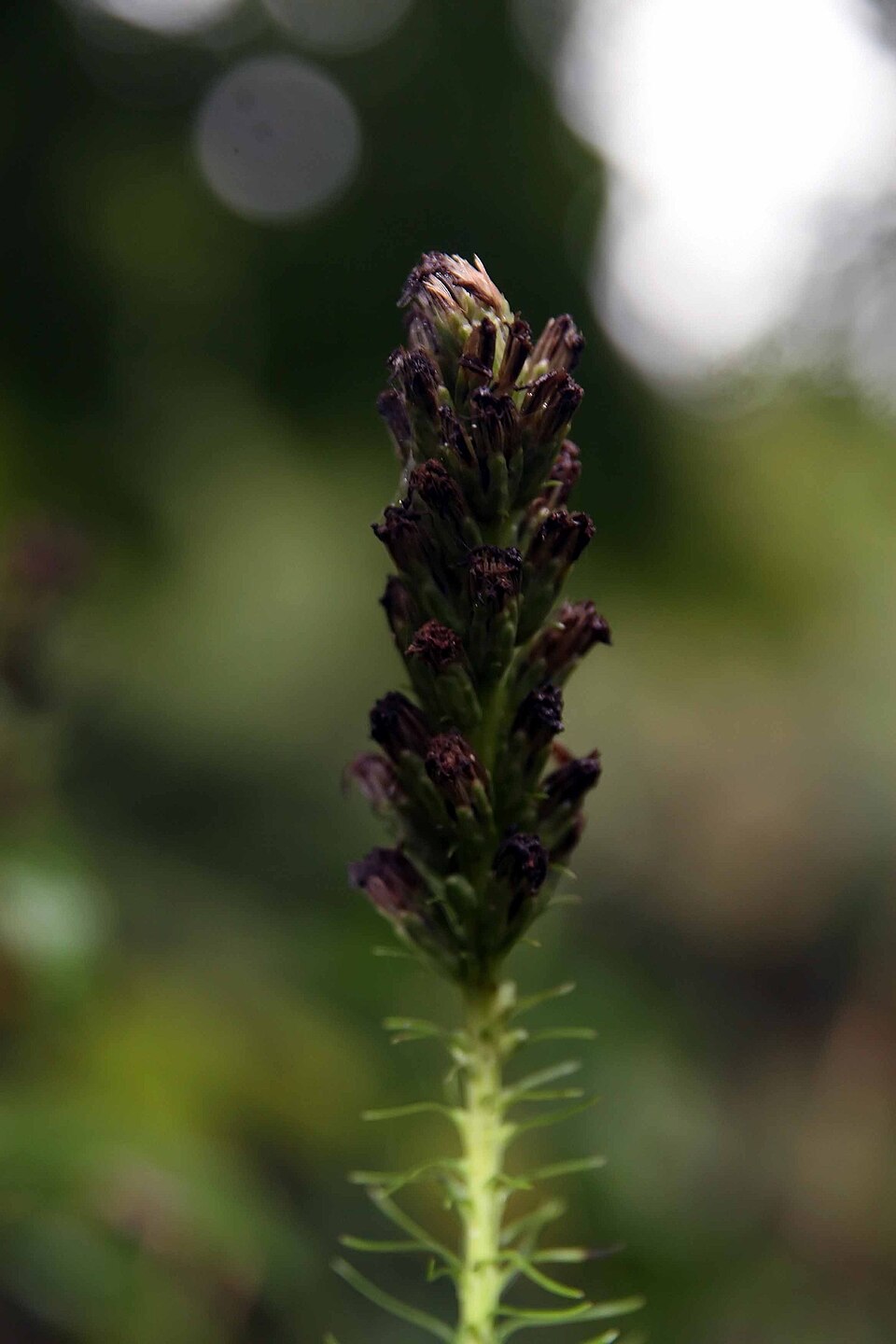
American Goldfinches are perhaps the most visible beneficiaries of Blazing Star, with flocks often covering plants in late fall and winter to harvest the abundant small seeds. Other finches, sparrows, and juncos also consume the seeds, while the sturdy dried stems provide perching sites and material for nest construction. The plant’s winter architectural structure adds important habitat complexity to prairie and meadow environments.
For Mammals
While not a major browse plant, Blazing Star’s leaves are occasionally consumed by rabbits and deer, particularly young growth in spring. More importantly, the extensive root system and corm provide food for various underground mammals and create soil structure that benefits the entire ecosystem. Prairie voles and other small mammals may shelter among the dense basal foliage.
For Pollinators
Blazing Star is exceptional for pollinators, supporting over 40 species of butterflies and numerous bee species. Major butterfly visitors include Monarchs, Great Spangled Fritillaries, Painted Ladies, Skippers, and various Sulfurs. The late summer bloom time makes it particularly valuable for Monarch butterflies during their fall migration. Native bees including bumble bees, leafcutter bees, and sweat bees are frequent visitors, along with beneficial wasps and hover flies.
Ecosystem Role
As a deep-rooted prairie species, Blazing Star plays crucial roles in ecosystem function. Its taproot channels moisture deep into the soil profile and brings nutrients from subsoil layers to the surface through leaf fall. The plant helps build soil organic matter and structure, creating better growing conditions for associated species. In prairie restoration, Blazing Star often serves as an indicator of establishment success and long-term community stability.
Cultural & Historical Uses
Blazing Star holds significant cultural importance throughout its range, particularly among Indigenous peoples of the Great Plains and eastern woodlands who developed numerous uses for this striking wildflower. The Lakota, Dakota, and other Plains tribes used various Liatris species medicinally, preparing teas and poultices from the roots and leaves to treat kidney problems, sore throats, and general malaise. The aromatic qualities of the plant made it valuable for ceremonial purposes, and it was sometimes burned as incense or carried for spiritual protection.
The Cherokee and other southeastern tribes had similar uses for Blazing Star, employing it in traditional medicine and incorporating it into cultural practices. The plant’s striking appearance and late-season bloom made it important in autumnal ceremonies and harvest celebrations. Some tribes used the fibrous outer layers of the corm to create cordage for basketry and other crafts.
European settlers quickly adopted Indigenous knowledge about Blazing Star, using it as a folk remedy for various ailments. The plant became known in frontier medicine as a diuretic and treatment for kidney stones, though these uses lacked scientific validation and could be dangerous. Early botanical explorers were struck by the plant’s beauty and unique flowering pattern, leading to its introduction into formal gardens and botanical collections.
In modern times, Blazing Star has found renewed significance as a symbol of prairie restoration and native plant conservation. It’s become emblematic of efforts to restore North America’s grassland ecosystems and is widely planted in prairie reconstructions, pollinator gardens, and sustainable landscapes. The plant’s exceptional value for butterflies has made it particularly important in conservation efforts focused on supporting declining pollinator populations, especially Monarch butterflies during their critical fall migration period.
Frequently Asked Questions
Why does Blazing Star bloom from top to bottom instead of bottom to top like most plants?
This unique flowering pattern, called “basipetal” blooming, is an evolutionary adaptation that may help extend the blooming period and ensure successful pollination. By opening flowers gradually over several weeks, the plant maximizes its chances of attracting pollinators and producing viable seeds.
How long does it take for Blazing Star to bloom from seed?
Plants grown from seed typically take 2-3 years to produce their first flowers, as they need time to develop the extensive root system and energy-storing corm that supports blooming. Corms or nursery plants will usually flower in their first or second year after planting.
Can Blazing Star be grown in containers?
While possible, container growing is challenging due to the plant’s deep taproot and preference for freely draining soil. Use very deep containers (at least 18-24 inches) and expect reduced vigor compared to ground-planted specimens. The plant is much better suited to in-ground planting.
Is Blazing Star deer resistant?
Blazing Star is generally considered deer resistant, though hungry deer may occasionally browse young foliage. The plant’s natural chemical compounds make it less palatable than many garden plants, and its prairie origins means it evolved with large grazing animals and can recover from moderate browsing.
When should I divide Blazing Star clumps?
Division is rarely necessary and can be challenging due to the deep taproot. If division is desired, do it in early spring before growth begins, and expect some plants to take a year or more to recover fully. It’s generally better to allow clumps to develop naturally and start new plants from seed or nursery stock.

Looking for a nursery that carries Blazing Star?
Browse our native plant nursery directory: North Carolina · South Carolina