
Alpine Enchanter’s-nightshade (Circaea alpina)
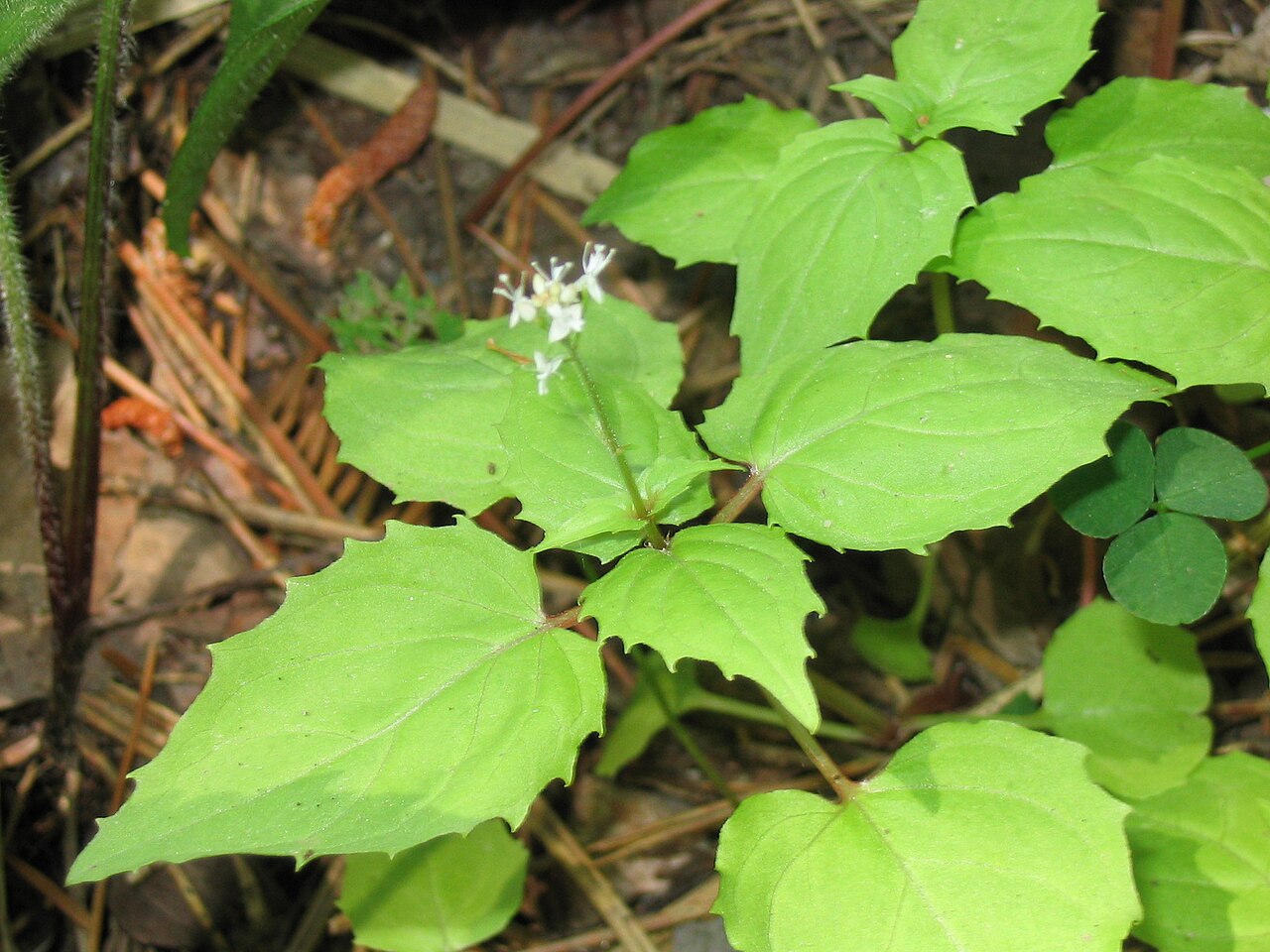
Circaea alpina, known as Alpine Enchanter’s-nightshade (USDA: small enchanter’s nightshade), is a dainty woodland wildflower of cool, moist forests across the northern half of the world. It belongs to the evening primrose family (Onagraceae) and, despite its name, is not related to the true nightshades of the tomato family. In North America it ranges from Alaska and Newfoundland south through the Rocky Mountains and Appalachians, and it grows in Europe and Asia as well.
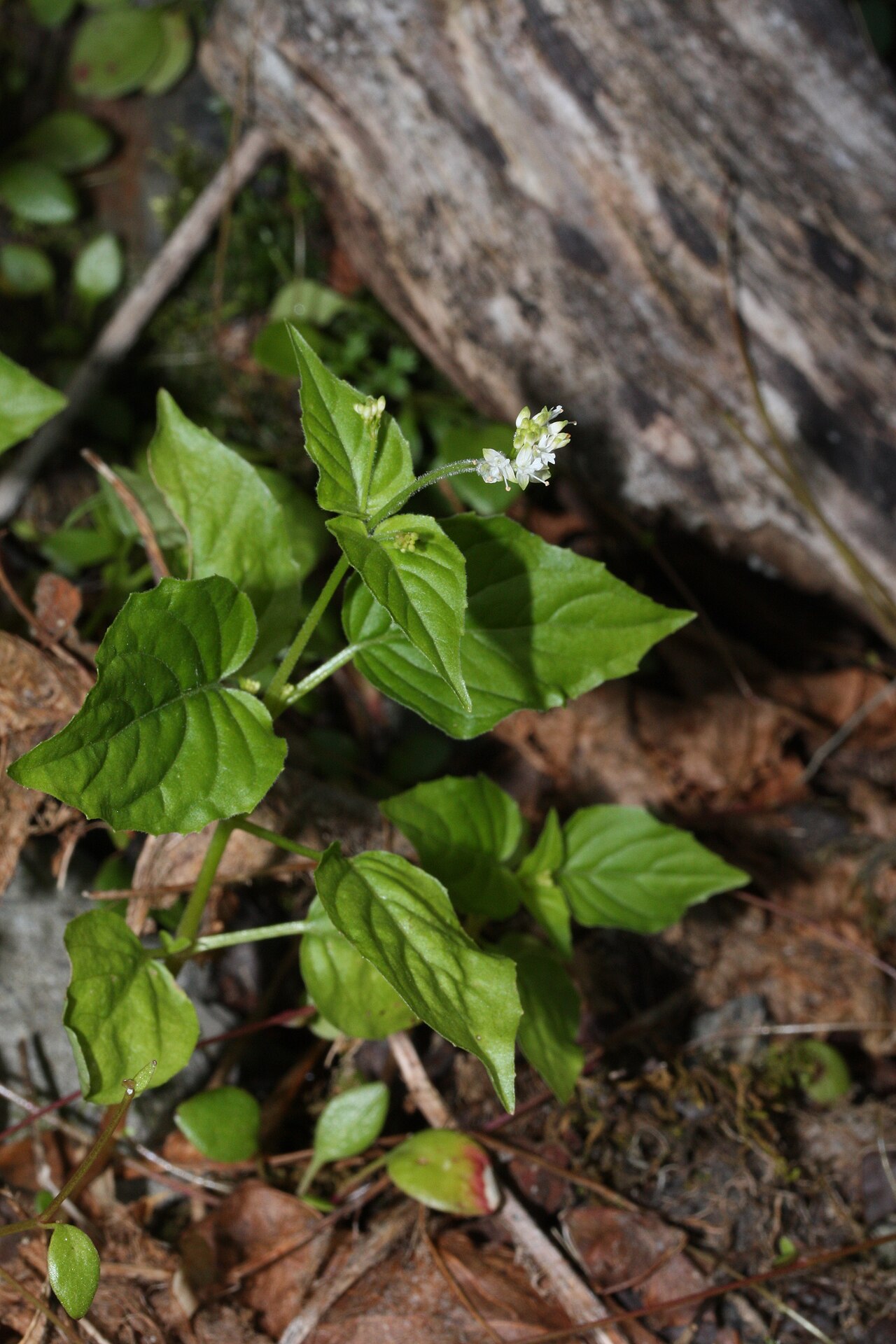
It is a small, rather succulent perennial, usually just 2 to 10 inches tall, with pairs of shiny, heart-shaped, coarsely toothed leaves and a slender spike of tiny white flowers in summer. Each flower has only two notched petals. The small, bur-like fruits are covered in hooked hairs that catch on fur and clothing. It spreads by thin underground stems that end in small tubers, often forming loose colonies on mossy logs, stream banks and the damp floors of conifer swamps.
Alpine enchanter’s-nightshade is easy to overlook, but it is a good indicator of cool, undisturbed, moist forest. It is seldom sold, but it can be grown in a shady, humus-rich woodland or moss garden that stays moist all summer. It has no known edible or medicinal use, so enjoy it as a wildflower and do not eat it.
Identification
Look for a small, delicate plant with opposite, shiny, heart-shaped, coarsely toothed leaves on a translucent stem, topped by a short spike of tiny white two-petaled flowers, on mossy logs and moist ground in cool forests.
Stems & Habit
Alpine enchanter’s-nightshade is a perennial herb 2 to 12 inches (5 to 30 cm) tall, with a single, weak, somewhat succulent and translucent stem that is smooth or slightly hairy. It spreads by slender rhizomes that form small tubers at their tips, from which new plants grow the next year. Plants often grow in loose colonies.
Leaves
The leaves are opposite, on long stalks, about 3/4 to 2 1/2 inches (2 to 6 cm) long, broadly oval to heart-shaped with a pointed tip and coarse, irregular teeth. They are thin, bright green and slightly glossy.
Flowers
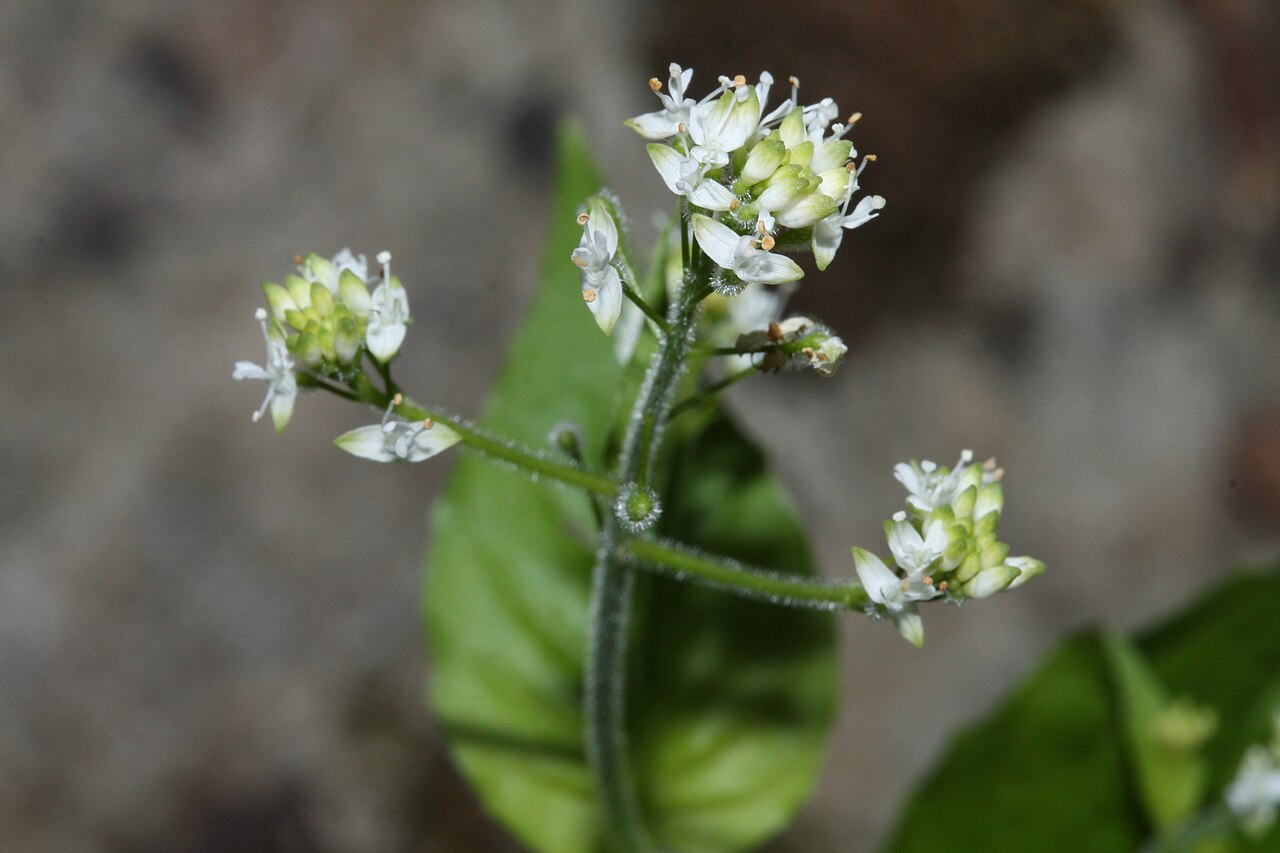
The flowers are tiny, about 1/8 inch (2 to 4 mm) across, in a short raceme at the stem tip and sometimes on side branches. Each has two white or pinkish petals with a notch at the tip, two sepals and two stamens. While in bloom, the open flowers are crowded together at the top of the stalk; the raceme lengthens as the fruits develop. Bloom time is about June to August.
Fruit & Seeds
The fruit is a small, club-shaped, one-seeded nutlet, about 1/12 inch (2 mm) long, covered with soft hooked hairs. It catches on the fur of animals and on clothing, which spreads the seed. Ripe fruits are present in late summer.
Look-alikes
Broadleaf Enchanter’s Nightshade (Circaea canadensis) is larger (1 to 3 feet tall), with dull, less toothed leaves, flowers spaced out along the stalk while open, and two-seeded, more bristly fruits; it grows in richer hardwood forests. The two species sometimes hybridize where they meet, producing sterile intermediate plants. Jewelweed seedlings and young violets can look similar, but they lack the two-petaled flowers. The tiny white flowers with two notched petals and the translucent stem identify alpine enchanter’s-nightshade.
Safety & Conservation
Alpine enchanter’s-nightshade is not known to be toxic, but it is not a food plant, so do not eat it. It is widespread and secure across most of its range, but it is rare at the edges of its range, for example in some southern Appalachian and southwestern states, where it is restricted to cool, high-elevation forests. Do not dig it from the wild.
Quick Facts
| Scientific Name | Circaea alpina |
| Family | Onagraceae (evening primrose family) |
| Plant Type | Herbaceous perennial wildflower |
| Mature Height | 2–12 in |
| Mature Spread | 4–12 in; spreads by rhizomes |
| Growth Rate | Moderate |
| Sun Exposure | Part shade to full shade |
| Water Needs | Moist to wet; consistently damp soil |
| Soil Type | Humus-rich, mossy or peaty soils; rotting wood |
| Soil pH | About 4.5–7.0 |
| Bloom Time | June–August |
| Flower Color | White to pale pink |
| Fall Color | Yellowish; dies back in fall |
| Fruit | Tiny one-seeded nutlet with hooked hairs |
| Deer Resistant | Unknown; small and seldom browsed |
| USDA Hardiness Zones | 2–7 |
Native Range
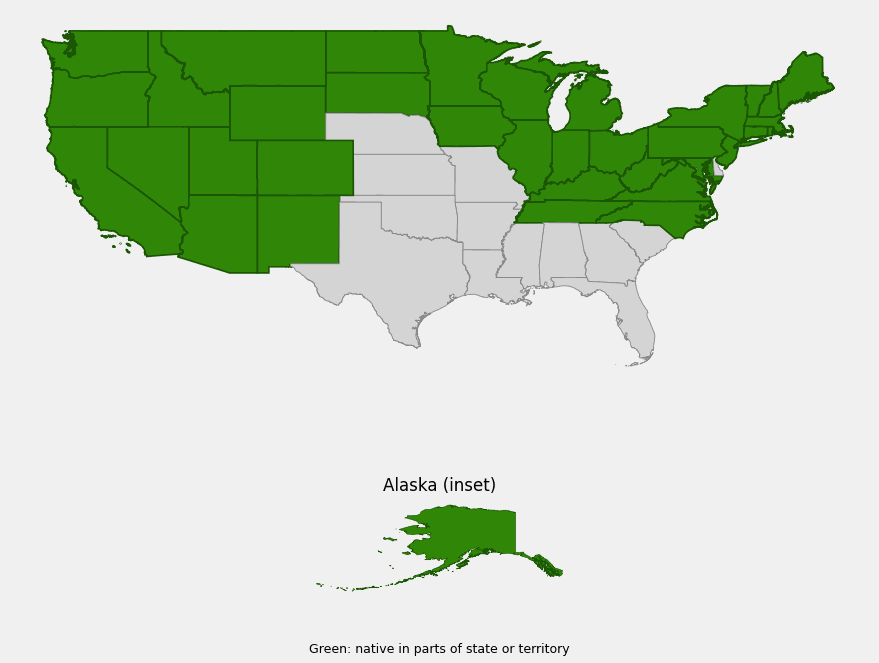
Alpine enchanter’s-nightshade has a circumboreal range, growing in cool forests of North America, Europe and Asia. In North America it is found from Alaska and the Yukon across Canada to Labrador and Newfoundland, and south through the northern states. USDA PLANTS lists it as native in 36 states, including Alaska, all of New England and the Great Lakes states, and the mountain states of the West.
In the East it reaches south along the Appalachian Mountains to Virginia, West Virginia, Kentucky, Tennessee and North Carolina, where it grows only in cool, high-elevation forests and is uncommon. In the West it follows the Rocky Mountains, the Cascades and the Sierra Nevada south to Colorado, Utah, Nevada, New Mexico, Arizona and California, again at higher elevations. Western plants are often treated as subspecies pacifica. In the Dakotas it occurs in the Black Hills and in the cool woods of northeastern North Dakota.
It grows in cool, damp, shady places: conifer and mixed forests, cedar and spruce swamps, alder thickets, stream banks and seeps, often on rotting logs, mossy stumps and hummocks. It needs consistently moist, humus-rich or peaty soil and is rarely found in open, sunny or dry places.
📋 Regional plant lists featuring Alpine Enchanter’s-nightshade: New York, Pennsylvania & Northern New Jersey · Idaho, Eastern Oregon & Eastern Washington · Ohio & Indiana · Montana & Wyoming · Michigan, Wisconsin & Eastern Minnesota · Kentucky & Tennessee · Utah & Western Colorado · Connecticut, Massachusetts & Rhode Island · New Hampshire, Maine & Vermont · Maryland, Virginia & West Virginia · Delaware, Southern New Jersey & Long Island · Arizona & New Mexico · Illinois, Iowa & Missouri · Alaska · North & South Carolina · North Dakota, South Dakota & Western Minnesota · Western Oregon & Western Washington · California & Nevada
Growing & Care Guide
Alpine enchanter’s-nightshade is a plant for cool, shady, moist woodland gardens in northern and mountain regions. It is rarely offered by nurseries, but it can be grown where conditions match its forest home.
Light
Part shade to full shade. Direct afternoon sun will scorch and dry out the thin leaves.
Soil & Water
It needs consistently moist, humus-rich soil, ideally with leaf mold, rotting wood or moss. Acidic to neutral soil suits it best. It does not tolerate drought, so water during dry spells, or grow it beside a pond, stream or seep.
Planting Tips
Plant small divisions or tubers in spring or early fall under trees, along a shady stream, or on a mossy log in a woodland or fern garden. It combines well with goldthread, Canada mayflower, twinflower and small ferns. It does best in regions with cool summers.
Pruning & Maintenance
No pruning is needed. Let the leaves die back naturally in fall and keep a layer of leaf litter over the soil. Leave rotting logs and stumps in place, since it often grows on them. Keep aggressive groundcovers and weeds away from its small colonies.
Propagation
Divide colonies or replant the small tubers that form at the ends of the rhizomes, in spring or fall. It can also be grown from seed sown outdoors in fall in moist, shady soil. Use only nursery-grown or garden-propagated plants; do not collect from the wild, especially where it is rare.
Landscape Uses
- Woodland and shade gardens: a delicate groundcover for cool, moist shade
- Moss and fern gardens: fits among mosses, ferns and rotting logs
- Streamside plantings: grows in damp soil along shady streams and seeps
- Native forest restoration: part of the herb layer of cool, moist forests
- Nature study: an indicator of cool, undisturbed forest
Wildlife & Ecological Value
Alpine enchanter’s-nightshade plays a small but real role in the forest ecosystem.
For Pollinators
The tiny flowers are visited by small flies, including syrphid flies, and small bees, which collect nectar and pollen. The plant can also self-pollinate when insects are scarce.
For Birds
The tiny, bur-like fruits are of little food value to birds. Ground-foraging birds such as thrushes and winter wrens hunt insects among the low plants on mossy logs and forest floors.
For Mammals
The hooked hairs on the fruits catch in the fur of deer, hares, foxes and other animals, which carry the seeds to new sites. The plant is too small to be an important browse plant.
Ecosystem Role
As part of the herb layer of cool, moist forests, it helps cover the soil on logs and stream banks. Its tubers and rhizomes let it form small colonies, while animal-carried fruits spread it to new patches of suitable habitat such as fallen logs and swamp hummocks.
Cultural & Historical Uses
The genus name Circaea comes from Circe, the enchantress of Greek myth who turned Odysseus’s men into pigs. Early European botanists linked the plant with magic and spells, and the name enchanter’s nightshade was given to the related European species Circaea lutetiana. The species name alpina refers to its cool, mountain habitats in Europe.
Despite the “nightshade” in its name, it has nothing to do with the poisonous deadly nightshade (Atropa belladonna) of the potato family. It is a member of the evening primrose family, in the same group as fireweed and the evening primroses.
Alpine enchanter’s-nightshade and its larger relative Broadleaf Enchanter’s Nightshade are both featured on this site. The two species hybridize where they grow together, and the hybrid can persist and spread by rhizomes even though it rarely sets good seed.
Frequently Asked Questions
Is alpine enchanter’s-nightshade poisonous?
It is not known to be toxic and is not related to deadly nightshade. However, it is not a food plant, so do not eat it.
How is it different from broadleaf enchanter’s nightshade?
Alpine enchanter’s-nightshade is much smaller (usually under 1 foot), has shiny, coarsely toothed leaves and a translucent stem, and grows in cool, moist conifer forests. Broadleaf enchanter’s nightshade is 1 to 3 feet tall and grows in richer hardwood forests.
Why is it called enchanter’s nightshade?
The genus is named for Circe, the enchantress of Greek mythology. The name has nothing to do with the true nightshades.
How does it spread?
It spreads by slender underground stems that end in small tubers, and by small fruits with hooked hairs that cling to animal fur and clothing.
Can I grow alpine enchanter’s-nightshade?
Yes, in a cool, shady garden with consistently moist, humus-rich soil. Use garden-propagated plants and do not dig it from the wild.

Looking for a nursery that carries Alpine Enchanter’s-nightshade?
Browse our native plant nursery directory: Alaska & Arizona · California · Colorado & Connecticut · Idaho, Illinois, Indiana & Iowa · Kentucky, Maine, Maryland, Massachusetts, Michigan, Minnesota & Montana · Nevada, New Hampshire, New Jersey, New Mexico, New York, North Carolina, North Dakota & Ohio · Oregon · Pennsylvania, Rhode Island, South Dakota, Tennessee, Utah, Vermont & Virginia · Washington · West Virginia, Wisconsin & Wyoming