
Parry’s Phacelia (Phacelia parryi)
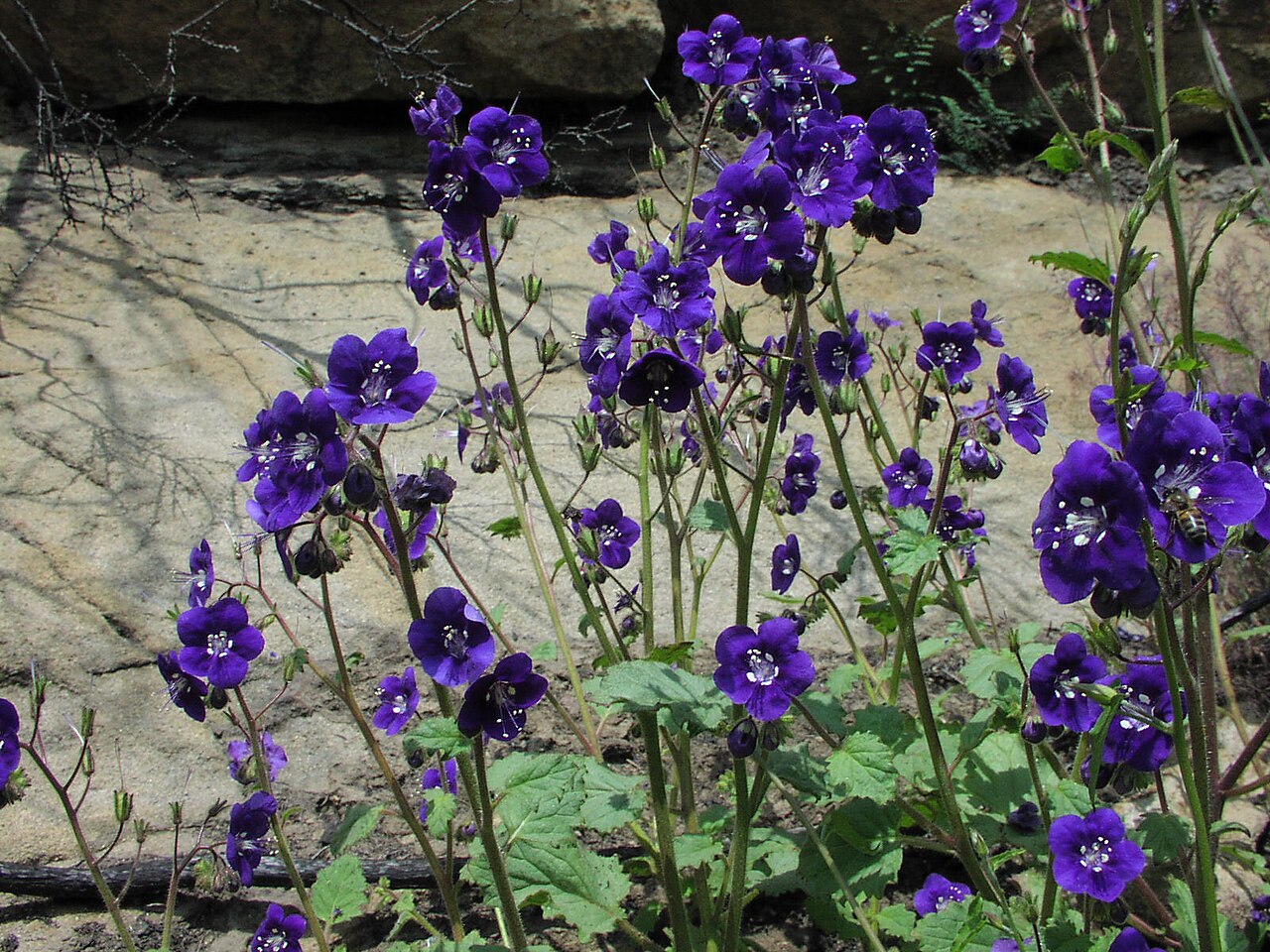
Phacelia parryi, known as Parry’s Phacelia, is a spring-blooming annual wildflower of southern California, western Arizona and Baja California. It grows into a leafy, glandular-hairy plant up to about 2 feet tall, and from late winter into spring it carries loose clusters of open, bowl-shaped flowers about an inch across in an intense deep violet, one of the richest purples of any California wildflower.
Parry’s phacelia grows in coastal sage scrub, chaparral and the edges of the Mojave and Sonoran deserts, often on rocky or sandy slopes and in washes. It is especially abundant in the first years after a wildfire, when seed that has waited in the soil germinates by the thousands, and it is one of the showy annuals of wet desert springs.
It is easy to grow from seed in a sunny, well-drained spot in a southern California or low desert garden, and it is a favorite of native bees. Like several phacelias, its sticky glandular hairs can cause an itchy rash in some people. This guide covers identification, range, growing tips, its value to pollinators and how to handle it safely.
Identification
Parry’s phacelia is one of the easier phacelias to recognize: a leafy annual with broad, toothed leaves and open, saucer-shaped, deep violet flowers rather than the coiled spikes of small flowers typical of many phacelias.
Stems & Growth Habit
Plants are annuals that grow from a taproot into a single upright stem or several branching stems, usually 8 inches to 2 feet tall. The stems are covered in stiff hairs and short glandular hairs that make the plant feel sticky and give it a faint, resinous smell.
Leaves
The leaves are alternate, oval to broadly lance-shaped, about 1 to 3 inches long, with irregularly toothed or shallowly lobed edges and a stalk. They are softly hairy and glandular, and the lower leaves are the largest.
Flowers
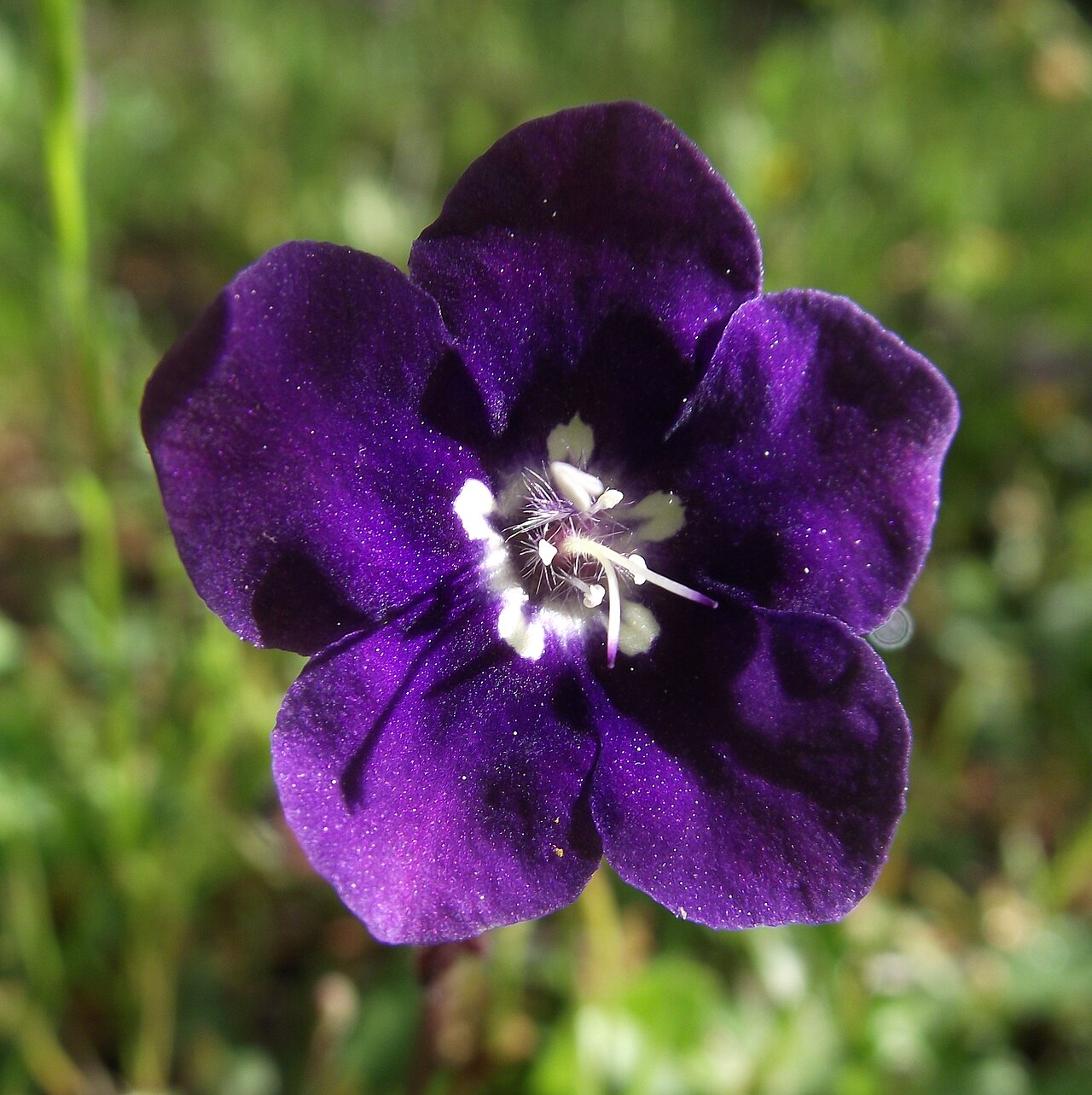
The flowers are borne in loose, one-sided, slightly coiled clusters at the tips of the stems, which straighten as more flowers open. Each flower is ¾ to 1¼ inches across, with five broad, rounded lobes forming a shallow bowl. The color is a deep, velvety violet to blue-purple, usually with a paler, whitish or yellowish area in the throat. Five stamens with white anthers stick out from the center. Bloom is mostly from March to May, earlier in the low desert after good winter rain.
Fruit & Seeds
Each flower produces a small, oval capsule that splits to release numerous tiny, pitted seeds. The seeds can stay dormant in the soil for years until fire or an unusually wet winter triggers mass germination.
Look-alikes
California bluebells (Phacelia campanularia) of the Colorado and Mojave deserts has bell-shaped, gentian-blue flowers rather than open, violet saucers. Wild Canterbury bells (Phacelia minor) has longer, tubular, bell-shaped purple flowers. Most other local phacelias, such as caterpillar scorpionweed, have small flowers in dense, fuzzy, caterpillar-like coils.
Quick Facts
| Scientific Name | Phacelia parryi |
| Family | Boraginaceae (borage family; formerly Hydrophyllaceae) |
| Plant Type | Annual wildflower |
| Mature Height | 8 in–2 ft |
| Mature Spread | 6–18 in |
| Growth Rate | Fast (germinates in winter, blooms in spring) |
| Sun Exposure | Full sun to light shade |
| Water Needs | Low; relies on winter rain |
| Soil Type | Sandy, gravelly or rocky, well-drained |
| Soil pH | About 6.0–8.0 |
| Bloom Time | March–May (earlier in the low desert) |
| Flower Color | Deep violet to blue-purple with a pale center |
| Fall Color | None (annual; dies by early summer) |
| Fruit | Small capsule with many tiny pitted seeds |
| Deer Resistant | Moderate (sticky, hairy foliage) |
| USDA Hardiness Zones | Annual; grown as a cool-season annual in zones 8–11 |
Native Range
USDA PLANTS lists Parry’s phacelia as native in two states, California and Arizona. It also grows in northern Baja California, Mexico. In California it ranges through the coastal hills and mountains of southern California, from the Santa Monica Mountains and the Transverse Ranges south through the Peninsular Ranges of Riverside and San Diego counties, and onto the western and southern edges of the Mojave and Colorado deserts.
In Arizona it grows in the western part of the state, in the Sonoran Desert and the desert mountains, where it appears mainly in years with good winter rain. It is a cool-season annual everywhere: seeds germinate after fall and winter rains, and plants bloom and set seed before the summer heat.
Typical habitats are coastal sage scrub, chaparral, desert scrub, rocky slopes, sandy washes and canyon bottoms. It is famous as a fire-follower, appearing in great numbers in the first spring or two after chaparral or sage scrub burns, then fading back to scattered plants as the shrubs regrow.
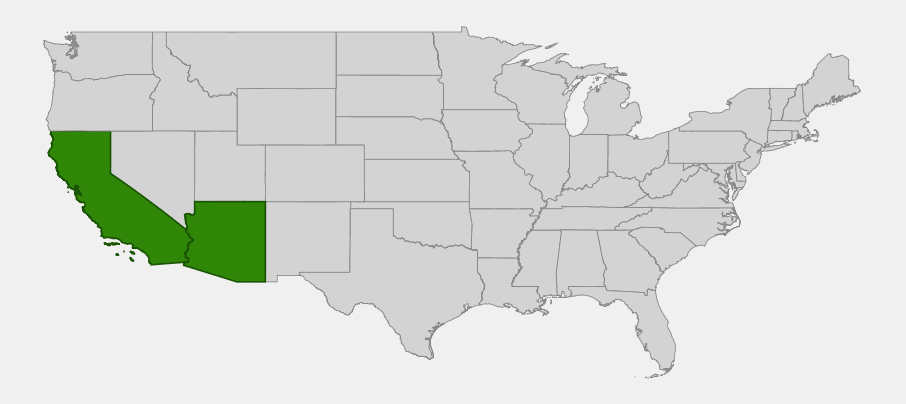
📋 Regional plant lists featuring Parry’s Phacelia: Arizona & New Mexico · California & Nevada
Growing & Care Guide
Parry’s phacelia is one of the most rewarding native annuals for southern California and low desert gardens. Sow it once, give it sun and good drainage, and it will often reseed in following years. It needs no summer water at all, since it completes its life cycle by early summer. Seed is available from native seed suppliers in California.
Light
Full sun gives the most compact plants and heaviest bloom. It tolerates light or afternoon shade, especially in hot inland and desert gardens.
Soil & Water
Grow it in sandy, gravelly or rocky soil that drains well; it tolerates poor soil and does not need fertilizer. Winter rain is usually enough. In a dry winter, water every week or two from germination until the buds form, then stop. Do not water in summer.
Planting Tips
Sow seed directly where it is to grow in fall or early winter, ideally just before a rain. Scatter it on raked, weed-free soil and press it in lightly or cover it with a very thin layer of soil. It does not transplant well. It looks best in drifts with California poppies, lupines, chia and other spring annuals, or scattered among low native shrubs.
Pruning & Maintenance
No pruning is needed. Let plants dry and drop their seed in late spring if you want them to return, then pull the dry plants. Wear gloves and long sleeves when handling the plants, since the glandular hairs can irritate skin.
Propagation
Grow it from seed. Fresh seed often has some dormancy, which is why it germinates in large numbers after fire. Gardeners sometimes improve germination by sowing in fall so the seed goes through a natural cool, wet period, or by using a smoke-water treatment sold for fire-following wildflowers.
Landscape Uses
- Wildflower meadows and seed mixes: for an intense violet note among poppies, lupines and other spring annuals
- Pollinator gardens: an early-season food source for native bees
- Post-fire and slope restoration: a natural fire-follower in sage scrub and chaparral
- Desert and gravel gardens: sown among cacti, brittlebrush and other desert shrubs
- Containers: sown in a deep pot of sandy mix for a short but brilliant spring display
Wildlife & Ecological Value
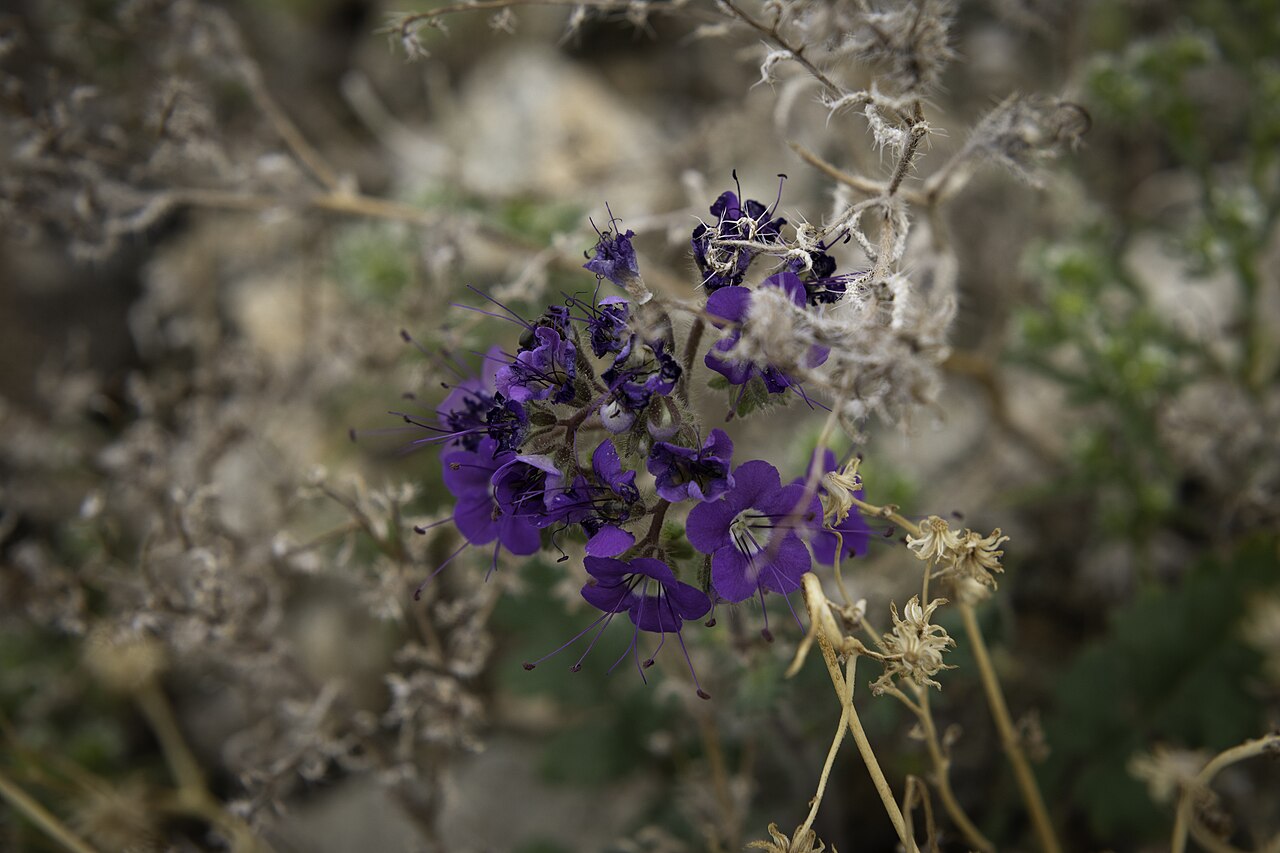
Like other phacelias, Parry’s phacelia is a strong pollinator plant, and its mass blooms after fire or wet winters provide a burst of food for insects and seed-eaters.
For Pollinators
The open, nectar-rich flowers are visited by many native bees, including bumblebees, digger bees, mason bees and specialist solitary bees, as well as bee flies and butterflies. Phacelias in general are known as some of the best bee plants in western North America.
For Birds
Seed-eating birds such as sparrows, finches and quail eat the small seeds that fall to the ground in late spring.
For Mammals
Rabbits and rodents may eat the young plants, but the sticky, hairy foliage is not favored by deer.
Ecosystem Role
As a fire-follower, it covers bare ground in the first years after chaparral and sage scrub burn, helping to hold soil, feeding pollinators and returning seed to the soil seed bank before the shrubs regrow. In the desert, its abundance from year to year tracks winter rainfall.
Cultural & Historical Uses
The species is named for Charles Christopher Parry (1823–1890), a botanist who collected plants on the U.S.–Mexico Boundary Survey in the 1850s and later throughout the West. Many western plants carry his name. The genus name Phacelia comes from the Greek phakelos, a bundle, referring to the clustered flowers.
Safety note: many phacelias, including Parry’s phacelia, have glandular hairs that can cause contact dermatitis, an itchy, sometimes blistering rash similar to a mild poison oak reaction, in sensitive people. Wear gloves and long sleeves when handling the plants, wash skin afterward, and keep it away from children who might handle it. It is not an edible plant.
Parry’s phacelia is one of the wildflowers that make a desert or chaparral “super bloom” so colorful. In the springs after big wildfires in southern California, hillsides that were bare black ash can turn purple with phacelias, and these displays draw many visitors.
Frequently Asked Questions
Is Parry’s phacelia an annual?
Yes. It germinates after fall and winter rains, blooms in spring and dies by early summer. It often reseeds itself in gardens.
Can Parry’s phacelia cause a rash?
It can. Like several phacelias, its sticky glandular hairs can cause contact dermatitis in sensitive people. Wear gloves and long sleeves when handling it and wash your skin afterward.
When does it bloom?
Mostly from March to May, earlier in the low desert and later in the mountains, depending on rain.
Why does it appear after wildfires?
Its seeds can stay dormant in the soil for years. Heat, smoke and the open, sunny conditions after a fire trigger mass germination, so it often blooms in great numbers the first spring after a burn.
How do I grow Parry’s phacelia?
Sow seed directly in fall or early winter in a sunny spot with well-drained soil. Rain usually provides all the water it needs. Do not fertilize, and do not water in summer.

Looking for a nursery that carries Parry’s Phacelia?
Browse our native plant nursery directory: Arizona · California