
Whispering Bells (Emmenanthe penduliflora)
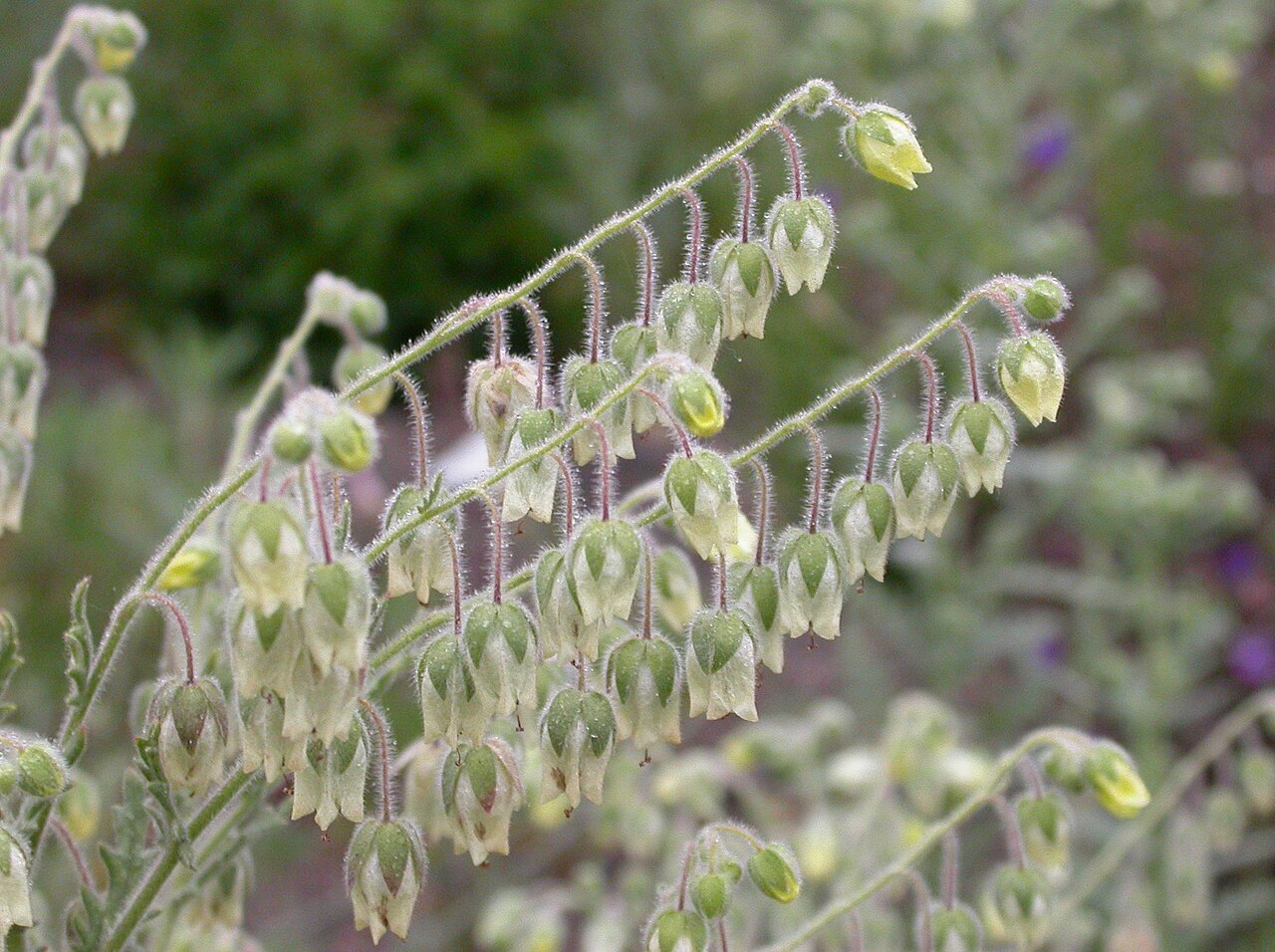
Emmenanthe penduliflora, known as Whispering Bells (USDA: whisperingbells), is a sticky, fragrant annual wildflower of the chaparral, foothills and deserts of the Southwest. Its slender, branching stems hang with rows of small, pale yellow bells. As the flowers age they dry to a tissue-paper texture but stay attached, and they rustle softly in the breeze, which gives the plant its name.
It is an annual, usually 4 to 20 inches tall, covered in glandular hairs with a pleasant, slightly medicinal scent. It is the only species in its genus and belongs to the borage family (Boraginaceae; formerly the waterleaf family, Hydrophyllaceae). Whispering bells is best known as a “fire follower”: its seeds can lie dormant in the soil for years and germinate in great numbers in the first spring after a chaparral fire, triggered by chemicals in smoke and charred wood.
It also grows in sandy washes and rocky slopes in the Mojave and Sonoran deserts, where it blooms after good winter rains. It can be grown from seed in dry, sunny gardens. Like many of its relatives, its sticky hairs may irritate sensitive skin.
Identification
Look for a sticky, hairy, bushy annual with pinnately lobed leaves and many small, pale yellow (sometimes pinkish) bell-shaped flowers hanging from thread-thin stalks, on burned chaparral, brushy slopes and desert washes in spring. Old flowers stay on the plant as dry, papery bells.
Stems & Habit
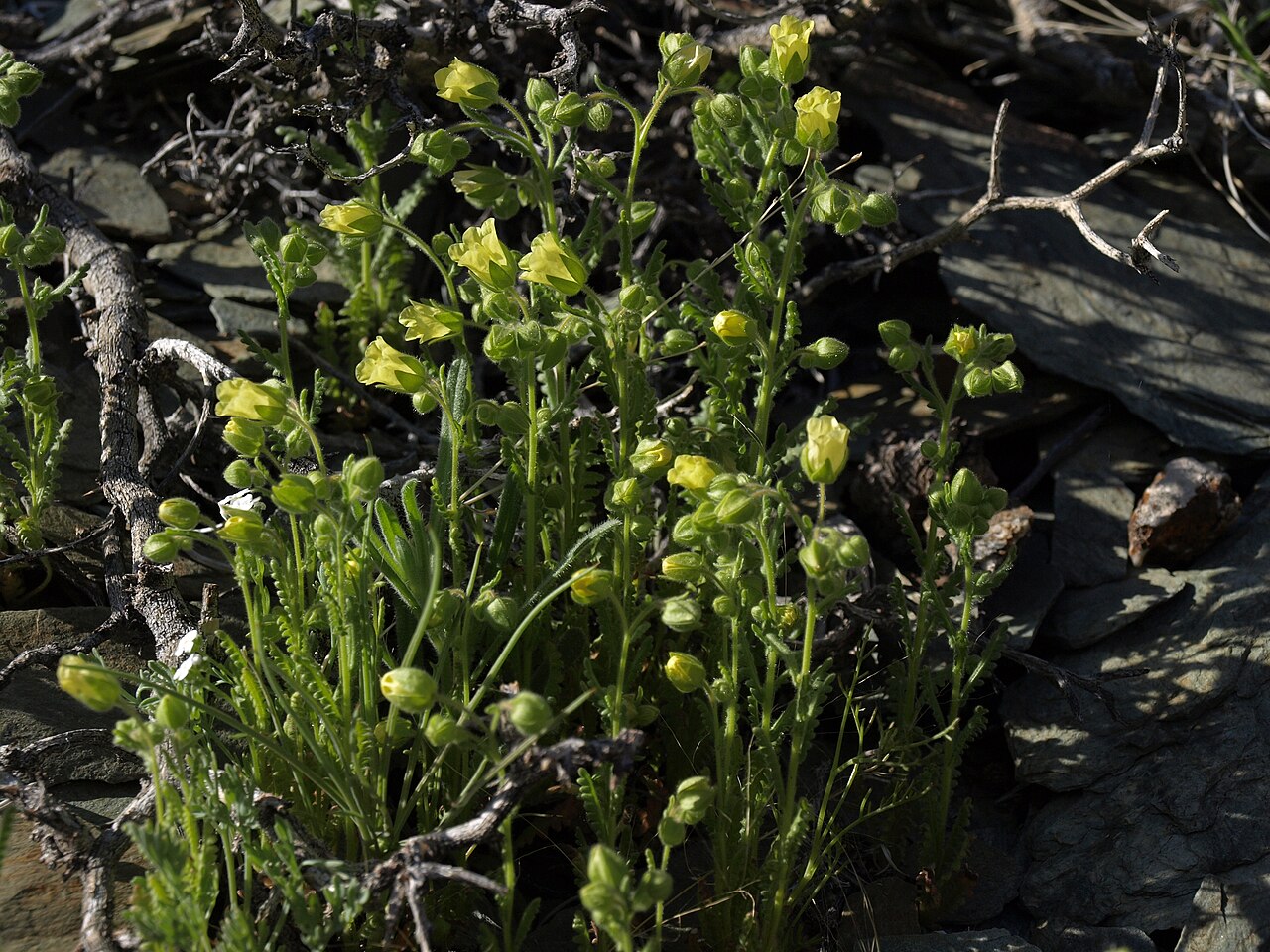
Whispering bells is an erect, branched annual from about 4 to 20 inches (10 to 50 cm) tall. The stems are covered with sticky glandular hairs that give off a sweet, somewhat medicinal odor when touched.
Leaves
The leaves are 1 to 4 inches long, oblong in outline and deeply cut into many toothed lobes, like a coarse comb. The lower leaves are stalked; the upper ones clasp the stem. Like the stems, they are sticky and hairy.
Flowers
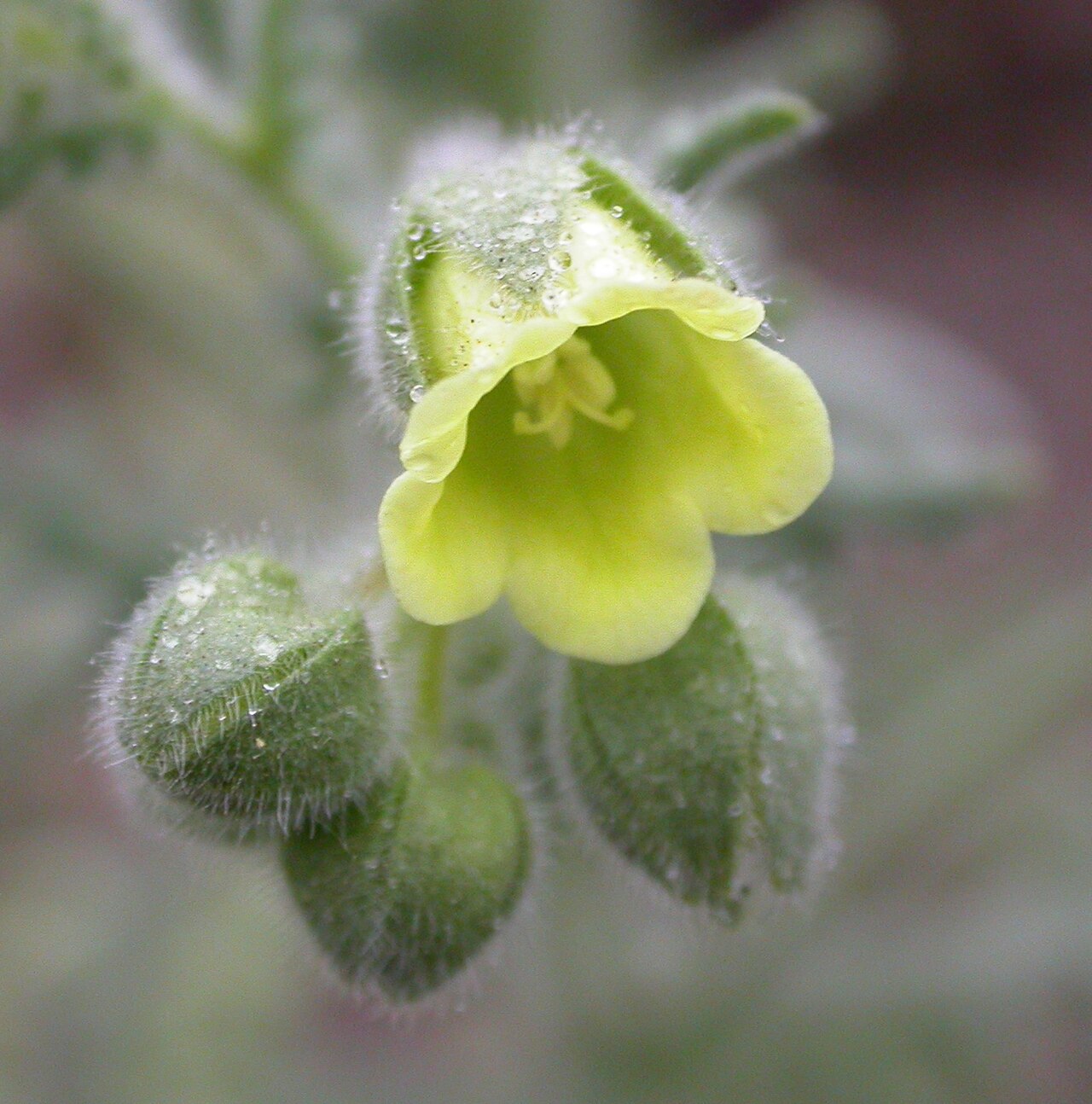
The flowers hang from slender, curving stalks along the upper branches. Each is a bell-shaped corolla about 1/3 to 1/2 inch (8 to 15 mm) long, pale yellow to cream, sometimes pink-tinged in parts of southern California. As the flowers age, the corolla dries to a straw-colored, papery bell that stays on the plant around the developing fruit. Bloom is from about March to July, depending on elevation.
Fruit & Seeds
Each flower forms a small, oblong capsule enclosed by the persistent dry corolla and calyx. The capsule holds many tiny, finely wrinkled seeds that fall near the parent plant and can remain dormant in the soil for many years.
Look-alikes
Few plants share its nodding, papery yellow bells. Its relatives the phacelias, such as California Bluebells, have mostly blue or purple flowers held upright in coiled clusters. Ground cherries (Physalis) have nodding yellow flowers but much larger, papery husks around a berry and are not sticky-glandular.
Quick Facts
| Scientific Name | Emmenanthe penduliflora |
| Family | Boraginaceae (borage family); formerly Hydrophyllaceae |
| Plant Type | Annual wildflower; fire follower |
| Mature Height | 4–20 in |
| Mature Spread | 4–12 in |
| Growth Rate | Fast |
| Sun Exposure | Full sun |
| Water Needs | Very low; relies on winter rain |
| Soil Type | Sandy, gravelly or rocky, well-drained soils; burned ground |
| Soil pH | About 6.0–8.0 |
| Bloom Time | March–July |
| Flower Color | Pale yellow to cream, sometimes pinkish |
| Fall Color | None; annual |
| Fruit | Small capsule inside the dry, papery corolla |
| Deer Resistant | Yes; sticky, aromatic foliage is seldom eaten |
| USDA Hardiness Zones | Annual; grows where zones 7–10 occur |
Native Range
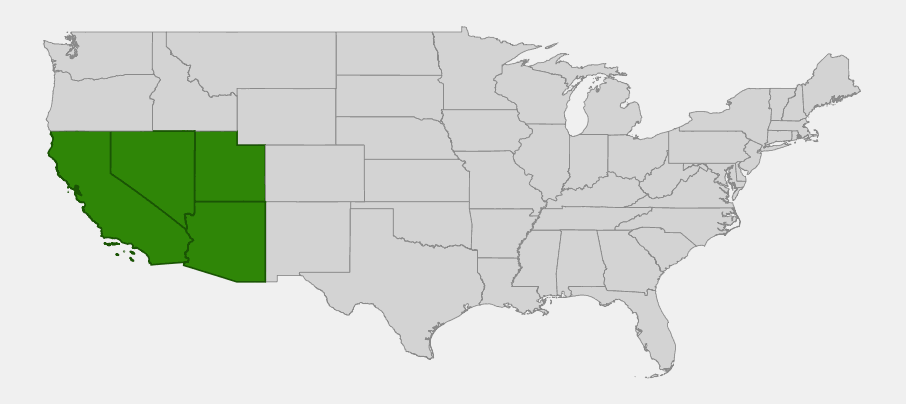
Whispering bells is native to the southwestern United States and northern Baja California, Mexico. USDA PLANTS lists it as native in Arizona, California, Nevada and Utah.
In California it ranges from the inner Coast Ranges and Sierra Nevada foothills of the northern and central part of the state south through the Transverse and Peninsular Ranges to Baja California, and east into the Mojave and Colorado (Sonoran) deserts and the White and Inyo Mountains. Beyond California it reaches southern Nevada (for example, Red Rock Canyon near Las Vegas), western and central Arizona, and the far southwest corner of Utah.
It grows in chaparral and coastal sage scrub, especially in the first years after fire, and on brushy hillsides, rocky slopes, sandy washes and canyon floors in desert scrub, Joshua tree woodland and pinyon-juniper woodland.
📋 Regional plant lists featuring Whispering Bells: Utah & Western Colorado · Arizona & New Mexico · California & Nevada
Growing & Care Guide
Whispering bells is an easy annual for dry, sunny wildflower gardens in the Southwest, though it can be erratic in cultivation. Its delicate bells and fragrance are worth the effort, and plants often reseed in suitable spots.
Light
Full sun to very light shade.
Soil & Water
It needs well-drained sandy, gravelly or rocky soil. Rely on winter rain; in dry winters, water lightly every two to three weeks until flowering. Rich soil and summer water are not needed.
Planting Tips
Sow seed directly on the surface of bare, raked soil in fall, before winter rains. Germination improves greatly if the seed is treated with smoke (commercial smoke-infused paper or “smoke water” is sold for native seed) or sown with a light dusting of powdered charcoal. Combine it with other chaparral and desert annuals for a natural wildflower display.
Pruning & Maintenance
No pruning is needed. Leave plants in place after bloom so the papery bells can be enjoyed and seed can drop. Wear gloves if your skin is sensitive to the sticky hairs.
Propagation
Seed only. Collect seed from the dried capsules in late spring or summer and store it dry. Expect some seed to remain dormant until a later year, as it does in the wild.
Landscape Uses
- Wildflower gardens: delicate nodding bells for dry, sunny sites
- Post-fire restoration: a natural first-year colonizer of burned chaparral
- Desert gardens: spring annual for sandy and gravelly soils
- Dried arrangements: the papery bells keep their shape when dried
- Pollinator gardens: nectar for native bees in spring
Wildlife & Ecological Value
Whispering bells is a small but important part of the early recovery of chaparral after fire, when it flowers in abundance on otherwise bare slopes.
For Pollinators
The flowers are visited mainly by native bees, which crawl into the hanging bells for nectar and pollen. In post-fire years, its mass blooms are an important food source while shrubs are regrowing.
For Birds
Seed-eating birds such as sparrows and finches forage for the tiny seeds on the ground.
For Mammals
The sticky, aromatic foliage is rarely eaten by deer or rabbits. Seed-harvesting rodents and ants may gather the seeds.
Ecosystem Role
As a classic fire-follower, whispering bells lives in the soil seed bank between fires, sometimes for decades. After a fire it quickly covers bare ground, helps reduce erosion and recycles nutrients, then gives way as shrubs regrow. Its seeds have been widely studied for their response to smoke.
Cultural & Historical Uses
The genus name Emmenanthe comes from Greek words meaning “abiding flower,” because the dry corolla stays on the plant after flowering. The species name penduliflora means “with hanging flowers.”
Whispering bells became a model plant for research on how fire triggers germination. Studies in California chaparral found that its seeds germinate when exposed to smoke or charred wood, and that certain compounds in smoke act as the trigger. This research helped explain why so many wildflowers appear in the first spring after a wildfire.
Its fragrance, often compared to a mix of honey and medicinal herbs, and the faint rustling of its dry bells make it a favorite with hikers in burned areas. On this site, related species include California Bluebells and Yerba Santa.
Frequently Asked Questions
Why is it called whispering bells?
The flowers dry to a papery texture but stay on the plant, and the dry bells rustle or “whisper” in the wind.
Is whispering bells a fire follower?
Yes. Its seeds can stay dormant in the soil for many years and germinate in large numbers after a chaparral fire, triggered by compounds in smoke and charred wood.
Can I grow whispering bells from seed?
Yes. Sow seed on the soil surface in fall in a sunny, well-drained spot. Treating the seed with smoke water or charcoal greatly improves germination.
Is whispering bells an annual?
Yes. It germinates in winter or spring, blooms from about March to July, and dies after setting seed.
Where does whispering bells grow?
In California, southern Nevada, Arizona and southwest Utah, and south into Baja California, in chaparral (especially after fire), brushy slopes and desert washes.

Looking for a nursery that carries Whispering Bells?
Browse our native plant nursery directory: Arizona · California · Nevada · Utah