White Sage (Salvia apiana)
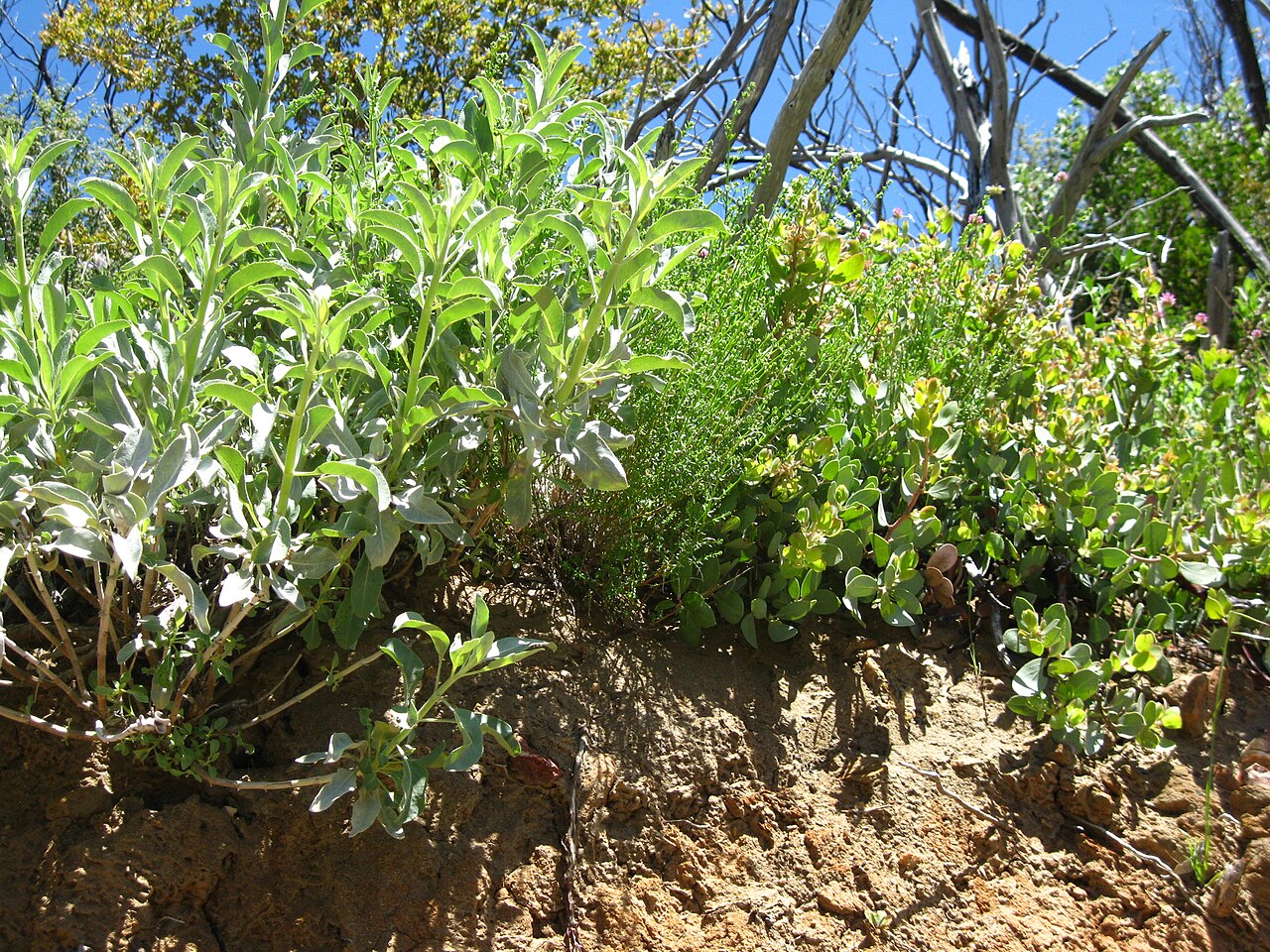
Salvia apiana, commonly called White Sage or Bee Sage, is an aromatic evergreen subshrub of the coastal sage scrub and chaparral of Southern California and northern Baja California. It is instantly recognizable by its pale, silvery-white leaves, a color so distinct it stands out against the surrounding greens and grays of the chaparral even from a distance. Crush a leaf and a sharp, resinous, unmistakable sage fragrance fills the air — the same fragrance that gives this plant centuries of cultural significance to the Indigenous peoples of its native range.
White sage grows as a rounded, woody-based subshrub 3 to 8 feet tall, sending up tall, branched flowering stalks in late spring that can tower well above the foliage mound and carry whorls of white to pale lavender flowers. Those flowers are a magnet for native bees, carpenter bees and hummingbirds, and the common name “bee sage” reflects just how attractive the plant is to pollinators during its long bloom season.
In the garden, white sage is prized by California native-plant gardeners for its silvery color, drought tolerance and wildlife value, but it asks for exactly the conditions of its native hillsides: lean, fast-draining soil, full sun, and no summer water once established. Because wild plants have faced heavy harvesting pressure for the smudging and incense trade in recent decades, gardeners who want white sage should buy nursery-propagated plants or seed rather than collecting from the wild.
Identification
White sage forms a rounded, somewhat sprawling subshrub, typically 3 to 5 feet tall and wide, though well-sited plants can reach 6 to 8 feet, especially when in full bloom with their tall flowering stalks. The base is woody and semi-persistent, while the newer growth is soft and herbaceous, dying back somewhat in the driest part of summer.
Stems
Young stems are square in cross-section, as in all mints, and covered in fine white hairs that give them a frosted look. Older basal stems become woody and gray-brown with age. Flowering stalks are tall, stiff and branched, rising well above the leafy base.
Leaves
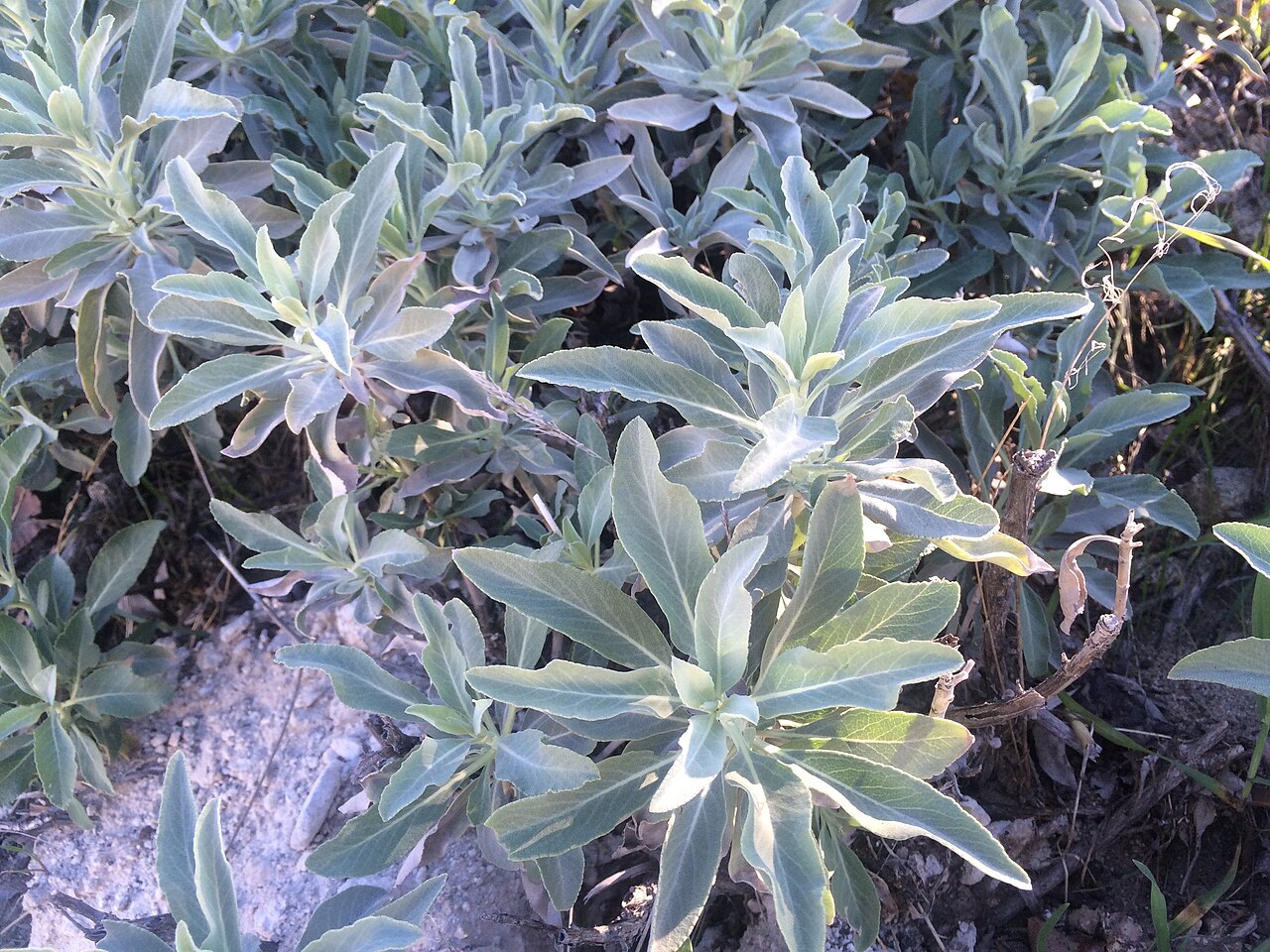
The leaves are the plant’s signature feature: 2 to 4 inches long, oblong to lance-shaped, and covered in dense, fine hairs that give them a chalky, silvery-white to pale sage-green color. They are thick and somewhat leathery, with finely scalloped edges, and are intensely aromatic when crushed, releasing the sharp, resinous scent for which the plant is famous.
Flowers & Fruit
Flowers appear from April through July in whorled clusters spaced along tall, branching stalks that can rise 3 feet or more above the foliage. Individual flowers are white to very pale lavender, about ¾ to 1 inch long, tubular and two-lipped in classic sage fashion, built for pollination by large bees and hummingbirds. After flowering, each flower produces four small, smooth, brown nutlets that ripen and are released from the dried, papery calyx by late summer.
Quick Facts
| Scientific Name | Salvia apiana |
| Family | Lamiaceae (Mint) |
| Plant Type | Evergreen Subshrub |
| Mature Height | 3–8 ft (with flowering stalks) |
| Mature Spread | 3–6 ft |
| Growth Rate | Moderate to fast |
| Sun Exposure | Full Sun |
| Water Needs | Low; drought tolerant once established |
| Soil Type | Lean, fast-draining; sandy, rocky or clay-loam |
| Soil pH | 6.0–8.0 (neutral to alkaline) |
| Bloom Time | April – July |
| Flower Color | White to pale lavender |
| Fall Color | None (evergreen gray-silver foliage) |
| Fruit | Small brown nutlets, inconspicuous |
| Deer Resistant | Yes |
| USDA Hardiness Zones | 8–11 |
Native Range
White sage is native to Southern California, from roughly San Luis Obispo County south through the Transverse and Peninsular Ranges and coastal lowlands to the U.S.-Mexico border, continuing into northern Baja California. Within the United States it occurs only in California; it is not native to Arizona, Nevada or any other state, though it is sometimes grown as an ornamental well outside this range.
Typical habitat is coastal sage scrub and the drier edges of chaparral, on dry, sunny slopes and washes from near sea level up to about 5,000 feet. It is often a dominant or co-dominant shrub in coastal sage scrub communities, growing alongside California sagebrush, California buckwheat, laurel sumac and deerweed on thin, rocky or decomposed-granite soils that bake dry for most of the year.
White sage populations near urban Southern California have been reduced by development, and wild stands have also faced unsustainable harvesting for the commercial smudge-stick trade, a practice that concerns both conservationists and the Indigenous communities for whom the plant holds ceremonial importance. Gardeners can support wild populations by sourcing only nursery-propagated plants and seed.
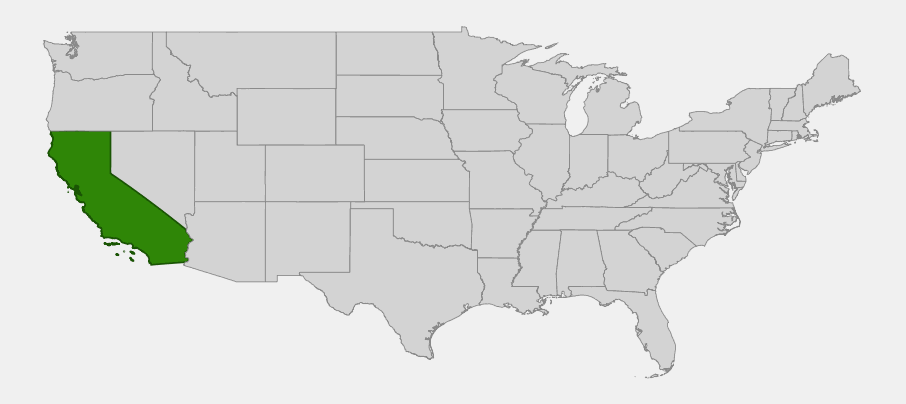
📋 Regional plant lists featuring White Sage: none of our current regional lists cover Southern California’s coastal sage scrub zone.
Growing & Care Guide
White sage rewards gardeners who resist the urge to pamper it. It is built for lean soil, intense sun and long dry summers, and too much kindness — rich soil, regular water, heavy mulch — is the most common way to lose a plant.
Light
Give white sage full sun. It wants as much direct light as the garden can offer; in shade or even part shade it grows leggy, loses its silvery color, and becomes prone to fungal problems from retained moisture.
Soil & Water
Fast drainage matters more than soil type — sandy, rocky or decomposed-granite soils are ideal, and even clay can work if the site doesn’t hold standing water. White sage is highly drought tolerant once established and needs little to no supplemental water after its first one to two summers; overwatering, especially in summer, is the most common cause of root rot and plant failure. Withhold irrigation entirely through the dry season on established plants.
Planting Tips
Plant in fall or winter so roots can establish before the first dry season. Space plants 4 to 6 feet apart to account for their eventual spread and to maintain the airflow that helps prevent fungal disease in humid winters. Avoid heavy organic amendments at planting time; white sage performs best in soil close to its lean native conditions.
Pruning & Maintenance
Cut back spent flowering stalks after bloom to tidy the plant and encourage a fuller form. A light shaping prune in fall, after the heat of summer has passed, keeps the shrub compact; avoid hard pruning into bare woody stems, which white sage does not reliably resprout from. Plants are relatively short-lived, often 5 to 10 years, and benefit from occasional replacement or renewal from seed.
Landscape Uses
White sage earns a place in many Southern California native gardens:
- Dry, sunny borders where its silvery foliage contrasts with greener natives
- Pollinator gardens — a magnet for native bees, carpenter bees and hummingbirds
- Coastal sage scrub restoration plantings
- Low-water landscaping and xeriscape designs
- Fragrance gardens, planted where foliage can be brushed or crushed
- Fire-wise landscaping when kept away from structures and given appropriate spacing
Wildlife & Ecological Value
Few Southern California natives match white sage for sheer pollinator traffic during its long bloom season.
For Pollinators
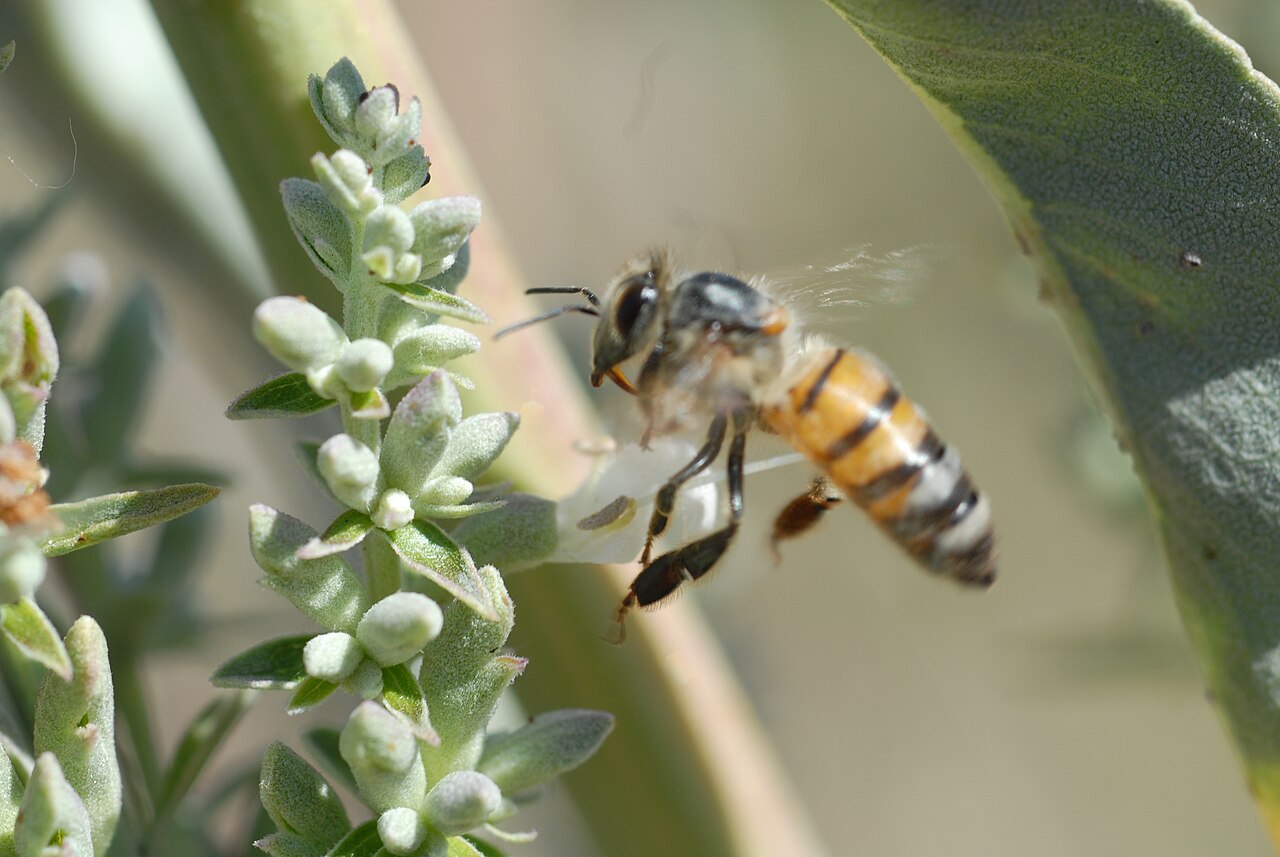
White sage flowers are built for large bees: the tubular, two-lipped blossoms have a spring-loaded staminal lever that dusts pollen onto the backs of carpenter bees, bumble bees and other large native bees as they push in for nectar. Honeybees also visit heavily, as do hummingbirds drawn to the long bloom period. The nectar flow is significant enough that white sage has long been valued by beekeepers for a distinctive, light-colored honey.
For Birds
Hummingbirds, including Anna’s and Costa’s, regularly feed at white sage flowers through the spring and summer bloom season. Seed-eating sparrows and finches pick at the ripened nutlets later in the year, and the dense basal growth offers low cover for ground-foraging birds.
For Mammals
Small mammals use the shrub’s base for cover, and browsing by deer and rabbits is minimal thanks to the strong aromatic oils in the foliage, which also makes white sage a useful, low-palatability anchor plant in gardens troubled by deer.
Ecosystem Role
As a common to dominant shrub in coastal sage scrub, white sage helps define a California plant community that has lost significant ground to development and conversion to other land uses. Its deep, lean-soil tolerance helps stabilize dry slopes, and its long, heavy bloom supports pollinator populations through a critical stretch of the Southern California growing season.
Cultural & Historical Uses
White sage holds deep and continuing significance to the Indigenous peoples of Southern California, including the Chumash, Cahuilla, Tongva and other nations, for whom the plant has long been used in ceremony and in daily life, including as a cleansing smoke in traditional practices. The leaves were also used historically for food flavoring, and various parts of the plant figured in traditional medicine. These are living cultural practices, not simply historical ones, and the plant remains important to Native communities today.
The commercialization of white sage smudge sticks over the past few decades, driven by its popularity outside Indigenous communities, has led to concerns about unsustainable wild harvesting on public and tribal lands in Southern California. Native organizations and conservationists have asked buyers to seek out ethically and sustainably grown sage rather than wild-harvested bundles, and gardeners who grow their own white sage from nursery stock avoid contributing to that pressure entirely.
Beyond ceremonial use, white sage was also valued by early California settlers and remains popular today as a culinary herb in small quantities and as an ornamental for its fragrance and silvery color.
Frequently Asked Questions
Is white sage the same as the sage used in cooking?
No. Culinary garden sage is typically Salvia officinalis, a different species native to the Mediterranean. White sage has its own distinct, resinous fragrance and is used differently, including in traditional Indigenous ceremonial practices.
Why is my white sage dying in summer?
The most common cause is too much water. White sage is adapted to bone-dry Southern California summers, and irrigation during that period — especially in heavier soils — often leads to root rot. Let the soil dry out fully between any summer watering, or withhold water entirely on established plants.
Should I buy wild-harvested white sage?
No. Unsustainable wild harvesting has put pressure on natural populations near Southern California’s growing cities. Buy nursery-propagated plants or seed for your garden, and if purchasing dried sage products, look for growers who cultivate it sustainably rather than collecting from the wild.
How long does white sage live?
It is relatively short-lived for a shrub, often thriving for 5 to 10 years before declining. Many gardeners let a few plants go to seed and allow volunteers to replace aging specimens over time.
Will white sage grow outside California?
It can be grown as an ornamental in other warm, dry climates with excellent drainage, such as parts of Arizona or Nevada, but it is native only to Southern California and northern Baja California and should not be considered a native plant choice outside that range.

Looking for a nursery that carries White Sage?
Browse our native plant nursery directory: California