Pond Pine (Pinus serotina)
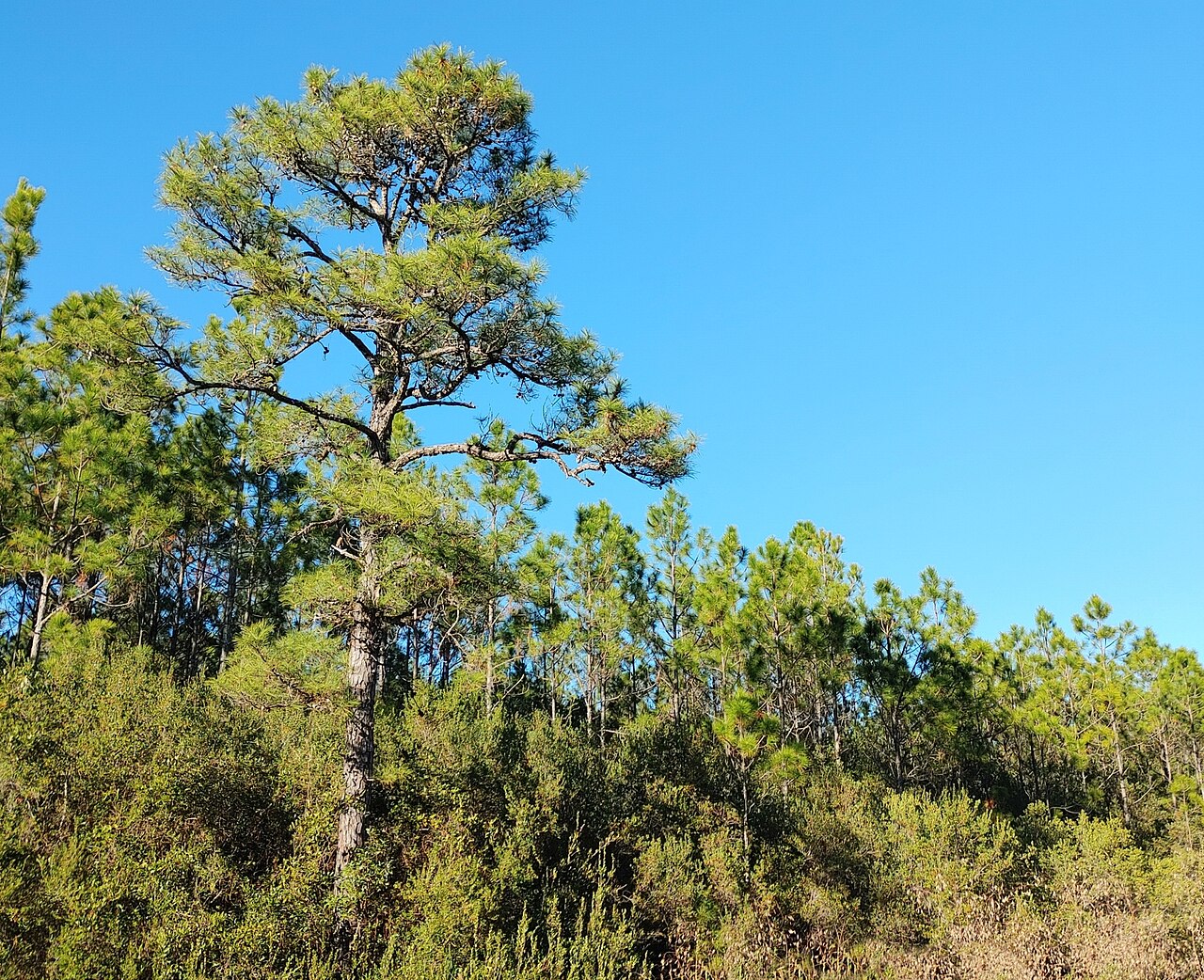
Pinus serotina, the Pond Pine, is a medium-sized, scrubby evergreen conifer of the wet pine flatwoods, pocosins and bay forests of the Atlantic and Gulf coastal plains. Unlike the tall, straight-trunked pines most gardeners picture, pond pine is often gnarled and irregular, with tufts of needles sprouting straight out of the trunk and older branches — a trait called epicormic branching that gives older trees a shaggy, almost prehistoric look. It rarely grows in pure stands over large areas; instead it is a defining tree of a particular wetland habitat, the pocosin, a term that comes from an Algonquian word meaning “swamp on a hill.”
What sets pond pine apart from its relatives is its relationship with fire. Many of its cones are serotinous, meaning they stay sealed with resin for years and only open to release seed when heated by flame. Where lightning-started fires once burned through these wetlands every few years, pond pine thrived on the cycle of burn and regrowth, resprouting from its base when top-killed and reseeding heavily after a hot fire clears the ground. That fire dependence makes it one of the best living indicators of a healthy, fire-maintained wetland.
For home landscapes near the coast from New Jersey to Alabama, pond pine is a tough, low-maintenance native for a wet, sunny spot where few other conifers will grow — though its irregular form and modest size mean it is chosen for naturalistic and restoration plantings more often than as a formal specimen tree.
Identification
Pond pine typically reaches 40 to 70 feet tall with a trunk 1 to 2 feet in diameter, though trees on the poorest, wettest sites may stay shrubby and much shorter. The crown is rounded, open and often asymmetrical, lacking the clean conical shape of many other southern pines. Trunks are frequently crooked or leaning, and older trees commonly show dense tufts of foliage sprouting directly from the trunk and larger limbs.
Bark & Stems
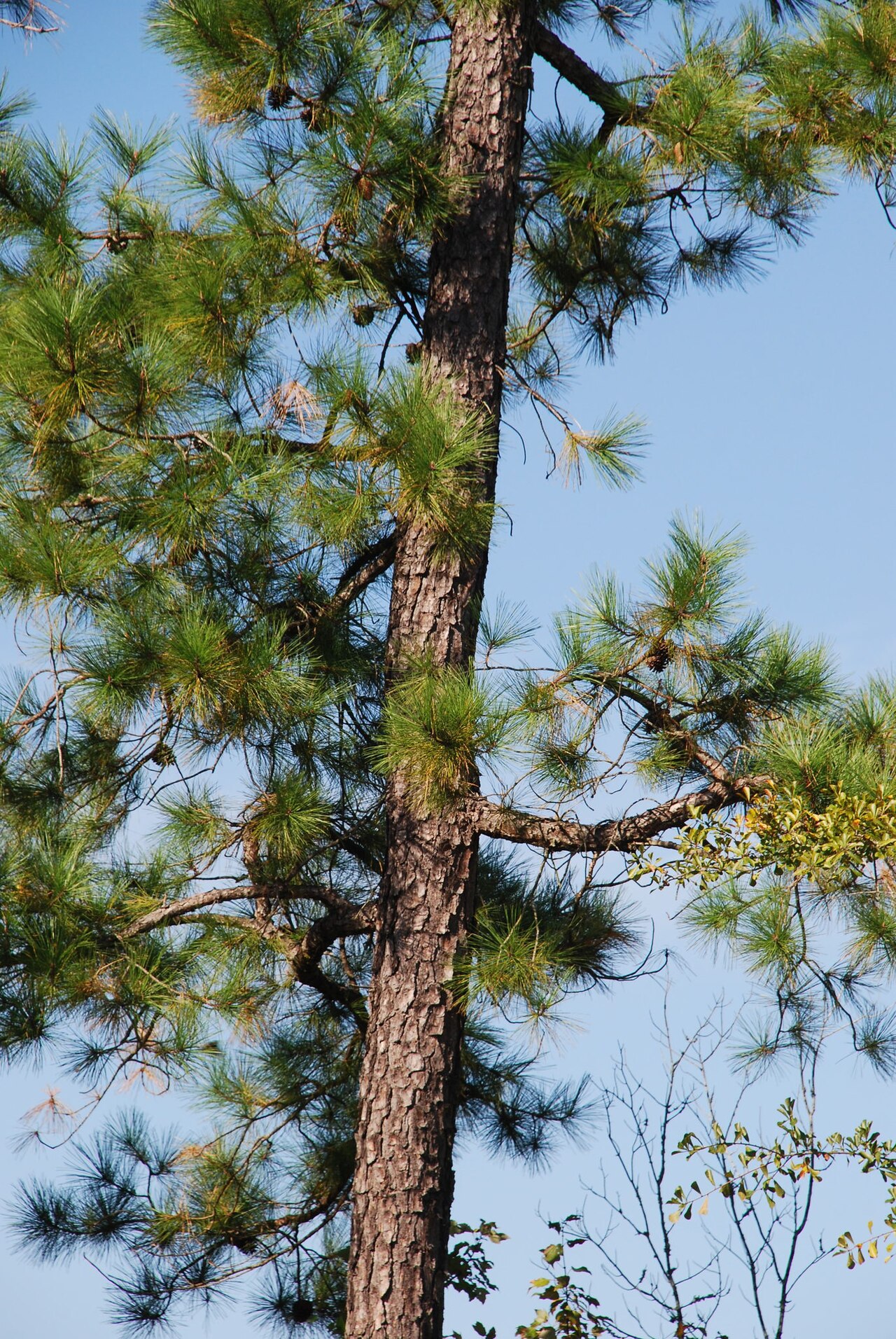
Bark is reddish-brown to gray-brown, broken into flat, irregular plates separated by shallow furrows — thinner and less deeply furrowed than longleaf or loblolly pine. Young twigs are stout and orange-brown. The epicormic buds along the trunk and branches can sprout new needle clusters even decades after a fire scorches the crown, a regenerative trick unusual among pines.
Leaves
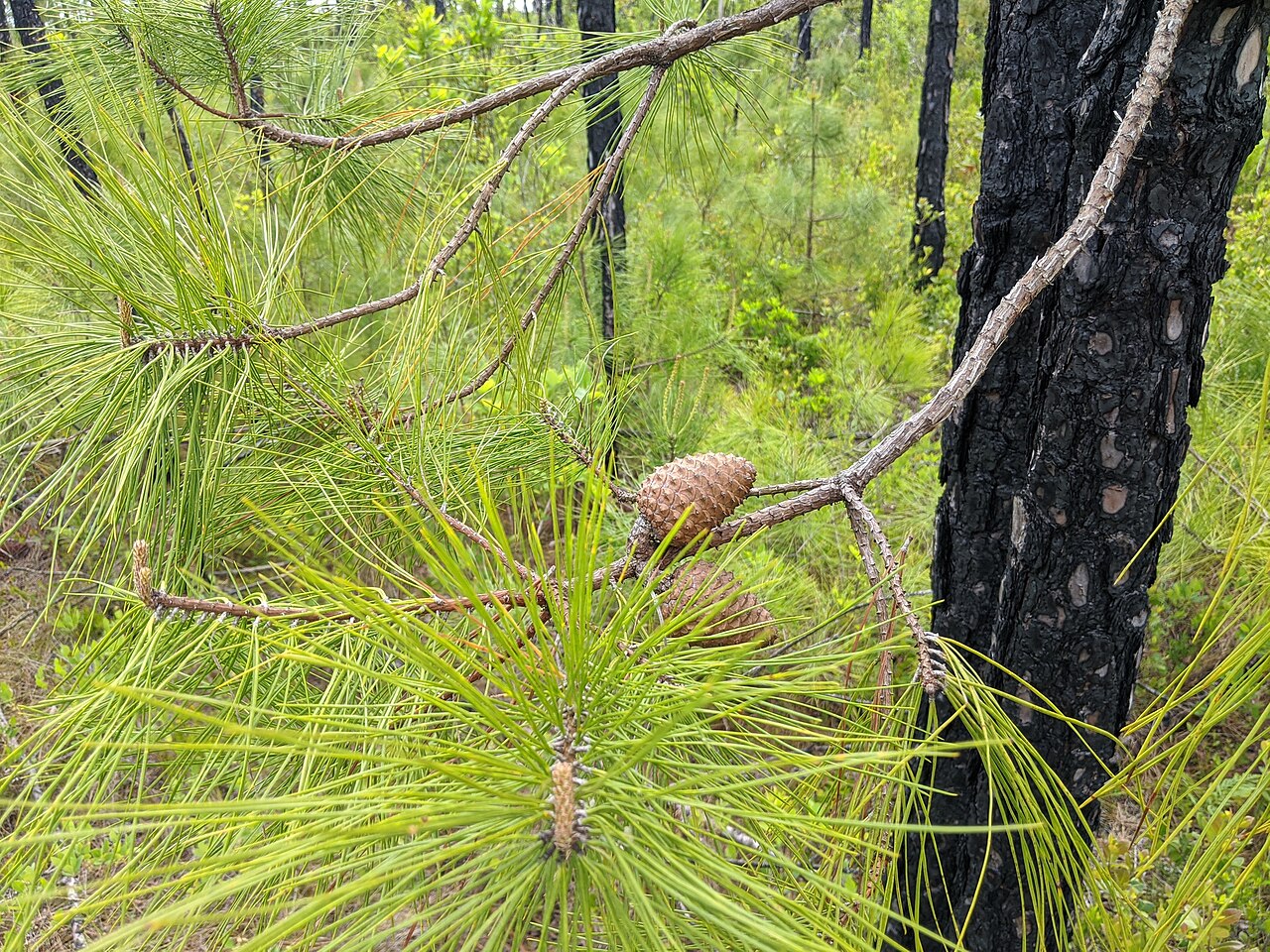
Needles are bright to dark yellow-green, 4 to 8 inches long, and grow in bundles (fascicles) of three, occasionally mixed with some bundles of four. They are slightly twisted and stiffer than loblolly pine needles, clustered densely at the branch tips and often sprouting in dense whorls directly from the bark of the trunk.
Flowers & Fruit
Like all pines, pond pine is wind-pollinated, with small yellow male cones releasing pollen in spring and inconspicuous female cones forming at branch tips. The seed cones are rounded to egg-shaped, 2 to 3 inches long, with a short, blunt prickle on each scale. Cones can take two to three years to mature, often appear in whorled clusters, and persist on the tree for years, frequently sealed shut with hardened resin until fire or, less often, prolonged heat opens them to release the small winged seeds.
Quick Facts
| Scientific Name | Pinus serotina |
| Family | Pinaceae (Pine) |
| Plant Type | Evergreen Tree |
| Mature Height | 40–70 ft |
| Mature Spread | 20–35 ft |
| Growth Rate | Slow to moderate |
| Sun Exposure | Full Sun |
| Water Needs | Wet to average; tolerates seasonal flooding |
| Soil Type | Poorly drained, acidic, sandy or peaty |
| Soil pH | 4.0–5.5 (acidic) |
| Bloom Time | March – April (pollen cones) |
| Flower Color | Yellow (male cones) |
| Fall Color | None (evergreen) |
| Fruit | Rounded, resin-sealed cones 2–3 in, persistent |
| Deer Resistant | Yes |
| USDA Hardiness Zones | 7–9 |
Native Range
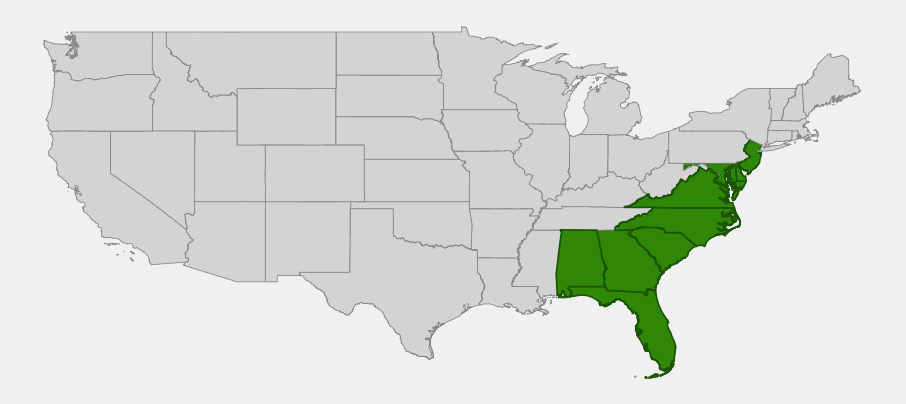
Pond pine is native to the Atlantic and eastern Gulf coastal plains, from southern New Jersey (Cape May and nearby pine barrens) south through Delaware, Maryland, Virginia, North and South Carolina, Georgia and Florida, west to southeastern Alabama. It reaches its greatest abundance in the vast pocosins and savannas of eastern North Carolina, where it is the signature tree of these fire-dependent wetlands.
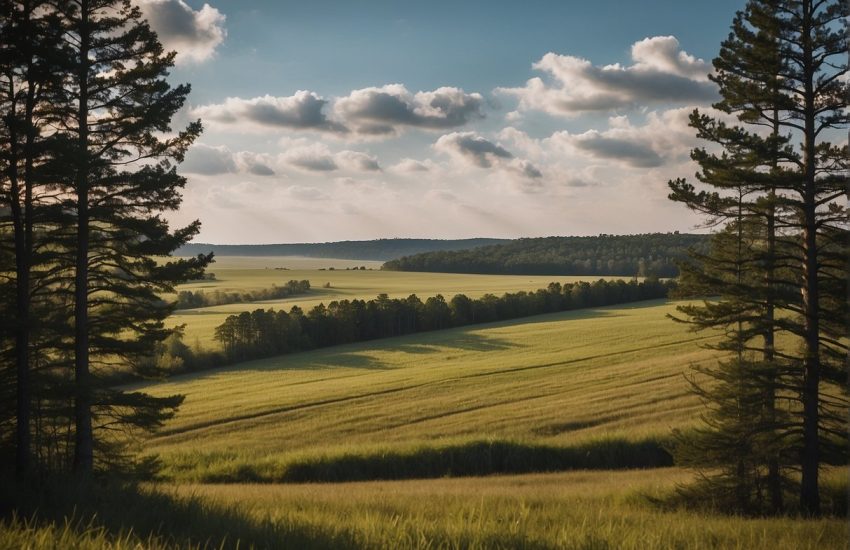
Typical habitat is flat, poorly drained ground with a high water table: pocosins, pine savannas, bay forests, and the margins of Carolina bays and other shallow wetland depressions. Soils are acidic, sandy or peaty, and often saturated or seasonally flooded, conditions that few other pines tolerate well. Pond pine grows alongside loblolly bay, sweetbay magnolia, red maple, swamp tupelo, fetterbush, titi and inkberry, and understories are often dense with evergreen shrubs.
Pond pine’s range is sometimes confused with pitch pine (Pinus rigida), with which it hybridizes in parts of the mid-Atlantic, and it is occasionally planted or naturalized slightly outside this core range; only the coastal-plain population described here should be considered truly native. Where pocosins have been drained or converted to pine plantations, pond pine has declined, making remaining wild stands ecologically significant.
📋 Regional plant lists featuring Pond Pine: Delaware, Southern New Jersey & Long Island · Maryland, Virginia & West Virginia · North Carolina & South Carolina · Georgia, Alabama & Mississippi
Growing & Care Guide
Pond pine is not a tree for the typical suburban yard with well-drained soil — it is a specialist for wet ground, and that is exactly where it earns its keep. Give it the soggy, acidic site other conifers reject and it will ask for little else.
Light
Pond pine needs full sun. In the wild it grows in open, periodically burned savannas and pocosin edges where little shades the canopy; in a shadier garden setting it becomes thin and leggy and produces far fewer cones.
Soil & Water
This is one of the few pines genuinely suited to wet, poorly drained, acidic soils — sandy or peaty ground that stays saturated for part of the year or floods seasonally is ideal. It does not need irrigation once established on an appropriately damp site, but it performs poorly in dry, well-drained upland soils where other southern pines are a better fit.
Planting Tips
Choose the lowest, wettest part of the property — a pond margin, rain garden edge or seasonally wet swale. Plant container-grown stock in fall or early spring, and avoid amending the planting hole with rich organic matter, which can work against the lean, acidic soil pond pine expects. Give young trees room; the crown is broad and irregular even in youth.
Pruning & Maintenance
Little pruning is needed or even desirable — the crooked trunk and sprouting trunk tufts are part of the tree’s natural character, not a flaw to correct. Remove only dead or hazardous limbs. Established trees need no fertilizer and tolerate the periodic prescribed burns used to manage pocosin and savanna restoration sites.
Landscape Uses
Pond pine’s niche is narrow but valuable:
- Wetland and pocosin restoration plantings on the coastal plain
- Pond and rain garden margins that stay consistently damp
- Naturalistic screens on poorly drained lots other trees struggle with
- Wildlife plantings paired with bay, titi and fetterbush understory shrubs
- Fire-adapted landscapes where prescribed burning is part of long-term management
Fire Ecology
Fire is central to pond pine’s biology. Many cones are serotinous, staying sealed with resin for years until the heat of a fire melts the resin and springs the scales open, releasing a dense rain of seed onto a freshly burned, competitor-free seedbed. Trees top-killed by fire frequently resprout from the base, and even standing trees scorched by a passing burn can push new needle tufts from dormant buds along the trunk. Decades of fire suppression have reduced pond pine’s regeneration in some pocosins, which is one reason prescribed burning is now used in coastal-plain conservation management.
Wildlife & Ecological Value
Pond pine anchors one of the Southeast’s most distinctive wetland communities, and its value runs deeper than the tree itself.
For Birds
Pine warblers, brown-headed nuthatches and various woodpeckers forage in pond pine crowns and glean insects from the furrowed bark. Pocosins dominated by pond pine provide important cover for species that favor dense, shrubby wetland habitat, and the seeds are eaten by pine siskins and other finches when cones are open.
For Mammals
Black bears use large, undisturbed pocosins as denning and travel habitat, and the dense shrub layer beneath pond pine stands offers cover for bobcat, white-tailed deer and smaller mammals. Squirrels feed on the seeds when cones release them.
Ecosystem Role
As the dominant canopy tree of the pocosin, pond pine shapes an entire wetland ecosystem found almost nowhere else in the world outside the southeastern coastal plain. Its fire-dependent regeneration cycle keeps these peat-based wetlands functioning, cycling nutrients and preventing the deep peat buildup that can otherwise fuel catastrophic, hard-to-control wildfires. Healthy pond pine pocosins also help filter and slow water moving toward coastal estuaries.
Cultural & Historical Uses
Pond pine’s twisted trunks and low resin yield made it far less important to the naval stores industry than longleaf or slash pine, so it largely escaped the heavy tapping for turpentine and tar that shaped so much of the historical southern pine economy. Its wood, often knotty and resinous from fire scarring, has chiefly been cut for pulpwood and rough lumber rather than high-grade timber.
The pocosin wetlands pond pine dominates were long viewed by European settlers as wasteland, fit mainly for drainage and conversion to farmland or pine plantation, a view that led to extensive pocosin loss across the Carolinas in the 20th century. Only in recent decades has the ecological value of these peat wetlands, and the fire-adapted tree that defines them, been widely recognized and prioritized for conservation.
Indigenous peoples of the coastal plain lived among and used pocosin resources for millennia, including the game, fish and plant materials these wetlands supported, though pond pine wood itself held less direct cultural importance than more easily worked or more resinous pines.
Frequently Asked Questions
Why does pond pine have needles growing out of its trunk?
This is epicormic sprouting, a fire-adaptation that lets the tree resprout new foliage from dormant buds beneath the bark after a fire or other crown damage. It is unusual among pines and gives older pond pines their shaggy, irregular look.
Do pond pine cones need fire to open?
Many do. A large share of pond pine cones are serotinous and stay sealed with hardened resin for years, opening mainly when heated by fire. Some cones do eventually open without fire, but seed release and seedling establishment are far heavier after a burn.
Can pond pine grow in a normal, well-drained garden bed?
Not well. It is adapted to wet, acidic, poorly drained soil and tends to struggle in typical upland garden conditions. It is best reserved for consistently damp or seasonally flooded sites, such as pond edges or low spots.
Is pond pine the same as pitch pine?
No, though they are closely related and hybridize where their ranges meet in the mid-Atlantic. Pitch pine (Pinus rigida) generally grows on drier, sandier uplands, while pond pine is a wetland specialist of the coastal plain.
How fast does pond pine grow?
Growth is slow to moderate, slower than loblolly pine, especially on the wettest, most nutrient-poor sites. Trees are long-lived and can persist for well over a century in undisturbed pocosins.

Looking for a nursery that carries Pond Pine?
Browse our native plant nursery directory: New Jersey & North Carolina · Delaware, Georgia & Florida · Maryland · Virginia & South Carolina · Alabama