California Bluebells (Phacelia campanularia)
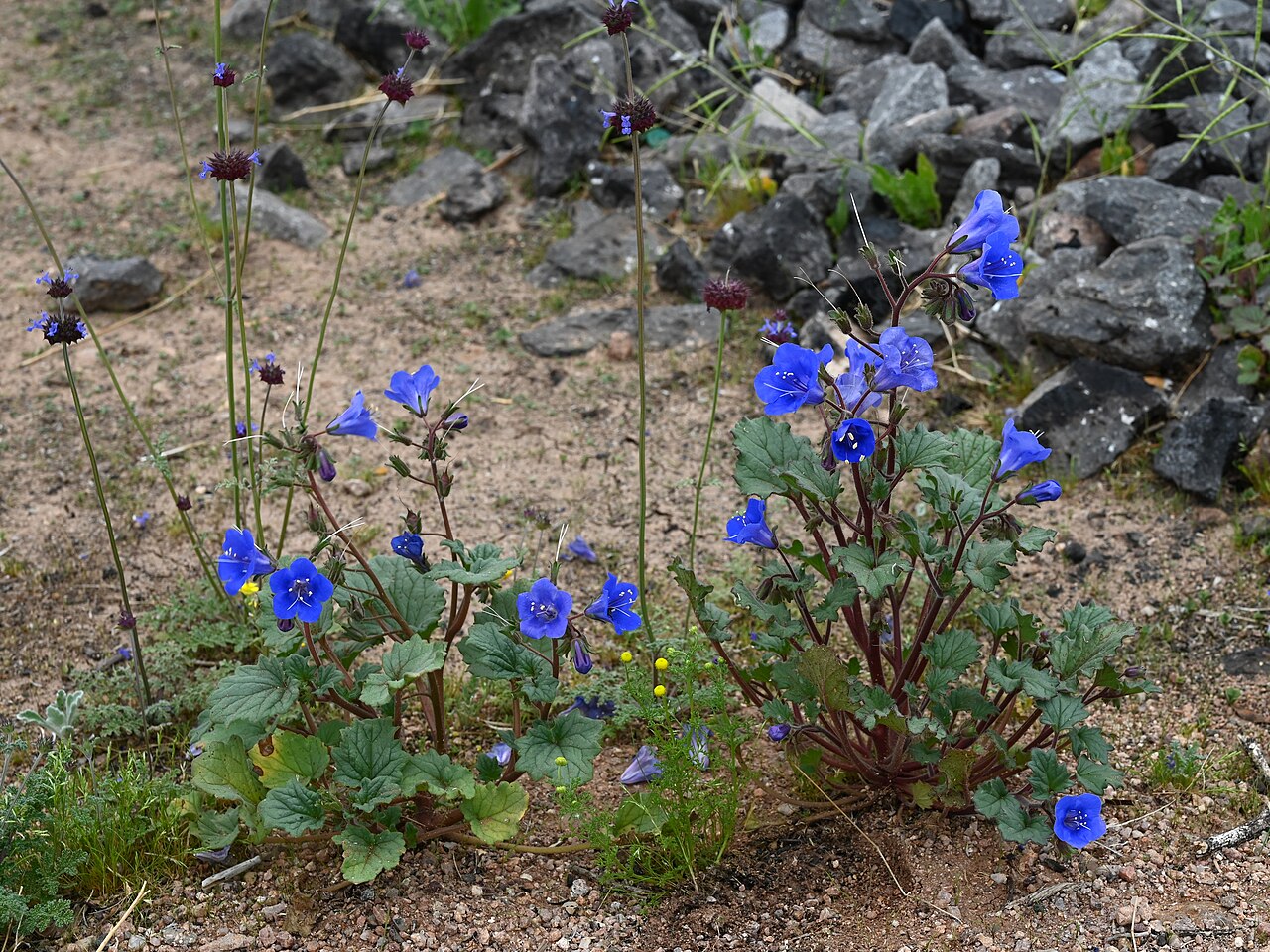
Phacelia campanularia, commonly called California bluebells or desertbells, is a small, intensely blue-flowered annual wildflower native to California’s desert regions. It belongs to the borage family (Boraginaceae, formerly classified in Hydrophyllaceae), and it is famous among wildflower enthusiasts for producing some of the most saturated, true-blue flowers of any North American native plant — a color so vivid that photographs of it are sometimes mistaken for digitally enhanced images.
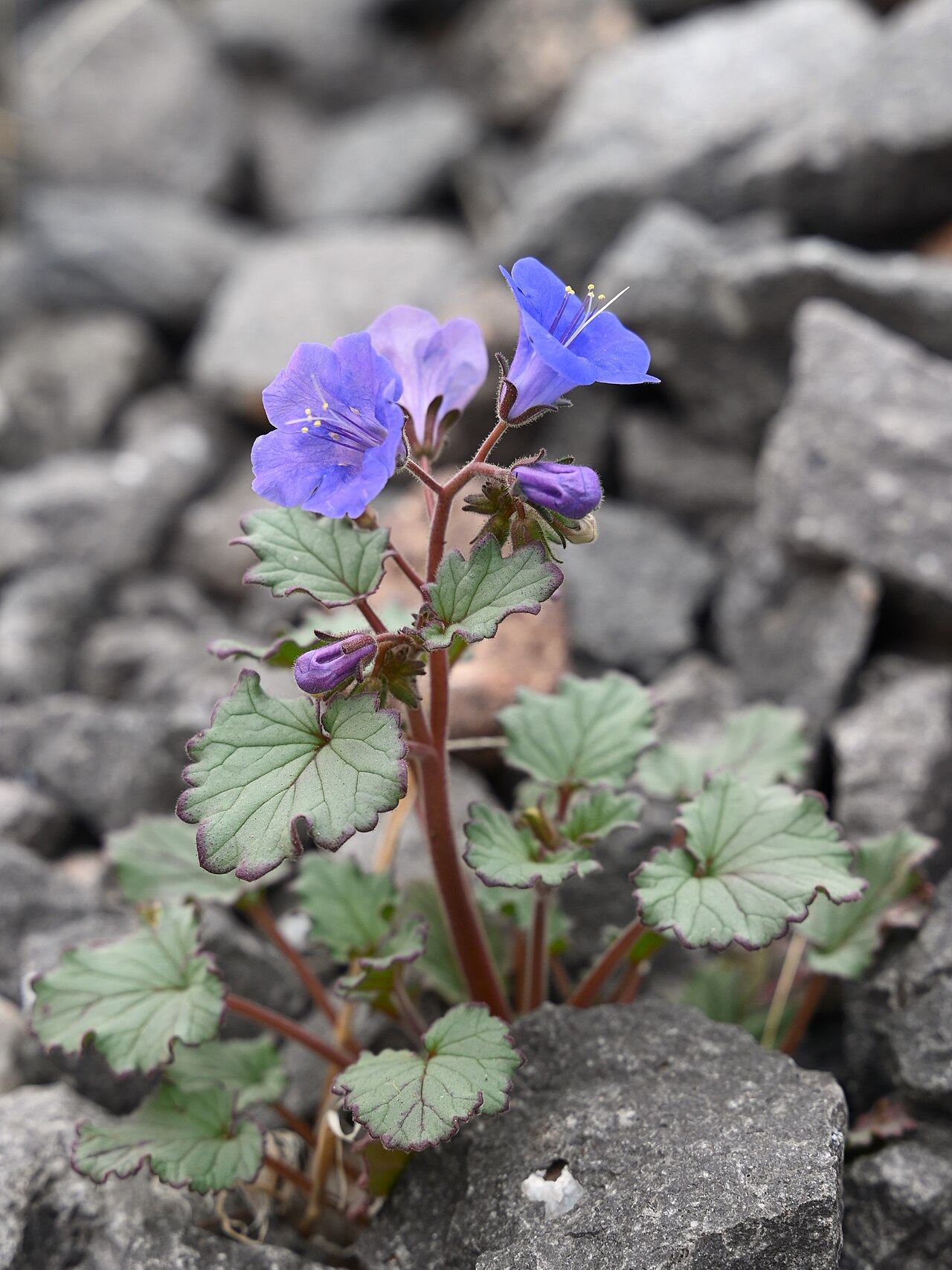
This is a compact, fast-growing desert annual, rarely more than a foot or two tall, with rounded, toothed, slightly fuzzy gray-green leaves and an open, branching habit. The bell-shaped flowers appear in loose clusters at the ends of reddish stems, usually in early spring following winter rains, and the plant completes its entire life cycle — germination, bloom, seed set, and death — within a single season, as is typical for desert ephemerals.
California bluebells is native specifically to California, where it grows in the Mojave and Sonoran Desert regions of the southern and eastern parts of the state. It is not native elsewhere in the United States, though it is popular in wildflower seed mixes and is sometimes grown well outside its native range as a garden annual; gardeners outside California should treat it as an introduced ornamental rather than a regional native.
Identification
California bluebells is an erect to loosely branching annual herb, typically 6 inches to 2 feet tall, covered throughout in short glandular hairs that can be slightly irritating to sensitive skin (see the note on contact below). The stems are often reddish to purplish, especially in strong sun.
Leaves
Leaves are alternate, somewhat rounded to broadly oval, with coarsely toothed or scalloped margins, and are covered in fine hairs that give them a soft, grayish-green cast. Basal leaves form a loose rosette early in the season before the flowering stems elongate.
Flowers
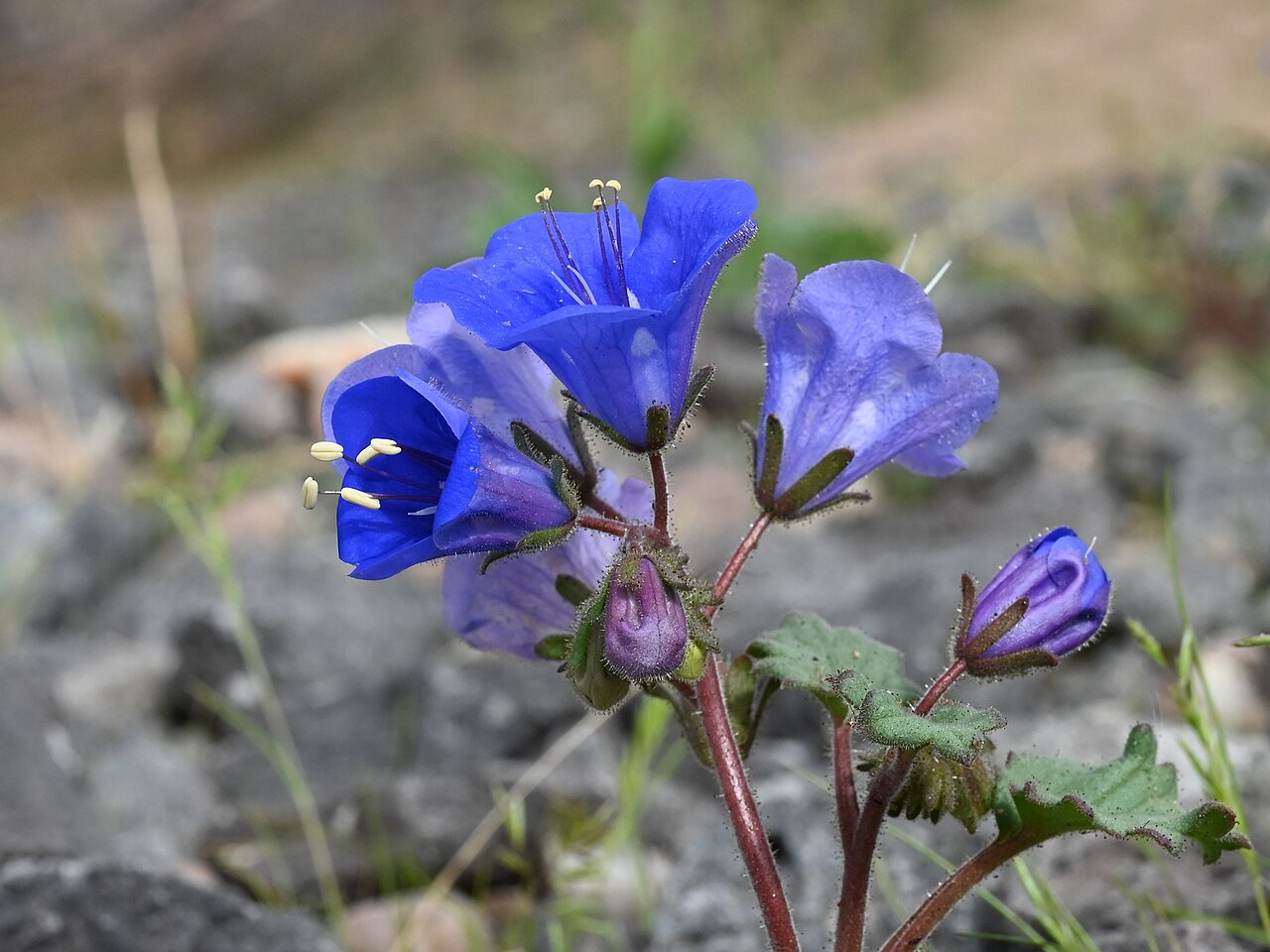
The flowers are the plant’s signature feature: bell- to funnel-shaped, up to 1.5 inches across, in a deep, electric blue to violet-blue, sometimes with a paler throat. They are borne in loose, one-sided coiled clusters (a cyme typical of the borage family) at the stem tips, with protruding white stamens tipped in pale yellow anthers that stand out sharply against the blue petals. Bloom typically runs from March through May, following adequate winter rain.
Fruit & Seeds
After flowering, the plant sets small, dry seed capsules that split to release numerous tiny seeds. Like many desert annuals, California bluebells relies on this seed bank to persist through dry years, germinating in flushes after sufficient rainfall rather than returning from the same root each year.
A note on skin contact: like several of its Phacelia relatives, California bluebells is covered in fine glandular hairs that can cause contact dermatitis in sensitive individuals, similar to a mild poison oak-type reaction. Gardeners and hikers who are prone to skin sensitivity should wear gloves when handling the fresh plant and avoid rubbing it against bare skin.
Quick Facts
| Scientific Name | Phacelia campanularia |
| Family | Boraginaceae (Borage; formerly Hydrophyllaceae) |
| Plant Type | Herbaceous Annual Wildflower |
| Mature Height | 6–24 in (15–60 cm) |
| Mature Spread | 8–16 in |
| Growth Rate | Fast (completes life cycle in one season) |
| Sun Exposure | Full Sun |
| Water Needs | Low once established; needs moisture to germinate |
| Soil Type | Sandy, gravelly, well-drained desert soils |
| Soil pH | Neutral to slightly alkaline |
| Bloom Time | March – May |
| Flower Color | Deep blue to violet-blue |
| Fall Color | None; plant dies back after spring bloom |
| Fruit | Small dry seed capsules |
| Deer Resistant | Yes; hairy foliage is rarely browsed |
| USDA Hardiness Zones | 8–11 (grown as a cool-season annual) |
Native Range
California bluebells is native to California, where its range is centered on the Mojave and Sonoran Desert regions of the southern and eastern part of the state. It is one of California’s signature desert wildflowers, frequently appearing in spring wildflower displays alongside other desert annuals in Joshua Tree, Anza-Borrego, and similar desert landscapes.
The species is not confirmed native to any other U.S. state. It is sometimes included in regional wildflower seed mixes and planted as a garden annual well beyond California, including in states like Arizona, but such plantings represent cultivation or escape rather than a native population, and this page does not claim native status outside California.
Within its native range, California bluebells grows on dry, sandy, or gravelly desert flats and slopes, often in rocky washes or disturbed ground, below about 4,000 feet elevation. It typically appears in dense, showy patches following years of adequate winter and early spring rainfall, and can be sparse or absent during drought years.
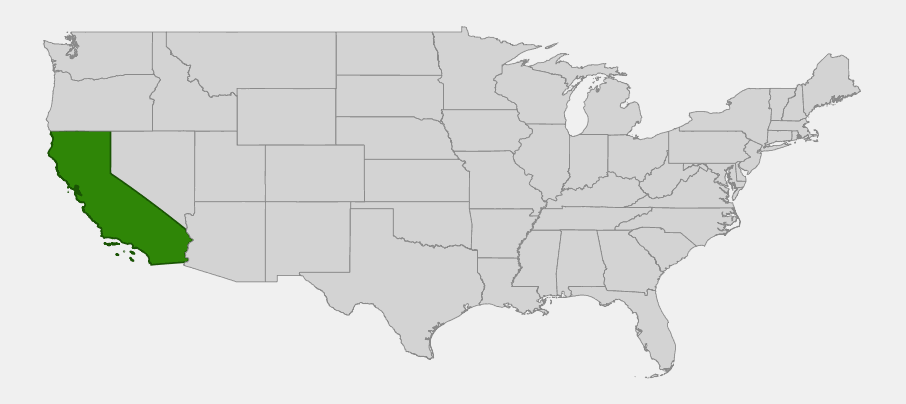
📋 California bluebells is native only within California, which is not yet covered by one of PlantNative’s regional plant lists; check back as our regional coverage expands.
Growing & Care Guide
California bluebells is easy to grow from seed within its climate range and is a popular choice for desert and dryland wildflower gardens, where its intense blue color is unmatched by almost any other annual.
Light
Give California bluebells full sun. It is a true desert annual and performs best with direct sun through its entire bloom period; shaded plants tend to be leggy with fewer flowers.
Soil & Water
Plant in well-drained, sandy or gravelly soil typical of desert gardens; heavy clay or constantly moist soil encourages rot. Water to germinate seed in fall or winter, then taper off — established plants need little supplemental water and perform best on natural rainfall patterns similar to their native desert climate.
Planting Tips
Direct-sow seed in fall or early winter, scattering seed over prepared soil and raking lightly to ensure soil contact; California bluebells germinates readily with cool, moist conditions and does not transplant well once established. In low-desert gardens, fall sowing timed to seasonal rains gives the most reliable spring bloom.
Pruning & Maintenance
No pruning is needed. Deadheading spent flower clusters can extend bloom slightly, but since the plant is an annual that naturally dies back after setting seed, most gardeners simply let the plant complete its cycle and reseed for the following year.
Landscape Uses
California bluebells works well in several desert and dryland garden settings:
- Desert wildflower meadows mixed with other spring annuals
- Rock gardens and gravel beds where its blue stands out against neutral stone
- Pollinator gardens in low-water, native plant landscapes
- Container plantings for a season of intense spring color
- Erosion-control seeding on disturbed desert soils within its native range
Wildlife & Ecological Value
California bluebells is a valuable early-season nectar source in the desert ecosystems where it grows natively, blooming at a time when relatively few other plants are in flower.
For Pollinators
The flowers are heavily visited by native bees, including desert-adapted solitary bees, as well as honeybees and some butterflies. The deep blue color and open bell shape make the nectar and pollen easily accessible, and the species is considered an important component of desert pollinator diets during spring bloom.
For Birds
Seed-eating birds take the small seeds once capsules mature and dry, though the plant is a minor rather than primary food source compared to desert grasses and larger-seeded annuals.
For Mammals
Small desert rodents may consume seed from the soil seed bank, contributing to its role in the broader desert food web, though the glandular-haired foliage is not a preferred browse for larger mammals.
Ecosystem Role
As a fast-cycling desert ephemeral, California bluebells is part of the pulse of spring annual growth that follows winter rains in California’s deserts, helping stabilize soil briefly and supporting pollinator populations during a narrow but critical bloom window each year.
Cultural & Historical Uses
California bluebells does not have a significant documented history of use by Indigenous peoples as a food or medicinal plant, unlike some of its showier desert wildflower neighbors. Its primary historical significance has been ornamental and botanical: California desert wildflower displays, including this species, have drawn naturalists, botanists, and tourists to the Mojave and Sonoran Desert regions for well over a century.
In horticulture, California bluebells has been cultivated as a garden annual since at least the late 19th century, prized specifically for its unusually saturated blue flower color, which is rare among garden annuals generally and especially rare among North American native wildflowers. Plant breeders and seed companies have long marketed it under names like “desert bluebells” or “California bluebell” as an easy-care addition to dryland and xeriscape gardens.
Today, the species remains primarily valued for its ornamental and ecological role rather than any traditional practical use, and gardeners growing it are participating in a relatively modern horticultural tradition rather than a long Indigenous or folk-use history.
Frequently Asked Questions
Is California bluebells the same as desert bluebells?
Yes. “Desert bluebells,” “California bluebell,” and “desertbells” are all common names used for Phacelia campanularia. The scientific name is the most reliable way to confirm you have the right plant, since several other blue-flowered desert wildflowers share similar common names.
Will California bluebells cause a skin reaction?
It can for sensitive individuals. Like several Phacelia species, its foliage is covered in fine glandular hairs that may cause a mild contact dermatitis similar to a poison oak reaction in people prone to skin sensitivity. Wearing gloves when handling fresh plants is a reasonable precaution.
Is California bluebells native to my state?
Only if you are in California. It is native specifically to that state’s Mojave and Sonoran Desert regions. Elsewhere in the United States, including in popular wildflower seed mixes sold nationally, it is an introduced garden annual rather than a native plant.
Does California bluebells come back every year?
Not from the same plant — it is a true annual that completes its life cycle in one growing season and dies after setting seed. It does reliably reseed itself in suitable garden conditions, so an established planting often looks like a perennial patch even though individual plants are short-lived.
Can I grow California bluebells outside of a desert climate?
It can be grown as a cool-season annual in other dry, sunny climates with well-drained soil, but it does not tolerate humid or consistently wet conditions well. Gardeners outside arid regions often have better luck treating it as a one-season specialty planting rather than expecting it to naturalize.

Looking for a nursery that carries California native plants?
Browse our native plant nursery directory: California