Oak Fern (Gymnocarpium dryopteris)
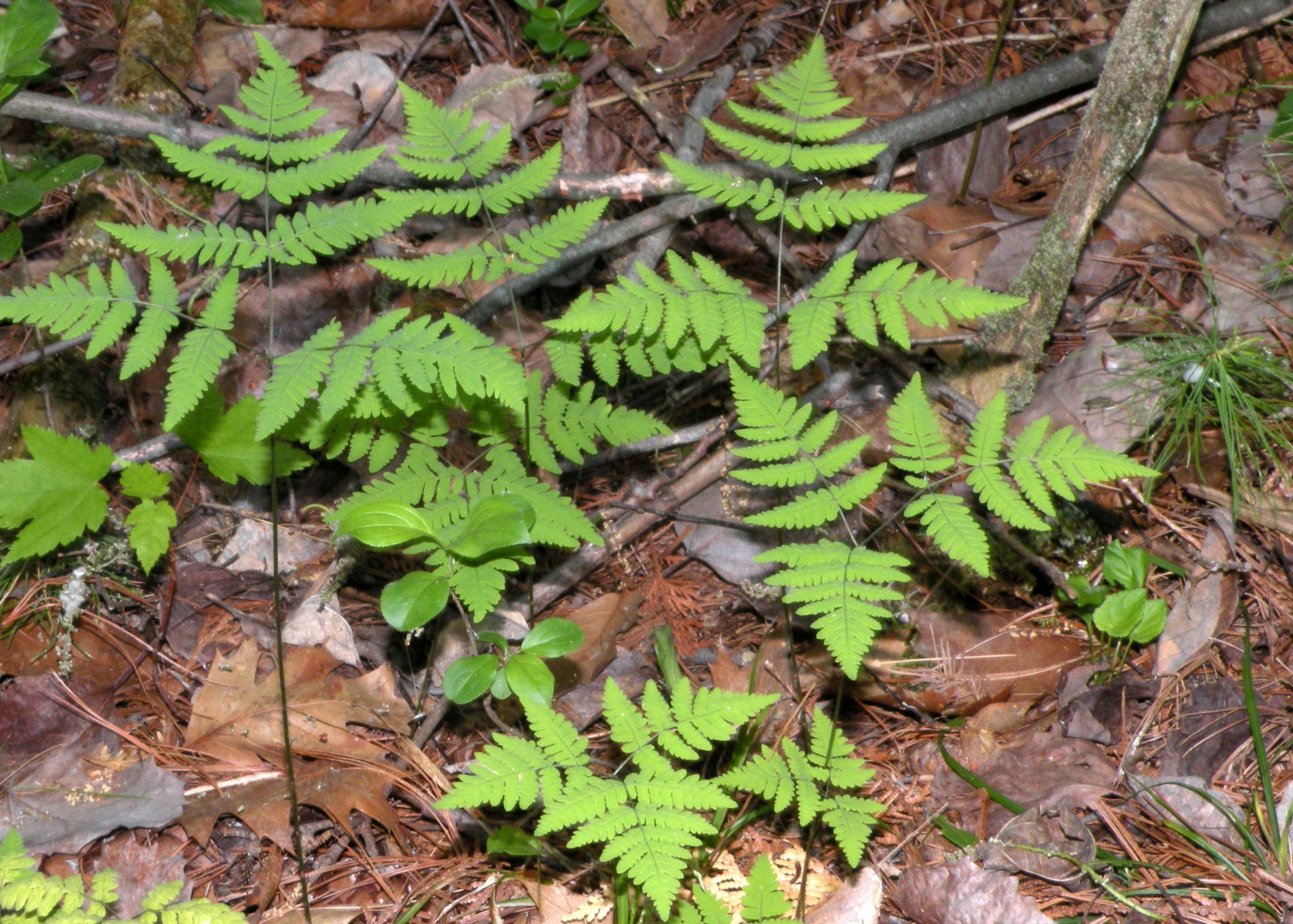
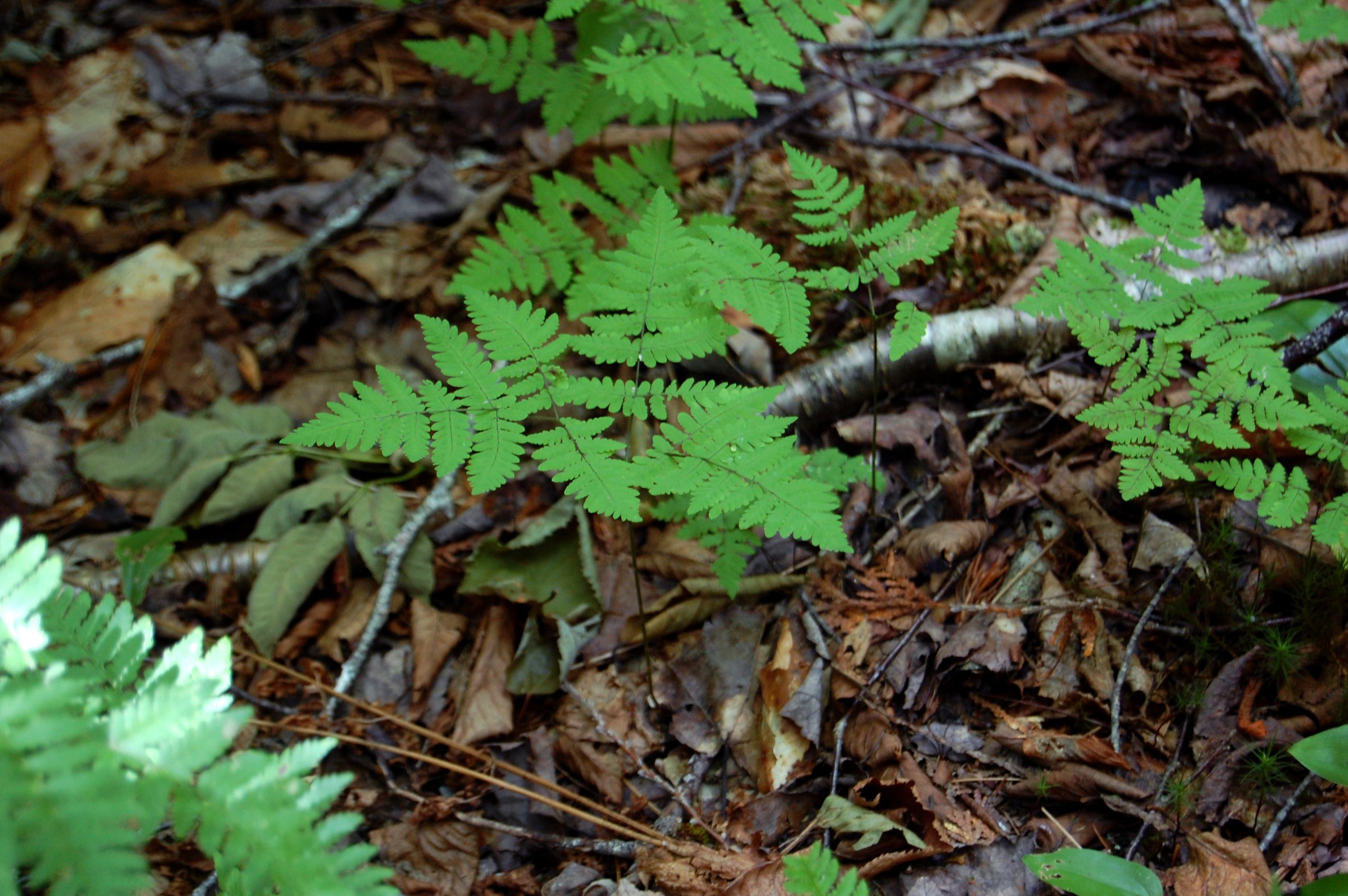
Gymnocarpium dryopteris, known as Oak Fern or common oak fern, is a small, delicate, colony-forming fern of cool, shaded forests across the northern United States, Canada and much of the Northern Hemisphere. It is easy to recognize once you know the trick: each frond is broadly triangular and divided into three nearly equal, further-divided parts, giving the plant a lacy, almost horizontal, umbrella-like silhouette that is unlike most other ferns sharing the forest floor.
Oak fern spreads by thin, wide-ranging underground rhizomes, so a single plant rarely stands alone — look for it and you will usually find a loose, airy carpet of fronds rather than an isolated clump. It thrives in the deep, even shade and cool, moist humus of coniferous and mixed forests, often growing over mossy logs, at the base of talus slopes, and along shaded streambanks. Though never a showy plant, its soft green color and finely cut texture make it a favorite of woodland gardeners looking for a graceful, well-behaved ground cover for the deepest shade.
Despite the common name, oak fern has no relationship to oak trees; the name likely comes from an old association with growing in oak woods in Europe, where the species is also native.
Identification
Oak fern is a low, deciduous fern, usually only 6 to 14 inches tall, that spreads into loose colonies rather than forming a dense clump. Each frond rises singly from a slender, creeping, blackish rhizome that runs just below the surface of the duff, so fronds often appear scattered or in loose lines rather than clustered together.
Fronds
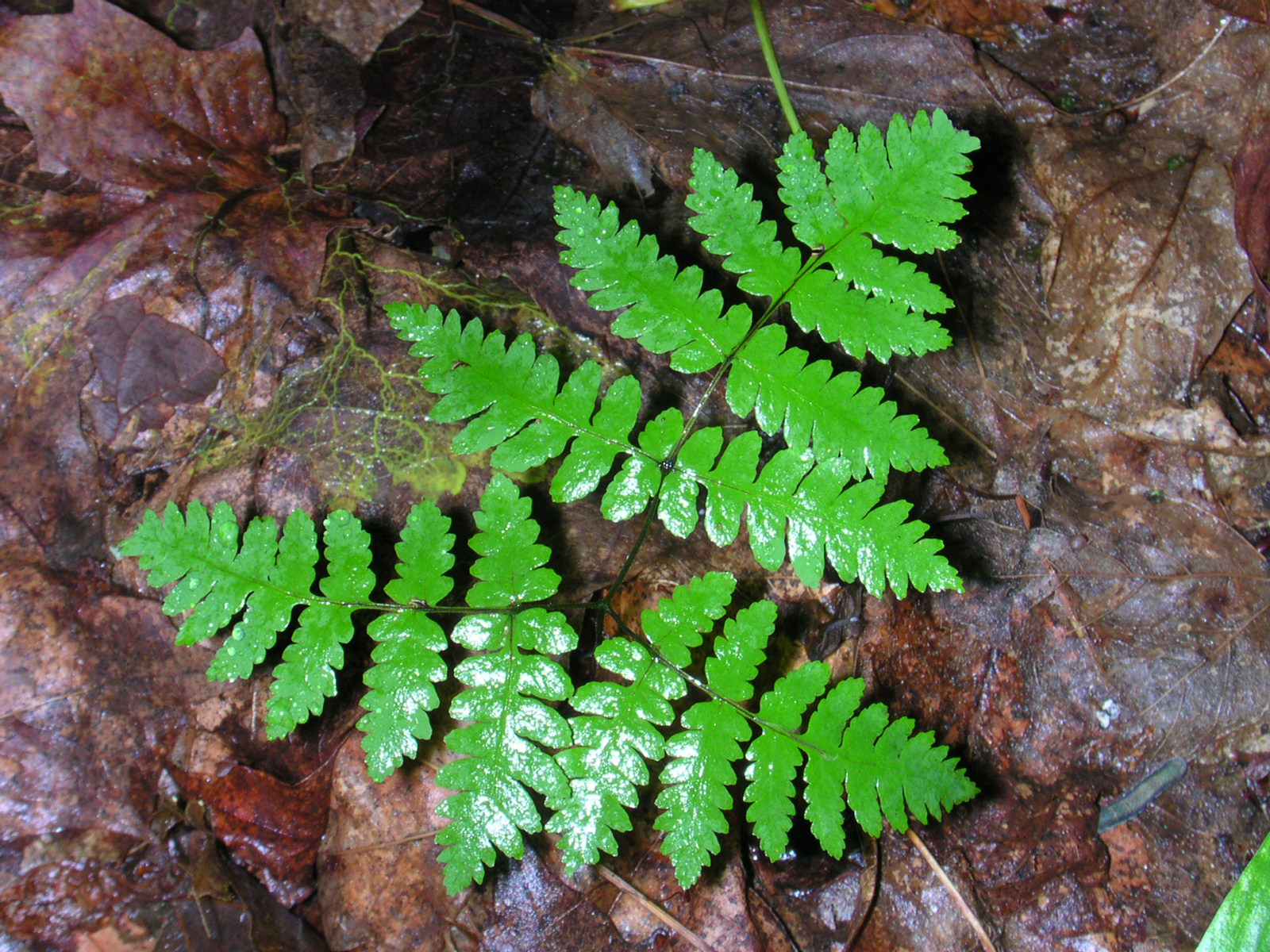
The blade is broadly triangular (deltate) in outline and divided into three main, nearly equal branches, each of which is further divided into pinnae and pinnules — a shape fern enthusiasts call “ternate.” This gives the whole frond a flat, airy, three-part look quite different from the single-plane feather shape of most woodland ferns. Blades are thin-textured, light to medium green, and held nearly horizontal to the ground on thin, wiry stalks (stipes) that are usually longer than the blade itself. The foliage is soft to the touch and largely hairless, though fine glandular hairs may be present on the stalk.
Rhizome & Spread
The thin, dark, creeping rhizome is the key to the plant’s colonizing habit. It travels just under the leaf litter, sending up new fronds at intervals, which is why oak fern typically appears as a spreading patch rather than a single crown the way many other ferns grow.
Spores
Like most ferns, oak fern reproduces by spores rather than flowers or seeds. Small, round spore clusters (sori) form on the undersides of the fertile fronds in summer, without the protective flap (indusium) that covers the sori of many other fern genera — a detail reflected in the genus name Gymnocarpium, meaning “naked fruit.”
Quick Facts
| Scientific Name | Gymnocarpium dryopteris |
| Family | Cystopteridaceae (Fragile Fern) |
| Plant Type | Deciduous, colony-forming perennial fern |
| Mature Height | 6–14 in |
| Spread | Indefinite; spreads by rhizome into loose colonies |
| Growth Rate | Moderate (spreads steadily once established) |
| Sun Exposure | Part Shade to Full Shade |
| Water Needs | Consistent moisture; not drought tolerant |
| Soil Type | Moist, humus-rich, well-drained woodland soil |
| Soil pH | Slightly acidic to neutral |
| Bloom Time | None (ferns do not flower) |
| Flower Color | N/A |
| Fall Color | Fronds yellow, then die back with frost |
| Fruit | None; reproduces by spores |
| Deer Resistant | Yes |
| USDA Hardiness Zones | 2–7 |
Native Range
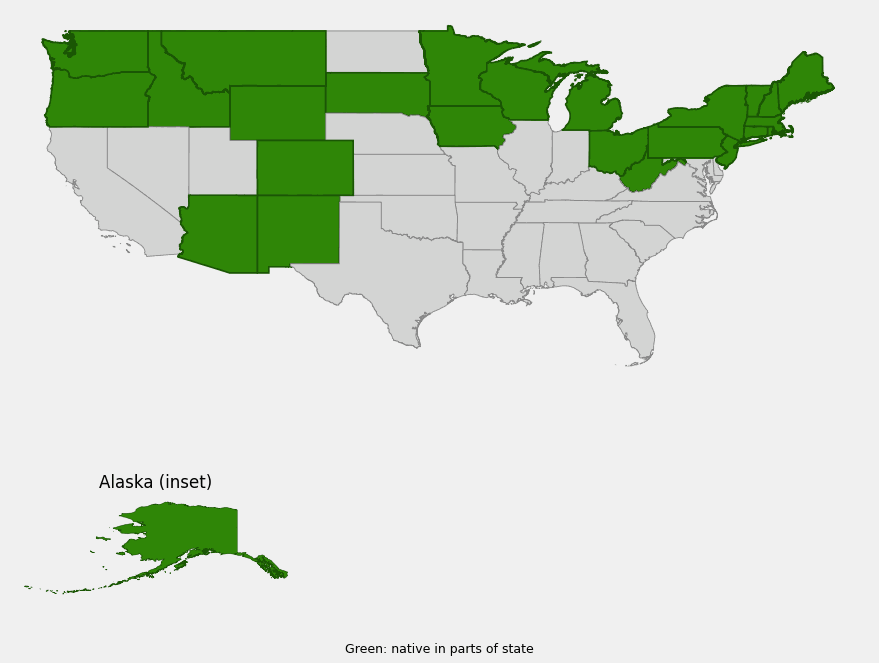
Oak fern has one of the broadest native ranges of any North American fern, circling the cooler parts of the Northern Hemisphere. In the United States it is native to Alaska and a wide band of the northern and mountain states: Washington, Oregon, Idaho, Montana and Wyoming in the West; Arizona, Colorado and New Mexico at high elevation in the Southwest; the upper Midwest in Minnesota, Wisconsin, Michigan and Iowa; South Dakota; and across the Northeast and Appalachians in New York, Pennsylvania, New Jersey, Ohio, West Virginia, Connecticut, Massachusetts, Rhode Island, New Hampshire, Maine and Vermont. It also ranges across most of Canada and Greenland. It is not native to the lower-elevation Great Plains, the Southeast, Texas, or California and Nevada, where the climate is too warm and dry for it.
Within this range, oak fern is strictly a plant of cool, shaded, moist habitats: coniferous and mixed hardwood-conifer forests, the base of talus slopes and rocky outcrops, shaded streambanks, and mossy, humus-rich ground, from near sea level in the north to subalpine elevations (reportedly to nearly 10,000 feet) in the mountainous parts of its range, including the disjunct, cooler-microclimate populations found in Arizona, Colorado, New Mexico and South Dakota’s Black Hills.
📋 Regional plant lists featuring Oak Fern: Alaska · Arizona & New Mexico · Utah & Western Colorado · Montana & Wyoming · Idaho, Eastern Oregon & Eastern Washington · Western Oregon & Western Washington · North Dakota, South Dakota & Western Minnesota · Michigan, Wisconsin & Eastern Minnesota · Illinois, Iowa & Missouri · New Hampshire, Maine & Vermont · Connecticut, Massachusetts & Rhode Island · New York, Pennsylvania & Northern New Jersey · Maryland, Virginia & West Virginia · Ohio & Indiana
Growing & Care Guide
Oak fern is a true shade specialist and one of the easiest small ferns to grow if you can offer it the cool, moist, humus-rich conditions it needs. It is not a fern for sunny or dry gardens.
Light
Give oak fern part to full shade. It is naturally a forest-floor plant and does best under the dappled or deep shade of a tree canopy. Too much direct sun scorches the thin fronds and dries the soil faster than the shallow rhizomes can tolerate.
Soil & Water
Plant oak fern in cool, consistently moist, humus-rich soil, similar to the leaf-litter-covered forest floor where it grows naturally. Good drainage matters too — moist does not mean soggy. This is not a drought-tolerant plant; allowing the soil to dry out for extended periods will cause fronds to brown and the colony to decline. A steady layer of organic mulch helps retain the cool, moist conditions the rhizomes need.
Planting Tips
Set out nursery-grown plants or divisions in spring, spacing them 8 to 12 inches apart if you want a quick-filling patch, since the plant will spread on its own over time. Work plenty of leaf mold or compost into the planting area beforehand. Oak fern is best suited to cooler climates (USDA zones 2–7) and tends to struggle in hot, humid summers at the southern edge of what growers attempt, even with shade.
Pruning & Maintenance
Very little maintenance is needed. Cut back or simply let the fronds die back naturally after they yellow in fall. Because it spreads by rhizome, oak fern can wander beyond its intended spot in ideal conditions; if that is a concern, grow it in a bottomless container sunk into the ground, or simply pull strays, since the thin rhizomes lift out of loose humus easily.
Landscape Uses
- Deep shade ground cover under conifers or dense deciduous canopy
- Woodland and fern gardens, mixed with other shade-loving natives
- Rock garden shade pockets, especially at the base of shaded boulders or talus-style plantings
- Stream and pond edges in shaded, consistently moist sites
- Naturalized colonies left to spread along a shaded slope or woodland path
Wildlife & Ecological Value
As a fern, oak fern does not offer nectar, pollen, or showy fruit, but it still plays a quiet supporting role in the forests where it grows.
Ecosystem Role
Oak fern’s spreading rhizomes help knit together the thin soil layer on shaded slopes and talus bases, contributing to erosion control in the forest understory. Its dense, low colonies add structure to the forest floor, offering cover for small invertebrates and amphibians that shelter in cool, moist leaf litter.
For Wildlife
Ferns in general are not a major food source for deer or other browsers, which is part of why oak fern is considered deer resistant; this makes it a reliable, persistent ground layer even in areas with heavy deer pressure. Small invertebrates use the fronds and litter beneath them for shelter and foraging.
Cultural & Historical Uses
There is little documented history of oak fern being used for food, medicine, or materials by Indigenous peoples of North America, likely because, like most ferns, it offers no significant edible or medicinal parts, and fiddleheads this small are not a practical food source. Its primary historical significance has been botanical and horticultural: its wide, nearly circumboreal distribution across North America, Europe and Asia has long made it a textbook example of a cool-temperate forest species, and it has been grown in shade gardens for its delicate texture for well over a century.
Frequently Asked Questions
Is oak fern edible?
No. Oak fern is not documented as a food plant, and its fiddleheads are too small and the species too limited in culinary tradition to be a reliable or recommended edible fern. Stick to well-documented edible fiddlehead species if foraging, and always get expert identification before eating any wild fern.
Why is it called oak fern if it’s not related to oaks?
The common name is historical rather than botanical. It likely comes from an old European association between this fern and oak woodlands, where it is also native, rather than any biological relationship to oak trees.
Will oak fern take over my garden?
It spreads steadily by rhizome and will fill in a shaded, moist bed over a few seasons, but it is low-growing and shallow-rooted, so unwanted spread is easy to control by pulling stray fronds or edging the bed. It is native and not considered invasive anywhere within its range.
Can oak fern grow in sun?
No. It is a shade specialist and will scorch and decline in direct sun, especially where soil also dries out. Give it part to full shade and consistently moist soil for best results.
Why are my oak fern’s fronds turning brown and dying back?
In most cases this is simply the fern going dormant for winter after the first hard frost, which is normal. If fronds brown and collapse during the growing season, the most likely cause is drought stress; check that the soil has not dried out, especially in a hot summer.

Looking for a nursery that carries Oak Fern?
Browse our native plant nursery directory: Alaska & Arizona · Colorado & Connecticut · Idaho & Iowa · Maine, Massachusetts, Michigan, Minnesota & Montana · New Hampshire, New Jersey, New Mexico, New York & Ohio · Oregon · Pennsylvania, Rhode Island, South Dakota & Vermont · Washington · West Virginia, Wisconsin & Wyoming