Western Sunflower (Helianthus occidentalis)
Helianthus occidentalis, the Western Sunflower — also called fewleaf sunflower or naked-stem sunflower — is a short, drought-tough perennial wildflower of dry prairies, barrens and open woodland edges across the eastern and midwestern United States. The “western” in its name is a historical accident: when the species was first described in 1836, the Great Lakes region it calls home was still considered the western frontier. Today its core range runs through the Great Lakes states and the Ozarks, with outlying populations reaching into the Appalachians, the Gulf Coastal Plain and central Texas.
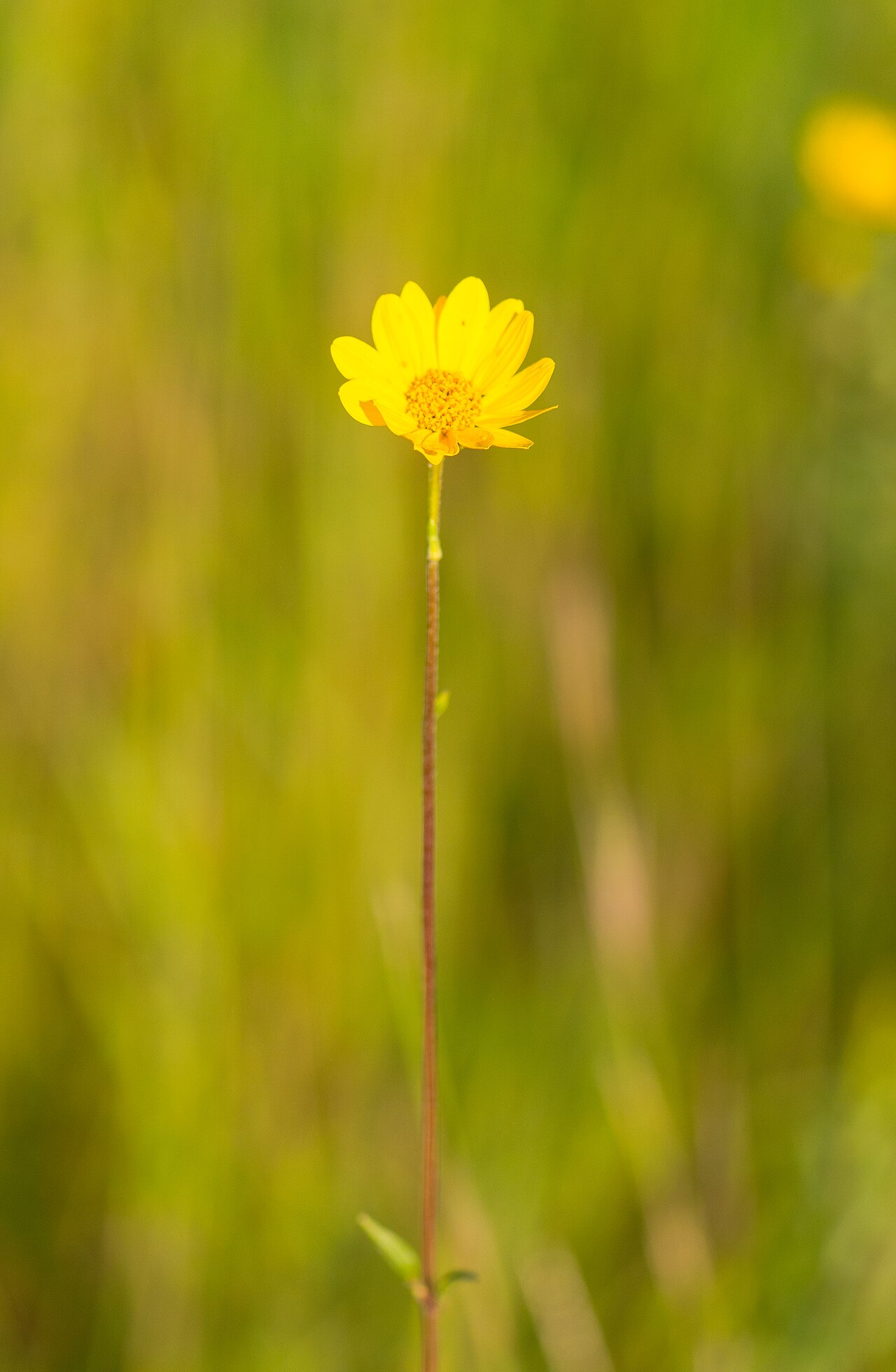
What sets this sunflower apart from its relatives is its sparse, almost leafless flowering stalk. Most of the foliage sits in a low rosette at the base of the plant, while the slender 2- to 4-foot stem above carries only a few scattered leaf pairs on its way up to one or more simple, elegant yellow flowerheads. That naked-stem habit, combined with its modest size — the shortest of the commonly grown native sunflowers — makes it easy to tell apart from the taller, leafier sunflowers of moist meadows and roadsides.
Western sunflower is especially valuable for gardeners with lean, sandy or rocky dry soil where many showier prairie plants struggle. It is one of the least aggressive sunflowers in cultivation, holding its place in a planting rather than crowding out neighbors, and its long summer bloom period makes it a dependable source of nectar and seed for prairie wildlife.
Identification
Western sunflower is best recognized by its rosette of basal leaves at ground level paired with a mostly bare flowering stalk that carries only a handful of small leaves on its way to one or a few simple daisy-like flowerheads.
Stems & Basal Rosette
The plant forms a rosette of stalked basal leaves, each about 1½ inches across, clustered at the base of the flowering stalk, which stands 2 to 4 feet tall (occasionally to 5 feet). The flowering stalk is light green to greenish-red, smooth to lightly hairy, and conspicuously bare for most of its length — carrying just one to two pairs of opposite leaves low down and a few scattered alternate leaves higher up. This “naked stem” look gives the plant one of its common names and is the single most useful field mark.
Leaves
Basal leaves have a rounded base, a blunt tip, and a slender petiole 1 to 4 inches long. Their upper surface is medium green and rough to the touch, the underside paler and smoother, with one to two pairs of lateral veins branching from the base of the blade alongside the central vein. The few leaves on the stem itself are smaller — 1 to 3 inches long and only ¼ to ¾ inch wide — lance-shaped to elliptic, usually smooth-margined, and nearly stalkless.
Flowers & Fruit
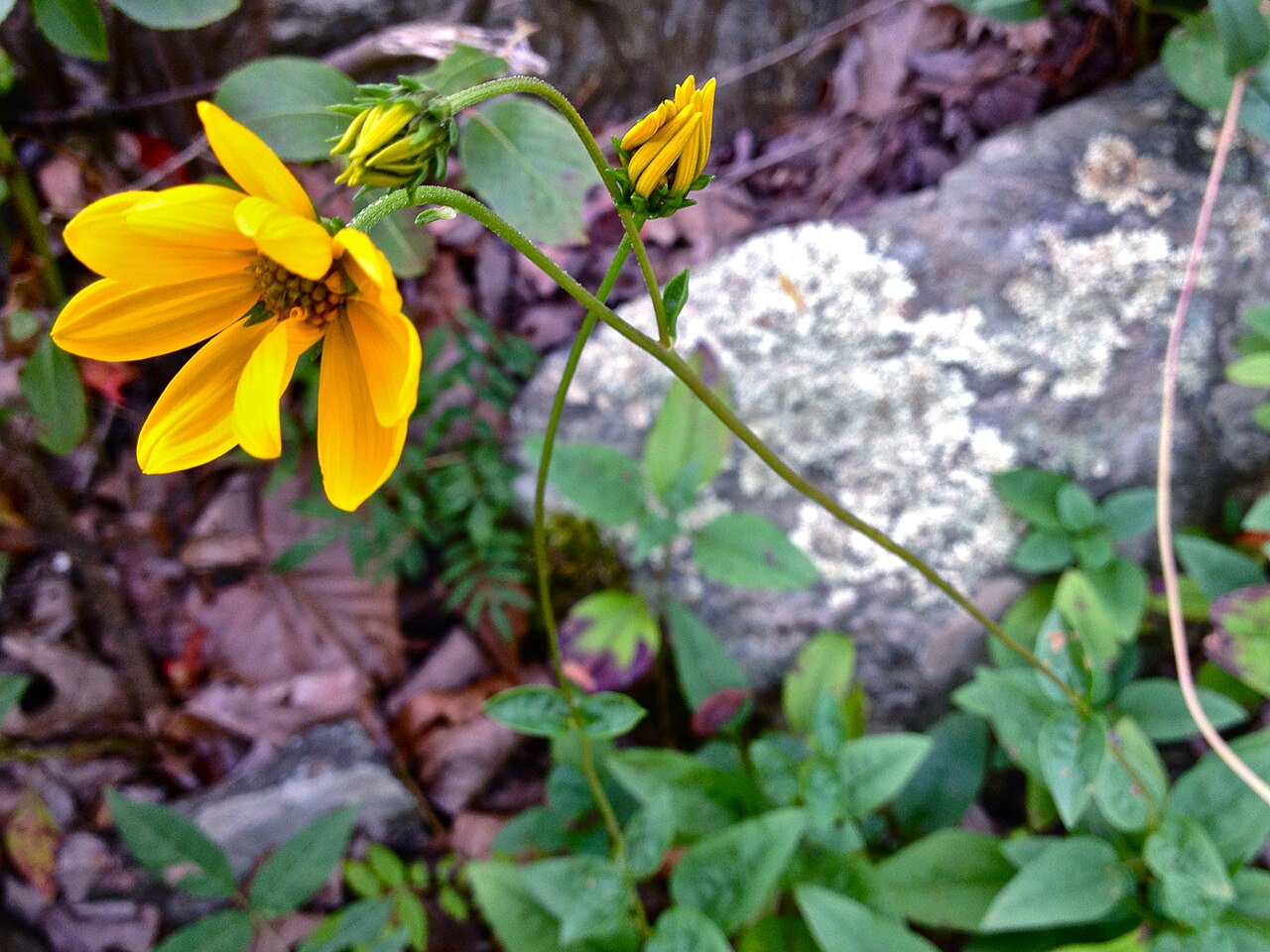
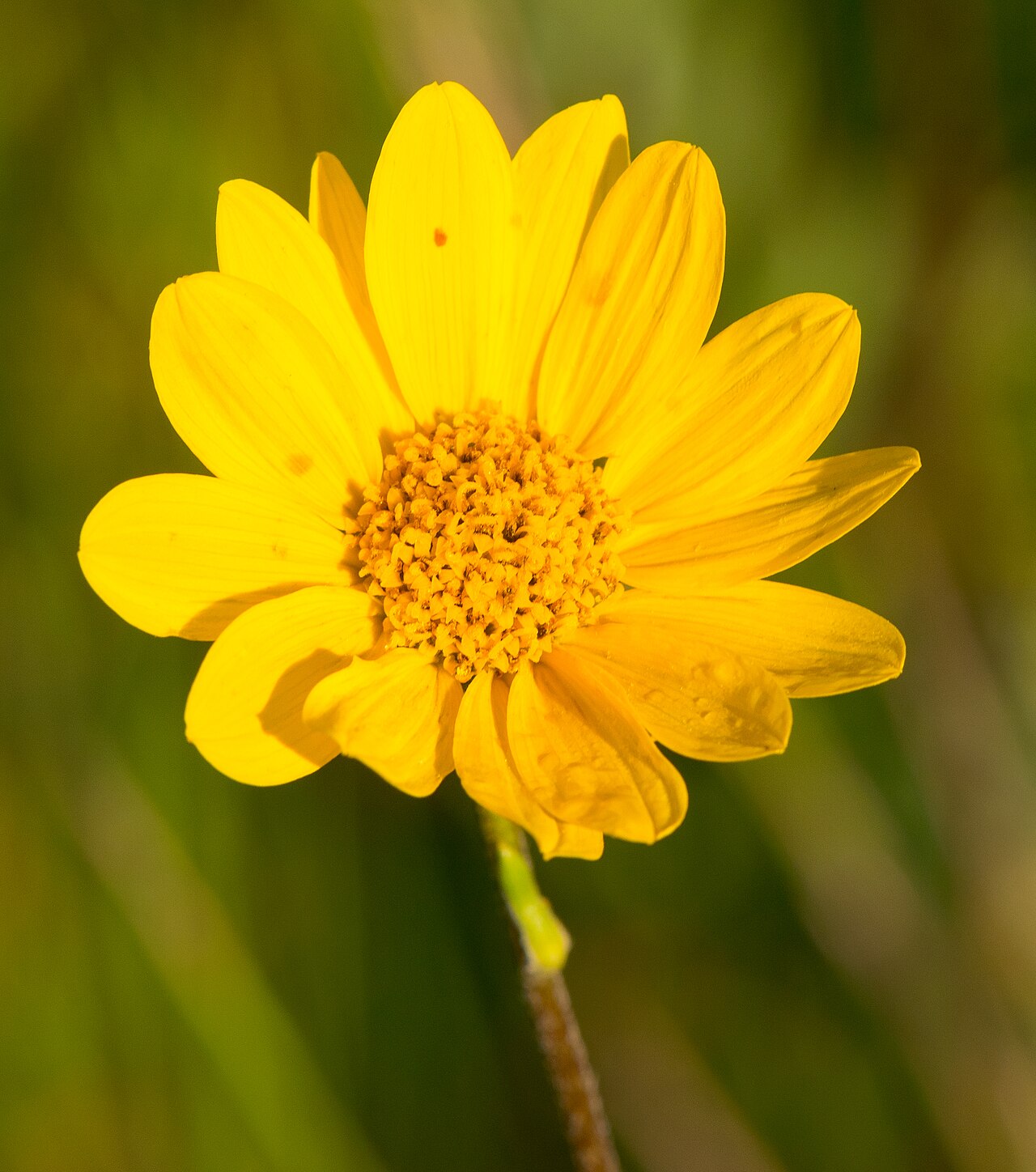
Each flowering stalk terminates in 1 to 12 flowerheads, 1½ to 2½ inches across, with 8 to 22 yellow ray florets surrounding a center of small, 5-lobed yellow disk florets. Several overlapping green bracts cup the base of each head. Bloom runs from mid-summer into fall, typically July through September. The root system is a narrow taproot with shallow rhizomes that occasionally form small vegetative colonies, though this species spreads far less aggressively than many other native sunflowers.
Quick Facts
| Scientific Name | Helianthus occidentalis |
| Family | Asteraceae (Aster/Sunflower) |
| Plant Type | Herbaceous perennial (basal rosette, naked flowering stalk) |
| Mature Height | 2–4 ft (occasionally to 5 ft) |
| Mature Spread | 1–2 ft; forms a slowly widening clump, not a running colony |
| Growth Rate | Moderate; one of the least aggressive native sunflowers |
| Sun Exposure | Full Sun to Part Sun |
| Water Needs | Low; average dry to medium, drought tolerant once established |
| Soil Type | Sandy, rocky or clay; well-drained |
| Soil pH | Adaptable; roughly 5.5–7.5 |
| Bloom Time | July – September |
| Flower Color | Yellow rays and disk |
| Fall Color | Foliage dies back after frost; no notable fall color |
| Fruit | Small achenes, late summer–fall |
| Deer Resistant | Moderate |
| USDA Hardiness Zones | 4–8 |
Native Range
Western sunflower is native to the eastern and central United States, most common in the Great Lakes region (Michigan, Wisconsin, Illinois, Indiana, Ohio) and the Ozarks (Missouri, Arkansas), with a broader scatter of populations through the Appalachians and mid-South (Pennsylvania, Maryland, Virginia, West Virginia, North Carolina, South Carolina, Kentucky, Tennessee, Georgia, Alabama, Mississippi), the western Corn Belt (Iowa, Minnesota, Kansas), and south into Louisiana and central Texas, where the Texas plains population is sometimes distinguished as a separate subspecies. It is notably absent from Oklahoma and from most of the Northeast, despite occasional garden plantings and a few historical waif records near the coast.
Typical habitat is dry, open and sun-exposed: sand and gravel prairies, barrens, rocky bluffs, old fields, dry savannas and roadside remnants with thin, well-drained soil. Unlike many of its taller, leafier relatives, western sunflower tends to avoid rich, moist ground, where more vigorous competitors crowd it out; it does best on exactly the kind of lean, sun-baked sites that frustrate many showier prairie wildflowers.
Because these dry prairie and barrens habitats depend on periodic disturbance, western sunflower populations are often tied to places with a history of fire, grazing or mowing that keeps woody plants from taking over. Where fire has been suppressed for decades, populations can decline as the open ground they need grows shadier and more crowded.
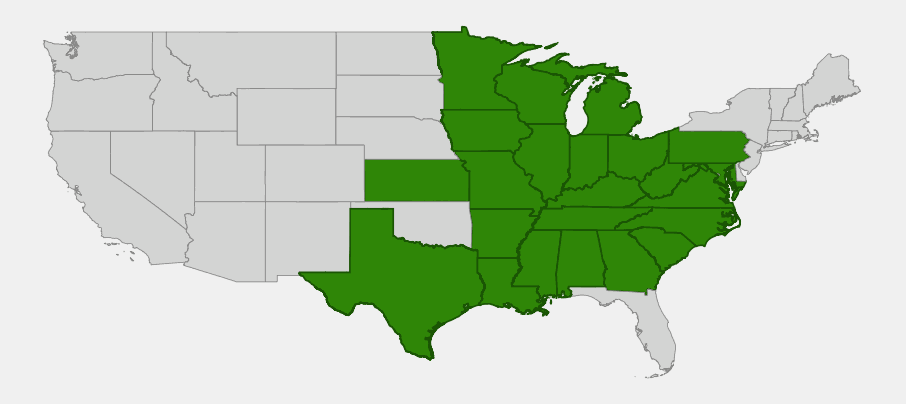
📋 Regional plant lists featuring Western Sunflower: New York, Pennsylvania & Northern New Jersey · Maryland, Virginia & West Virginia · North Carolina & South Carolina · Georgia, Alabama & Mississippi · Arkansas, Louisiana, Eastern Oklahoma & Eastern Texas · Kentucky & Tennessee · Ohio & Indiana · Illinois, Iowa & Missouri · Michigan, Wisconsin & Eastern Minnesota · North Dakota, South Dakota & Western Minnesota · Nebraska, Kansas & Eastern Colorado
Growing & Care Guide
Western sunflower rewards gardeners who have a hot, dry, lean spot that few other showy perennials want. Give it sun and good drainage, and it asks for almost nothing else.
Light
Full sun produces the sturdiest plants and the most flowers, but western sunflower tolerates part sun reasonably well, especially in the southern part of its range where afternoon shade can help it through the hottest weeks. Too much shade produces a leggier, less floriferous plant that may need staking.
Soil & Water
This is a plant for lean, well-drained ground — sandy, rocky or average clay soils all work, though heavy clay benefits from amendment to improve drainage. Water needs are low once established; the species is genuinely drought tolerant and actually performs worse, becoming floppy and less competitive, in deep, fertile, consistently moist soil where other plants can out-compete it. Avoid rich garden beds and fertilizer; lean soil is a feature here, not a flaw.
Planting Tips
Plant container-grown stock in spring, spacing plants about 1 to 2 feet apart in a sunny, dry bed, rock garden or prairie planting. It is one of the best-behaved native sunflowers for small gardens, since it spreads slowly by short rhizomes rather than running aggressively. Because flowering stalks can reach 3 to 4 feet on a fairly slender frame, a bit of support or close neighboring plants can help keep taller specimens upright in open, windy sites.
Pruning & Maintenance
Very low maintenance. Cut back dead stalks in late fall or leave them standing through winter for seed-eating birds, then clear old growth in early spring. Divide clumps every three to four years to control spread and renew vigor, which also yields free plants for other dry areas of the garden. No significant insect or disease problems are typically reported; taller plants in exposed sites occasionally need staking.
Propagation
Propagate by dividing the shallow rhizomes in spring or fall, or by sowing seed collected from ripe achenes in fall; seed benefits from a period of cold, moist stratification over winter if sown in containers rather than directly outdoors in autumn. Division is the faster, more reliable method for named selections or when quick establishment is the goal.
Landscape Uses
- Dry prairie and meadow gardens, where its short stature keeps it from overwhelming neighbors
- Rock gardens and gravel beds on lean, fast-draining soil
- Xeriscaping and low-water plantings
- Pollinator gardens, especially paired with little bluestem and other dry-prairie natives
- Restoration plantings in sand prairie, barrens and savanna projects
- Front-of-border plantings, since it stays shorter than most garden sunflowers
Wildlife & Ecological Value
Like other native sunflowers, western sunflower is a reliable source of nectar, pollen and seed through the heart of the growing season in habitats where few other dry-site plants offer as much.
For Pollinators
The flowerheads draw a wide range of bees, including several specialist sunflower-pollinating species along with generalist bumblebees, honeybees and leafcutter bees, as well as butterflies, skippers and other flower-visiting insects. Its long bloom window from midsummer into fall helps bridge the gap between the main flush of early-summer prairie flowers and the asters and goldenrods of autumn.
For Birds
Seed-eating birds such as goldfinches and sparrows feed on the ripening achenes in late summer and fall, particularly where seedheads are left standing into winter rather than cut back in autumn.
For Mammals
Small mammals typical of dry prairie and barrens habitat, including ground squirrels and mice, occasionally take the seeds, and the plant’s foliage is browsed lightly by deer without serious damage to established clumps.
Ecosystem Role
As a characteristic plant of dry sand and gravel prairies, barrens and savanna edges, western sunflower is part of a plant community that depends on periodic disturbance — historically fire, now often prescribed burns or mowing — to stay open and sunny. Its presence is often used by land managers as an indicator of good-quality remnant dry prairie, since the species does not compete well once a site becomes shadier or more fertile.
Cultural & Historical Uses
Western sunflower has left a much lighter mark on the historical record than the large-seeded common sunflower that Indigenous peoples across North America bred and cultivated as a major food crop. Being a smaller, less productive wild relative of open dry ground, it was not developed as a food source in the same way, and detailed historical accounts specific to this species are sparse.
Its real significance has always been ecological: as a dependable midsummer bloomer of the dry prairies, barrens and savannas that once covered large parts of the Great Lakes region and Ozarks before conversion to agriculture and fire suppression shrank these habitats dramatically over the past two centuries.
In recent decades, western sunflower has found a second life as a well-behaved garden perennial, prized by prairie restoration projects and home gardeners alike for filling the dry, sunny sites that many showier wildflowers cannot tolerate, without the aggressive spread that makes some other native sunflowers difficult to contain.
Frequently Asked Questions
Why is it called “western” sunflower if it grows in the East and Midwest?
The species was named in 1836, when the Great Lakes region where it is most common was still considered the western edge of settled North America from a European perspective. The name reflects that historical viewpoint, not the plant’s actual range, which today is concentrated in the Midwest, Ozarks and Appalachians.
How is western sunflower different from other native sunflowers?
It is shorter than most, typically 2 to 4 feet, and has a distinctive growth habit: a low rosette of basal leaves with a nearly bare, leafless flowering stalk rising above it. Most other native sunflowers carry leaves along most of the stem.
Does western sunflower spread aggressively?
No — it is one of the least aggressive native sunflowers in cultivation, spreading slowly by short rhizomes rather than running widely. Dividing clumps every three to four years keeps plants vigorous without the need for containment that some other sunflowers require.
What kind of soil does western sunflower need?
Lean, well-drained soil is ideal — sandy, rocky or average clay all work. Rich, consistently moist, fertile soil actually works against it, producing weaker, floppier growth and letting more vigorous plants crowd it out.
When does western sunflower bloom?
Typically from July into September, giving it a long midsummer-to-fall bloom period that helps support pollinators between the main spring flush and the fall asters and goldenrods.

Looking for a nursery that carries Western Sunflower?
Browse our native plant nursery directory: Alabama & Arkansas · Georgia · Illinois, Indiana, Iowa & Kansas · Kentucky, Louisiana, Maryland, Michigan, Minnesota, Mississippi & Missouri · North Carolina & Ohio · Pennsylvania, South Carolina, Tennessee, Texas & Virginia · West Virginia & Wisconsin