
Stemless Four-nerve Daisy (Tetraneuris acaulis)
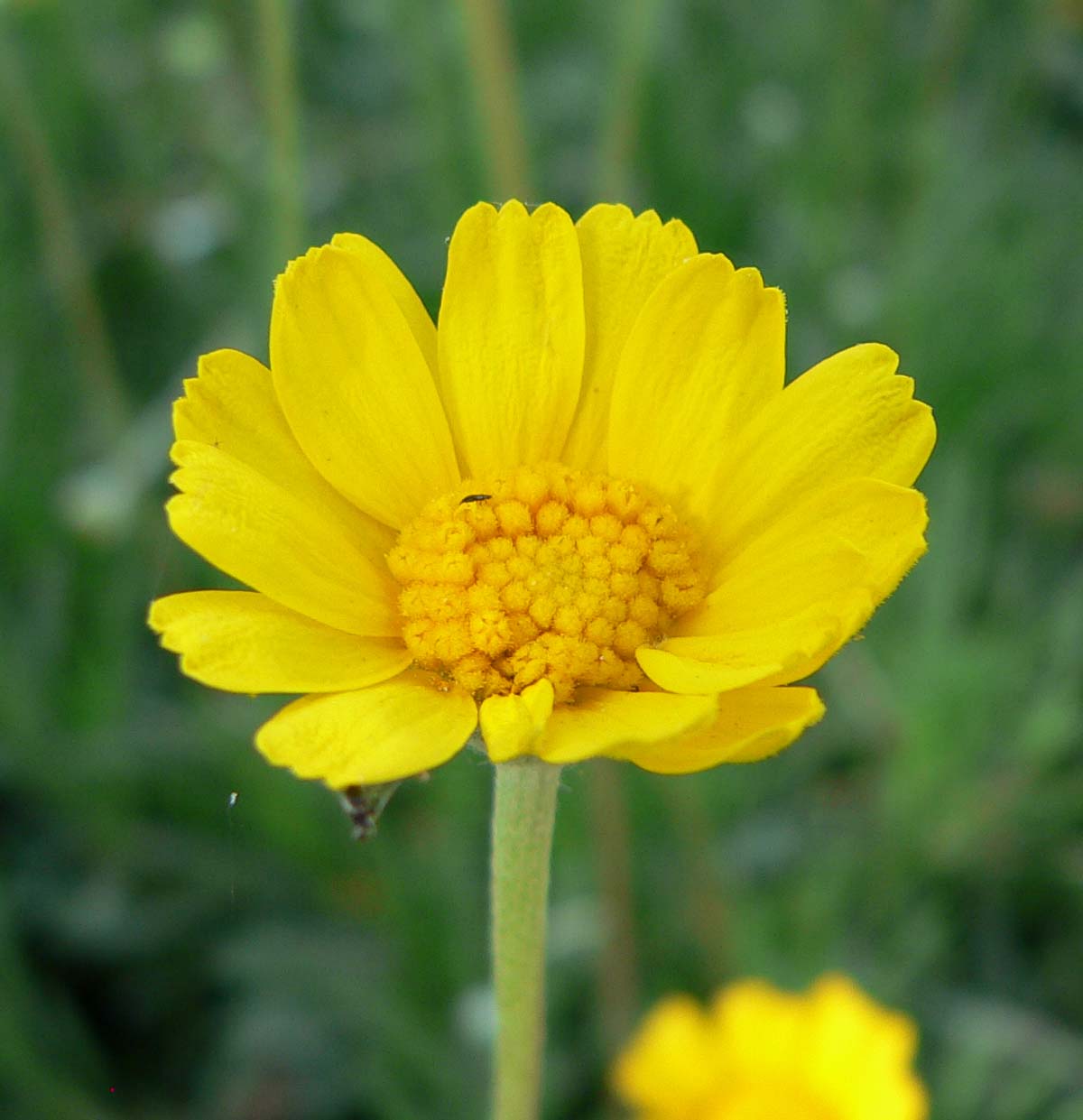
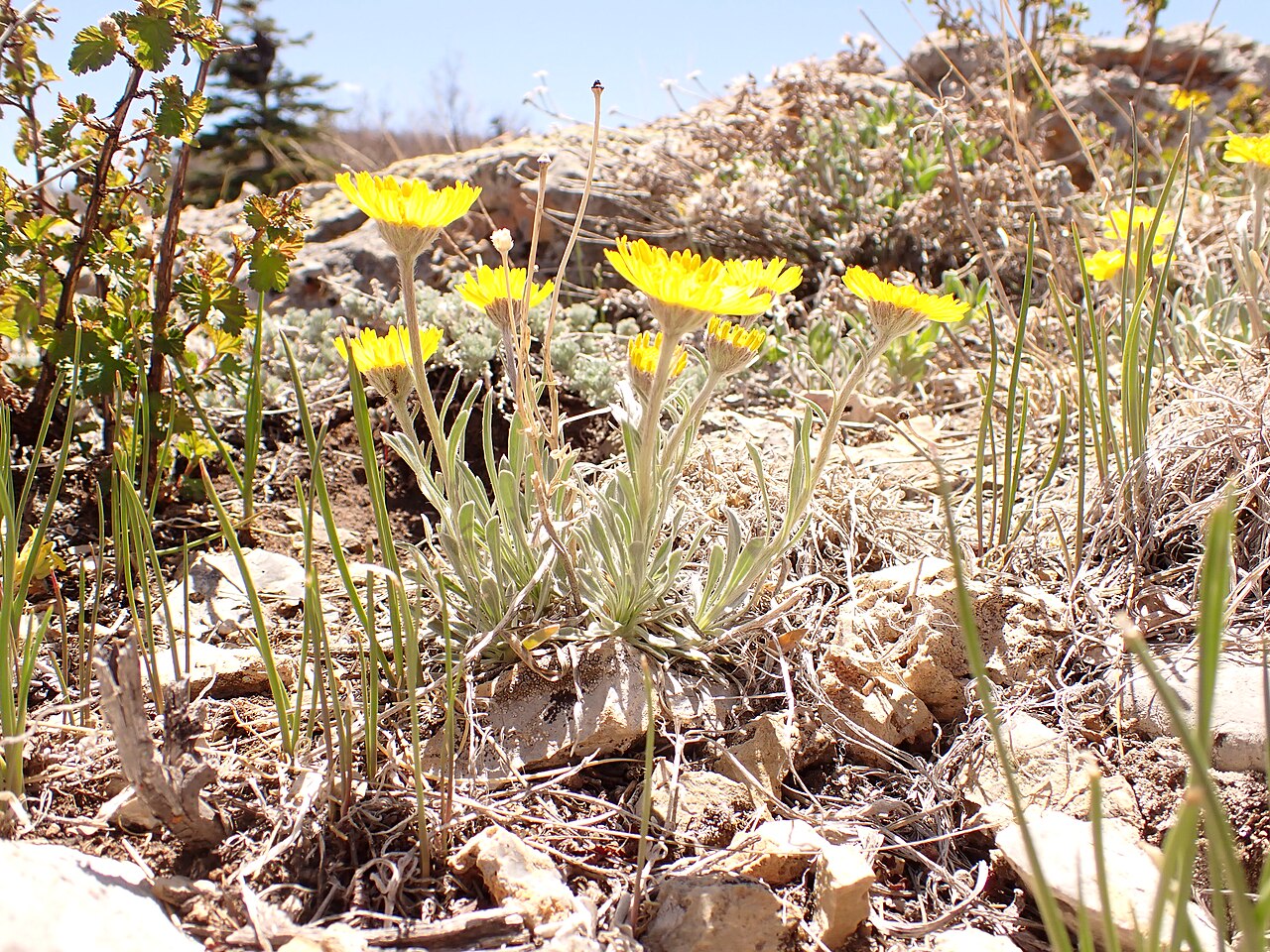
Tetraneuris acaulis, the Stemless Four-nerve Daisy (also called stemless hymenoxys and, in the nursery trade, angelita daisy), is a small, tough, sun-loving wildflower of the western United States. It forms low tufts of narrow, often silvery-hairy leaves, and from spring into summer sends up leafless stalks, each carrying a single cheerful yellow daisy about an inch across.
It grows across a huge range, from the shortgrass prairies of the Dakotas, Nebraska and Kansas west through the Rocky Mountains and the Colorado Plateau to the Great Basin and the mountains of southern California, and north into Alberta and Saskatchewan. Across that range it lives on dry, open, rocky or gravelly ground: plains, badlands, sagebrush flats, pinyon-juniper slopes and, in its high-elevation forms, wind-scoured ridges up to the alpine zone.
Gardeners in the Mountain West prize it as a nearly indestructible plant for rock gardens, troughs, crevice gardens and xeric borders. It needs no water once established, blooms for weeks, and attracts small native bees. This guide covers how to identify it, where it grows, how to grow it and its value to wildlife.
Identification
Stemless four-nerve daisy is a cushion- or tuft-forming perennial with all of its leaves at the base and single yellow flower heads on leafless stalks. It is extremely variable: botanists recognize several varieties, and plants range from nearly hairless to densely silky-white.
Leaves & Growth Form
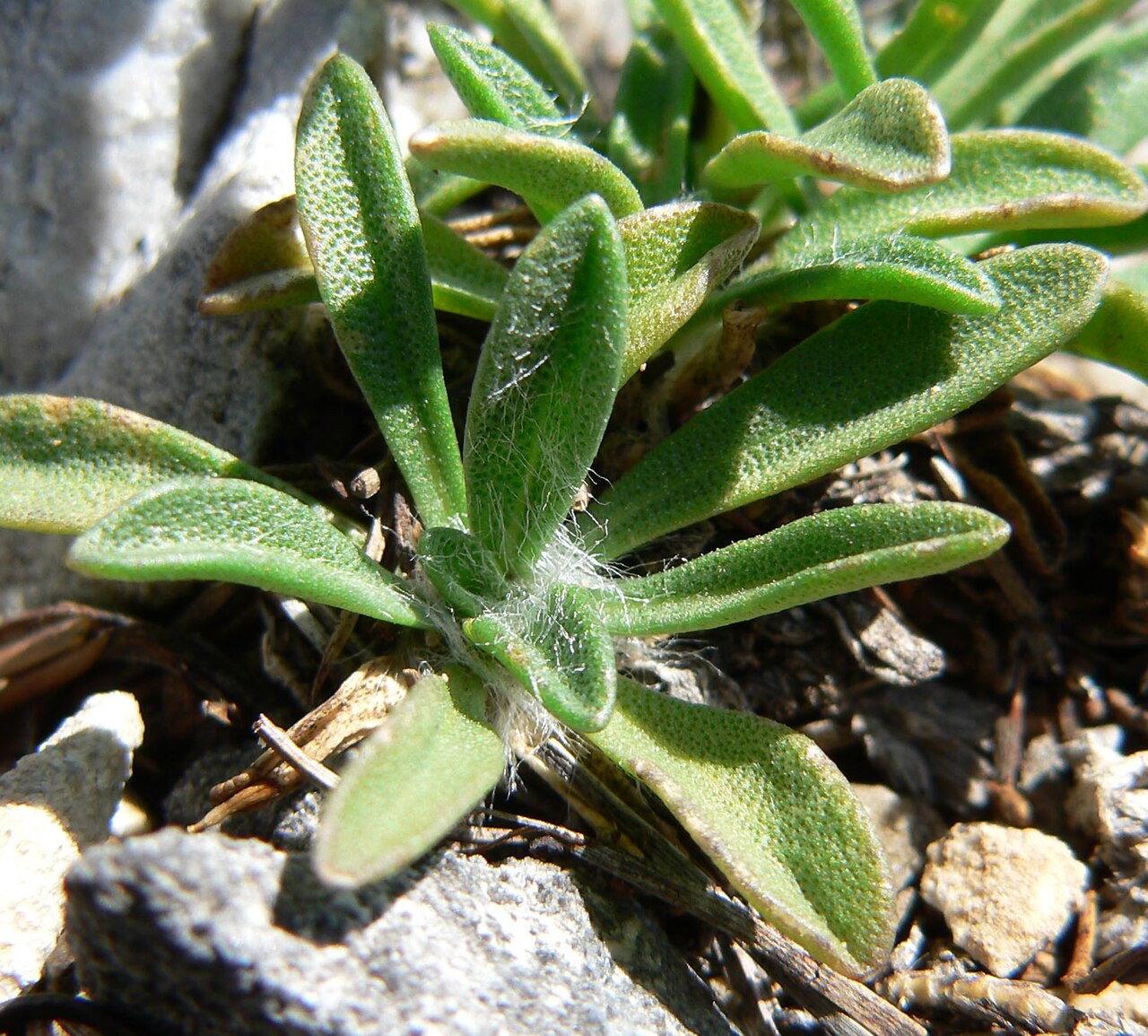
The leaves are crowded at the tips of short, branched woody bases (a caudex), forming tufts or small mats a few inches across. Each leaf is narrow and strap- to spoon-shaped, roughly 1 to 3 inches long, with a smooth edge, and is usually covered with silky or woolly hairs and tiny glandular dots. Old leaf bases persist around the crown. As the common name says, there are no leafy stems; the plant is “stemless” apart from the flower stalks.
Flowers
Each leafless flower stalk, usually 2 to 12 inches tall, ends in one flower head about 1 to 1½ inches across. The head has 8 to about 14 bright yellow ray flowers, each with three small teeth at the tip and four darker veins, the “four nerves” that give the genus Tetraneuris its name. The center is a dome of many small yellow disk flowers. Blooming runs from April or May at low elevations into August in the mountains.
Fruit
The seeds are small, hairy achenes topped with several thin, pointed scales (the pappus). As the seeds ripen, the rays dry and fold back and the head becomes a small round seed head.
Look-alikes
Four-nerve Daisy (T. scaposa) of Texas and the southern plains is very similar but has longer, often green leaves and taller stalks. Fineleaf Four-nerved Daisy is an annual with leafy branching stems. Alpine Sunflower (T. grandiflora) of the high Rockies has much larger, very woolly flower heads on short stalks. Townsendias and other low yellow daisies (such as stemless goldenweeds) lack the three-toothed, four-veined rays.
Quick Facts
| Scientific Name | Tetraneuris acaulis (Pursh) Greene (syn. Hymenoxys acaulis) |
| Family | Asteraceae (aster family) |
| Plant Type | Herbaceous perennial with a woody base |
| Mature Height | 2–12 in (in flower) |
| Mature Spread | 4–12 in |
| Growth Rate | Slow to moderate |
| Sun Exposure | Full sun |
| Water Needs | Low; very drought tolerant |
| Soil Type | Rocky, gravelly, sandy or clay soils; must drain well |
| Soil pH | About 6.5–8.5 (neutral to alkaline) |
| Bloom Time | April–August (spring at low elevations, summer in the mountains) |
| Flower Color | Bright yellow |
| Fall Color | Evergreen to semi-evergreen gray-green tufts |
| Fruit | Small hairy achenes with scale-like pappus |
| Deer Resistant | Yes; seldom browsed |
| USDA Hardiness Zones | 3–9 |
Native Range
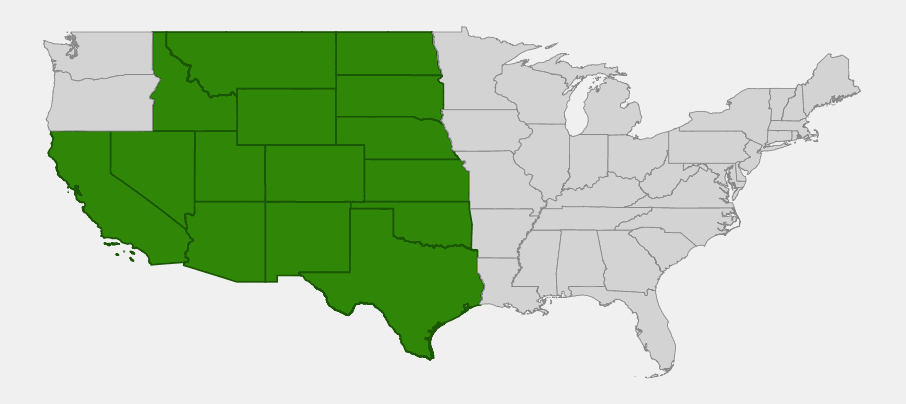
Stemless four-nerve daisy is one of the most widespread wildflowers of the interior West. USDA PLANTS lists it as native in Arizona, California, Colorado, Idaho, Kansas, Montana, Nebraska, Nevada, New Mexico, North Dakota, Oklahoma, South Dakota, Texas, Utah and Wyoming, and in Alberta and Saskatchewan in Canada. It is most common in Wyoming, Colorado, Utah and northern New Mexico, where it reaches its greatest variety of forms. In Texas and Oklahoma it is a plant of the western Panhandle and high plains; in California it grows mainly in the desert mountains and the eastern Sierra region.
Its habitats are all dry and open: shortgrass and mixed-grass prairie, badlands and buttes, sagebrush steppe, pinyon-juniper woodland, ponderosa pine openings and, at higher elevations, rocky ridges, talus and fellfields. It is common on limestone, shale, sandstone and gravelly soils and often grows on the thinnest, most exposed ground, where taller plants cannot compete.
Botanists divide the species into several varieties. The widespread typical variety grows on the plains and foothills; var. arizonica occurs in the Southwest and Great Basin mountains; var. caespitosa forms tight cushions on high Rocky Mountain ridges; and var. epunctata lacks the gland dots on its leaves. All of them share the basic look: low tufts of basal leaves and single yellow heads on leafless stalks.
📋 Regional plant lists featuring Stemless Four-nerve Daisy: South & West Texas · North Dakota, South Dakota & Western Minnesota · Nebraska, Kansas & Eastern Colorado · Montana & Wyoming · Utah & Western Colorado · Arizona & New Mexico · Idaho, Eastern Oregon & Eastern Washington · California & Nevada
Growing & Care Guide
Stemless four-nerve daisy is one of the easiest native perennials for dry, sunny sites in the West, and it is sold by native and rock-garden nurseries in the Rocky Mountain region (sometimes as Hymenoxys acaulis). The key to success is sharp drainage and a lean, sunny spot. In wet, rich soil or shade it rots or fades away.
Light
Full sun. It blooms best with sun all day and becomes floppy and short-lived in shade.
Soil & Water
Plant it in lean, fast-draining soil: gravel, sand, decomposed granite, crushed limestone or rocky clay. Alkaline soils suit it well. Water new plants every week or two during their first summer, then only during long droughts, or not at all in most of its native range. Overwatering, heavy mulch and soil that stays wet in winter are the main causes of failure.
Planting Tips
Use it at the front of a xeric bed, between rocks in a rock or crevice garden, in troughs and containers, or along gravel paths. Space plants 8 to 12 inches apart. A mulch of gravel rather than bark keeps the crowns dry. It is an excellent companion for low penstemons, buckwheats, blue grama and small cacti.
Pruning & Maintenance
Very little. Snip off spent flower stalks if you want a tidier look or to encourage more bloom, or leave some to set seed. Pull old dead leaves from the crown in spring. Do not fertilize.
Propagation
Grow it from seed sown in fall or early spring on the surface of a gritty mix; seed germinates fairly readily, and a short cold, moist period can help. Seedlings often bloom in their second year. Established clumps can be carefully divided in early spring, and plants often self-sow lightly in gravel.
Landscape Uses
- Rock and crevice gardens: a long-blooming yellow accent between stones
- Xeriscapes and water-wise borders: needs little or no supplemental water once established
- Troughs and containers: compact tufts suit small spaces
- Prairie and steppe restoration: fits shortgrass, sagebrush and foothill plantings
Wildlife & Ecological Value
Stemless four-nerve daisy is a small plant, but its long bloom season on dry, open ground makes it a reliable nectar and pollen source where few other flowers grow.
For Pollinators
Its open yellow heads are visited by many small native bees, including sweat bees and mining bees, as well as flies, beetles and small butterflies that land on the flat flower heads. Blooming from spring into summer, it supports pollinators over a long season.
For Birds
Small seed-eating birds of open country, such as sparrows and finches, may pick at the seed heads. The plant also forms part of the low, open cover used by ground-nesting grassland and sagebrush birds.
For Mammals
It is generally little browsed by deer or livestock. Small rodents may eat some seed.
Ecosystem Role
As a long-lived perennial on bare, rocky and eroding ground, it helps stabilize thin soils and is one of the first flowers to bloom on exposed ridges and badlands. Its many local forms reflect a long history of adaptation to different soils and elevations across the West.
Cultural & Historical Uses
Frederick Pursh first described this plant in his Flora Americae Septentrionalis (1814) as Gaillardia acaulis. Later botanists moved it to Actinea, Hymenoxys and finally Tetraneuris, Edward Greene’s genus name meaning “four nerves,” for the four veins in each ray. Many older books and nurseries still call it Hymenoxys acaulis. The species name acaulis means “stemless.”
Its close relatives in Hymenoxys and Tetraneuris include the four-nerve daisy of Texas (T. scaposa), orange sneezeweed and the alpine sunflower of the Rockies. Some relatives, such as bitterweed (Hymenoxys odorata), are known to be toxic to sheep, so these plants are best kept out of pastures where livestock might graze them heavily.
Today the plant is a favorite of rock gardeners. Selections from high-elevation populations make tight, silvery cushions, and low-elevation forms from Arizona are widely grown as angelita daisy in desert landscapes.
Frequently Asked Questions
Why is it called four-nerve daisy?
The genus name Tetraneuris means “four nerves.” Each yellow ray has four prominent veins, which you can see if you look closely at a ray against the light.
Is stemless four-nerve daisy the same as angelita daisy?
They are closely related. “Angelita daisy” is the nursery name for Tetraneuris acaulis, especially var. arizonica; the similar T. scaposa is occasionally sold under it too. Both form tufts of narrow leaves with single yellow heads on leafless stalks.
How much water does it need?
Very little. After its first summer it usually survives on rainfall alone across the West. Too much water, especially in winter, kills it faster than drought.
How long does it bloom?
A long time. In gardens it often blooms from mid-spring into summer, with scattered flowers later, especially if spent stalks are removed.
Is it deer resistant?
Yes. Deer and rabbits rarely eat it, which makes it a good choice for foothill gardens.

Looking for a nursery that carries Stemless Four-nerve Daisy?
Browse our native plant nursery directory: Arizona · California · Colorado · Idaho & Kansas · Montana · Nebraska, Nevada, New Mexico, North Dakota & Oklahoma · South Dakota, Texas & Utah · Wyoming

