Four-nerve Daisy (Tetraneuris scaposa)
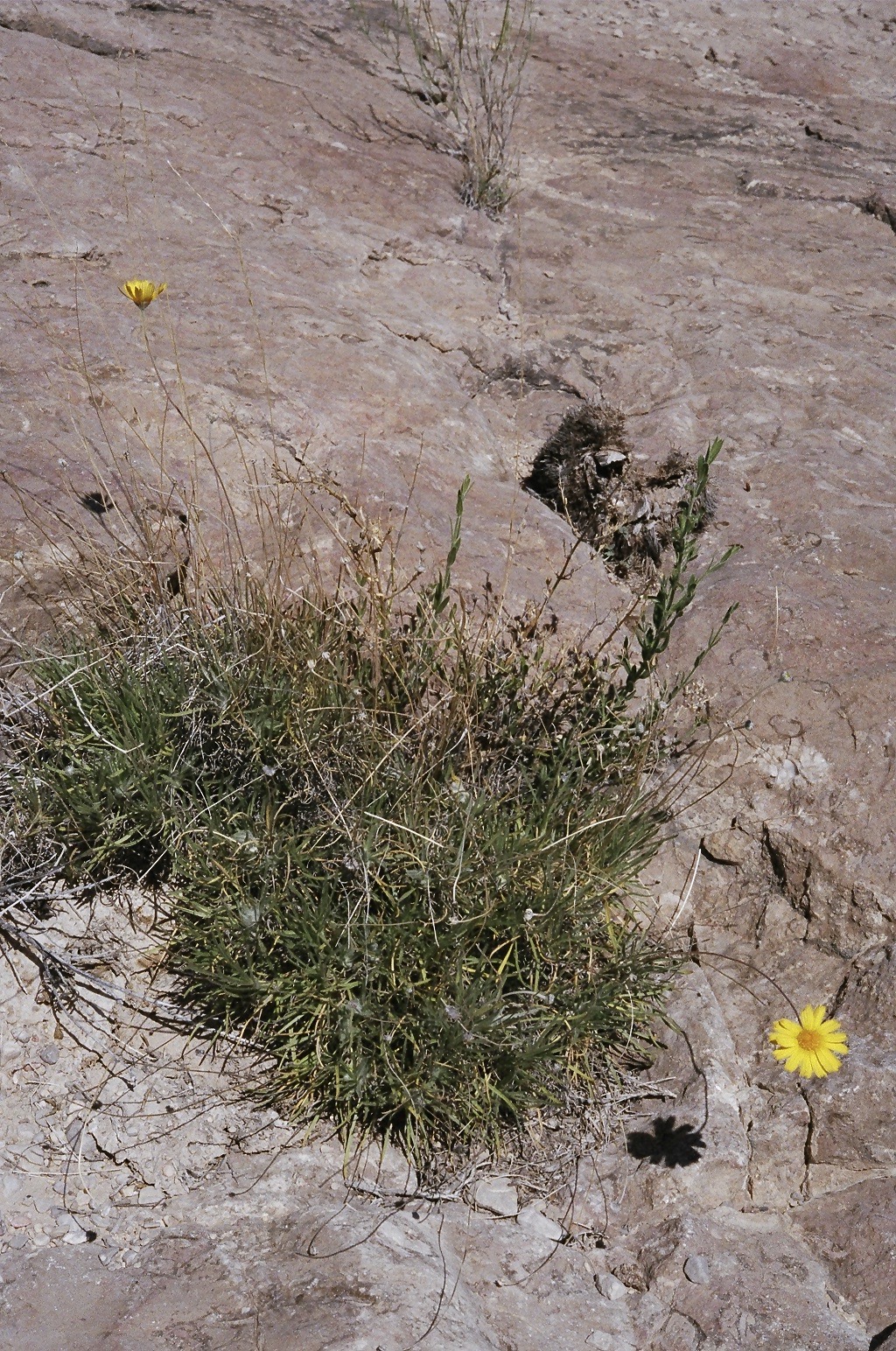
Tetraneuris scaposa (formerly classified as Hymenoxys scaposa), commonly known as Four-nerve Daisy or Stemmy Four-nerve Daisy, is a tough little evergreen wildflower of the southern Great Plains and Chihuahuan Desert borderlands. A member of the Asteraceae (aster or sunflower family), it forms neat, low tufts of narrow gray-green leaves that stay green through the winter, and it blooms on and off for most of the growing season wherever it has rooted into thin, rocky soil.
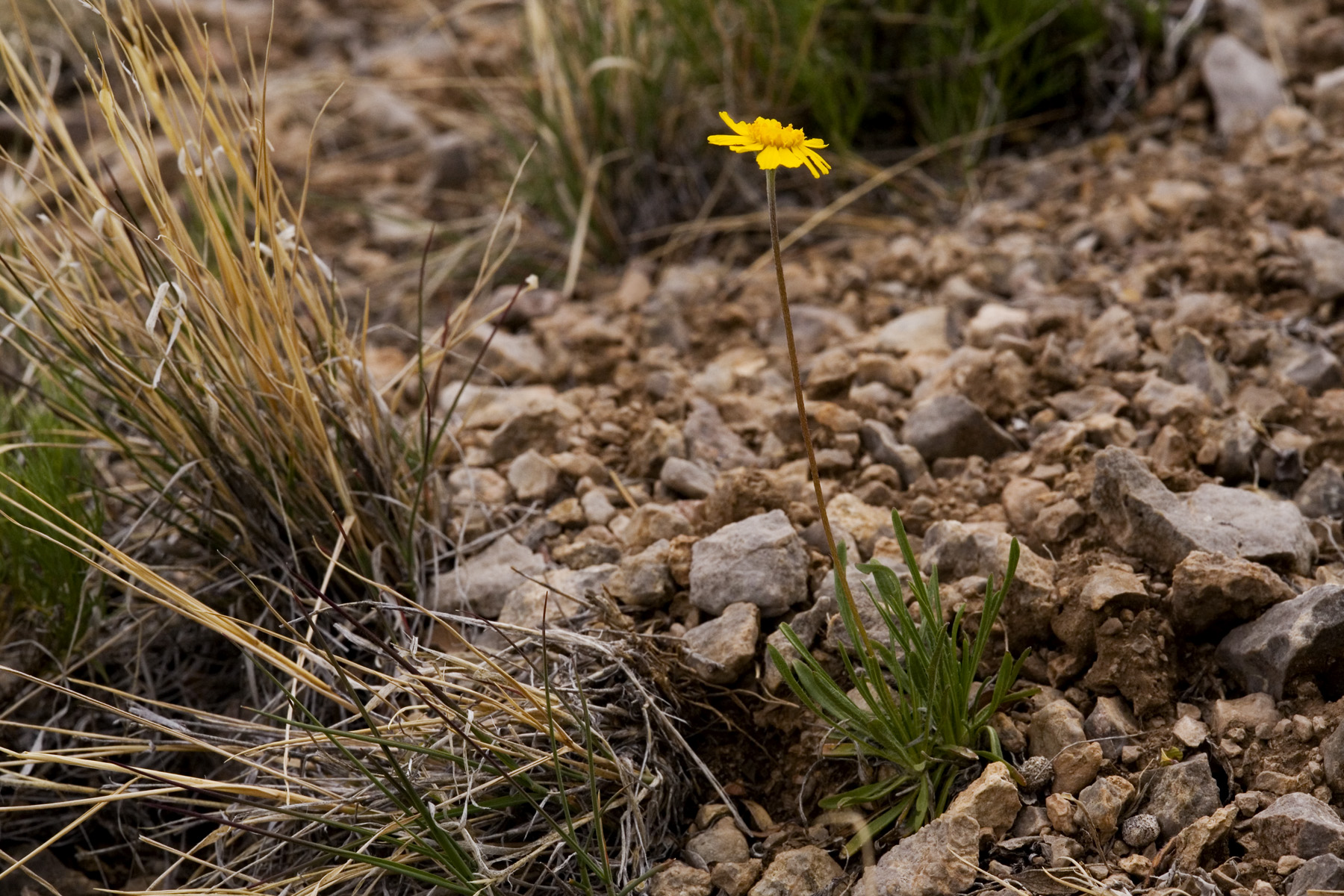
The plant takes its name from the bright yellow ray flowers, whose petal tips are divided into four small lobes (occasionally three), each marked with four parallel veins that are easiest to see when backlit. Flowers are carried singly on wiry, leafless stalks that rise 4 to 10 inches above the foliage, giving the plant a cheerful, long-blooming presence out of proportion to its compact size.
Few native wildflowers combine so much drought tolerance, so little need for soil, and such a long bloom season in one small package. Four-nerve Daisy is a staple of rock gardens, caliche beds, and xeriscapes across Texas, Oklahoma, New Mexico, Kansas, and Colorado, where it holds its ground in gravel and limestone that would defeat most other perennials.
Identification
Four-nerve Daisy grows as a low, rounded mound of foliage 4 to 8 inches tall and 6 to 12 inches wide, from which individual flower stalks rise well above the leaves.
Leaves
Leaves are narrow, linear to spoon-shaped, 1 to 3 inches long, gray-green to silvery, and covered with fine, silky hairs that give the foliage a soft, matte texture. They are clustered at the base of the plant in a basal rosette and persist through winter in all but the coldest parts of its range, giving the plant year-round structure.
Flowers
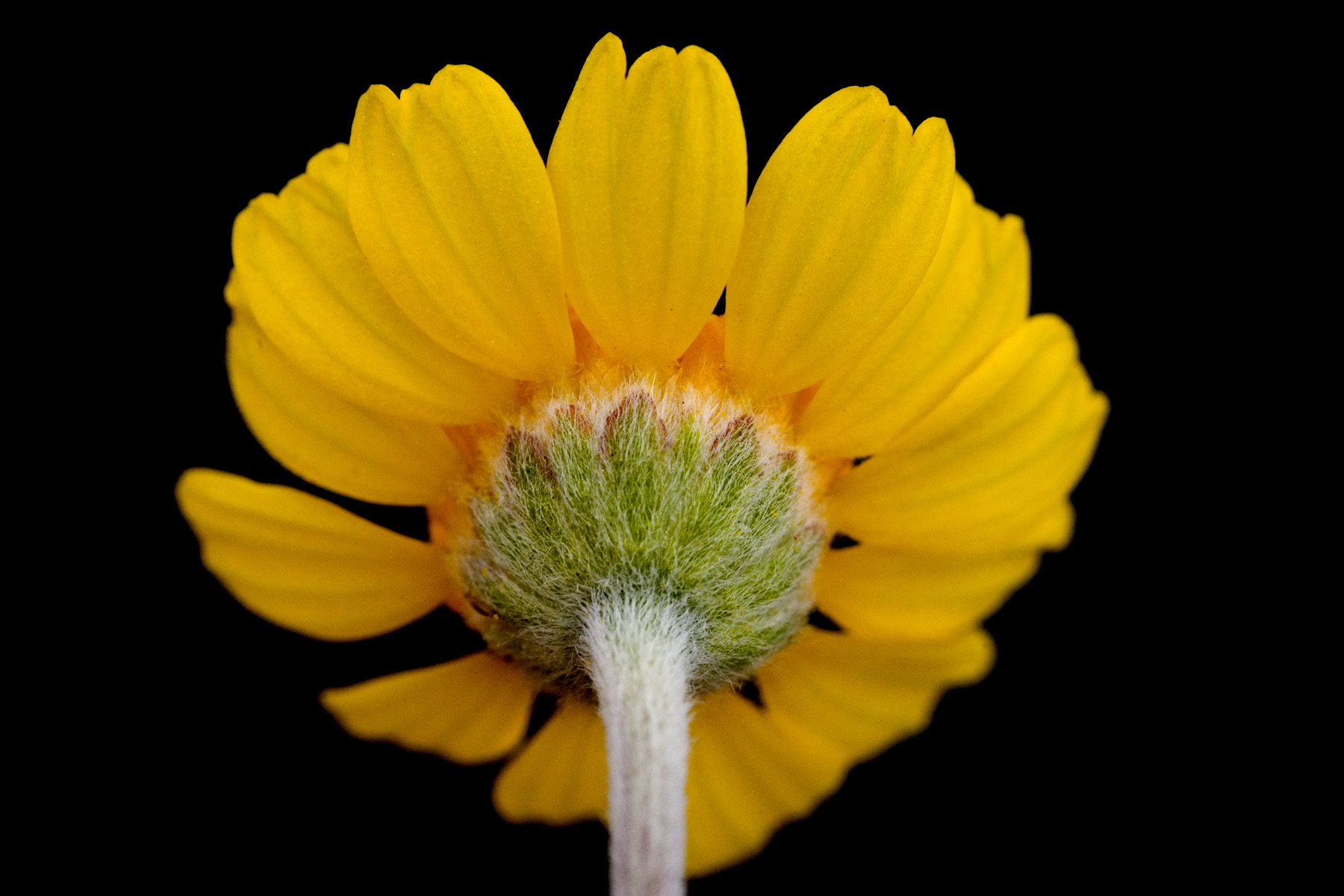
Each flower head is a solitary daisy, 1 to 1.5 inches across, with 6 to 10 golden-yellow ray florets surrounding a dense, slightly domed center of yellow disk florets. The outer tip of each ray is notched into three or four small lobes, each showing four fine parallel veins — the “four nerves” of the common name. Flower stalks are slender, leafless (scapose), and covered in the same fine hairs as the foliage, typically holding the blooms well clear of the leaf mound. Bloom is heaviest in spring, but the plant continues to flower sporadically through summer and into fall, especially after rain.
Fruit & Seeds
Like other sunflower-family plants, Four-nerve Daisy produces small, dry, one-seeded fruits (achenes) topped with a tuft of stiff bristles that aid wind dispersal, maturing in the dried flower head after bloom.
Quick Facts
| Scientific Name | Tetraneuris scaposa (syn. Hymenoxys scaposa) |
| Family | Asteraceae (Aster / Sunflower) |
| Plant Type | Evergreen Perennial Wildflower |
| Mature Height | 4–10 in (foliage 4–8 in; flower stalks to 10 in) |
| Mature Spread | 6–12 in |
| Growth Rate | Slow to moderate |
| Sun Exposure | Full Sun |
| Water Needs | Low |
| Soil Type | Rocky, gravelly, or caliche; sharply drained |
| Soil pH | 7.0–8.5 (neutral to alkaline) |
| Bloom Time | March – October (heaviest in spring) |
| Flower Color | Golden yellow |
| Fall Color | Evergreen gray-green foliage |
| Fruit | Small bristle-tufted achenes |
| Deer Resistant | Yes |
| USDA Hardiness Zones | 5–9 |
Native Range
Four-nerve Daisy is native to the southern Great Plains and adjacent Chihuahuan Desert borderlands, found from southeastern Colorado and southern Kansas south through Oklahoma, New Mexico, and across most of Texas, including the Trans-Pecos and Big Bend region.
It grows almost exclusively on thin, rocky, or gravelly limestone and caliche soils — roadcuts, exposed bedrock, dry prairie, desert grassland, and rocky hillsides — where competing vegetation is sparse. It is a conspicuous early-season bloomer on the limestone benches and caprock of the Edwards Plateau and the gravelly flats of the Trans-Pecos.
Four-nerve Daisy is sometimes grown as a xeriscape plant well outside this native range, including in parts of the Intermountain West; in those areas it is a garden introduction rather than a native wildflower, and gardeners there should check it does not seed aggressively into adjacent wild land.
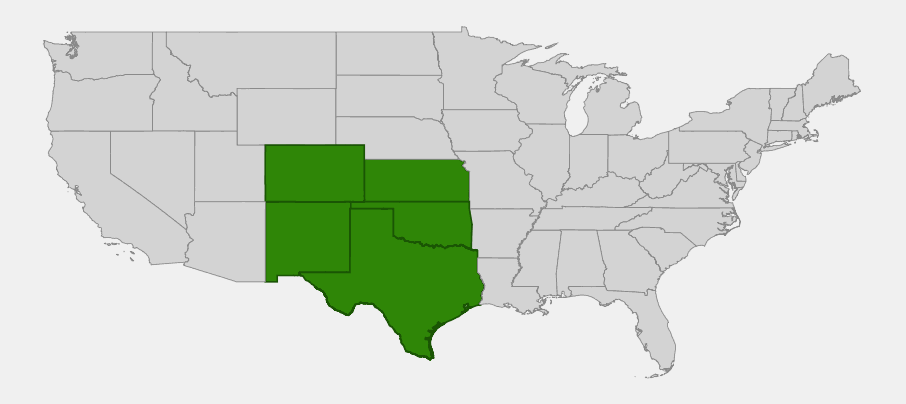
📋 Regional plant lists featuring Four-nerve Daisy: Arizona & New Mexico · Nebraska, Kansas & Eastern Colorado · Arkansas, Louisiana, Eastern Oklahoma & Eastern Texas · South & West Texas
Growing & Care Guide
Four-nerve Daisy is close to foolproof once you give it what it actually wants: baking sun and soil that drains in seconds. It is one of the easiest long-blooming perennials for a rock garden, gravel bed, or caliche-soil yard.
Light
Give it full sun. This species evolved on open, exposed limestone and caliche with essentially no shade, and it blooms poorly and can rot in shadier, moister settings.
Soil & Water
Sharp drainage is the single most important factor for success. Rocky, gravelly, or caliche soils that would be considered too poor for most perennials are exactly what this plant prefers; rich, moisture-retentive garden soil tends to shorten its life. Water sparingly after establishment — Four-nerve Daisy is adapted to long dry spells and resents being kept consistently moist, especially in winter.
Planting Tips
Set out container plants in fall or spring, spacing them 8 to 12 inches apart for a filled-in look, or farther apart to let individual mounds show as accents among rock. It is an excellent choice for crevice gardens, dry rock walls, and gravel paths where few other flowering perennials will take hold. Avoid mulching heavily around the crown, which can trap moisture and encourage rot.
Pruning & Maintenance
Deadhead spent flower stalks to encourage repeat bloom through the season, though this is optional — the plant will rebloom on its own after rain even without deadheading. Older clumps occasionally die back in the center after several years; dividing and replanting the healthy outer growth keeps plantings vigorous. No fertilizer is needed and can actually weaken the plant’s natural drought tolerance.
Landscape Uses
Four-nerve Daisy earns its keep in several tough garden settings:
- Rock gardens and crevice plantings where little soil is available
- Xeriscape and gravel-bed plantings needing long-season color with no irrigation
- Caliche or limestone yards where few perennials will establish
- Edging and border fronts, thanks to its tidy, low mounding habit
- Pollinator gardens for small native bees and butterflies
- Winter interest from its evergreen gray-green foliage
Wildlife & Ecological Value
Despite its small size, Four-nerve Daisy is a dependable resource for dry-land pollinators through most of the growing season.
For Pollinators
The long bloom period makes this one of the more reliable nectar and pollen sources on the Southern Plains, visited by native bees, small butterflies, skippers, and beneficial flies, especially valuable during the hot, dry stretches of summer when many other wildflowers have finished blooming.
For Birds
Small seed-eating birds, including sparrows and finches, feed on the bristle-tufted achenes once flower heads dry, particularly on open range and prairie where seed sources can be scarce.
For Mammals
The foliage is generally avoided by deer and rabbits, likely due to its tough, hairy texture and bitter compounds typical of the Hymenoxys/Tetraneuris group, making it a reliably deer-resistant choice.
Ecosystem Role
As a pioneer species on thin, disturbed, or eroded caliche and limestone soils, Four-nerve Daisy helps stabilize sparsely vegetated ground and provides season-long floral resources in habitats where few other plants can establish, supporting pollinator communities across the dry grasslands and desert grassland transitions of its range.
Cultural & Historical Uses
Four-nerve Daisy has no major documented record of medicinal or ceremonial use among Indigenous peoples of its range, unlike some of its showier relatives in the sunflower family, and it has historically been regarded primarily as a conspicuous, cheerful component of Southern Plains rangeland rather than a utilitarian plant.
Ranchers and naturalists across Texas and Oklahoma have long recognized it as an indicator of thin, rocky, poor-quality range soil, since it readily colonizes overgrazed or eroded ground where more palatable forage species have been lost — a role that, while not a direct human use, has made it a familiar and easily identified feature of the regional landscape for generations of landowners.
In recent decades, Four-nerve Daisy has moved from rangeland curiosity to deliberate garden subject, as xeriscape and native-plant gardeners across the Southwest and Southern Plains have recognized its combination of low water need, long bloom season, and tolerance for soils unsuitable for most perennials.
Frequently Asked Questions
How long does Four-nerve Daisy bloom?
It blooms heaviest in spring but continues flowering sporadically through summer and into fall, especially after rain showers, making it one of the longest-blooming native perennials for dry Southern Plains gardens.
Does Four-nerve Daisy need rich soil?
No — the opposite. It performs best in thin, rocky, or caliche soil with sharp drainage and actually declines in rich, moisture-retentive garden soil. Avoid fertilizing or amending the planting site heavily.
Is Four-nerve Daisy evergreen?
Yes, its gray-green basal foliage persists through most winters in its native range, giving the plant year-round garden presence even when it is not in bloom.
Why do the flower petals look notched?
The tips of the ray florets are divided into three or four small lobes, each marked with four parallel veins visible when backlit — the source of the “four-nerve” common name, a helpful identification feature that distinguishes it from similar yellow composite wildflowers.
Is Four-nerve Daisy deer resistant?
Yes. Its tough, hairy foliage is generally left alone by deer and rabbits, making it a reliable choice for gardens with heavy browsing pressure.

Looking for a nursery that carries Four-nerve Daisy?
Browse our native plant nursery directory: Colorado · Kansas · New Mexico & Oklahoma · Texas