Plains Pricklypear (Opuntia polyacantha)
Opuntia polyacantha, commonly known as Plains Pricklypear, is the most widespread and cold-hardy cactus of the North American Great Plains and Rocky Mountain foothills. While most people associate cacti with the hot deserts of the Southwest, Plains Pricklypear thrives across a vast expanse of the northern plains and mountains — enduring the bitterest winters that Montana and Wyoming can deliver, with temperatures dropping to -30°F or below, while also surviving the prolonged summer droughts of the shortgrass prairie. This extraordinary cold and drought hardiness, combined with its stunning flowers, makes Plains Pricklypear one of the most ecologically fascinating and visually striking native plants of the northern West.
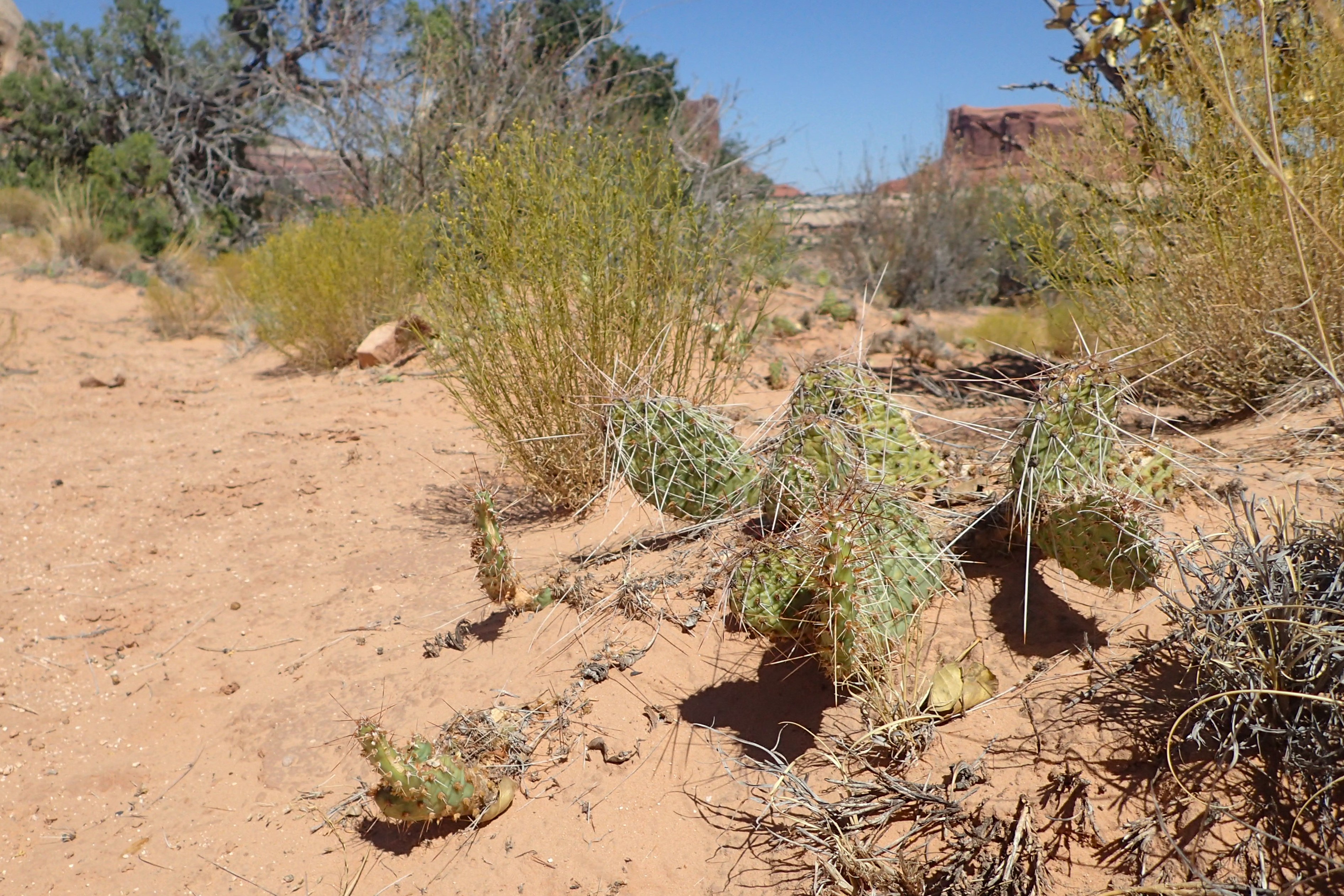
A low-growing, mat-forming cactus, Plains Pricklypear rarely exceeds 6 to 12 inches in height but spreads outward to form clumps and colonies 2 to 6 feet or more in diameter over time. Each stem segment (pad) is flattened, oval, and bristling with clusters of long, sharp spines as well as nearly invisible glochids — tiny barbed bristles that detach at the slightest touch and embed themselves painfully in skin and clothing. Yet despite this formidable armament, Plains Pricklypear produces some of the most gorgeous flowers in the prairie landscape: large (2–3 inches), silky, brilliant yellow to magenta blooms that open for just a few days in early summer, transforming the spiny mats into breathtaking pools of color.
Plains Pricklypear is an essential component of shortgrass and mixed-grass prairie ecosystems across its vast range. It provides critical food and cover for pronghorn, cactus wrens, porcupines, packrats, ground squirrels, and many other prairie animals. Its padded clumps create specialized microhabitats used by a variety of reptiles, insects, and small mammals. In Montana and Wyoming, it is a defining plant of open, rocky, and sandy prairie landscapes, dry foothills, and gravelly slopes throughout both states.
Identification
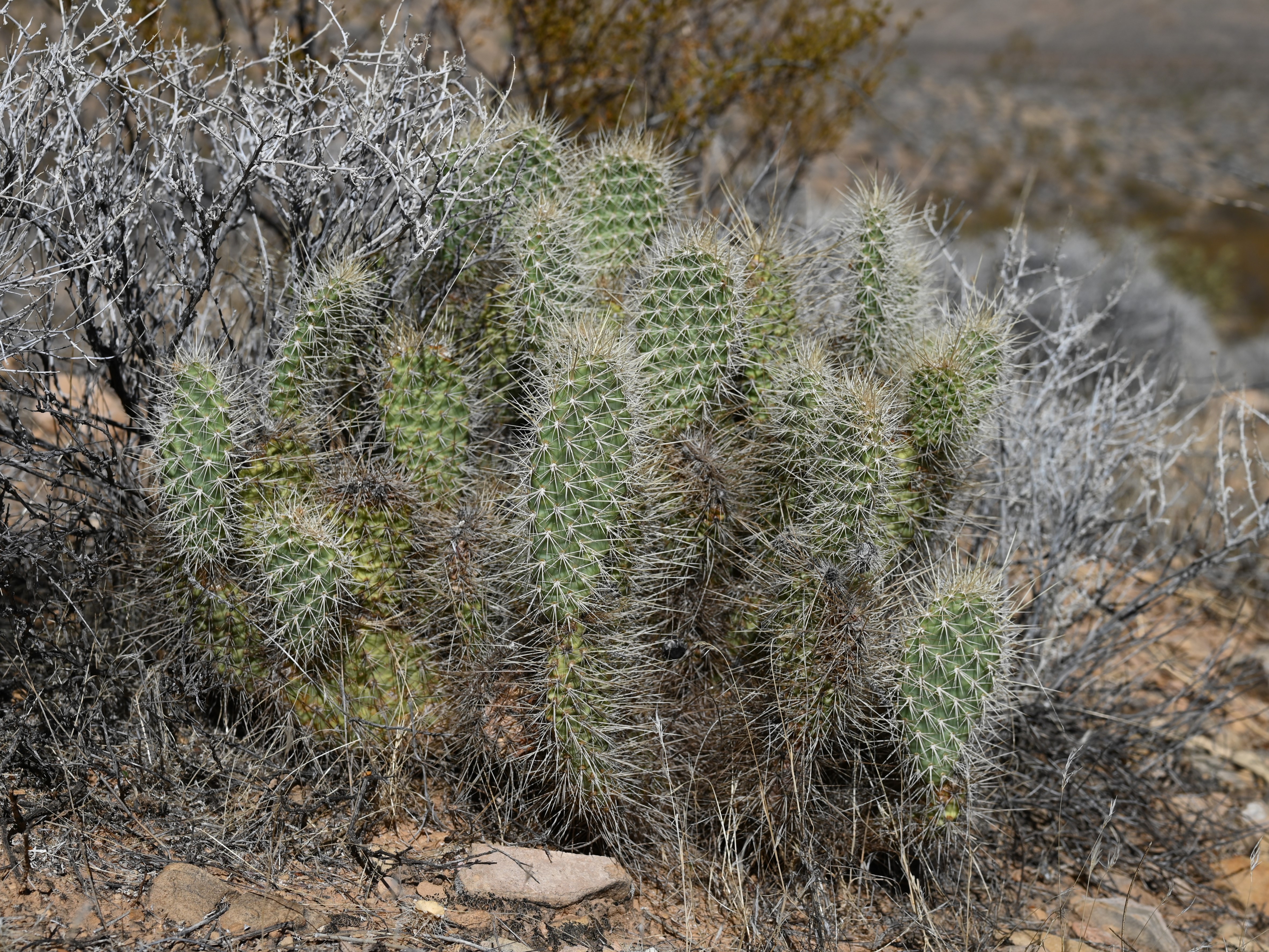
Plains Pricklypear is a low-growing, spreading cactus that forms ground-hugging mats and clumps. Individual stem segments (called cladodes or pads) are flattened, oval to nearly circular, 2 to 5 inches (5–13 cm) long and 1.5 to 4 inches wide, green to blue-green in color, and somewhat wrinkled during drought stress when the plant loses internal moisture. The pads are jointed and connected, spreading outward from the center to form clumps that can eventually reach several feet across.
Spines & Glochids
Each pad bears multiple areoles (specialized structures unique to cacti) arranged in a regular pattern across the surface. From each areole project 3 to 10 stout, rigid spines, typically 1 to 3 inches long, whitish to grayish-tan, often with darker tips. The spine arrangement is a key identification feature for distinguishing Opuntia species. More dangerous than the obvious spines are the glochids — dense tufts of tiny, backward-barbed bristles at each areole. Glochids are barely visible but detach instantly at the slightest touch, embedding in skin where they cause irritation and are very difficult to remove. Always handle Plains Pricklypear with leather gloves.
Flowers
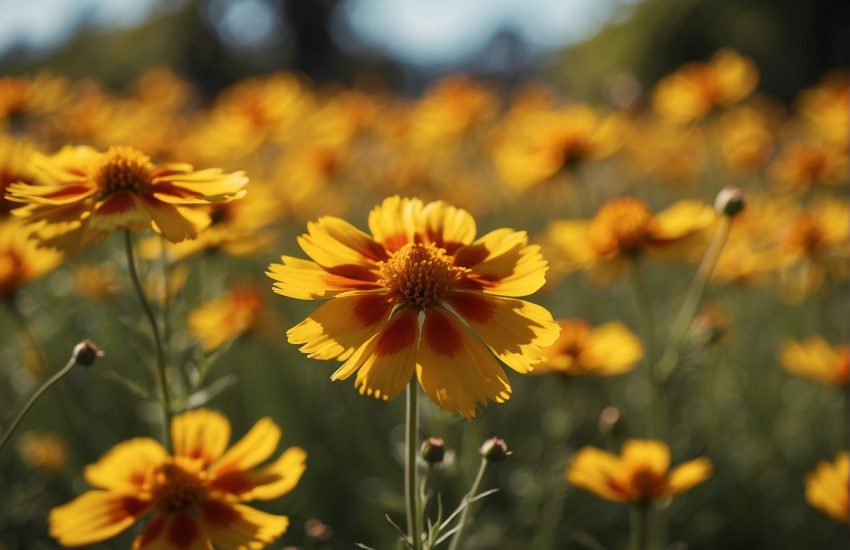
The flowers are among the most beautiful of any native cactus: 2 to 3 inches (5–8 cm) in diameter, with multiple layers of silky, overlapping petals in brilliant yellow — sometimes with a reddish or orange center — or, in some populations and varieties, magenta to rose-pink. The flowers open in full sun during the morning and close by afternoon, similar to Blue Flax. Blooms appear in early summer (May–July, depending on elevation and latitude) and last only 2–3 days each, but the overall bloom season on an established clump can last 2–4 weeks. The flowers are followed by fruits (tunas) that are reddish to purplish when ripe.
Fruit
The fruit is a barrel-shaped berry, 1 to 1.5 inches long, reddish-purple to brownish when ripe in late summer. The flesh is edible — somewhat sweet and mucilaginous — and is consumed by coyotes, foxes, pronghorn, bears, birds, and other wildlife. The fruits contain numerous hard, flattened seeds. In some years, fruiting is abundant, providing a significant food source for wildlife. Native peoples across the Great Plains harvested the fruits for food.
Quick Facts
| Scientific Name | Opuntia polyacantha |
| Family | Cactaceae (Cactus family) |
| Plant Type | Perennial Succulent / Cactus |
| Mature Height | 6–12 in (mat-forming) |
| Mature Spread | 2–6 ft (slowly expanding) |
| Sun Exposure | Full Sun |
| Water Needs | Low (Drought Tolerant) |
| Bloom Time | May – July |
| Flower Color | Brilliant yellow to magenta |
| USDA Hardiness Zones | 3–9 (extremely cold-hardy) |
Native Range
Plains Pricklypear has one of the largest native ranges of any North American cactus species, extending from British Columbia south through the western Great Plains to Texas and New Mexico, and from the Pacific Coast states east to Wisconsin and Illinois. It is most abundant and ecologically dominant across the shortgrass and mixed-grass prairies of the Great Plains — from Montana and the Dakotas south through Wyoming, Colorado, Nebraska, Kansas, Oklahoma, and into Texas. It also occurs in the Great Basin, on dry plains and foothills east of the Cascades and Sierra Nevada, and across much of the Rocky Mountain region.
In Montana and Wyoming, Plains Pricklypear is a defining plant of the open prairie landscape. It occurs throughout both states at elevations from the valley floors (as low as 1,000–2,000 feet in eastern Montana) up to alpine foothills at 7,000–8,000 feet. It is most abundant in the mixed-grass and shortgrass prairie zones of eastern Montana and Wyoming, where it forms extensive colonies on dry, rocky, sandy, or gravelly soils. In the foothills and lower mountain slopes, it occurs on south-facing exposures where thin soils and intense summer heat create near-desert conditions.
Opuntia polyacantha is notably variable across its range, with multiple varieties recognized by botanists. Some authorities divide it into several distinct species or subspecies based on spine number, arrangement, and flower color. The yellow-flowered form is most common across the northern plains; populations with magenta or pink flowers occur in some areas, particularly in the southern portions of the range and in the Great Basin.
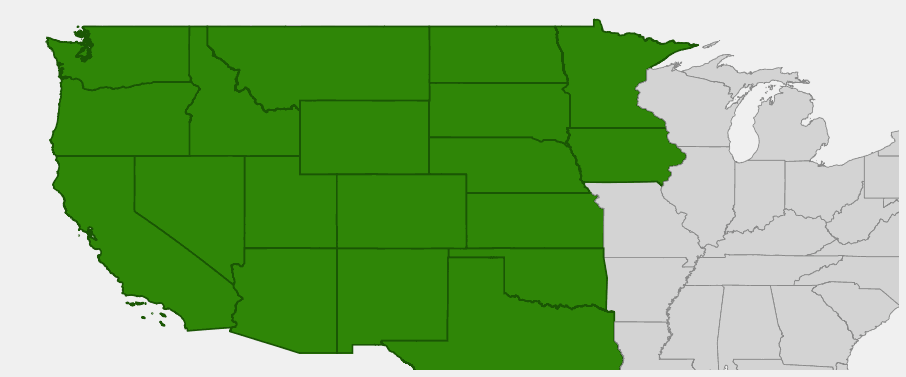
📋 Regional plant lists featuring Plains Pricklypear: Montana & Wyoming
Growing & Care Guide
Plains Pricklypear is one of the easiest cacti to grow in garden settings throughout the West, and it thrives with minimal intervention. Its exceptional cold hardiness — far beyond most garden cacti — combined with its stunning flowers and wildlife value make it an excellent addition to dry, sunny gardens in its native range and beyond.
Light
Plains Pricklypear requires full sun. It is adapted to the intense sunlight of open prairie and should not be planted in shade or even partial shade — shaded plants become etiolated, lose their compact form, and rarely flower. Choose the sunniest, most exposed position in your garden for best results. South- and west-facing slopes that receive afternoon sun are ideal.
Soil & Water
Excellent drainage is the single most critical requirement for Plains Pricklypear. It thrives in sandy, gravelly, rocky, or otherwise well-drained soils and will rot quickly in heavy clay or any soil that holds moisture. If your native soil is heavy, amend the planting area with coarse sand and gravel, or plant in a raised bed. Once established, Plains Pricklypear requires virtually no supplemental irrigation — it is one of the most drought-tolerant plants native to the northern Great Plains. Overwatering is the most common mistake: err on the side of too little water rather than too much.
Planting Tips
Plains Pricklypear is easily propagated from stem pads. Wearing thick leather gloves, break off one or more pads and allow the cut surface to callus (dry) for 1–2 weeks before planting. Press the calloused end into dry, gritty soil to about one-third of the pad’s length. Do not water until new growth appears. Container-grown plants can be transplanted in spring or fall. Plant in an area where the spiny mats will not be hazardous to people or pets — away from walkways, children’s play areas, and areas where people might accidentally step or fall on them.
Pruning & Maintenance
Plains Pricklypear is essentially maintenance-free once established. Remove dead or diseased pads with long-handled tongs or heavy leather gloves. If the colony grows larger than desired, remove outer pads using tongs and discard or propagate. No fertilization is needed or beneficial in most settings. The plant is naturally resistant to most pests and diseases; root rot from overwatering or poor drainage is the main threat.
Landscape Uses
- Xeriscape and rock gardens — spectacular flowering cactus for dry, sunny sites
- Prairie plantings — authentic component of shortgrass prairie gardens
- Wildlife gardens — provides food and shelter for pronghorn, birds, and small mammals
- Slope stabilization — spreading mats hold dry, erodible soils
- Security planting — impenetrable clumps deter trespassers and predators
- Difficult, dry spots — thrives where other plants fail
Wildlife & Ecological Value
Plains Pricklypear is a keystone species in shortgrass prairie ecosystems, providing food, cover, and specialized habitat for a remarkable variety of wildlife.
For Birds
The Cactus Wren — though primarily a Sonoran Desert species — uses pricklypear for nesting in the southern portions of the range. More importantly across the northern plains, Sage Thrashers, Mourning Doves, and various sparrows use the dense, spiny clumps as secure nesting and cover sites. The fruits (tunas) are consumed by many bird species in fall. The spine clusters also provide structure for spider webs that catch insects, which in turn attract insectivorous birds.
For Mammals
Pronghorn are the primary large mammal consumer of Plains Pricklypear, eating the pads throughout the year — their specialized lips and mouths allow them to consume the spiny pads without injury. This browsing is especially important in winter when grasses are dormant and covered in snow. Coyotes, foxes, and black bears eat the ripe fruits in fall. Packrats (woodrats) construct elaborate stick dens around pricklypear clumps, using the spines for defensive protection. Porcupines and deer mice also consume the pads and fruits.
For Pollinators
The large, brilliantly colored flowers attract many native bee species, including specialist cactus bees (Diadasia spp.) that have co-evolved with Opuntia species. Bumble bees, sweat bees, and mining bees also visit for nectar and pollen. The intense color and large floral displays make Plains Pricklypear one of the most conspicuous pollinator resources on the open prairie during its brief bloom period.
Ecosystem Role
Plains Pricklypear plays a vital structural role in shortgrass prairie ecosystems. Its spiny clumps create protected microhabitats that maintain local biodiversity, sheltering reptiles (skinks, horned lizards), invertebrates, small mammals, and nesting birds from predation and thermal extremes. The plant’s shallow, extensive root system effectively captures runoff and stabilizes sandy and gravelly soils. It also persists through disturbances — fire, drought, overgrazing — that eliminate other vegetation, providing continuity of cover and food during recovery periods.
Cultural & Historical Uses
Plains Pricklypear was used extensively by Indigenous peoples throughout its range. The fruits (tunas) were an important summer and fall food source — eaten fresh, dried, or made into syrup and fermented into a mildly alcoholic beverage. The Lakota, Crow, Blackfoot, Shoshone, and other tribes all made use of the fruits. The pads were also eaten after singeing off the spines over a fire, making them safe to handle and consuming the mucilaginous flesh, which was roasted or boiled. The pads provided emergency water and calories during harsh times on the open prairie.
Medicinally, pricklypear pads were split and used as poultices for wounds, burns, and skin infections — the mucilaginous sap has mild antiseptic and wound-healing properties. The Zuni and other Pueblo peoples also used the sap as a hair treatment and the pads as a food preservative. Modern research has validated some traditional medicinal uses: compounds in Opuntia pads have been shown to have anti-inflammatory, antioxidant, and blood-sugar-regulating properties.
Today, Plains Pricklypear is valued primarily for its exceptional hardiness, wildlife value, and striking beauty in dry western landscapes. It is increasingly available at native plant nurseries and through wildflower seed suppliers throughout its native range. Its unique combination of extreme cold hardiness, profound drought tolerance, and spectacular flowers makes it an irreplaceable element of authentic western prairie plantings from southern Canada to Texas.
Frequently Asked Questions
Is Plains Pricklypear safe to plant near walkways or in family gardens?
With caution, yes — but plan carefully. The spines and glochids can cause serious injury if someone falls on or accidentally contacts the plant. Plant away from walkways, children’s play areas, and pet exercise areas. However, in the right spot — on a dry, rocky slope, in a xeriscape border, or as a property boundary planting — it is safe and extremely effective. Always wear thick leather gloves when handling.
How do I remove glochids from my skin?
Glochids are nearly impossible to see and very difficult to remove because of their backward barbs. Do not rub the affected area — this embeds them deeper. Instead, apply rubber cement or white glue over the area, let it dry completely, then peel it off, pulling the glochids out. Repeat as necessary. Tape or duct tape applied and ripped off can also work. Tweezers are helpful for any remaining individual glochids, viewed under magnification.
How cold-hardy is Plains Pricklypear?
Extremely cold-hardy — it survives temperatures of -30°F or colder in Montana and the Canadian prairies, making it one of the hardiest cacti in the world. In winter, the pads lose water and appear shrunken and wrinkled, but they fully rehydrate and resume growth in spring. It is reliably hardy in USDA Zones 3–9, far more cold-tolerant than most garden cacti from warmer regions.
Can I eat Plains Pricklypear fruits?
Yes — the fruits are edible and have a sweet, somewhat melon-like flavor. Carefully singe off or scrub away the glochids before handling; do not touch the fruit with bare hands until all glochids are removed. The flesh can be eaten raw, made into jam or jelly, or juiced. The seeds are edible but hard and often swallowed whole or discarded. The pads (nopales) can also be eaten after singeing off spines and glochids, then peeling and cooking.
Why are the pads wrinkled and shrunken in summer?
During drought stress, Plains Pricklypear pads lose internal moisture and become wrinkled, somewhat deflated, and may turn slightly yellowish or purplish. This is normal — the plant is drawing on stored water reserves to survive. After rainfall, the pads quickly rehydrate and regain their plump, green appearance. Do not water heavily in response to this — it’s the plant doing exactly what it’s adapted to do.