Woolly Cinquefoil (Potentilla hippiana)
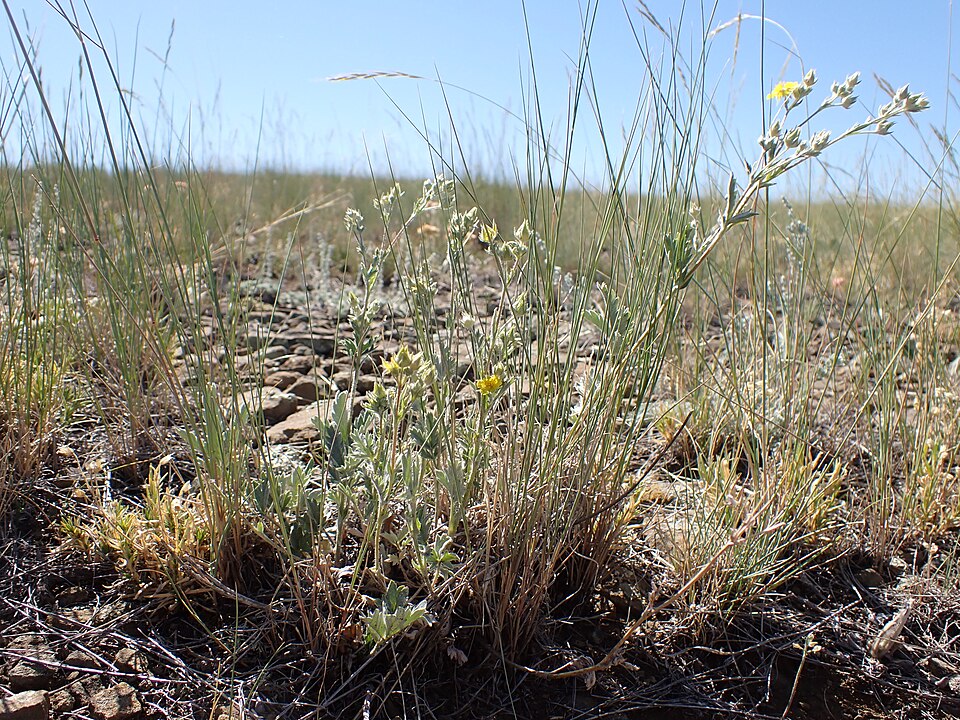
Potentilla hippiana, commonly known as Woolly Cinquefoil or Horse Cinquefoil, is a charming native perennial wildflower of the Rocky Mountain West and northern Great Plains. Its genus name Potentilla comes from the Latin “potens” (powerful), reflecting the long medicinal history of cinquefoils, while hippiana refers to its association with horses — it is reportedly relished by horses and other equines as forage. The common name “cinquefoil” means “five leaves” in French, referencing the five-parted leaves typical of the genus.
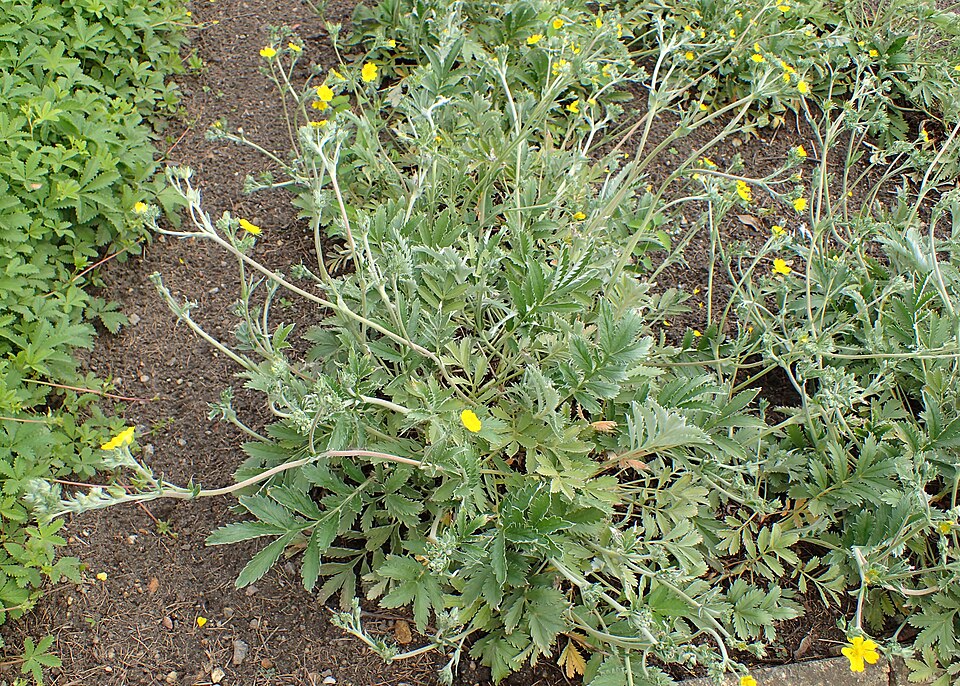
Woolly Cinquefoil grows 8 to 18 inches tall from a woody, branching crown, producing clusters of cheerful, bright yellow, five-petaled flowers that bloom from late spring through midsummer. The most distinctive feature of the plant is its densely white-woolly foliage — both the leaves and stems are covered in thick, soft, silvery-white hairs that give the entire plant a fuzzy, silvery appearance. This wool serves as both a drought adaptation (reducing water loss from leaf surfaces) and a deterrent to some insect herbivores.
In Montana and Wyoming, Woolly Cinquefoil is a common resident of dry to moderately moist open habitats — prairies, mountain meadows, dry slopes, and open ponderosa pine forests from the plains to subalpine elevations. It is particularly characteristic of calcareous (limestone-based) soils and dry, gravelly slopes where its drought tolerance allows it to thrive where many other forbs struggle. As a member of the rose family (Rosaceae), it supports a variety of pollinators and provides important forage for wildlife across its range.
Identification
Woolly Cinquefoil is an erect to spreading perennial herb, growing from a woody, multi-crowned base with multiple stems. It typically reaches 8 to 18 inches (20–45 cm) tall, with a spreading, somewhat open habit. The most immediately distinctive feature is the dense covering of long, soft, white to silvery-gray woolly hairs on all above-ground parts — a feature more pronounced than in most other Potentilla species in the Rocky Mountain region.
Leaves
The leaves are pinnately compound with 7 to 11 leaflets, the lower leaves long-petiolate and the upper ones becoming sessile near the stem. The leaflets are oblong to lanceolate, ½ to 1½ inches long, with coarsely toothed margins (each tooth tipped with a small point). Both surfaces are densely hairy — the upper surface with silky appressed hairs, the lower with thick, woolly, almost felted hairs that give it a pure white appearance. This contrast between the upper and lower leaf surfaces is a useful identification feature: green-woolly above, white-woolly below. The basal leaves are largest and most numerous, forming a rosette-like arrangement from the woody crown.
Flowers
The flowers are the classic cinquefoil structure: five bright yellow, broadly rounded petals, each with a small notch at the tip, arranged around a center of numerous stamens and pistils. Each flower is ¾ to 1 inch across — larger than many other native Potentilla species. Flowers are borne in loose, branching corymbs at the tops of the stems. The calyx has 5 sepals and 5 bracteoles (epicalyx lobes). Bloom time is May through July in Montana and Wyoming, depending on elevation. The bright yellow of the flowers contrasts strikingly with the silvery-white woolly foliage, making this a visually attractive plant throughout its bloom period.
Fruit
After pollination, the ovaries develop into small, dry achenes (seed-like fruits) clustered in the center of the flower. The achenes are tiny, smooth, and pale brown. Seeds are wind-dispersed or transported by animals and birds. Like most cinquefoils, Woolly Cinquefoil produces abundant seed and can self-sow in favorable conditions.
Quick Facts
| Scientific Name | Potentilla hippiana |
| Family | Rosaceae (Rose) |
| Plant Type | Perennial Herb |
| Mature Height | 1–2 ft |
| Sun Exposure | Full Sun |
| Water Needs | Moderate |
| Bloom Time | May – July |
| Flower Color | Bright yellow |
| Foliage | Densely white-woolly; silver-green appearance |
| Soil Type | Well-drained; loamy, sandy, gravelly; tolerates calcareous soils |
| USDA Hardiness Zones | 3–8 |
Native Range
Woolly Cinquefoil is native to the interior of North America, ranging from the Rocky Mountain states east across the northern Great Plains to the upper Midwest, and north into the Prairie Provinces of Canada. Its core range spans Montana, Wyoming, Colorado, Utah, Idaho, North and South Dakota, Nebraska, Kansas, Minnesota, Iowa, Wisconsin, and Ohio, with the densest populations in the drier portions of the Rocky Mountain Front Range and the mixed-grass and shortgrass prairies of the Great Plains.
In Montana and Wyoming, Woolly Cinquefoil is a characteristic forb of dry to moderately moist grasslands, mountain meadows, and open slopes from the prairie-foothill transition zones up to subalpine parklands. It is particularly common in the foothill grasslands of the Bighorn Basin and Powder River Basin in Wyoming, and in the mixed-grass prairies of eastern and central Montana. In mountain areas, it favors south- and west-facing slopes with good drainage and full sun exposure.
The species shows a moderate affinity for calcareous substrates — soils derived from limestone, chalk, or other calcium-rich parent materials — where it sometimes forms dense stands. In the Bighorn Mountains and Wind River Range foothills of Wyoming, it is a characteristic component of the calcareous grassland community. Its tolerance of moderately dry to moderately moist conditions gives it broader habitat flexibility than many other native forbs in the region.
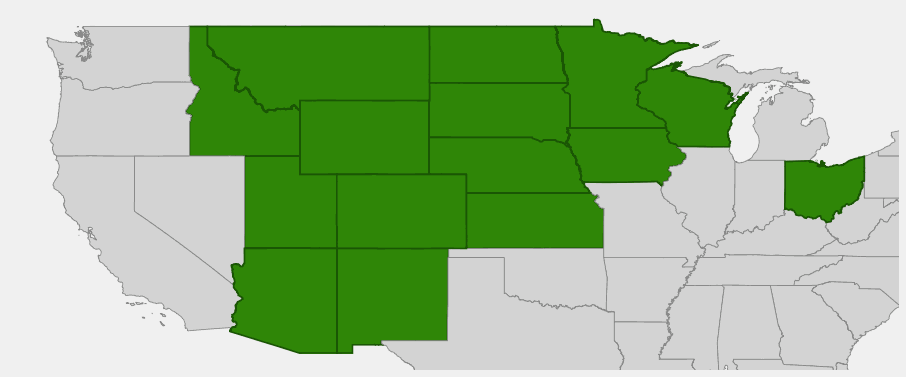
📋 Regional plant lists featuring Woolly Cinquefoil: Montana & Wyoming
Growing & Care Guide
Woolly Cinquefoil is a tough, adaptable native wildflower that thrives with minimal care in sunny, well-drained gardens throughout Montana and Wyoming. Its silvery foliage provides year-round textural interest, and its cheerful yellow flowers are among the most reliable native bloomers of early summer.
Light
Full sun is essential for Woolly Cinquefoil. It is adapted to the intense, unfiltered sunlight of open western grasslands and meadows, and performs best with 8+ hours of direct sun. In partial shade the plant becomes leggy, the woolly covering on the leaves becomes less pronounced, and flowering decreases substantially. Plant it in the most sun-exposed positions in your garden.
Soil & Water
Woolly Cinquefoil prefers well-drained soils with moderate fertility — loamy, sandy, gravelly, or calcareous substrates are all suitable. It tolerates lean, rocky soils better than most ornamental plants. Water needs are moderate — consistent moisture encourages the best growth and flowering, but the plant is resilient during dry spells once established. In Montana and Wyoming’s typically dry summers, supplemental watering every 1–2 weeks during the growing season will maintain good vigor. Avoid waterlogged soils or heavy clay that holds moisture. Fertilization is generally not needed — moderate fertility is preferable.
Planting Tips
Woolly Cinquefoil can be established from seed or container transplants. For seed propagation, surface-sow seeds in fall for natural cold stratification and spring germination, or stratify seeds in the refrigerator for 30 days before spring sowing. Seeds germinate at 60–70°F. Container transplanting in spring or fall works well — the taproot of mature plants can be deep, so transplanting is best done with young plants in early spring. Space transplants 12–18 inches apart; they will expand to form attractive clumps over 2–3 years. For a naturalistic meadow planting, scatter seed in fall at a rate of about ¼ ounce per 100 square feet.
Pruning & Maintenance
Very little maintenance is needed. After the primary bloom period (typically June–July), removing spent flower stems at the base encourages a potential secondary flush of blooms. The woolly foliage remains attractive throughout the growing season. In fall, the plants can be cut back to a few inches or left standing — the dried stems and persistent woolly basal rosettes provide winter visual interest and habitat for overwintering insects. Divide large clumps every 4–5 years to maintain vigor and prevent overcrowding.
Landscape Uses
- Native wildflower borders — the silver foliage and yellow flowers provide striking contrast
- Dry meadow plantings — naturalizes well in open, sunny meadow gardens
- Rock gardens — thrives among rocks in full sun
- Prairie and grassland restorations — characteristic forb of Rocky Mountain grasslands
- Pollinator gardens — attractive to native bees and beneficial insects
- Deer-resistant plantings — the woolly texture deters deer browsing
- Low-maintenance xeriscape — drought tolerant once established
Wildlife & Ecological Value
Woolly Cinquefoil provides diverse ecological benefits across its range, supporting pollinators, providing forage for herbivores, and contributing to grassland structural diversity.
For Pollinators
The large, open yellow flowers of Woolly Cinquefoil are accessible to a wide variety of pollinators — particularly native bees including bumblebees, sweat bees, mining bees, and small carpenter bees. The pollen-rich flowers attract both generalist and specialist bee species. As a member of the Rosaceae (rose family), Potentilla flowers share a structure that is particularly well-suited to ground-nesting and early-flying native bees that seek pollen in spring and early summer. Butterflies, including skippers and fritillaries, also visit the flowers for nectar.
For Birds
Small finches and sparrows consume the tiny achene seeds of Woolly Cinquefoil from the dried flower heads in late summer and fall. Horned Larks and Western Meadowlarks are among the most frequent seed predators. The plant’s branching stems provide perching and foraging sites for small birds in open grassland habitats, and the woolly plant material is occasionally collected by birds for nest lining.
For Grazing Mammals
The species name hippiana (“of horses”) reflects Woolly Cinquefoil’s well-documented palatability to horses and other large herbivores. Cattle, horses, elk, mule deer, and pronghorn antelope all consume the foliage, making it an important component of native range forage. The plant’s tolerance of moderate grazing — it resprouts readily from its woody crown after browsing — has made it a persistent member of mixed-grass prairie communities even under livestock use. Its relatively high protein content and palatability makes it a valued forage species in native grassland management.
Ecosystem Role
Woolly Cinquefoil is a foundation species in Rocky Mountain grassland communities. Its deep taproot accesses moisture and nutrients in the subsoil, bringing these resources into the above-ground biomass where they become available to other organisms upon decomposition. The woolly leaf surface traps windblown soil particles, contributing to the slow but continuous soil-building process that underpins grassland productivity. After fire or grazing disturbance, it resprouts quickly from its woody crown, providing early cover and food sources for insects and wildlife in recovering communities. Its presence in a plant community is typically an indicator of moderately well-managed, native-dominated grassland.
Cultural & Historical Uses
Like many members of the large genus Potentilla, Woolly Cinquefoil has a history of medicinal and practical use by Indigenous peoples of the Rocky Mountain West. The Blackfoot, Crow, Cheyenne, and other Plains and Rocky Mountain peoples used various cinquefoil species medicinally — root preparations were used as astringents for treating diarrhea, mouth sores, and skin irritations, reflecting the high tannin content typical of the Rosaceae family. The Cheyenne used cinquefoil root preparations as a blood purifier and tonic. Traditional healers distinguished between different cinquefoil species based on their varying potencies.
In the early settlement period of Montana and Wyoming, Woolly Cinquefoil was noted by range managers and livestock operators as one of the most nutritious and palatable native forbs for horses — hence both its species name and the common name “horse cinquefoil.” Early ranchers actively managed their pastures to preserve stands of native forbs including cinquefoils, recognizing them as essential components of high-quality native hay meadows. The plant continues to be regarded by modern range ecologists as an indicator of good range condition in mixed-grass prairie communities throughout Montana and Wyoming.
In European herbal tradition, the genus Potentilla has a very long medicinal history dating back to ancient Greece. Potentilla species (particularly P. erecta, Tormentil) were among the most important medicinal plants of medieval European herbalists, used as astringents for a wide range of conditions. The North American species including P. hippiana were adopted into frontier medicine by early settlers who recognized their similarity to the European species they already knew. While formal medicinal use has largely been replaced by modern pharmaceuticals, the astringent properties of cinquefoil root extracts continue to be studied for potential applications in treating inflammatory conditions.
Frequently Asked Questions
How is Woolly Cinquefoil different from other yellow-flowered Potentillas?
Woolly Cinquefoil is distinguished by its exceptionally dense, thick woolly hairs covering both leaves and stems — more woolly than most other native Potentilla species in the Rocky Mountain region. The heavily white-hairy underside of the pinnate leaves is the most reliable identification feature. The most commonly confused species are Graceful Cinquefoil (P. gracilis), which has a similar leaf shape but less dense hair, and Sticky Cinquefoil (P. glandulosa), which has glandular (sticky) hairs rather than woolly ones.
Is it deer resistant?
Generally yes — the dense woolly texture of the foliage deters deer browsing in most situations. However, under severe browse pressure (when other food is scarce in late winter and spring), deer may still consume it. In areas with very high deer density, young plants may benefit from temporary protection until established.
Can I use it as a groundcover?
Woolly Cinquefoil is more of an upright clump-forming plant than a true groundcover — it won’t spread to fill large areas the way a mat-former like Little Pussytoes does. However, when planted in groups of 3–5 spaced 12–18 inches apart, it creates an attractive, uniform planting with good weed suppression. For large-scale groundcover effects in sunny areas, combine with low-growing native grasses like Blue Grama for a more cohesive, spreading carpet.
Does it need supplemental water in Montana and Wyoming?
During the first growing season, weekly deep watering helps establishment. Once established (typically after the second growing season), Woolly Cinquefoil can survive on natural precipitation in most of Montana and Wyoming — 12–15 inches per year is generally sufficient. In the driest parts of the state (below 10 inches annual precipitation), occasional supplemental watering during the summer dry season is beneficial.
Is it suitable for revegetation of disturbed sites?
Yes — Woolly Cinquefoil is commonly included in seed mixes for revegetating disturbed sites in northern Rocky Mountain grassland communities. It establishes reliably from seed, tolerates the poor, compacted soils typical of road cuts and construction sites, and provides good early cover. It is available from several native plant seed suppliers that specialize in Great Plains and Rocky Mountain species.