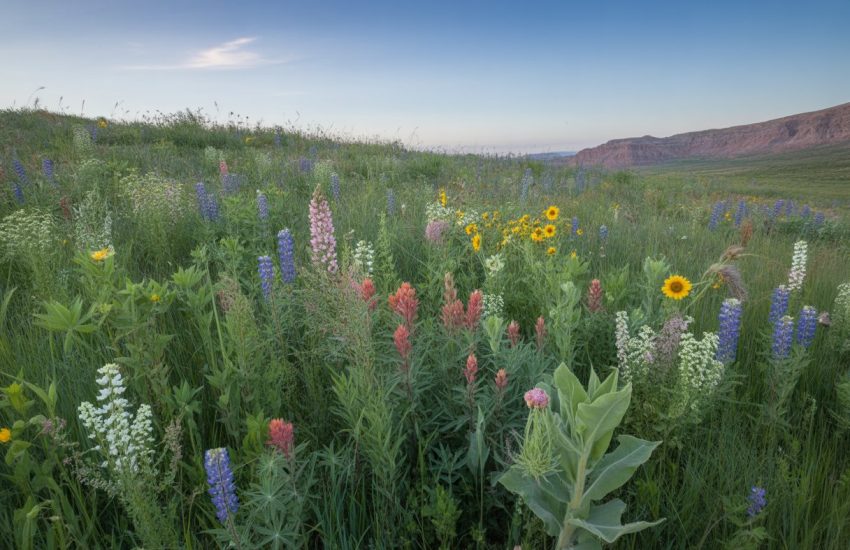
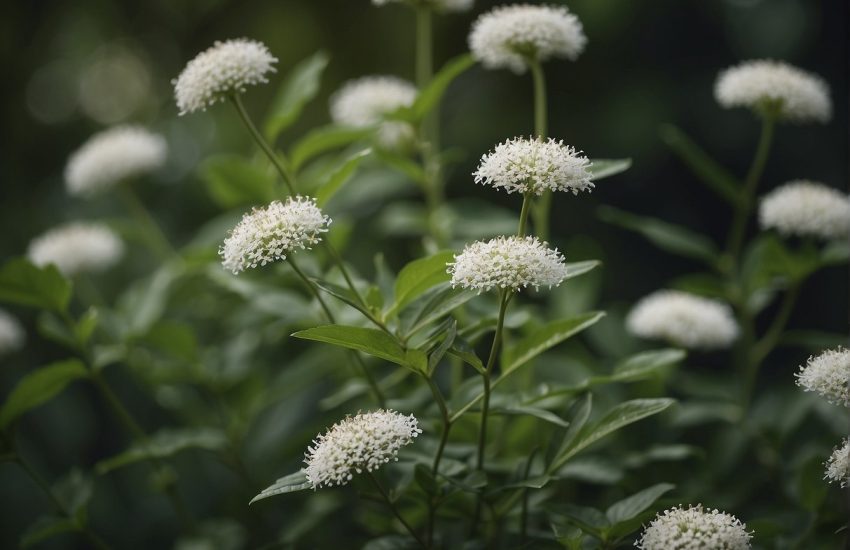
Silverleaf Phacelia (Phacelia hastata)
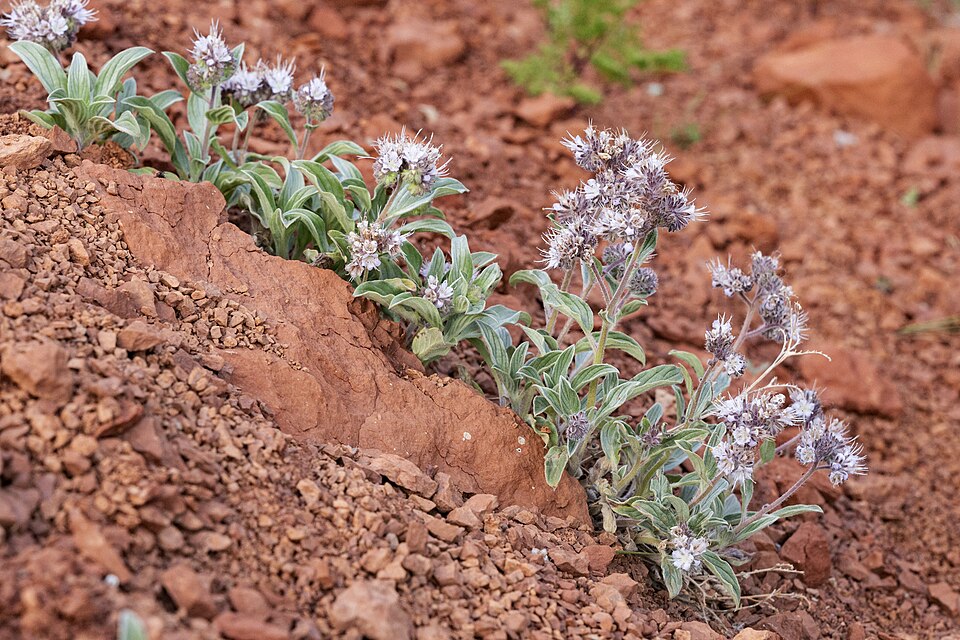
Phacelia hastata, commonly known as Silverleaf Phacelia or Hastata Phacelia, is a striking native wildflower of the arid and semiarid Rocky Mountain West. Its common name references the distinctive silver-gray, hairy leaves that give the plant a dusty, metallic sheen — an elegant adaptation to the harsh, sun-baked environments it calls home. In bloom, Silverleaf Phacelia is unmistakable: the white to pale lavender flowers are arranged in tightly coiled, scorpioid cymes that uncoil progressively as each flower opens, creating a fascinating, caterpillar-like inflorescence that is one of the most distinctive floral structures in the entire Rocky Mountain flora.
A member of the Boraginaceae family (or placed in the segregate family Hydrophyllaceae by some authorities), Phacelia hastata is a biennial or short-lived perennial growing 1 to 2 feet tall in sunny, dry habitats throughout the Intermountain West. It thrives in the open sagebrush shrublands, dry mountain slopes, gravelly washes, and roadside banks of Montana and Wyoming, where its drought tolerance and preference for lean, well-drained soils allow it to colonize sites that challenge less resilient plants. After fire or disturbance, Silverleaf Phacelia is among the first forbs to appear, making it a valuable revegetation species.
Beyond its striking appearance, Silverleaf Phacelia is an exceptional pollinator plant. The tubular flowers are rich in nectar and attract a remarkable diversity of native bees, including specialist mining bees that collect pollen exclusively from Phacelia species. In areas where it forms large populations, the plant buzzes with bee activity during its spring and early summer bloom period — creating a spectacle of pollinator diversity that has made it a beloved subject for native bee researchers and citizen scientists alike.
Identification
Silverleaf Phacelia is an erect to spreading biennial or short-lived perennial herb, 8 to 24 inches (20–60 cm) tall, with a taproot and branching stems. The entire plant is covered in stiff, spreading hairs — both simple and glandular — that give it a rough, bristly texture and the characteristic silvery-grayish appearance that distinguishes it from most other plants in its habitat.
Leaves
The leaves are the most visually distinctive feature outside of bloom time. They are oblong to lanceolate — often broadly so — 1 to 4 inches long, with prominently hastate (spear-like, with basal lobes pointing outward) bases on the lower stem leaves. The surface is covered in conspicuous silver-white or grayish hairs, giving the plant its common name. Lower leaves are petiolate (on stalks); upper leaves become sessile and may clasp the stem. Leaf margins are typically entire (smooth) or occasionally wavy. The contrast between the silvery leaves and the white-lavender flowers is one of the plant’s most attractive features.
Flowers
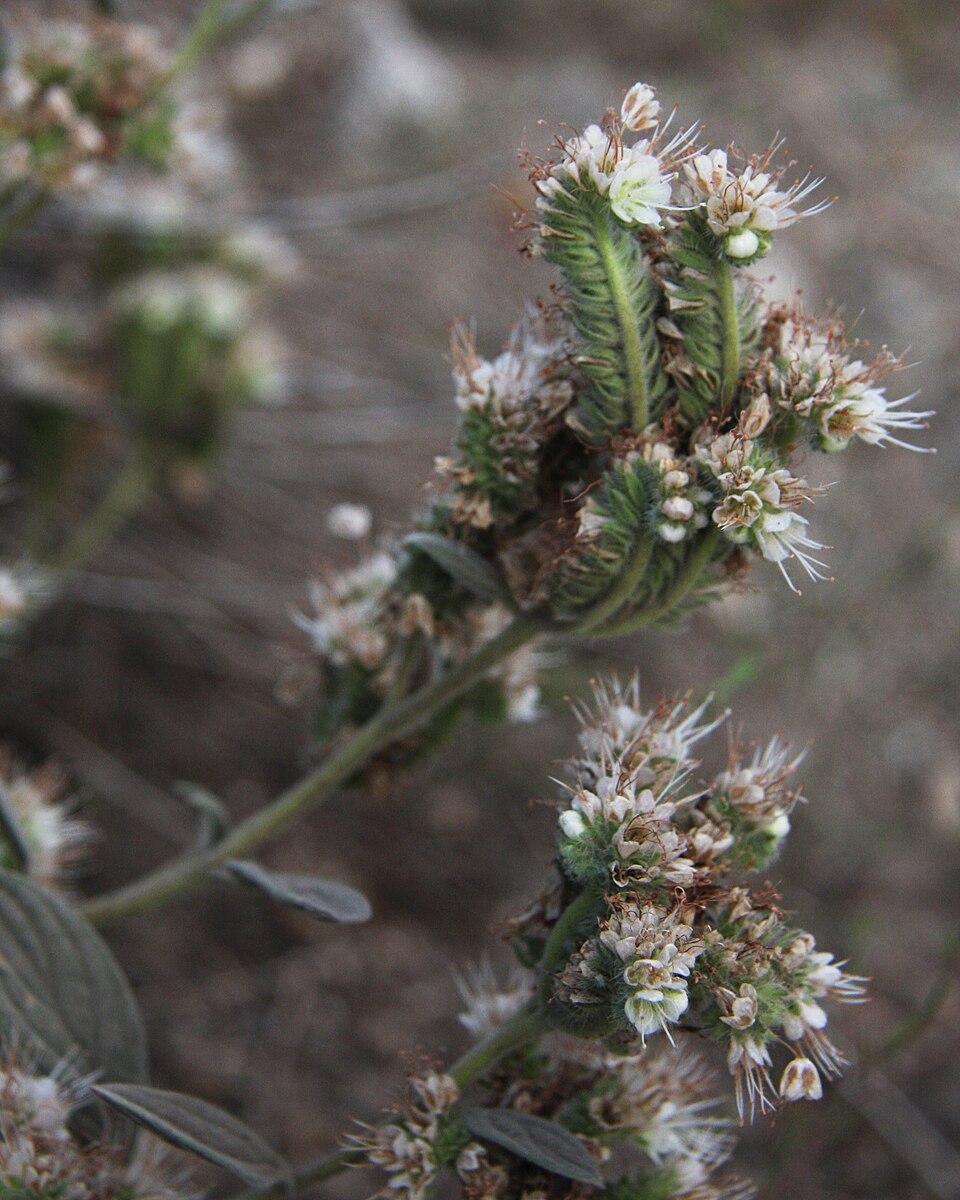
The flowers are borne in the characteristic scorpioid (coiled) cymes of the Boraginaceae — tightly coiled like a watch spring when in bud, gradually unfurling as individual flowers open from the coil’s base toward its tip. Each individual flower is funnel-shaped, 5-lobed, ¼ to ½ inch long, white to pale lavender or lilac, with protruding stamens tipped with cream anthers. The stamens and pistil extending beyond the flower tube add a delicate, fringed quality to the blooms. Bloom time is April through July in Montana and Wyoming, typically peaking in May–June at mid-elevations. The flowers are powerfully attractive to bees and other pollinators.
Fruit & Seeds
The fruit consists of 2 to 4 small, hard, rough-textured nutlets enclosed within the persistent calyx. The nutlets are ridged and pitted, brown to grayish. They ripen progressively as the scorpioid cyme continues to unfurl, with mature fruits at the base while new flowers open at the tip. Seeds can remain dormant in the soil for many years — a characteristic fire-adapted trait that allows large populations to emerge rapidly after fire or disturbance.
Quick Facts
| Scientific Name | Phacelia hastata |
| Family | Boraginaceae (Borage / Waterleaf) |
| Plant Type | Biennial or Short-lived Perennial Herb |
| Mature Height | 1–2 ft |
| Sun Exposure | Full Sun |
| Water Needs | Low (Drought Tolerant) |
| Bloom Time | April – July |
| Flower Color | White to pale lavender |
| Soil Type | Well-drained; sandy, gravelly, rocky |
| Foliage | Silver-gray, hairy — distinctive year-round |
| USDA Hardiness Zones | 4–9 |
Native Range
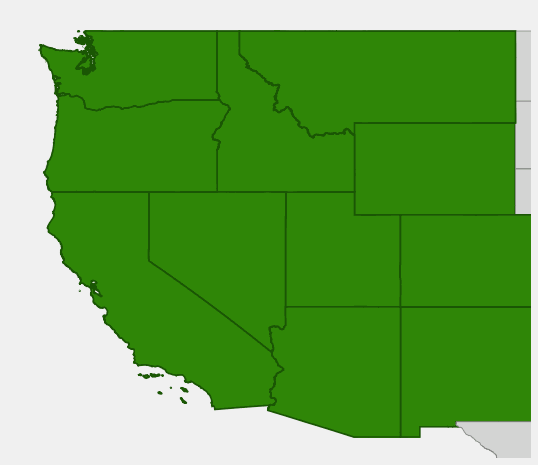
Silverleaf Phacelia is native to the western United States, primarily west of the Rocky Mountain Continental Divide and through the Great Basin. Its range encompasses California, Oregon, Washington, Idaho, Nevada, Utah, Arizona, New Mexico, Colorado, Wyoming, and Montana — essentially the full breadth of the Intermountain West from the Pacific slope to the Rockies. It also occurs in the Columbia Plateau and northern Basin and Range provinces.
In Montana and Wyoming, Silverleaf Phacelia is found at low to mid-elevations in the drier portions of both states — particularly in the sagebrush steppe, dry grasslands, and open ponderosa pine parklands that dominate much of the landscape east of the Continental Divide. It is especially common on steep, south-facing slopes, road cuts, and talus fields where thin, rocky soils and intense sun exposure create the xeric conditions it prefers. The Wind River Range foothills in Wyoming and the Beartooth piedmont in Montana are among its strongholds.
The species is a prolific fire follower — seeds lying dormant in the soil can remain viable for 50+ years and germinate en masse after fire removes competing vegetation. In the years immediately following a wildfire in sagebrush steppe, Silverleaf Phacelia sometimes completely dominates the forb layer, creating spectacular silvery-white flowering displays across burned hillsides. This post-fire abundance makes it a crucial early food source for pollinators rebuilding populations in burned landscapes.
📋 Regional plant lists featuring Silverleaf Phacelia: Montana & Wyoming
Growing & Care Guide
Silverleaf Phacelia is an easy and rewarding plant for dry, sunny western gardens. Its tolerance of poor soils, drought, and heat make it ideal for rock gardens, dry slopes, and xeriscape plantings throughout Montana and Wyoming. Establish it once and it may self-sow reliably for years.
Light
Silverleaf Phacelia demands full sun — it is adapted to the intense solar radiation of open western slopes and sagebrush flats, where no overhead shade exists. In shade or even partial shade, the plant becomes leggy, fails to develop its characteristic silver coloration fully, and produces far fewer flowers. Plant it in the most exposed, sun-drenched spot available.
Soil & Water
This species thrives in the leanest, most well-drained soils — sandy, gravelly, rocky, or even pure decomposed granite are ideal substrates. It absolutely requires excellent drainage; clay soils or any site with standing water will kill it. Once established from seed or transplant, Silverleaf Phacelia is highly drought tolerant, deriving sufficient moisture from winter snowmelt and occasional summer thunderstorms in its natural habitat. In garden conditions, water once or twice per week during establishment (the first growing season), then reduce to monthly deep watering or rely on natural precipitation. Avoid fertilization — rich soils produce rank, unattractive growth.
Planting Tips
Direct seeding in fall is the most reliable establishment method for Silverleaf Phacelia. Scatter seeds on the surface of prepared, weed-free, well-drained soil in October or November; do not cover deeply — seeds need light or only a thin covering of 1/8 inch of sandy soil. Spring seeding is also possible but may require 30–60 days of cold stratification. Transplanting container-grown seedlings works best in early spring before hot weather arrives. As a biennial or short-lived perennial, plants typically flower in their second year from seed; allowing some plants to set seed ensures long-term population persistence through self-sowing.
Pruning & Maintenance
Very low maintenance. After the main bloom period, leave some seed heads to ripen and drop seed for natural self-sowing. In a rock garden or naturalistic border, minimal intervention is best — the plants self-regulate effectively. In tidier gardens, spent flowering stems can be removed after seed set. The silver foliage of basal rosettes (in biennial plants) is attractive throughout the growing season and even into late fall. No fertilization or supplemental feeding is needed or desirable.
Landscape Uses
- Rock gardens — one of the finest native plants for rocky, xeric rock gardens in the West
- Dry slope planting — stabilizes steep, rocky banks while providing spring color
- Xeriscape gardens — drought-tolerant once established
- Pollinator gardens — exceptional native bee magnet
- Wildflower meadows in dry, open sites
- Sagebrush steppe restoration — prolific self-sower on disturbed ground
- Fire-adapted landscapes — thrives in post-fire environments
Wildlife & Ecological Value
Silverleaf Phacelia is one of the most important pollinator plants in the Intermountain West, supporting a remarkable diversity of native bee species and providing critical early food in disturbed landscapes.
For Native Bees
Silverleaf Phacelia is a magnet for native bees of all types. Several specialist mining bee species in the genus Andrena collect pollen exclusively or primarily from Phacelia species — making Silverleaf Phacelia a critical host-specific resource for these pollen specialists. Bumblebees (Bombus spp.), small sweat bees (Lasioglossum), mason bees (Osmia), and leafcutter bees (Megachile) are all frequent visitors. On warm spring days, a single stand of Silverleaf Phacelia can host dozens of bee species simultaneously. Research on native bee diversity in the Great Basin consistently identifies Phacelia species as among the top five most important native bee forage plants.
For Butterflies and Moths
Various checkered-skipper butterflies (Pyrgus spp.) use Phacelia as a larval host plant. Adult butterflies of many species visit the flowers for nectar, including Spring Azure, Western Tiger Swallowtail, and Sara Orangetip. Hawkmoths (Sphingidae) visit the flowers at dusk for nectar, particularly during warmer weather when the flowers remain open into the evening.
For Birds
The bristly stems provide perching sites for small birds, and the seed-filled nutlets are consumed by small sparrows and finches. The plant’s post-fire abundance — and the resulting mass concentration of pollinating insects — attracts insectivorous birds including Violet-green Swallows, White-throated Swifts, and various warblers that hawk insects over the blooming stands.
Ecosystem Role
In the post-fire ecology of Great Basin and sagebrush steppe communities, Silverleaf Phacelia plays a pivotal role. Its long-dormant seed bank germinates en masse in response to fire, rapidly providing ground cover that reduces erosion while simultaneously providing nectar and pollen to pollinators rebuilding after the disturbance. It is part of the fire-adapted plant community that has evolved with the sagebrush steppe’s fire regime over thousands of years, and its presence is a positive indicator of ecological resilience in these landscapes. Without abundant early-succession forbs like Silverleaf Phacelia, post-fire pollinator communities would struggle to rebuild, with cascading negative effects on the entire ecosystem.
Cultural & Historical Uses
The Paiute, Shoshone, and other Great Basin peoples used various Phacelia species medicinally. Preparations of the seeds, leaves, and roots were used to treat skin irritations, fevers, and digestive complaints. However, it is important to note that the bristly hairs of Phacelia species contain compounds that cause contact dermatitis in many people — handling the plants without gloves is inadvisable, and they should not be confused with edible species. The skin-irritating properties were sometimes used deliberately in traditional medicine as a counterirritant.
Silverleaf Phacelia was documented by early botanical collectors in the Rocky Mountain West. It appears in the collections of John Fremont’s exploring expeditions of the 1840s, which traversed much of the Great Basin and Rocky Mountain region. The species name hastata (“spear-shaped”) references the hastate leaf bases — a characteristic that allowed botanists to distinguish it from the many other Phacelia species in the West. The genus Phacelia, with approximately 200 species largely concentrated in western North America, is one of the most diverse and ecologically important genera of the Intermountain West.
In modern times, agronomists and farmers have recognized the value of various Phacelia species as cover crops — particularly the California Phacelia (P. tanacetifolia), which is widely used in European sustainable agriculture as a pollinator-attracting, soil-building cover crop. Silverleaf Phacelia has similar potential for dryland farming systems in Montana and Wyoming, where it could serve as both a soil cover crop and a pollinator support plant in organic grain and vegetable operations. Research on integrating native Phacelia species into agroecological systems in the Intermountain West is an active area of interest among range managers and sustainable agriculture advocates.
Frequently Asked Questions
Will Silverleaf Phacelia cause skin irritation?
Yes, the bristly hairs can cause contact dermatitis in sensitive individuals. The reaction is similar to handling stinging nettles — a rash, redness, and itching that typically resolves within a few days. Wear gloves when handling the plant, especially when pulling it up or transplanting. This irritation potential does not reduce its value as a garden plant — simply handle with care.
Is it a biennial or a perennial?
Silverleaf Phacelia is often described as a biennial (flowers in the second year from seed, then dies) or a short-lived perennial (may persist 2–3 years with some individuals flowering in consecutive seasons). In gardens, treating it as a biennial is most reliable: allow some plants to set seed each year to maintain a self-sustaining population. Don’t pull plants until you see the seed heads are fully mature.
How do I tell it apart from other Phacelia species?
The key features of Silverleaf Phacelia are: (1) silver-gray, hairy leaves with hastate (spear-base) lower leaves; (2) white to pale lavender flowers (not purple or bright blue); (3) robust size (1–2 ft) relative to other western phacelias. The most common confusion species is Capitate Phacelia (P. capitata), which has more rounded leaves, and Scorpionweed (P. heterophylla), which has more varied leaf shapes.
Does it attract honeybees?
Yes, but native bees are more important pollinators of Silverleaf Phacelia than honeybees. The flowers are particularly well-suited to small to medium native bees, which match the flower architecture. Honeybees do visit but are outcompeted at busy flowers by the many native bee species that have co-evolved with Phacelia.
Will it grow in a lawn or is it strictly a wild-garden plant?
Silverleaf Phacelia is strictly for naturalistic, wild-style gardens — not suited for formal or tidy landscapes due to its bristly texture and somewhat untidy appearance as the flowering stems mature and dry. It is perfect for rock gardens, dry meadow plantings, and xeriscape borders where a naturalistic aesthetic is desired.